
Most people still can’t grasp this or realize it too late. Last year, I started a new chapter in my life.
Nature demands this balance. Every person is born, experiences infancy, childhood, youth, grows older through middle age, and eventually passes away. This is a natural process that applies to everyone. Life, essentially, is a gift given to humankind. Whether we are children or middle-aged, every phase of life has its own unique beauty. We should enjoy each phase to the fullest and be prepared to turn the page when the time comes for the next stage.
To give a personal example, I’m 35 years old. Last year, I began a new phase in life. I stepped down from all my responsibilities in the family business and started a new venture in the solar energy sector. Of course, I still hold shares and board memberships in the family company. But I’m no longer an active executive. People still can’t believe I left a well-functioning operation like KFC and Pizza Hut (after years of effort restructuring the company from top to bottom—when I left, it was at its historical peak and still gaining momentum; I’ll write about that another time) to enter an unstable, unestablished sector with a startup. But I made this transition without a second thought.
Life moves fast. We pass through its phases quickly and grow older every day. I do have a bit of an advantage in this regard. Since I look younger than my age, people often mistake me for the younger twin when I’m with my twin brother Baran. I don’t even bother correcting them anymore. This happens everywhere. For instance, when I took my younger sister to register for university in the U.S. four years ago, she was tired, so I stood in the registration line. The students in front of me started chatting and asked which department I was in. I smiled and told them I had graduated nine years ago and was there for my sister.
Another time, two years ago, we hosted the President of Ireland and his official delegation at our hotel. At the entrance of the Ritz-Carlton’s ballroom, my father and I ran into a family friend. My father introduced me to Abdulkadir Konukoğlu, one of Türkiye’s prominent businessmen and a fellow native of Gaziantep:
My father: “… And this is my son, Serhan.”
Abdulkadir Konukoğlu: “Wow. What year are you in at university?”
Me (smiling): “I’m 33. It’s been 11 years since I graduated.”
Konukoğlu: “Incredible. You look so young!” (Turning to my father) “His grandfather had a youthful look too. He must take after him.”
We all laughed and went inside to welcome the President of Ireland. When I see friends from high school or university, many of them look physically different. Some even jokingly say, “Dude, we’re annoyed by how you never change.” But I know that in 5–10 years, I’ll have gray hair, maybe lose some hair, and continue aging. I’m ready for it—and I plan to live that phase to the fullest too, continuing to contribute to those around me.
Everyone ages—without exception. But many people continue living as if they aren’t getting older. They refuse to let go of their positions. In truth, it’s humanity itself that makes life unbearable. Personal egos, jealousy, hatred, aggression, the urge to dominate others, smiling to your face while gossiping behind your back, insults—these are the things that poison life.
Some say: “Live every day like it’s your last,” and go through life living only in the moment. Others behave as if they’ll never die, clinging to their roles and trying to live the same life forever. What they forget is this: nature simply doesn’t allow that. The performance you had 30 years ago can’t be sustained today. You get tired more easily, get irritated, and your perception slows down.
In my opinion, living for the moment or clinging to the same role forever—both are extremes and both are wrong. One must enjoy life while also having short, medium, and long-term plans. If you avoid an accident or an untimely death, you should work diligently to achieve your goals.
I enjoy helping those around me in this regard, especially enthusiastic young people who want to create something or people who feel lost. Of course, I start with those closest to me. Just the other night, a young person came to me and shared their ambitions. I asked three questions: “Does your current internship excite you? Do you have a five-year plan? Where do you see yourself in 20 years?” Then we dived into details and created a sensible plan. If he keeps his excitement, I believe he’ll be successful—because eventually, he’ll take the baton from someone else, carry it for a while, and then pass it on to the next.
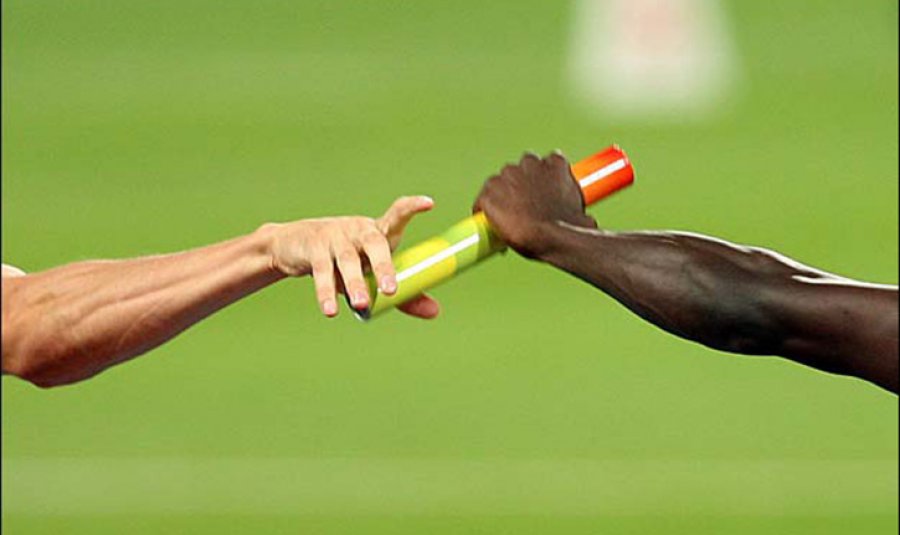
Yes, life is a relay race. But most people still don’t get it—or realize it is too late. We see this everywhere: in politicians, artists, athletes, businesspeople, club presidents, and countless others.
Let’s take a recent example that’s sparked debate, especially among Fenerbahçe fans: the case of Alex de Souza. For those who don’t know him, the Brazilian footballer joined Fenerbahçe in 2004 and became a club legend. In the 2010–2011 season, he became the first and only foreign player to be the league’s top scorer for a second time. He also became assist leader for the fourth time this season. Beyond his dazzling career, his modest personality and strong family life have won over fans—even Galatasaray supporters like me admire him. However, this year he clashed with the coach after being benched. Eventually, the club president backed the coach. I think both sides made mistakes. Coach Aykut Kocaman failed to manage communication with Alex and the fans. Loyalty matters—but Alex also needs to remember he’s 35, and his physical strength doesn’t match the younger players. As someone whose statue Fenerbahçe fans wanted erected while he’s still alive, he should not let things end this way. He should step away from football gracefully—whether to become a coach, a journalist, or simply to enjoy retirement. In my opinion, he should hang up his boots within 1–2 years and start his next chapter.
The same goes for politics. Take the global example of Putin and Medvedev. Putin achieved great things before handing over the presidency. But after Medvedev’s term, Putin returned first as Prime Minister, then again as President. This marked the decline of his career. Had he stepped aside, he might’ve been remembered as a legendary statesman. But using Medvedev as a front for ‘mock democracy’ hurt his legacy.
The same applies in Türkiye. We have hundreds of politicians who’ve served over 15–20 years. They ignore the fact that politics isn’t a profession but a public service—and one that should have a time limit. Our lack of internal democracy within parties enables “career politicians.” Just imagine—a party leader selects the delegates, and those delegates pretend to vote for the same leader in a fake election. It’s the blind leading the blind. I believe political office should be limited to two terms or 10 years. Even in the face of force majeures such as earthquakes, wars, floods, civil unrest, and the like—the maximum tenure should be limited to three terms or 15 years. Under no circumstances should this be exceeded.
The same applies to businesspeople. There are plenty of egotistical entrepreneurs out there who carry themselves as if they built everything with their own hands if they moved mountains and carved valleys. These types wouldn’t hesitate to step on those closest to them, even their own family, just to preserve their status. Some think they’ve done their duty as a parent by simply throwing money at their kids without providing a proper education. In doing so, they not only compromise their own legacy but also sabotage the next generation. Unfortunately, they realize this far too late. There’s a Mexican saying that perfectly captures this: “The grandfather is an entrepreneur, the father a playboy, the son a beggar.”
You see similar issues in foundations, associations, bureaucracies, federations, and many other types of organizations. A president and their inner circle settle in, get re-elected time and again through sham elections, and when asked, “Why are you running again?” they give absurd answers like, “Honestly, I didn’t want to, but my friends insisted.” It’s a never-ending cycle.
There’s a quote from Woody Allen that I love: “If a guy sings a beautiful song, you’re enchanted. If he sings it non-stop, you get a headache.” That’s exactly how life works too.
Finally, I’d like to explain my “life is a relay race” philosophy through track and field. At this year’s Olympics in London, Jamaica set a world record in the 4×100-meter relay with a time of 36.84 seconds. You can watch the video of the race here:
http://webtv.hurriyet.com.tr/4/36544/0/1/bolt-varsa-kaybetmek-yok.aspx
Now let’s look at some stats. The 400-meter individual world record was set by Michael Johnson in 1999 with a time of 43.18 seconds. The Jamaican relay team (carrying a baton, no less) completed the same 400 meters a full 6.34 seconds faster than Johnson. That’s 15% faster than the best solo run. Why? Because every 100 meters, they passed the baton to the next runner, who was fresh and ready.
Life works the same way. You run your distance, and when you feel your time is up, you pass the baton to the next capable person. And you must raise these people with love and compassion, share all your accumulated knowledge with them, and give them the confidence they need—so that they can carry the baton faster and without dropping it.
Tag: family