
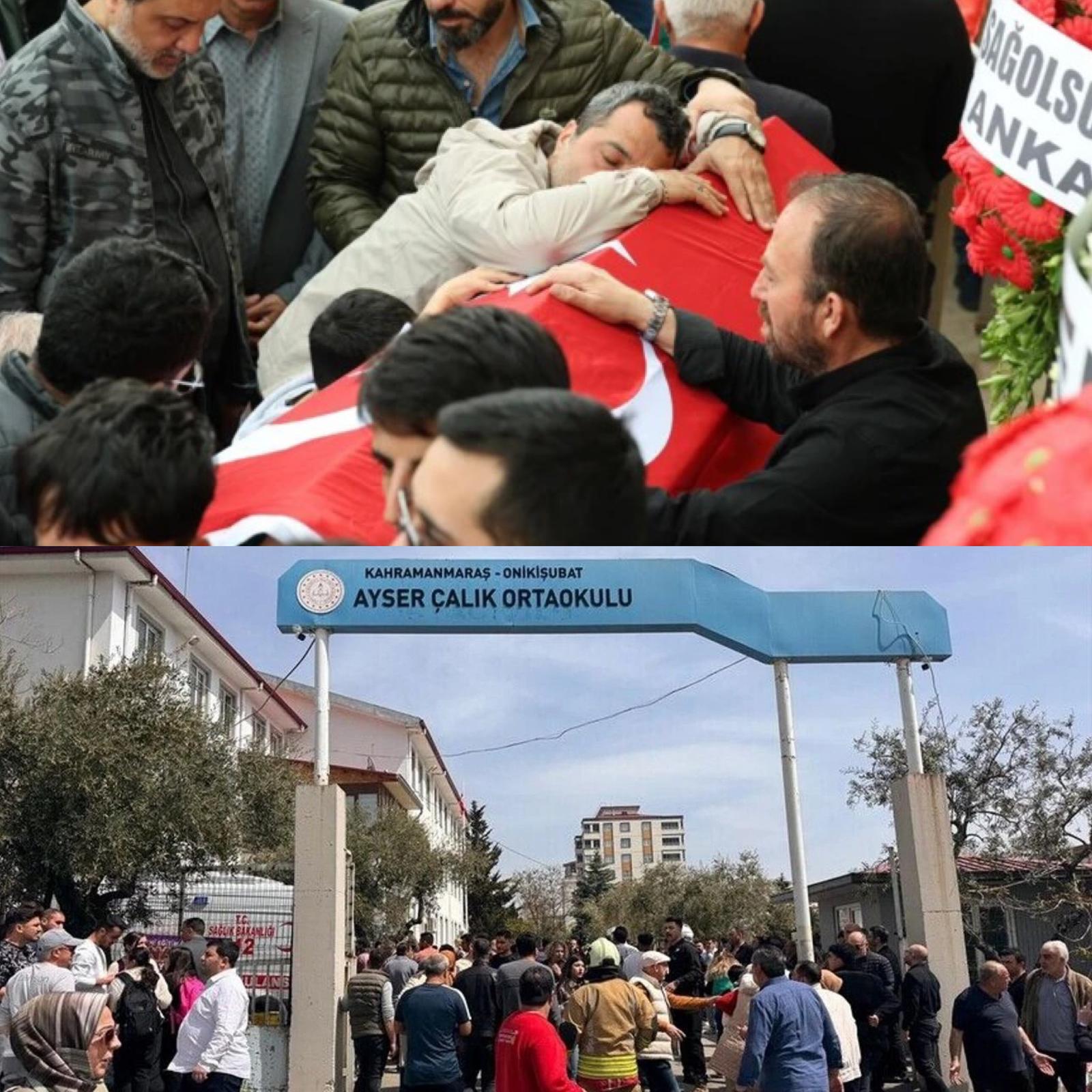
When school shootings first started in the US, I was very surprised. I read all the in-depth analyses and listened to all the commentary. I couldn’t make sense of it. It seemed strange and absurd that in a country we perceive as the most developed, like the US, young kids could acquire weapons and, driven by the most savage emotions, storm their own schools and kill dozens of kids, teachers, and school staff. I couldn’t comprehend it.
Then, as these events became increasingly frequent, we all realized that they were no longer individual ‘tragedies,’ but rather a systemic societal failure. We understood that the problem wasn’t just a few ‘sick individuals,’ but a combination of extremely high access to weapons, a weak safety culture, the inability to manage threat signals in a timely manner, and political deadlock. Because thousands of kids have lost their lives in this struggle, and continue to do so, the CDC* states that gunshot wounds are no longer just one of the leading causes of death for kids aged 1-19 in the US, but the direct leading cause of death. Education Week is even tracking shootings resulting in injury or death in K-12 school settings as a separate annual report in 2026; this alone shows how ‘routine’ such events have become.
A Sign of Internal Decay
The most shocking aspect for the US is this: it’s not an unpredictable natural event. According to the CDC’s study on school-related violence, the weapons used in school-related homicides and suicides often come from the perpetrator’s home, friends, or relatives; moreover, about half of the attackers give some kind of warning signal beforehand. So, the problem is often not a situation that ‘suddenly explodes without any warning,’ but rather accessible weapons and unseen and unmanageable risk signals.
This situation in the US clearly shows us that in a country perceived as the most developed in the world, they cannot even protect their own kids, and more importantly, how the society is decaying from within. This decay leads to the rise to power of people like Trump and the country rapidly sliding towards the brink of collapse.
Now let’s turn to Türkiye and the new school massacres. Similar events to those in the US occurred first in Şanlıurfa on 14 April, and then a day later in Kahramanmaraş.
School Massacres in Türkiye Last Week
- Gun Attack on a School in Kahramanmaraş: In Kahramanmaraş, a 14-year-old 8th-grade student carried out a gun attack at Ayser Çalık Middle School, killing 10 people; it was announced that the attacker died from a major blood vessel injury resulting from being stabbed in the leg by a parent.
- Gun Attack at a High School in Siverek: In Siverek district of Şanlıurfa, a person who entered Ahmet Koyuncu Vocational and Technical Anatolian High School with a gun opened fire, injuring 16 people, including 10 students, four teachers, a police officer, and a canteen operator.
Mistakes Made in Türkiye’s Education System Since its Establishment
The education policy of the last 24 years seems like an endless chain of trial and error on the kids of a country. The problem is not just the frequent changes to the system; it is that each change is presented as a ‘major reform,’ only to be quietly patched up or effectively abandoned a few years later. From the 4+4+4 system to exam systems, curriculum revisions, school types, and transition models, the picture is this: There is no stability, no institutional seriousness, no long-term vision. Education has become a subject of daily political interference. Significant steps have been taken, such as extending compulsory education to 12 years, but the subsequent implementation has been inconsistent.
Buildings were constructed, signs were changed, names were altered, and exams were modified; but a lasting system prioritizing quality could not be established. This is because education policy was implemented not according to pedagogical needs, but through sudden political and administrative decisions made centrally. The process of abolishing TEOG (the national high school entrance exam) is one of the most striking examples of this. In 2017, the system was suddenly abolished; the model that replaced it was again presented as having ‘solved’ the problem. If a transition system that determines the fate of millions of students in a country can be so easily abolished and redesigned, then the issue is not reform, but institutional disarray.
Quality cannot keep pace with quantity.
The argument frequently used by proponents is: “Right, but the number of schools, teachers, and classrooms has increased.” Yes, it’s true that there has been an expansion in accessibility. But this isn’t the whole picture of success; in fact, it’s only a starting point. The real question is: How much has this massive expansion actually enabled kids to learn better? OECD assessments of Türkiye acknowledge that numerous reforms have been implemented in the last twenty years to improve access and quality; but they also indicate that the system needs careful monitoring in terms of outcomes, equity, and implementation. So, what we have here isn’t a ‘stable success story,’ but a highly interventionist system producing limited results.
All this structural manipulation, all this political noise, all this talk of a ‘new model’ has resulted not in a leap forward, but in a fluctuating, limited, and fragile performance. What’s even more disturbing is this: the price of educational failure is paid not by those making the decisions, but by the students. The minister changes, the model changes, the curriculum changes, the exams change, but the kids taking the exams remain the same. Each generation struggles with the weight of a new ‘reform’ on top of the unresolved problems of the previous generation. Therefore, looking at the education report card of the last 24 years, my conclusion is this:
Education was used not as a seriously managed public policy, but as a political showcase constantly interfered with. Quantity was increased, but quality was not established. The system was expanded, but trust was not built. Most importantly, kids were not provided with a predictable, fair, and high-quality education system.
Recent examples
School massacres are essentially a mirror of this systemic failure and collapse in education. When we look at the history of school massacres in Türkiye, we can observe that the vast majority have occurred in the last 24 years (see: https://tr.wikipedia.org/wiki/T%C3%BCrkiye%27deki_okul_sald%C4%B1r%C4%B1lar%C4%B1_listesi) .
The list you will read in this link chronologically lists the attacks that occurred in state and private K-12 (primary, secondary, and high school) schools, as well as higher education institutions and school buses in Türkiye. These situations are excluded from the list (events before the 1980 military takeover are mostly excluded): incidents resulting from police intervention and suicides or suicide attempts involving only one person.
Now, let’s come to the present. I read one of the best analyses of the student attacks that resulted in deaths in schools in Şanlıurfa Siverek and Kahramanmaraş last week on Bianet, which you can access via this link: https://bianet.org/yazi/okul-baskinlari-ne-anlatiyor-ne-anlatmiyor-318761 . I am sharing a quote from this article:
The student attacks that resulted in deaths in schools in Siverek and Maraş in Türkiye have caused justified outrage and concern in society. To understand this new and shocking situation, looking at the decades-long experiences of the United States, the country where this phenomenon is most intensely experienced and researched, and what lessons they have learned from these events, may be a way of understanding; Because thousands of academic and multidisciplinary studies refute the general belief that these acts are a sudden ‘random fit of rage;’ on the contrary, they show that the event is a structural crisis with sociological, psychological, economic, and increasingly digital dimensions (in the context of Peter Langman’s books Why Kids Kill: Inside the Minds of School Shooters and School Shooters: Understanding High School, College, and Adult Perpetrators). The issue has several layers.
Looking at individual and psychological reasons, it is seen that perpetrators often experience deep social isolation and negative childhood traumas such as domestic violence or neglect. Textual analyses and psychological profiling reveal that these individuals carry much higher levels of ‘humiliation,’ ‘desire for revenge,’ and ‘narcissistic vulnerability’ in their inner world compared to ordinary people, according to research in the USA. While counterarguments tend to link such attacks solely to clinical psychiatric illnesses like severe schizophrenia, research shows that only a small percentage of perpetrators suffer from severe mental illnesses; most are driven by anxiety, depression, and feelings of exclusion. In this context, many school shootings are actually seen as a ‘public suicide’ ritual where the perpetrator seeks to exact revenge on the system that excluded them before ending their own life.
The perpetrators are overwhelmingly male.
From a sociological perspective, the most striking aspect of the issue is that almost all of the perpetrators are male. This situation is often interpreted through the lens of violence being frequently associated with ‘impaired masculinity.’ The school environment has a brutal hierarchy that dictates certain standards of masculinity, such as physical strength, popularity, and social success. Today, this is an even more prevalent phenomenon. Young people who are bullied, excluded, or rejected perceive this as a direct attack on their masculinity and identity. Research suggests that resorting to weapons and taking over the school is a way for these young people to rebuild the power and prestige they’ve lost, portraying themselves as dangerous figures. Surveys of students also indicate that the attacks are rooted in feelings of ‘revenge against those who hurt them’ and ‘being bullied.’ The ‘General Tension Theory in Criminology’ states precisely this: “Young people who fail to meet their expectations and experience injustice and humiliation at school, unable to control their anger, adopt violence as a rational solution.”
On the economic and political level, it has been determined that such acts of violence are closely linked not only to poverty but also to income inequality and ‘relative deprivation.’ Being in high-income and competitive environments but unable to share in that prosperity or status creates a deep sense of anomie among young people. This is an undeniable fact. In environments where institutional trust is weak and justice is perceived to be lacking, young people tend to solve their problems on their own, through violence. I would like to add a parenthetical note here: with the digitalization and increasing privatization of education, I observe a growing tendency among teachers to avoid problems rather than solve them. Nobody really wants to bother. Furthermore, the “code of silence” in schools—students not reporting problematic behavior to adults for fear of being seen as informers or due to a lack of trust in the administration—prevents the prevention of impending disasters.
Digital platforms portraying perpetrators as ‘saints’
Perhaps the most vital new parameter to consider when interpreting the situation in Türkiye is the brutal realities of the digital world. Young people are now influenced not only by their physical environment but also by borderless global digital subcultures. In the dark corners of the internet, there are numerous misanthropic and nihilistic echo chambers that glorify violence and mass murder, portraying former perpetrators as heroes or ‘saints.’ Algorithms can quickly radicalize an outcast and angry young person at school, drawing them into these communities that aestheticize violence. Furthermore, the media’s dramatization of events and its portrayal of perpetrators as notoriety creates a triggering effect known as ‘media contagion.’ News of an event can lead other at-risk youth to emulate similar actions in the following weeks.
One more thing: people naturally look at the media culture in Türkiye, the production of masculinity, the mafia-violence monopolies, and gangs, and wonder what other consequences they might have. Indeed, the state of society is so disastrous that it’s impossible to describe. Consequently, we cannot discuss healthy generations from this perspective.
A positive school climate is a necessity.
In conclusion; To interpret these tragic events in Siverek and Maraş solely as cases of local indiscipline would be a grave mistake. The American experience shows us that intense pressure on young people, the devastating psychological effects of peer bullying, shattered social ties, and digital radicalization mechanisms all combine to make school violence inevitable. The family factor is also added to this. What kind of family you raise and what you encourage becomes crucial. In Türkiye, simply increasing security personnel or installing metal detectors is insufficient and ineffective in stopping this dangerous trend. It is imperative to place the focus of education on building a positive school climate where students feel valued and treated fairly. In short, a truly human-centered education is essential. It would be more appropriate to prioritize the real impact of education over the ideological sphere. Otherwise, the spread of a youth profile that feels it has nothing to lose and views violence as a display of power is inevitable. And such a profile is openly proclaiming its presence everywhere.
We will, of course, learn more details about what happened in Siverek and Maraş. This doesn’t negate the underlying causes. Because cultural differences are also profound in such events, but when considered in terms of ‘location,’ the stories happening in the US are not far removed from here.
Comparison of Türkiye and the US
When comparing Türkiye, it is necessary to make a very clear distinction: We are not comparing two identical cases from the same country. In Türkiye, there is violence within schools, attacks on teachers, student violence, and even individual cases of firearms; but there is no pattern of regularly recurring, highly visible, mass school shootings like in the US. Recently, there have been very shocking events in Türkiye, such as the killing of a teacher or an armed attack on a school administrator; there have also been protests by teacher unions against school violence. However, these have not turned into a constantly recurring ‘school shooting ecosystem’ like in the US.
One of the most important reasons for this is the difference in access to weapons. According to the Small Arms Survey’s 2017 estimate, the number of firearms in the hands of civilians in the US is 120.5 per 100 people, while in Türkiye it is 16.5. This number is not negligibly low in Türkiye; But there’s a huge gap compared to the US. Moreover, the licensing regime shows that there’s an administrative permit structure for carrying and possessing firearms in Türkiye; meaning that even though there are problems in Türkiye, daily civilian access to firearms and the cultural legitimacy of firearms are not at the US level.
Lest we fall into the complacency of thinking, “It won’t happen here.”
In the US, school shootings are largely a structural public safety crisis resulting from the gun regime and political paralysis. In Türkiye, however, school violence appears to stem more from erosion of authority, disciplinary problems, social polarization, youth violence, and weak institutional prevention mechanisms. The risk in Türkiye should not be underestimated; however, it is not on the same scale as the problem in the US today.
The US has transformed into a gun-wielding society unable to prevent school shootings. Türkiye is not yet at that point; but if it underestimates school violence, it could be dragged to a much worse point.
In short, Türkiye is not as bad as the US; but it should never fall into the complacency of thinking “it won’t happen here.” Because school safety doesn’t collapse overnight; first, small acts of violence become normalized, then major disasters become possible.
How can we prevent it?
I will not address how to fix the education system in Türkiye in this article. That is a topic for another blog post altogether. To avoid further lengthening this already lengthy discussion on school massacres, and to prevent it from escalating into a structural public security crisis like in the US, I will briefly outline here how to take precautions:
1) Anything that fuels violence in society negatively impacts young people. Violent TV series and films should be banned, and broadcasts promoting and educating about social peace should be consistently promoted. These bans should apply not only to Turkish television channels but to all channels, including digital platforms.
2) Access to the information and manifesto-style guidance of sick and toxic individuals abroad should be prohibited, and measures should be taken to prevent kids and young people, who are particularly vulnerable, from being influenced. Elliot Rodger is a prime example. In May 2014, he killed six people in a stabbing and shooting attack in Isla Vista, California. Before committing suicide, the 22-year-old uploaded a ‘revenge’ video to YouTube and sent a lengthy autobiographical document to about two dozen acquaintances. The fact that an online community known as ‘involuntary bachelors’ or incels, who blame women for their sexual failures, declared Elliot Rodger a hero and stated they were following in his footsteps, has triggered teenagers worldwide who suffer from similar psychological problems. They even found a picture of Elliot Rodger on the WhatsApp profile of İsa Aras Mersinli, who perpetrated the Kahramanmaraş massacre.
3) Restricting access to weapons is crucial here. Even police officers must prevent the creation of mini-arsenals in homes. Those with gun permits should be limited to one weapon, and these weapons should be kept in a secure safe inaccessible to anyone. Otherwise, kids who know their parents’ lifestyles will take advantage of the slightest carelessness of their elders to obtain these weapons and commit massacres. Those who do not comply with this secure safe rule should have their weapons confiscated and be prohibited from acquiring weapons.
4) Schools need to be redesigned so that kids enjoy learning. Furthermore, bullying and any behavior that incites violence among kids must be prevented.
5) Kids and young people with excess energy need to be directed towards sports in a way that allows them to channel this energy in the best way possible, contributing to their health and personal development. They should also be encouraged to enjoy sports. Professional-level participation isn’t necessary; proficiency in at least one sport is sufficient. Furthermore, kids should be introduced to fundamental sports like gymnastics and swimming from a very young age. Regular participation in sports helps kids and young people release negative energy.
The entire system needs to be overhauled
In conclusion, the first signs of trouble for a country like the USA, which is heading downhill, were problems in the education system and school massacres. When similar events began to occur in Türkiye, we all became worried.
Our education system, which has been in disarray for the last 24 years and has seriously declined in terms of quantity, needs to be reformed as soon as possible. Otherwise, the country will be dragged into an irreversible collapse.
For the continuity of the Republic of Türkiye and for ensuring sustainable development and progress in the country, our education system needs to be completely overhauled by highly qualified individuals. In doing so, we can take as a reference the good examples from our past, such as the Village Institutes.
Transformation in the education system is the most important factor in changing our country’s unfortunate fate. We possess all the vision, financial, technical, and human resources necessary to do this. All that is needed is for qualified and patriotic individuals to be given the opportunity.
Note: I used ChatGPT and Bianet Communication Network while preparing this text.
* CDC is an abbreviation for Centers for Disease Control and Prevention. Roughly translated into Turkish: US Centers for Disease Control and Prevention.
It is a public health agency under the US federal government. Its main functions include:
- Monitoring epidemics and infectious diseases
- Collecting data on death and injury
- Publishing guidance on vaccines, safety, and health
- Conducting public health research