
Each has dozens of subfields and areas of expertise. You can find thousands of reports written on these topics across many countries. They’re constantly discussed in full detail at congresses and private meetings alike. I have tremendous respect for all experts working on energy and environmental issues, and I believe these topics must remain at the forefront of discussion for the sake of humanity’s future.
That said, my goal in this article is to give you a general overview in simple language and share my thoughts on the matter.
Let’s start with energy. To simplify, we can divide energy sources into two categories: fossil fuels and renewable energy sources.
Fossil fuels are naturally occurring energy sources like coal, oil, and natural gas, which contain hydrocarbons. They are formed from the decomposition of dead organisms over millions of years in an oxygen-free environment. Fossil fuels are finite resources.
Although there is ongoing debate over the size of coal deposits and oil and natural gas reserves, it’s safe to say that oil and gas won’t last for centuries more. Due to factors like rapid population growth, industrialization, and urbanization, consumption is rising rapidly, and resources are being depleted just as quickly.
Assuming humanity won’t give up the comforts of modern life and the population will keep growing, it’s fair to say that fossil fuel consumption will only accelerate.
Below are two charts that illustrate this situation:
The first shows the historical growth of the global population; the second shows the historical distribution of global energy consumption. From these, you can clearly see how population growth has skyrocketed (from about 1 billion in the 19th century to over 7 billion today), and how the use of fossil fuels—especially since the early 20th century—has increased dramatically (note the overwhelming dominance of oil, gas, and coal in this equation).
Global Population History – source: Angus Maddison
Global Energy Consumption History – source: Vaclav Smil
(Compiled using BP’s 1965 Statistical Review and projections based on needs and future expectations.)
As you can see in the charts, this accelerating consumption must of course be met with supply. In economic terms, every demand must have a corresponding supply. And supply, in this case, means rapidly increasing investment.
According to a Global Data study reported in the 25 August 2012 edition of Sabah newspaper on, investments in oil by major energy companies have surpassed $1 trillion. In recent years, 242 new oil fields have been discovered.
We’ve passed the peak of oil production capacity. While production is increasing, consumption is growing even faster—and oil companies know this all too well. That’s why they’re spending huge amounts of money and effort to search for oil in places they wouldn’t have dared to touch in the past—like Antarctica, open oceans, and areas with heavy oil.
So, as the gap between oil supply and demand continues to grow, how is this gap being closed?
If you’re wondering how all this energy demand is being met, the answer lies in other fossil fuels like natural gas (including LNG and LPG) and coal. This is also evident in the charts above.
One such example is the growing significance of shale gas.
Shale gas refers to small quantities of natural gas trapped in rock formations beneath the surface. The process to extract it, known as “fracking” (hydraulic fracturing), involves injecting water at high pressure to crack the gas-bearing rock layers and release the gas.
In the U.S., environmentalists have heavily criticized the use of chemicals mixed with water during this process, as they may seep into underground water sources and threaten public health. Another concern is that earthquakes have been reported in areas where shale gas is being extracted.
I’d like to share a moment I had this past May outside the Denver Convention Center, which was hosting both the World Renewable Energy Forum and the Natural Gas Congress. I spoke with a group of protestors, and the video clearly shows how sensitive environmentalists are about shale gas:
https://www.youtube.com/watch?v=blYFcXWncy8
Naturally, trend-savvy Türkiye has also begun exploring shale gas.
A Sabah newspaper article titled “Gas Hunt Begins by C-Section” (25 August 2012) reported that Türkiye’s first shale gas exploration would begin in the village of Sarıbuğday in Diyarbakır. The six-month drilling operation was set to begin in the week of 25 August (I’m not sure whether it actually started). The goal is to drill 4,500 meters in this area, located between Diyarbakır and Batman.
The same article claims Türkiye has serious shale gas potential, noting that shale gas turned the U.S. from the world’s largest importer to a major exporter, even surpassing Russia in production. It’s believed that shale gas and oil basins exist in Diyarbakır, Erzurum, and Thrace, with reserves estimated at 20 trillion cubic meters of natural gas and 11 billion barrels of oil.
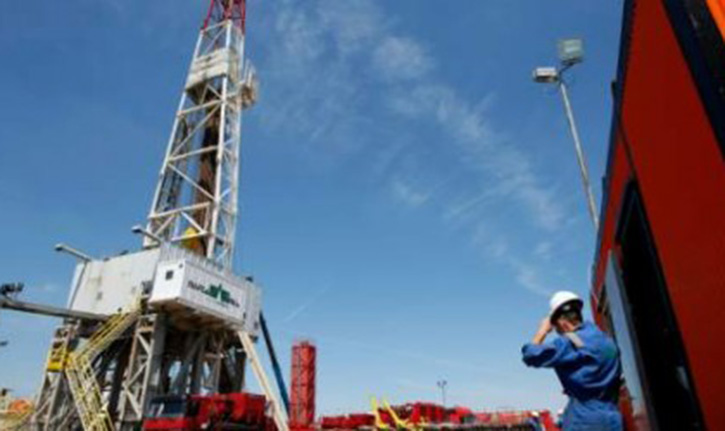
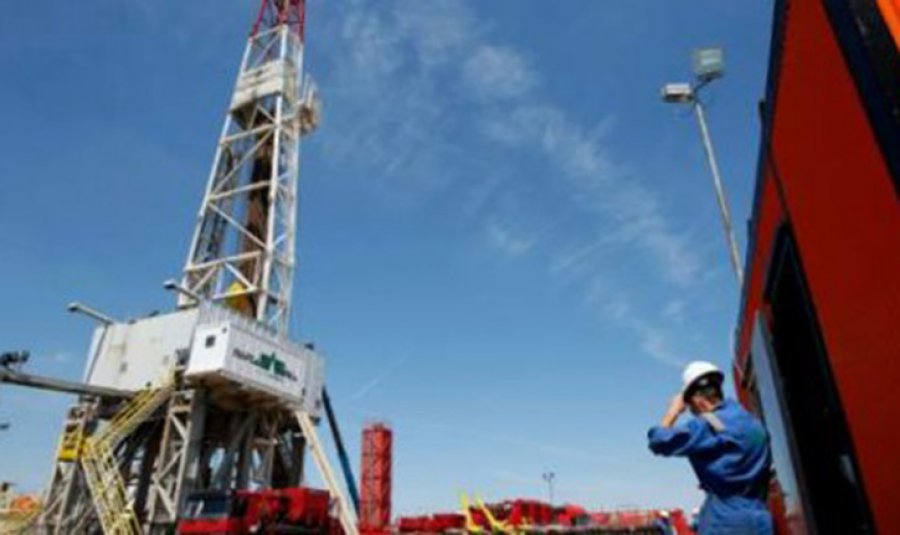
Example of Shale Gas Drilling
As this shale gas example shows, huge investments—totaling trillions of dollars—and great effort are being made to extract oil, gas, and coal. And when I say “great effort,” I mean humankind is now polluting oceans, drilling the poles, and fracturing mountains and rocks to find fossil fuels. In other words, they’re trying everything.
Why?
Because energy companies know that whatever they extract from fossil fuels can be sold instantly in the world’s most profitable market. Prices are rising, and the market is becoming increasingly lucrative—so much so that even meeting demand has become difficult.
Can we say the methods used in this high-demand market are environmentally friendly? We cannot.
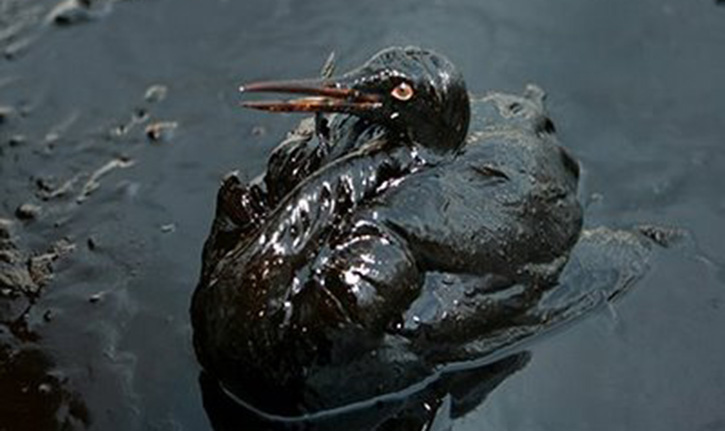
I already mentioned shale gas, but there are many other environmentally harmful methods in use. One unforgettable example is the disaster in the Gulf of Mexico.
Every living creature in the Gulf was affected by the oil spill.
Burning fossil fuels leads to massive carbon emissions and is one of the biggest contributors to environmental pollution. From another perspective, fossil fuels are incredibly valuable resources for humanity. Instead of burning them, they could be used in the petrochemical industry (e.g., for plastics) or in fertilizer production. The late Shah of Iran once said something that sums up the situation perfectly: “Future generations will curse us for burning this oil.” And he wasn’t wrong. Instead of using oil to produce materials that could benefit humanity, we burn it and destroy it. In my view, fossil fuels are precious raw materials. By burning them, we’re not only wasting these valuable resources, but we’re also polluting the environment and disrupting nature’s balance. Here are a few examples: According to Greenpeace, on Sunday, 26 August, the area covered by Arctic ice shrank to a size even smaller than the record low seen during the summer of 2007. Just 30 years ago, the Arctic ice sheet was the size of the Australian continent. But the rate of melting has increased so dramatically that we might lose the ice entirely in the next 20–30 years.
As a result of climate change, we’ve seen an unending series of natural disasters over the past two decades, resulting in millions of deaths. Just off the top of my head: The earthquakes in Türkiye that struck in 1999 were followed by major earthquakes and tsunamis in Indonesia, Pakistan, and Japan; hurricanes in the U.S., Haiti, and the Caribbean islands; landslides in the Philippines and other Pacific countries; flooding caused by excessive rainfall in many parts of the world; and the thousands of deaths caused by extreme heatwaves… The list goes on and on.
In other words, “Mother Nature” first tugged on our ear for disrupting the balance. Then she started slapping us. And if we don’t stop, she’ll eventually deliver the final, fatal blow.
Some people talk about the end of the world. Personally, I believe the Earth—though it may take billions of years, will recover and repair the damage on its own. If things continue as they are, it’s humanity that will disappear. Just like the dinosaurs, we will vanish. And in that moment, all the material things we obsess over today will lose all meaning. Let me close with a powerful quote from the Native Americans, who lived in harmony with nature and made it a way of life: “Only when the last tree has been cut, the last river has been poisoned, and the last fish has died, will you realize that money cannot be eaten.”
Finally, despite this bleak picture, I have not lost hope. I truly believe that if we start doing the right things now, we can ensure a livable future for our children and the generations to come.
And if you’re wondering what we should do to turn things around from here—
Well, I kindly ask you to stay tuned for my next article.
Tag: ecology