When I first started my career in 2001, I never imagined I would enter the tourism industry. While studying Finance in Canada, my only goal was to become a banker. I had planned my career accordingly. But sometimes you decide and then find yourself on a completely different path.
After graduating in 1999, I worked for a while in Generali Insurance’s U.S. operations. Then, as agreed with my family, I returned to Türkiye, and my first job was going to the military. On the first day after discharge, I found myself assigned to the opening of the Ritz-Carlton hotel. It was a surprise for me as well. Although, in my opinion, someone trained in finance can work comfortably in any real sector because one of the three crucial pillars of any business is finance. If there is a disruption in finance, marketing, or operations, the business cannot sustain itself in the long run.
I won’t go into too many details, but after the professional managing the Ritz-Carlton project left, my father said to me, “I want you to take care of this.” Suddenly, I found myself in the tourism sector. I initially resisted, since I lacked experience, but after reassurances like “Don’t worry, we’re here if you get stuck,” I began talks with the Ritz-Carlton Hotel Company and financial institutions.
I took over the job in July 2001, and we opened the hotel in October 2001. It was truly an unlucky period. We opened the hotel just 25 days after the 9/11 attacks. When we looked at reservations for 10 September, the hotel was fully booked at 100%, with 50 more customers waiting, and the numbers were rising daily toward the opening. Then 9/11 happened, and all reservations started canceling rapidly. On 6 October, we opened the hotel with only 8% occupancy. One day after opening, the U.S. entered Afghanistan, and cancellations continued.
50% of the hotel’s investment was financed by OPIC, a U.S. financial institution. Between loan repayments and the hotel operating at a loss, those were tough times. We had to take radical measures but eventually managed to keep the ship afloat. After overcoming this crisis, the hotel quickly became one of Türkiye’s important and followed hotels due to its operating standards, investment quality, and location.
I remember trying to stabilize revenue while also scrutinizing every cost. Our options on the revenue side were limited due to the big crisis in Istanbul’s tourism sector caused by factors beyond our control. Among expense items where we could make a difference, energy costs stood out the most.
The first thing we tackled was energy efficiency. We asked ourselves, “What can we do to reduce energy consumption to optimal levels?” I remember working with our licensed electrical engineers and implementing many solutions with the technology available at the time.
Fast forward to 2011, a decade after that crisis and all those experiences. I was working in retail then, having transitioned after five years in tourism. My job was related to food and beverage services in hotels—I was CEO of KFC and Pizza Hut. After 4-5 years of management experience, while these companies were performing at their best, I felt it was time to return to the sector closest to my heart. My last project there was opening the first LEED-certified green restaurant in the Yum International chain. To earn the LEED certification in question, we had to improve energy efficiency, water efficiency, and insulation at the KFC restaurant in Bostancı and build a renewable energy plant. It was a very enjoyable project. Our calculations showed we invested 20% more than a typical investment, but we would recoup this extra cost within three years thanks to savings. After that, all savings were pure profit. Many investors didn’t know this. I gave many interviews through the press encouraging restaurant investors to go green.
Since then, slow but steady progress has been made in this area. Of course, we wish green hotels and restaurants were much more widespread. But at least awareness has grown somewhat. After retail, I entered the solar energy sector. I started with an R&D project. We developed CSP Parabolic Trough technology that produces superheated steam and electricity from solar power at our company Hitit Solar. We installed our CSP collector in Denver, USA, showcasing this technology designed by Turkish engineers. After these successes, I sold my shares in Hitit Solar to move from R&D to projects, launching Eko Renewable Energies Inc., or EkoRE for short, company developing projects, EPC, and investments in Solar, Wind, and Biogas.
With EkoRE, we continue to carry out many solar energy projects. As we develop these projects, I’ve always kept in mind how much the sectors I worked in before could benefit from renewable energy. Particularly, the tourism sector has many potential applications. These benefits can be summarized under three main headings:
- ELECTRICITY: Electricity is produced from solar radiation, called Global Horizontal Irradiance (GHI), using Photovoltaic (PV) technology that generates electrons. PV panels can be installed on hotel rooftops, adjacent land, or parking lots to generate electricity. Using PV technology, you can:
a. Reduce or eliminate costs: Distributed generation systems are increasingly important in current energy trends. Instead of drawing all electricity from the grid, the trend is moving toward “generation on-site, consumption on-site.” Therefore, you can reduce or even zero out your electricity costs if you have adequate space (roof, land, etc.). To give an idea, approximately 20 acres (about 20,000 m²) are required for a 1 MW (1,000 kW) installation. A 1 MW system in Türkiye produces over 1.5 MWh of electricity; assuming an average household consumes 2,400 kWh per year (depending on usage), this capacity could cover the annual electricity consumption of roughly 600 homes. Since consumption varies, especially for hotels, I won’t provide a specific algorithm, but such a system could cover a medium-sized hotel’s needs. Everyone in the sector knows the value of such savings during summer, when electricity consumption and prices peak.
b. Generate income: During winter months with lower consumption, surplus electricity can be sold to the distribution company, creating additional revenue. This is possible through license-free generation. You use electricity for your hotel and sell the surplus back to the grid at 13.3¢/kWh. This can be a valuable revenue stream, especially for southern hotels that close or operate with minimal staff in winter.
Investment costs fluctuate. Currently, a 1 MW facility costs about $1.2 million. However, the return on investment can drop to 6-7 years in areas with high solar irradiation at the 13.3¢/kWh rate. After that, all revenue is pure profit. Considering panels come with a 25-year warranty, this can be a long-term income source for hotels.
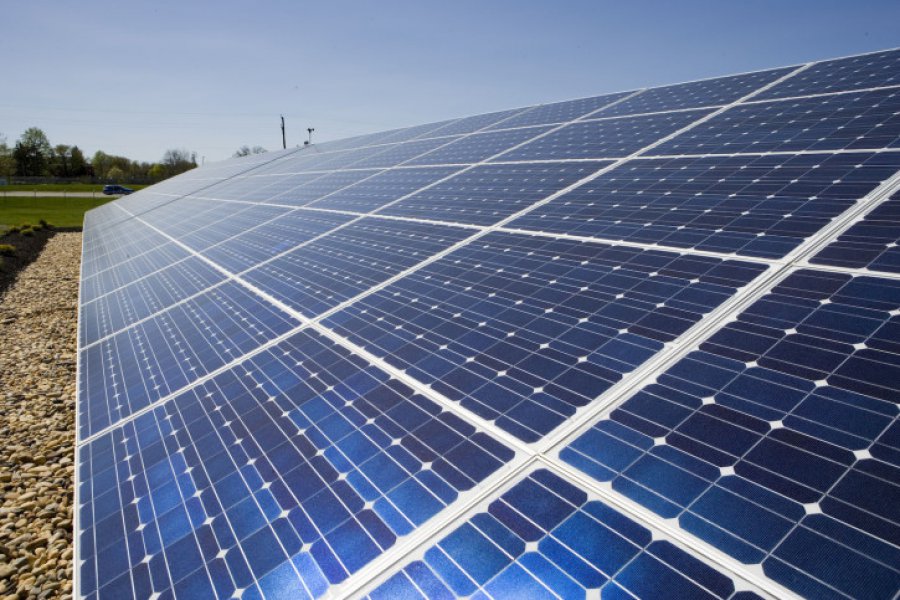
There are two main types of PV technology: crystalline and thin films. Both can be used. Thin-film technology is relatively newer and requires more space (about 30 acres for 1 MW capacity), so crystalline technology—specifically polycrystalline panels—is generally preferred as they’re more cost-effective despite slightly lower efficiency compared to monocrystalline panels. However, thin film technology can be preferred in hotter climates due to less efficiency loss at high temperatures. If you have design concerns for your hotel, flexible thin-film panels are also an option—they’re lightweight, break-resistant, and especially suitable for roofs. Here are some examples for visualization:
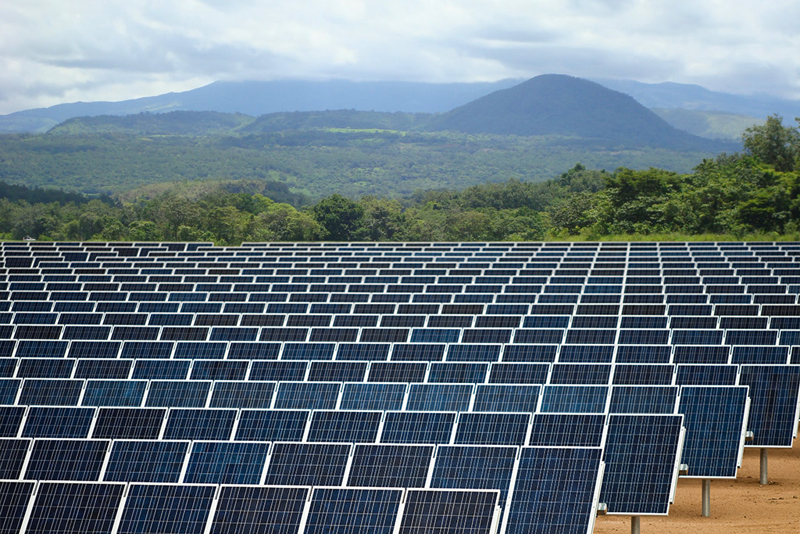
A solar power plant built with polycrystalline panels on land in Costa Rica
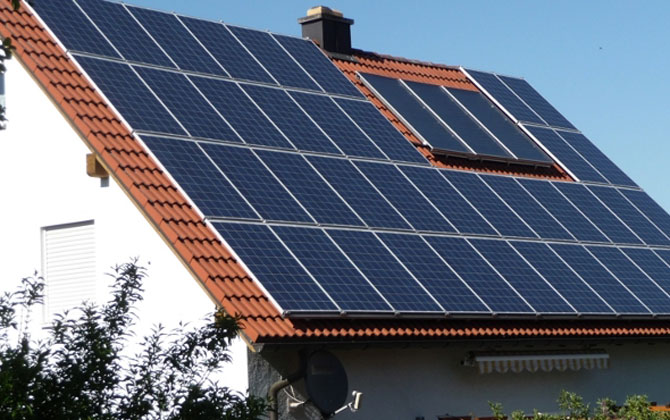
A rooftop application of polycrystalline panels in Uruguay
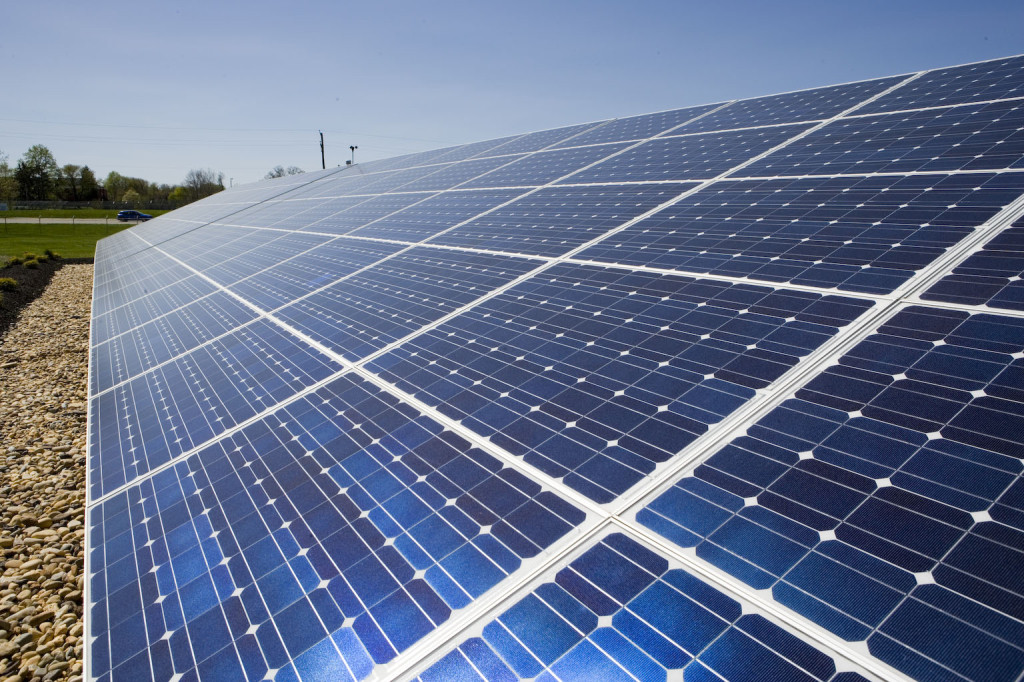
A monocrystalline PV panel application on land
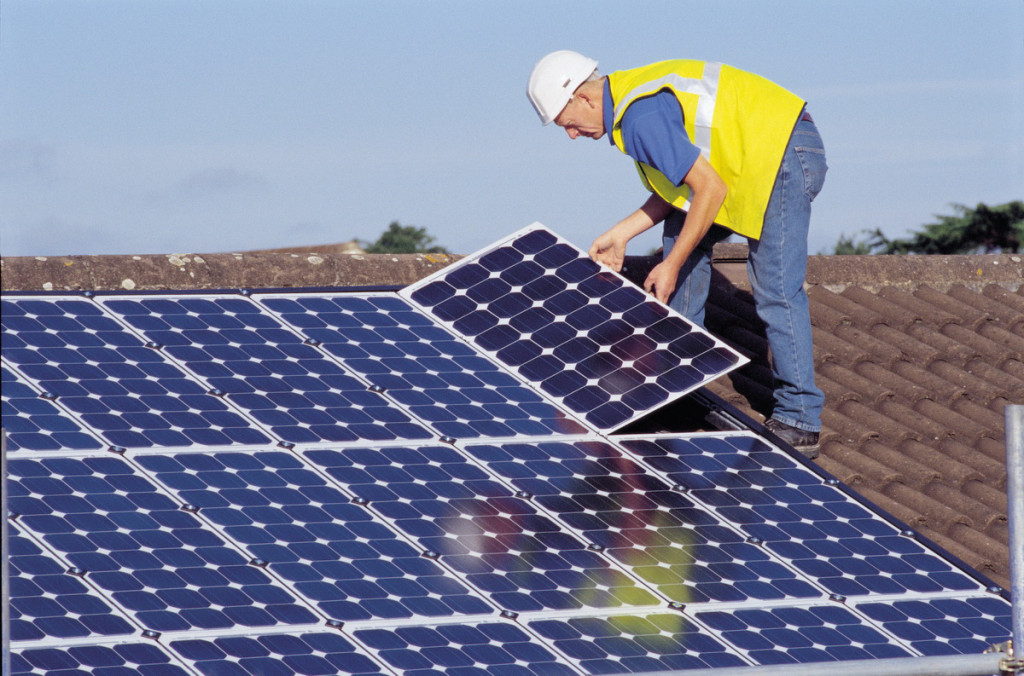
Rooftop application of monocrystalline panels
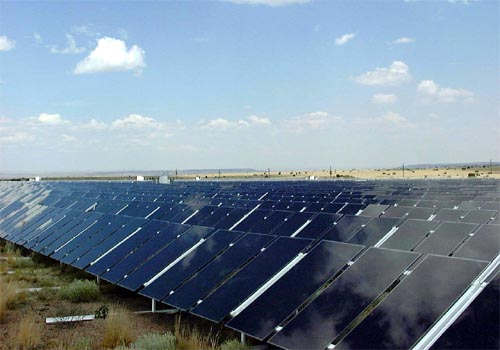
Thin film application on land
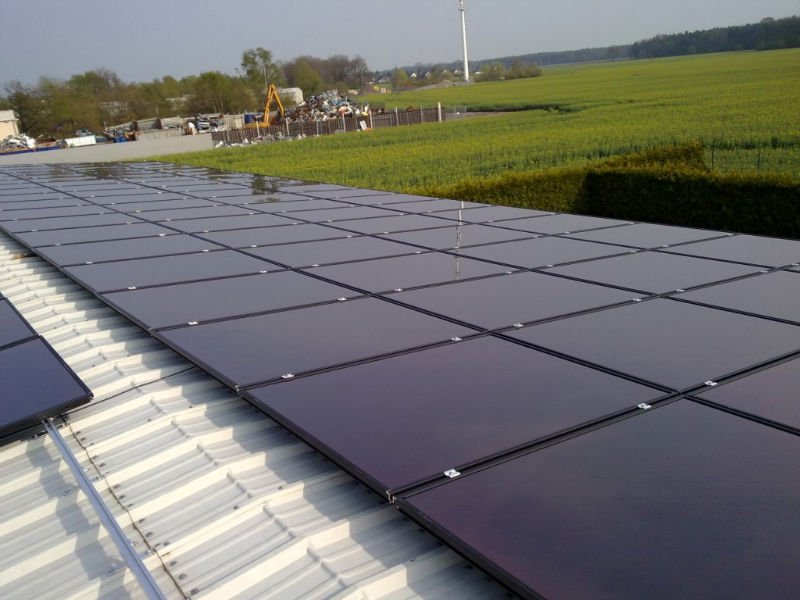
Thin film application on a roof
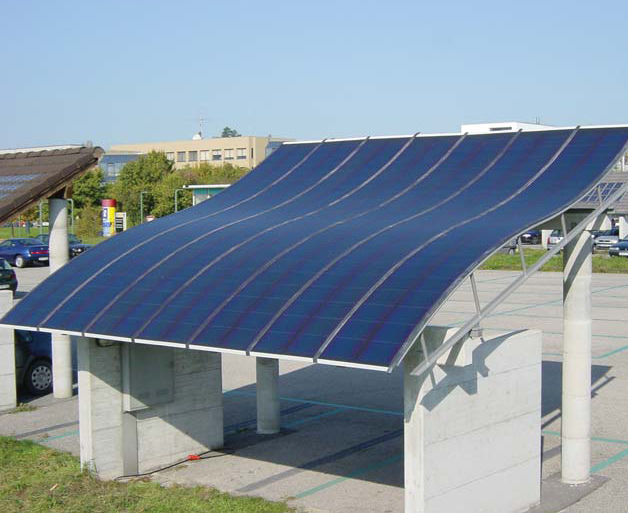
Flexible thin film application on a parking lot
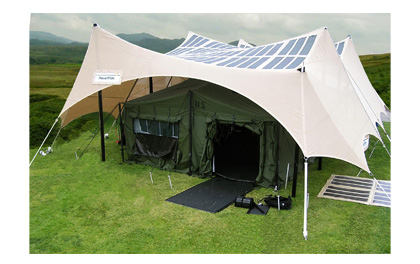
Flexible thin film application on a tent
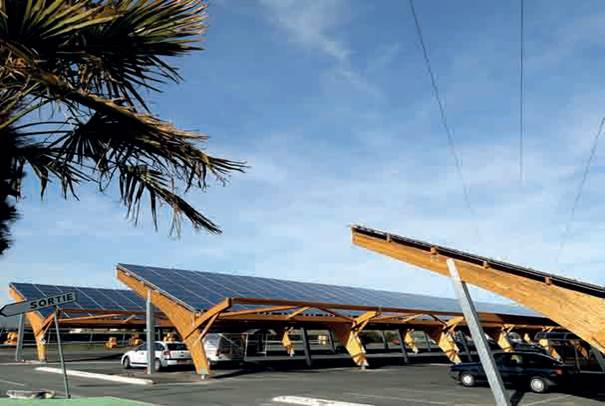
Solar power plant application in a parking lot in France
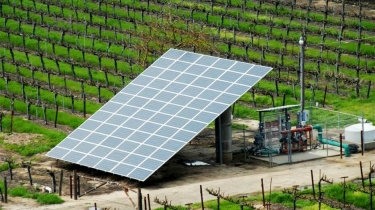
PV-powered agricultural irrigation
2. HEAT/STEAM: Heat and steam can be generated using a different form of solar radiation known as Direct Normal Irradiance (DNI). This type of production is called Concentrating Solar Power (CSP). There are various CSP technologies, but the one most relevant to hotels is Parabolic Trough technology. By harnessing heat, you can serve two main purposes:
a. Heating/Cooling: With Parabolic Trough systems installed on land adjacent to the hotel, the heat generated can be used via absorption chillers (HVAC systems). Especially in the summer—when solar radiation is at its peak, this heat to cool your building results in significant energy savings. There are already studies and successful implementations of this around the world. These systems, often referred to as micro-CSP, can generate heat at the pressure and temperature levels needed for specific applications
b. Hybrid Use: For example, if your hotel currently runs on natural gas, you can build a micro-CSP plant next to it and operate it in tandem with your existing system. In other words, you can boost the volume and efficiency of your heat or steam production by hybridizing it with a micro-CSP collector.
3. CARBON: If you truly care about the environment, you’re probably also thinking about how to reduce your carbon emissions. To protect nature and leave a cleaner world for future generations, we must incorporate solar energy systems into our hotels.
But even if the environment isn’t your top concern, and you’re more focused on short-term personal profit, it’s worth noting that today’s economic systems are shifting toward models that penalize those who harm the environment and reward those who protect it.
For example, reducing carbon emissions can now generate income through carbon credits. You’ll be hearing a lot more about concepts like the Carbon Exchange, Carbon Market, and Carbon Trading in the years to come. The solar energy plant you install will carry a quantifiable carbon reduction value. You can sell this value through various channels for profit. For instance, in Europe, there’s the EU ETS (European Emission Trading Scheme), and each country has its own carbon exchange. Voluntary carbon offset certificates can be traded globally. I recommend researching this area further and consulting with professionals who specialize in carbon markets.
- PR: Beyond financial returns, renewable energy also adds PR value to your hotel. In the long term, this can translate into additional business. You can share with tour operators and travel agencies that your hotel holds green certifications, adheres to a sustainable hotel concept, or operates on renewable energy. These agencies can then pass that message on to your potential guests.
Believe me, in today’s world, more people are becoming environmentally conscious every day. For that reason alone, travelers from various countries may choose your hotel over others. That means additional income for your business.
Finally, I want to remind you that many financing options are available for installing solar energy systems. These include:
a. Grants: If your project qualifies for certain programs, you may be eligible for grant funding from your regional Development Agency. I highly recommend researching this. You can find announcements on the Ministry of Development’s website (http://www.kalkinma.gov.tr/Pages/Tum-Kalkinma-Ajansi-Duyurulari.aspx) or by checking the website of your local development agency. Below is a list of the 26 development agencies currently operating in Türkiye:
* İzmir Development Agency (İzmir)
* Çukurova Development Agency (Adana, Mersin)
* Istanbul Development Agency (Istanbul)
* Mevlana Development Agency (Konya, Karaman)
* Middle Black Sea Development Agency (Amasya, Çorum, Samsun, Tokat)
* Northeastern Anatolia Development Agency (Erzurum, Erzincan, Bayburt)
* Eastern Anatolia Development Agency (Muş, Hakkari, Bitlis, Van)
* Silk Road Development Agency (Adıyaman, Gaziantep, Kilis)
* Karacadağ Development Agency (Diyarbakır, Şanlıurfa)
* Dicle Development Agency (Batman, Mardin, Siirt, Şırnak)
* Thrace Development Agency (Edirne, Kırklareli, Tekirdağ)
* South Marmara Development Agency (Balıkesir, Çanakkale)
* South Aegean Development Agency (Aydın, Denizli, Muğla)
* Zafer Development Agency (Afyonkarahisar, Kütahya, Manisa, Uşak)
* Bursa Eskişehir Bilecik Development Agency (BEBKA)
* Eastern Marmara Development Agency (Kocaeli, Sakarya, Bolu, Düzce, Yalova)
* Ankara Development Agency (Ankara)
* Western Mediterranean Development Agency (Antalya, Isparta, Burdur)
* Eastern Mediterranean Development Agency (Hatay, Kahramanmaraş, Osmaniye)
* Ahiler Development Agency (Aksaray, Kırıkkale, Kırşehir, Nevşehir, Niğde)
* Central Anatolia Development Agency (Kayseri, Sivas, Yozgat)
* Western Black Sea Development Agency (Bartın, Karabük, Zonguldak)
* Northern Anatolia Development Agency (Kastamonu, Çankırı, Sinop)
* Eastern Black Sea Development Agency (Artvin, Giresun, Gümüşhane, Ordu, Rize, Trabzon)
* Serhat Development Agency (Ağrı, Ardahan, Iğdır, Kars)
* Fırat Development Agency (Bingöl, Elazığ, Tunceli, Malatya)
b. Bank Loans: There are two types of bank loans you can access. Due to the positive environmental impact of these projects, and the fact that they have proven themselves financially—banks tend to be open to providing such loans. In fact, thanks to funding from international institutions like the EBRD and IFC, Turkish banks can offer renewable energy loans in various formats. As an example, I recommend looking into TURSEFF loans: http://www.turseff.org/. Since solar power plants can be built in as little as three months, financing the construction period is relatively easier than with other energy projects. That said, it’s still possible to secure loans with terms of up to 10 years, including a 1-year grace period.
As everyone knows, bank loans can be secured in two main ways:
- Project Financing: These loans are granted for the project itself, and the collateral and conditions required vary from bank to bank. To be honest, project financing in Türkiye is often “Turkish-style”—in other words, true project financing (where the project itself is the only collateral) is extremely rare. Banks usually ask the project owner for additional guarantees. In Türkiye, bank loan terms generally range between 5 – 12 years. The documents banks may request also vary, but typically include:
- A detailed breakdown of investment costs
- Customer feasibility study
- Electricity Generation License for the plant (or call letter for unlicensed projects)
- TEİAŞ Grid Connection Opinion (or TEDAŞ approval for unlicensed projects)
- Environmental Impact Assessment (EIA) Positive/Not Required decision (or letter confirming the land is non-agricultural for unlicensed projects)
- Project Introduction File and other necessary licenses and permits
- General company background and financial data of the investor
- Balance Sheet Loan: These are loans granted to companies that own the project. Companies can obtain them based on their existing credit limits.
Given that these plants can be operated and maintained at a very low cost (especially when it comes to panel cleaning, which is crucial for operations), it’s not far-fetched to predict that more hotels in Türkiye will begin installing them every year. The advantages are both financial and environmental. It’s safe to say that newly constructed hotels will increasingly adopt green hotel concepts from the start, while existing hotels will transition to green operations with the help of solar power plants.
Lest we forget: When it comes to energy, the right thing to do is to minimize energy consumption through energy efficiency efforts, and to meet existing energy needs through renewable energy source, solar energy first and foremost.
Tag energy