The day before I left for Iceland, I was chatting with my twin brother, Baran, and he shared two very interesting pieces of information. Baran said:
“I met an Icelandic model, and she told me the following about Iceland: Their country’s English name is Iceland, meaning ‘Land of Ice.’ Its northern neighbor is called Greenland. The reason the country, located in the poles and mostly covered in ice, is called ‘Greenland,’ while the country further south, with its mild climate, is called Iceland, is because the Norwegians, when they discovered this region in the past, deliberately named it ‘Land of Ice’ to discourage more visitors to the island, which was more habitable. They also called the much colder, icy country ‘Greenland’ to deter would-be travelers. In a sense, there’s psychological manipulation involved. Of course, the names of the countries have remained the same since then.”
So, Iceland isn’t the Land of Ice as people say. Of course, it’s cold. The temperature fluctuated between -1° – 5° C. while I was there. However, the -20° C. I was accustomed to in Canada certainly didn’t exist there.
“Killing Turks is Free”
Another interesting piece of information I learned was the Icelanders’ “Killing Turks is Free” law for Turks. This law remained in effect until the 1970s, but then, realizing this, the Icelanders repealed this absurd, centuries-old law. I looked up Baran’s statement online, and indeed, such a law existed.
According to the news article at http://www.hurriyet.com.tr/izlandada-turk-oldurmek-serbestti-27174137 , in 1627, the Ottoman fleet led by Murat Reis captured around 400 Icelanders in about 26 days. Due to kidnappings in Grindavik, Austfiroir, and Vestmannaeyjar, the killing of Turkish citizens who landed in Iceland in 1627 was permitted.
However, no Turkish citizens were killed due to this law. In fact, the law was forgotten in later years. This law, which allowed the killing of Turks, was repealed in the 1970s. For more detailed information, you can visit http://uskudar.biz/tarih/türk-denizciliği/kuzey-denizinde-türk-korsanları . The original source is http://www.ismennt.is/vefir/eyglob/sagave/tyrkir.html .
So, off I went.
This intriguing information made me even more curious about the country. Finally, I flew to Copenhagen on the morning of Friday, 23 November. Of course, I couldn’t fly with a clear conscience, as I had to answer every phone call until takeoff. After hanging up the last phone call in frustration, I couldn’t sleep because I’d slept for two hours on the plane the night before. I was happy to have a layover in Copenhagen. Frankly, I don’t like large, chaotic airports like Heathrow in London or Schiphol in Amsterdam. Making these kinds of transfers from there can be a real ordeal.
I landed in Copenhagen. Danish police officers were standing outside the plane, waiting for passengers, performing passport checks. Frankly, these European practices really bother me. They make you feel like you’ve arrived from a third-world country. Just as I was leaving the plane, I handed my passport to the Danish policewoman and explained that I would be flying to Reykjavik, the capital of Iceland, via a connecting flight. She asked me if I had an Icelandic visa. I explained that a Schengen visa, not an Icelandic one, was sufficient for my arrival. She initially said that wasn’t true, but then hesitated, asking the officer next to me something in Danish. After receiving the answer to her question, she turned to me and said, “Sorry, I confused you with the Faroe Islands. Yes, you can enter Iceland with a Schengen visa.” After checking my visa, she handed me my passport and wished me a safe trip.
I was last in Copenhagen for Galatasaray’s UEFA Cup victory in 2000, so I have a special fondness for this city. Because the airport was large and uncrowded, I felt comfortable navigating the airport. All passengers had specially designed seats with cushions. The floor was hardwood. In this comfortable environment, I happily opened my laptop and answered my messages and phone calls. Then, I went to the gate for my flight to Iceland. To simplify my work, I was traveling with only the largest suitcase and backpack I could fit in the overhead compartment. I boarded a plane for Reykjavik.
Arrival in Reykjavik, the capital
After another comfortable two-hour flight, I finally landed in the capital. My first order of business after leaving the gate was to go to the car rental agency. After renting the car, I headed to the location. My first car was a Nissan Pathfinder, which I bought in Canada during my university years. In a place like Iceland, which is close to the Canadian climate, I was pleased to find Nissan’s Jeep, the Qashqai, my choice among so many other vehicles.

After final checks, I was ready to travel. As I always do on my way from Keflavik Airport to the capital, Reykjavik, I turned on Icelandic radio and started listening to Icelandic songs out of curiosity. I found it interesting, and I enjoyed it.
After about an hour’s drive, I arrived in Reykjavik. I’m generally good at choosing hotels and restaurants. The hotel I chose exceeded my expectations. I recommend the Canopy Hotel, operated by Hilton, to everyone. It received top marks from me for its design, quality of service, location, and guest comfort. The price is a bit steep, but you get what you pay for.
Harpa and the “Golden Circle”
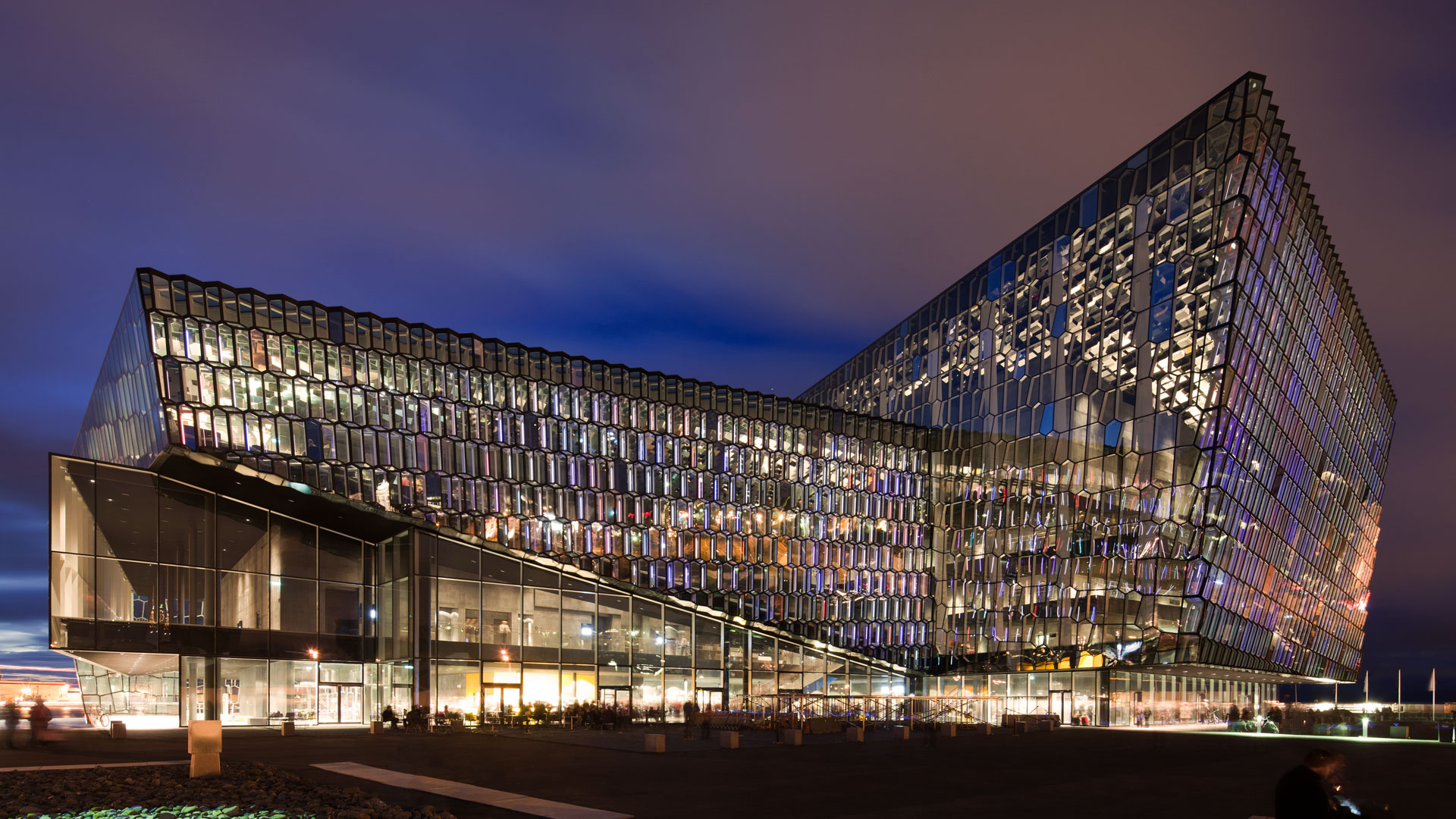
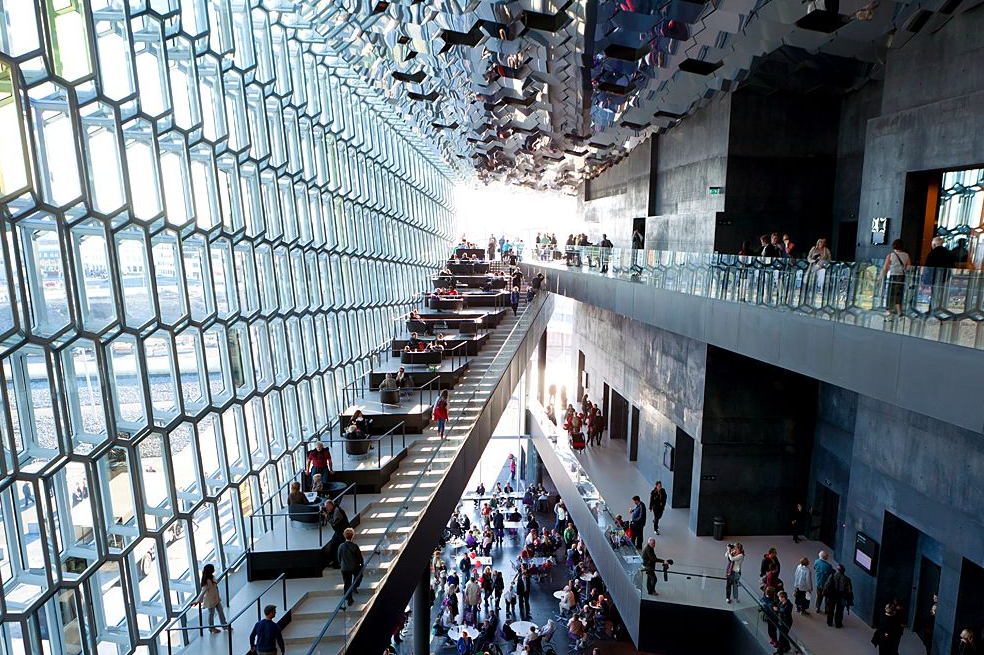
As soon as I dropped off my luggage at the hotel, I went out and walked to Harpa, one of the capital’s most striking buildings, a social and cultural hub. Designed by the Danish architectural firm Henning Larsen Architects and Icelandic artist Olafur Eliasson, it won the European Union’s Mies van der Rohe Design Award. Featuring colored glass and lighting, its exterior was modeled after Iceland’s landforms. It has been the setting for the Netflix series Black Mirror and Sense8. You can see images of Harpa below:
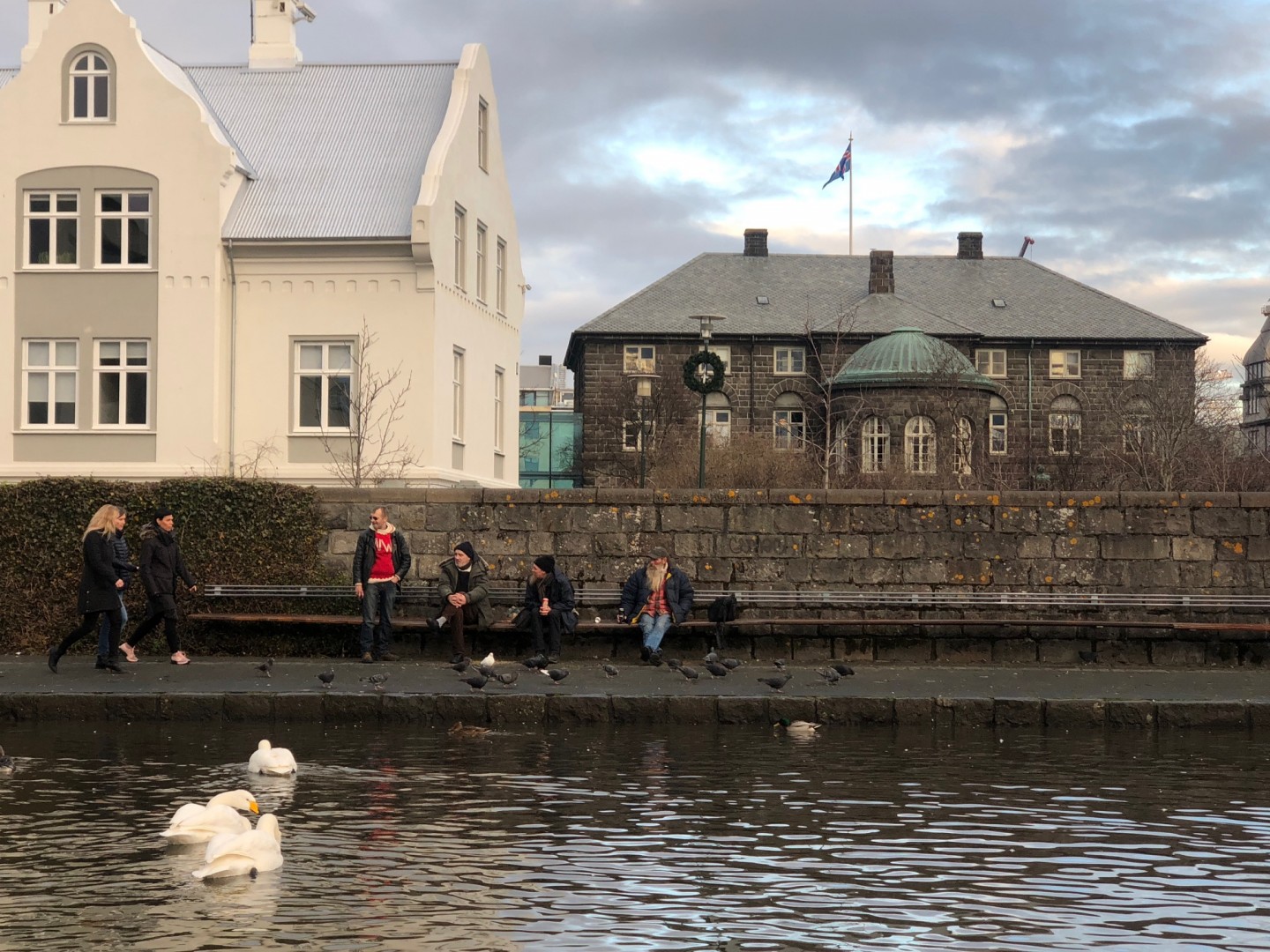
After leaving Harpa, I had a short city tour and then a meal at Grill Markadurinn. The grills at this restaurant were excellent. You can make a reservation at http://m.grillmarkadurinn.is/en/ . I’d like to share two photos taken in the city center during the tour:
Afterwards, I returned to the hotel and rested. The next morning, I woke up to calls from Istanbul. After answering the calls and having breakfast, I packed up and hit the road.
I met a friend there and as planned, embarked on Reykjavik’s classic ‘Golden Circle’ tour. This tour includes three of Iceland’s most popular tourist attractions: Gullfoss Waterfall, the Geysir Geothermal Region, and Þingvellir National Park. The route covers approximately 250 km and follows a circular route from the capital, Reykjavik, to the center of Iceland and back. We planned to make a semicircle and stay in the southern city of Vik.
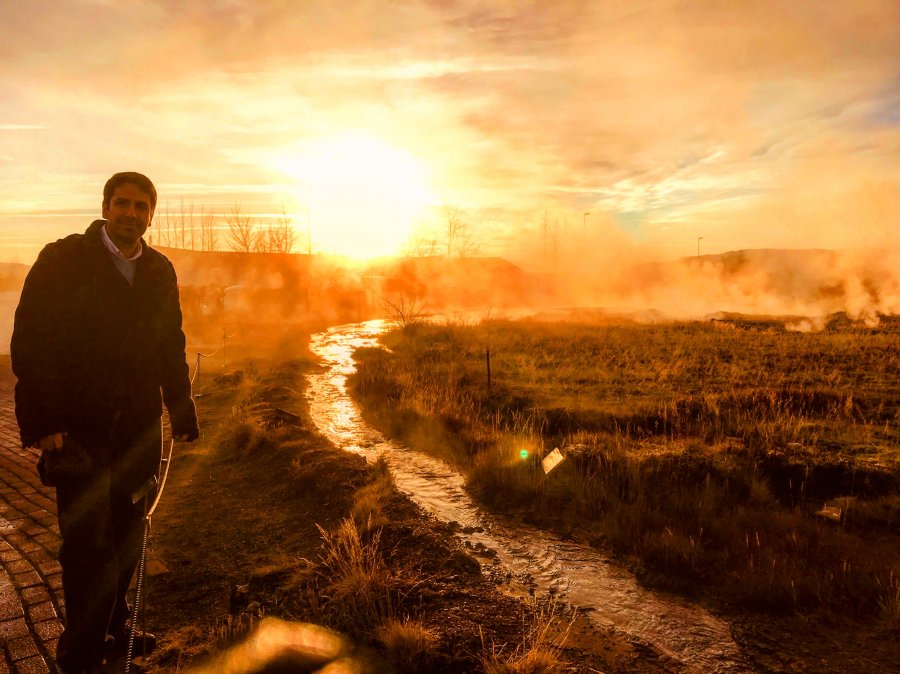
During this visit, the Geysir Geothermal Region was particularly magnificent. On the way, I observed the geothermal resources that are often talked about in Iceland. Steam was rising from the ground everywhere along this route.
Going to the Bright Side with Geothermal
Since I work in renewable energy, this topic is of particular interest to me. Geothermal is the most efficient and therefore profitable renewable energy source when you find the right vein. Because the underground is like an oven, you can generate energy continuously and continuously from the right source. In other words, geothermal is a type of renewable energy that you can provide baseload with. Of course, as I mentioned earlier, finding the right vein is crucial. You capture the heat source underground by drilling a well. Drilling each well is significantly costly. Drilling the well in the right place is the most critical issue. Even experts in this field have a significant margin of error. You drill a well, the source turns out to be inefficient, and you’re throwing away millions of dollars. You drill a well, you find the right vein, bingo! You’ll generate significant income. Sounds familiar, right? Yes, the oil business operates with a similar discipline to geothermal. Oil, too, is related to the underground, and everyone strives to find the right vein. That’s why many in the geothermal business have transitioned to this field after working in oil. Because oil is being burned and nature is being polluted in today’s world, I describe those who transition from the oil business to the geothermal sector as “those who moved from the dark side to the light side.” The most successful experts in this field are generally of Icelandic origin. I don’t think this is surprising; since the country is comprised entirely of active volcanoes and geothermal resources, it’s natural for Icelanders to specialize in these areas. I also believe that Icelanders are intelligent, disciplined, calm, and friendly. These qualities make them popular and successful in their careers. Since my blog posts on technical topics receive the lowest ratings, I’m now tucking technical topics into my travel and personal posts so people can read and learn. That’s my new tactic.
Geysir Impressions
I was completely captivated by the magical atmosphere of Geysir, one of the most important destinations in the Golden Circle.
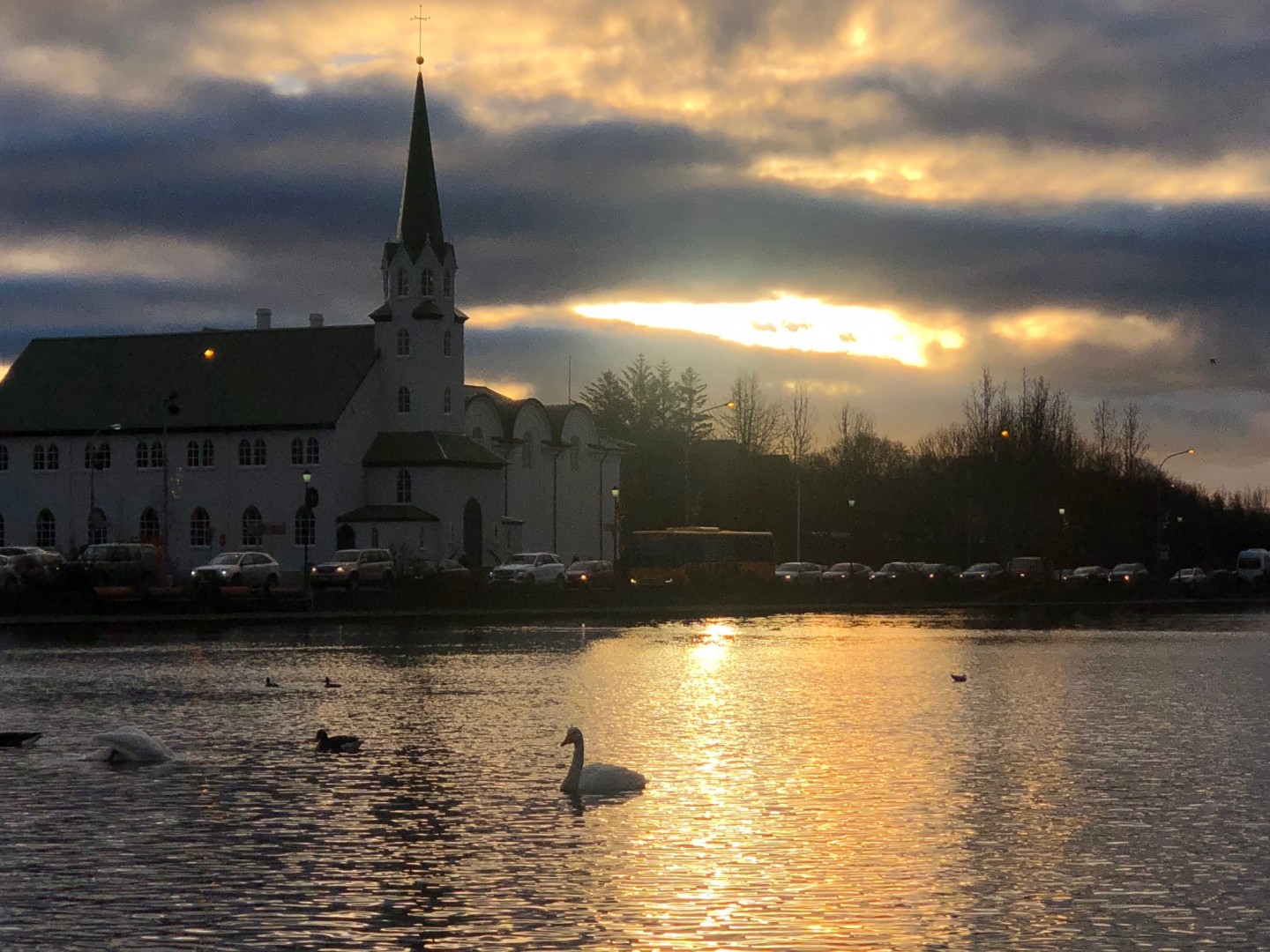
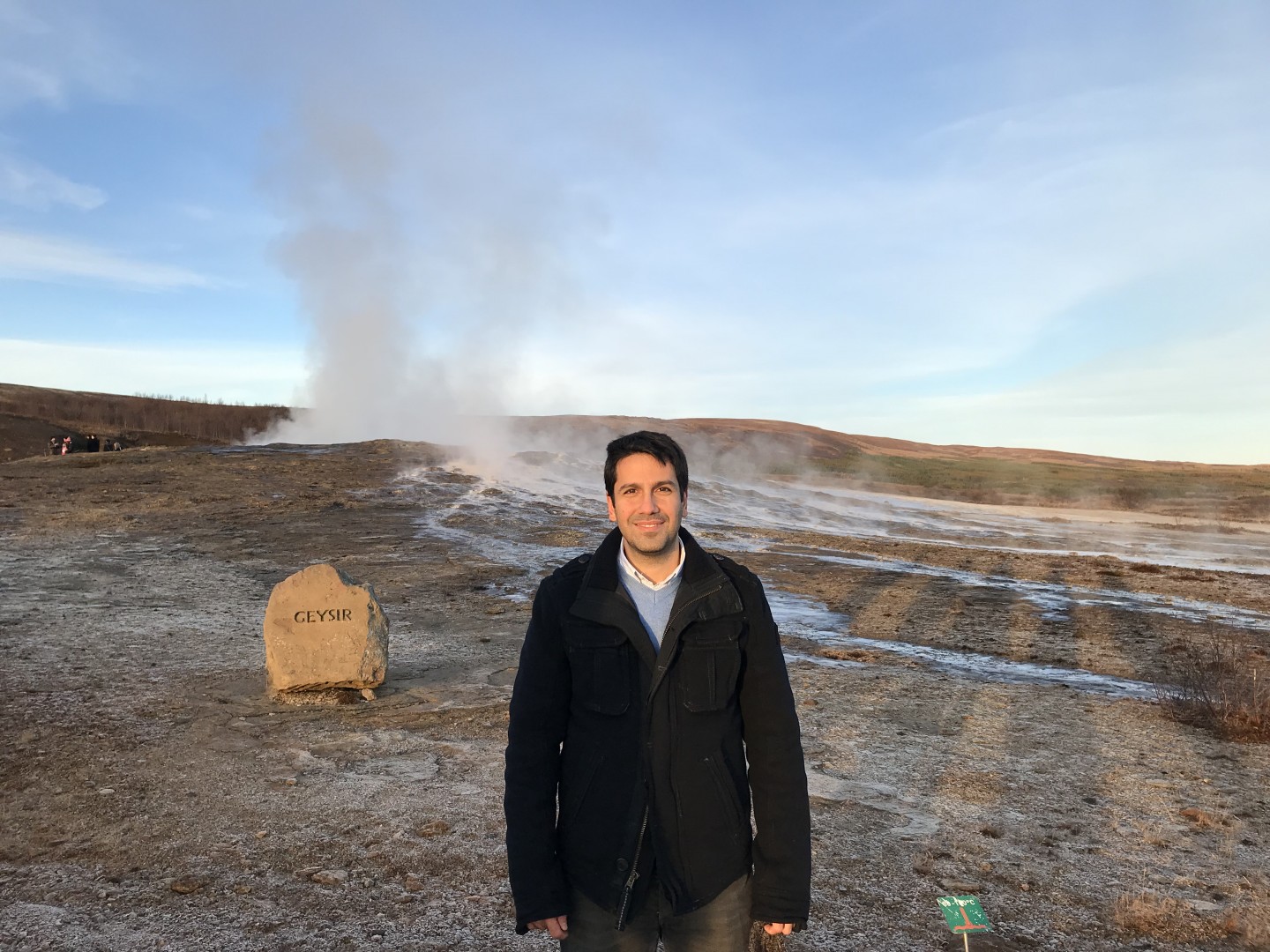
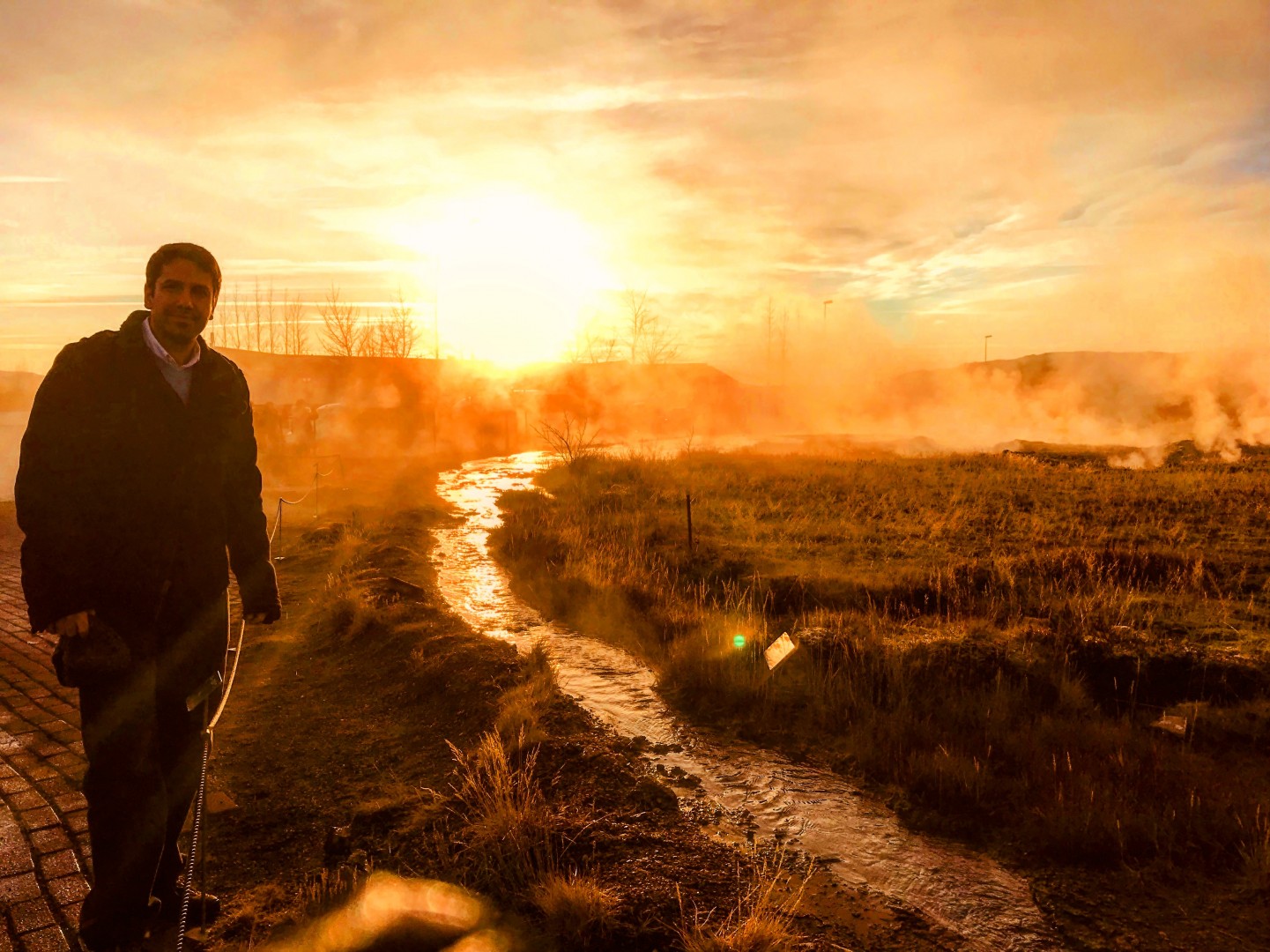
As I continued taking photos, I was immediately drawn to the water erupting from the incredible spring higher up. After a few more eruptions, I took the shot below.
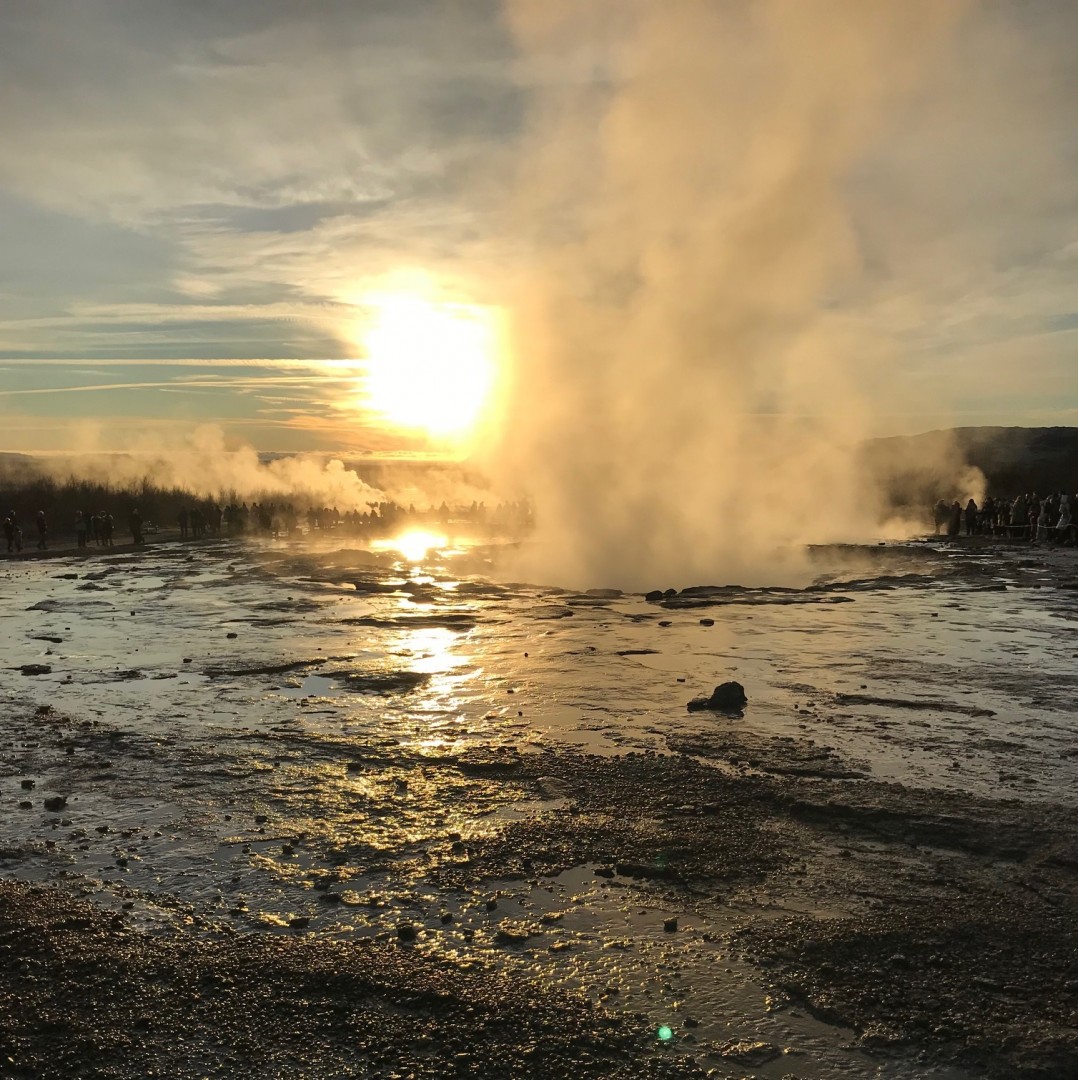
This is the video of the thermal water spewing onto the surface:
After this visit, we went into the tourist center to warm up a bit. After wandering around the center, which features restaurants and shops, and taking the picture below, we got back in the car and set off.

Here’s Serhild Suzersson, a Viking with a soul from Türkiye.
Afterwards, we drove straight to our destination, Vik. On the way, we stopped at the Rangarping Eystra Waterfall:
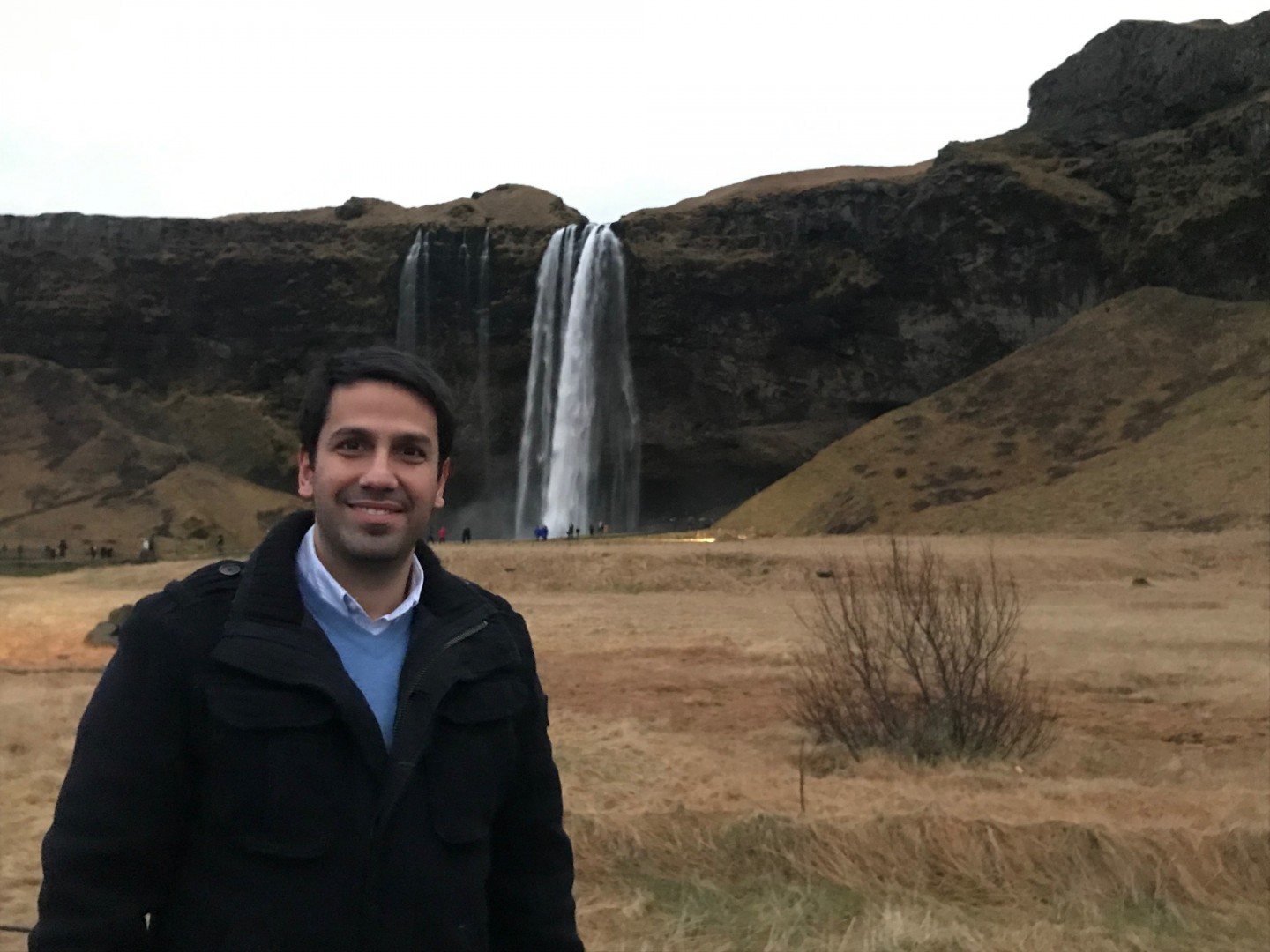
I’d like to share some of the photos we took along the way:
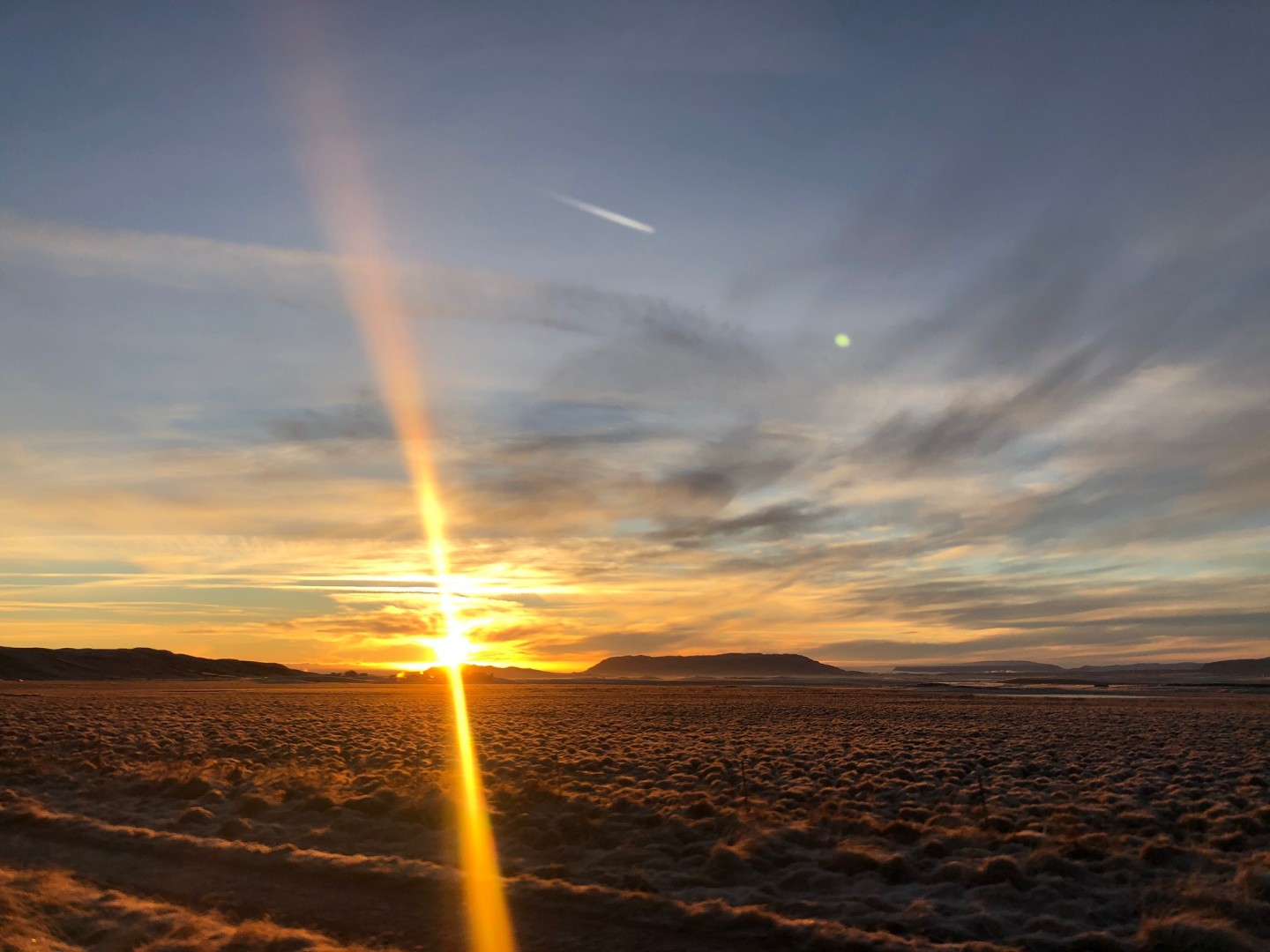
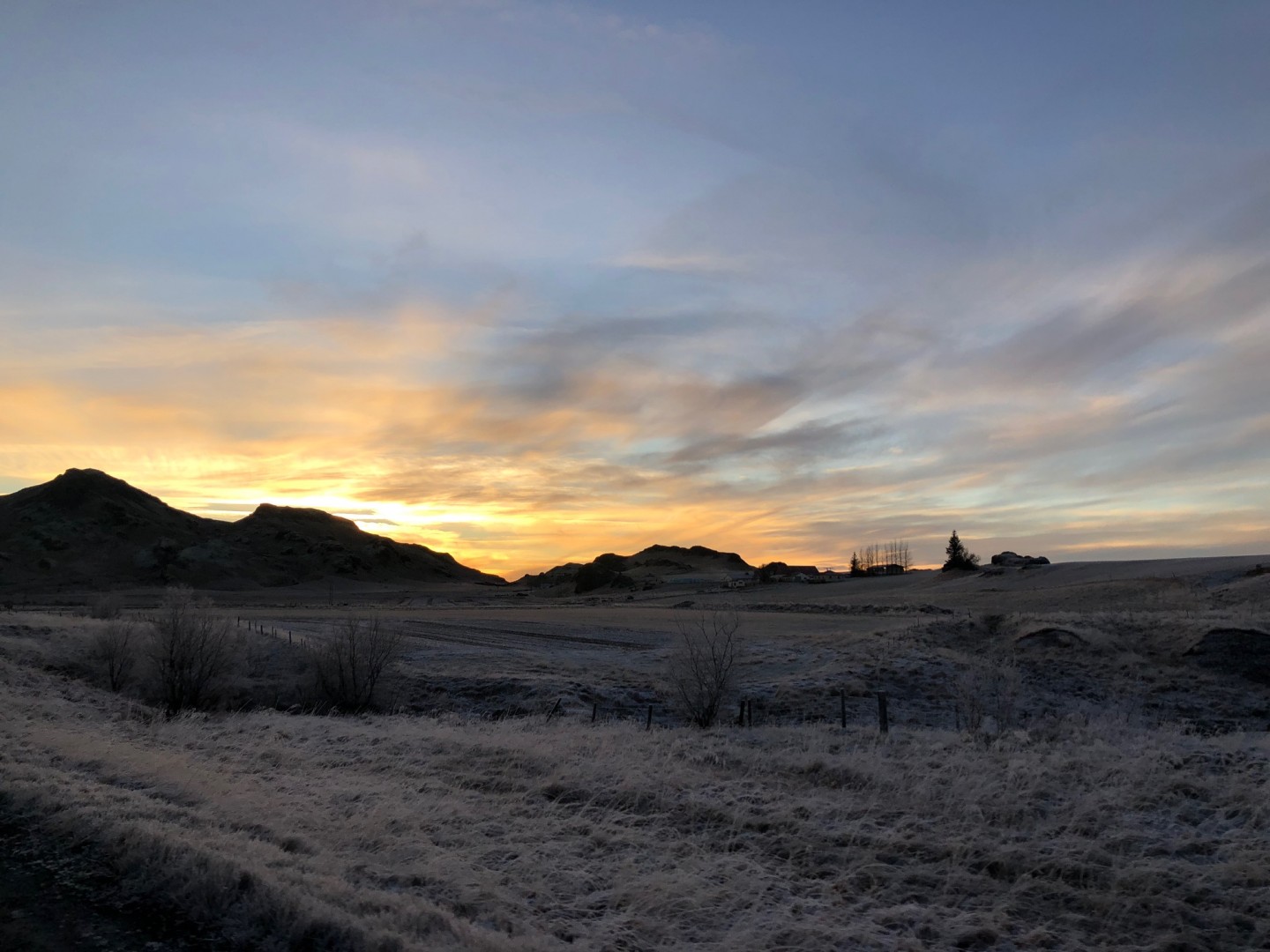
The full name of Vik is actually Vík í Mýrdal. Vik means bay or gulf in Icelandic. So, Mýrdal Bay. Everyone here simply calls this beautiful town Vik, meaning bay or gulf. You’ll also notice the word Vik at the end of other words. For example, the capital city is Reykjavik, or Reykja Bay. For those wondering, I can tell you that this word is easier to pronounce than it seems. It’s pronounced ‘Reykevik’ in Turkish. We’ve gotten used to it through practice. Another example is Keflavik, the name of the airport. It’s Kefla Bay.
Vík is a small coastal village of 300 people in southern Iceland, about 180 kilometers from the capital, Reykjavík. It’s a major hub for tourists and residents of the Mýrdalsjökull glacier (source: Wikipedia).
A true hamburger
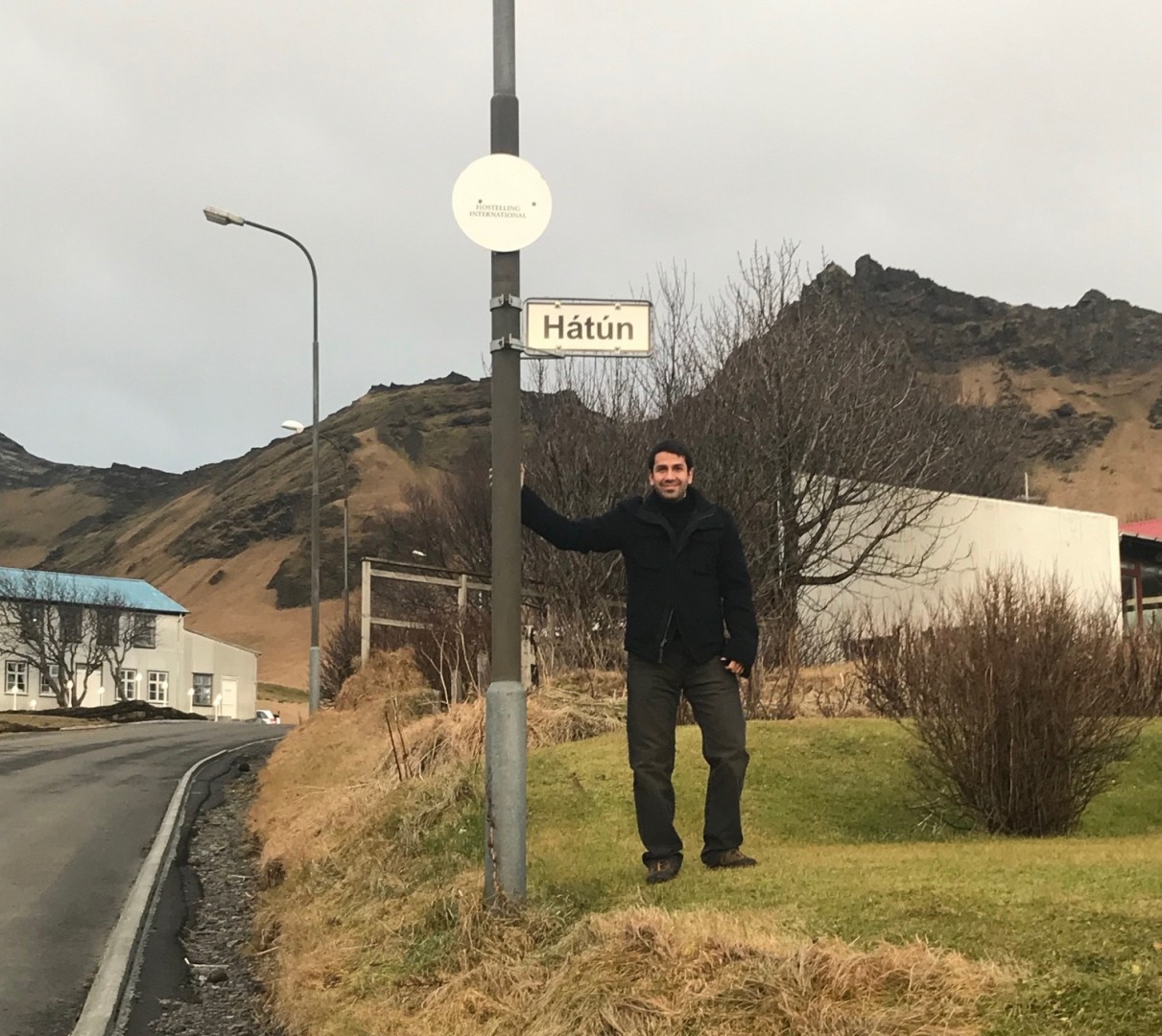
When I first arrived in Vik, I took the wrong street on my way to the hotel. When I saw that the street was called ‘Hatun Sokak’ (Hatun Street), I found it interesting that the same words were used in two very different languages, so I took this photo (I don’t know what ‘Hatun’ means in Icelandic for my foreign readers, but it means ‘Woman’ in Turkish).
The Icelandair hotel I stayed at in Vik immediately gave the impression of being a very nice hotel. However, the rooms, unlike the lobby, appear to have undergone no investment. What’s interesting is that the hotel’s lobby is 5-star, while the rooms are 2-star. So, I was disappointed. Still, I can say it’s perceived as one of the best hotels in Vik. After dropping off our luggage, we went to the first of two recommended places.
The first place I visited in Vik was Smidjan. You can find it at http://smidjanbrugghus.is/ . Hamburgers are perceived as an American staple. However, I can say that I had one of the best hamburgers I’ve ever had here. The freshness of the wild-raised animals and other produce plays a role in this. There’s also a brewery here. Those interested can try all kinds of beer from around the world, including their own brewery.
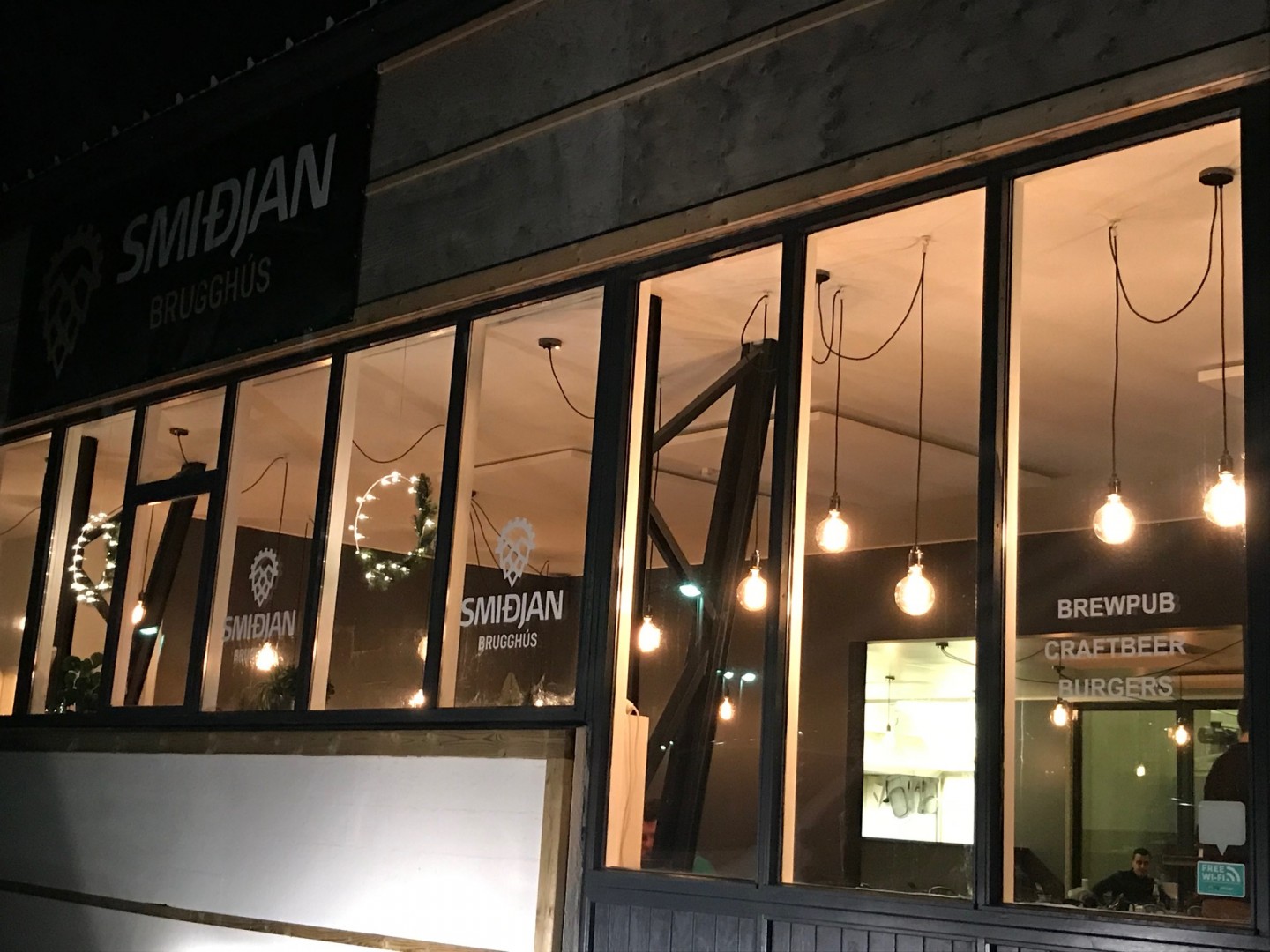
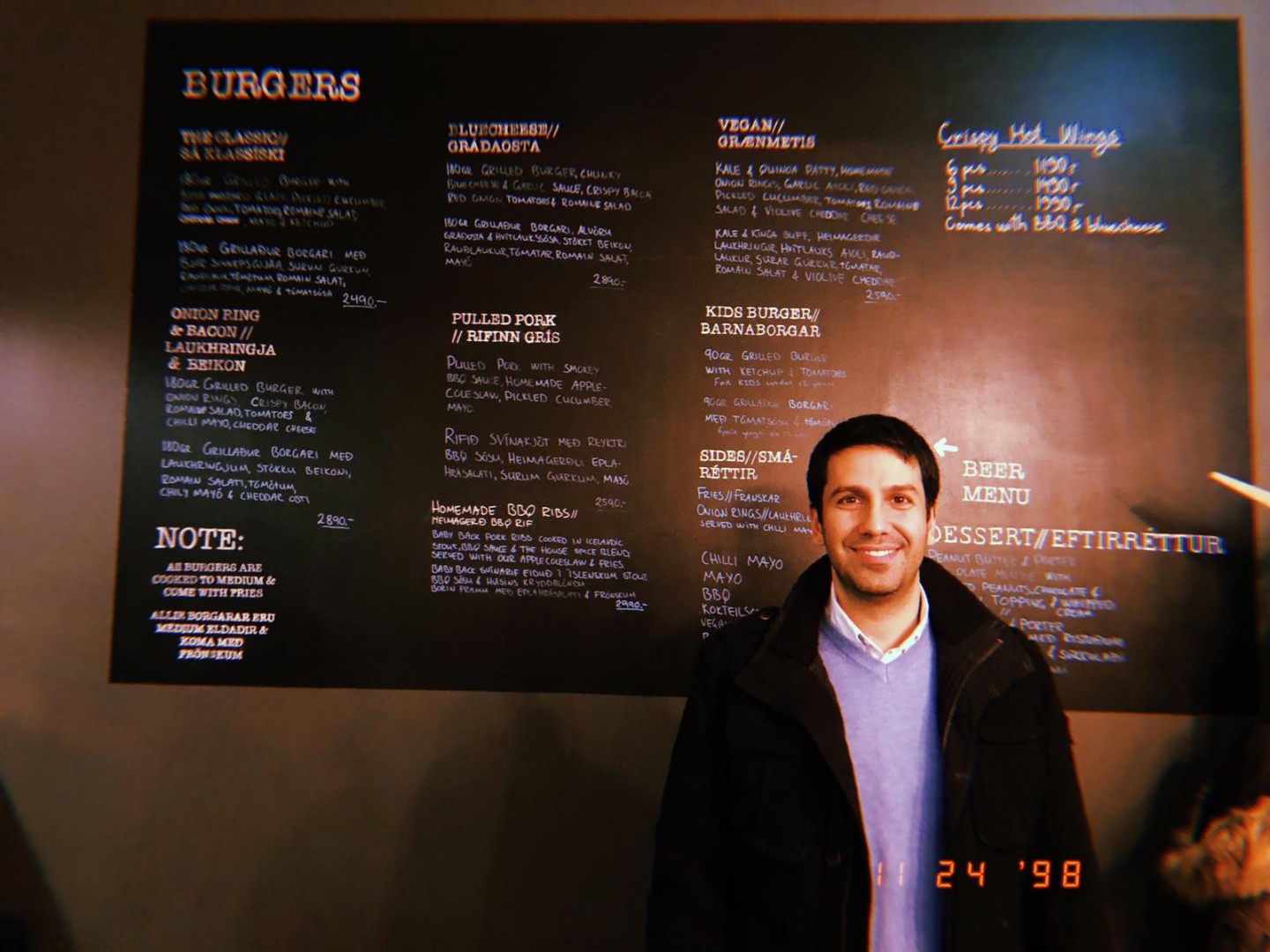
After the burger, I also tried the dessert, which was also delicious. After our meal, we had the opportunity to chat with the staff at Smidjan, which serves simple yet delicious food.
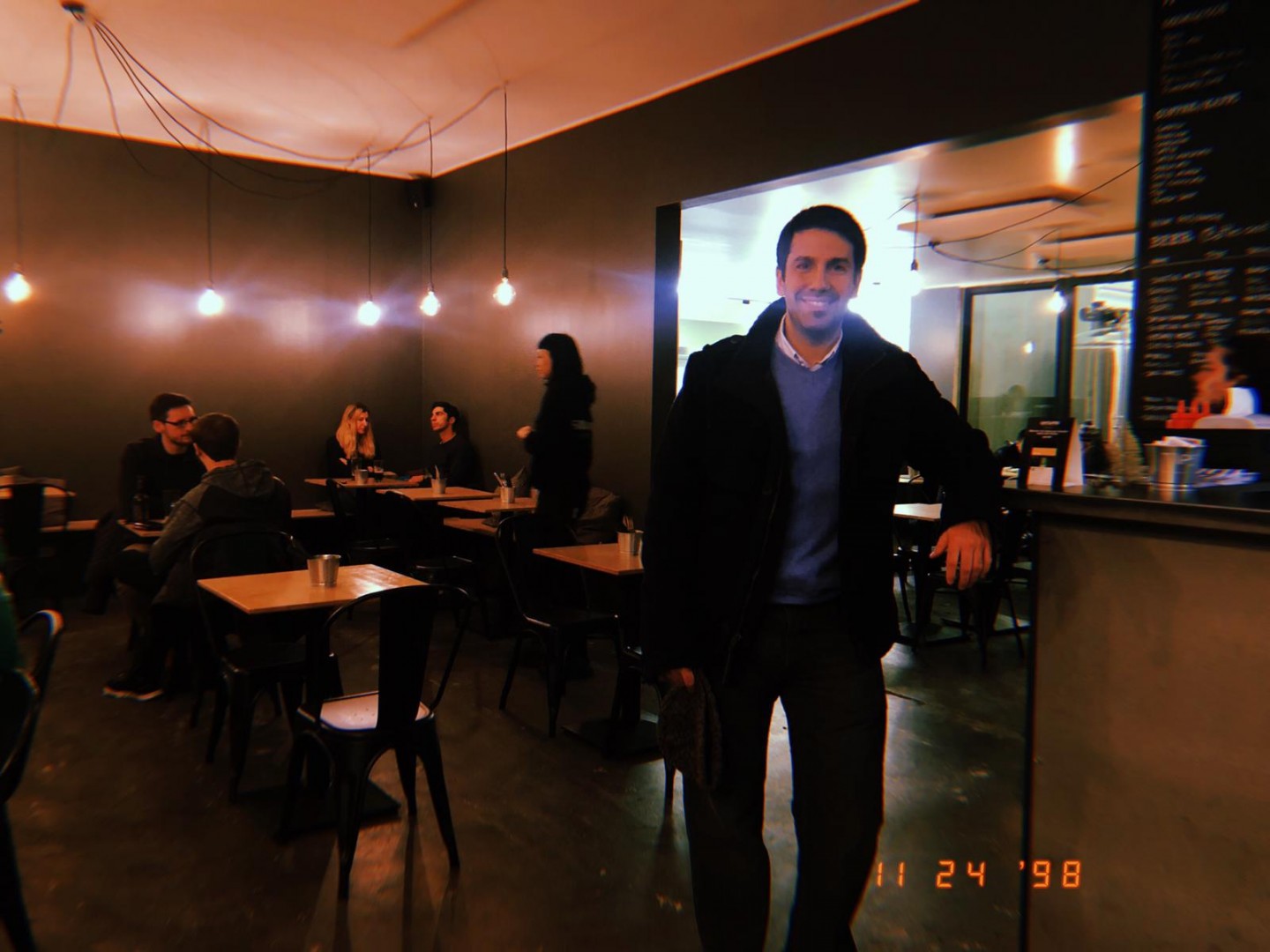
Plenty of Poles
Noticing Poles working in the foyer and kitchen, I asked the girl behind the counter, “Are there many Poles here?” She smiled and said, “After Icelanders, the largest population on the island is Polish. Poles, lacking opportunities in their own countries, choose to work here because they are able to save a good amount of money.” I had another question answered. I found it interesting that so many Poles are settled in Iceland. And of course, you can’t physically tell Icelanders from Poles. After speaking a few sentences in English, you’ll understand their accent.
I asked the same girl, “Is there anywhere we can listen to music here?” She smiled and said there wasn’t a music venue in this small village, but there was a ‘Jam Session’ organized at the hostel up the road (a hostel is a type of dormitory where students from around the world usually stay). The people here gather to make their own music. I really liked the idea. I immediately asked, “Where is this hostel? We’d like to go from here to there.” He gave me directions.
A surreal ‘jam session’ experience
We left the burger joint and went straight to the hostel. It was a very interesting atmosphere. It was something I really wanted to see and I was happy to be in. For example, as soon as we entered, Gülcan, who was born and raised in Belgium, greeted us. When she realized I was Turkish, she immediately started speaking Turkish. I learned all sorts of tips about Iceland from her. We confirmed that a total of 100 Turks live in Iceland.
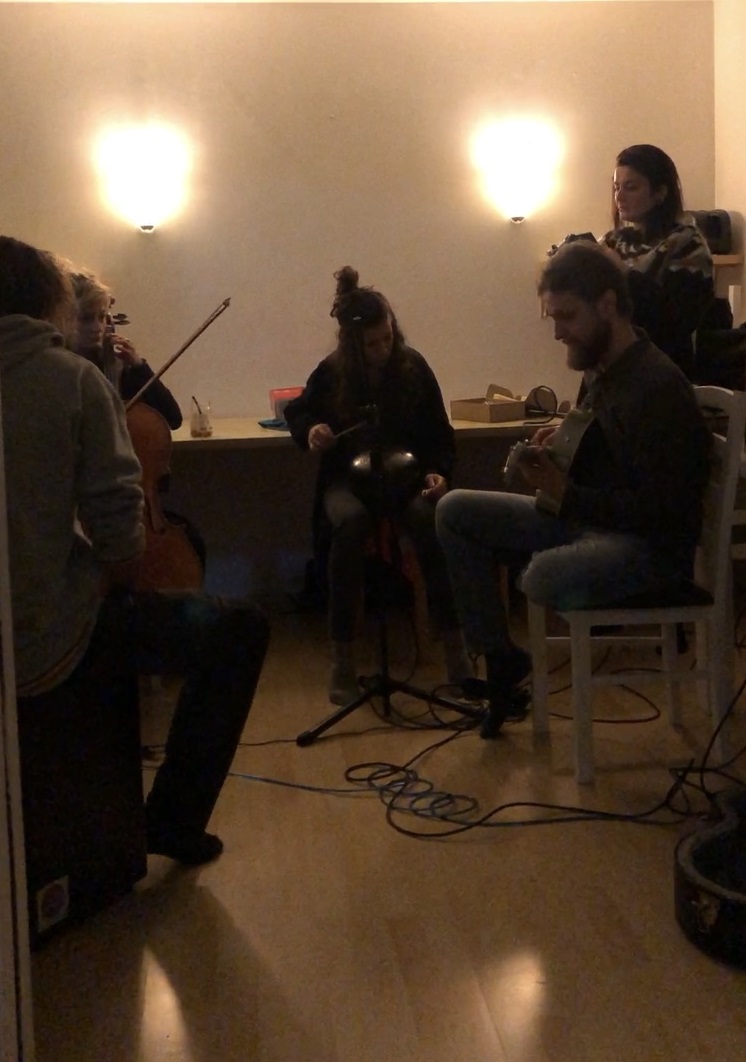
We walked in; there were young people from Poland, Spain, Germany, America, Canada, France, and many other countries. Some were playing music, others were listening. We had the opportunity to chat with everyone there. It was like the United Nations. Everyone’s common denominator was music and enjoying the moment. I remember thinking to myself, “This is the direction the world needs to go.” Everyone who had a different instrument was singing along, while the rest listened with great pleasure.
A French boy took the stage first. He sang three solo songs, one of which was his own composition. Then a young Spanish woman and a Polish woman took the stage.
After their wonderful music, everyone with a musical instrument filed into the room.
The Future Shape of the World
Take note of these scenes. This is a sign of how the world will shape itself in the future. What matters is humanity. The unification of people from diverse cultures and backgrounds around common denominators and universal values like music, love, respect, and compassion will continue to accelerate.
This process will certainly not be easy. Personally, I’ll continue to do everything in my power to ensure an environment where humanity lives in peace and prosperity, enjoying life to the fullest. There may be great struggles against those who sow hatred like racism for generations to come, but ultimately, humanity will achieve the environment it deserves.
That night, I returned to the hotel with great joy. The next day, it was time to set off further east, to the lands of glaciers and waterfalls.
Note: I originally planned to write about Iceland in a single article. However, because there was so much to cover, I decided to write it in two parts. In my next article, I will share my experiences in Iceland as of Sunday, 25 November.
Tag: excursion