Let me clarify right away: I’m not talking about every educated citizen. We have hundreds of thousands of citizens who possess both invaluable knowledge and experience, as well as high character. However, these individuals are in a significant minority. Much of our country consists of the uneducated, the undereducated, or the educated with serious character flaws. I’m writing this article as a form of self-criticism on behalf of my country. Of course, I’ll have some suggestions in the conclusion.
Most recently, I wrote an article entitled, Our country’s English name should be ‘Turkia’. I shared it on Instagram, Facebook, and LinkedIn, where I actively use them. My Instagram and Facebook pages are not public. I only post publicly on LinkedIn and Facebook when there’s a topic of interest to everyone.
I’ve generally received very positive feedback. Many people who embrace the ‘Turkia’ idea have shared my article. This makes me happy. The more we spread this idea, the more successful we will be. We’re just getting started.
My suggestion for ‘Turkia’ received inconsistent comments.
There were also some very strange reactions. For example, someone working as a legal consultant at an institution that determines and oversees the operation of one of the country’s most important sectors wrote the following comment (I’m toning down what I remember, as I haven’t copied it):
“For God’s sake, stop this nonsense. Do you want to reinforce our already Middle Eastern image with the name Turkia, which Arabs use? Don’t you do any research? How superficial your writing is! Turkey’s name comes from the Celts.”
He deleted his comment just as I was replying. He probably did this because he thought voicing hate speech against Arabs wouldn’t benefit his own position. So, I wrote my response:
My response sentences
Some people make absurd comments like, “Arabs say the word ‘Turkia,’ so are you going to make us a Middle Eastern country?” That’s why I made some additions to my article.
First of all, Arabs write in Arabic and don’t use the Latin alphabet. Therefore, even though the pronunciation is the same, you won’t see the Arabic spelling ‘Turkia’ anywhere.
Basque is the language that writes ‘Turkia’ in its own language. Aside from the Basques, who live in northern Spain, many Latin-based languages pronounce Turkey as ‘Turkia,’ only with slightly different spellings. For example, it’s written ‘Turquia’ in Spanish and ‘Turchia’ in Italian, but both are pronounced ‘Turkia.’
Moreover, the most crucial part of the article is that the word ‘hindi’ and our country’s name are the same in English. I’m trying to change this. I’m not discussing other, open-to-interpretation issues.
As I mentioned in the article, the English suffix -ia is the equivalent of the Turkish suffix -istan. So, when you add -ia to the end of a nation or ethnicity’s name, you define ‘its country.’ For example, Bulgaria means ‘the country of the Bulgars,’ and Malaysia means ‘the country of the Malays.’ This is the case all over the world.
In short, I will continue to use and promote the word ‘Turkia,’ which suits us in English, everywhere.
A surprising comment from a composer
Then another very strange comment came, this time from a composer working at a French institution (again, I’m toning it down and recounting what I remember):
“Your article is complete nonsense. You’ve written an extremely superficial piece without any research. It’s not even an article. Even reading articles like this is a waste of time, instead of writing articles that are scientifically sound, etymologically sound, etc. So, what are those named Mert supposed to do when they say “Merde” in French, or “Shit” in English, or “Bok” in Turkish? Should they change their names too? And when we say Turkey, do we become turkeys? Stop bothering with this stuff.”
(Of course, as in the previous comment, it was also very interesting to me that the person using violent language and attacking in this comment was a professional musician. You’d normally expect those involved in the arts to be more at peace with themselves and their surroundings. Here’s the profile of an educated person in Turkey!)
“Let them call us turkeys.”
I replied. This time, a professional ‘brand expert’ with a clear style (she even wrote harshly at first) stepped up to the plate and stated her agreement with the composer. She made another remark that surprised me:
“Let them call us turkey, so what? Will that affect our brand value? Besides, it’s your problem that you think turkey when you say ‘Turkey.’ With so many problems in our country, are we supposed to deal with them? Let’s reach such a level of development that the British would take off their hats when you call us turkey. The institution responsible for the country’s branding is the Ministry of Culture and Tourism.”
I wrote the following response to both (they made me repeat the same phrases several times, insisting on the same things):
I explained why I found it absurd in my previous reply. I reiterate:
- The comparison being made is not an apples-to-apples comparison. Because the French word “Merde” has no connection to the name “Mert,” either in spelling or pronunciation (“Merde” in French is not pronounced as “Mert.” This is a misconception). However, “Turkey” means both “Turkey” and “turkey” in both its spelling and pronunciation.
- I completely disagree with your insistent “Let them call us turkey, what difference does it make?” I don’t want my country to be called “turkey.” I know (from the messages I receive) that the vast majority, especially those living abroad, share my views. Because when you live abroad, you often encounter people mocking our country’s name, whether well-intentioned or not, with a smirk. Interestingly, some people living in Turkey fail to grasp this. We are trying to correct a mistake that has been made on behalf of our country for decades. We are trying to correct a mistake that has been made in our own country for decades, and we are trying to constructively say, “Why bother? Mind your own business.” I’m having a hard time understanding these criticisms. I want to reiterate that I will continue to do everything in my power to correct this mistake.
Regarding your other comments, I’d like to point out this: You can’t just put the burden of improving the country’s image on the public sector (Ministry of Tourism and Culture, etc.). This would be a repeat of past mistakes. The responsibility to correct this image rests with all of us.
I’ve been an action-taker my entire life. Unlike many others, I don’t just sit around and lecture. I’ve done a lot for the country’s image, and I will continue to do so.
Here’s an example:I spoke on behalf of Turkey on former US Vice President Al Gore’s program on climate change: https://www.youtube.com/watch?v=O_25mBIoP34
Here’s a second example: As EkoRE, the company I founded, we laid the groundwork for the first integrated solar panel production facility in Turkey, combining four processes. We launched our “Turkia” campaign with a promotional video for this facility, which will perhaps create a global brand from Turkey: https://www.youtube.com/watch?time_continue=3&v=9LX3lLEtOK8
Here’s a third example: News about this facility appeared in dozens of international media outlets, from Italy to China (I’m sharing some links below):
https://kknews.cc/zh-cn/world/qgm5v3o.html
http://www.rinnovabili.it/energia/fotovoltaico/turchia-fabbrica-fv-integrata/
So, personally, I’m doing everything necessary for the country’s image, together with my team. I don’t agree with your statement, “A British citizen will take off their hat even when they say ‘turkey.’” I want the British citizen to use the name ‘Turkia,’ which suits us (both in terms of its sound and meaning), and to appreciate our achievements and the country’s potential, placing us first in their minds (this doesn’t happen with just calling us ‘turkey.’) To that end, I don’t just talk; I do what’s necessary.”
Repetitions based on insistence on not understanding
They made me repeat similar correspondence three times. The last time the composer said, “You’re saying, with your passable French, that the French word ‘Merde’ can’t be pronounced ‘Mert,’ you’re wrong,” and when he tried to explain it with vocalizations, and wrote, “What you’re saying is an argument; it has no basis. Talk to us based on science,” I fell off my chair with laughter. This time, I wrote him the following reply:
- How do you know my French level? Ask any French person, and they’ll tell you they don’t pronounce “Merde” as Mert. This is a reality.
- The turkey is the most frequently mocked bird, especially in North American culture. Furthermore, hundreds of thousands of Turks living in the US and Canada have been subjected to turkey jokes. I include myself in this. This isn’t an argument; it’s a reality.
- Throughout my career, I’ve always been involved in technology and R&D. Currently, the four companies I co-own have R&D and software development departments. We’ve allocated significant budgets to all of them. I’ve always been involved in science, so I was one of the first in Turkey to enter what everyone once called the sectors of the future, like solar energy and fintech. I’ve worked extensively on science, technology, and innovation in various fields, and this will continue to grow.
After writing this, I realized I was repeating myself unnecessarily because these people either didn’t understand or were pretending not to. I don’t think either of these things are good. They distort reality (call it an argument, for example) and make strange comments simply out of a desire to win an argument. Ultimately, I decided to distance myself from these people, thinking my time was much more valuable than that.
Another surprising recent example
Let me give you another example related to the educated. The day before these weekend events, last Friday, I gave a speech at TÜBİTAK. A professor who heads the Solar Energy Research Center at one of Turkey’s leading universities gave a speech before my speech. Everyone in the solar energy industry generally knows me. He knew I would be speaking next, and he looked me straight in the eye and relayed misinformation about the technological development. He either acted out of a lack of knowledge or deliberately used his own advantage. I think both are bad. Then he praised another company and praised its founder. After listening to his speech with amazement, I took the floor. In my speech, I corrected some of their misconceptions in a level-headed tone, completely avoiding polemics, and stated that we were in the process of signing a protocol with Niğde Ömer Halisdemir University, the university in the region.
Following this, people ask, “Why isn’t technology developing in the country? Why isn’t R&D for this field being conducted at universities?” If technology is embraced and insisted on like a football team, we’ll miss even more trains. Thankfully, entrepreneurs don’t make these mistakes. They’re more flexible and move quickly.
Academia in Turkey has serious shortcomings. Not all, but a significant majority, of academics are disconnected from real life. Just like that composer calling real events arguments. They create their own worlds, and then they believe them.
Many of them also recount information from 10 years ago. They belittle those who do the same thing professionally in real life. However, those who do the work in practice are always more knowledgeable. I believe that professors should also work in the private sector and maintain their disconnection from real life. Or, in practice, it would be very beneficial for those who do those jobs to work as academics and perform public service.
I can say that, in addition to the very valuable and humble academicians, I’ve also encountered many of them with inflated egos who act with an air of “I created small mountains.” You can see these kinds of character flaws not only in academia, but throughout the country. Such egos exist in both the educated and the uneducated.
I also have to say that corruption is present in every corner of the country. From those trying to make money through NGOs to serious problems in the private sector and the public sector. We are aware of what is happening.
Personally, I am focused on how I can contribute to humanity and my country.
My proposed solutions
As I mentioned in the examples above, this country is unable to reach the level of developed countries because of most educated people in our country, those with inadequate and weak character. Let me explain why.
If millions of educated people had stopped pontificating and acted, many things would be different in our country today. For example, educating the uneducated is also a matter for the educated. If the educated were willing and committed to this, they wouldn’t have allowed the gap between them and the uneducated to widen so widely. The number of those contributing to civil society is still very small compared to the population. This needs to change.
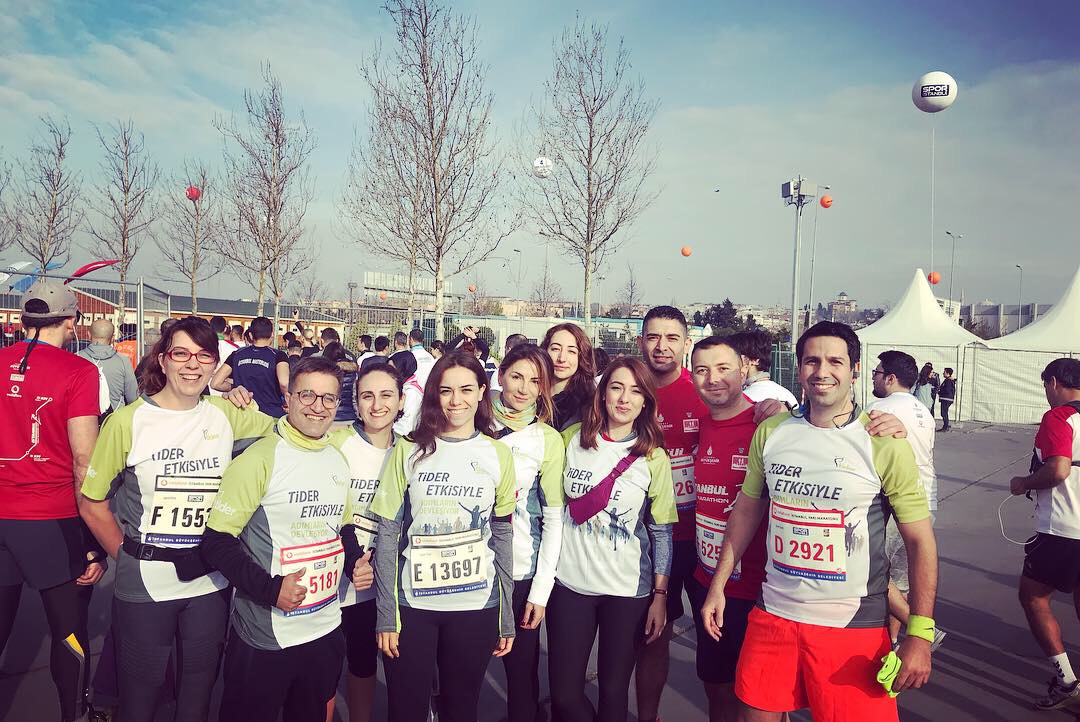
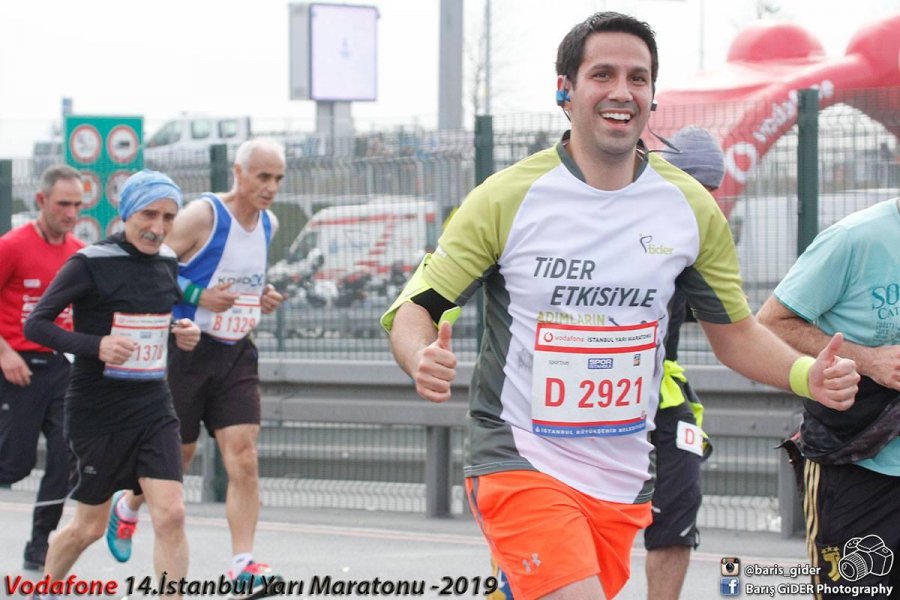
Here’s a photo we took with TİDER volunteers contributing to civil society. These unsung heroes are exercising and having fun while supporting a civil society organization.
- Many people who are educated but lack sufficient training or who haven’t been able to renew themselves become fixated on their ideas and fail to benefit those around them. For example, if we consider education to be the most important problem in our country, we can also determine that the most important element of education is the training of educators. Many teachers in our country need to be constantly trained in life and their own subjects, and to improve themselves every year. Otherwise, teachers stuck in the system of 15-20 years ago won’t be of much use to students. The world we live in is heading into a very different place. We need to prepare children for this. Let’s not forget that change is constant!
For this reason, I recommend you follow the work of the Young Success Foundation. They are doing amazing work. You can visit their website at http://www.gencbasari.org . I am also on the board of trustees of this foundation and occasionally speak at its events.
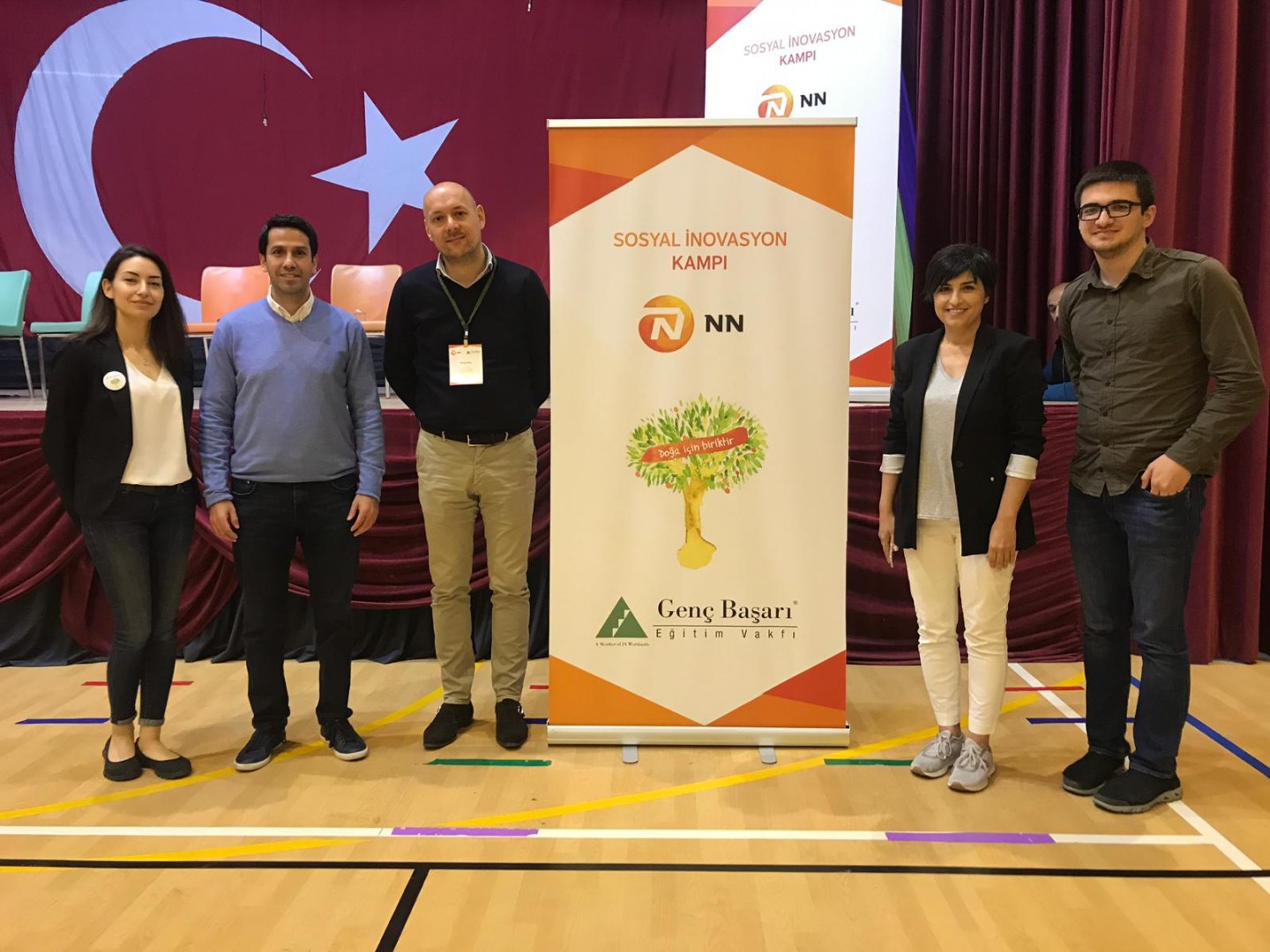
This photo was taken after he spoke at a panel organized last weekend at Evyap School in Sarıyer to encourage young people in social entrepreneurship.
There are also civil society organizations working to train educators, but their efforts are insufficient in both quality and quantity.
- There are many educated individuals with high egos who are prone to violence, project their own traumas onto others. To solve this problem, it’s necessary to examine the traumas of these individuals. Indeed, delving into their childhood or adolescence can reveal the root of the problem. The solution lies in prioritizing education for children aged 0-10 and parenting. Just as a child who witnesses violence in their family may be prone to violence in the future, some traumas can also stem from the social environment they live in. Some complain about politics, others about their neighbors. Those who have experienced trauma in their immediate circle can also be quite aggressive.
The Importance of a Kindness Framework and Positive Thinking
Education for children aged 0-10, parenting, and educator training all need to instill universal values and a positive culture. In other words, it’s essential to lay the foundations for being a good person. I’d like to draw your attention to the work of the ‘Young Guru Academy,‘ which has made it its mission to cultivate innovative young people who are both good people and constantly improving themselves. I hope the wonderful work done by YGA will be emulated and implemented throughout the country. I’ll soon begin supporting them. I’m excited about this. For more information, please visit http://www.yga.org.tr.
I’d like to conclude by sharing a video of Claire Wineland, who lived almost her entire life at the risk of death and undergoing intensive treatments. I hope that the joy of life of this wonderful woman, who sadly passed away at the age of 21, will be an example to everyone. That’s why I’m sharing this final message:
https://m.youtube.com/watch?v=865nKudhLfM
Life is beautiful, we all deserve to be happy. But for this, we need to take action and be positive. Sitting around and criticizing others won’t do. My advice to everyone is to start with those around us and take action to contribute to life. Stay healthy and happy, and spread your positivity. Pura Vida!
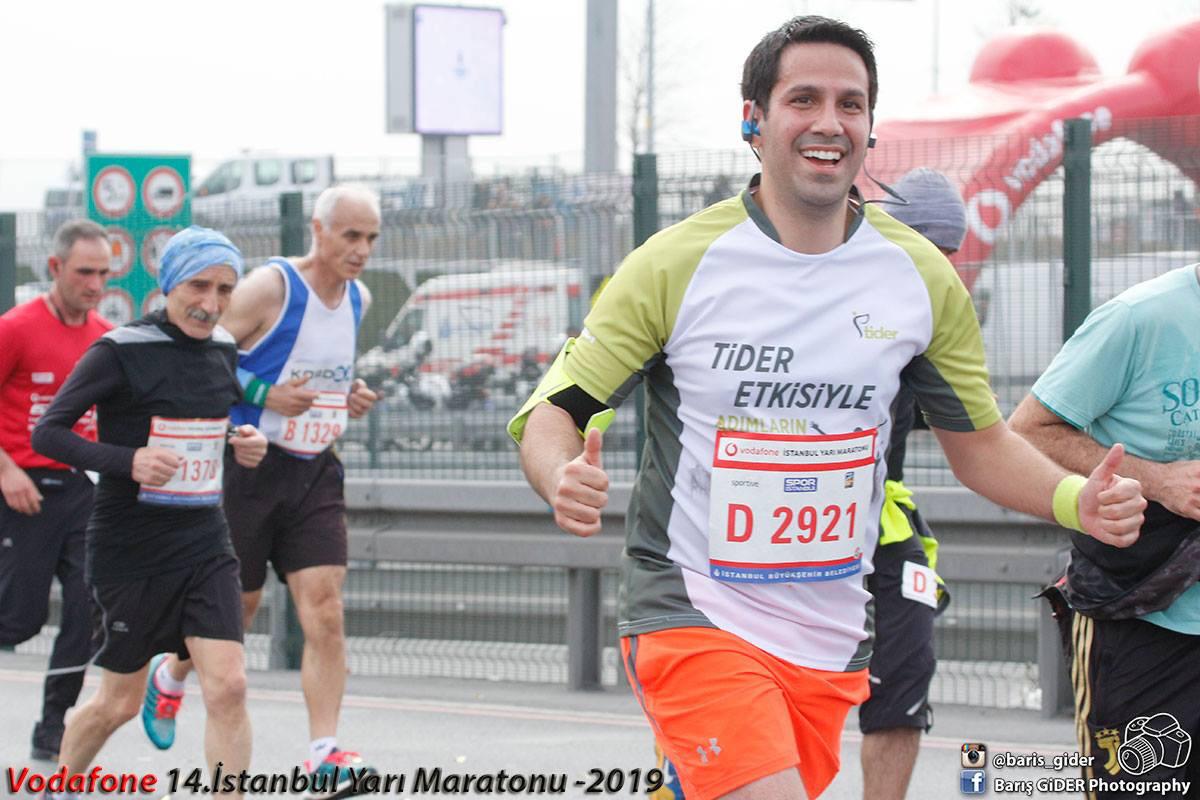
An image reflecting Costa Rica’s Pura Vida (pure living) philosophy
Tag: culture