In my second article about my trip to China, I’ll be discussing the ancient city of Xi’an. I visited Xi’an for a meeting on Sunday, which was free, and I’ll be describing the visits I made: the Terra Cotta Warriors (The Museum of Qin Terra-cotta Warriors and Horses), the Huaqing Palace and Hot Springs, the Laomu Temple on Mount Li, and the Giant Wild Goose Pagoda (Dyanta). Before this second article, which will be a travel post, let’s talk to SNEC, one of the world’s largest solar energy events held in Shanghai.
We arrived in Shanghai after a roughly 10-hour journey. Entry into China requires fingerprinting, facial recognition, and everything in between. They scan your passport at a predetermined counter and have it scanned. Then, you take a printout and get in line to speak with the attendant at the entrance. The attendant didn’t have much to do during this process. They simply communicate with you through a computer system. The system prompts you with things like, “Place your finger here,” or “Look here for facial recognition.” When the computer spoke to the Japanese person in front of me in Japanese, it even started speaking to me in English when it was my turn. I asked the Chinese officer in front of me, “Isn’t there a Turkish version of this?” The officer seemed a little confused. Since he didn’t quite understand what I was saying, I repeated it twice. Smiling, I said, “The person in front of me spoke Japanese, so I want to speak Turkish.” Of course, I made this request partly to get the gist of things and partly to see the limits of their system. After repeating it a second time, the official said, “No Turkish, only English,” and ended the conversation. I didn’t press further, followed the procedure, and went through the gate.
After leaving the airport, I was amazed at the order I saw on the highways in China. Everyone was obeying the speed limit, there were no traffic violations, and despite being the world’s most populous country, there seemed to be no traffic. The Chinese have also streamlined their traffic. The overhead camera system, which has become increasingly popular in China recently, has been installed on highways at frequent intervals, recording almost our entire journey. Unlike in China, a flash fires overhead as you pass under each camera, giving you the impression that your image is being captured each time.
You may be aware that in China, they’ve taken this recording process even further and created a social credit system. They first piloted it in Suzhou, Jiangsu Province. Those who misbehave and disobey the rules and laws lose their score, which affects other areas of your life. For instance, if you want to take out a personal loan, you’ll need to have enough. If you don’t have the points, you’re in trouble. The idea of social credit, a project the government declared as the official government system in 2007, resurfaced in 2014. However, there are significant differences between the official government system and the private, institutional versions; the system, planned to be implemented throughout China starting in 2014, focuses more on social behavior and relationships.
After arriving at our hotel, we went for dinner at Yershari Xinjiang, a Uyghur restaurant located inside the Super Brand Mall in the Lujiazui (Financial District) district of Shanghai, on the banks of the Huangpu River. The food was delicious and suited our palate. For example, they had grilled meat. Afterwards, we walked around The Bund and Lujiazui Ring in that area. Lujiazui, which literally means “Mouth of Lu,” is located on the east bank of the Huangpu River in the Pudong New Area. More than 20 city landmarks are located near Lujiazui Century Boulevard and Pudong Boulevard in the Lujiazui Financial and Trade District. The Oriental Pearl Tower, Jin Mao Tower, and Shanghai World Financial Center are in this zone. In fact, this is the first area that comes to mind when Shanghai is mentioned and forms the city’s skyline.
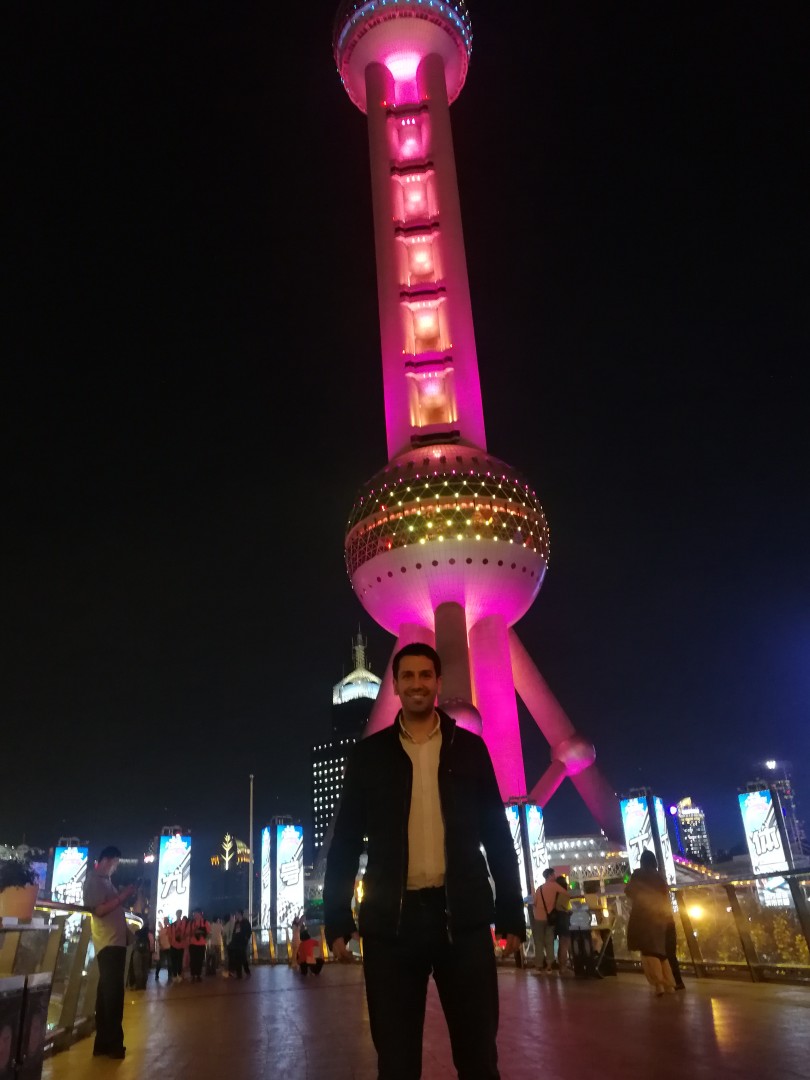
My picture in front of the Oriental Pearl Tower on Lujiazui Ring.
After returning to our hotel, we were ready for SNEC the next day.
SNEC, the 13th (2019) International Photovoltaic Power Generation and Smart Energy Conference and Exhibition (SNEC PV POWER EXPO), took place in Shanghai from 4-6 June this year.
This event was initiated by the Asia Photovoltaic Industry Association of China Renewable Energy (APVIA). This year, it was jointly organized by 23 leading international associations and organizations, including the Energy Association (CRES), the China Renewable Energy Industries Association (CREIA), the Shanghai Federation of Economic Organizations (SFEO), the Shanghai Science and Technology Development and Exchange Center (SSTDEC), the Shanghai New Energy Industry Association (SNEIA), and the Solar Energy Industry Association (SEIA).
SNEC has become the largest international PV exhibition in the world. I would like to share with you the photo and video we took at the Talesun stand, which reflects the energy of this important event:
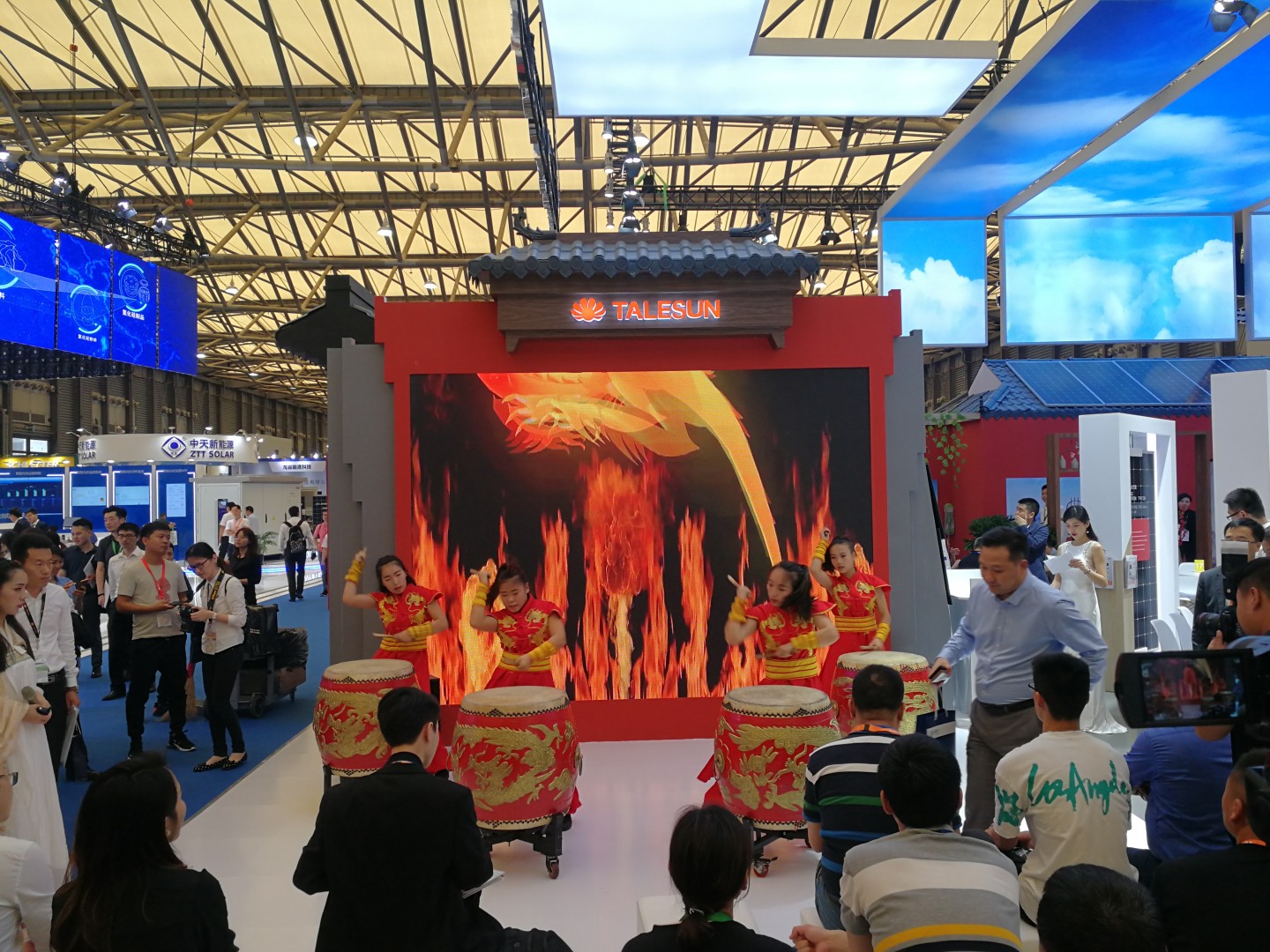
Focusing on the entire industry chain, SNEC 2019 PV POWER EXPO hosted over 2,000 companies with exhibition stands, over 260,000 visitors, and over 5,000 conference participants in the 200,000 m² foyer area of SNEIC (Shanghai New International Expo Center).
On Monday, the official start of the conferences, we kicked off a busy week at this important event, attending an average of 10 meetings per day at SNEC. Every day was hectic and intense.
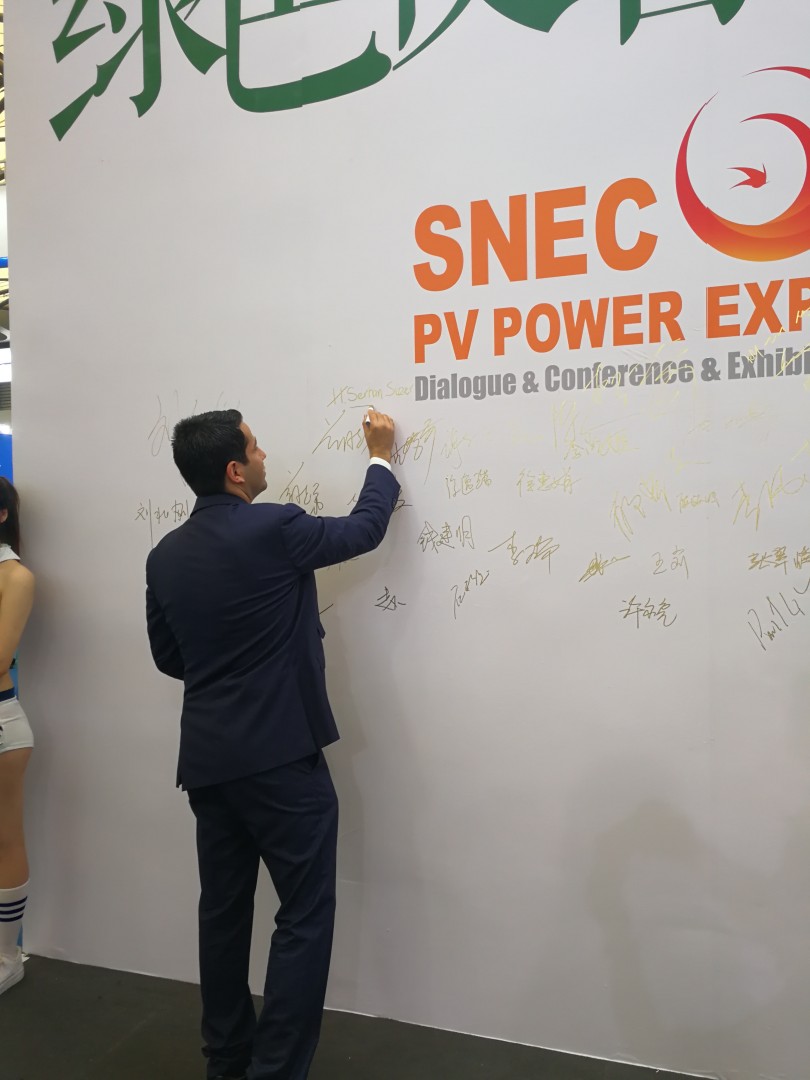
Signing my name on the main board in the exhibition hall at the very beginning of SNEC…
Amidst all this hustle and bustle, I also gave a speech at SNEC. This speech, delivered on Tuesday, was one of the first given at the exhibition site. When I arrived, there was almost no one in the hall. However, as I began speaking, the hall quickly filled. I can say that we finally achieved a good capacity. Without worrying about some technical issues, I jumped right into my speech.
I’d like to share the slides of my speech, which conveyed universal messages, with you here:
I welcomed the audience and made the introductory speech.
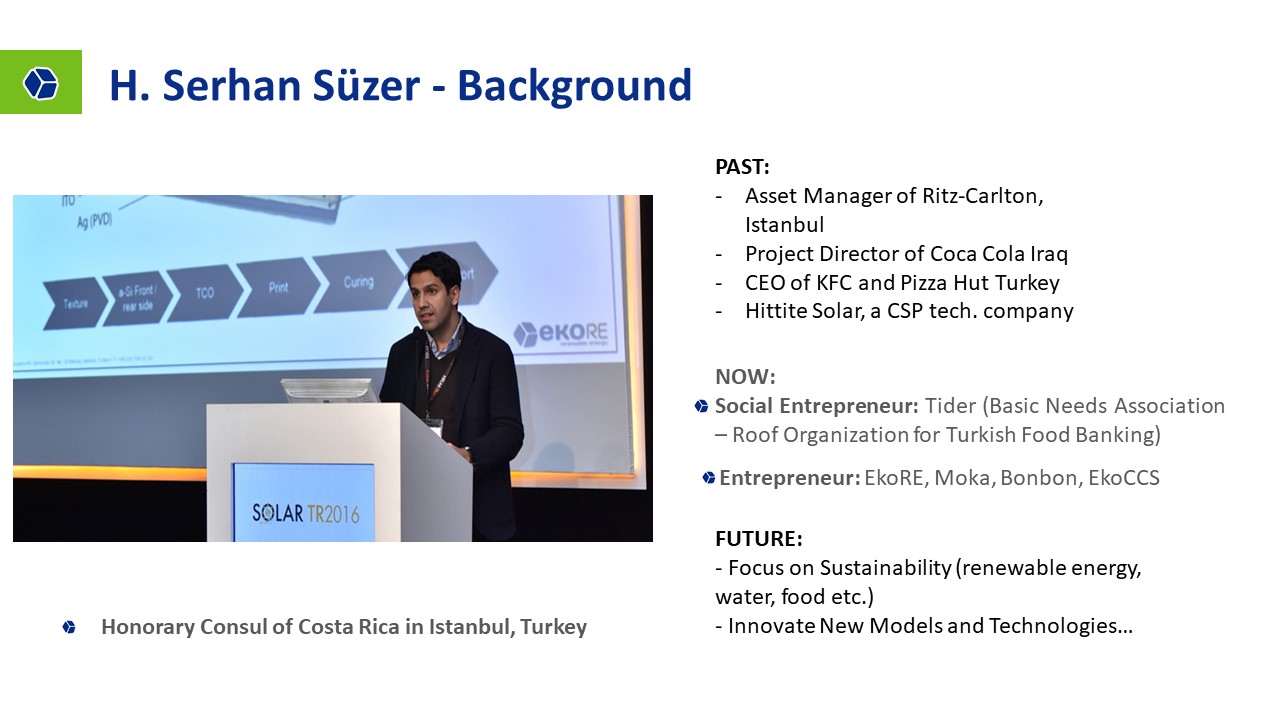
I’m introducing myself. In this slide, I’m talking about my past, present, and future.

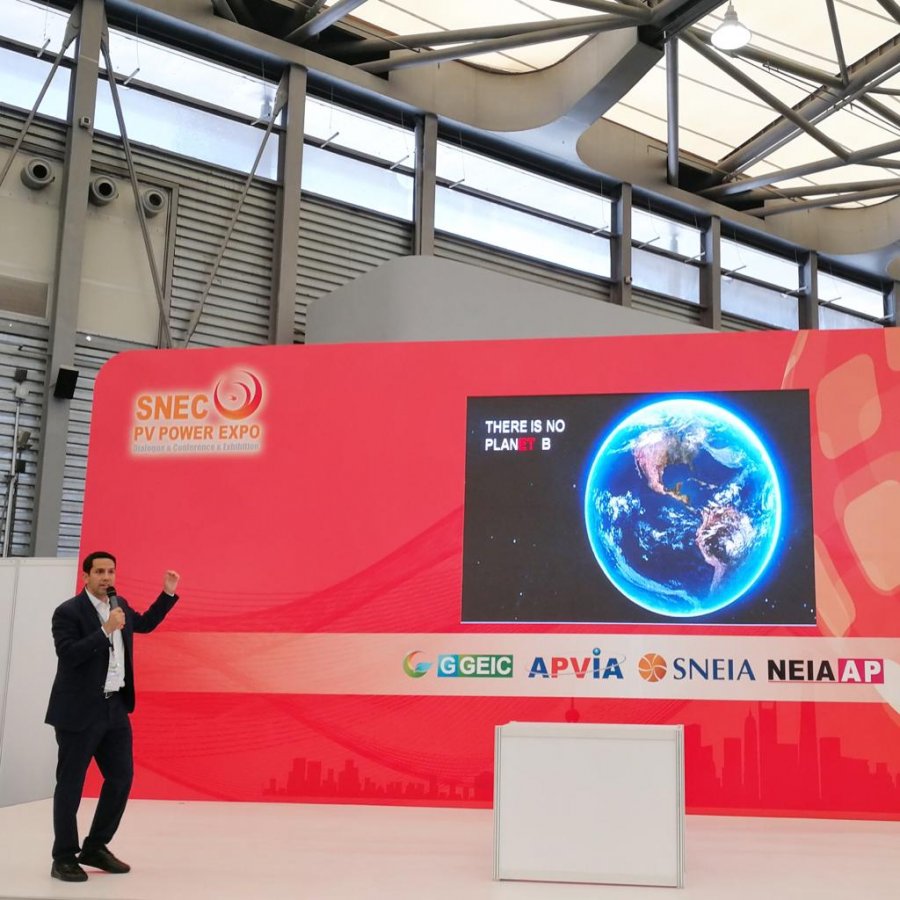
I’m conveying important universal messages in this slide. I argue that there’s no other plan/planet. I emphasize that the Earth is in a delicate balance, and that the ozone layer protects it, providing the climate for all life. Damage to this layer would lead to the extinction of life on Earth. Therefore, I emphasized that we have only one planet and that all Humanity must work together to protect, preserve, and preserve our world.
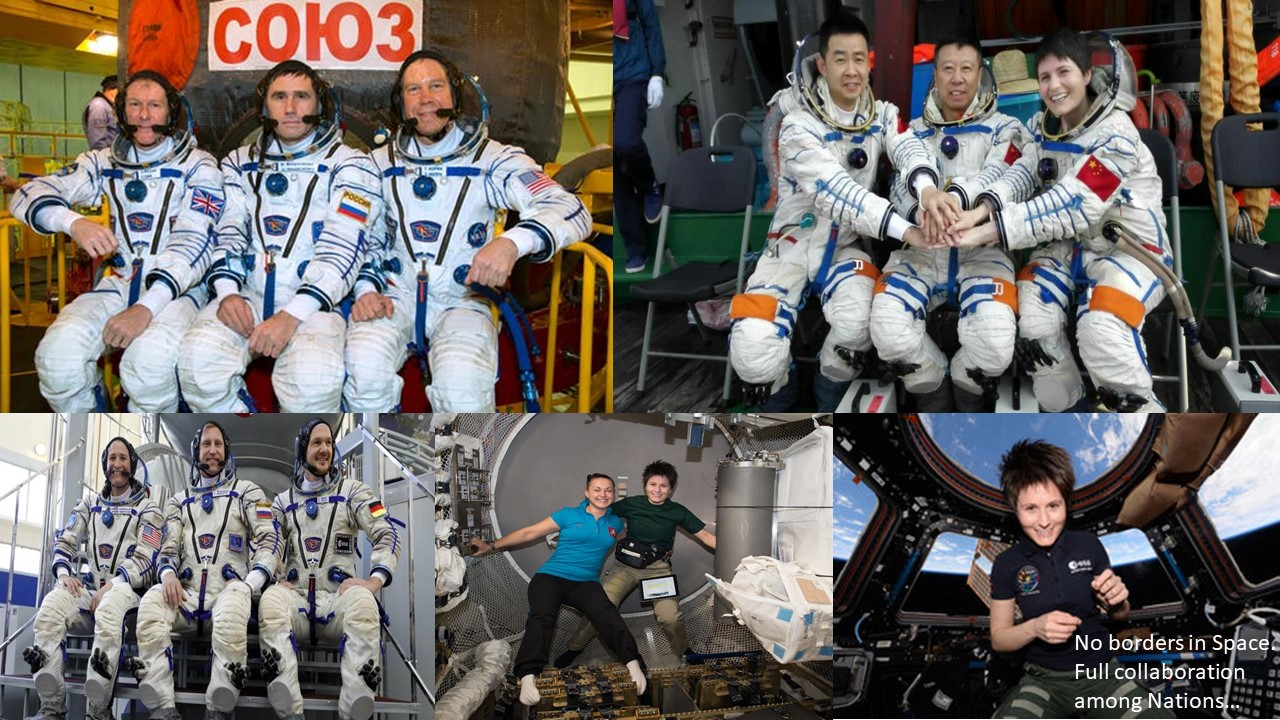
I cited countries that collaborate and collaborate on space research as examples. I stated that there are no borders in space, and that citizens of all countries can work together comfortably in space and support each other. I emphasized that the same environment must be created in the global solar energy sector. I emphasized the necessity of creating an environment of cooperation for the future of our world.
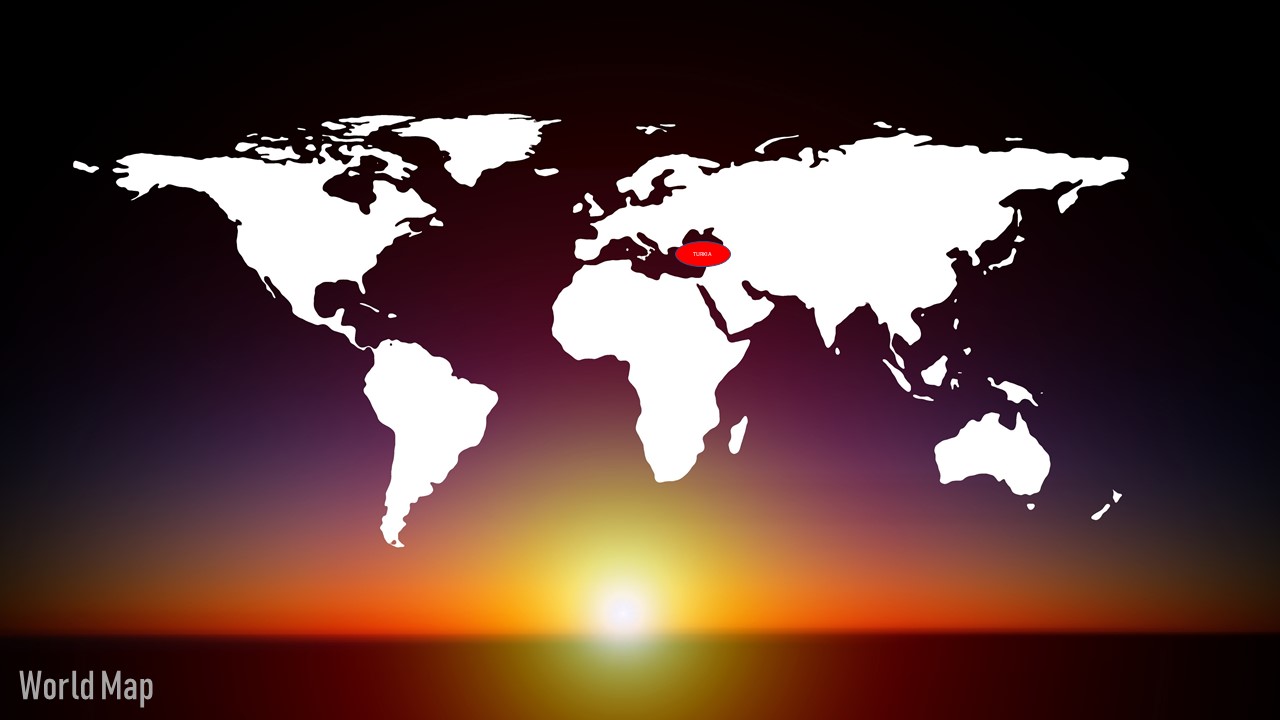
In this slide, where I showed Turkey’s central position on the world map, I explained that Turkey is the most suitable location for the cooperation environment. I said, “Because Türkiye is at the intersection of East and West and has a structure that encompasses many different cultures.”
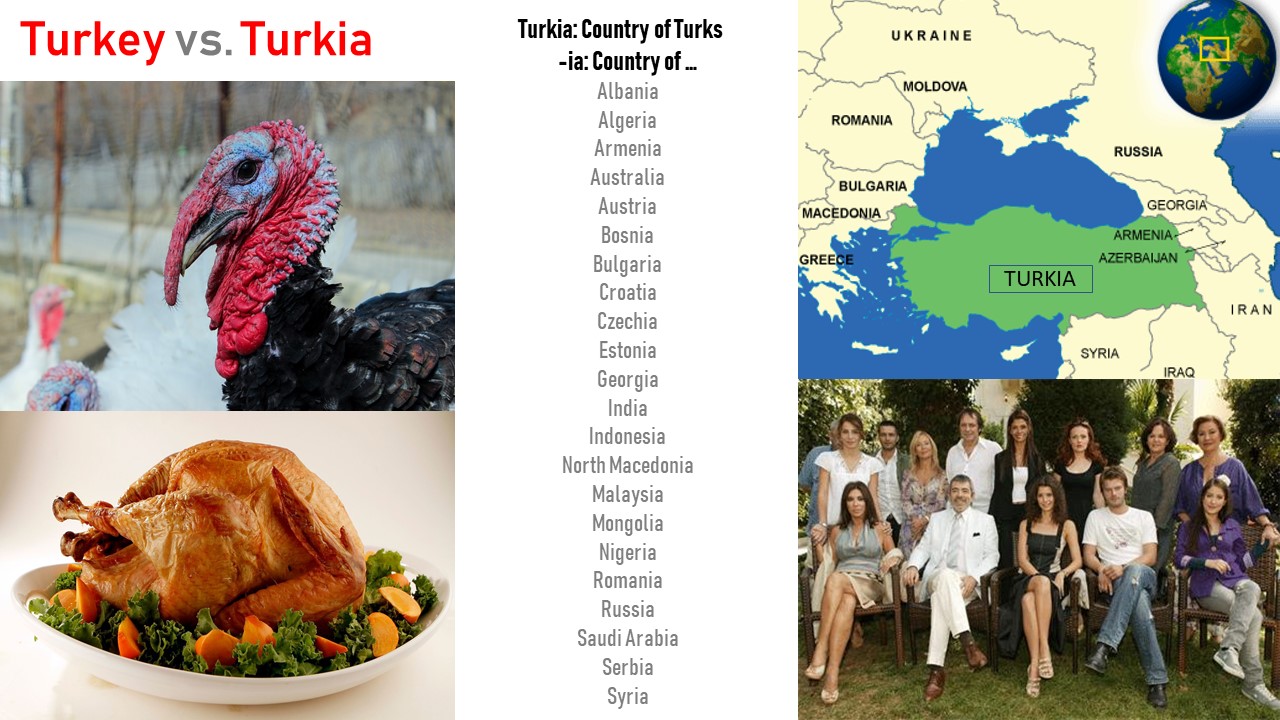
In this slide, I explained why Turkey should be called “Turkia” instead of “Turkey” in English. As I previously mentioned in my blog post at https://www.serhansuzer.com/tr/ulkemizin-ingilizce-adi-turkia-olmali , I demonstrated with examples that the suffix ‘-ia’ technically means ‘-‘s country’ in English. I explained that the word ‘Turkia’ could also mean ‘Turk’s country,’ and that this definition is correct. I also compared the ugly turkey image on the left to the Turkish people on the right, saying, “Please don’t make this comparison to us. Call Turkey ‘Turkia’ in English.” I emphasized that I would use the term “Turkia” throughout the rest of my presentation.
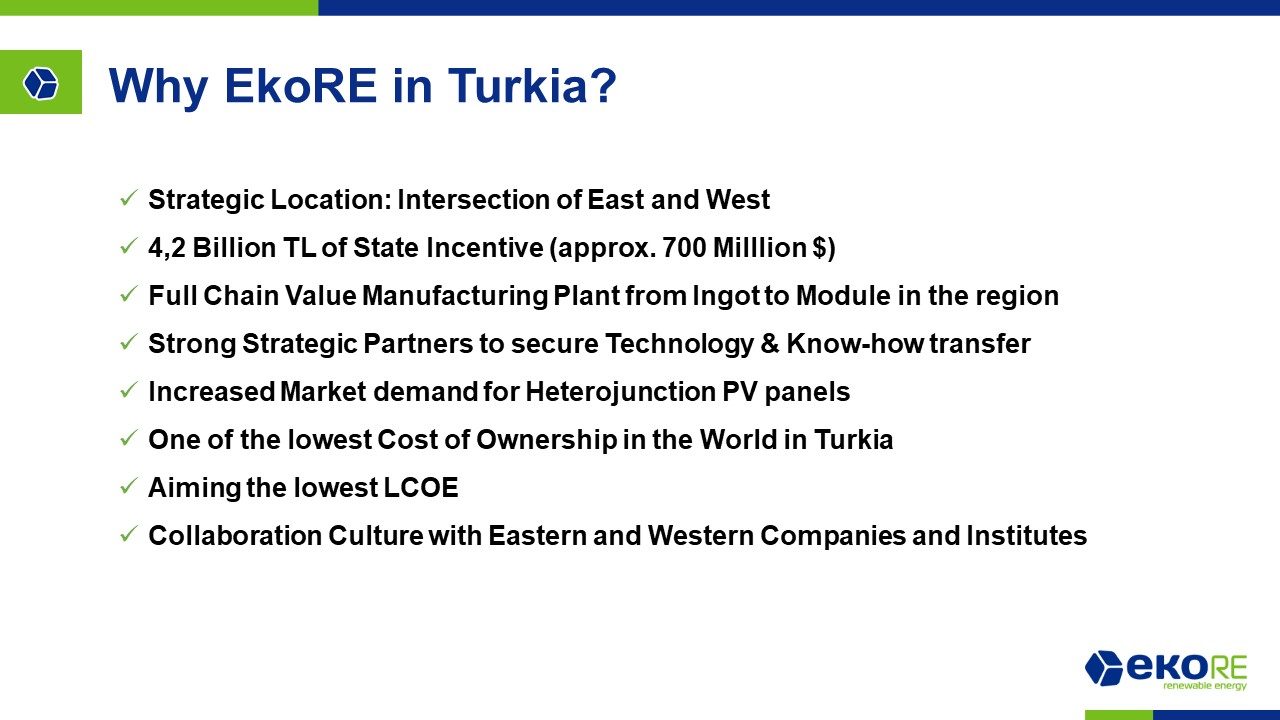
Here, I explained why working with EkoRE in Turkey is crucial. I particularly emphasized that Turkey is at the crossroads of East and West, and that our visionary project in this important region has received significant government incentives.
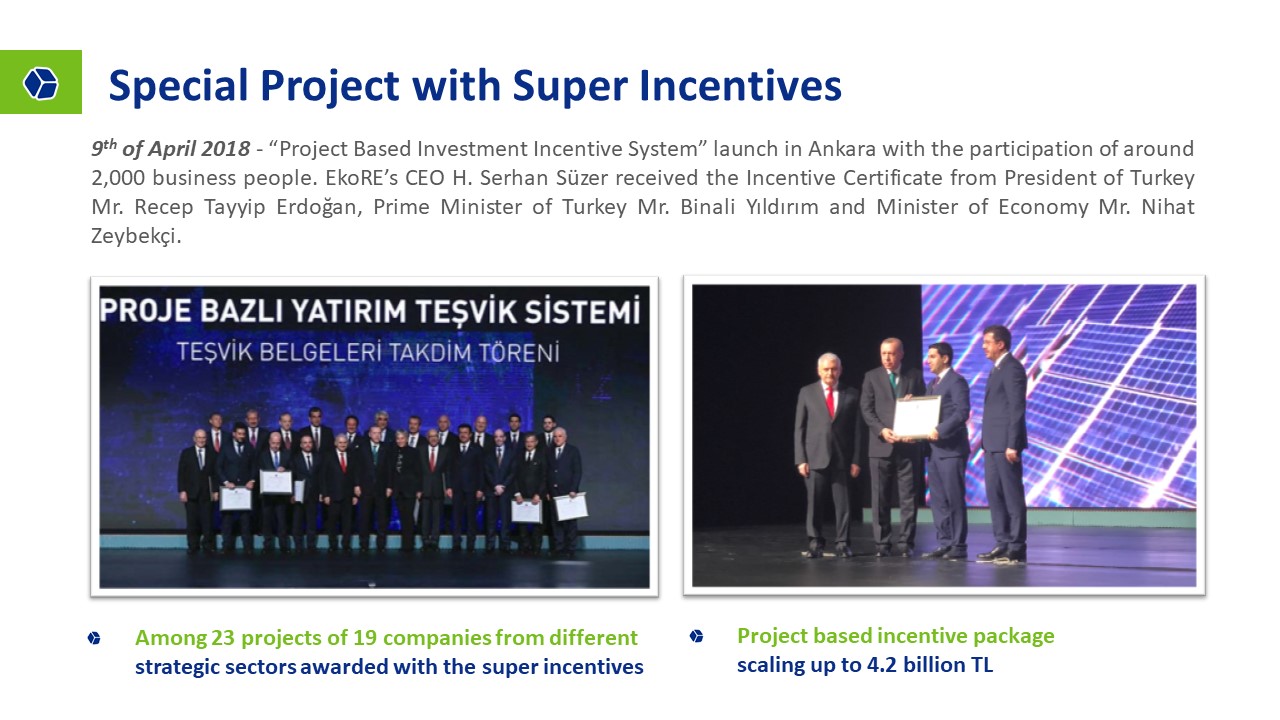
In this slide, I explained in general terms the government incentives we received.
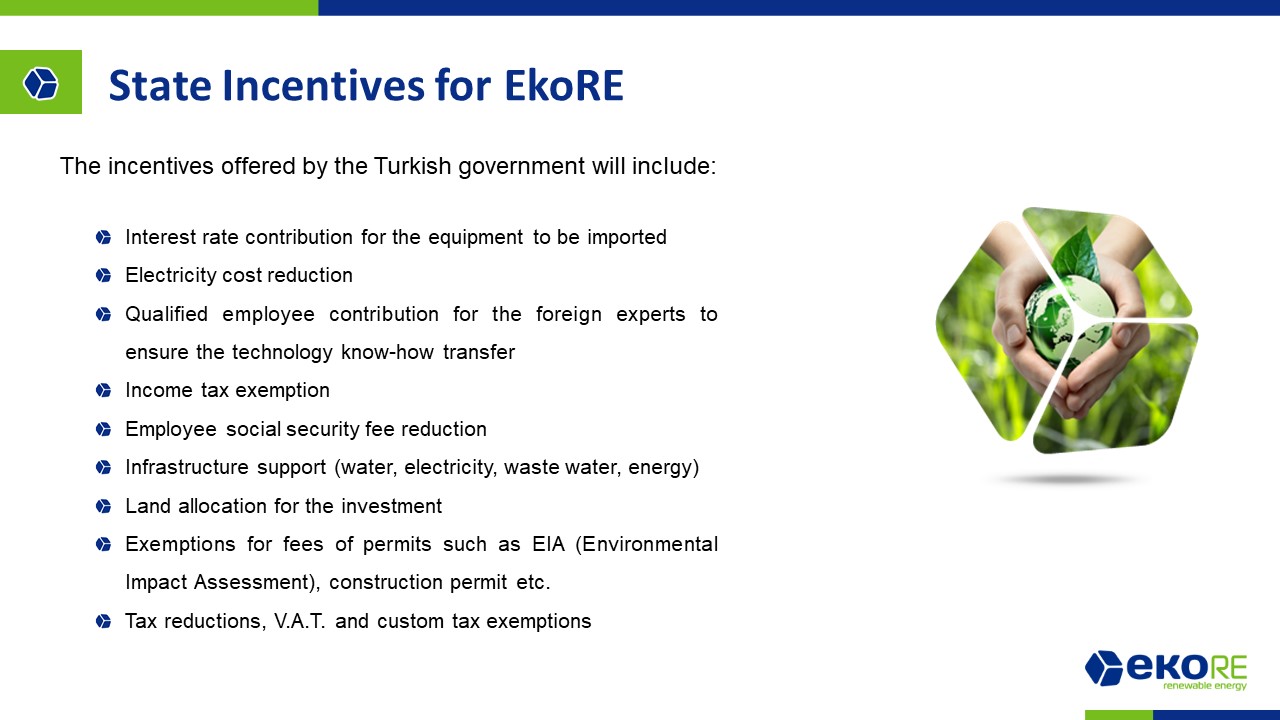
I have given the details of the government incentive here.
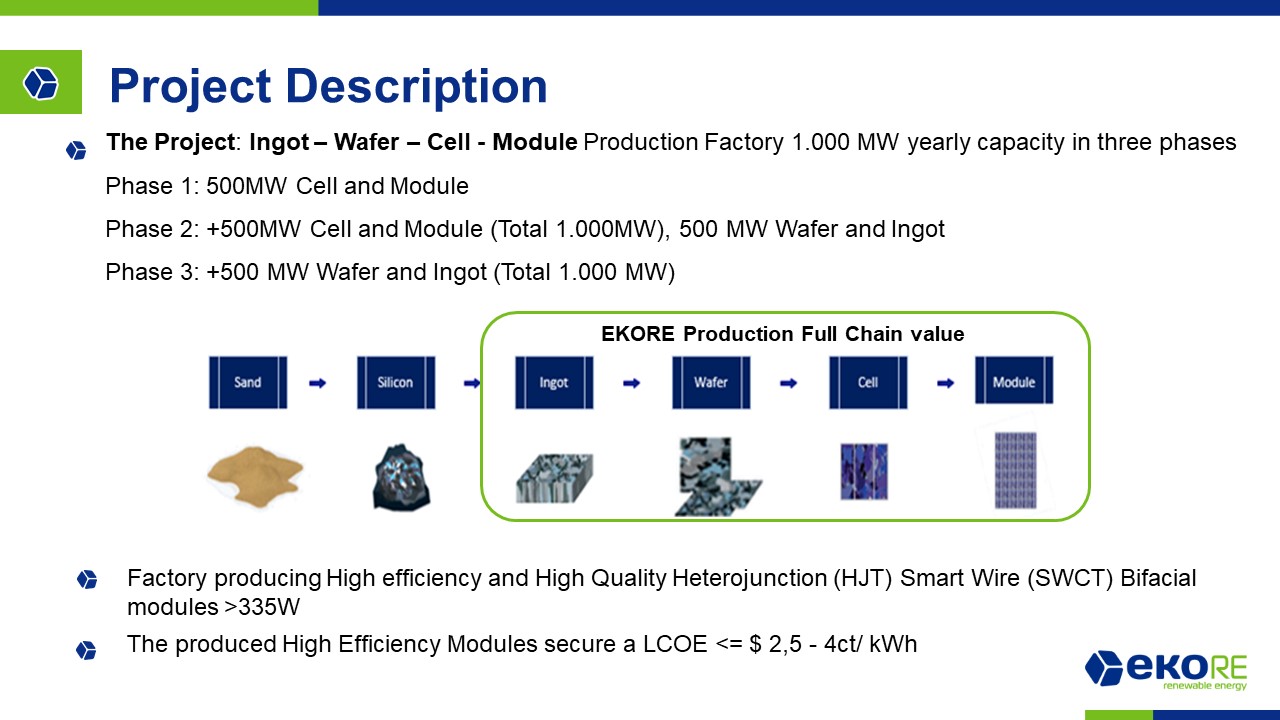
Here, I explained the phases of the investment, including ingot, wafer, cell, and module processes. I also outlined our LCOE target and the type of module we plan to start with.
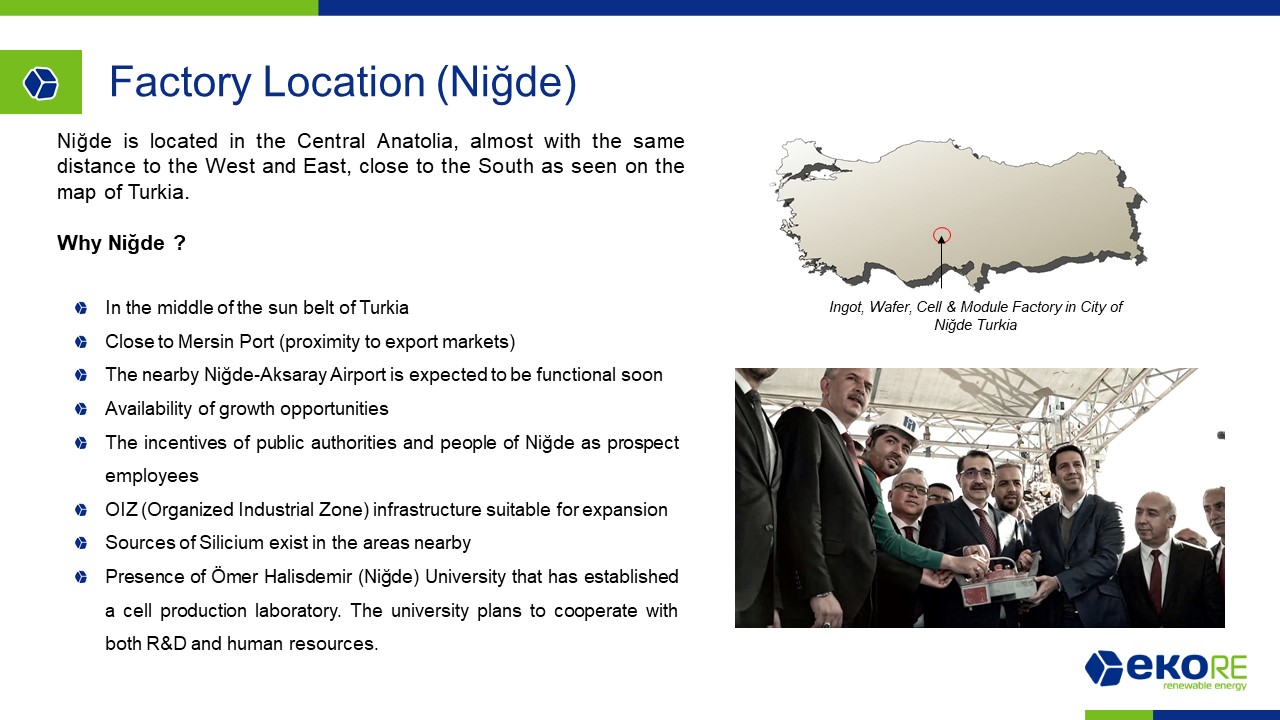
I explained why we chose Niğde in Turkey.
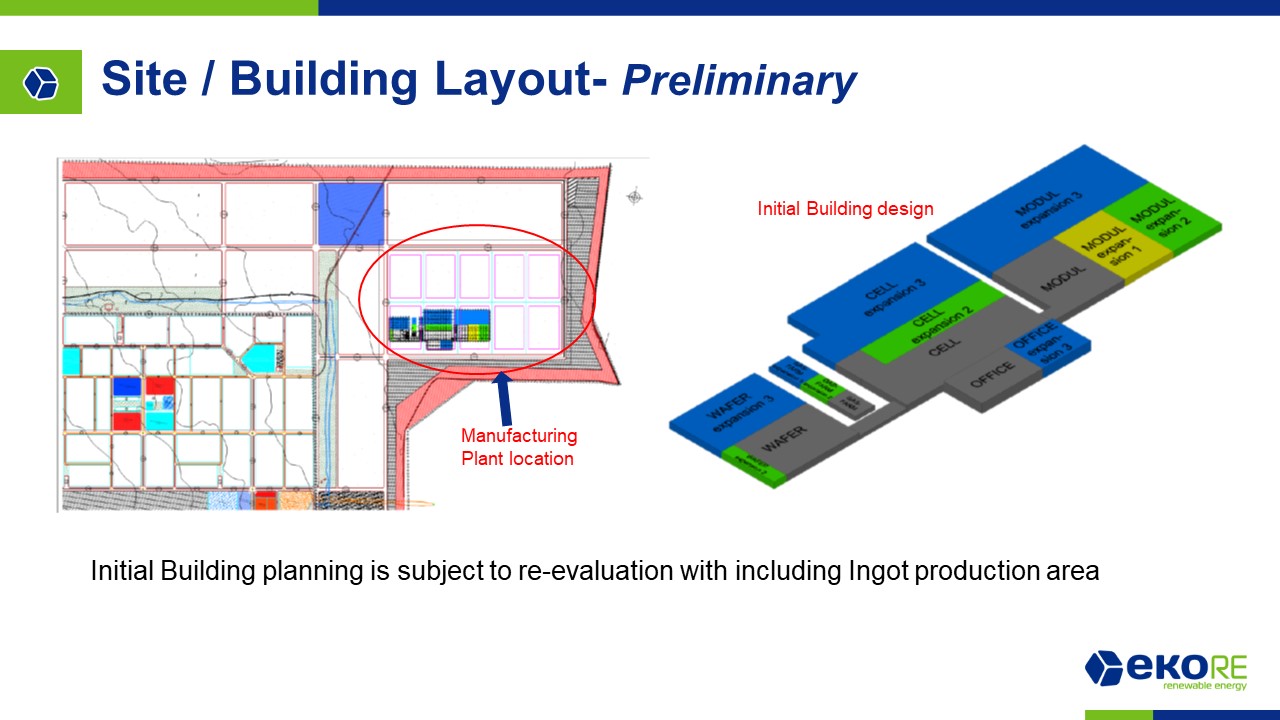
I transferred the layout plan of the land.
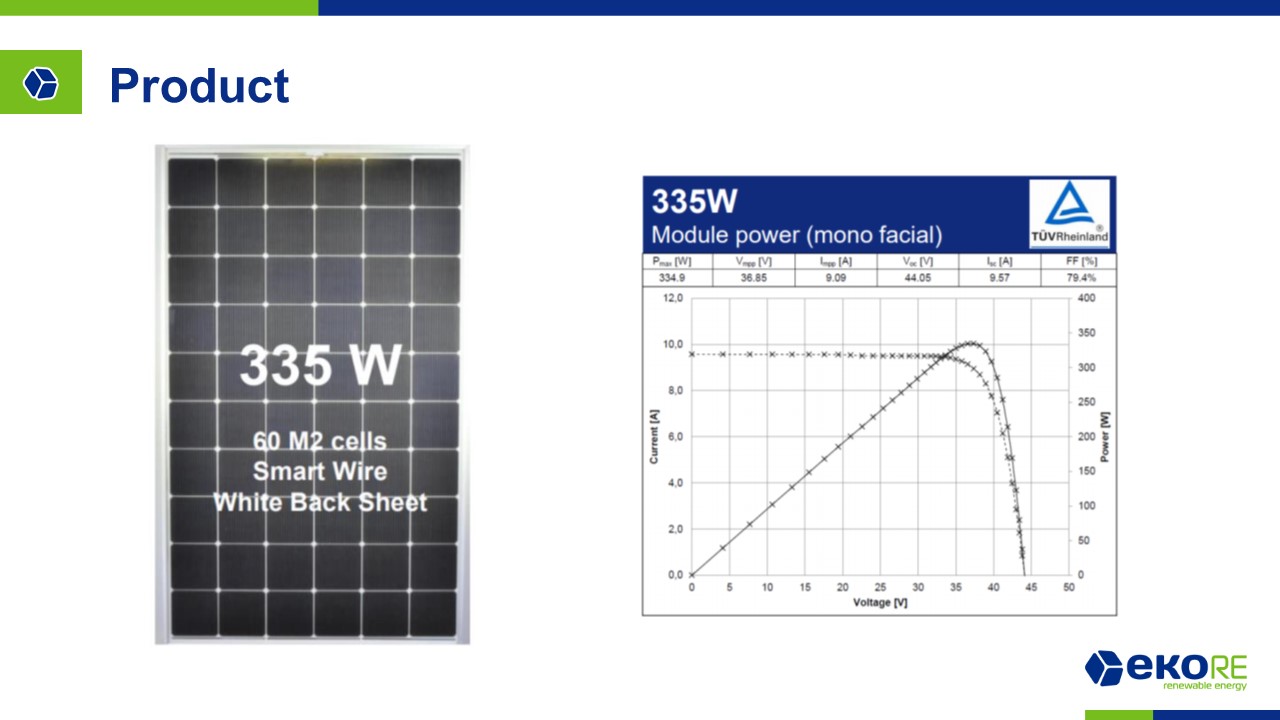
First, I shared the details about the solar panel we plan to produce.
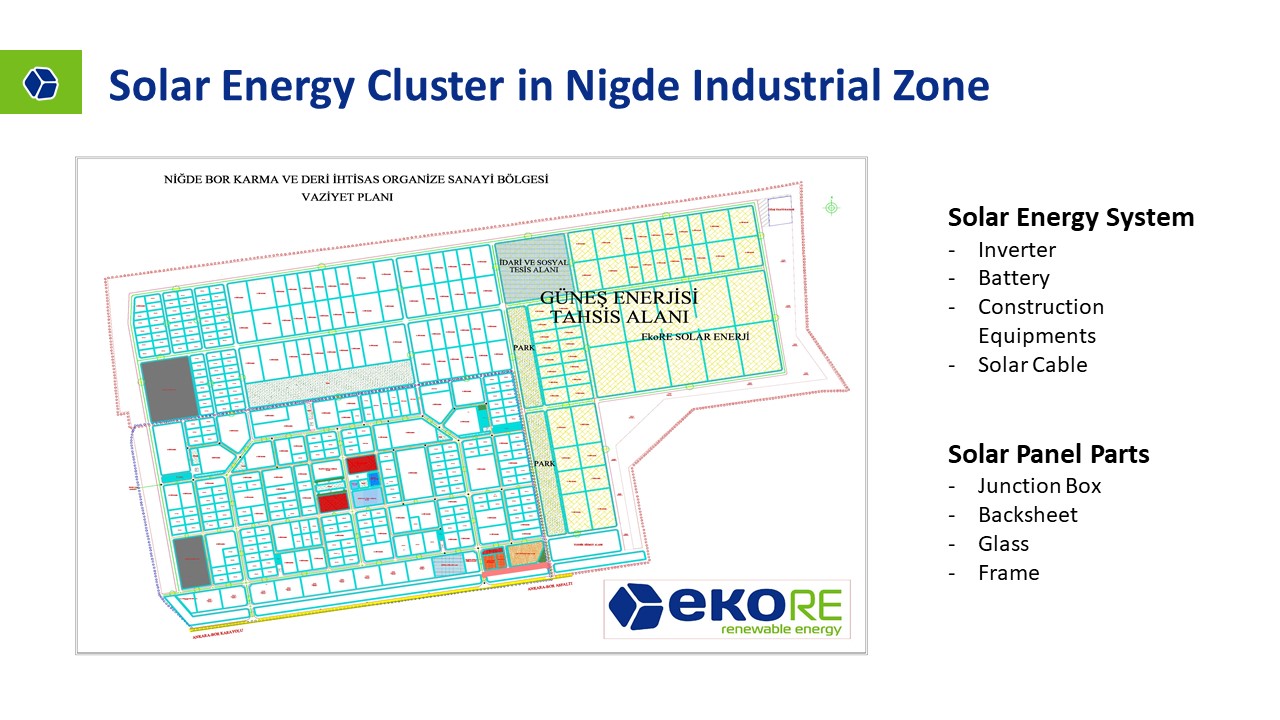
I explained what we did regarding clustering in Niğde Bor Organized Industrial Zone.
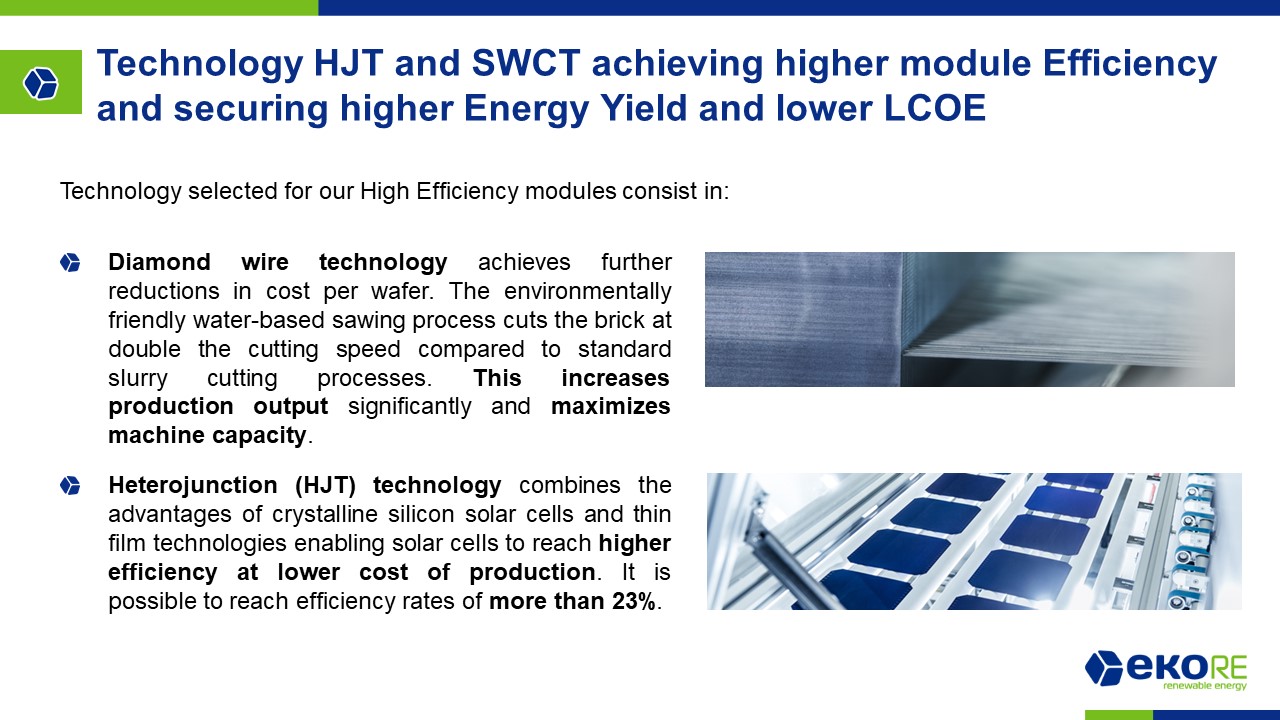
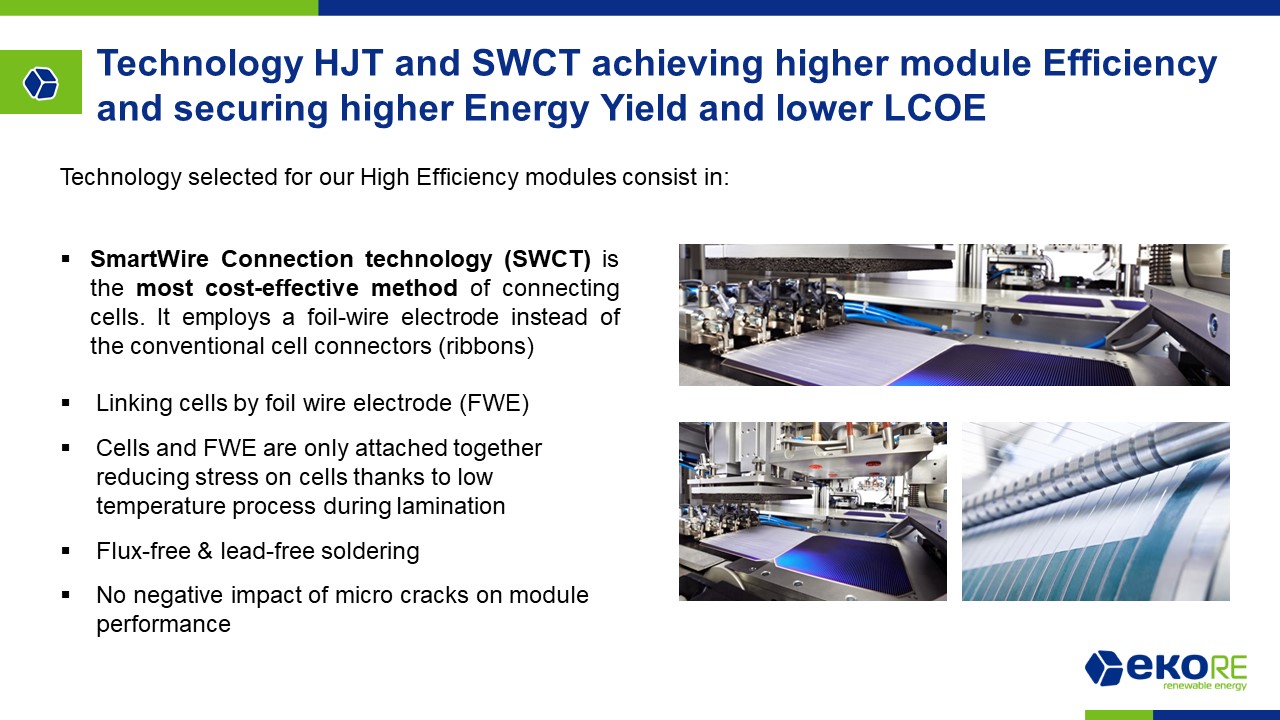
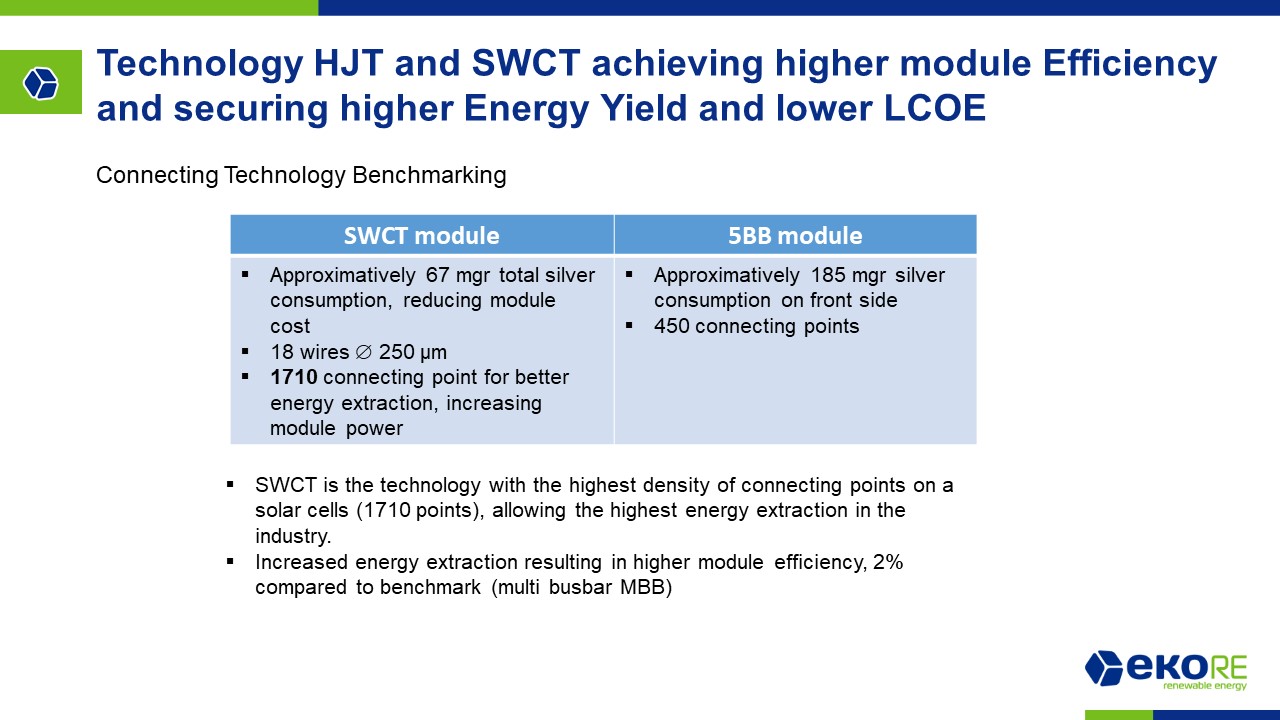
Here I provided the details of the Heterojunction, Smart Wire (SWCT) and Diamond Wire technologies we plan to use.
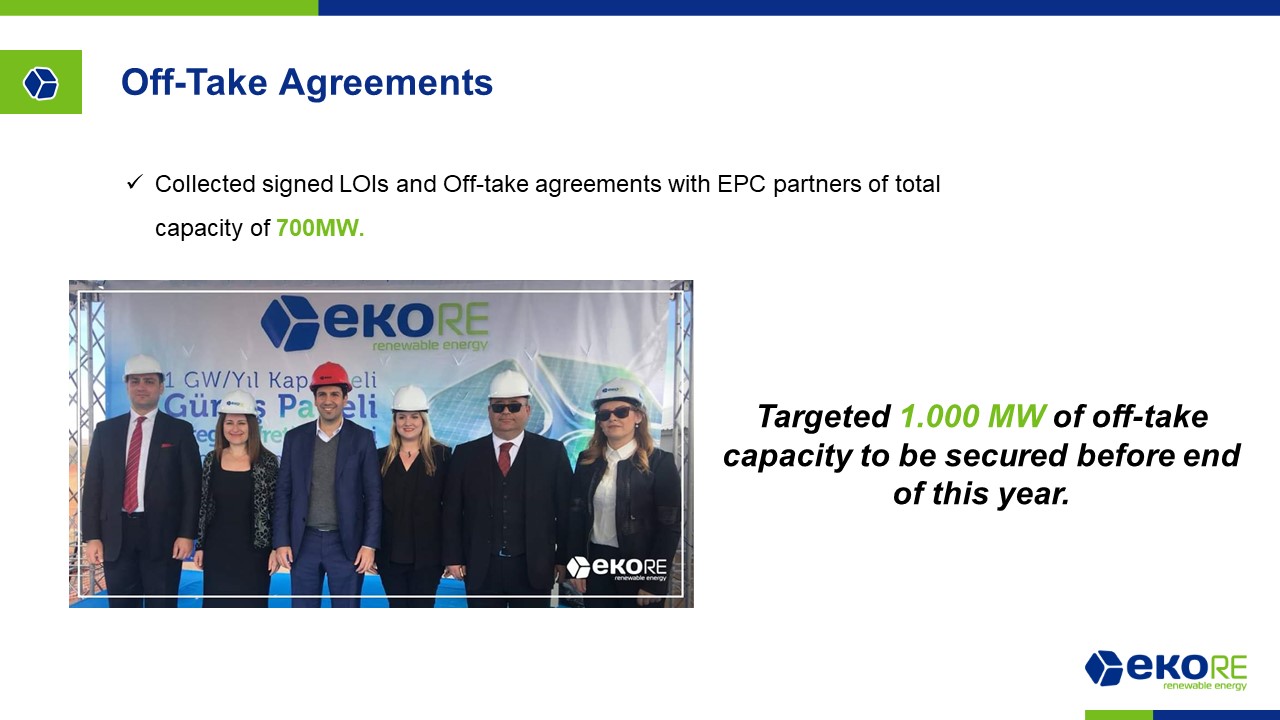
I explained that we have an off-take agreement for 700 MW as of this month, that we plan to increase this to 1,000 MW by the end of this year, and that it will not be difficult for us to sell the panels after they are produced.
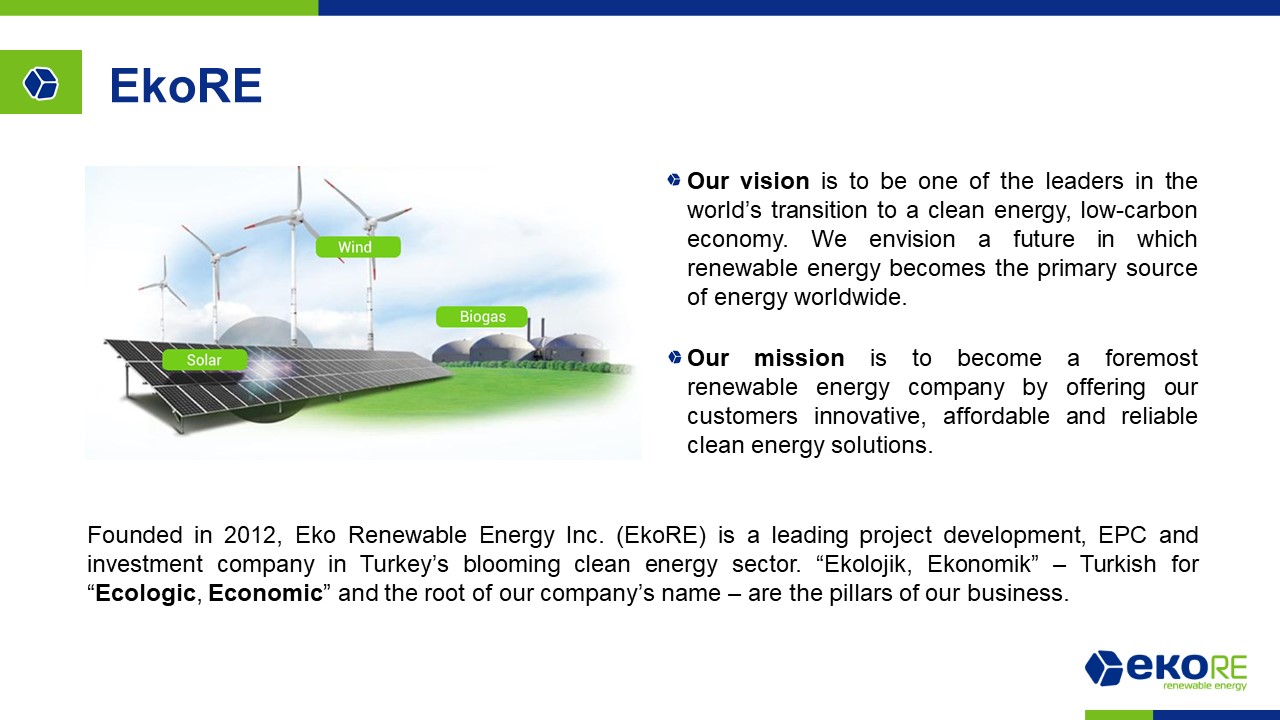
I explained our vision and mission. I also explained the origin of the name EkoRE.
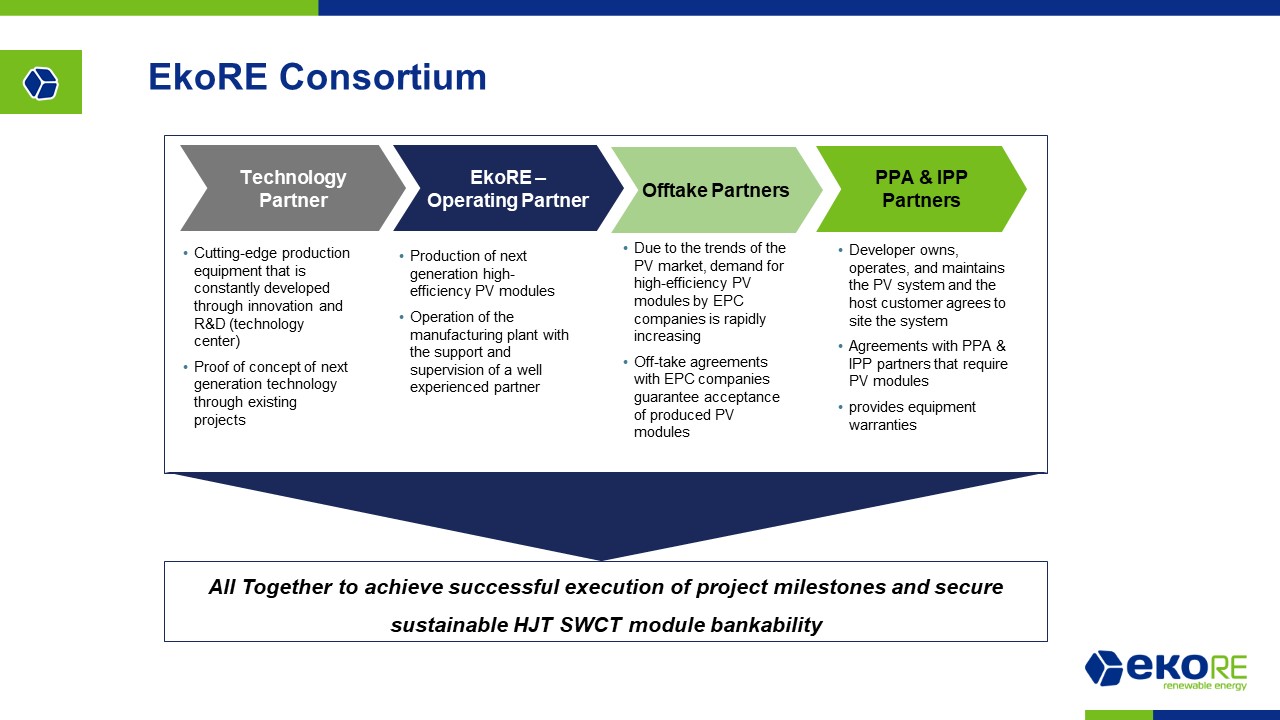
I mentioned the institutions and organizations that EkoRE collaborates with.
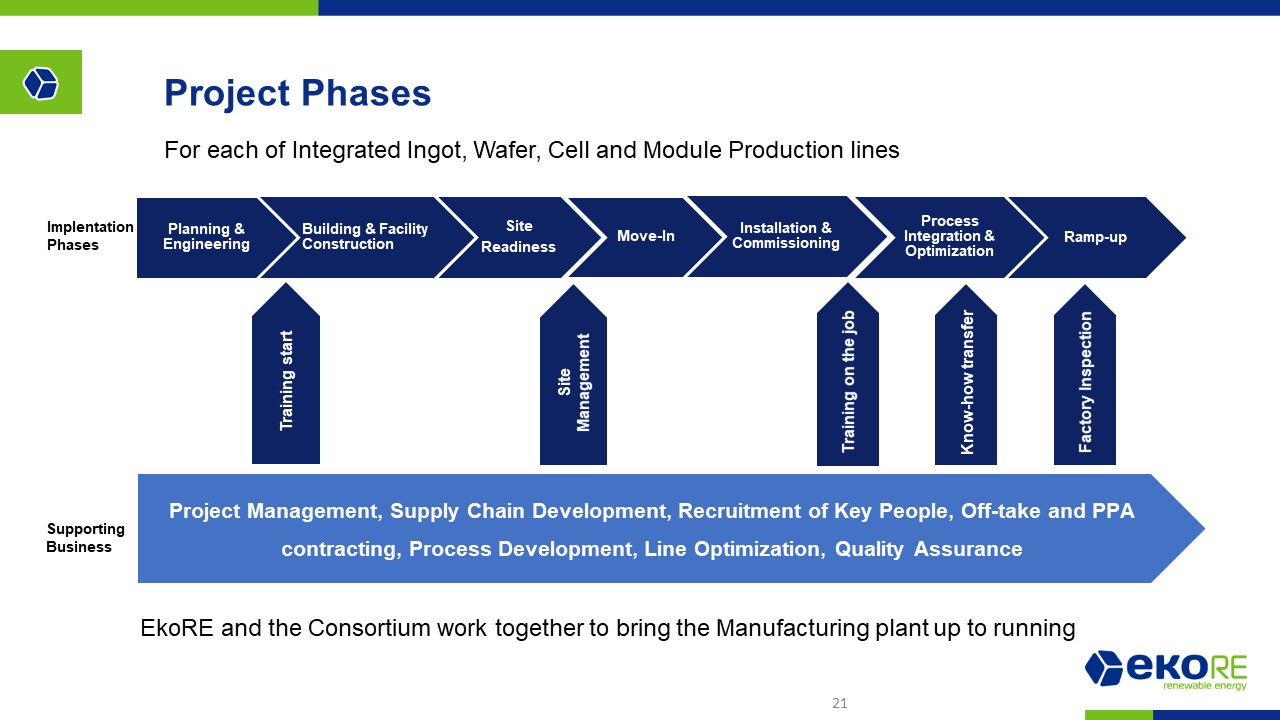
I explained the project construction process and where we are in the process.
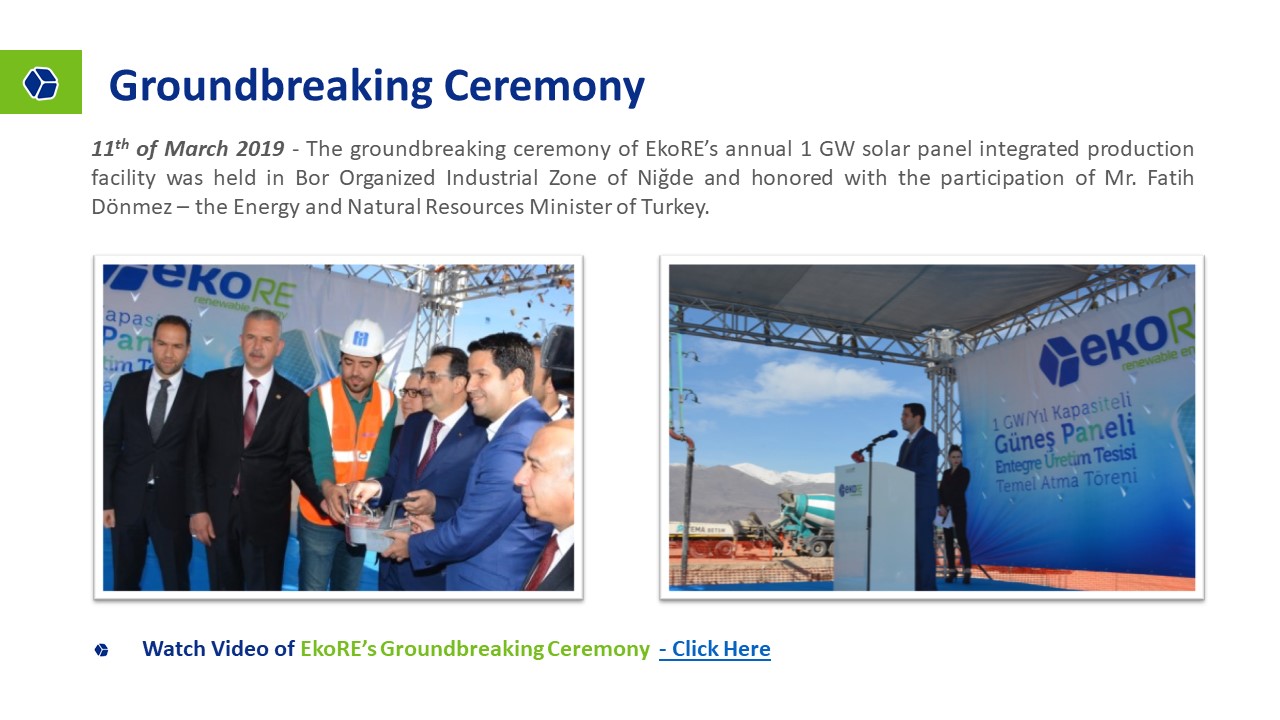
I explained our groundbreaking ceremony and said that we would show a video of the groundbreaking ceremony at the end of the presentation.
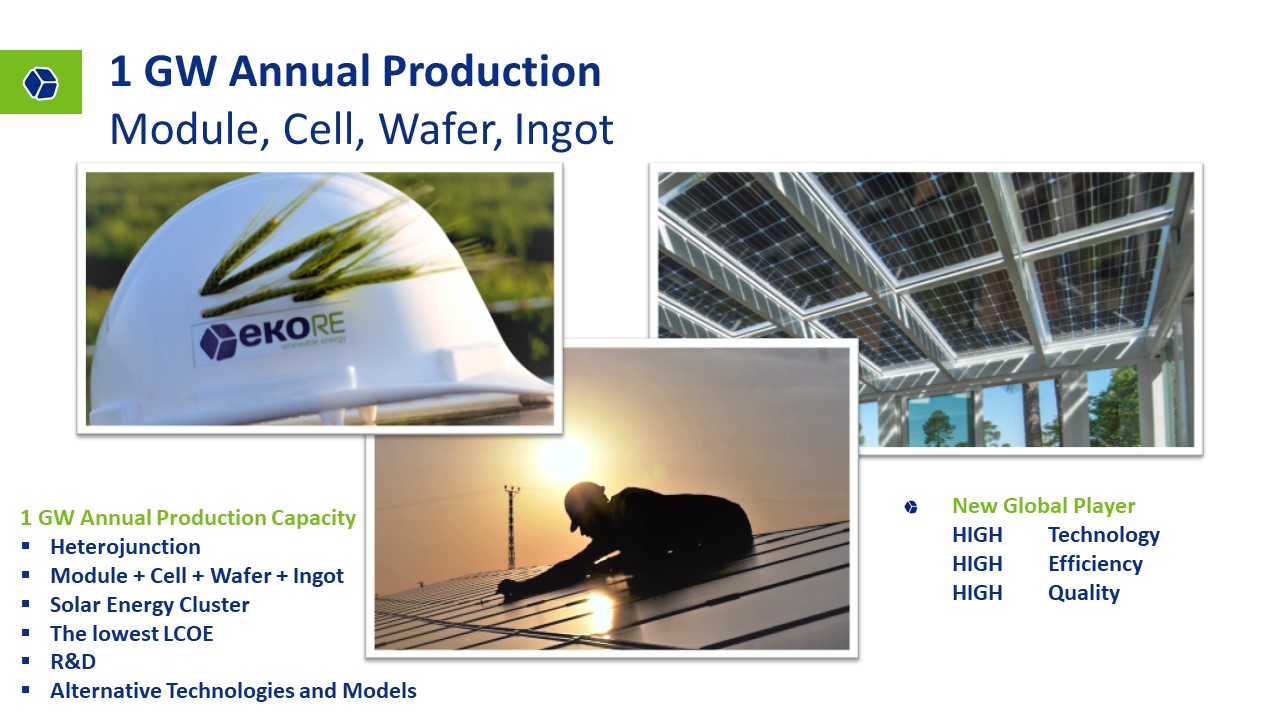
I gave the summary of the entire presentation in this last slide.
I thanked the audience (in English and Chinese). Now, to help you visualize it, I’d like to share with you the photos and video taken during my presentation:
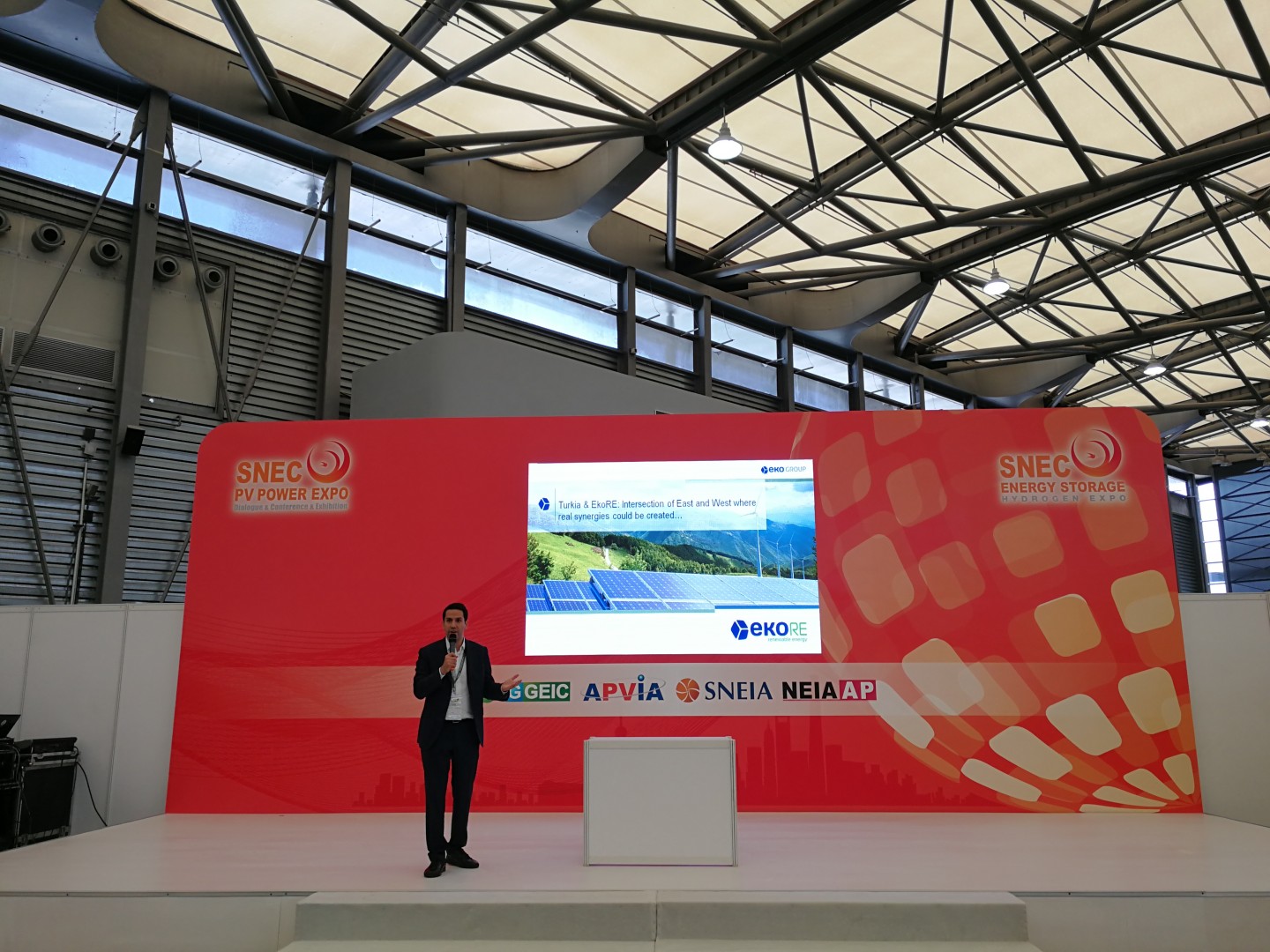
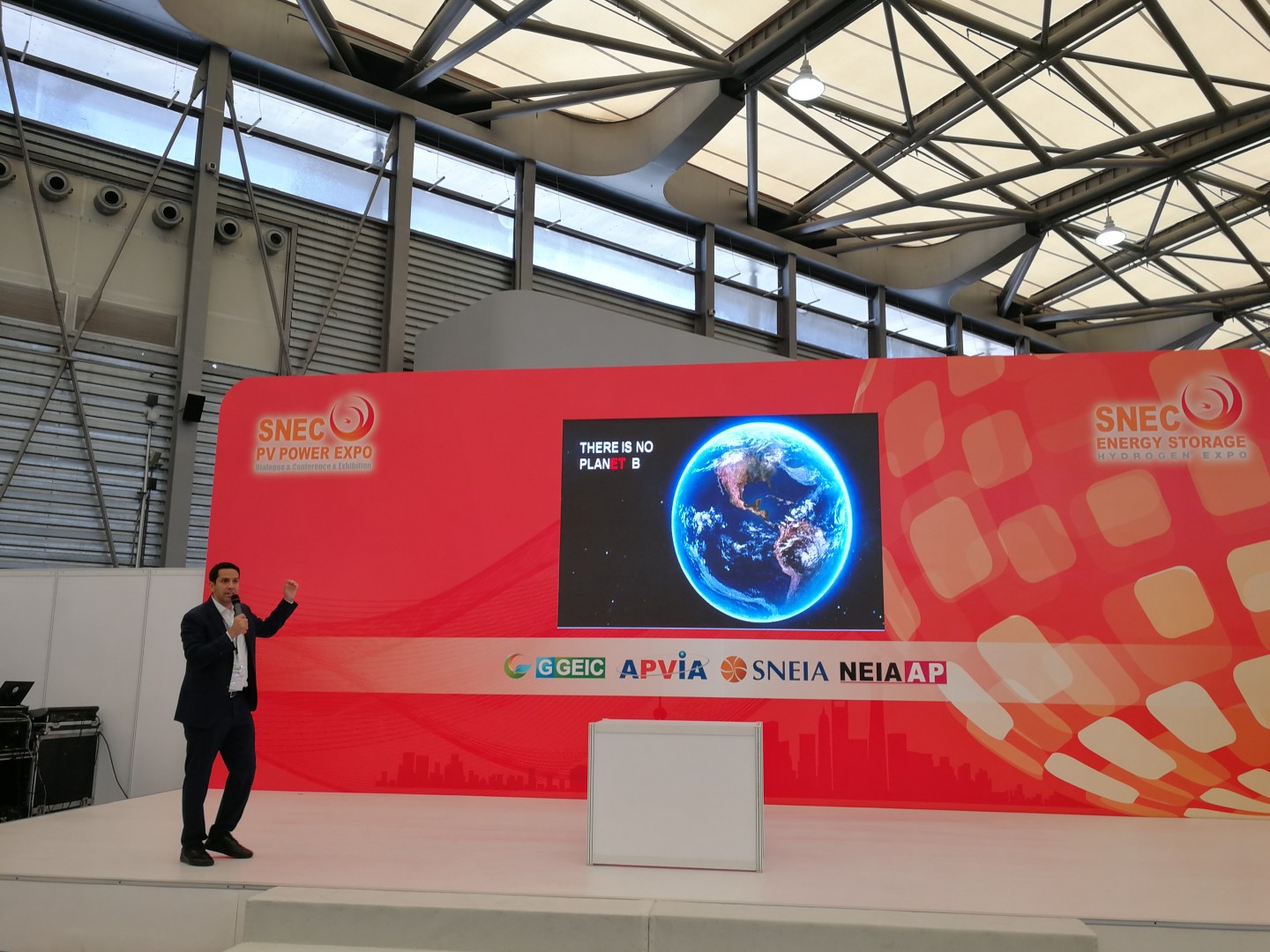
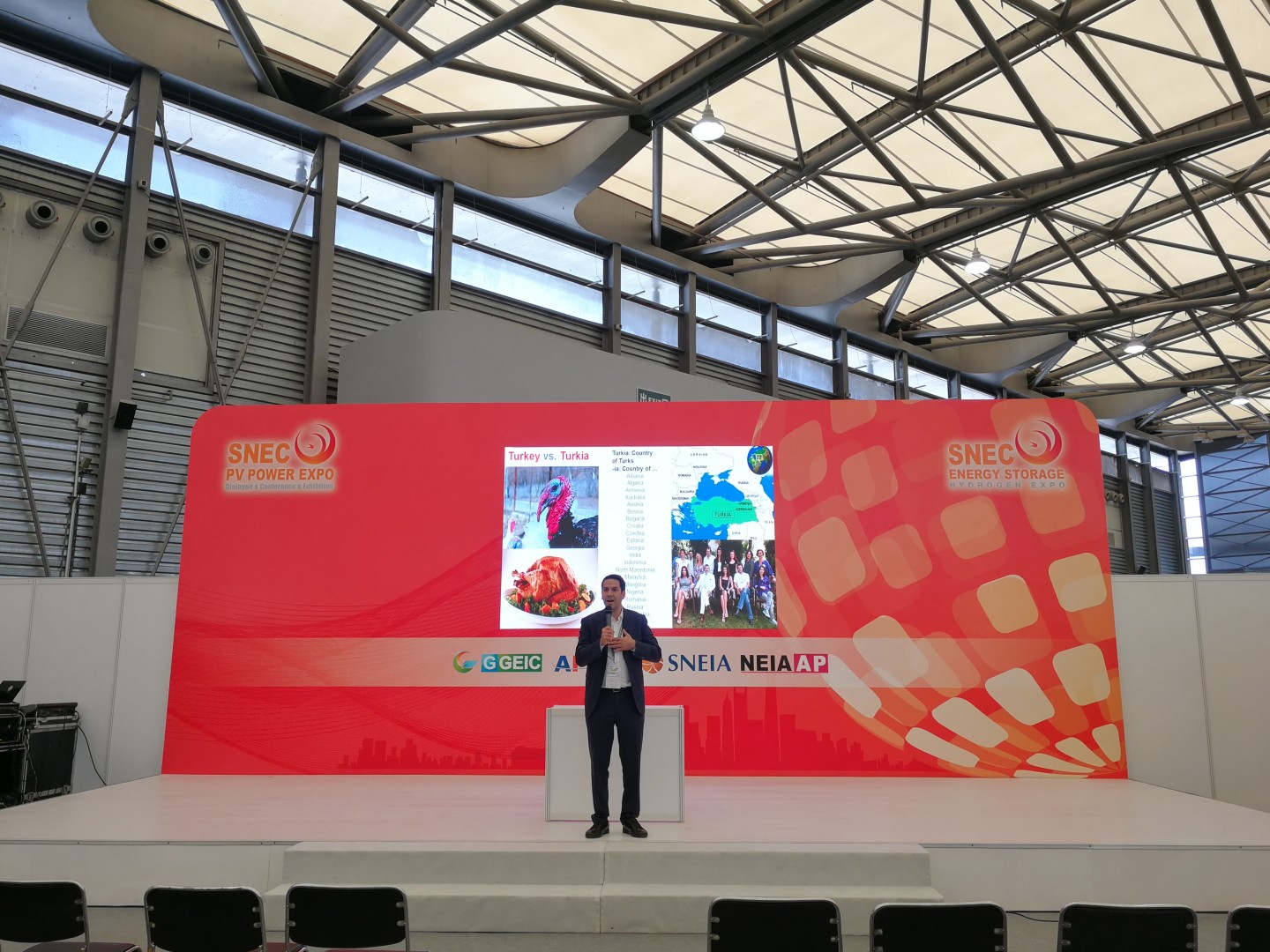
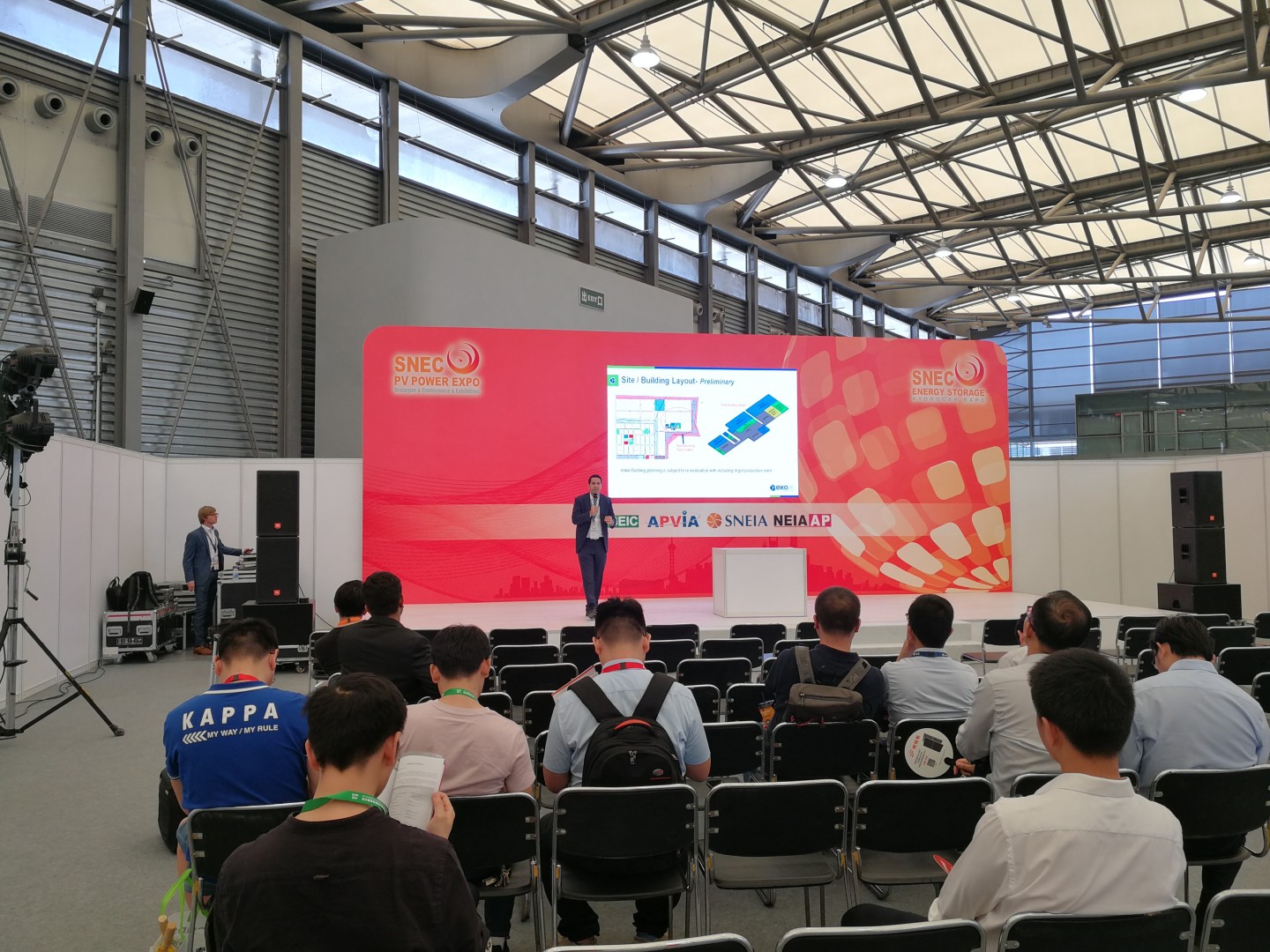
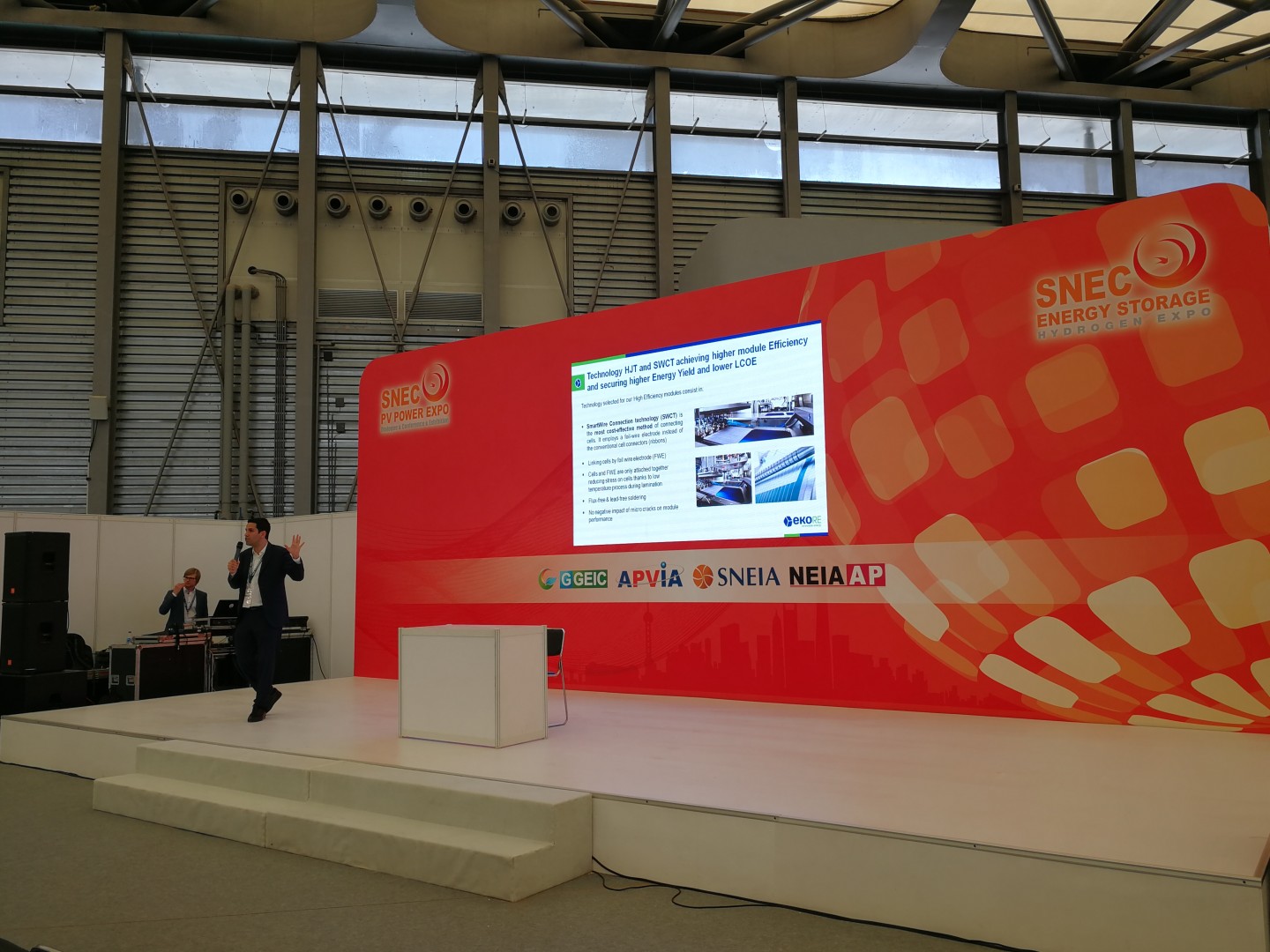
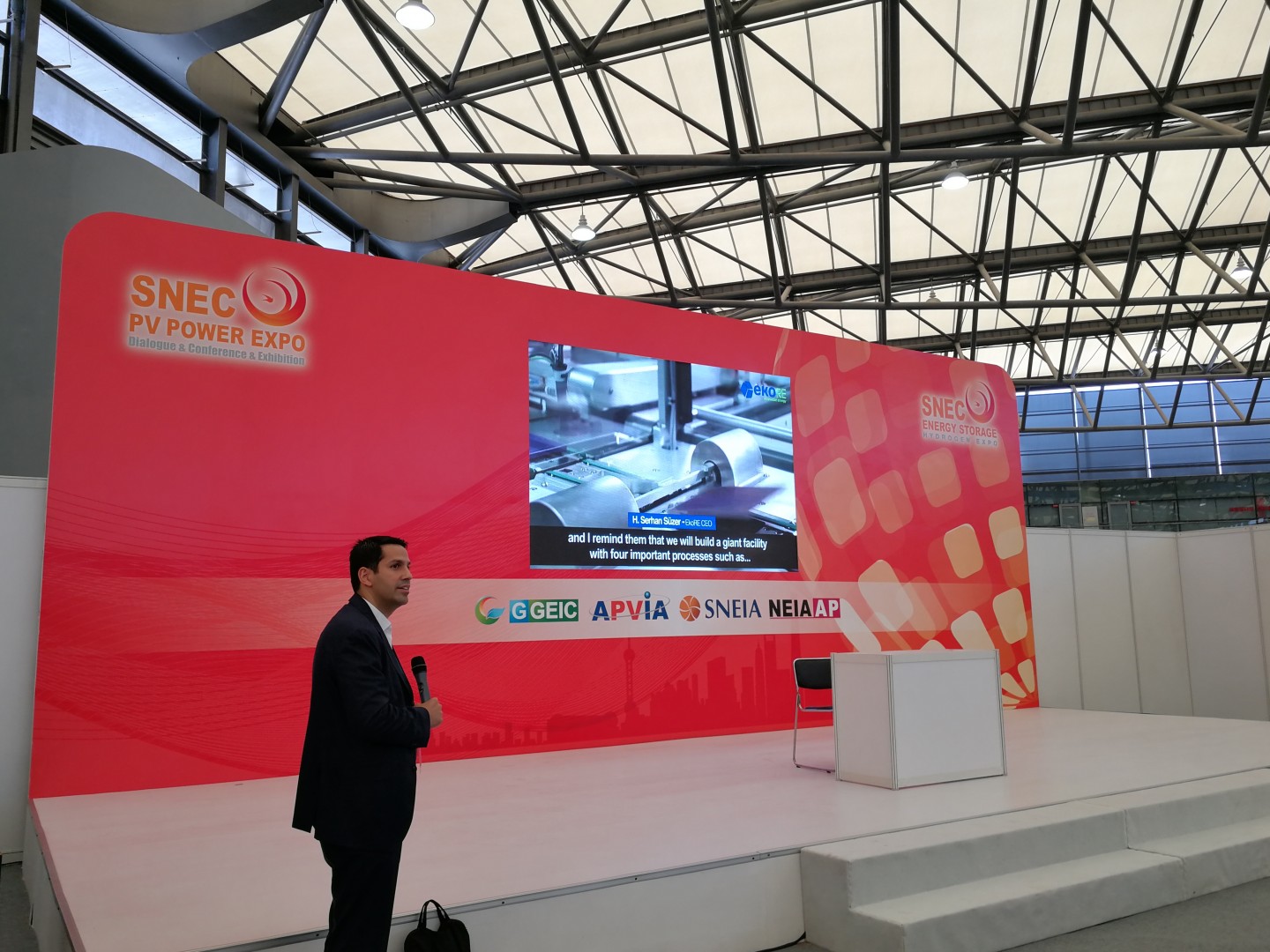
After my presentation, we were able to play the video, albeit a bit late. The presentation received a good round of applause. No one asked questions. After the speech, some people approached me and spoke. Various participants from both China and Europe approached me personally to offer their comments, and I answered their questions.
In these conversations following the presentation, I emphasized that “plans have been made and action has been taken, but flexibility and changes can be made depending on market conditions.” In such large investments, the speed with which you adapt to change is a key factor in your success. I emphasized this.
It was a productive presentation for me. I was pleased with the interest shown. I believe I represented my country in China in the best possible way.
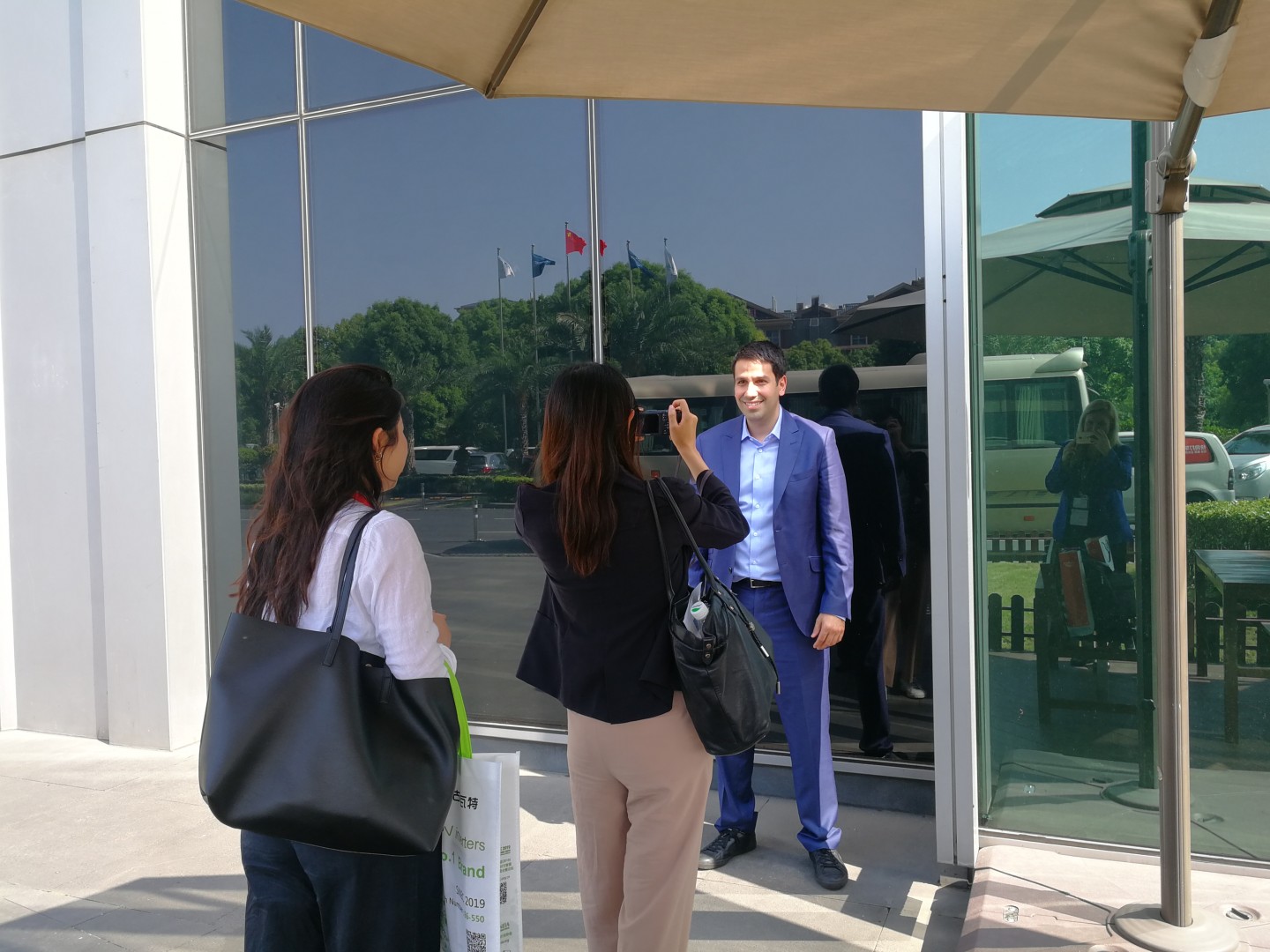
I was now ready for a busy series of meetings.
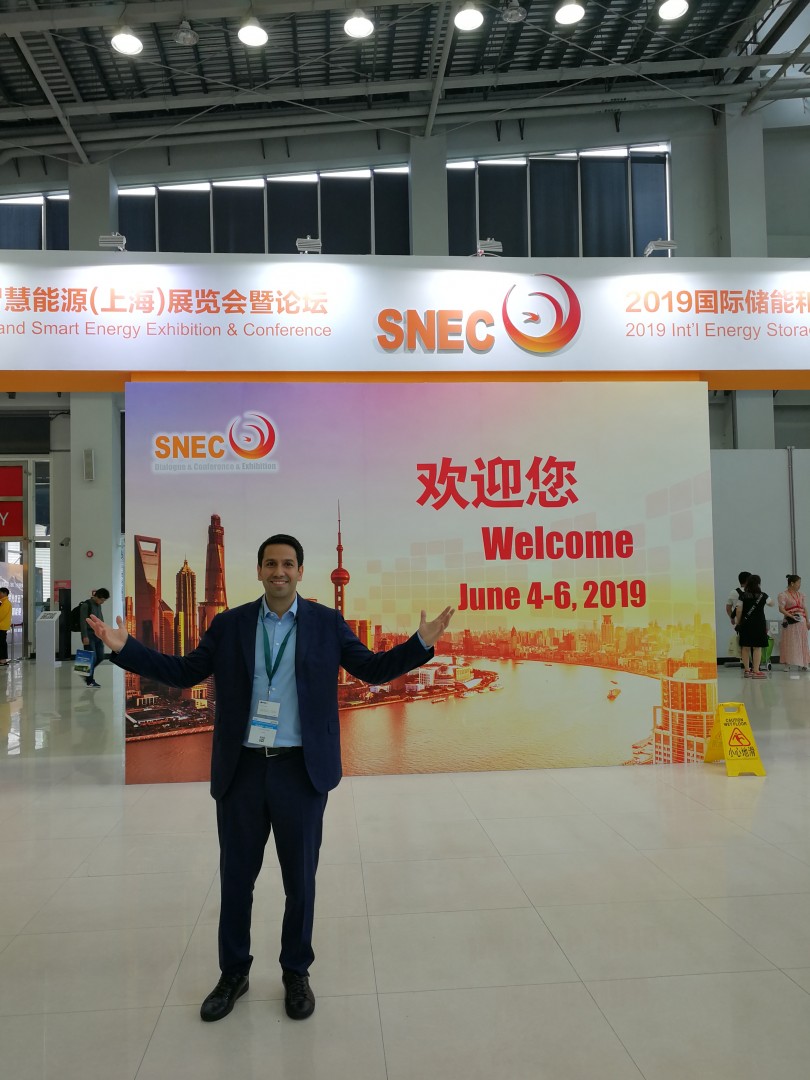
After evaluating the situation with our Sales and Marketing Director, Simay Hanım, and thanking the organizers, I moved to the adjacent hall for our next meeting.
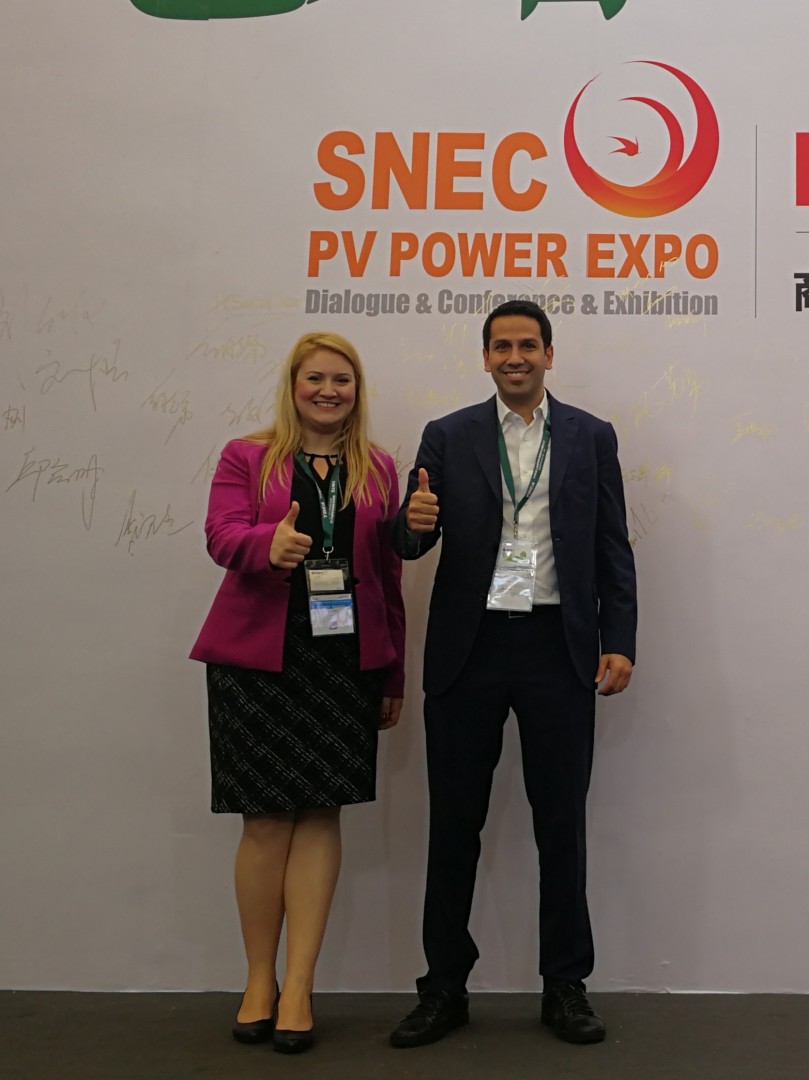
Our day, which was supposed to be full of meetings, had started off happily…
Bonus 1: I enjoyed spending time with Chinese children the most in China. Here are two examples. First, I went to a shopping mall in Shanghai to buy a charger for my computer, and I picked up a cute Chinese boy who came up to me and caught my eye. We had a wonderful conversation. The second example was when I tried to play football with a Chinese boy in the lobby of the Kerry Hotel, where the event was taking place.
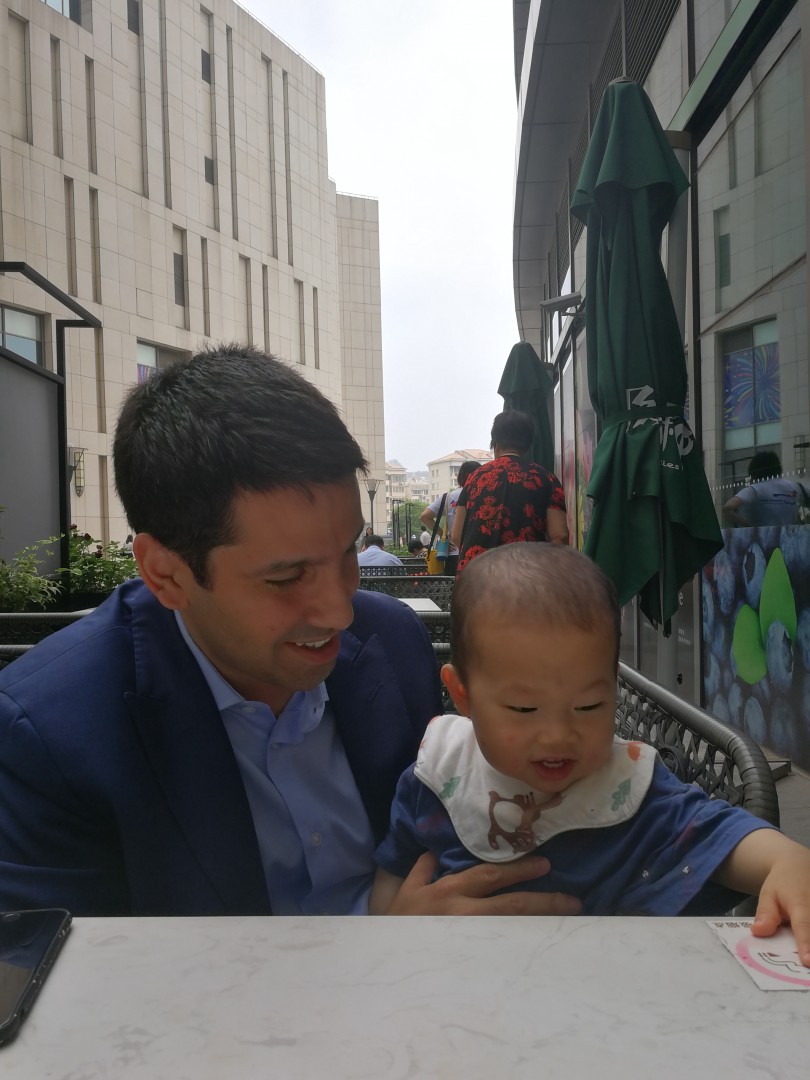
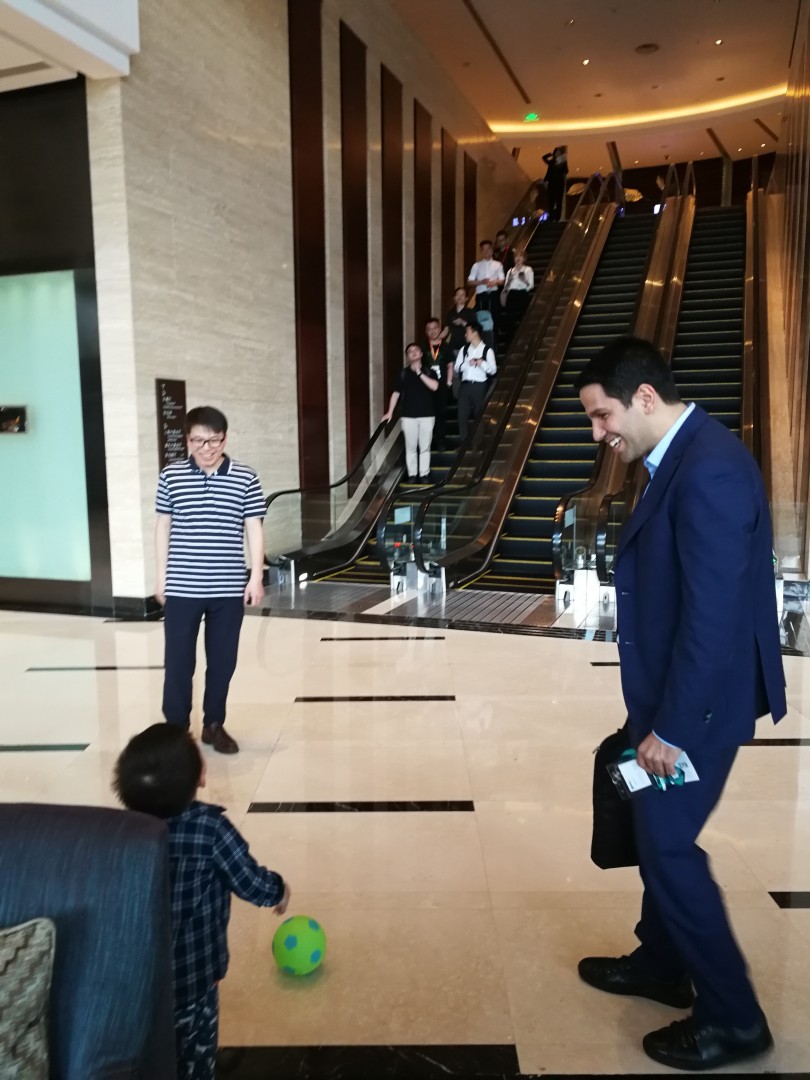
Bonus 2:
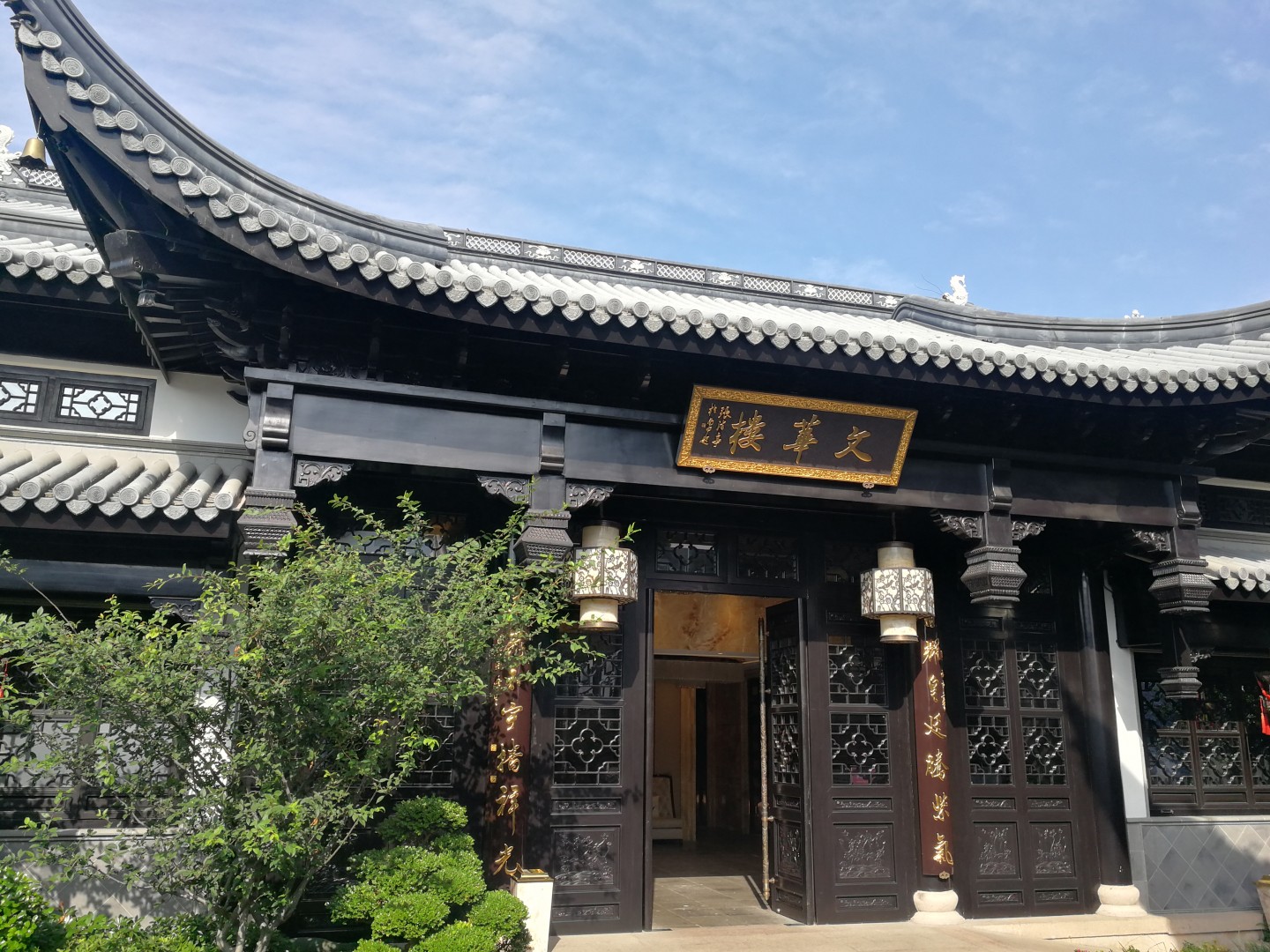
The venue where the event was held reflected Chinese culture.
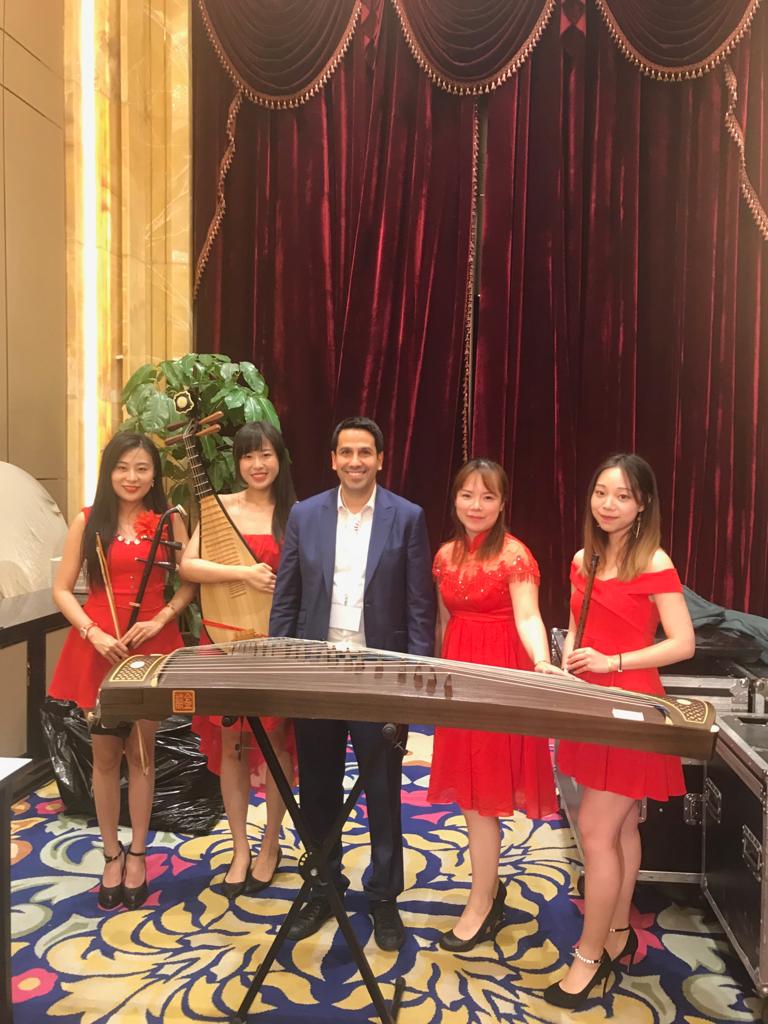
On the first day of SNEC, at a night organized by one of our potential suppliers, the ‘Twelve Girls Band,’ comprised solely of Chinese women, performed this piece they nicknamed ‘Freedom’:
I couldn’t believe my ears when I heard this song. As many of my Turkish readers will recall, it was the soundtrack to the famous Turkish film, ‘Tosun Pasha.’ At first, I couldn’t recognize it. I asked around and confirmed that it was actually our famous ‘Nihavend Longa.’ You can listen to the full song at https://open.spotify.com/album/2qtWzajxpYgaH0OwKnetIB .
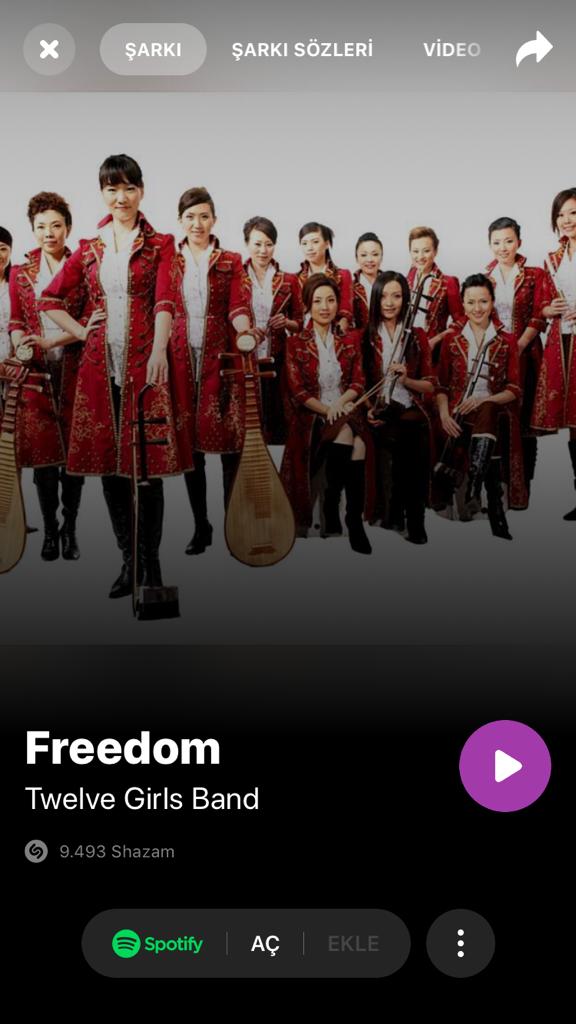
Afterward, I approached the girls and told them the truth of life: that this song was originally in Turkish. We sent them the original to confirm this, and then took the following souvenir photo: