Let’s recall the first two articles I wrote about this RES project. I recommend reading them before reading this one. You can access them via the links below:
- Serhan Süzer – Ders niteliğinde bir RES projesinin kurtarılması -1- (serhansuzer.com)
- Serhan Süzer – Ders niteliğinde bir RES projesinin kurtarılması-2- (Kanat Kazası) (serhansuzer.com)
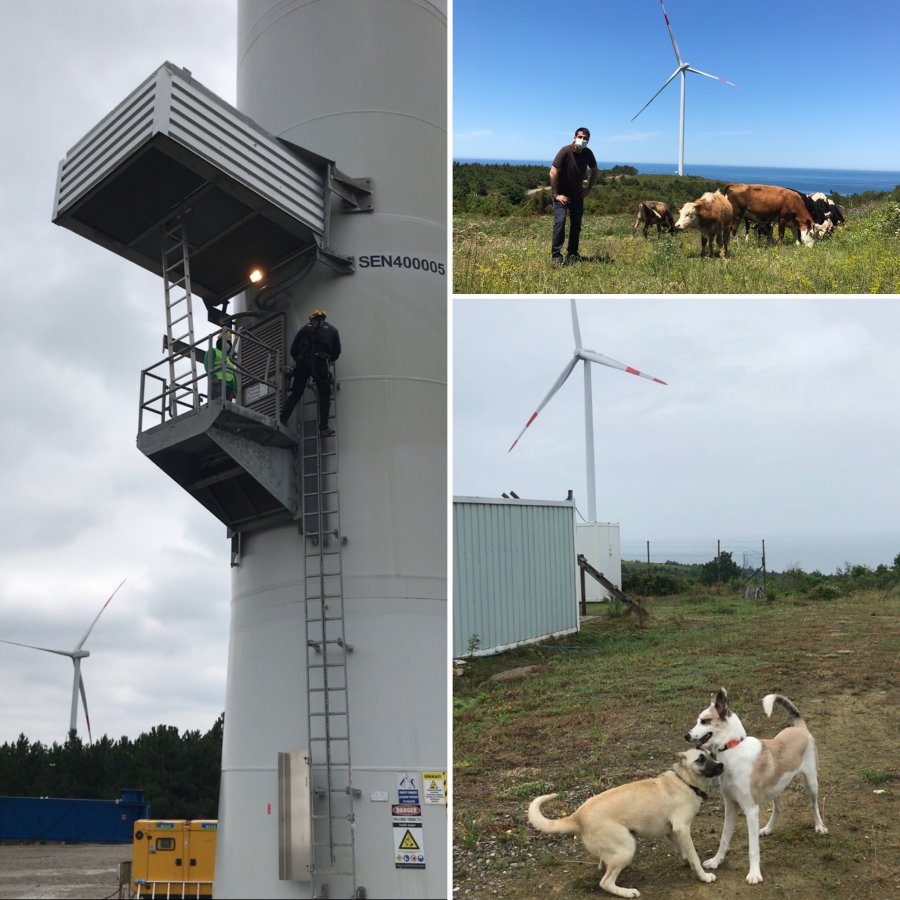
First, let’s rewind and begin with our experiences after commissioning our first turbine (T2) on 29 July. After commissioning this first turbine with considerable difficulty, our focus was on completing the blade repairs as quickly as possible and commissioning the second turbine. However, the blade repair took longer than expected. We had purchased the blades from a Portuguese company. We subsequently hired another Portuguese company, staffed by technical experts who had left this Portuguese blade company, acquired by Siemens Gamesa, because they were familiar with the blades and we were confident in their expertise. Due to border closures due to COVID-19, logistics, and other delays, we were able to bring the blade repair company’s technical professionals to the field at the end of July. The repair process, which should normally take two months, took four months due to some setbacks. We were particularly hampered by supply issues with Tila, the company from which we purchased the necessary materials. Can you imagine? You pay for something up front, and the blade repair is delayed because Tila Inc., the company that had made the commitment, couldn’t deliver the imported products to the field on time. After weeks of heated discussions and a process that had now reached the stage of litigation, the company we had invested in upfront four months prior was only able to deliver the imported products we needed (such as special resin) to the field with such a delay. This severely disrupted the wing repair process. Despite being a well-known company in the market, we experienced once again how companies in Turkey fail to fulfill their commitments. After all our efforts, the wing repair was completed in early November last year.
The Problem of the “Crane Rush”
These disruptions further harmed us. Because we couldn’t predict when the wing repair would be completed, we couldn’t organize the next phase. The next step was to organize the cranes and install the wings. This time, we faced the challenge of sourcing cranes due to the six-month extension of the YEKDEM deadline, which led to a surge in crane supply from all investors. Imagine, we barely managed to complete the wing repairs due to supply problems. Just when we were about to organize the crane and have the wings installed, we couldn’t find a crane from any other crane company in the market.
We received three different responses from the crane companies. Either they said they were booked until the end of next year and didn’t offer. Many companies offered us a quote after February or March 2021. Or they asked for 4-5 times the normal price, saying, “If you give us that amount, we’ll see.” This is exactly what they call Turkish-style opportunism. Ultimately, to minimize our losses, we settled on Aydıntaş Crane, which offered three times the normal offer. While the YEKDEM extension wasn’t even on the agenda, we received a quote of approximately €50,000 from a well-known company in the industry. Aydıntaş Crane also offered approximately €150,000. They said, “If you give us that amount, we can organize the crane you want.” The deadline was set for 14 December. As soon as the installation was completed elsewhere, they would send the crane to our site and begin installation. We evaluated the situation, calculated the potential losses due to lost production, and ultimately, we were forced to accept this offer. Yes, this crane company was being opportunistic, but no other options were open. Another crane company had told us, “We’ll bring a special Liebherr crane from Germany; we might be able to get it done in time.” However, they said they could get it done in December, but when they started talking about March for the crane’s arrival in Turkey, we were forced to embrace the only option we had.
After the agreement was made, other problems arose. Aydıntaş Crane claimed the work was delayed due to adverse weather conditions and that they wouldn’t be able to deliver the cranes to site on the agreed-upon date of 14 December. We began negotiating day by day. Then, the 15th, 16th, 17th, 18th, 19th, and finally, the crane arrived on 20 December.
They postponed the work due to the Christmas holiday
Meanwhile, the crews from Robur Baltic, the Polish subsidiary of the German company Robur, whom we had brought onto the field for installation, had already taken their positions on 14 December. After six days spent mostly stalling and making some preparations, the real work began on 29 December. This time, another problem arose. Of course, they were paid for those six days of stalling. The Poles were growing impatient and announced that they had purchased their tickets to Poland on 21 December and would return home for the Christmas holidays no matter what. With begging, we managed to extend the deadline by one more day (by reminding them that Christmas started on 24 December). So, the company we had brought from abroad to do the installation only worked for two days. As a result, they left the job unfinished. Isn’t that a different situation from the Turkish mentality? What does it mean to leave the job unfinished? You stay for another day or two, complete it, and then return. But because the Germans and Poles, in their mindset, were of the opinion “this is the agreed-upon date, no work on Christmas,” we were completely unable to convince them.
After telling the crane company that the work would be incomplete due to the scheduling delay and that we would compensate them for our losses, the crane company organized a local installation company and brought them to the site. The local team was not bad, but we had to clean up a lot of things ourselves after they left.
Bank’s Deduction Request
The crane company paid the local installation company’s fee, out of a figure three times higher than we had quoted. However, another problem arose here. The bank, claiming the crane company was at fault for all these delays, said the amount to be paid to the crane company should be restricted. They wanted a 10% deduction from the last remaining installment. Since payment approvals go through the bank, we informed the crane company of this. The crane company went on a rampage. They dramatically lowered the bar and began threatening to shut down the site and prevent us from operating, just as Sistem Vinç, a company we were suing, had done (see: H. Serhan Süzer – Ders niteliğinde bir RES projesinin kurtarılması -2- (Kanat Kazası) (serhansuzer.com) (serhansuzer.com)). While acting on the initiative of our bank, we now ran into trouble with the crane company. I intervened on site to calm the situation and resolve the situation. The owners of Aydıntaş Vinç were relentless, and in response to their insulting remarks, I responded with the necessary response, and a confrontation ensued. In fact, when I realized they had ordered the installation team to ‘remove the turbine,’ I sent the entire team to the turbine. We called the men again, told them we were preparing to call the gendarmerie, and told them to leave the site immediately.
With the intervention of some sensible managers from this crane company, the situation was defused, and the installation team descended the turbine. Our team stood guard in the nasal section of the turbine for a while, then locked it down and prevented anyone from entering. We repeatedly urged the teams on site to leave. Meanwhile, I stepped in again and convinced the bank. I explained that this €5,000 deduction was unnecessary and not worth all the trouble we were experiencing and the risk to the turbine. Ultimately, when the men started leaving the site, we confirmed that we would send the remaining balance, along with all their equipment, one week after they left.
This was another problem. While organizing the commissioning of the second turbine, we realized that Aydıntaş Crane was deliberately keeping the equipment for the large crane at our site. We began to warn them. They kept telling us, “We’ll pull it out, we’ll pull it out,” but no action was taken. Two weeks after our warnings (which meant we were calling every other day to ask), we informed them that we had given them one last warning and that if they didn’t immediately remove the crane equipment from the site, we would initiate legal action with the gendarmerie. The crane owner once again spoke in a bravado, and when we made it clear that we weren’t bluffing and would begin operations on Monday, they removed their cranes from the field over the weekend.
Swaggering rhetoric in the crane industry
In my opinion, this was a complete disgrace in the Turkish environment. When I looked at the crane industry in Turkey, I noticed the following: The founders of most of these companies had backgrounds in truck driving and evolved from logistics. These companies, which dominated the sector, were constantly engaging in swaggering, mafioso, and threatening rhetoric. We learned this as we entered the industry. Fortunately, we stood our ground and didn’t give in to this kind of behavior. But once again, our lives were lost.
Other difficulties arose in December last year, January, and February this year. The T2 turbine, which we commissioned in July, experienced malfunctions. We contacted Siemens Gamesa from the outset to get the turbine started immediately. Siemens Gamesa was the company that purchased the bankrupt Sevion turbine in Germany. They also had a strong operation in Turkey. However, for some reason, they were unwilling to take over the maintenance and operation. They told us that Siemens had taken over Senvion’s European operations and that Turkey wasn’t included. They also said, “Your turbines are prototypes; we can’t handle them.” We explained that Siemens could travel from their headquarters on the Anatolian side to our site in two hours, that they had acquired teams with turbine expertise, and that they were obliged to provide this service. Therefore, it took a long time to fix the turbine problems.
Unnecessary customs burden on imported products
To resolve these issues, we enlisted the support of local companies like Anka Energy, which have extensive experience in this field. They were somehow solving our problems. Our T2 turbine, which we commissioned in July, operated flawlessly for two months, but then a series of problems arose. These problems were compounded by problems with the equipment in the T1 turbine, which we had worked diligently to commission. In the latest of these, the control panel on the turbine burned out. Therefore, during the pandemic, we ordered it from the Spanish company Ingeteam and had it brought to Turkey. Of course, I should mention that we experience customs headaches for every imported product brought into Turkey. Products are cleared through customs, but in my opinion, due to outdated systems, unnecessary paperwork, and bureaucracy, tasks that could normally be handled immediately are often delayed by a week or 10 days. Anyway, by the last week of January, we had the control panel removed, installed on the turbine, and commenced operations.
Throughout all this chaos, we were able to bring Senvion’s commissioning team to the field in February. Immediately afterward, we were able to bring the Ministry’s commissioning team to the field. After some minor setbacks, we officially commissioned our second turbine (T1) in February this year.
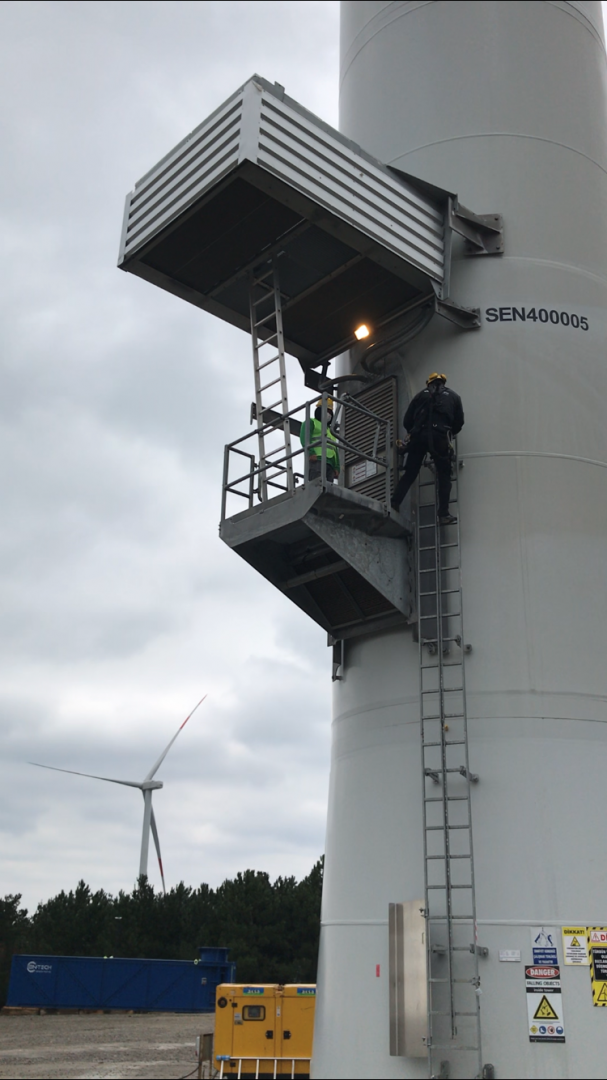
You can watch short videos of the commissioning process (both field inspections and signature collection) at the end of this article. I’ll be writing the fourth and final article in this series soon. In it, I’ll share a lesson on how we solved unimaginable problems and achieved success in our project, which was a constant challenge.
Tag: education