
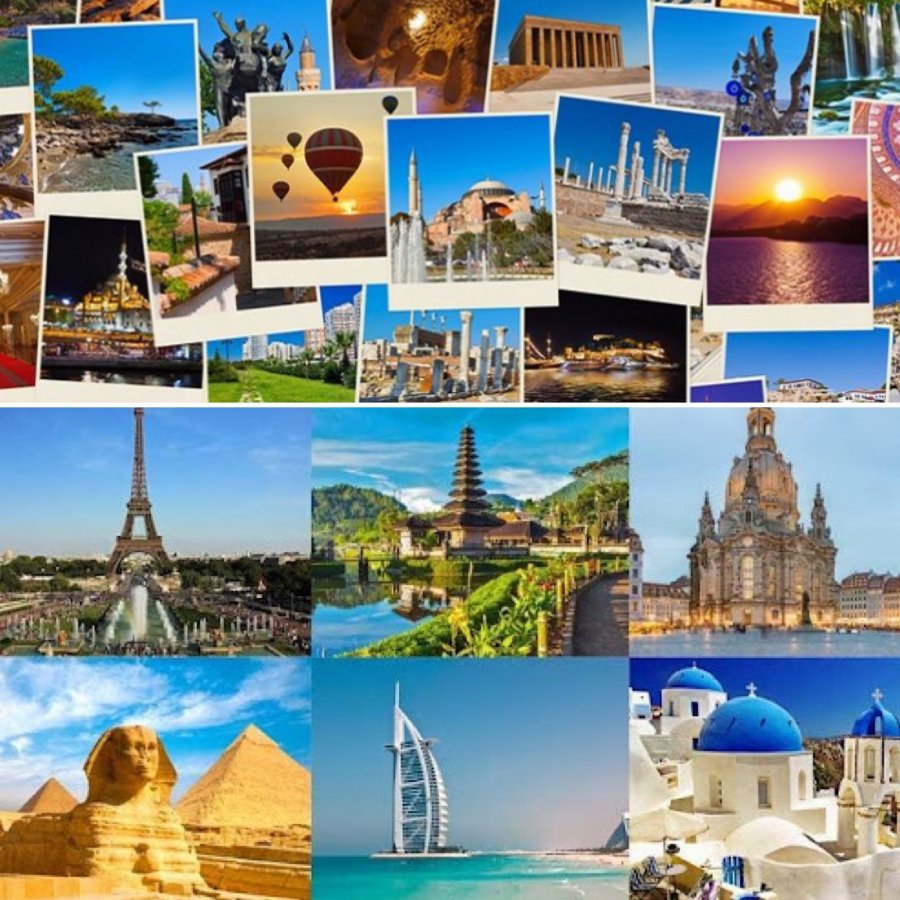
By chance, while reading tourism news, I came across the news that some Italian cities no longer welcome tourists. This news truly surprised me. It was an article that made me say, “This won’t happen here,” partly because I believe we haven’t reached our potential as a country in Turkey, where I live, and partly because I’m aware of our corrupt culture, unfortunately fueled by the greed inherent in our genetic code. Yet, as the cradle of Mediterranean culture, Italy is relatively close to us in every respect. But, unfortunately, they’re still far ahead in some areas.
When I conducted an online search for “destinations that don’t want tourists,” I came across an article by Australian author Ben Groundwater on the subject (https://www.smh.com.au/traveller/reviews-and-advice/the-new-rules-of-travel-14-destinations-that-are-done-with-bad-tourists-20231221-p5eswt.html ). Since this article has satisfied my curiosity on the subject, I will summarize and share some excerpts from his article. I will then try to explain what Turkey should do and the essence of the matter. First, let me summarize Groundwater’s article:
An Idea Spreading Globally from Palau
The idea of selectively admitting tourists originated in Palau, one of the world’s smallest nations. And it changed the world of travel forever.
In 2015, Palau faced a problem: New flight routes had created a significant increase in visitors, so much so that these tourists outnumbered the local population by eight to one.
While the revenue generated by this Micronesian country was welcome, the impact of these visitors was putting significant pressure on Palau’s infrastructure, water supply, and natural environment.
So the country came up with a new solution: it required all visitors to sign the “Palau Pledge” upon entry. The Pledge is a code of conduct, a contract between visitors and locals, a commitment to do what is right to protect a fragile nation. Clearly, other destinations in similar positions to Palau have taken note, as these pledges are now being enforced worldwide, both to curb bad behavior and to combat global warming, as well as to advise tourists.
Pledges similar to the Palau Pledge have been implemented in other destinations to curb bad behavior and control excessive tourist numbers. Let’s examine 14 destinations that have implemented these practices:
Kyoto, Japan
A classic example of overtourism is Kyoto, a relatively small, historic, and beautiful city in Japan with a population of approximately 1.5 million. Kyoto receives over 70 million visitors annually. This has created significant problems for locals, who are unable to explore the city, shop, dine, or enjoy their cultural heritage as they once did.
The Kyoto City Tourism Association has published a “Kyoto Tourism Code of Conduct,” a set of recommendations designed to mitigate the impact of visitors. These recommendations include cultural education and respect, encouraging visitors to interact with locals and attend festivals and events, and even asking them not to leave food scraps behind when eating at restaurants (which is considered a major waste in Japanese culture).
One way to lighten the visitor burden is reportedly to seek out attractive alternative destinations like Kanazawa and Sakata. They also recommend visiting Kyoto from January to March to avoid the crowds. (See: https://kyoto.travel/en/)
Amsterdam, Netherlands
Amsterdam is home to just under a million people, but it welcomes over 21 million visitors annually. This relatively small city, which embraces liberal views, also hosts a large number of drunk and rowdy tourists. The Amsterdam tourism office has reportedly published a list of rules and regulations for visitors, with fines of €150 for public nuisances such as littering, noise pollution, and public urination, as well as for public nuisances such as drunkenness and alcohol consumption. Marijuana in the old city center now carries a €100 fine.
We’re saying it’s not difficult to act appropriately in Amsterdam; if what you’re doing is illegal or upsetting in your own country, it’s likely the same in the Netherlands. Authorities urge visitors to go out and have fun, but to do so in a way that doesn’t negatively impact local residents (see: https://www.iamsterdam.com/en ).
Machu Picchu, Peru
Not long ago, Machu Picchu was a niche destination, considered far off the beaten path by many travelers. But since the turn of the century, the Inca citadel’s popularity has exploded, and more than a million visitors pass through the UNESCO-listed site each year. These tourists are causing permanent damage to the ruins and the surrounding landscape.
As a result, sections of Machu Picchu have been closed to tourists indefinitely; visitors are now required to follow marked trails, and the number of visitors to the site has been limited to 3,800 per day. However, this daily limit will increase to 4,500 next year, and construction is underway on a controversial new airport near Chinchero (See: https://www.peru.travel/en ).
Southern Thailand
Southern Thailand’s beaches and islands are incredibly popular. While this boom was partly fueled by the film The Beach, the reality is that Koh Phi Phi, Koh Samui, Pattaya, and Krabi—like Phuket, the world’s most crowded tourist destination by some measures—were always going to attract large crowds.
In 2018, Thai authorities took a drastic step: Maya Bay, with its stunning sea and sand textures at The Beach, was completely closed to tourists for three and a half years to allow the marine ecology to recover. The bay was closed again for two months in 2023 for similar reasons. Tourist boats can no longer dock in the bay, and swimming is prohibited (See: https://www.tourismthailand.org/home ).
Prague, Czech Republic
Since the fall of the Iron Curtain, Prague has been booming as a tourist destination, and this popularity has led to major changes in the city’s historic center, where the resident population has been halved and driven out by high prices. Vacation rentals and tourist influxes continue. Prague officials say they’ve seen a chance for a reset during the pandemic and are implementing “Putting Prague First,” a plan to manage the tourism industry sustainably as it recovers. This means adding amenities for residents in the historic center, more stringently regulating short-term apartment rentals, and encouraging visitors to travel more slowly and respectfully with the locals. (See: https://www.praha.eu/jnp/en/index.html )
Bhutan
In June 2022, the Bhutanese government reportedly took a drastic measure to deter all but the wealthiest visitors: it raised the “Sustainable Development Fee” (essentially a daily tax on foreign travelers) from approximately $100 to $300 per day (in addition to the $60 visa fee). Only 14,000 taxable visitors arrived in the first six months of 2023. In September of last year, the government lowered the fee to approximately $150 per day, effective until 2027.
It’s worth noting that Bhutan is an incredibly beautiful, culturally rich nation that will reward those who make the effort and pay to experience it (for information about Bhutan, visit https://bhutan.travel/ ).
Venice, Italy
Venice’s resident population has fallen from 175,000 to 50,000, while up to 120,000 daily visitors are placing a significant strain on its infrastructure and surroundings.
Venetian authorities have taken measures to curb overtourism, including banning cruise ships over 25,000 tons from docking in the city. They say the city will begin testing ticketed/timed entry (controlled by QR code) for €5,000, starting later this year. This is a tax on visitors who don’t stay overnight.
Part of Venice’s problem is reportedly the sheer number of short-term visitors, many of whom disembark from cruise ships, don’t stay overnight, and simply take up space, spending almost nothing. (For more information about Venice, visit https://veneziaunica.it/ ).
Bali, Indonesia
The problem in Bali goes beyond the sheer number of visitors, but rather the poor behavior of some tourists. Recent reports have circulated worldwide visitors exposing themselves at sacred sites, including temples, driving recklessly, drinking excessively, engaging in violence, and working without permits.
Last June, Balinese authorities reportedly published a list of “do’s and don’ts” for visitors. These urge visitors to dress appropriately, respect local traditions and beliefs, behave appropriately at religious sites, avoid climbing sacred trees, and refrain from littering, acting aggressively, or taking inappropriate photos. (For information about Bali, visit https://www.indonesia.travel/gb/en/home. )
5 more destinations with visitor rules
Berlin, Germany
The German capital, experiencing a boom in visitor numbers, is facing problems with short-term rentals driving away inner-city residents and replacing local services with tourist-focused infrastructure. In response, the city restricted short-term rentals and also issued “Sustainable Berlin” guidelines, encouraging visitors to stay in eco-hotels, shop, dine, and explore the city sustainably. (For more information, see https://www.visitberlin.de/en )
Siem Reap, Cambodia
Given pressing issues like water insecurity, damage to Angkor Wat and its surrounding temples, and the popularity of elephant tours and orphanages, the key to visiting this tourist city and country is to do so ethically and sustainably. Visitors are encouraged to seek out ethical accommodations like Fair Trade Village, Kulen Elephant Forest, and Jaya House River Park, and to adhere to all regulations when visiting historical sites. (For more information, see https://tourismcambodia.org/ ).
Rome, Italy
Italian authorities have introduced a nationwide set of regulations and fines (ranging from $16,500 to $99,000) for anyone caught damaging a monument or cultural site. Tourists can also be fined for sitting on Rome’s Spanish Steps, swimming in the Trevi Fountain, eating and drinking at famous historical sites around the country, organizing a bar crawl in Rome, or even taking photos of the Sistine Chapel ceiling. (For more information, visit https://www.italia.it/en ).
Yellowstone National Park, USA
Yellowstone has a problem: Vehicle accidents, which also harm the park’s animals, have increased by 90% use by 60%, and search and rescue efforts by 130%. Meanwhile, staffing is dwindling. While work continues on ways to cope with the influx of tourists, visitors can help by adhering to marked paths, disposing of all trash properly, and planning their visits outside of the peak summer season (See: https://www.nps.gov/index.htm ).
Barcelona, Spain
Barcelona is a relatively small city and attracts many visitors, the majority of whom are genuinely there to have a good time. In response, government officials have introduced strict new licensing laws for properties offered for short-term rentals, banning smoking on beaches, restricting tour group sizes, and limiting nighttime noise levels in popular tourist areas (See: https://www.barcelonaturisme.com/wv3/en/ ).
Turkey’s Situation
Of course, when reporting global developments, it’s impossible not to mention our own country. According to the news you can read at https://www.hurriyet.com.tr/ekonomi/turizmde-rekor-yili-42399294 , Turkey, which saw 56.7 million visitors, $99 per capita per night, and $54.3 billion in total tourism revenue in 2023, aims to increase the number of visitors to 60 million this year, $106 per capita per night, and $60 billion in tourism revenue. Culture and Tourism Minister Mehmet Nuri Ersoy, himself a keen tourism professional and owner of a hotel chain, said, “2023 was a record-breaking year for tourism. We will break new records in 2024.”
If there are no human-caused events like war, earthquakes, or other natural disasters, I can tell you that the minister will be proven right. Employers seeking to expand their businesses, increase their income and profitability, along with the professionals and stakeholders they employ, are the majority. The public is generally satisfied with the situation. Those who suggest restricting certain things by imposing rules for tourists are negligible. However, we still occasionally hear reactions from local residents. For example, I can cite the residents of Kaş who reacted to the highway project. In the news you can read at https://www.sozcu.com.tr/otoyol-projesine-kas-tan-tepki-bodrum-gibi-oluruz-p13256 , officials and residents from the three districts who attended the Investigation and Evaluation Commission (IAC) meeting for the “Positive Environmental Impact Assessment” report for the highway project, which covers the districts of Kaş, Demre, and Finike, stated that the project would cause significant damage to agricultural and archaeological sites, and that Kaş, in particular, would soon become like Bodrum. This means that there are even citizens and officials who want to protect their own nature and environment and oppose projects that would boost tourism, which are in everyone’s best interest.
Slow cities and other things that need to be protected
Personally, I believe that some destinations need to be protected. Money isn’t everything. Infrastructure investments that make our lives easier (including renewable energy) are important. Tourism is also an important source of income, but there’s a balance to be struck. We need to pave the way for these investments by considering nature and environmental factors.
In Turkey, we can start by protecting “slow cities.” According to the Cittaslow philosophy, cities where individuals can communicate and socialize, are self-sufficient and sustainable, use renewable energy sources, protect their nature, culture, and traditions, have no infrastructure problems, and have a population of less than 50,000 are called “slow cities” (See: https://www.garantibbva.com.tr/blog/sakin-sehirler ).
The International Cittaslow Association, a model encompassing 278 cities in 30 countries worldwide, includes 22 districts from Turkey on its “slow cities” list. The candidacy process for eight districts on the Cittaslow candidate list is ongoing. Among the Turkish Cittaslow cities, there are examples from across the country. These include Ahlat, Akyaka, Eğirdir, Gerze, Gökçeada, Göğnük, Güdül, Halfeti, Köyceğiz, Mudurnu, Perşembe, Seferihisar, Şavşat, Taraklı, Uzundere, Vize, Yalvaç, and Yenipazar. These are, of course, districts from many different cities.
We have much work to do.
We can develop protection programs not only for these slow cities but also for newly added destinations. We can also overhaul the planning of destinations that currently lack sufficient infrastructure and have serious environmental and natural problems and undertake urban transformation. Of course, I’m talking about urban transformation, not profit-driven transformation. Indeed, some destinations may need to be demolished and rebuilt. During this rebuilding process, we must transition away from the private sector’s focus on revenue maximization and complete it as it should, without compromising sustainable urban planning principles. We can implement this process, which will span a very long time, in stages. As we do so, I hope we complete it before natural disasters like earthquakes and floods cause significant devastation. Because these disaster-resistant destinations we have replanned and rebuilt will likely save millions of lives.
In short, we have much work to do in newly emerging destinations, in stable, quiet cities, and in major tourism destinations currently experiencing serious problems. By developing nationwide, we can prevent future disasters, provide people with a sustainable life, and preserve our history and culture. These same principles apply to all tourism destinations around the world with high potential, such as Turkey.
Tag: ecology