
First of all, you can read the article written by Prof. Andrew Blakers based on ISES* reports, which states that solar energy has by far the largest capacity among newly added capacities in energy, at the following link: https://www.pv-magazine.com/2024/04/24/the-fastest-energy-change-in-history-still-underway/?utm_source=Global+%7C+Newsletter&utm_campaign=90e0481fcc-dailynl_gl&utm_medium=email&utm_term=0_6916ce32b6-90e0481fcc-160022974 . Here’s the link to John Fitzgerald Weaver’s article based on EIA reports: https://pv-magazine-usa.com/2024/01/10/more-than-50-gw-of-new-solar-projected-in-2024/?utm_source=USA+%7C+Newsletter&utm_campaign=944851ee87-RSS_EMAIL_CAMPAIGN&utm_medium=email&utm_term=0_80e0d17bb8-944851ee87-159228941 .
Our Takeaways from the Articles
Now, let’s move on to our takeaways from these two articles. These two articles, which confirm what we already know with data, offer the following conclusions:
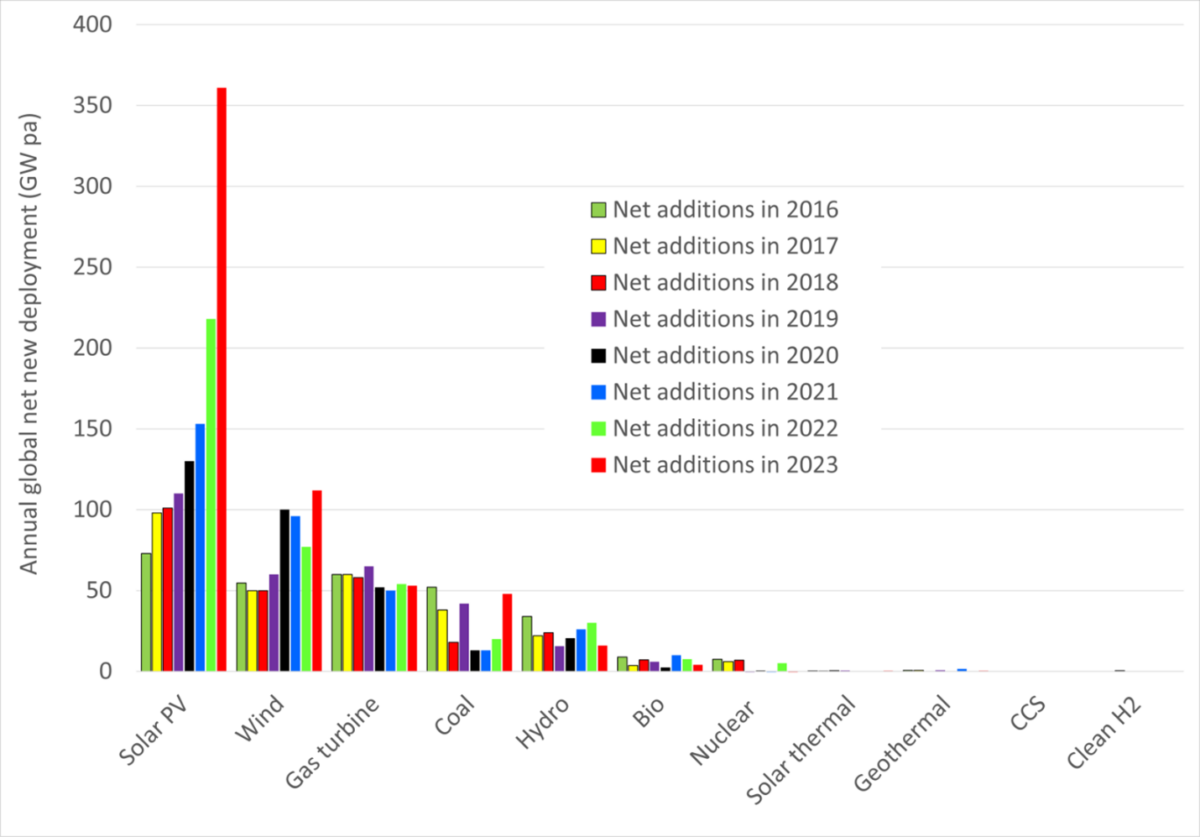
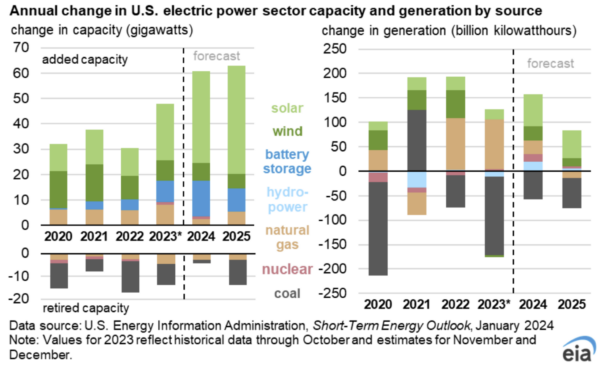
1) Renewable energy is clearly ahead in new capacity additions in energy. The star of renewable energy is solar energy, which has seen the highest capacity additions of all. In 2023, solar and wind energy accounted for approximately 80% of global net generation capacity additions. In 2023, four times more new solar and wind generation capacity was installed than all other electricity generation sources combined. You can see the exact figures in the graph below;
2) The current installed capacity of solar energy is exactly 10 times what it was 10 years ago. Solar installed capacity doubles every three years.
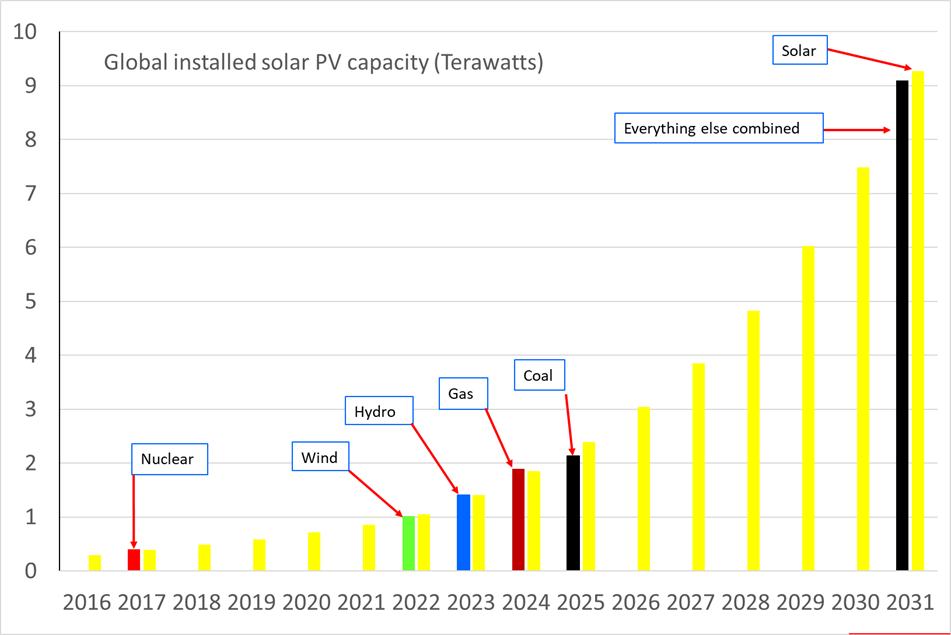
3) Cumulative global solar energy installed capacity exceeded 1.4 TW, and cumulative production reached 1.7 TW. Total installed solar capacity surpassed total nuclear installed capacity in 2017. It surpassed wind in 2022, hydroelectric power last year, and is expected to surpass fossil fuels in 2024.
4) At current annual growth rates of 20%, solar energy will surpass coal in 2025 to become the largest component of global generation capacity. Everything is becoming electric.
5) The trend in technology is “electrification of everything.” In other words, the era of generating energy by burning fossil fuels is coming to an end. Everything is becoming electric. Electric vehicles, electric heat pumps, electric furnaces, and hydrogen production facilities are just a few examples. Solar and wind are also becoming the leading sources of electricity.
6) Construction supply chains and activities related to other production technologies are now much smaller than those in the solar and wind energy sectors.
7) In the US alone, more than 50 GW of new solar energy capacity is projected for 2024. I should also emphasize that China, by far the leader in this area, is adding at least 25-30 GW of additional capacity every year. Looking at the projected figures for 2025 in the US, a total of 65 GW of solar energy is expected to be installed.
8) Small-scale solar energy production is projected to contribute 2% of total electricity production in 2024 and rise to 2.3% in 2025. This means solar energy will account for 8% of total electricity used in 2024 and 9.3% in 2025. If newly added capacity reaches 65 GW in 2025, solar energy could account for approximately 11% of all electricity production in 2026.
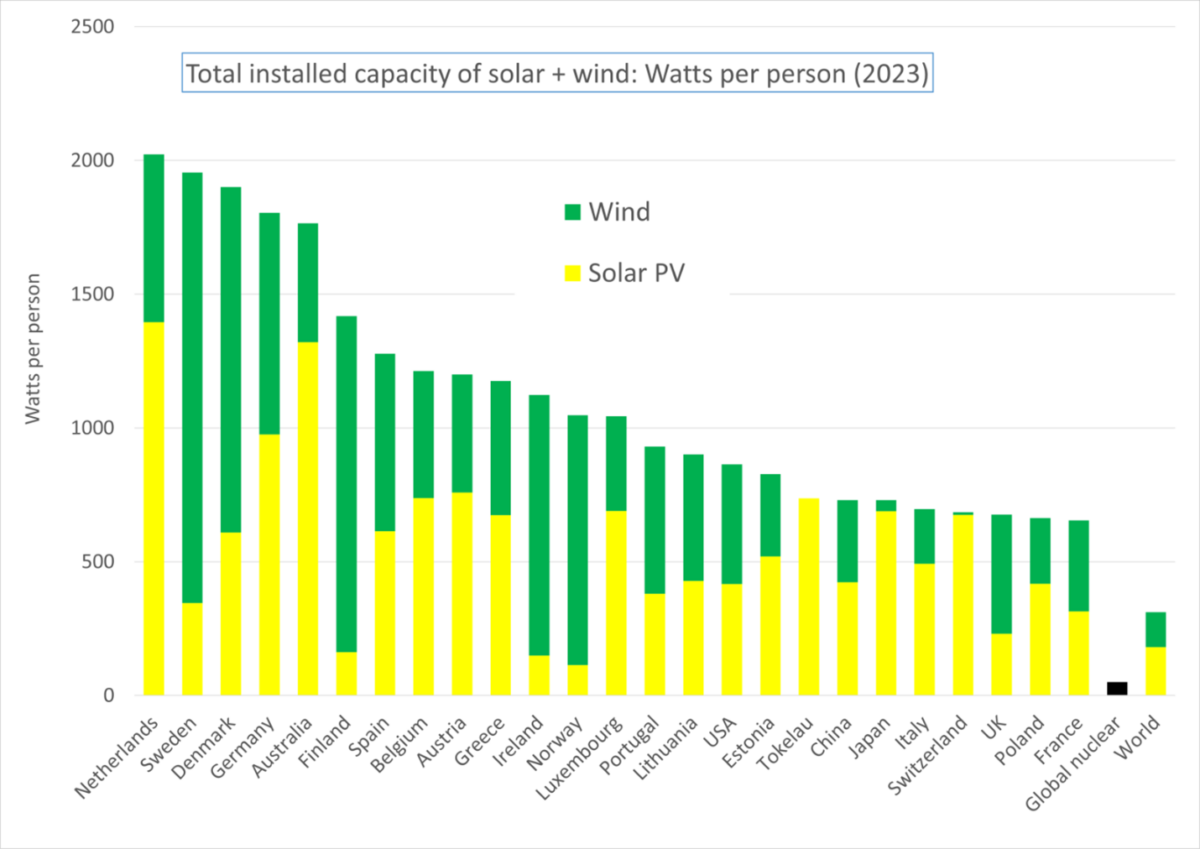
Solar energy is replacing the decline in coal.
9) Considering that electricity production in the US is projected to increase by 3% in 2024, coal will decrease by 9%, and natural gas will remain stable, this means that solar energy will replace the decline in coal and account for 3% growth. This is equally true for Turkey and other countries.
10) Due to the decrease in gas and coal use in 2024, this will lead to a decrease in electricity emissions of less than 1%, followed by a 2.5% decrease in 2025. However, oil use will remain constant throughout this period, meaning total emissions are projected to remain constant in 2024. A decrease of 1.7% will occur in 2025. The US administration’s approach to this issue is also crucial.
If desired, a transition to 100% renewable energy can be achieved in three years.
I emphasize this in every environment I’ve been in: With the government’s will, it’s possible for any country to transition to 100% renewable energy in approximately three years. If a rapid change isn’t desired, countries can achieve this within five years without any effort. Perhaps you’ll read the summary of the article above and ask, “What a pace.” I’d like to point out that this change is still below the potential transition rate. However, I’m grateful for this. It took me over 10 years of trying to explain it to people. We’re finally moving toward the ideal environment.
We’re on the right track.
Bonus: I’d like to share two articles about 100% renewable energy:
- “Why Should Türkiye Aim for 100% Renewable Energy?”, an article I wrote in Turkish Policy Quarterly in 2013. My articleentitled: http://turkishpolicy.com/article/632/why-turkey-should-aim-for-100-renewable-energy-summer-2013
- My article entitled “The Path to 100% Renewable Electricity” by Andrew Blakers, Matthew Stocks, Bin Lu, Cheng Cheng, and Ryan Stocks, published by the IEEE (Institute of Electrical and Electronics Engineers): https://ieeexplore.ieee.org/stamp/stamp.jsp?tp=&arnumber=8836526
* ISES, the International Solar Energy Society, is a UN-approved member NGO founded in 1954, working towards a world with 100% renewable energy for all, used efficiently and wisely.

Tag: ecology