In my previous articles (you can find these articles at http://www.serhansuzer.com/tr/uc-yaraya-bir-merhem-destek-projesi-1 and http://www.serhansuzer.com/tr/uc-yaraya-bir-merhem-destek-projesi-2) , I shared two important benefits of the Support Project, which consists of the Support Market and Support HR. The first is waste prevention. By donating expiration dates or surplus products from producers or retailers of essential goods like food and cleaning products to the Support Market, these products are recycled, and those in need can use them before their expiration dates. You can also donate your unused clothes to us. We wash these clothes and give them to those in need in the clothing section of our Support Market, keeping them clean and undamaged. We do not offer any credit for clothing. The second is that those in need can shop at a high-standard supermarket in a dignified manner, meeting their basic needs for food, cleaning products, and clothing.
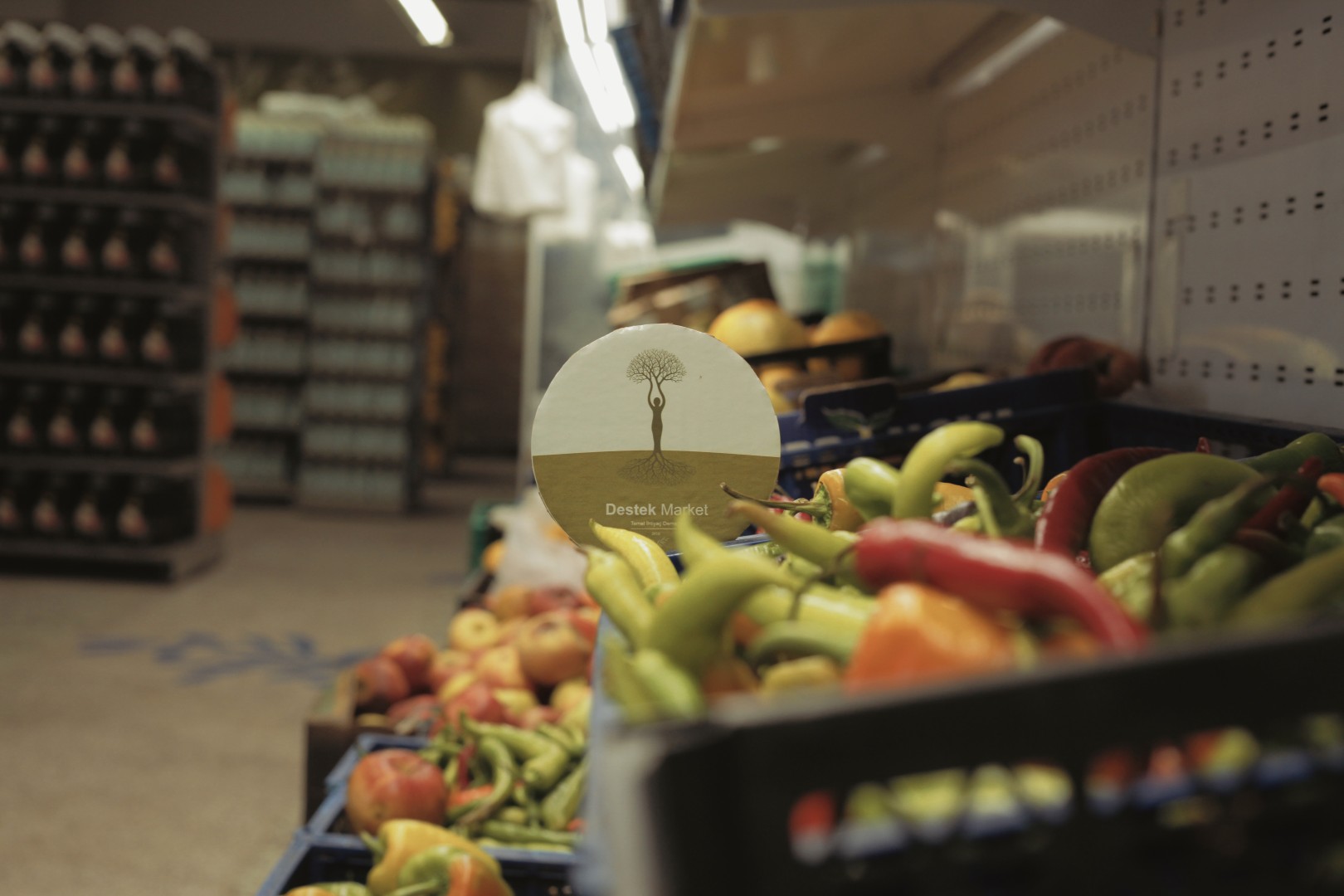
A shot from the Support Market.
Aren’t all these actions very logical and good things? But are they enough?
It’s not for us. Because to make these social assistance programs sustainable, you need to avoid impregnating those in need. In other words, you’re not creating a sustainable model by constantly providing these products to people on the poverty line. Sometimes, people continue to receive these aids because they’re free, even though they don’t need them. Firstly, you’re getting these people accustomed to the ready-made. There’s a group in Türkiye that has made it a habit to get by on constant aid from the municipality, district governor’s office, and various public institutions and organizations. These people don’t work official jobs to validate their poverty. Because if they work official jobs and are covered by the Social Security Institution (SGK) or Bağkur (Social Security Institution), they’re deprived of these benefits.
Simply put, the advantage of working is this.
I realized this one day when we first opened Destek Market, I was at the market and chatting with a fit woman in her 50s who was buying from us at the checkout. The conversation went something like this. I started by saying:
- Are you happy with the products you purchased?
- Yes. You offer very high-quality and beautiful products. May God bless you.
- Thank you, we’re doing our best for you. Of course, my friends have already told you. Our main goal isn’t to provide you with these products all the time. We want you to have the ability to work and be able to buy these products yourself from a regular supermarket.
- You say you’re good, but there’s no work.
- There is work. We’re also eager to find you a job.
- Will I be covered by the Social Security Institution (SGK)?
- Of course. Since you’ll be officially employed, you’ll be registered with Social Security. Isn’t that great?
- No, I wouldn’t want that. Being covered means I won’t be deprived of the benefits I receive.
- But being covered by the SGK is very beneficial. God forbid, if something happens to your health, how will you cover the expenses?
- Nothing will happen to me. I’ll cover it with my own income.
- Don’t say it can’t happen. This is healthcare we’re talking about. And what are you going to do if you’re not working? A person grows dull at home all day, not working and producing. The iron that works shines.
- I could go to daily housekeeping.
- Wouldn’t it be better if we hired you as a hotel housekeeper instead? You don’t know what the environment is like in the houses you clean daily. Since you’re not officially employed, you don’t have social security. Hotels always provide a healthier, more hygienic environment. Moreover, thanks to your Social Security Institution (SGK), you have some protection if you experience a health problem. Let’s do the math. Is it better to live off the help you receive from others, or to get a job officially?
After the grocery calculations we did, I proved to him that getting a job officially would both provide a higher income and provide health insurance through the SGK. Finally, we continued:
- See? In any case, it’s more advantageous for you to work in a hotel housekeeping department instead of daily housekeeping. And, God forbid, if you’re fired, you’ll get severance pay. Otherwise, the people you work with for daily housekeeping could show you the door at any time and leave you stranded.
- Yes, you’re right. So, what should I do?
- Have your friends received information about how many people in your family, including you, are available for employment?
- Yes, we have.
- Help our colleagues in the Human Resources department when they contact you. In other words, help us find jobs for you and the other members of your family who are available for employment.
- Okay, that’s fine.
- Stay well.
- Thank you. I’m glad.
- I’m glad too, have a good day.
The above dialogue explains the whole picture. There’s one truth: the social system in Türkiye is crooked, and this large segment of the population in need is accustomed to constant aid, and then, unfortunately, they are exploited, especially by extremist groups or for political purposes. You could say, “Buyers are happy, sellers are happy.” However, the outcome can be disastrous. We all experienced this on 15 July.
Our national ‘disease’ is the herniated disc!
This distortion is so ingrained that our colleagues in Human Resources face serious challenges. Sometimes, there can be four people with herniated discs in one house. Herniated discs are a chronic illness for Turks. Whenever they don’t want to do something, they just say, “I have a herniated disc, I can’t do it.” There’s a large segment of the population that gets by on the help they receive, without doing anything, and has adopted this as a way of life.
This is a fundamentally serious problem. We believe that everyone who is physically able should be able to participate in employment. Of course, we value the elderly and disabled citizens who are unable to work. We will always support them, regardless of the circumstances. However, we also emphasize to everyone who can work that this assistance is temporary and that they must work and become self-supporting.
We also have another model. Our main model is to provide vocational training to those in need who come to the Support Market, enabling them to become self-supporting and ultimately prevent them from coming to us. However, we are open to those who come to us and say, “I’m not well off. My relatives and neighbors are supporting me. Therefore, instead of sharing in someone else’s livelihood, my main problem is unemployment. I want to get help here. Can you find me a job?” TIDER’s human resources department is doing everything in its power to find jobs for these individuals.
How Destek İK works
To help you understand, I’d like to share with you how the vocational training mechanism works:
The Social Assistance and Solidarity Foundation, affiliated with the Maltepe District Governorate, identifies those in need in the district. They visit applicants and request assistance, assessing them based on their own criteria (for example, how many people work in the family, whether anyone works at home, and whether the family owns a house or a car). They then allocate a limit to the family based on the household’s needs (for example, how many people live there).
Women are typically chosen to represent the family, and a text message is sent to the relevant representative’s mobile phone. The message is sent as follows:
“You have a 150 TL limit at Destek Market this month.”
The family representative who receives this message goes to Destek Market and shows the representative at the cash register their mobile phone number and their ID card with their Turkish ID number. Our cashier matches this information with our system and, after identifying the family’s record, tells the family representative, “Here you are, ma’am/sir. You can start shopping. You have a limit of 150 TL. However, before you start shopping, please stop by our Human Resources desk first.”
Later in the process, our colleague at the Human Resources desk explains how we can find jobs for the family in need and then asks the following questions:
- How many people live in your family?
- How many of you are able to work?
- Can we get the contact information of those who are able to work?

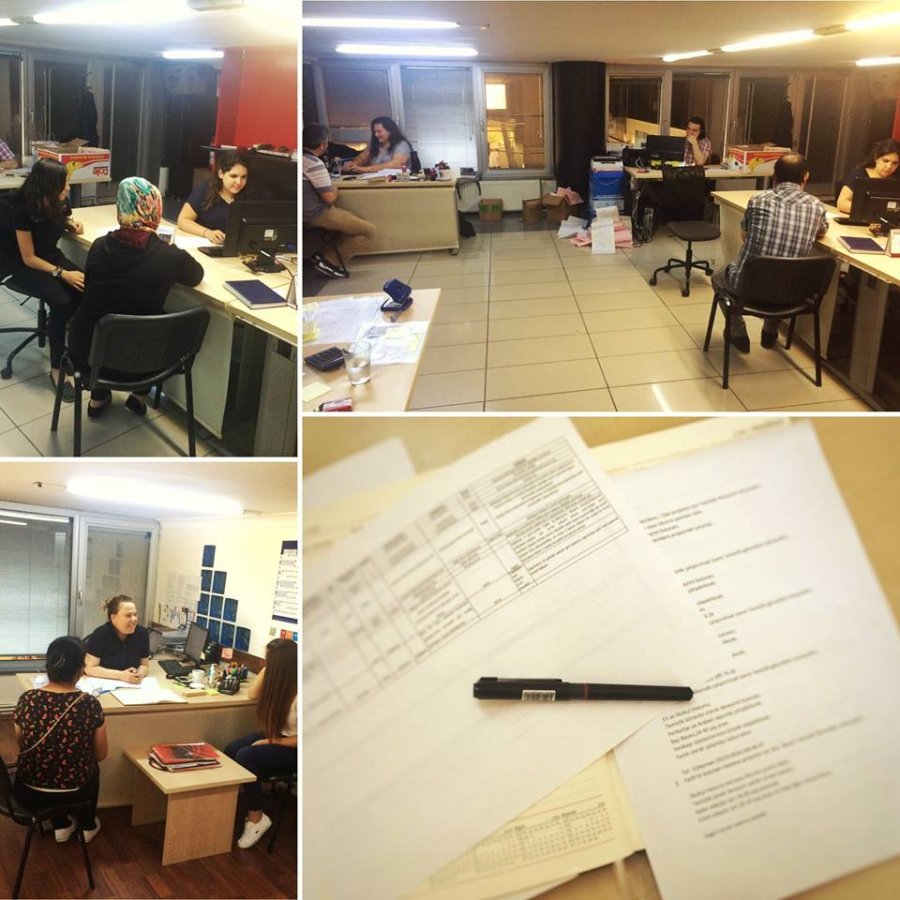
While our Human Resources representative was having the first meeting…
An example of job placement:
After this brief interview, the family shops and meets their needs. In the following days, our human resources department contacts the family again and interviews potential candidates individually. The findings and questions from these interviews, along with representative names and job opportunities, illustrate how individuals are guided:
For example, they ask, “According to our information, there are seven people in your family, and three of you are employable: Ayşe, Ahmet, and Mehmet. Can we meet with them?”
After the interview with Ayşe, Ayşe is asked, “You have strong communication skills. Would you like to work in the call center sector?”
After receiving Ayşe’s approval, Ayşe is referred to a call center company that is a member of the Call Center Association, where she receives a certain amount of vocational training and is hired.
After the interview with Ahmet, Ahmet is asked, “You are physically fit. According to our research, you have no criminal record. Would you like to work in the security sector?” After Ahmet’s approval, he is offered a job as a security guard at a hotel affiliated with the TÜROB (Turkish Hoteliers Association) after completing vocational training.
After Mehmet’s interview, he is asked, “We see that you have sufficient dexterity. There’s a butcher opening at a retail chain. Would you like to work as a butcher there?”
After receiving his approval, Mehmet begins working as a butcher at an international retail chain that works directly with our association, again following vocational training.
If all goes well, once these three individuals have been employed, we tell the family, “You no longer need us. You can stand on your own two feet as a family,” and sever our ties.
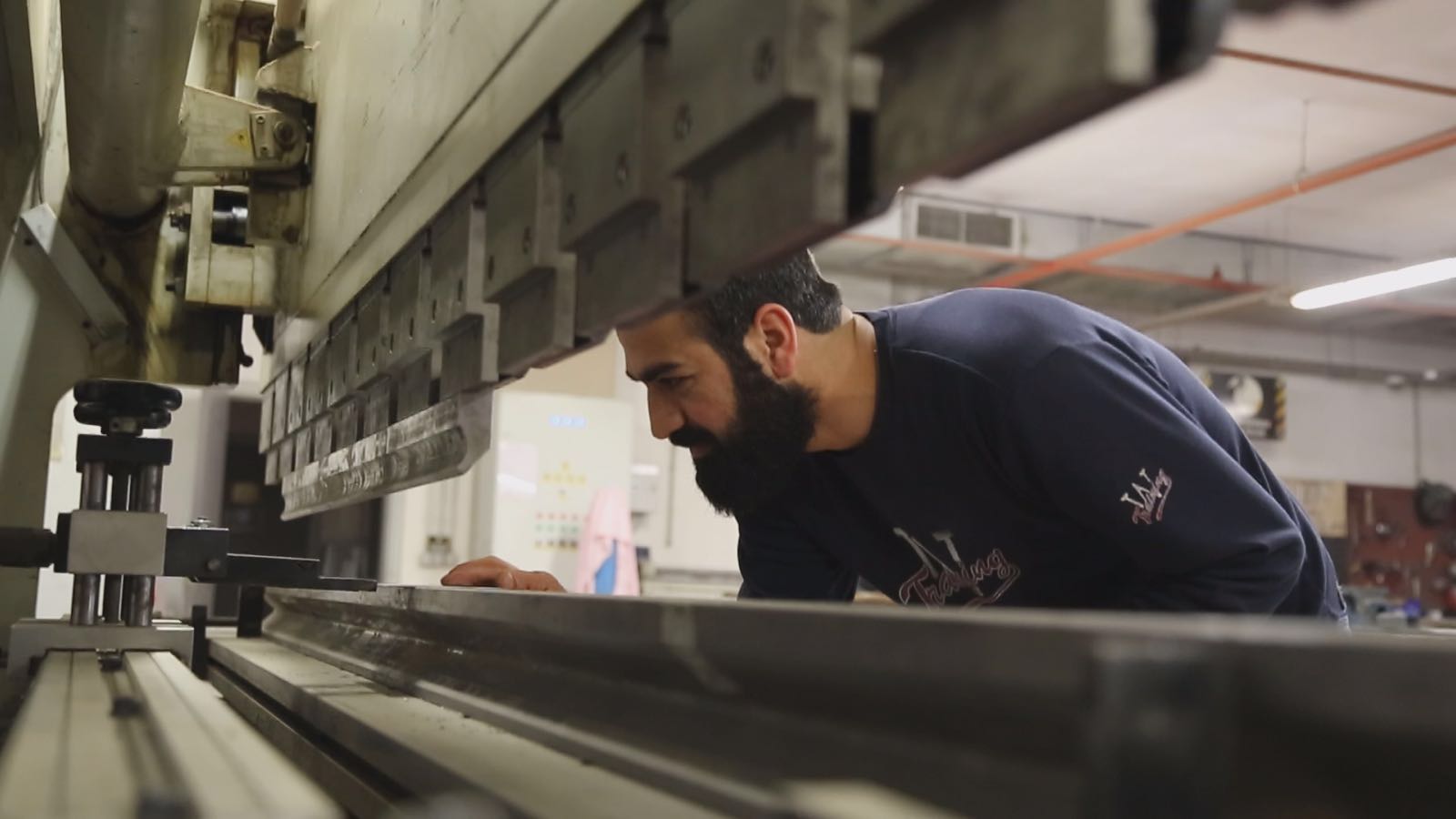
A photo of Ercan, whom we helped to find employment. Previously unemployed, he now manages challenging tasks and, driven by this motivation, contributes to production.
When we say, “We’re severing ties,” we naturally monitor those we employ. We check if they’re still working and need us. However, our primary goal is to ensure people no longer need us.
Our support HR mechanism is that simple and effective. You can also find these processes on TIDER’s website: http://www.tider.org/destek-ik
‘Gray collar’ and technology support coming soon…
Our efforts to address unemployment, the most serious social problem addressed by the Support Project, have accelerated. To conduct all this work, we obtained an ‘Employment Agency’ certificate from İŞKUR for the company we established as an economic enterprise. In other words, we charge companies a fee for the people we employ. This income remains with our association to be used for our social welfare activities. In other words, instead of relying solely on donations, our association earns its own income and uses the income to expand its operations and help more people.
We will also be undertaking other employment-related initiatives in the future. For example, we want to move beyond ‘blue collar’ positions and guide people toward diverse careers. We will soon be providing guidance to what we call ‘gray collar’ occupations, which involve underwater work or require specialized skills like crane operation. We will also be guiding people toward these lesser-known employment opportunities, which require significant vocational training and aptitude. Finally, we aim to leverage technology to increase employment. We will announce the details of these opportunities later.
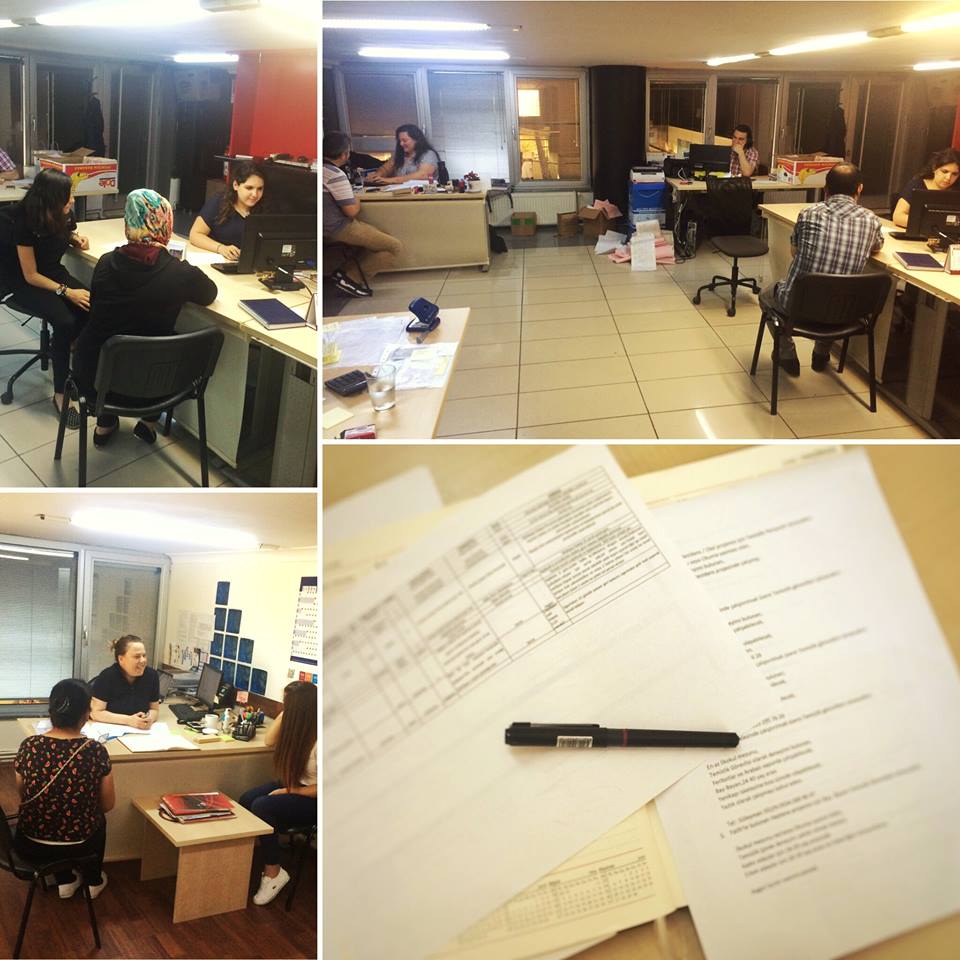
Interviews conducted by our human resources department to provide vocational training.
I’d like to take this opportunity to inform you about our “Adım Adım” (Step by Step) campaign:
13 November is less than a month away, and registration for the Istanbul Marathon closes on 15 October. If you’re eligible to participate in this sporting event and haven’t registered yet, please register before 15 October at http://www.istanbulmarathon.org/ .
You can then create your profile on the “Adım Adım” (Step by Step) platform, which you can do at http://ipk.adimadim.org/.
The final step is to create a campaign on İPK for 13 November.
To do this, visit http://www.ipk.adimadim.org and click the “create a campaign” button. The process works as follows:
- On the next screen, first select your project (TIDER – New Support Market Step by Step Project).
- If you are participating in a corporate running team, select your organization’s name here. Otherwise, you can create your own (e.g., Cargill, etc.)
- If you are a member of a running group, please indicate this here. (Not required.)
- Enter your donor target and targeted donation amount.
- You can enter whatever you want in the “Why am I running” section; it’s entirely up to you. You can also update this section later.
- Enter your marathon bib number (if you don’t know or have forgotten it, you can check it with your Turkish ID number in the registration check section at the bottom of http://www.istanbulmarathon.org/ ).
We are creating our campaign, but we are waiting until 31 October to request donations. According to information we’ve received from our experienced colleagues, starting the run two weeks in advance is the most effective. Until then, we can provide information about our running goals, explain our new Support Market project, and share it on social media. Here are the relevant hashtags: #adimgibibiliyorum #goodnesspursuit #adimadim
I’d also like to inform you about our upcoming event this Sunday, which will introduce you to our valued runners at TİDER and give you a firsthand look at the Support Market in Maltepe.
On Sunday, we’ll gather in the ballroom of our sponsor, the Rotana Hotel, to meet with you, discuss the Step by Step campaign process, fundraising methods, and tour the Support Market. We’ll also be handing out TIDER running T-shirts at the meeting.
We’d be delighted if we could all get together. Please don’t forget to let us know your participation!
Interviews for adimadim@tider.org
Program Details
11:00 – 11:30 Introduction
11:30 – 11:45 TIDER Presentation (To be given by our General Secretary, Yasemin Hanım, and myself)
11:45 – 12:15 Campaign and Donation Process Presentation (To be given by TIDER NGO Manager, Pınar Erdem, Step by Step)
12:15 – 12:30 Questions and T-shirt Distribution
12:30 – 1:30 Support Market Visit
For hotel transportation: http://http://tr.foursquare.com/v/arjan-by-rotana-otel/55310ca4498e39f686b332d9
If we can’t see each other this Sunday, we hope to see you in the next article.
Take care…
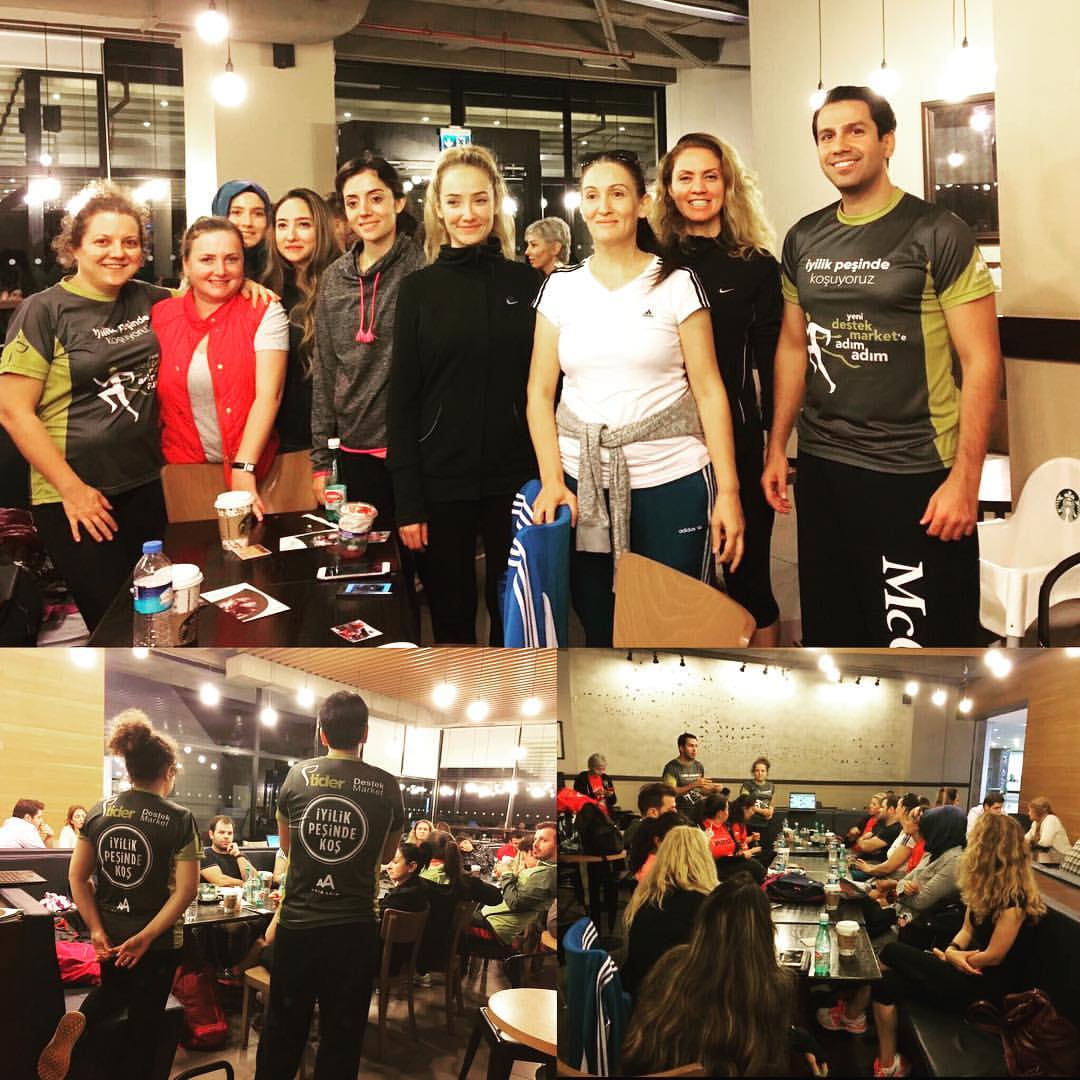
After Caddebostan and Maçka, we organized a post-training informational meeting in Florya with Adım Adım volunteers and TIDER supporters. Here are some photos from this very enjoyable event.