Upon acquiring a 50% stake in Turkent A.Ş., our KFC and Pizza Hut company, from our Qatari partner in December 2009, the company began a frantic restructuring under my leadership.
As General Manager, I implemented changes in numerous key areas, from finance and marketing to human resources and operations. Planning and completing this restructuring took six months. During this time, we implemented numerous improvements. By the end of the six months, we had emerged as a fast-moving, dynamic, and profit-oriented company, with 25 new restaurants added to 81 venues opened over the 21 years of our franchise. And we did this without ever using a bank loan. We were so fast paced that we went from scratch to opening a restaurant in a record 13 days.
At that time, we addressed every problematic area of the company. For instance, our call center experienced serious operational issues. Our lost call rate was very high. We warned that company once, twice, and then on the third, we started researching, “Which company in the market could do this better?”
When we launched, we realized that none of the existing call centers understood the highly specific business of food retail, especially home delivery. Finally, we made the strategic decision to do it ourselves. But with one difference. We chose to run this operation not within our restaurant company, Turkent A.Ş., but through a separate company. This was because if we had launched an operation within the restaurant company, we wouldn’t have been able to establish the professional structure we desired, and there would have been constant interference from the restaurants. To ensure a more healthy and professional operation, we decided to launch this operation within another facility management company of ours (our family company, Süzer Holding), Eko Tesis Yönetimi A.Ş. (By the way, yes, I also named this company back in 2002 while working at the family business; I’ve had a long-standing obsession with the name ‘Eko’). At the time, I personally conducted the interviews and agreed to have Serkan Başöz, who managed a call center serving the Netherlands, serve as General Manager, and Ali Koç, also experienced in training and business development in the industry, serve as his assistant (I made a lot of jokes about this back then, saying, “Ali Koç works at our company”). We placed people with restaurant experience under Serkan. This way, we blended call center experience with restaurant experience, creating a robust operation. The result was successful.
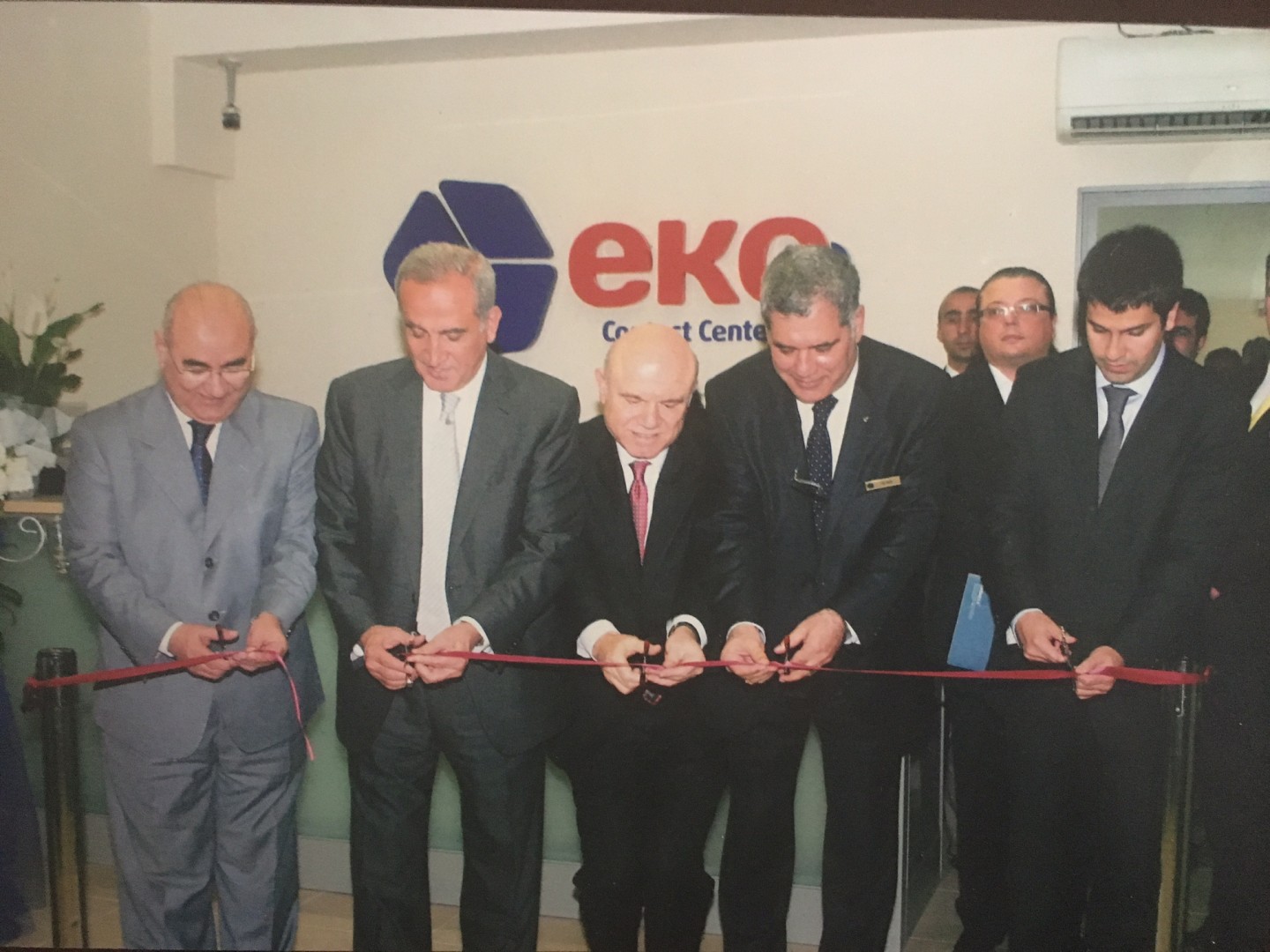
Here are two photos from our historic opening ceremony on 6 May 2011. In the first photo, you can see my father and Sami Çakır, Chairman of the Holding’s Board of Directors. In the second photo, from left to right, you can see Serkan Başöz, General Manager of EkoCC, Hür Aktaş, General Manager of Eko Tesis Yönetimi A.Ş., Deputy General Manager Ali Koç, and me.
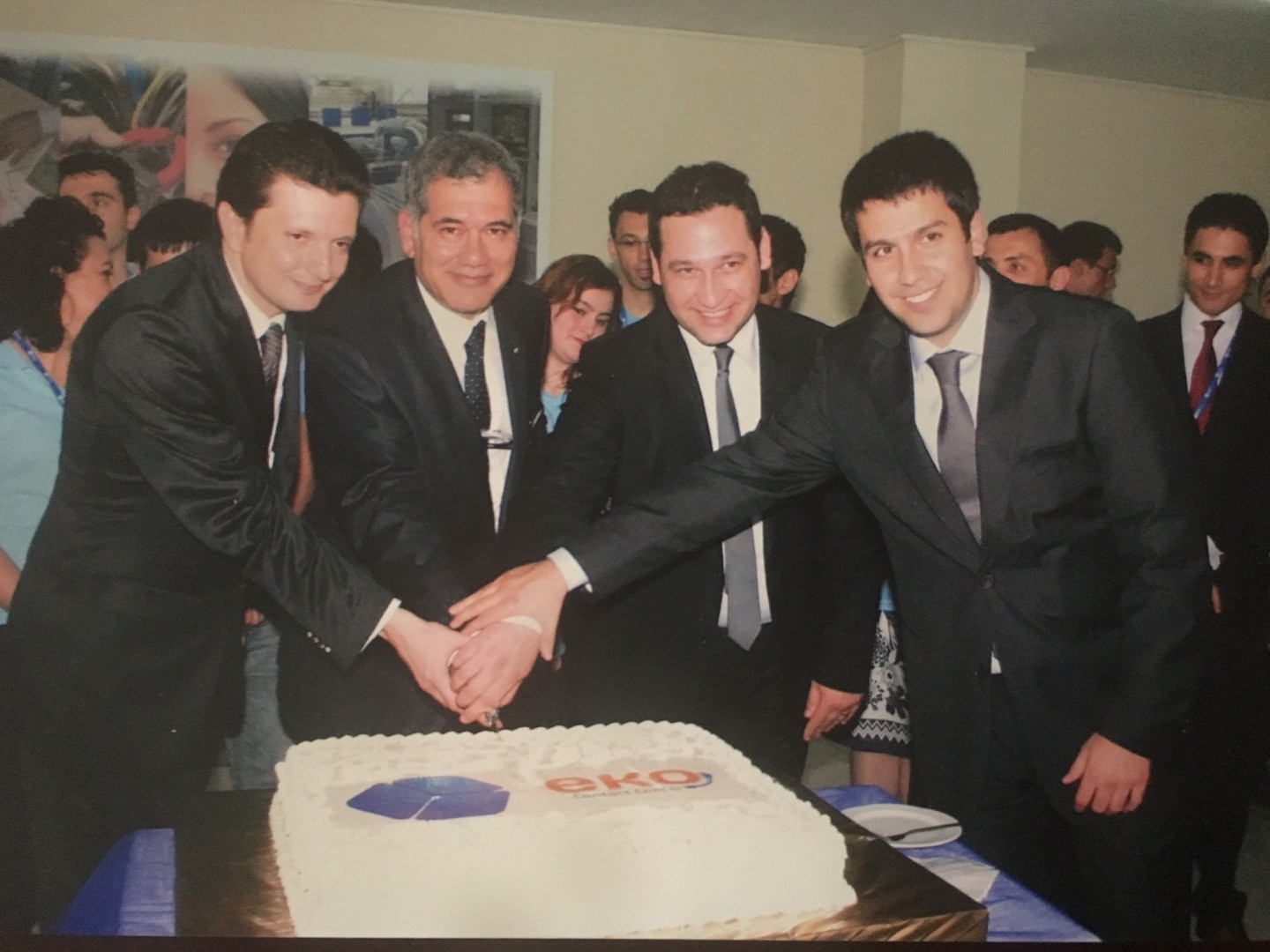
I remember that despite having fewer staff, we reduced lost calls by 20% over the first few months. This meant increased sales and a higher percentage of the home service department’s total sales. Thanks to good management, the call center was steadily increasing its influence within the company. Home delivery sales, which were 18% of total sales when I launched this operation, had risen to 23% by December 2011, the year I left the company.
From bluff to reality
After I first approached my father about leaving the family business in July 2011, we spent several months discussing how I would leave the group. I’ve previously written about this in detail: http://www.serhansuzer.com/tr/15-yillik-is-hayatim-ve-gelecege-notlar
From July until late-November, when I left, we discussed many topics at length. When the call center came up, my father asked, “What are we going to do with it?” I was taken aback. I explained that I thought we would continue operating the business and that we could even start outsourcing if desired. However, my father said, “Call center services aren’t one of our core businesses and don’t align with our vision.” I asked what to do. He said he wasn’t sure and probably wouldn’t continue it after I left.
A flash of lightning struck me. As someone who thinks in visuals, the events that were about to unfold flashed through my mind. At that moment, I saw the company being dissolved, and the colleagues I’d worked alongside for years losing their jobs. The fact that all of this was happening because of my departure gave me a nightmare feeling. I didn’t like the picture at all. I suddenly felt responsible.
Let me be. In a moment of reflex, the following words, a playful bluff, slipped out of my mouth: “If you don’t plan on continuing this operation, then at least give it to me. I’ll grow it and make it one of Türkiye’s leading call centers.”
My father paused for a few seconds, saying that expanding the business wasn’t easy and that I might face difficulties, but then he called my bluff by saying, “Take it, it’s yours, but be careful.” I told him, “Don’t worry, you’ll see how this company becomes a major player in the sector.” After all this talk, my father gave the directive to his staff, and the call center operations were separated from the facility management company, and the company was sold to me.
The Nightmare of the Pakistani General Manager
Thus, I entered a sector that had never been in my mind or vision. Driven to fulfill every responsibility I’d taken on, I immediately rolled up my sleeves with my colleagues. As the call center with the deepest understanding of food retail, it wasn’t long before we started winning business in the sector.
We secured our first job at Komşu Fırın. May God bless them. After that, we secured contracts with Aslı Börek, Keskinoğlu (Tavvuk), Tamustumegore.com (our first e-commerce business; it was an interesting idea and project. We worked on it for three years, but it’s no longer active), and Groupon, and the list goes on.
In addition to food, we began serving other similar retailers and e-commerce organizations. However, just as everything was going well and the business was snowballing, we faced a devastating crisis.
A year and a half after I left, my family’s Süzer Group sold the company to Yum International, the brand’s owner. After that sale, Yum International appointed a Pakistani general manager to head the Turkish company. May God protect my enemy from such a general manager. As soon as he arrived, he began erasing all memory of the KFC and Pizza Hut brands we’d franchised in Türkiye since 1989, and slashing everything related to Süzer. He either fired dozens of executives in key positions simply because they were close to us or forced them out through bullying. Leaving aside the finance, marketing, and HR departments, operations, the backbone of the food retail business, are simply not worth this level of manipulation. He laid off restaurant managers, regional managers, and KFC/Pizza Hut operations managers who had been involved in the company’s operations for 20-25 years, or these experienced individuals were forced to leave.
Having operated under the team I founded between 2010 – 2013, and which continued until its sale a year and a half later, Turkent enjoyed the brightest period in its history. Its transformation from a company brimming with cash and breaking profit records to one currently experiencing significant losses and a constant decline is deeply troubling. It breaks my heart to see 24 years of hard work (the most successful of which was the significant contributions of my team and I) being wasted to this extent. I will write more about this later.
For now, I’d like to share my prediction with you. I believe Yum International will be forced to re-franchise at some point in the future because it’s unable to manage its own brands through the incompetent and incompetent managers it sent to Türkiye. We’ll all see this happen.
Okay, should we continue?
Getting back to our topic, after all the layoffs and massacres at Turkent A.Ş., it was the call center’s turn. At a time when KFC and Pizza Hut, with a total of 62 customer representatives, accounted for 80% of our business (a percentage that was decreasing as we gained more business), this Pakistani General Manager made a political decision simply because Süzer was running the call center. He gave the business to the previous call center we had terminated years ago because the service quality was incomparable to ours, the prices were higher than ours, and he couldn’t reduce the lost call rate. He terminated his contract with us. I know that afterward, his sales revenue dropped immediately, and the downward trend continues. I leave that Pakistani to God for his injustice. I know he earned the wrath of many.
For us at EkoCC, losing 80% of the company was close to losing the entire company. It was like being knocked out by a very strong punch in a boxing match. We were like a boxer who had fallen to the ground in the ring, trying to recover while the referee counted to ten. At this challenging juncture, I had to make a strategic decision. Okay, or should I continue?
What do you think I decided?
Of course, “Continue!”
Let my temper dry up. I decided to stand behind the business again. I couldn’t let my colleagues down. A call center that was self-sufficient but had achieved significant growth had, for the reasons I’ve described, shrunk to a fifth of its value and become a company constantly burning cash. 99% of businesspeople in Türkiye would have decided to shut down in that situation. But I had faith in the knowledge and my colleagues. I believed we would recover.
I hope the managers from that period appreciate the fact that I stood behind the company from the very beginning and never let them down. Loyalty is important to me. You can read my thoughts on this topic in my blog post titled “To the vast majority, ‘Vefa’ is a neighborhood name.” http://www.serhansuzer.com/tr/buyuk-cogunluga-gore-vefa-bir-semt-ismidir
From Rise to Merger
Frankly, I wasn’t thrilled that the call center was burning significant cash, especially at a time when I was focusing on solar energy investments. Over the next two years, we continued to rapidly acquire new business. As we grew into a company serving 30 brands with 130 customer representatives, I gradually began to get to know the players in the industry.
Among those I met during that time, I admired Vodasoft, a company operating in the same segment as us and operating with a similar business model. Putting aside the fact that they were our biggest competitors and that we often butted heads in tenders, their style was very similar to ours. Like us, they focused on retail. Their customers, like us, were primarily incoming calls (in other words, they preferred not to take on outside sales). They also serve many international and national brands, albeit small like us. They had the advantage of starting their business eight years earlier, and they were three times our size, yet they continued to win business and grow just as we did. The owners of this company were CEOs and General Managers. I was even more surprised when I first met Zekeriya and Fatih. Later, I met the other shareholders, Seyit Arslan and Yunus Kaya. All the shareholders, like us, had a humble demeanor. They were meticulous about their accounts and did their jobs well. Our General Manager, Serkan Bey, had a close relationship with Zekeriya Bey, particularly through his work with the Call Center Association.
The Vodasoft side of the story is also a long one. Despite many ups and downs, it’s very difficult to survive for 15 years in Türkiye’s well-known business environment without taking out loans or any external support. The main reasons for their continued success in this long journey are their love of their work, their commitment to their work, their unwavering commitment as a team of think tanks, and their loyalty and patience. Despite everything, Vodasoft has experienced steady and consistent growth for 15 years. They will now be applying the same qualities to EkoCCS.
Zekeriya Bey, the company’s main shareholder, visionary, and a veteran of the call center industry, holds significant sway in the industry. He reinforced this by writing the industry’s first and only glossary of terms. This book defines foreign concepts and words used in the call center world and translates them into Turkish.
And so EkoCCS was born.
With Serkan Bey’s guidance, we began discussing how a partnership with Vodasoft could be possible. Various options were discussed, from acquisition to merger. However, when we first began talking in 2014, we couldn’t decide how this partnership would work. The matter was put on hold. However, we never lost contact and continued to meet occasionally.
After the disaster that befell us on 15 July, I remember telling Serkan Bey that we should meet with Zekeriya Bey again the following week. There were two reasons for this:
- Although we continued to receive business, we knew that the call center industry was a scaled-up business, and the larger we were, the more profitable we could be. This is because the fixed expenses in a call center decrease as the business grows, resulting in increased cash flow and profits.
- Call centers are a sector prone to crises. As companies are affected by the crisis downsize, the service they receive from the call centers serving them naturally diminishes as well. This led to the collapse of many call center companies in the sector. Naturally, the number of call centers in the sector began to decline rapidly, and consolidation (i.e., the acquisition of many small companies into smaller, larger ones) began to emerge. To be more resilient to crises, we needed to become larger.
With similar views, we began discussing the possibility of a new partnership with Vodasoft. Ultimately, we agreed in principle to merge. We authorized Gemicioğlu Law Firm for the legal side of the merger and Aresa Financial Consultancy for the financial side. Bora Gemicioğlu, a partner at Gemicioğlu and Filiz Yücesoy Eren, a partner at Aresa Financial Consultancy, experienced in mergers and acquisitions, personally oversaw the process. Our financial advisor, Alper Gerdaneri, who knows our companies very well, provided them with significant support. With their close monitoring and swift work, we completed the process in the shortest possible time.
To explain the process in more detail, I can share the following details with you. We met several times in August and September. The Letter of Intent was signed in the first week of October. Then, in early November, we negotiated all the details. Thanks to the flexibility and practicality of both parties, we quickly finalized the Merger Agreement and signed it in early November. The merger process then began. The process took approximately two months. The merger was registered on 30 December, the last day of the year.
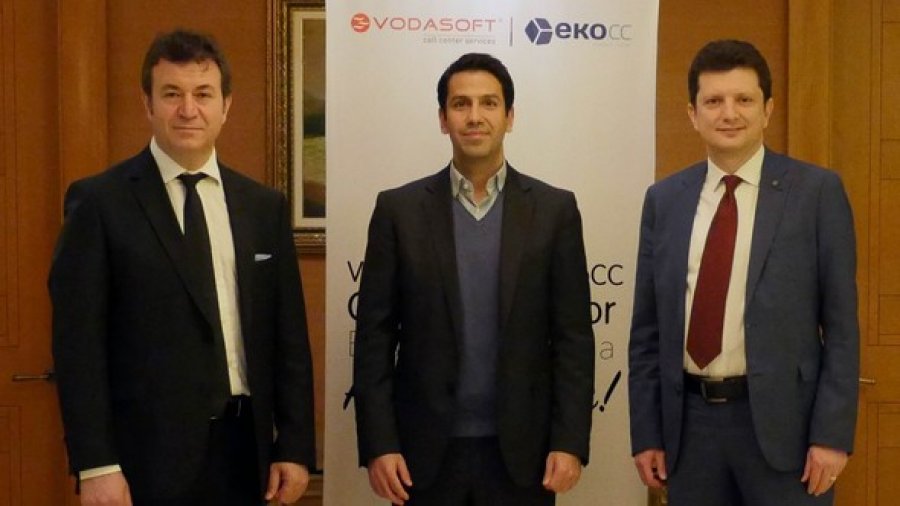
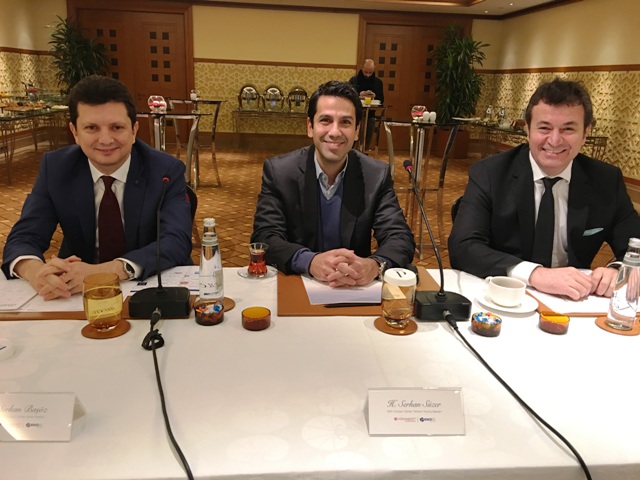
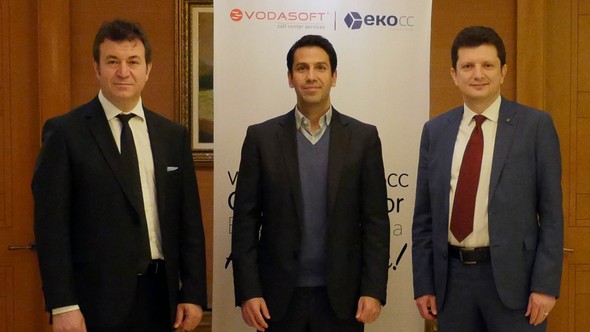
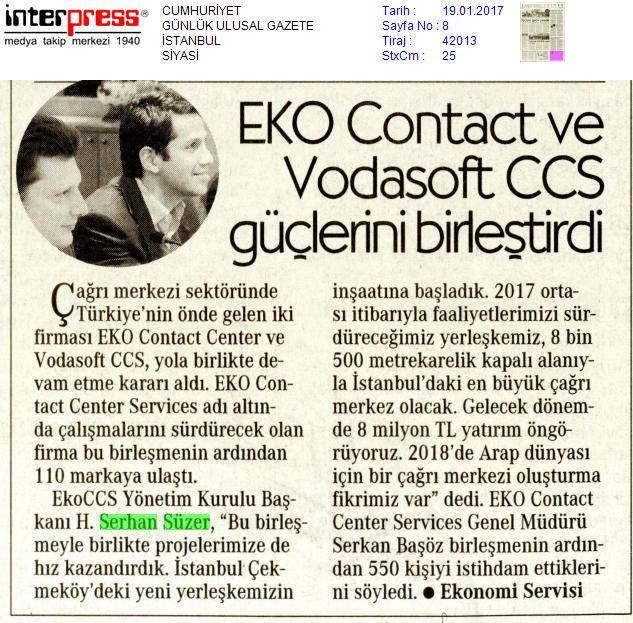
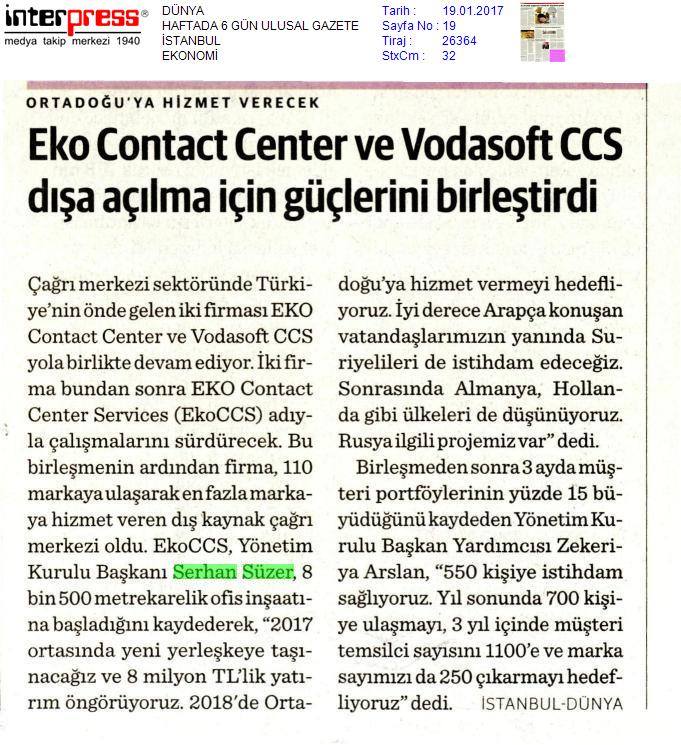
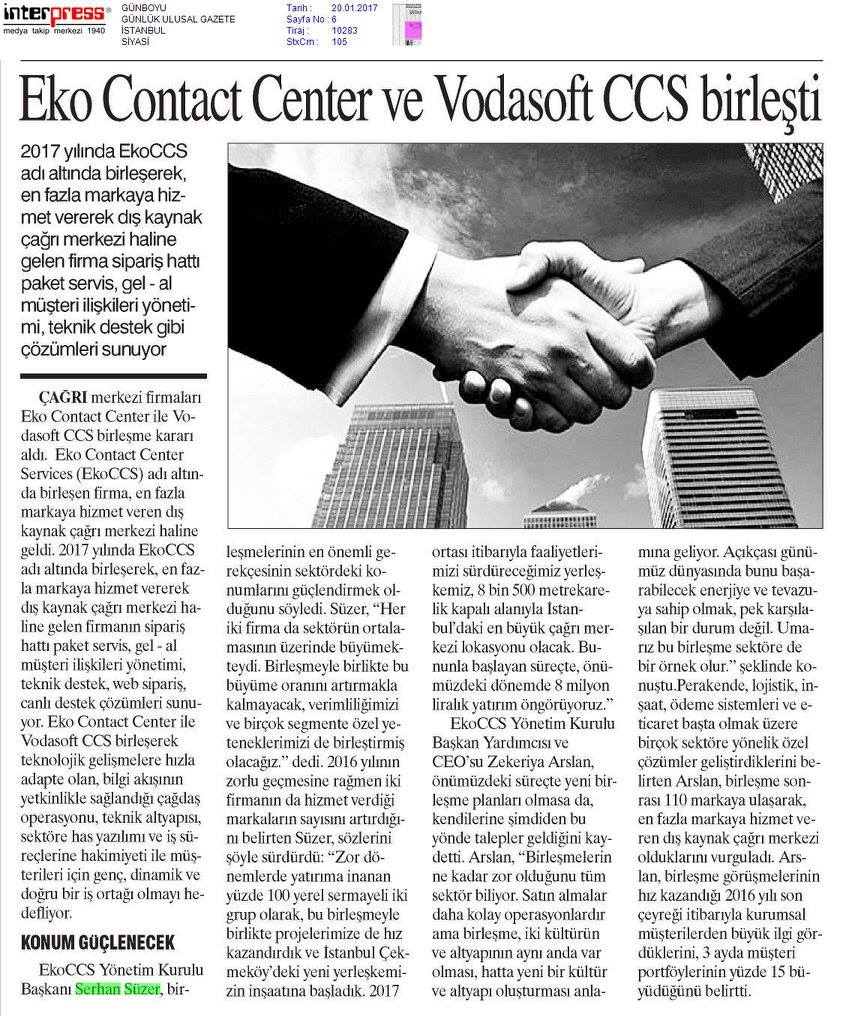
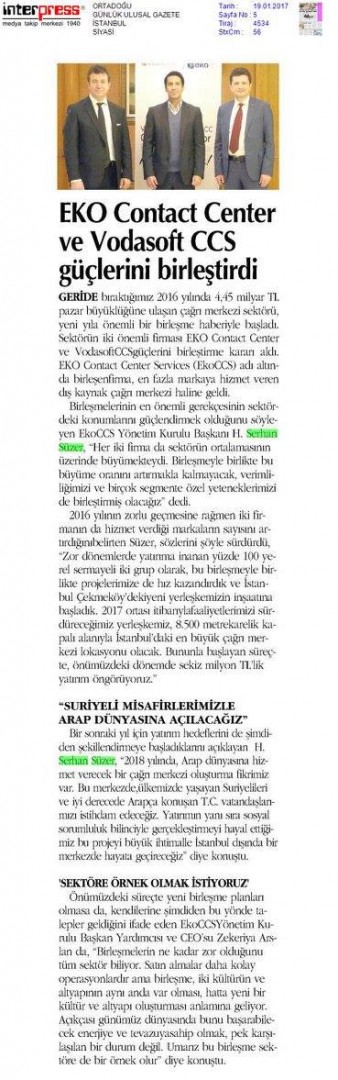
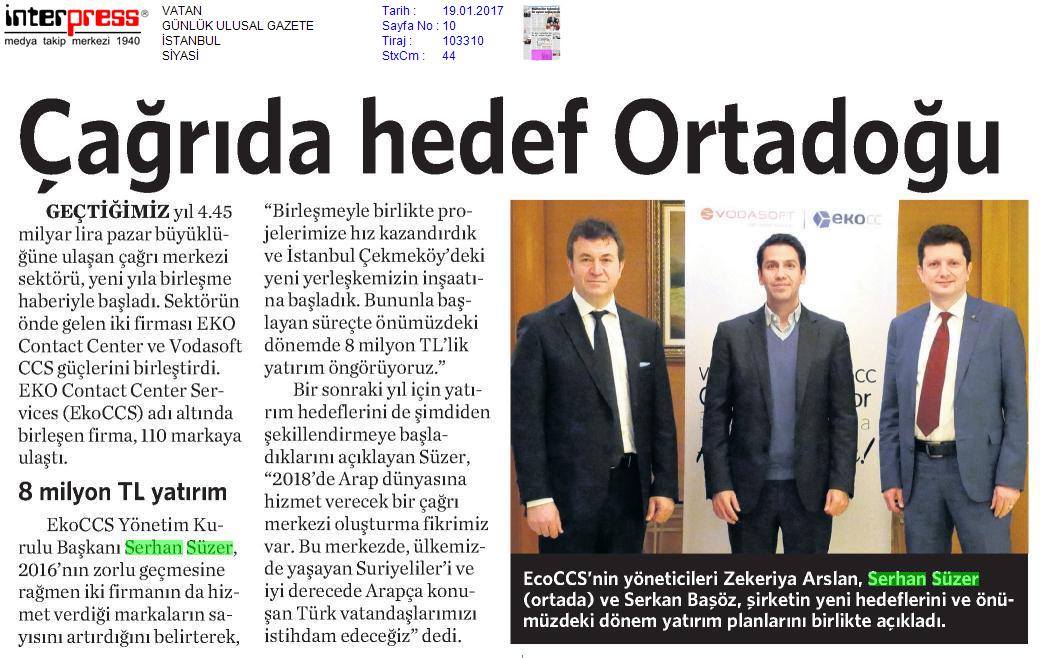
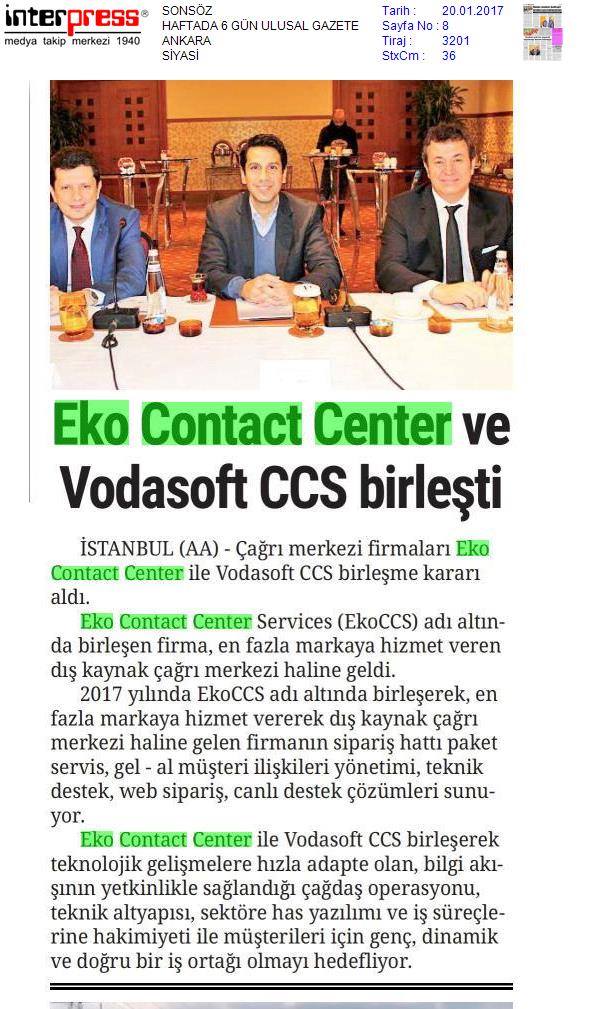
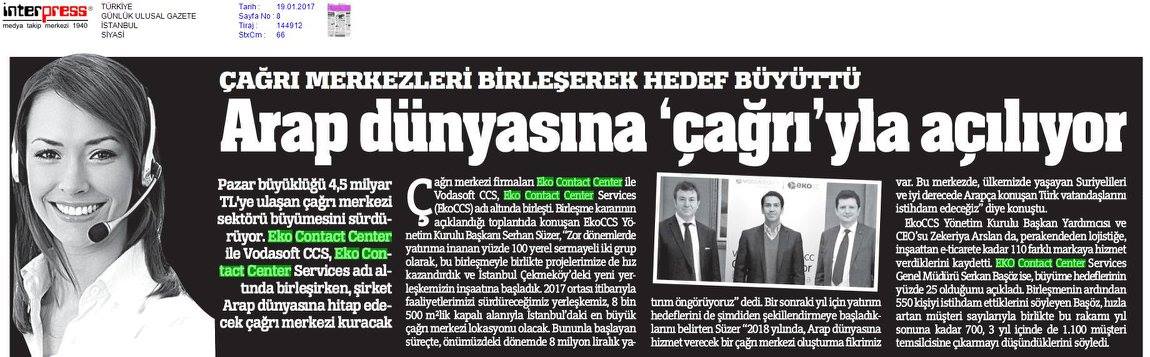
Due to the New Year’s holiday and snowfall, we held a press conference in mid-January to share this good news with the public. You can find the photo and video of the press conference below.
Firsts and Bests
I’d like to share some interesting highlights of this merger, which includes some ‘firsts’ and ‘bests.’
- Our New Name and Logo
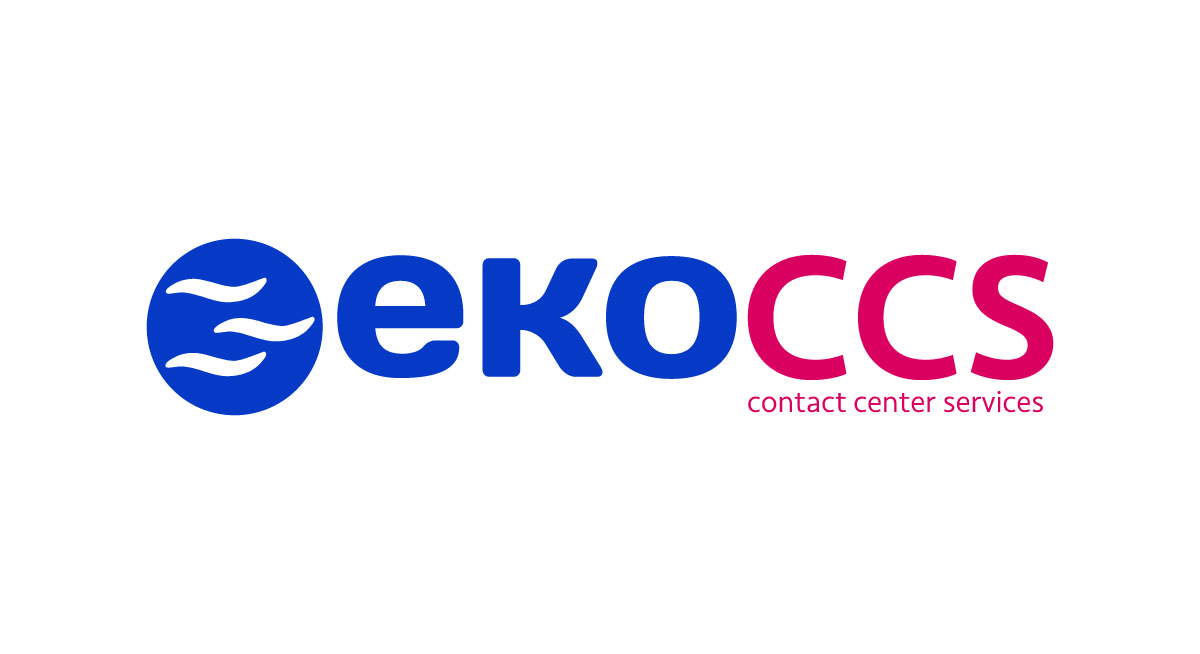
After EkoCC and Vodasoft CCS merged, our new name became EkoCCS. You can find our new logo, created by blending the symbols and names of the two companies, and the related animation prepared by our art director, Oğuzhan Bey, below:
- Largest Location
Our new campus in Çekmeköy, construction of which will be completed soon, will be Istanbul’s largest single-location call center with 8,500 m² of indoor space.
- Record Number of Brands
With the additions following the merger, EkoCCS has reached a total of 110 brands, making it the market’s largest outsourced call center serving the largest number of brands.
- 100% Local
Unlike our dominant competitors, this merger is based on 100% domestic capital.
- Social Responsibility
As of 2018, we plan to serve the Arab world and employ Syrians and Arabic-speaking Turkish citizens living in our country as part of our social responsibility initiative. Through this project, we plan to serve Middle Eastern countries such as Qatar, Abu Dhabi, Dubai, Kuwait, and Saudi Arabia, and thus export services. This means contributing to both employment and national income.
- First Merger
This was also the first merger in the call center sector in Türkiye. Had it been an acquisition, the industry would have been more concerned about the new company (even if it were foreign-owned). This applies to both customers. Such a merger was an effective tool for us, creating a stronger structure that blended the best aspects of both companies without causing concern for our existing customers.
Market insiders and some members of the press, accustomed to acquisitions, had difficulty understanding the merger. We were constantly asked questions like, “Who bought whom?” and “Who owns you now? EkoCC or Vodasoft?” We emphasized that this was a merger, that one company wasn’t buying the other, and that the percentages were determined by share size. I can only say this: because of this merger, the shares of Zekeriya Bey, Vodasoft’s main shareholder, and I have equalized. As the two largest shareholders, every decision we make jointly is final. Of course, both he and I strive to make all decisions unanimously, ensuring the unanimous agreement of all other shareholders and board members. I can say that a harmonious partnership has emerged.
15% Growth in the First Three Months
The response from the moment we decided to merge has been very positive. After signing the initial agreement in early October, we gradually began announcing it to our customers and the market. Everyone responded very positively. Since then, our business acquisition has accelerated, and even before we made the official announcement, we’ve grown by 15% in the last three months. As I always say from the beginning, this merger creates significant synergies. This momentum has accelerated our growth.
To keep abreast of both my own business and the market, I recently asked at a bank meeting, “Last year was a challenging and challenging year for the markets, wasn’t it?” After everyone responded yes, I said that 2016 was our best year in the last five years since I started my own ventures. Then I asked, “Well, this year is expected to be even more challenging than last year, isn’t it?” When I asked, everyone at the table nodded yes again. I told our banker friends, “Despite everything, I expect this year to be even better than last year for our companies, the Eko Group.”
We are beginning to reap the rewards of five very challenging years, especially in an environment where the crisis is increasingly severe. No matter what, we have remained true to our vision, worked hard, made the right decisions at the right time, and implemented them quickly.
Our call center has already reached 450 customer representatives and a total of 540 employees, including our administrative and leadership team. We plan to increase our staff to 700 by the end of the year.
I’d like to extend my sincere gratitude to our customer representatives, team leaders, and all our other managers who have worked with us since our founding. Thank you for your efforts!
EkoCCS will continue along its path with confident steps, contributing to both the Turkish economy and its own ecosystem. Best of luck…
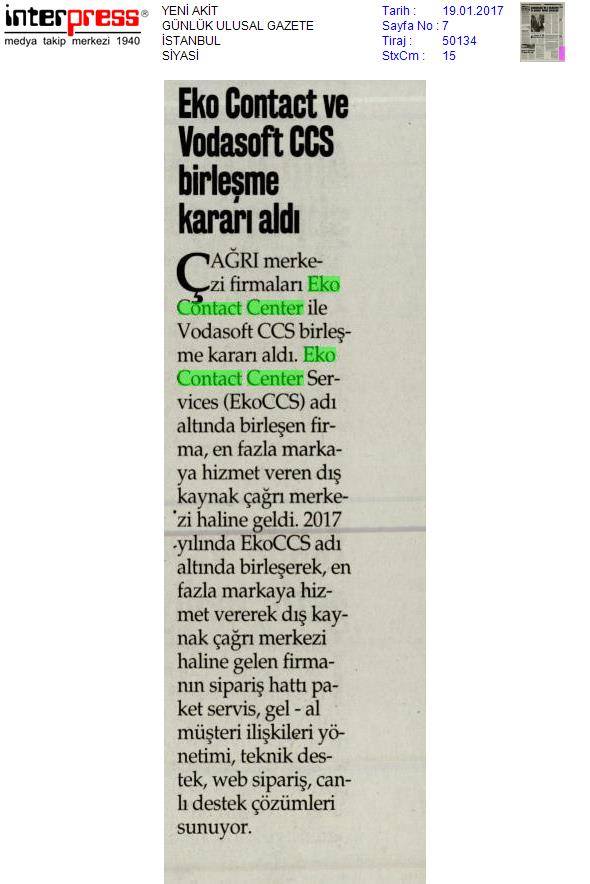
Finally, you can find some of the latest news about us below:
http://www.hurriyet.com.tr/eko-contact-center-ve-vodasoft-ccs-guclerini-birlestirdi-40345299
http://www.haberler.com/cagri-merkezi-sektorunde-buyuk-birlesme-9173918-haberi/
http://www.konhaber.com/haber-eko_contact_center_ve_vodasoft_ccs_birlesti-662355.html
http://www.haberler.com/eko-contact-center-ve-vodasoft-ccs-birlesti-9173590-haberi/
http://ekonomi.haber7.com/sirketler/haber/2246047-eko-contact-center-ve-vodasoft-ccs-birlesti
http://www.memleket.com.tr/eko-contact-center-ve-vodasoft-ccs-birlesti-1039306h.htm
http://akgundem.com.tr/eko-contact-center-ve-vodasoft-ccs-birlesti/26777/
http://www.haber50.com/ekonomi/eko-contact-center-ve-vodasoft-ccs-birlesti-h170633.html
http://ekonomi.haber7.com/sirketler/haber/2246047-eko-contact-center-ve-vodasoft-ccs-birlesti
http://mavikocaeli.com.tr/eko-contact-center-ve-vodasoft-ccs-birlesti/20403/
http://www.365haberler.com/eko-contact-center-ve-vodasoft-ccs-birlesti-179492h.htm