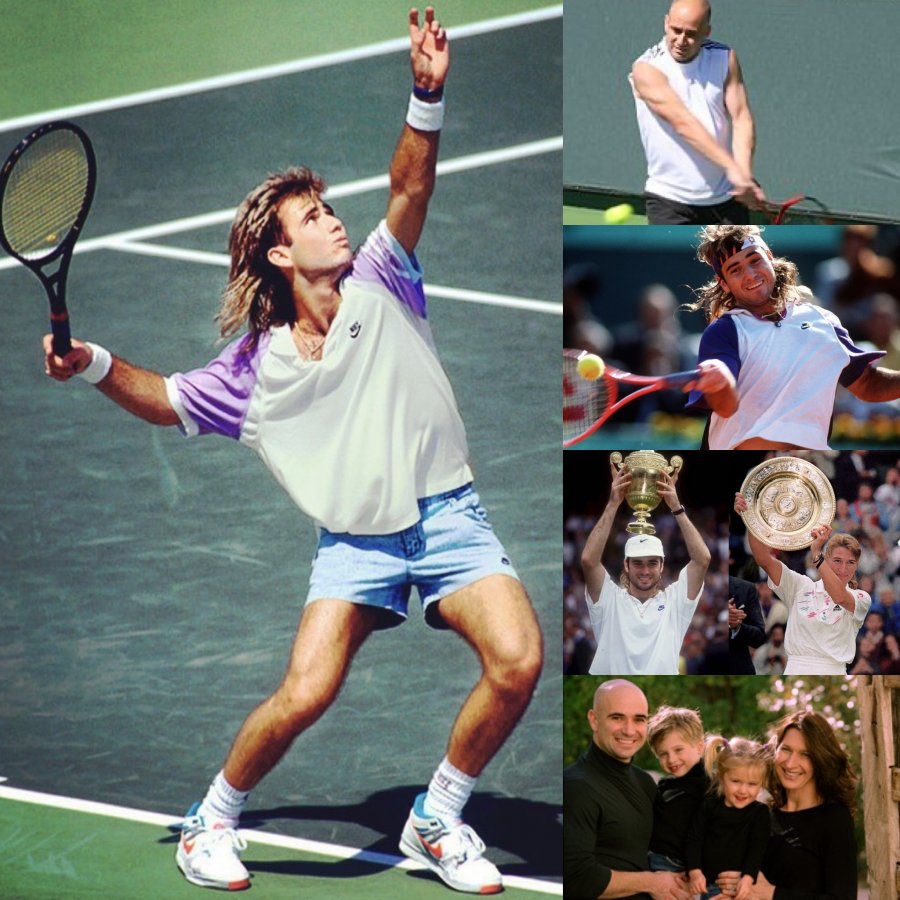
Before delving into my personal thoughts on Andre Agassi and why I consider him a role model, let’s begin by introducing him to young people today who may not know him personally (See: https://tr.wikipedia.org/wiki/Andre_Agassi). You can read the biography about Agassi below and also watch the following video:
Andre Kirk Agassi (born 29 April 1970, Las Vegas) is an American tennis player born to a mother of English descent and a father of Iranian-Armenian-Syriac descent.
He is considered one of the “wonderkids” who achieved great success in tennis history at an early age. He is one of the few tennis players to have won all four men’s Grand Slam tournaments. He has been married to German tennis player Steffi Graf since October 2001.
Agassi made his professional debut on the tour in 1986, winning his first tournament a year later in Itaparica. He finished 1988 with six titles and semifinal appearances at the French Open and the US Open. In 1990, he reached the finals of two Grand Slams, but lost the French Open to Andres Gomez and the US Open to his future rival, Pete Sampras.
Significant success at Wimbledon
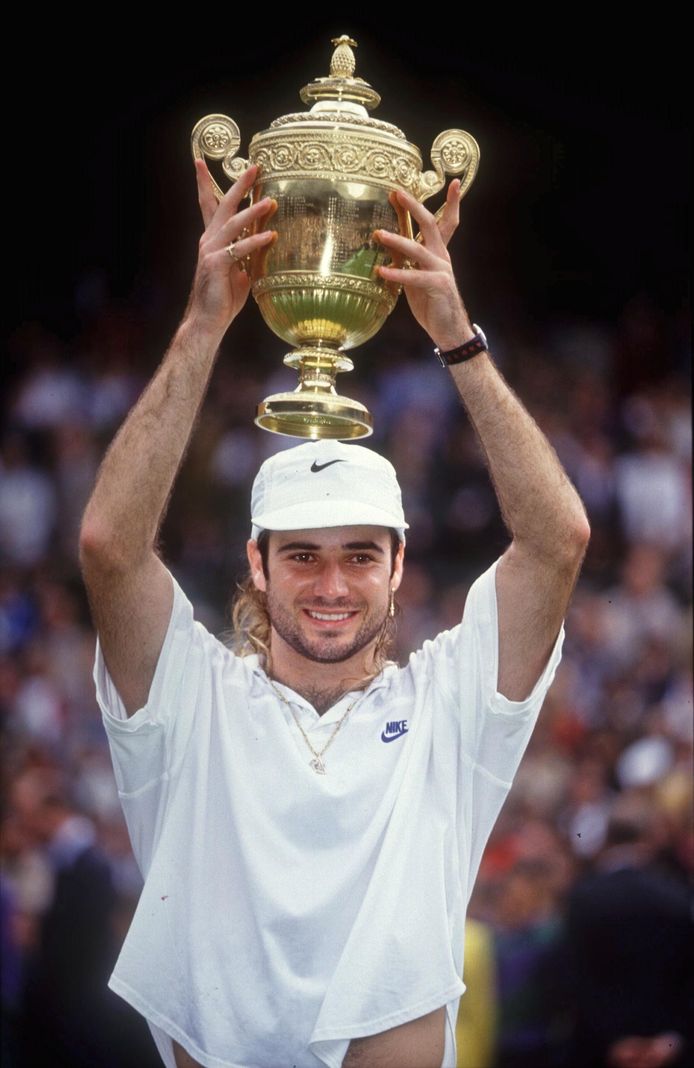
In 1992, he achieved his first major victory at Wimbledon, defeating Goran Ivanisevic in a five-set final. By 1995, he had reached number one in the world rankings by winning seven of his eleven ATP finals. The following year, he won the gold medal at the 1996 Atlanta Olympics. In 1997, injuries had plunged the world rankings to No. 141, and he was also experiencing turbulent times in his personal life. Agassi, who divorced his actress wife, Brooke Shields, refocused on tennis in 1999, winning the French Open and US Open.
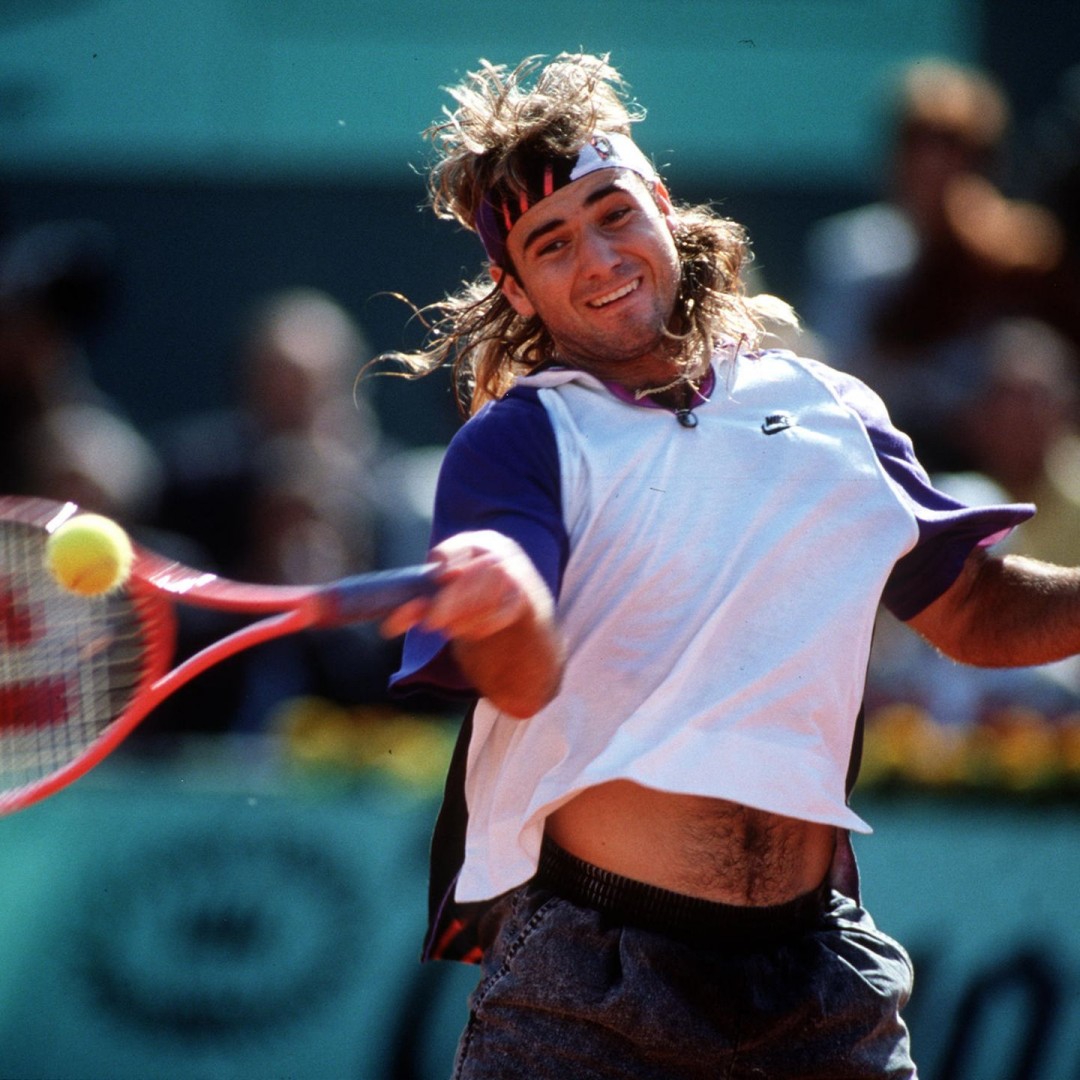
Andre Agassi, who held a top 10 position in the ATP rankings until 2005, was sidelined for most of that season due to sciatica. He announced that he would retire after the 2006 US Open. Agassi won 60 of the 90 finals he competed in during his professional career. The tennis player, who has eight Grand Slam titles, has two children, Jazz Elle and Jaden Gill.
In later years, in his biography “Open,” published in November 2009, he recounted his tennis achievements and life events, admitting to using methamphetamine. He wrote that he started playing tennis at the urging of his father and that he couldn’t enjoy it because of the pressure he put on him. Now, let’s delve into the details of his life (See: https://tenis.market/blog/andre-agassi-kimdir-basarilari-kariyeri-rekorlari-ve-hakkinda-bilinmesi-gerekenler ):
Early Life
His father was former Olympic boxer Emmanuel Mike Agassi. He left school at the age of 13 and entered the world of tennis by enrolling in the Nick Bollettieri Tennis Academy in Florida. Career
Andre Agassi made his professional tennis debut in 1986 at the age of 16.
In 1987, he won the first victory of his professional career by competing in the Sul American Open. Following this victory, he rose to 25th in the world rankings. He maintained his ranking with six victories in 1988.
In 1990, he was part of the team that won the Davis Cup for the United States after an eight-year hiatus. He also won the Tennis Masters Cup in 1990.
After failing to achieve the desired results in the three Grand Slam finals he participated in (the French Open (1990, 1991) and the US Open (1990), Andre Agassi won his first Grand Slam title in 1992, defeating Goran Ivanisevic in the Wimbledon final.
In 1993, he competed in the Cincinnati Masters, where he teamed with Petr Korda to win his first and only doubles title.
In 1994, he became the first seeded player to win a grand slam by defeating Michael Stick at the US Open.
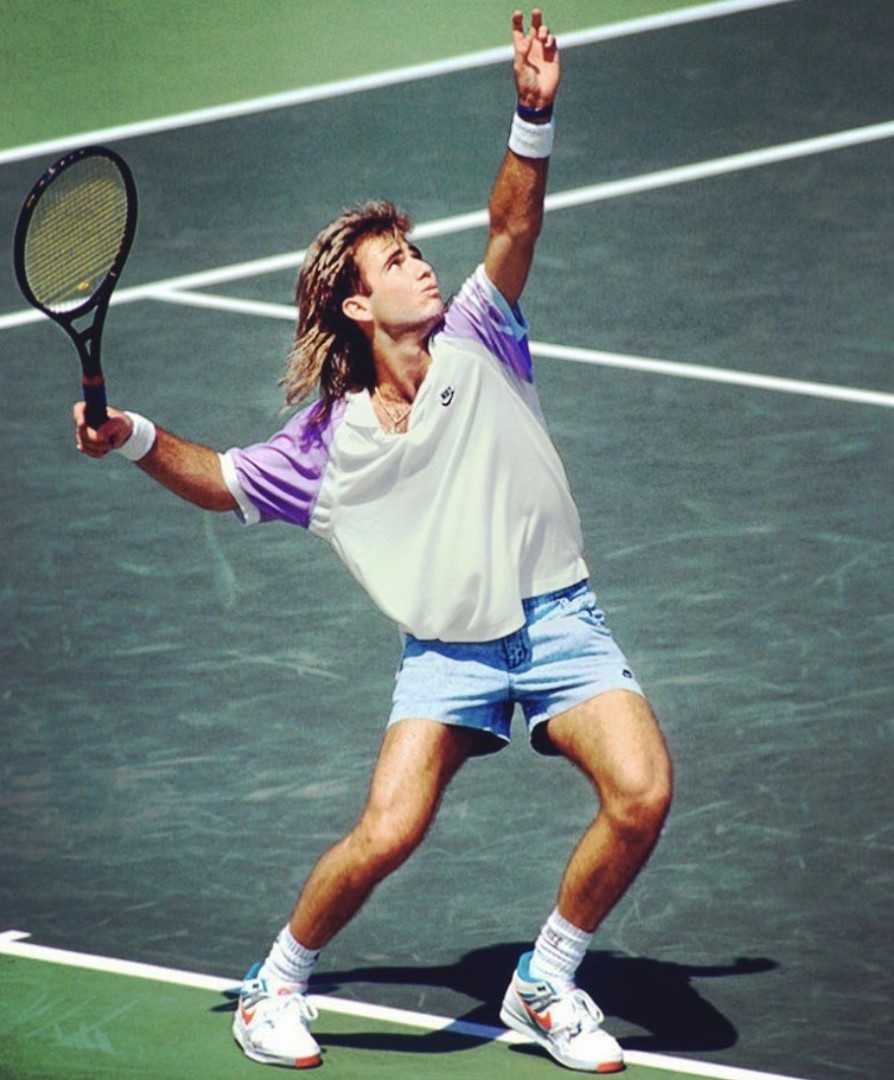
World No. 1 at 25
He won his first Australian Open title in 1995. Following this victory, he rose to number one in the world rankings. He also won three Master Series titles and seven tournament titles in 1995.
1996 wasn’t as productive as he had hoped. The highlight of that year was winning the gold medal at the Olympics in Atlanta.
He experienced a significant decline in his career in 1997. Due to a wrist injury, he was only able to play 27 matches that year. The injury caused his world ranking to plummet from No. 1 to 141.
His career began to improve slightly in 1998 with the Challenger Series tournaments. Following these victories, he rose to No. 6 in the world rankings.
He demonstrated his significant improvement by winning the US Open and French Open in 1999.
By winning the Australian Open in 2000, 2001 and 2003, she won the 8th Grand Slam tournament of her career.
In 2006, he suffered another ankle injury, which led to a period of suspension. During this time, he began experiencing leg and back problems.
He ended his professional tennis career on September 4, 2006, with the US Open.
Awards and Achievements
In 1988, he was named Most Improved Player of the Year by the ATP and Tennis magazines.
In 1992, he was awarded the BBC Overseas Sports Personality of the Year award.
In 2010, Andre Agassi was listed as the 7th greatest player of all time by Sports Illustrated.
In 2011, he was inducted into the Rhode Island International Tennis Hall of Fame.
His autobiography, “The Open,” reached #1 on the New York Times bestseller list. He won the British Sports Book Award for this book in 2010.
He won eight Grand Slam singles titles throughout his career. Australian Open (1995, 2000, 2001, 2003), French Open (1999), Wimbledon (1992), US Open (1994, 1999).
In 1995, she had the best season of her career with a record of 73 wins and 9 losses.
Singles Career
Career Record: 870-274
Total Trophies: 60
Highest Ranking: No. 1 (10 April 1995)
Grand Slam Singles Career
Australian Open: Champion (1995, 2000, 2001, 2003)
French Open: Champion (1999)
Wimbledon: Champion (1992)
US Open: Champion (1994, 1999)
Tournament Career
Tour Finals: Champion (1990)
Olympic Games: Champion (1996)
Double’s Career
Career Record: 40–42
Total Trophies: 1
Highest Ranking: No. 123 (August 17, 1992)
Grand Slam Doubles Career
French Open: Quarterfinals (1992)
US Open: 1R (1987)
Team Career
Davis Cup: Champion (1990, 1992, 1995)
Coaching Career
Novak Djokovic (2017–2018)
Grigor Dimitrov (2018–2020)
Why I look up to Agassi?
Now, let’s get to why I look up to Andre Agassi. The first reason is that he was a fun character and had a certain style. He had long hair and a bandana back in his day, but he cut it completely in the later years of his career. We don’t know if he did this because he was losing his hair or because he was bored with his long hair, but he had charisma in both styles. I remember saying to myself as a child, “If I were a tennis player, I would want to play with such charisma.”
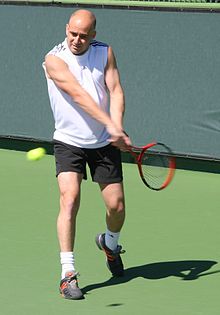
Second, his body type was like mine. So, we were the same height (1.80 meters, or 5’11” in American terms). Although he wasn’t a height advantageous for tennis, his agility, speed, game variation, and top-spin style made a difference on the court. I started playing tennis when I was 8 or 9 years old, and I felt a close connection to him, so I played exactly like him. Although I was ambidextrous, I think I started playing with my racket in my right hand, partly due to Agassi’s influence. I, too, played tennis with a two-handed backhand and a lot of topspin. However, my tennis career was short-lived. At 11, I decided to quit tennis due to a problem I had with my tennis coach (I described this incident in my blog post, “A Weekend Reflecting on My University Days and My Tennis Career Ending Before It Even Started.” I recommend reading this for those interested in learning more: https://www.serhansuzer.com/tr/universite-gunlerime-dondugum-bir-hafta-sonu-ve-baslamadan-biten-tenis-kariyerim ). Eventually, by the time I was done growing up, we were the same height.
Thirdly, Agassi’s father was Iranian Armenian (his name is Emmanuel Agassian). My paternal grandmother also has roots in Khorasan, a Turkish region in Iran. There’s a similarity there, too.
Playing the game with his intelligence
Beyond his physical ability to play the game quickly and agilely, Agassi also used his intelligence, demonstrating the same agility when developing strategies. Sometimes, you’d have to change the strategy you’d developed beforehand during the game. Agassi would adapt different stroke combinations to his evolving strategy throughout the game. Let me give you another example of Agassi’s intelligence. He would predict which direction the star champion of the time, German Boris Becker, would hit by observing his tongue movement before his serve, and thanks to this, he defeated him repeatedly. During those years, Becker complained to his wife that Agassi “was practically reading my thoughts.” We hear from Agassi himself how shocked Becker was when he revealed this to him years later, after the German champion had retired from the sport:
Short version:
https://www.youtube.com/shorts/FHsL4DeKvQs
Long version:
Common like: Brooke Shields
Also, in my teenage years, I admired Brooke Shields. According to Serhan back then, Shields’s beauty in the film “Blue Lagoon” was legendary. Agassi began dating Brooke Shields in 1993 and married her in 1997. They divorced in 1999. I didn’t understand why they divorced; when I first heard they were getting married, I thought it would suit him. However, later, Agassi made a marriage that I thought was even better for him. He married Steffi Graf, one of the greatest women’s tennis players of all time, winner of 22 Grand Slams. I remember saying, “Well done, Agassi,” to Graf, who had a much bigger tennis career than he did and possessed a strong character.
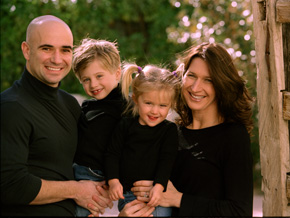
He had two children from his marriage to Steffi Graf. Here’s the Agassi family’s happy picture.
I once saw a commercial about the tennis skills of the Agassi-Graf son. I’d like to share this commercial with you, which made me laugh and say, “They did it cleverly!”: https://www.instagram.com/reel/C_QuaLTCPvr/?igsh=MXY1YnF3OTBqc3FuOQ%3D%3D
Finally, Agassi saw rapid peaks in his career, followed by a rapid decline. While he was No. 1 on the court during his time, he quickly dropped to 141st. Unfortunately, he also admitted to drug use during that time, which he openly wrote about in his book “Open.” He used the chemical drug meth for years and struggled to overcome its effects. He finally managed to completely recover, returned to the top, and retired from tennis due to a physical injury, still in the Top 10.
The Power to Persevere and Come Back
Everyone makes mistakes in life. The important thing is to acknowledge your mistakes, make a concerted effort to resolve them, and demonstrate the necessary willpower to return to your rightful place.
Andre Agassi has achieved a remarkable comeback story, which we call a “comeback story.” Just like Semih Saygıner, whom I featured in my previous role model article. Both, despite the long wait, worked hard and did everything necessary to reach the top. You can hear Andre Agassi’s account of this comeback:
https://www.instagram.com/reel/C3lakzOv-jE/?igsh=MTR0b3hvbTJndHNpMQ==
Comeback stories aren’t just for athletes; they’re for everyone. They’re especially true for those who achieve success in life, only to face significant setbacks and reach rock bottom, especially due to external interventions. I personally see myself in a similar position. For those who have faced or are facing life’s challenging tests, I can offer this advice: Never give up, continue to do your best, and strive to take positive steps every day until you reach your full potential. Just like Saygıner or Agassi, know that the day will come when you too will reach your peak. Then you will be much more resilient to face any challenge. Good luck.
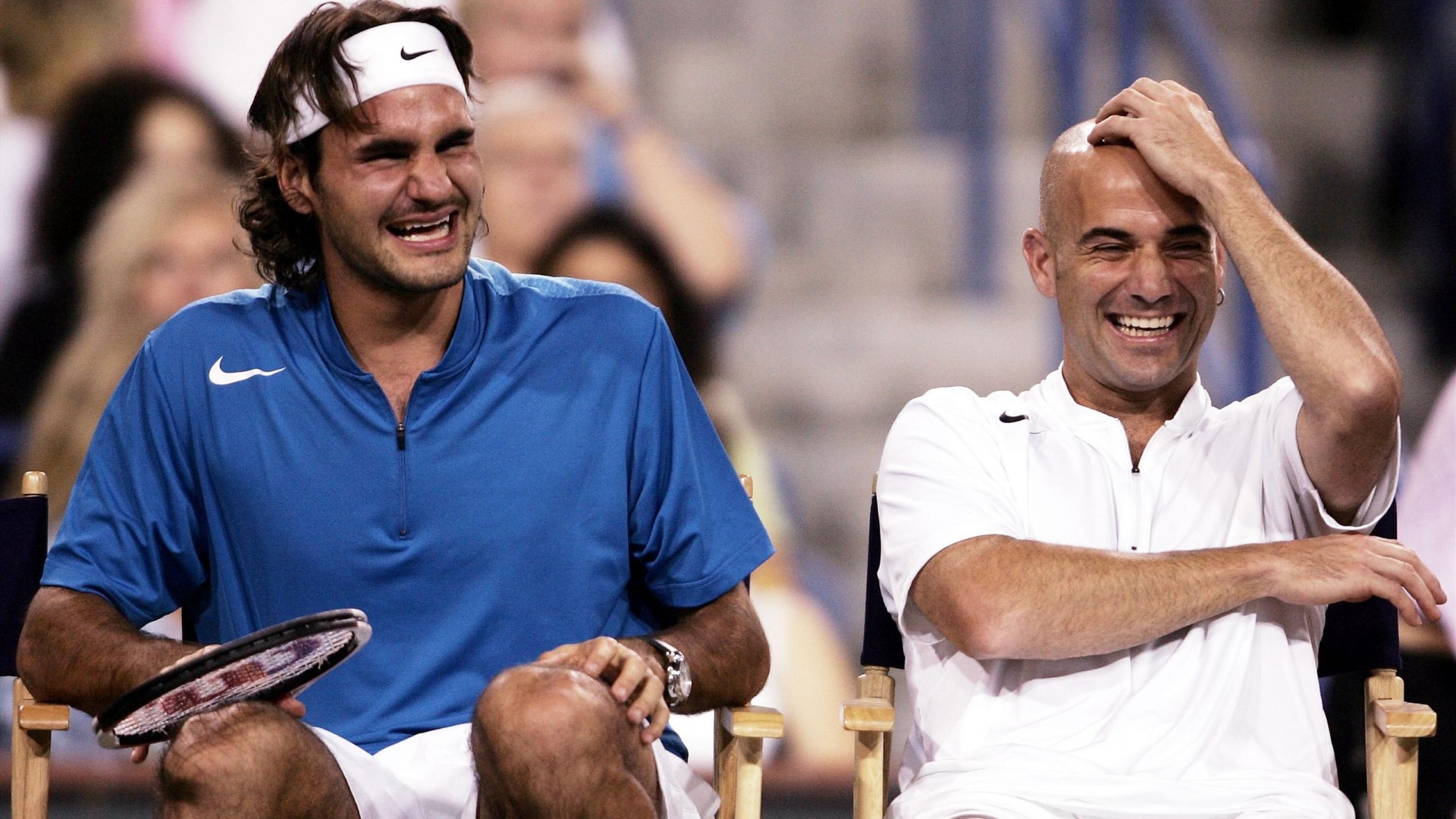
Note: There are two tennis players I personally consider role models. The first is Andre Agassi, and the second is Roger Federer. While I have great admiration for Sampras and Nadal, my admiration for them isn’t quite as role model-level. Later in his career, Agassi competed in an exhibition match with Federer, who was in the early stages of his career, the proceeds of which will be donated to charity. In that match, Agassi, who had cut off his long hair completely and ditched his bandana, joked with Federer, who also had long hair, though not as long, and was also wearing a bandana. He sweetly teased him, saying, “If you cut off that hair, you wouldn’t have to play with it so much.”
https://www.facebook.com/reel/1124506395320942
Tag: memoir