Here are the links to my first two articles:
http://www.serhansuzer.com/tr/memleketin-dnasina-askerlikten-bir-bakis-1
http://www.serhansuzer.com/tr/memleketin-dnasina-askerlikten-bir-bakis-2
I’m re-quoting the introduction to this section to remind you of my transition from novice to proficient:
After novice, everyone’s destination was clear. Some of our short-term soldiers continued their military service by serving as drill sergeants, some as clerks, some as officers at the officer’s club, and others at the Söke unit in Denizli. I was also selected for the brigade headquarters, the main administrative unit of the brigade. Initially, I was assigned to the IT (Information Technologies) section of the brigade headquarters. Although I didn’t have a background in computer engineering, I was assumed to have computer knowledge and was assigned to the entire brigade’s IT department. One of my closest friends was assigned to intelligence, while another became the clerk of our dormitory. Because our short stints were spread throughout the brigade, I knew everyone. I also bonded with my colleagues in the IT department immediately. I fell into a good circle, but it was short-lived for me.
After three weeks in the IT department, I was assigned to the command floor next to the brigade commander. There was only one general in our brigade, the brigade commander. Alongside our brigade general, we also had a staff colonel. Both were assisted by an adjutant. I was assigned as his adjutant. In the private sector, I was the assistant to the assistants of the two highest-ranking officers in the brigade. They also gave me a sideline job teaching English. Both were jobs I could easily handle.
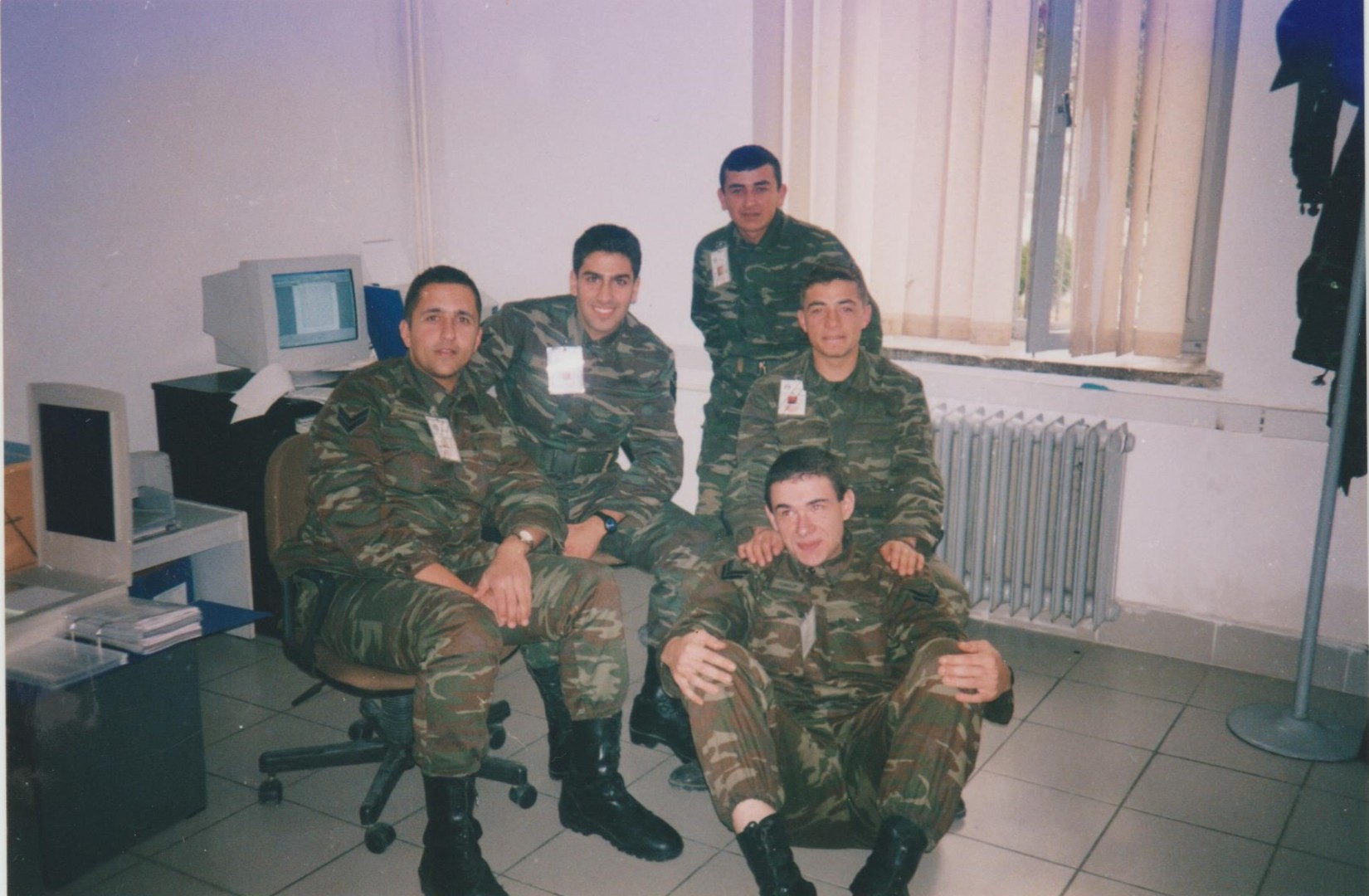
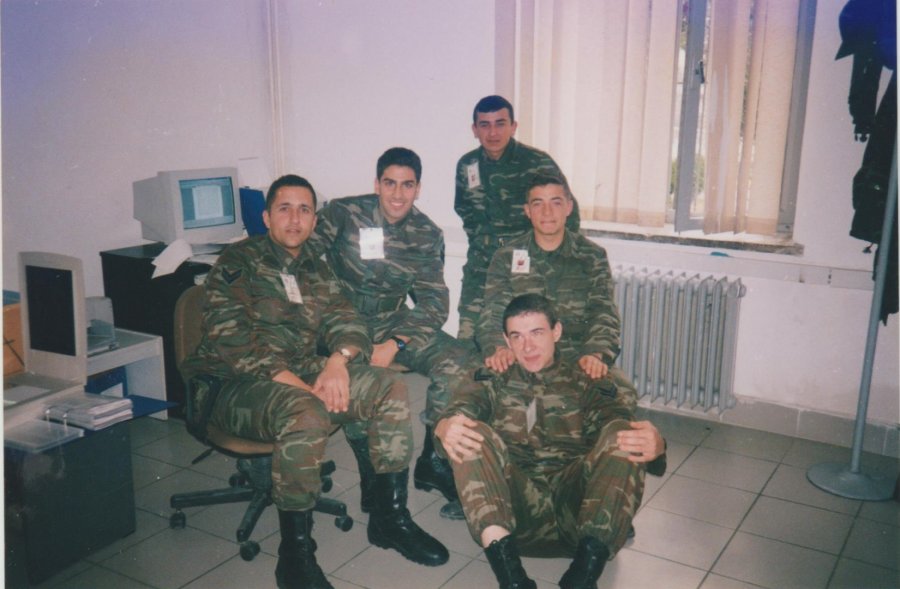
A photo we took with our friends from the IT department…
Except for one person…
There were no problems with the job description, and I’ve never shied away from work in my life. I could handle any amount of pressure. My colleagues on the command floor at brigade headquarters were also good people. I got along with them all easily. The vast majority of the command floor employees were from the western provinces of our country, such as Istanbul, Izmir, and Bursa, and I had no problems with them in terms of frequency. Our brigade commander, a brigadier general, and our staff colonel were both good people and excellent managers. I had no problems with anyone. Except for one person…
As much as I got along with our brigadier general and staff colonel, I had just as much trouble with the adjutant general I was assigned to. My goal isn’t to denigrate anyone, so I’m not mentioning names. I’m writing this specifically for the colleagues I worked alongside on the command floor. I’m sure they’ll read these lines with a wry smile on their faces.
If asked to name the three most negative people you’ve ever met in your life, I’d easily place the adjutant general there in the top three. I won’t go into detail, as he was a member of the military. I can only say that I never allowed myself to be used outside of the assigned duties at brigade headquarters. This occasionally caused serious tension with my subordinate. Although he was a man of many kinds, he assumed a completely different persona in the presence of the brigade commander and our staff colonel, and when it came to the soldiers on the command floor, he would spill all his guts.
On the verge of fisticuffs
Let me give you a simple example. I was frequently training him on computers. One day, while I was performing some computer tasks, he appeared behind me and began to mention the functions I had taught him three days earlier, as if giving me orders, saying, “Let me teach you: do this like this, do that like this.” At first, I thought he was joking. I looked up; he was completely serious. I remember thinking to myself, “What am I supposed to say to this guy?”
One day, during another period of tension, he stormed in while I was in the command floor kitchen. He told the tea boy in the kitchen, “Get out, close the door,” and told me, “You stay.” Anticipating what was coming, I waited at the airport. He started yelling again. As usual, he couldn’t control his anger and was speaking nonsense. The moment he raised his hand, I clenched my fist, ready to punch him in the face at the first physical contact, and then I would do whatever was necessary. I was determined to take revenge on the entire command floor. I waited for him to be the first to intervene, just to be proven right. Then his hand hung in the air. He didn’t eat.
There were two reasons he didn’t eat. First, the brigade commander loved and respected me very much. I showed him the same respect and affection. Second, short-term enlistments have a special status. Although they were below non-commissioned officers in the military, we were promoted above them when we went to court. After all, if university graduates like us served long terms, they became second lieutenants in the army, ranking above non-commissioned officers. The non-commissioned officer on the command floor, familiar with these complex rules of command, lowered his hand. He stormed out, shouting and slamming the door.
This tension continued throughout my military service. There were many different reasons for this. As I said, I won’t go into further detail. However, it was the most challenging factor for me during my military service. Other than that, I experienced no other problems.
Different Types, Different Behavior
I believe there’s a serious imbalance in the army. You encounter all kinds of characters and physical characteristics, both among officers and non-commissioned officers. For example, the non-commissioned officer I was assigned to was short and seriously ignorant, while there were also non-commissioned officers with both strong physiques and strong character. This applies to officers as well. For example, in our brigade, we had a major over 1.90 meters tall, a solid soldier you could tell when you saw him. Similarly, I met officers who were so overweight they couldn’t see their toes. While there were officers and non-commissioned officers who were completely self-centered, there were also soldiers who were passionate about their country and nation and didn’t hesitate to sacrifice themselves. I encountered all kinds.
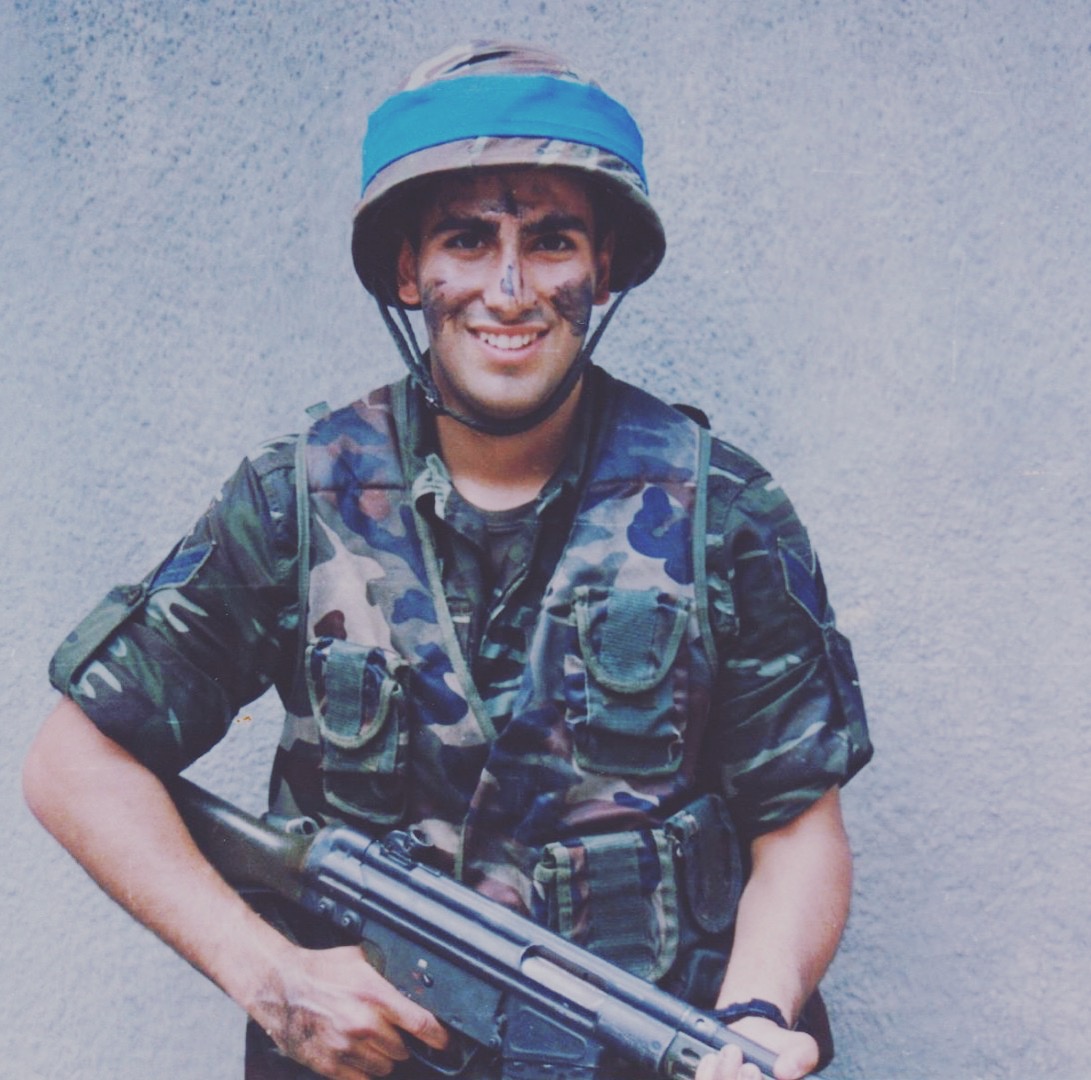
As I mentioned before, don’t be fooled by my pose. I’ve never had any experience with guns. Outside of basic training, I’ve always been on the computer.
Soldiers’ wives shared a similar profile. Some, acting as commanders with a much more authoritarian air than their husbands, would subject soldiers to considerable hardship, while others, in a manner that commanded the utmost respect, treated them with compassion and kindness.
Nefarious Reasons
We continued our military service in an environment filled with contradictions. The only consistent thing was that all soldiers resorted to every possible method to avoid serving. For example, our tall friend, who worked as the commander’s bodyguard on our command floor, underwent two surgeries for ingrown hairs, each receiving a 40-day leave of absence. From what I’d said to him, I knew he had nothing serious. After all, everyone was trying to find and implement their own methods to avoid serving. Personally, I would never undergo ingrown hair surgery to avoid serving. But this, of course, is a matter of choice.
Some may wonder whether I enjoyed the environment I experienced while serving near a magnificent place like Pamukkale. Yes, I often went to Pamukkale on weekends when I was on leave. As fate would have it, there were some good Gaziantep kebab restaurants in Denizli. We’d go out to eat there too. Sometimes I’d join my friends on leave. There was a relatively small shopping mall outside at the time. I remember the entire command floor playing bowling together and having a great time. To help you visualize it, I’m sharing some photos we took while on leave:
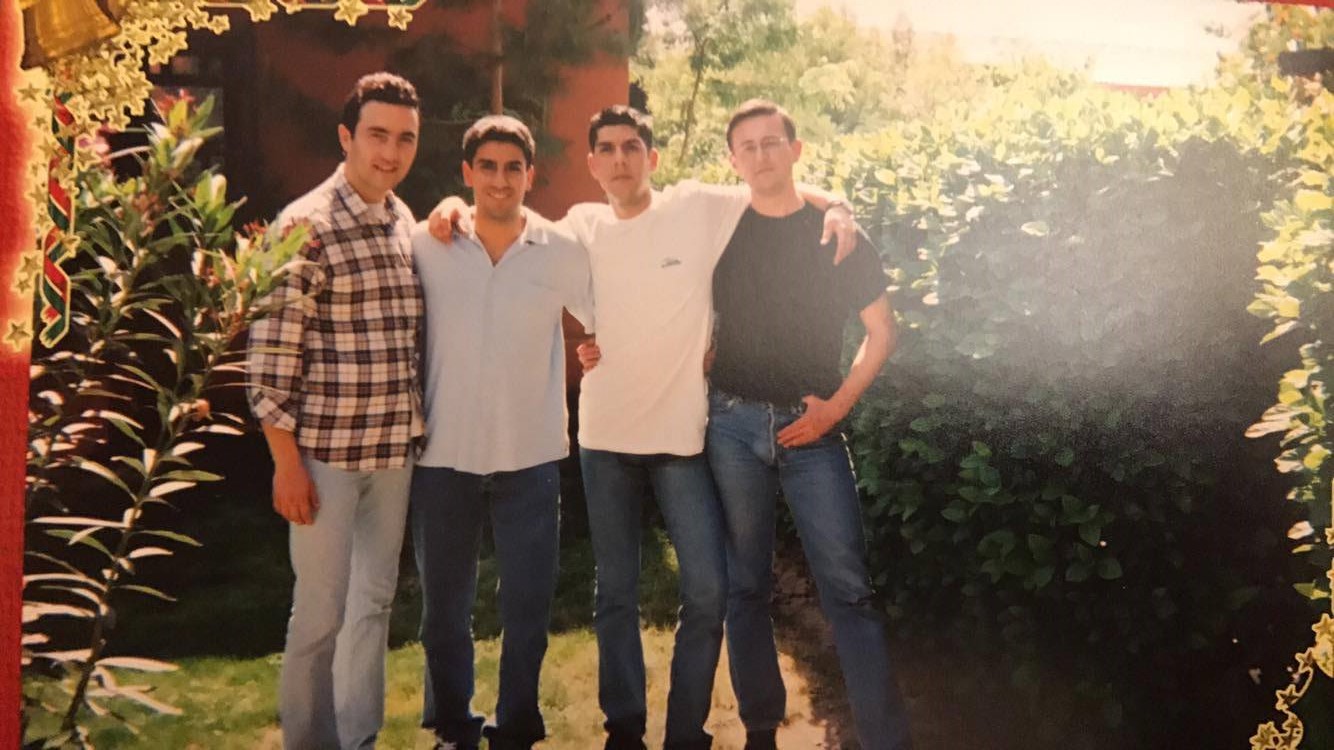
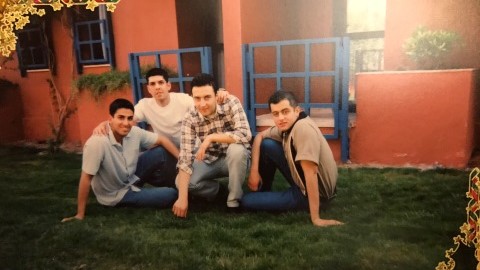
I’m going to be the center, commander!
We had a good time inside from time to time. There was an artificial turf pitch inside the brigade. Officers and NCOs would occasionally play matches on this pitch. Normally, soldiers weren’t allowed to attend these matches. Only a few soldiers from brigade headquarters could be specially selected to play with the senior officers. I was one of the soldiers who played in the matches. Even during artificial turf matches in the military, we could encounter some very interesting events. For one thing, in military matches, everyone on the field addressed each other as “Commander,” and orders followed the same pattern.
My playing positions are clear. I usually play either in midfield or anywhere in the defense. I’ll switch to wherever there’s a gap. Since there’s always a shortage of left-backs or right-backs, I volunteer to fill those positions. When I play in midfield, I’ll pass the ball to the forwards and occasionally score directly. One day, I scored a goal from midfield in a match where a friend of mine had briefly scored. I was surprised by the goal I scored; it was a generic goal. After the match, I made a serious joke about it with my short-term friend, who worked in intelligence and was the one who got us into these matches in the first place.
In defense, in addition to my typical defensive duties, I bring the ball out from the back and make a lot of assists. And of course, my defense is very strong. Since I usually anticipate the strikers’ moves, I’ll preempt them and never let them pass.
The Lieutenant Couldn’t Cope
One day, two fellow soldiers and I were playing a mixed-use football match between officers and non-commissioned officers. I was playing right back in that match. A tall Lieutenant was playing forward for the opposing team. The Lieutenant started to get annoyed with me during the match; no matter what he tried, he couldn’t get past me, and I kept taking the ball. After seven or eight attempts, I realized the Lieutenant was getting really peeved. I anticipated what might happen and decided to take precautions. The highest-ranking officer on the field was a lieutenant colonel, playing for our team. My friend in midfield and I were throwing every ball we got at him. Our lieutenant colonel, who played forward, was scoring plenty of goals thanks to us. To take precautions, I went to the lieutenant colonel and said, “Commander, the first lieutenant is playing very nervously. An injury might happen soon.” He replied, “Son, stop this. Get down and focus on your game.” I said, “Yes, commander,” and took my place. But then, a moment later, a thought struck me. Twenty seconds after this exchange, the first lieutenant received another ball, and he tried to dribble past me. I took the ball from him again, and as I was passing it to my friend in midfield, the first lieutenant double-dived into me from behind. He had hit me so hard, I landed headfirst. My leg could have been broken. Seeing this, the lieutenant colonel became furious and started yelling at the first lieutenant, “What are you doing? You’re going to break the kid’s leg, you rude bastard!”
The first lieutenant, having heard the reprimand, tried to get on top, and the lieutenant got even angrier: “Get out, butchers like you have no place in this game,” he said, and threw the first lieutenant off the field. A petty officer working under him, trying to flatter the first lieutenant, tried to interject, saying, “He’s not at fault.” Unable to restrain himself, the lieutenant colonel shouted back, “You too, get out!” Then he told two soldiers watching from the sidelines, “You get in the game,” and so the game began again.
The magnificent Denizlispor fans…
We didn’t just play matches. We also watched Super League (then known as the First League). After a busy weekday, I was eagerly awaiting the weekend. I went to Denizlispor matches a few times on the weekends. Denizlispor, right across from our 11th Infantry Brigade, had interesting matches. Denizlispor wasn’t a bad team. They were unpredictable. Sometimes they’d beat one of the Big Three, and sometimes they’d lose to the bottom of the league. The unpredictability of the match results made it exciting. And the Denizlispor fans were a beast. I’ve never seen such fans in my life. They’d watch the match in silence, as if watching a theater, while simultaneously munching on sunflower seeds. Imagine a significant portion of the stadium munching on sunflower seeds without making a sound throughout the match. Some of the stadium were trying to get the fans excited. But the announcer, who was yelling “yeşşşiiiiiilll” at the top of his lungs, didn’t pay attention. He tried this a few times. Except for a small number of fans, no one else was doing it, shouting “siyyyyyaahhh!” No one cared. The people of Denizli continued to pick at the sunflower seeds. Frankly, I was glad to see such peaceful and docile fans in our country, where violence is rampant. I was laughing to myself. The floors were filthy, but that’s okay, that’s just how the guys like it.
I’ve only ever seen one match where Denizlispor fans went all out “Istanbul-style” and that was the Denizlispor match, where Fenerbahçe lost the championship in the last leg. Watching that match played in Denizli on TV, I couldn’t believe my eyes. Those calm and docile Denizlispor fans were gone, replaced by a crowd that lit flares, shouted throughout the match, and even cursed the opposing team. It’s highly likely that those people weren’t Denizlispor fans at all.
Bad news on the last day
My discharge from military service was also a turning point in my life. The day before my discharge, Kentbank was seized. I wrote about this in detail in my article at http://www.serhansuzer.com/tr/15-yillik-is-hayatim-ve-gelecege-notlar . I’m rewriting the relevant section here to remind you:
During the final days of my military service, while serving as an orderly to the brigadier general commanding the 11th Infantry Brigade in Denizli, I received a call from my mother on the morning of 11 July 2001:
“Son, did you hear that?”
“What?”
“Unfortunately, they’ve seized Kentbank. It’s on the news now. I can’t reach Selma (my father’s assistant).
“Who seized it?”
“The government.”
“Okay, I’ll call you back.”
Immediately after I hung up, I called my father directly. His voice sounded incredibly bad. With considerable difficulty, he told me that the news was true and briefly explained some of his experiences.
After the phone call, I felt compelled to return to Istanbul as soon as possible and be with my men. I went to our staff colonel at our brigade headquarters and explained the situation. I was scheduled to receive my discharge the next day. He immediately called our brigade commander, who was traveling out of town. After receiving his approval, thankfully, I received my discharge the same day. I said goodbye to my brigade friends and left.
After discharge, I immediately arranged my flight to Istanbul and returned the same day. Meanwhile, I canceled the three-week Amsterdam-Bodrum-Çeşme vacation I’d organized with my friends as a reward for my post-military service.
That evening, I was with my family.
In the end, I completed my military service in eight months, with all its ups and downs, and with flying colors. During this time, I developed a strong understanding of the military. I’d like to share some of my recommendations here:
- The Need for Professional Military Service
Transitioning to professional military service is essential in Türkiye. In my opinion, having everyone spend a long time in the military is both a waste of the army’s resources and a waste of the minds that could spend their time much more productively.
Professional soldiers are equipped with the best equipment and the necessary infrastructure to defend the country, which is crucial for strengthening the country’s defense. If the goal is for all men capable of holding a weapon to participate in combat in a war, then the Swiss model can be applied. In other words, keeping training short (like 10 days) and revising it at regular intervals (like 2-3 days) would be beneficial. This would allow people to both refresh their military knowledge and update it with enhanced training programs.
- The Importance of Technology
Technology must be given great importance in the military. While there are armies today that have advanced technology for unmanned warfare, there are also those that still defend their country with simple rifles or knives. We must constantly improve our technology and stay ahead. Here are examples of countries that are constantly developing technology: http://mobil.hurriyet.com.tr/galeri-son-teknolojiyi-kullanan-savas-makineleri-40535171/7
- Alternatives to the Petty Officer System
I think the petty officer system should be abolished. I can say this more clearly because it happened to me.
It’s absurd that people like me, who speak three languages, have seen the world, and possess a certain vision, are under the command of some complex NCOs with elementary school-level knowledge and no foreign language. My general observation about NCOs is that they can’t rise above a certain level of rank, and with this complex, they infuriate all soldiers. I’ve frequently witnessed a 50-year-old non-commissioned officer deeply resentful of having to address a recent university graduate NCO as “commander” and attempt to disobey his orders. Therefore, either the NCO system should be abolished, or a training mechanism should be established that will allow them to advance if they work hard.
- Require psychological testing
Everyone in the military should undergo psychological testing at regular intervals, and those experiencing psychological distress should be dismissed from the military.
- Ensuring physical standardization
As Atatürk said, “A healthy mind resides in a healthy body.” A soldier’s physical fitness also requires adequate physical fitness. As I mentioned in my article, some soldiers are just jackboots. When you look at them, you’d think they were perfect soldiers. Some aren’t physically fit. This absolutely shouldn’t happen in the army. Physical standards should be set, and only those who are physically fit should continue.
- Quality and Continuity of Education
After transitioning to professional military service, soldiers must undergo regular and continuous training in the army. The situation of military and civilian schools intermingling the functions of many institutions in the country shouldn’t exist. Schools already need to be strengthened for civilians and ensure they receive a good education. In my opinion, education should also be free. When it comes to military education, I don’t subscribe to the thesis that “the military is also a school for these ignorant people.” These schools should be built in places where these ignorant people live and ensure they receive the best possible education.
That’s all I can say for now, based on my years in the military. Hope to see you in my next article.
Take care.
Tag: lifestyle