My grandfather was born in 1926 in the Akçadağ district of Malatya. In 1928, when he was just two years old, his father Ali Süzer, his mother Cennet, his elder sister Zöre, and younger brother Haydar migrated to Gaziantep. From a very young age, my grandfather Hasan Süzer experienced every stage of commercial life in Gaziantep, and in 1953, he officially entered the business world. Every year, he expanded his ventures in household goods, cologne manufacturing, carpet trading, white goods sales, and the fuel business.
At the end of 1977, he acquired shares in İstanbul Otelcilik ve Turizm Ticaret A.Ş., which included the historic Pera Palas Hotel. He managed Pera Palas until his death in 2005. In addition, he contributed to Turkish tourism by founding the Altın Kayısı Hotel in Malatya and the Süzer Hotel in Alaçatı, İzmir. In Malatya, he planted 12,000 trees.
In Gaziantep, my grandfather purchased and restored a historical mansion, transforming it into an ethnography museum, which he then donated to the Ministry of Culture and Tourism.
He also built a school for the hearing impaired in Gaziantep in honor of his father, Ali Süzer, and an elementary school named after his mother (and daughter) Cennet Süzer. In Ümraniye, Istanbul, he had another elementary school constructed bearing the name of his wife, İsmihan İsmet Süzer.
In addition to being a founding member of the Malatya Education Foundation and the Malatya İnönü University Foundation, he also served as president of both the Joy of Life Sports Club for the Disabled and the Gaziantep Association. Throughout his life, he consistently awarded scholarships to thousands of students every year without interruption.
He was also the author of a book titled “Words That Illuminate the Path of Humanity.”
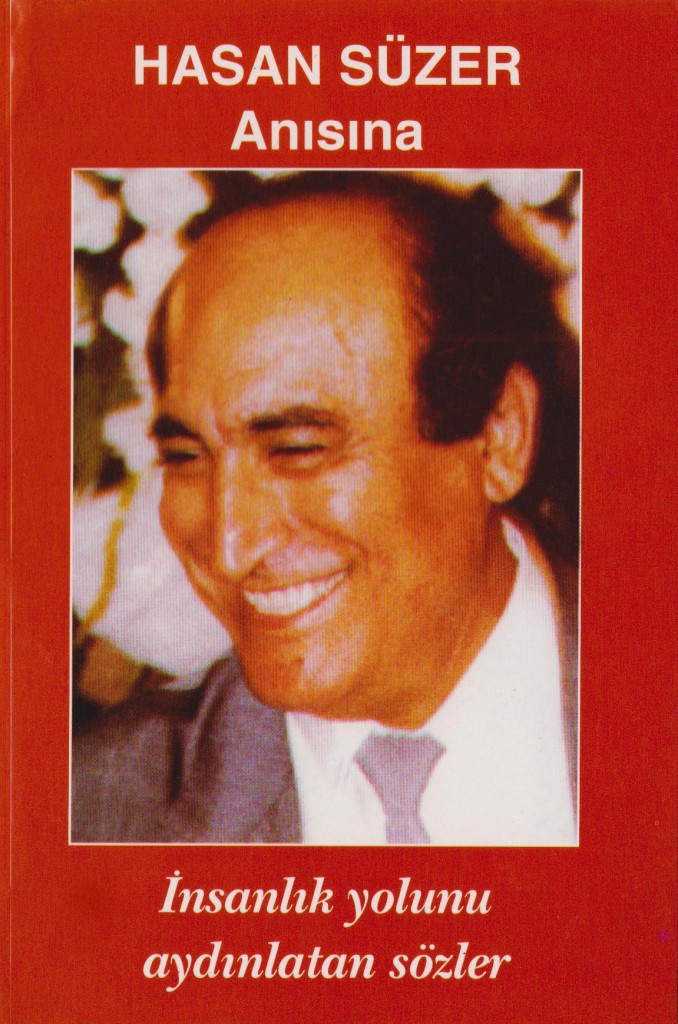
The cover of a book my grandfather prepared. He loved giving advice and sharing his experiences.
He eventually compiled these wise sayings into a book. My grandfather’s two most important qualities were his foresight and his unwavering support for those around him. He was a self-taught man and a truly forward-thinking individual. At a time when Gaziantep was not as developed as it is today, he made a significant effort to ensure that all six of his children received a good education. Even then, he advised all his children to learn a foreign language and encouraged them to study at American colleges. His observations and suggestions on many matters eventually proved true.
He often went above and beyond his financial capacity to help those around him. That’s why he was always so beloved. Today, when I go to dinner anywhere in Gaziantep or Malatya, everyone still remembers my grandfather with gratitude and speaks of him with admiration. He supported and contributed to many organizations in Gaziantep, from the entrepreneurs of yesterday to the prominent companies of today.
After the prayers at my grandfather’s mawlid, my father took the microphone and began sharing his memories of him. The first story he tells begins when, at the age of 13, he attempted to travel by bus to Hatay to visit acquaintances from Gaziantep. The weather conditions were dire, and the weather forecast warned of heavy snowfall. Despite my grandfather’s warnings, my father ignored him and hopped on the bus, setting off. The road conditions on Gavurdağı, located between Gaziantep and Hatay, are notorious for its challenging conditions. Whenever the weather turns nasty, it’s not only very windy in the passes, the mountain is also impassable. When they arrived at Gavurdağı, the bus got stuck due to heavy snowfall, leaving no way back. They were forced to spend the night inside the freezing bus, at the risk of freezing to death. According to my father, the story unfolded like this: “The next morning, I woke up early. And much to my surprise, there was a snowplow with my father inside. I couldn’t believe my eyes. When my father realized I was going to get stranded, and he didn’t even have a cell phone at the time, he called everywhere and finally secured a snowplow from the governor’s office. He also set out to find us. I was on the verge of freezing to death, but that morning, my father saved not only me but all the other bus passengers as well.” After my father’s anecdote, other family members and my grandfather’s friends took the microphone and began sharing their memories and feelings about him. My grandmother dropped the real bombshell at the Mawlid. One of the attendees deliberately provoked my grandmother, asking, “Did you really love Hasan Bey?” My grandmother replied, with all her naturalness, “Wouldn’t I, dear? If I didn’t, could I have brought six children into the world?” Naturally, great laughter ensued.
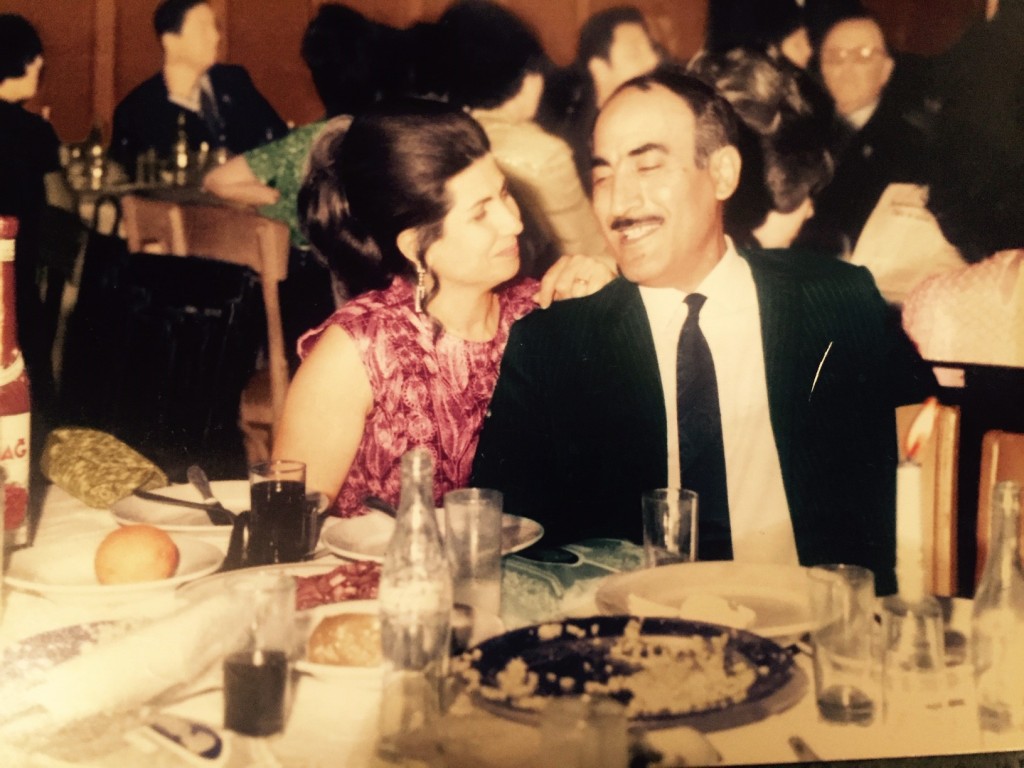
A glimpse into the happy days of my grandmother and grandfather, who married out of sheer love and remained married for 60 years until my grandfather’s death. The year was 1965 in Izmir. The photo was taken at a dinner in Izmir at the invitation of entrepreneur Sümer Bey, the inventor of the Dough Machine, which featured cutting-edge technology my grandfather helped commercialize and sell throughout Türkiye, and his wife.
When it came to my turn, I explained that I had many memories of my grandfather and that we had a very special grandfather-grandson relationship. First, for those who don’t know, my middle name is Hasan. Middle names are generally at the top of the list in Türkiye. That’s why my full name is Hasan Serhan Süzer. My grandfather was always proud that I bore his name. He often joked with me, “Hey, I’ll turn you over to the police; you stole my name.”
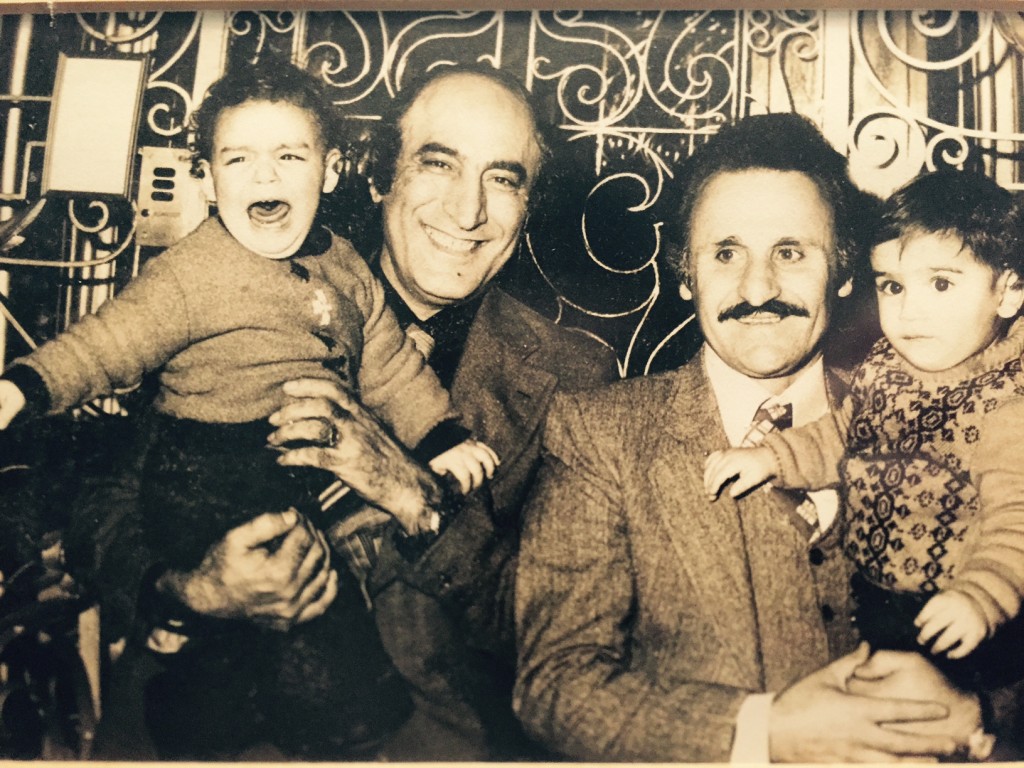
My twin brother Baran and I are in front of the Pera Palas’ famous elevator (the first in Türkiye), in the arms of our two grandfathers. On the left, is my paternal grandfather, Hasan, embracing Baran, and on the right, you can see me being held by my maternal grandfather, Ali, originally from Trabzon.
I’ll also write about my grandfather, Ali, a Korean War veteran. One of my most striking memories comes from the first time I visited him in Alaçatı. He bought the land in the 1990s, and while explaining how he was going to build a hotel, he said these exact words: “Look, son, in the future, this will be one of the most popular places in Türkiye. You’ll see, it will rival Bodrum.” When he told me these words, Alaçatı resembled nothing to how it looks today. There were only rundown stone houses and beautiful, unused, inaccessible beaches. While everyone, especially those from Izmir, went to their summer houses in Çeşme, Alaçatı was a place people approached with the words, “Oh, look at this abandoned old Greek village!” My grandfather shared what he told me with others. Those he spoke to mocked him under their breath. In fact, I even heard people say things like, “I guess Ali Bey has gotten a little carried away after turning 70. Is it possible to invest in such a desolate place, where no one goes? It’s such a shame, a sin, for the money spent.” Even our family members criticized us, saying, “Is it possible to take such a risk at this age?” Today, I look at Alaçatı’s current state. My grandfather was right. In fact, it has perhaps even surpassed the image he once imagined as Alaçatı went on to become one of Türkiye’s most important tourist destinations.
Far from being so overwhelmed during the summer that it’s impossible to walk on the streets, Alaçatı has become a place where people live year-round and migrate from Istanbul.
Another important memory I want to share is the last time I met my grandfather. Normally, he didn’t call me very often. On a Tuesday in the first week of November 2005, he called me on my cell phone, and the following conversation ensued:
“Son, what are you doing?”
“I’m working, Grandpa.”
“We haven’t seen each other for a long time.” Come by tomorrow sometime, let’s talk. I miss you.
– Sure. When should I come back?
– Let’s have lunch together. I’ll expect you at the hotel tomorrow at 12:30.
– Okay. I’ll see you for lunch tomorrow.
I went to see him at noon the next day. He greeted me in the large living room and said, “Let’s go to dinner.” The Pera Palas has a smaller, more beautiful room next to the large dining room. We went there. The conversation continued intensely while we ate. I was explaining what I’d done when he suddenly said, “Son, I’m tired. I don’t know how long I’ll live, and I want to delegate some of my responsibilities. I see you as the only person in the family who can carry this responsibility.” Then he told me, one by one, his outlook on life, his views on family members, how I should behave, and who I should turn to for support. He spoke to me as if he were sharing his Last Will & Testament.
Listening to him in utter amazement, I involuntarily said, “Grandpa, for God’s sake, don’t talk like that. We’ll do many more things together.” He replied, “No, no, son, everything has its time. My time is up, too; it’s time to hand over some of my responsibilities.” I insisted that he shouldn’t talk like that. At one point during our conversation, I said, “Grandpa, are you aware that you’re skipping generations? My father is in the mix.” He replied, “That’s what I want.” He said, “In fact, to reinforce my decision, I want to give you my gun.” Afterwards, we went up to his room together. He opened his safe, and just as he was handing me his gun, he said, “Ah, how did I miss that? First, I need to get this license in your name.” He summoned two of his most loyal men (they are my witnesses) and instructed them to get the license in my name immediately.
I bid adieu to my grandfather on Wednesday. We lost him around 4:00 PM on Sunday of that same week. He suddenly fell ill and passed away in our house in Bebek, where I grew up. The family made a mutual decision not to have an autopsy. However, according to our doctor friends, my grandfather most likely died of a pulmonary embolism (a condition in which one or more arteries in the lungs become blocked, leaving a person breathless. Pulmonary embolisms usually occur when blood clots travel from the legs, but rarely from other parts of the body to the lungs).
All of this was unbelievable to me. My grandfather felt as if he were about to die. He shared some very important things with me in one of his last conversations, in the form of his Will, and then he passed away.
His funeral at the Teşvikiye Mosque probably witnessed one of the largest congregations in history. Tens of thousands of people came from all over Anatolia. The loved ones who attended my grandfather’s final journey filled not only the mosque courtyard but even the adjacent road like a protest meeting.
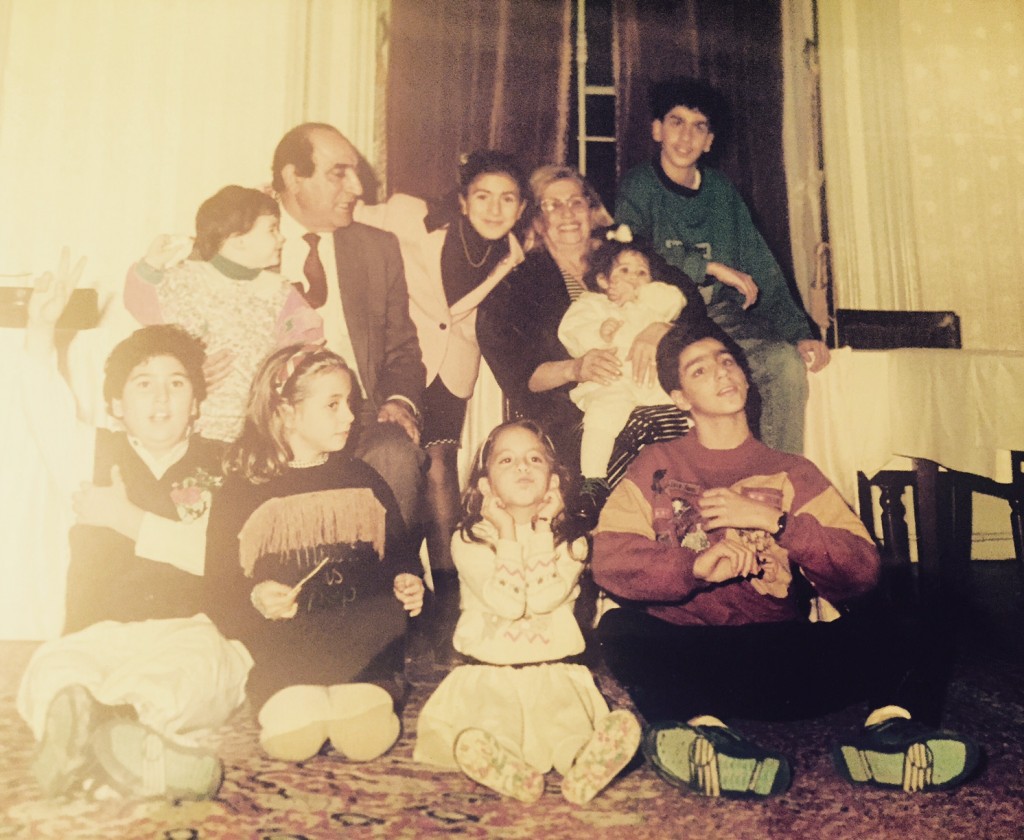
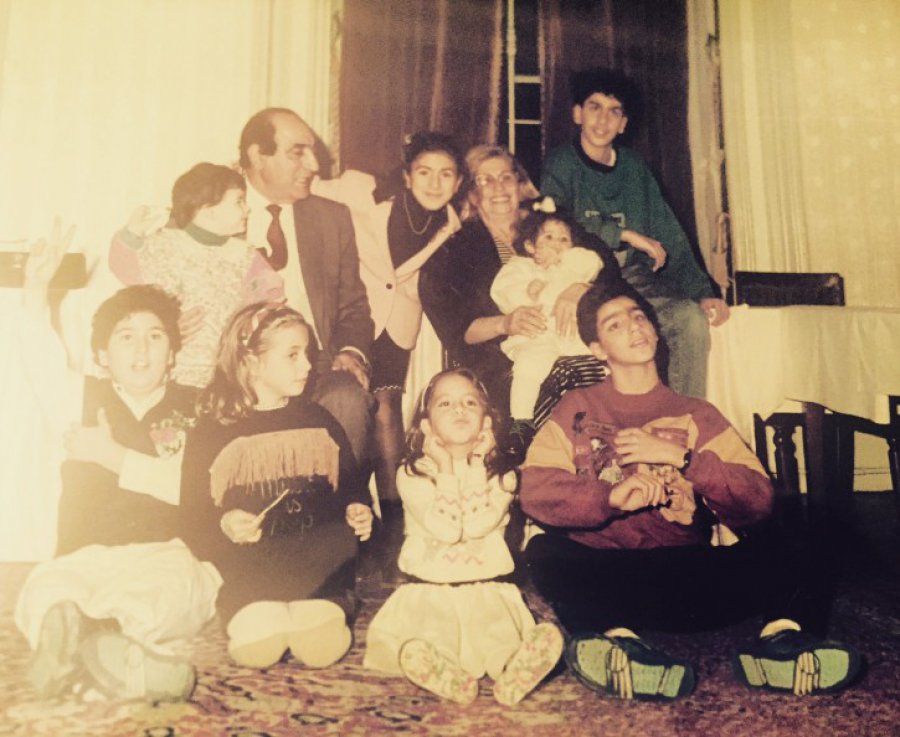
Our family picture. From left to right, my sister Nazlı on my grandfather’s lap, my cousin Enci next to her, my grandmother, my cousin Helin on her lap, and me next to them. Next to me in the row below is my cousin Evren, raising his hand in the air, my two cousin sisters Bahar and Zeynep next to him, and my brother Baran next to them. I think it’s 1990.
Our family picture. From left to right, my grandfather. I commemorate my dear grandfather Hasan with respect. May he Rest In Peace. I’ve already started working on things that would truly make him happy. I’ll share all of these in my next post.
Tag: memoir