On 11 July 2001, our family-owned bank, Kentbank, was seized. This event, which occurred on the last day of my military service and was a significant turning point in my life, and I’ve previously written about other details: http://www.serhansuzer.com/tr/15-yillik-is-hayatim-ve-gelecege-notlar
The day this occurred, I received my discharge papers and returned to Istanbul. The next day, I headed to Süzer Holding headquarters. On that first dramatic day, I made a promise to myself: if all went well in 10 years, I would establish my own company and pursue work that truly excited me.
And that’s exactly what I did. From the beginning of 2011, I focused on researching what I could do. In July 2011, I knocked on my father’s door and founded my own company. I had solar energy systems in mind for the scope of this company, which I named Steno. I hired a professional manager and then began researching business planning and the solar energy sector. It took me a few months to convince my father. Thankfully, he finally agreed and loaned me money. By late November 2011, I had resigned from my positions at KFC and Pizza Hut, bidding farewell to the family business. Around that time, a job in the commercialization of a new technology in the sector I was researching came up, and it seemed quite appealing.
My First Experience with Hitit Solar
After leaving the family business at the end of November 2011, I invested in Hitit Solar Energy with my father’s loan, setting up a new company, Hitit Solar Energy Inc., with a 50% partnership in order to commercialize CSP (Concentrating Solar Power) parabolic trough technology, which generates steam directly. You can find the company’s website at http://www.hittitesolarenergy.com/. This was my first foray into the sector. To help those outside the industry visualize what’s being developed in this field, I’m sharing images of different CSP technologies below:
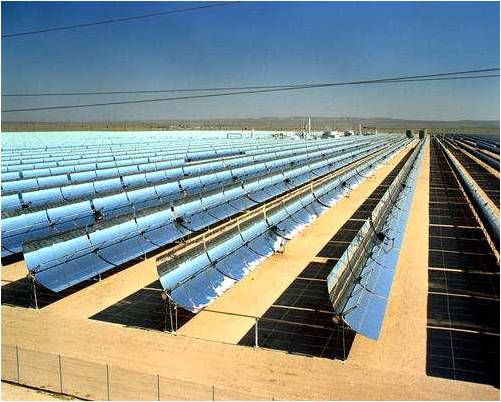
Parabolic Trough Technology
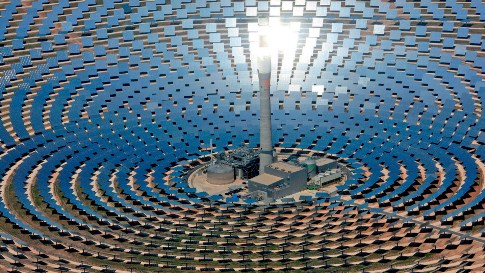
Tower Technology
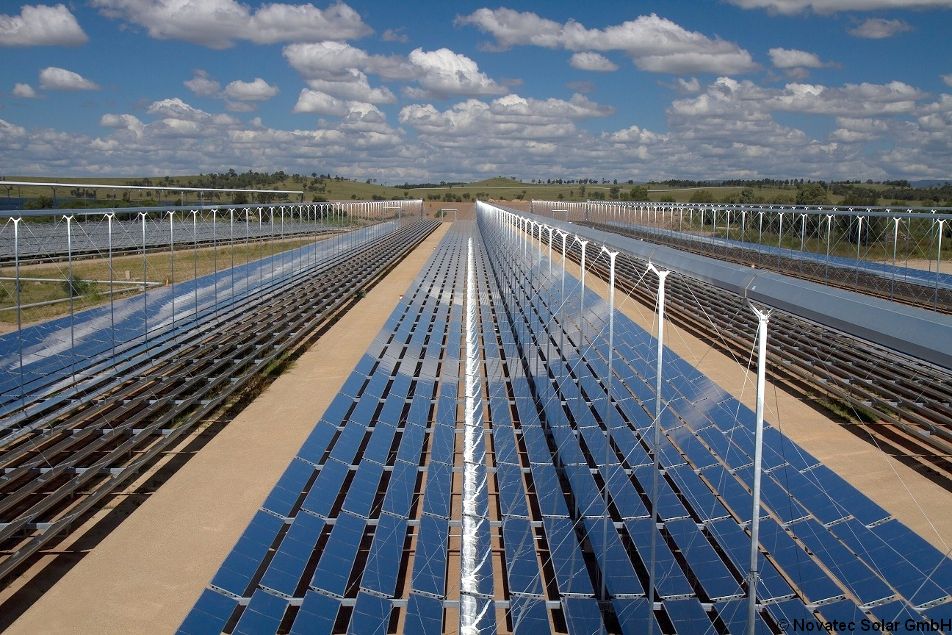
Linear Fresnel Technology
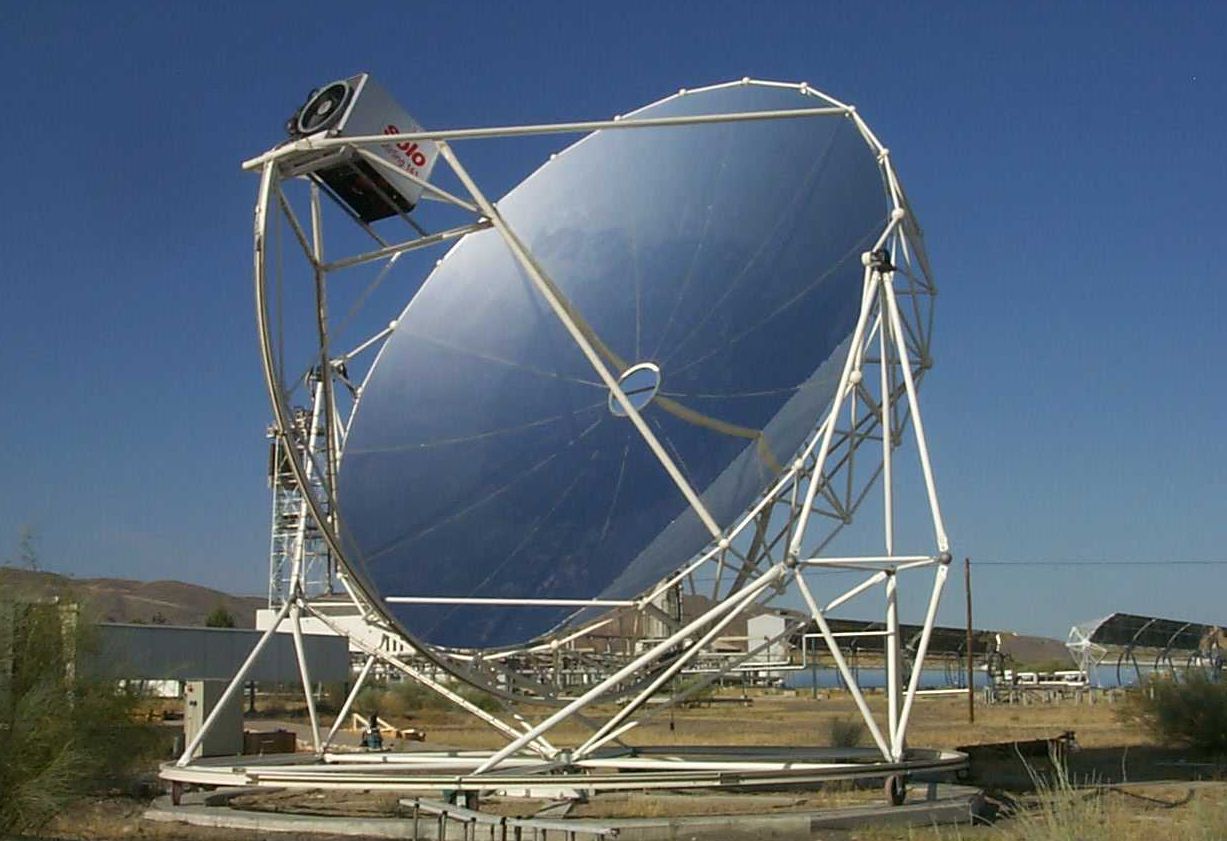
Stirling Engine Technology
So, driven by a burning passion within me, I invested the first money I received right back into the solar energy sector without hesitating. In fact, just as I was now determined, I also invested in an R&D project that would combine my passions for both renewable energy and technology development. In other words, I took a significant risk entering a sector that generates heat and steam without a clear future. I will share my experiences with Hitit Solar Energy with you later. In fact, we have also achieved success at Hitit Solar. For now, I’ll simply share the link to CSP Today, a UK-based news site for the sector (http://social.csptoday.com/technology/dsg-hybridisation-and-parabolic-trough-innovation-paving-future-csp) . In this article, I will explain how I started EkoRE and how far we’ve come.
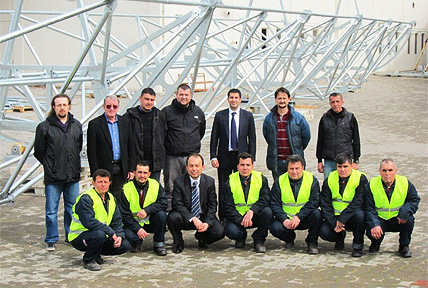
A photo from my days at Hitit Solar. While I was in Türkiye making initial preparations for the installation at a test site operated by the US Department of Energy in Denver, Colorado.
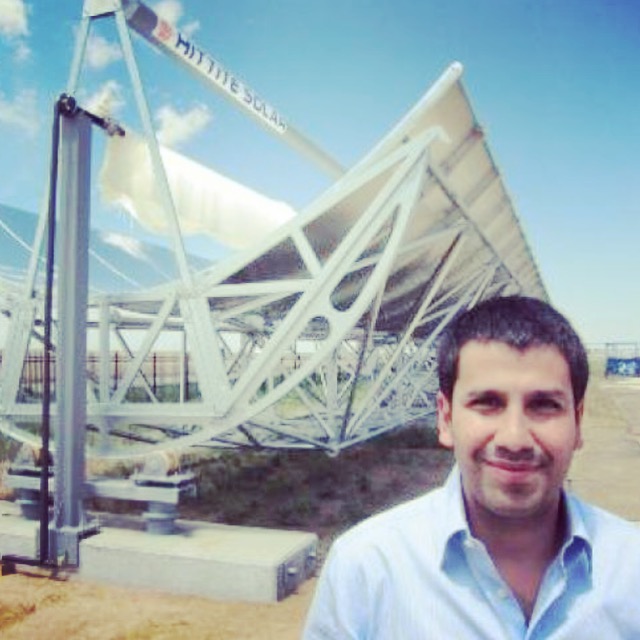
This photo was taken after installing our first collector in Denver after working long hours at Hitit Solar Energy in the US.
Within the first three months of investing in Hitit Solar, I had a clear understanding of the situation. The main problem on the CSP side was this: CSP costs couldn’t be brought down as desired. Meanwhile, PV (Photovoltaic: For those outside the industry, I want to point out that when using the abbreviation PV, we’re talking about electricity generating solar panels) costs were constantly on the decline. The 70% cost reduction over the last four years wasn’t enough; they were still falling.
A Divergence of Opinion and Ways
Those in the CSP sector, on the other hand, were obsessed with generating electricity. Coming from the commercial side, I can more or less predict what works and what doesn’t. From the very beginning, I’ve been advocating that those in the CSP sector focus on their core products—in other words, abandon electricity and focus on heat and steam, building their business plans around their implementation.
However, explaining this to technical professionals wasn’t easy. First, I convinced my partner, who manages the technical side at Hitit Solar, of this. Our team spent two months working on R&D projects to simplify and minimize solar collectors to meet the steam needs of factories or to connect them to a device we call an absorption chiller to heat and cool a building. After two months, just as the technical work had reached a certain point, Mr. Oğuz came to me at the company one day and said, “I don’t want to work with this model: I’m canceling the project. My goal is to build large power plants.” We reiterated the discussion we’d been having for months. I tried to explain to him that micro-collectors were much easier to commercialize, that the CSP sector couldn’t compete with PV in terms of cost, and that the outcome would always be disappointing. He explained that heat storage and base load (i.e., the ability to generate electricity 24 hours a day, when needed) were possible with CSP, but not with PV. I tried to explain to him that the storage business was currently prohibitively expensive and that attempting storage with existing technologies was not practical. I said, “In the future, when significant advances are made in electricity storage technologies, different business models will be preferred in this heat storage business. We will all see this together.”
The discussion still went nowhere, and finally, I told him, “If we continue like this, we’ll hit a wall. Then I don’t want to be in the company,” and told him for the first time that I wanted to sell my shares. I then took action to find a buyer for the company. At the same time, I put my backup plan into action. I began preparing business plans for my dormant company, Steno.
“Ecological and Economic Solutions”
After six months, I sold my shares in Hitit Solar to an investor from the Middle East. Moreover, I made a good profit. I honestly explained the problems I was experiencing to the investor to whom I sold my shares. This investor wanted to buy my shares in the company because he wanted to participate in a massive 52 GW solar power tender in Saudi Arabia. It was decided that 60% of this 52 GW tender, equivalent to $110 billion at the time, would be built with CSP technology. These figures whetted the appetite of many investors. I made the right move at the right time and secured this sale.
Afterwards, we immediately began working on EkoRE. First, I changed the name of the other, inactive company from Steno to EkoRE. In fact, the company’s official name is Eko Yenilenebilir Enerjiler A.Ş. We began using the brand name EkoRE for short. EkoRE is a combination of the words Eko and Renewable Energy (RE). We use Eko to refer to Ecology and Economy. In fact, our motto is “Ecological and Economic Solutions.”
We’ve seen and experienced a lot with EkoRE. We’ve also made serious mistakes. However, as soon as we realized we’d made a mistake, we immediately took the necessary steps to correct the situation. For example, we’ve experienced undesirable turnover in management and professionals. There are reasons for all of this, but it wouldn’t be appropriate to delve into the details. I’ll simply point out that human resources is a chronic problem in the energy sector. As a result, the team has begun to settle this year.
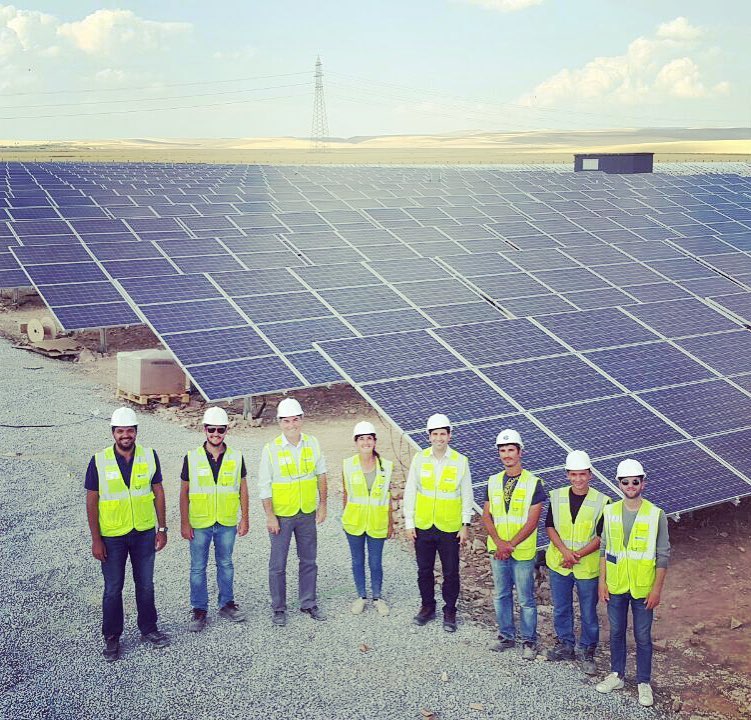
A photo we took with our colleagues from EkoRE Solar at our Konya Kulu project.
The best team, the brightest results
I can’t be too modest about our company’s progress. The picture that emerges after all this is quite bright: we have Türkiye’s best technical team in solar and wind energy. Personality traits aside, let’s look at the engineering work they’ve accomplished.
For instance, according to figures released last year, our wind energy team has completed projects that ranked first and third best in Türkiye in terms of capacity factor. Another powerplant, right next to Türkiye’s champion efficiency project in Hatay, failed to reach the same levels as ours, despite capturing the wind from a better angle. This difference lies in significant engineering experience, knowledge, and intense effort.
Since March 2013, when we sold Hitit Solar and launched EkoRE, we have implemented approximately 25 MW of unlicensed solar power plants and 6.8 MW of wind power projects. We will be finalizing the approval process for the first of our solar power plant projects, the 4 MW Konya Kulu project, this month. This means our plant will be operational and generating revenue starting in November. Following this, the Konya Akören, Osmaniye, Antalya Kaş, Tokat, and Aydın projects will become operational within the first six months of next year.
Regarding wind power, we plan to commission the 6.8 MW project we launched near Kefken, İzmit, in July next year.
Like all these renewable energy plants and projects, we’ve always completed niche projects like the “Solar-Powered Agricultural Irrigation” project with serious determination, working day and night, even on weekends. Personally, after leaving the family business, I had to pursue everything on my own. It’s true that I sacrificed a lot of my life while doing this. It’s no big deal. Looking back, I’m glad I followed my heart and made these moves. I’m so glad I implemented what I envisioned, always stood by it, and took on the right projects at the right time. Of course, this vision and perspective aren’t enough. Most importantly, I’ve never given up on my goals. I’ve done whatever was necessary, and I will continue to do so.
As a result of all this effort and determination, our human resources, once our greatest weakness, have become our greatest strength.
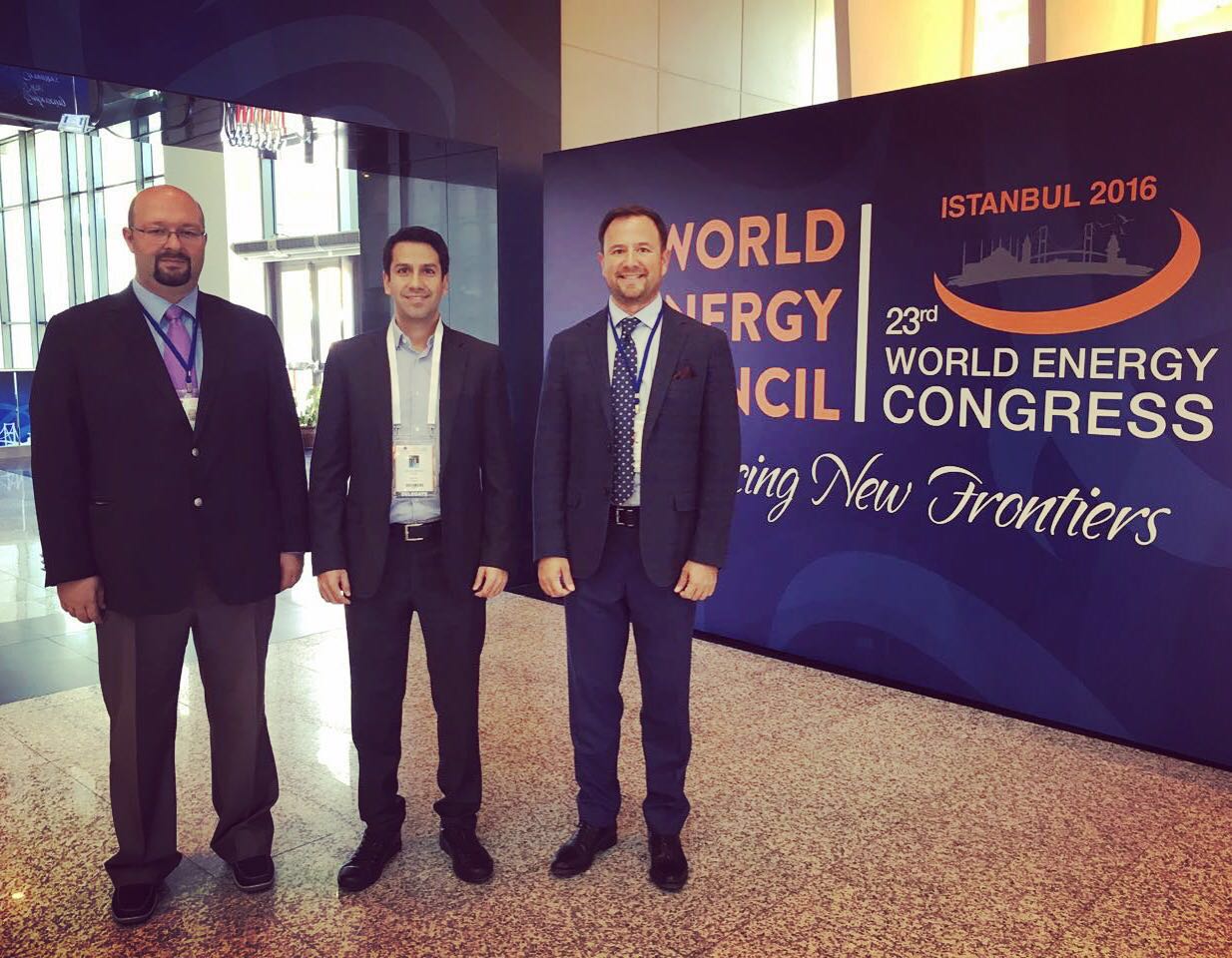
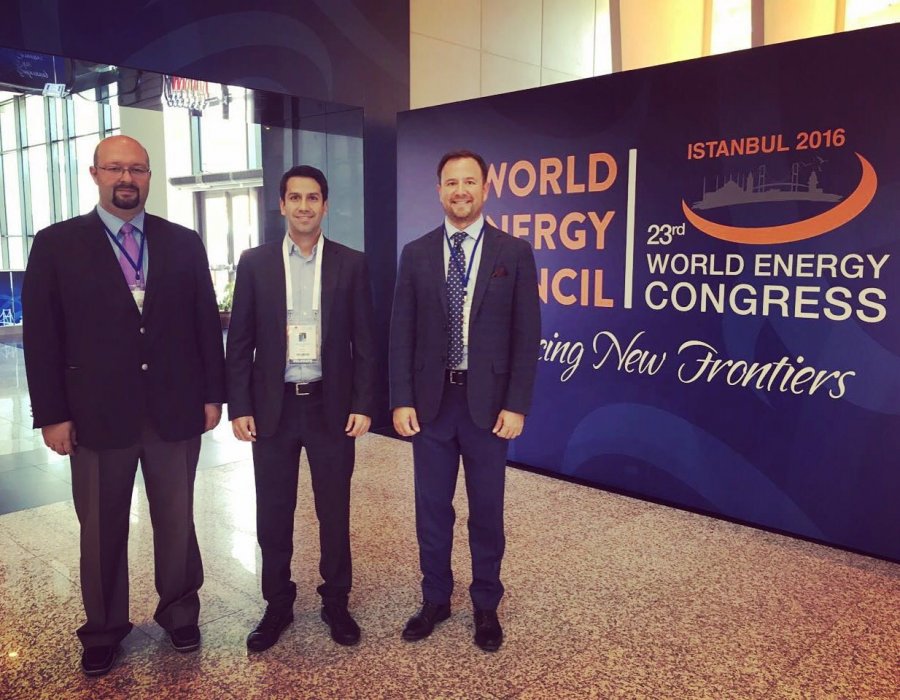
We attended the World Energy Congress in Istanbul with two members of our energy team. From left to right, Melih Şenol, Deputy General Manager at EkoRE Rüzgar, and myself, along with Zorlu Yalnız, General Manager of EkoRE Solar Industry.
For example, the EkoRE Solar team, which provides project development and EPC services, is led by Oğuzhan Bey, whose 20 years of experience at Siemens have made their impact felt. Oğuzhan Bey is EkoRE’s first official general manager. Thanks to the team he’s built under him and the ITU graduates who have been working alongside us since the beginning, a truly exceptional team has emerged. This is why we aim to exceed German standards in our work.
Similarly, the EkoRE Wind team is led by Süheyl Bey, one of the first individuals to initiate wind energy applications in Türkiye in the late-1990s and early-2000s. I know him from Canada. So, our history goes back more than 20 years. Therefore, I have complete confidence in both him and the team he assembled. The work our wind team has accomplished speaks for itself.
Our EkoRE Solar Industry company is also led by Mr. Zorlu, whom I may not recognize as the most knowledgeable person in panel production in Türkiye. Mr. Zorlu is a manager with experience within the 15-20-person engineering team that was involved in the infrastructure of the solar energy sector, which was booming in Germany in the early 2000s. For example, Mr. Zorlu and his team built the Q Cells factory back then.
EkoRE is a strong contender for the major tender
Last week, the competition conditions for the YEKA (renewable energy resource areas) tender were announced. For those outside the industry, let me explain: The 1000 MW solar power plant contract will be awarded to a company through YEKA. To enter the competition, this company must establish a 500 MW solar panel facility in Türkiye. Furthermore, this facility must include wafer-cell-module production processes for crystalline technology. To illustrate the scale of the power plant, let me discuss the cost and the area it will occupy. A 1000 MW facility, with a 10% margin of error, will cost €1 billion, while a 500 MW facility will cost €300 million. Furthermore, considering that a 1 MW facility occupies approximately 15 acres, a 1,000 MW facility will require 15,000 acres, or 15 million m2 of land. Imagine, 15 million m2 in the Karapınar district of Konya will be covered with seamless solar panels.
All the industry players have rolled up their sleeves for this massive investment. Although we don’t like some of the conditions, we are seriously considering participating in this tender. We will decide on participation in the tender in a meeting with our company’s staff next week.
If we decide to participate, I want to emphasize that our chances of winning are substantial. We started our industrial investment in May. So, ours has already passed the paper commitment. In terms of strategic investment, we’re riding neck and neck.
I will share my detailed opinions about YEKA in my next article, but for now, let me conclude with the essence:
When we first started our operations, EkoRE, due to my family business background, was frowned upon by many, even with absurd prejudices like “the rich kid, it’ll pass,” and today has grown into a global brand that is responsible for the sector’s most important projects, possesses all the necessary capabilities to win the YEKA tender, and will be a source of pride for Türkiye in the future. Stay well and continue to follow our confident progress towards our goals.
Tag: economy