
There are certain moments and memories in life that shape who we become, and certain people who always hold a place—good or bad—in our lives. What I’ll be sharing in this post is exactly that.
This past weekend, I reconnected with old university friends and was transported back to those days. I was also reminded of the role tennis once played in my life and the memories I have of two important coaches.
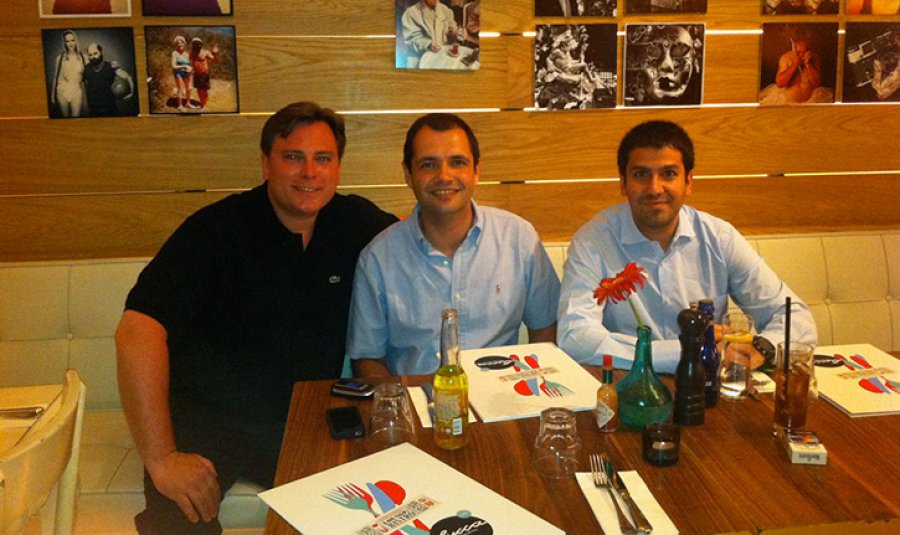
Two of my university friends were visiting Istanbul last weekend, and we had a great time. It’s hard to believe it’s been 13 years since we graduated from McGill University. But one thing is clear: whenever I reunite with my high school or college friends, I immediately slip back into those years—it’s almost automatic. Sometimes we reminisce about specific moments, and other times we just continue the running jokes from back then.
My close friend Thomas—whose father is German, mother is French, but who acts like a textbook Mediterranean—visited me for the first time in nine years. While we were at university, we used to play tennis whenever we could find time. Thomas had trained at top tennis academies in Germany and had great technique. Even before arriving in Istanbul, he was already talking smack: “Just wait till I get there—I’m going to destroy you!”
On Saturday, we prepped and headed out to play on an outdoor court. Since I live in Nişantaşı, I called up Bülent Hoca to book a court at one of Istanbul’s well-known hotels nearby. Bülent Hoca was my high school PE teacher and now runs the hotel’s spa and fitness center. I was genuinely thrilled when I happened to run into him by chance in the hotel lobby last year. Back in the day, he was a strict, no-nonsense, authoritative figure. Outside of school, he was also a coach at one of Türkiye’s top tennis clubs. He had a cool demeanor and was always professional, and now, years later, he still had the same positive, disciplined presence.
Before we started our match, we had a quick chat. He jokingly said, “Serhan here trained with some of Türkiye’s finest tennis coaches, didn’t you, Serhan?”—referencing a story I’d told him years earlier. It instantly whisked me back to a time when I was 11 years old.
At the time, I was attending the tennis school at the same club where Bülent Hoca coached, though our paths never crossed there. Instead, I was working with a younger coach who’s now a veteran (I’ll leave names out—my aim here isn’t to criticize anyone). There were three groups: A, B, and C. The top players were in Group A. I was in Group A, along with four others, and we were told that two of us would be selected for the official team that year. I had strong technique and was one of the fastest runners in the group.
One quiet Saturday, we were doing a basic drill: forehand, backhand, then come to the net for a volley. When it was my turn, I hit a solid forehand—but the ball went straight between the coach’s legs. And then something unexpected happened.
Our coach collapsed to the ground, groaning in pain. We all rushed over.
Everyone (to the coach, lying on the ground): “Coach, are you okay? Are you hurt?”
Coach (suddenly springing up): “Where is that little punk?!”
Me: “Coach, I’m sor—”
Coach: “You think I won’t show you how to hit a ball properly?!”
And just like that, things turned absurd. He started chasing me around the court with his racket, picking up balls from the ground and hurling them at me. Yep—full-on revenge. Picture a 11-year-old Serhan sprinting around the court, dodging tennis balls. Honestly, I think my agility on the Latin dance floor today traces back to this foundational “training.”
After about 10 minutes, some people stepped in to end the madness. And yes, it was madness. Anyone who plays tennis knows the unspoken rule: if you’re on the court with a racket, and you get hit with a ball from a reasonable distance, it’s on you. You’re expected to defend yourself. My shot came from a distance, and he had a racket. Plus, the fact that the coach was standing inside the court and got hit only confirmed it was a clean, in-bounds shot—a technically great one, even. But for whatever reason, that incident traumatized me.
I still remember the excitement I felt the first time I stepped into that indoor tennis court—the sound of the ball, the players’ styles, the entire atmosphere captivated me. I was ambidextrous, athletic for my age, and most importantly, I had huge potential. But after that incident, I quit tennis.
I didn’t pick up a racket again for five years. Eventually, I started playing again at a swim club that had a calm and pleasant tennis environment. Despite still using my 11-year-old technique, the coach at the time even suggested getting me licensed. But I couldn’t commit to extra training because of school, so once again, I had to let the dream go.
I share this story to highlight something that affects many young athletes in our country. For one reason or another, so many promising talents fall off the path to professionalism. Instead of saying, “What a shame—what’s to become of Turkish sports?” (and yes, there are exceptions—our female volleyball players, for instance, deserve huge praise), we should focus on education first. Talented athletes must be matched with excellent coaches. It’s the coaches who discover raw talent, develop it, and provide the motivation to keep going. That means our first step should be educating better coaches—only then would they be able to properly train our athletes.
As for the match with Thomas? I’ll be honest—back in university, he usually beat me. But this time, due to limited time, we only played 15 games. I won the first set 6–3, and the second set was tied 3–3 before we had to stop for dinner. So technically, I won. That evening, we went to Bebek, the neighborhood where I grew up (it’s changed a lot), and were joined by another university friend, Cenk, who currently lives in London. We had a fantastic time.
And the next day? Something even more interesting happened. Despite not being a serious player, I beat Thomas in backgammon—5 to 0. (Don’t underestimate the guy—he’s crushed every Turkish opponent he’s faced so far!) Shocked by his defeat, he said he might fly in from Düsseldorf for a day just to get his revenge when I’m in Munich this week for the Solar Energy Expo. Judging by his tone, I think he’s dead serious.
Tag: memoir