That night, after a delicious seafood feast accompanied by pleasant conversation, we moved on to the party, and everyone in our group greeted the New Year with great fun.
I returned to the hotel after a very enjoyable night.
The phone call in the early morning shattered my spirits…
After about two hours of sleep, I woke up at 6:30 a.m. to head to the Phi Phi Islands the next day. Just as I was brushing my teeth, my phone started ringing. I looked at it to see who was calling at this hour. It was my father. Given the four-hour time difference between us and Türkiye, it wasn’t unusual for my father to call me at 2:30 a.m. Turkish time.
The following conversation took place:
− Son, where are you?
− I’m in Thailand.
− Oh, thank goodness.
− What happened?
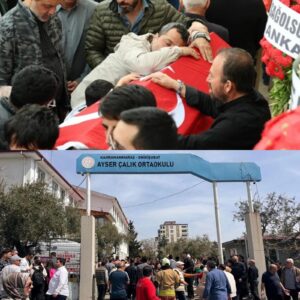
− They raided the Reina, dozens of dead.
− What do you mean?
They went in and massacred dozens of people.
I can’t believe this. Does anyone know me?
I don’t know, it’s new. I haven’t heard from anyone yet.
Oh, my gosh. I know most of the people who work there. I hope it’s not serious.
After I hung up, I immediately went online and started looking at the newspapers. For 15 minutes, I was trying to keep up with the news while preparing.
There may be those who turn their noses up at Reina and criticize its style, but Reina has a unique quality. My guests from abroad, no matter where they hear about it, always ask me, “Can you take us to the Reina?” In other words, the Reina is an internationally renowned place. It has established itself as a tourist destination and attraction worldwide. That’s why, for the last 10 years, I’ve always gone to Reina with my foreign guests. For this reason, in my opinion, the attack on Reina, which resulted in the massacre of dozens, is tantamount to stabbing Turkish tourism in the back. However, the messages I received from abroad after the Reina Incident confirm this. I cannot comprehend the brutal murder of people whose sole purpose was to have fun. I pray that those who perpetrated, planned, and supported this incident will suffer the consequences.
Before embarking on the tour, I considered calling the owner or general manager. However, because the situation was so heated, and I was abroad and had no choice, I didn’t call at that moment, hoping not to be a burden. Besides the sadness I felt at that moment, I also remember muttering, “It must be because I’m in the Far East, it’s a white night. This time, it’s like in Far Eastern culture.”
The next day, I spent a wonderful day on Phi Phi Island, surrounded by nature. My mind was fixated on Reina. That day, I also texted Ali, the general manager of Reina. I am truly sorry. I take this opportunity to offer my condolences to those who lost their lives at Reina and in previous terrorist attacks, and I offer my condolences to those left behind.
I returned to Türkiye from Singapore with a delay due to weather conditions. The week I returned, we lost my most beloved neighbor in our apartment building, Sayeinur Arıman. My neighbor across the street, Sayeinur Hanım, was a wonderful person. My entire family, descendants of a Grand Vizier from the Ottoman Empire, lives in my apartment in Nişantaşı. I am the only one living outside the family. I get along well with my landlords and everyone else in the building. Thankfully, they accepted me and treated me like family. I hold my neighbor across the street, Sayeinur Hanım, in a special place among my family. She was truly a noble and nurturing woman.
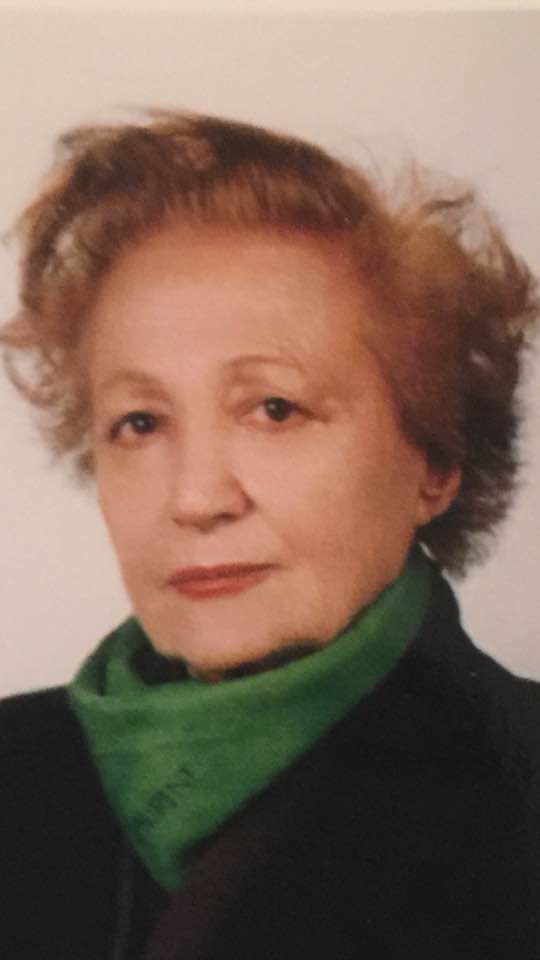
Here’s my dear neighbor, Ms. Sayeinur. Don’t let her serious appearance fool you; she was a genuinely cheerful, sweet, and good person.
I have many memories of him. I’d like to give you a simple example: When he’d look out of his house and see me coming, he’d run, despite his legs being sore, and opened the door for me before I even reached the front door. I’d then greet him from my front door.
Unknown to me, he’d also tell my esteemed host, his nephew, for some reason, “He’s our Obama.” He’d liken my demeanor and mannerisms to Obama’s, which he found very endearing. I laughed out loud when I first heard that.
On this occasion, I’d like to mention that I’ll be writing an article outlining my views on the “Obama to Trump handover ceremony” we all watched last week, and on American politics during and after the Obama era. For now, I’d like to share with you a video compiling the key elements of Obama’s final speech, which won hearts not with his work, but with his humane demeanor and his engaging approach:
You can watch the full final speech at https://www.youtube.com/watch?v=rhjlC3OxDms. What he said in this conversation, especially regarding his wife, serves as an example for every couple. Harmony between couples, being a unified whole like yin and yang, and building a beautiful family is perhaps the highest level a person can achieve. Life is tough, but after a certain point, facing these challenges together and raising good children is truly crucial.
In couples who are united in this way, the loss of one partner can be very sad and devastating for those left behind. Being a couple sustains one. My downstairs neighbor, who lost her husband last year, has changed dramatically in just eight months. After losing her husband, who had a difficult (but good) personality, she developed memory problems. She barely even recognizes me anymore.
For over nine years, I’ve lived with my neighbor across the street, Sayeinur, and I’ve always asked her, “Do you have any requests?” She’d always say, “No, my child, do you need anything?” Only once did she have a request of me, and I fulfilled it without a second thought. It was worth it in every way. After experiencing all this, you inevitably begin to question certain things in your life again. The conclusion I’ve reached isn’t fundamentally different from the way of thinking I’ve previously shared with you here. As someone who embraces the Pura Vida culture (you can see my blog’s opening post: http://www.serhansuzer.com/tr/pura-vida-veya-yasami-anlamla-donatmak ) and who believes in “always live life to the fullest,” I’d like to express this this time through the words of Nazım Hikmet. In fact, for the sake of humor, I’d like to share Nazım Hikmet’s On Life with you through Fazıl Say’s Nazım Oratorio. You can find this piece, its title, and this wonderful poem below:
Fazıl SAY NAZIM ORATORIO On Living:
Conductor: İbrahim Yazıcı
Piano: Fazıl Say
Poems: Genco Erkal
Baritone: Güvenç Dağüstün
Songs: Zuhal Olcay
Child Soloists:
Kansu Tanca (Vocal)
Sezer Yılmazer (Glockenspiel)
Dersu Tanca (Record Flute)
Bilkent Symphony Orchestra
State Polyphonic Choir
Aspendos Ancient Theater
Date: 28 June 2005
Written by: Nazım Hikmet
On Living
1
Living is no laughing matter;
you must live with great seriousness—like a squirrel, for example—that is, without expecting anything beyond and above living,
that is, your entire occupation will be living.
You must take living seriously,
that is, to such an extent that,
for example, with your arms tied behind your back, your back to the wall,
or in a laboratory with your huge glasses and a white shirt,
you could die for people,
and for people you’ve never even seen,
and even though no one has forced you to,
even though you know that the most beautiful,
most real thing is to live.
I mean, you must take living so seriously that,
even at seventy, for example, you’ll plant olive trees,
and not because they’ll be left to your children,
but because, although you fear death, you don’t believe in it,
because living, in other words, weighs heavier.
2
Let’s say we’re seriously ill, needing surgery,
that is, there’s a possibility of never getting up from the white table again.
Even though it’s impossible not to feel the sadness of leaving a little too soon,
we’ll still laugh at the Bektashi jokes being told,
we’ll look out the window to see if it’s raining,
or we’ll eagerly await the latest agency news.
Let’s say we’re at the front, fighting for something worth fighting for.
It’s possible to fall face down and die right there, in the first attack, that very day.
We’ll know this with a strange resentment,
but we’ll still be frantically curious about the end of the war, which will probably last for years.
Let’s say we’re in prison,
nearing 50,
waiting for another 18 years for the iron gate to open.
We’ll still live with the outside,
with its people, its animals, its struggles, and its winds—that is, with the outside beyond the walls.
So, no matter how or where we are,
we must live as if we will never die…
3
This world will grow cold,
a star among stars,
and one of the smallest,
a gilded speck on blue velvet,
this vast world of ours.
This world will grow cold one day,
not even like a block of ice,
or a dead cloud,
but like an empty walnut,
it will roll endlessly in pitch darkness.
The pain of this must be felt now,
the sorrow must be felt now.
This world will be loved this much,
so that you can say, “I lived.”
A striking article about life from İshak Alaton
Before concluding, I’d like to share with you another article about life by businessman İshak Alaton, whose books The Necessary Man and The Unnecessary Man I devoured and whose experiences and thoughts I’ve always admired:
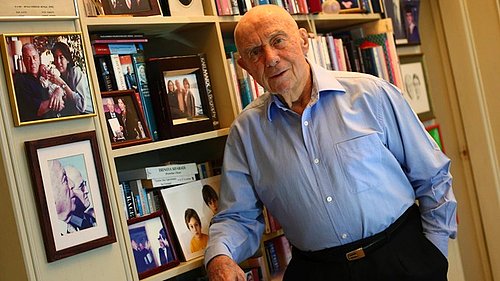
İshak Alaton
“Whether you’re young or old, if you’re not at peace with your age, you’re old. Just as there are elderly people who die very young, there are also those who are born old.
In the interviews I give at our universities, I’m most often asked about money. I suppose it’s because I’m a businessman.
I say, “Money has two personalities.” First, money is a medium of exchange. You can buy food, clothing, a house, wealth, even health with it. Second, you overcome fear of the future.
“You won’t be helpless, needy, or miserable in your old age because you’ll say you’ve set aside money for a rainy day. But there’s something beyond money, something you can’t buy with money. This is called pleasure and enjoyment. Enjoying and experiencing joy is only possible through CULTURE. Exhibitions are free for enjoying paintings, music, cassettes, and discs cost three to 30 bucks. Concerts aren’t expensive either. Theaters cost the price of a hamburger…
Love and affection are free anyway. If you can enjoy a sunset, the sound of the sea, or a game of chess… How much can you spend to set the sun? What’s the price of making the sea rustle? You can sigh for free with your castle. These pleasures and happinesses are as important as, perhaps even more important than, the rainy-day money you’ll save for your old age.
These pleasures and happinesses are only possible through culture. Put as much effort into acquiring culture as you do into earning money. They say the elderly are closer to death. But death doesn’t ask for an ID card.
My current passion is to cultivate walnut forests. I’ve already started planting saplings. A walnut sapling grows into a tree and produces walnuts after eight years. I’m 76 now, which means I’ll be cracking walnuts when I’m 84. This time, my own walnuts…”
İshak Alaton
What will I do next?
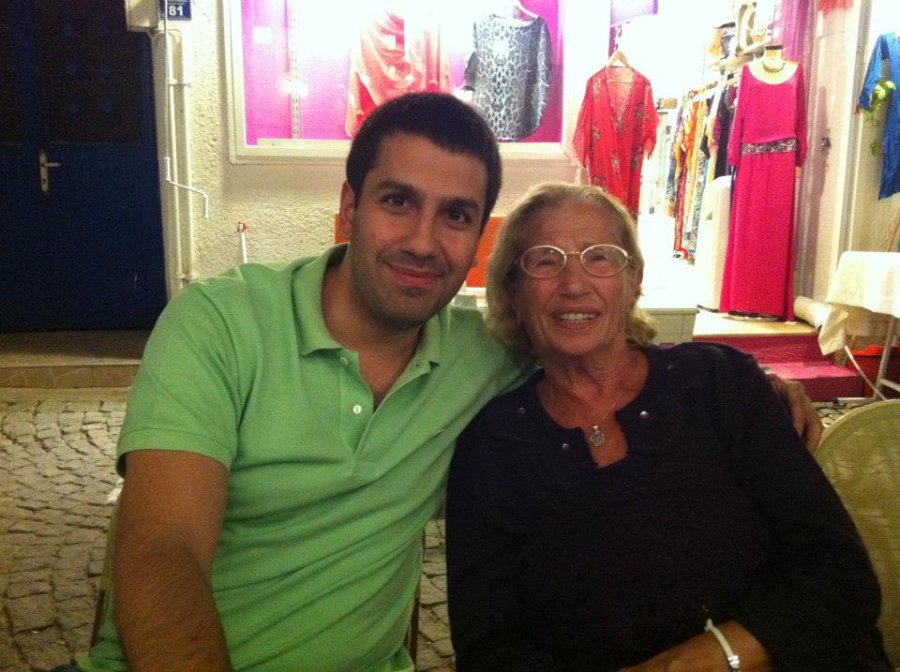
What will I do after all this emotional sharing? Of course, I will visit the person I value most in life, my grandmother, more often. And when I see her, I will hug her tightly, as always. For me, every moment I spend with her is precious.
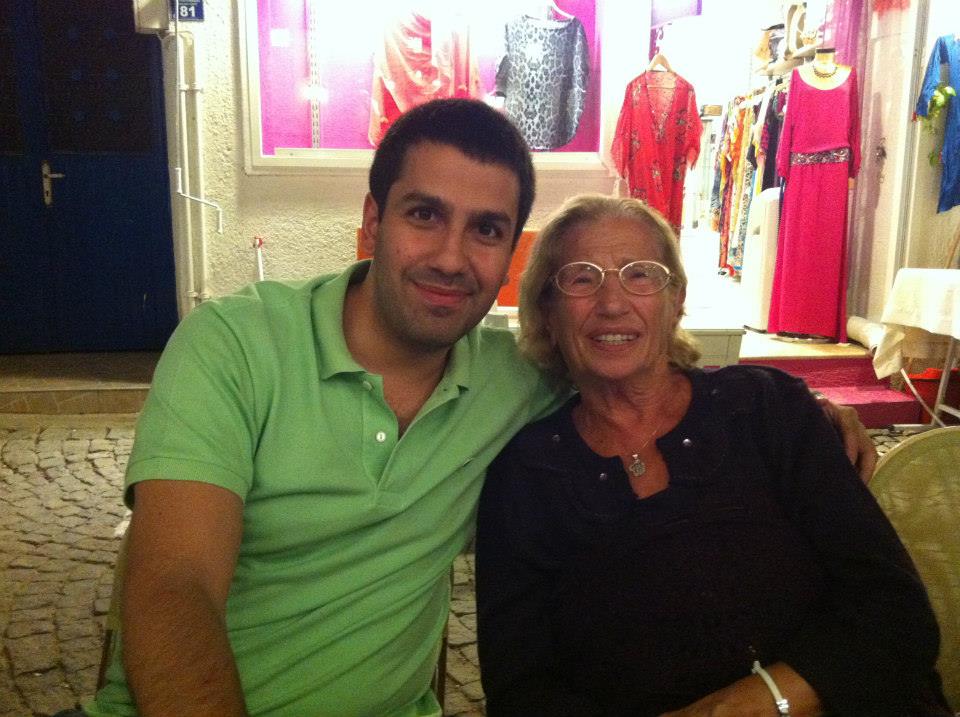
Here is a photo I took with my beloved grandmother in Alaçatı.
Stay well and with love…
Tag: culture