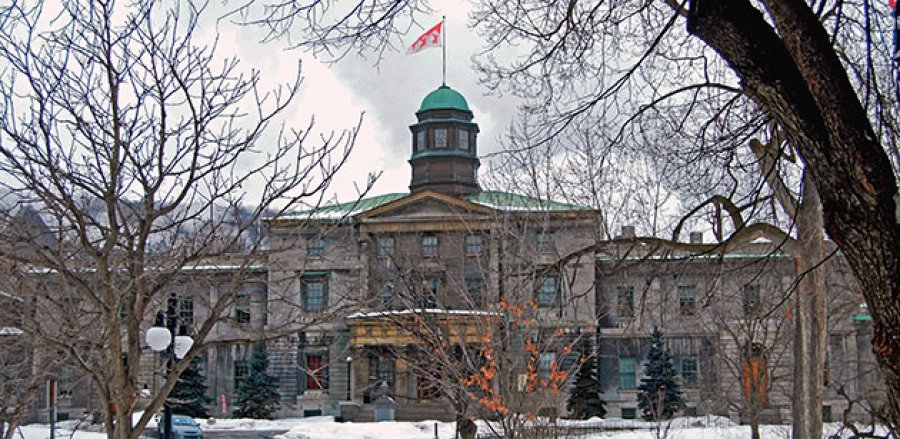
I can say that entering university and my experiences there were turning points in my life. In fact, nothing in my life was as easy as it seemed. I am the first member of the Süzer family to study and graduate abroad. Moreover, I achieved this by successfully completing a Harvard summer school and then enrolling in one of Canada’s leading universities, McGill University.
Of course, I benefited greatly from attending summer school in England at a young age and learning from international professors during my high school education, especially for the first three years. However, it’s not easy for someone that age to go abroad and stand on their own two feet, away from their family.
Even entering university was quite an adventure. Initially, I had set my sights on studying in the US. One day, when the topic of university applications came up over dinner, a family friend asked me, “Wouldn’t you consider Canada?”, and Canada came up on my agenda. I had never considered Canada before, so I thought, “Why not?” and put it on the agenda. Where I would study was truly important to me, so I visited each campus of the universities I applied to. Naturally, I added Montreal to my itinerary. I could describe my first visit to Montreal and the feelings I felt afterward as “love at first sight.” When I visited Montreal and the McGill University campus in the city center, I said to myself, “Okay, I think I’ve found the university I want to study at.” I rarely experience such a feeling. It’s like a lightning bolt. When it happens, I know I’m in the right place, doing the right job, or meeting the right person. This feeling has never failed me; it’s always proven right. So, even when I feel like I’m losing, I persist and give it my all.
After that visit, my most important goal became getting into McGill University. Unlike other families, we didn’t have much experience with international studies. Frankly, I didn’t receive much support from Tarabya Kemal Atatürk High School, where I attended. However, these processes needed to be completed in the best possible way. The application and the preparations beforehand were crucial.
Meticulous preparation and a surprising answer
During this period, a family friend, Binnur Uzuner, came to my aid. Having also gotten her son into MIT, Binnur was extremely knowledgeable about the application process and always guided me in the right direction. She’s an exceptionally kind and compassionate person, so the application process was very positive for me. I completed all the necessary university admissions and have been steadily improving myself over the past year and a half. I told Binnur from the start that McGill University was my favorite, and we agreed to do our best together. It wasn’t an easy process. I still don’t think there’s been much change from back then. You had to complete the TOEFL, SAT 1, and SAT 2 exams within a year. After serious preparation and study, I managed to achieve passing scores on all these exams.
The results of these exams, my school grades, my resume, extracurricular activities like sports, achievements that demonstrate my leadership, and references all combined to create a truly impressive application. While I was waiting for positive results, what did I expect? I received a rejection letter from McGill University. I was completely devastated. How could this happen? I met all the criteria they required. I passed every exam. I even achieved one of the highest scores on the SAT math exam, almost a perfect score. I was one of the best students in my school. I was the school president. I was very active in sports. There was a mistake here, and I needed to fix it.
No giving up.
The normal reaction would be to accept the situation and go to one of the universities they’d been accepted to, right? In my mind, I’d already been accepted to McGill University. I took immediate action and caught the first plane to Montreal.
I went straight to the Admissions Office, explaining the situation. I told them I wanted to talk about my application. The lady who answered my request at the entrance said, “Just a moment, I’ll call the person in charge.” I’ll never forget when a blonde woman came towards me from the enclosed area inside. We started talking, and the following conversation unfolded:
- Hello, I’m Serhan Süzer. I applied to your school and received a rejection. I think there’s a mistake here, because when I looked at your application criteria, I fit all of them. I’m here to find out the reason for this rejection.
- Could you please write your full name and where you applied from? Let me get your file from inside and take a look.
After getting this information, he went back inside and returned with my file in hand. Our subsequent conversation went as follows:
- The reason is that your TOEFL score is below the minimum required score.
- How could that be? I passed the TOEFL exam, meaning I received a passing grade.
(I had my entire application file with me, and I pulled out the document showing the score and placed it in front of you).
- Here it is.
- How could that be? Your score appears to be lower than ours.
- Let’s look at the dates.
Then the real problem arose. I took the TOEFL exam without studying for my first attempt (to find out what the exam was like). Then I studied and took the exam again (they held TOEFL exams every two months during our term). I got a passing grade on that one. For some reason, the information about the first exam I took at McGill University to try and get a low score was lost. When the application officer realized what had happened, they immediately reacted:
- It’s good that you brought this document. Can I have a copy of it?
- Of course.
After the copying process,
- We will re-evaluate your application and get back to you. I see there’s no problem with your English.
- (I continued chatting, a habit I’ve acquired since high school) Thank you. I’ve been traveling a lot since I was a kid. That probably plays a role. Where are you from (he had a slight accent)?
- I’m originally from Russia.
- How wonderful. We Russians and Turks are brothers. Relations between us are improving every day.
- Yes, I’m following the region.
- Have you ever been to Türkiye?
- No, I’ve never been.
- We have some wonderful places. Marmaris, Fethiye, Bodrum, Çeşme. Türkiye is a true holiday paradise. I recommend it.
- Yes, I hope to come one day.
- All the best. Thank you so much for your help.
- Sure, what do you mean?
- I’ll be waiting to hear from you.
- Okay. Have a good day.
- Have a good day.
Two weeks after this conversation, I received my acceptance from McGill University. It sounds like a joke, but I did it. I was going to the school and city of my dreams. Later, I completed a double major in finance and accounting at McGill from 1995 – 1999. I had a wonderful four years at university.
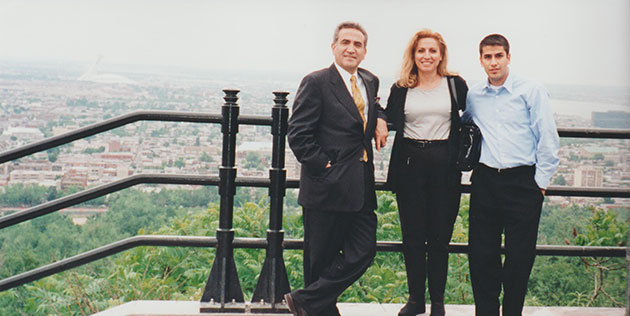
A photo of me with my father and aunt during my early years in Montreal
Engineering Purpose and the Benefits of Finance
In the years that followed, my only regret about university was not choosing a field like electrical/electronics, mechanical, or software engineering instead of finance and accounting. My math, physics, and chemistry classes in high school were always excellent, and I thoroughly enjoyed them. At the time, I had set myself the goal of becoming a banker. Today, I am the founder of Ekore Renewable Energy Inc. (EkoRE), a company that has penetrated the heart of engineering. Despite my background in finance, my practical expertise in many engineering details allows me to work well with the successful engineers within our organization. I even sometimes participate in R&D meetings. And, of course, let me be fair, finance is an essential part of any job, regardless of the field. Good financial management gives you a significant advantage over your competitors. I believe these advantages have contributed to our current position.
I learned and experienced a great deal at university. I can say there was a huge difference between the Serhan who first entered university and the Serhan who graduated. Of course, my fundamental background and character were the same, but my perspective on the world and my way of thinking had completely changed.
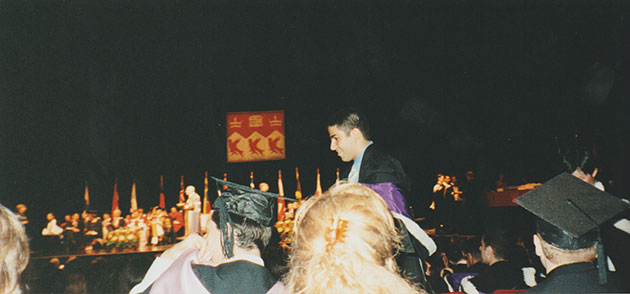
A photo from the graduation ceremony
I’d like to share with you what changed:
- I was already predisposed to this, but after graduating from McGill University, I truly became a ‘Global Citizen.’ Montreal, Canada, a country of immigrants, is home to French origins, and you can feel the French influence everywhere. Montreal, a city favored by people from many different backgrounds, was a city that felt like a truly international environment. With the addition of the international atmosphere at my school, I felt like a true United Nations. I thoroughly enjoyed being surrounded by and meeting all these different cultures.
- My taste in food changed. At first, like a typical Turkish student, I refused to eat anything, but then I began to thoroughly enjoy everything I tasted. I remember my first sushi experience during my freshman year of university. As the sushi I first tasted grew in my mouth, wondering, “How am I going to swallow this? I’m going to throw up now?,” my French friends asked, “Isn’t it delicious?” After the first few mouthfuls, which I struggled to swallow, I handed the sushi over to my French friends. After graduating from university, I turned into a Serhan who enjoyed eating even the strange sweet and sour Chinese dishes, let alone sushi (which I love very much now).
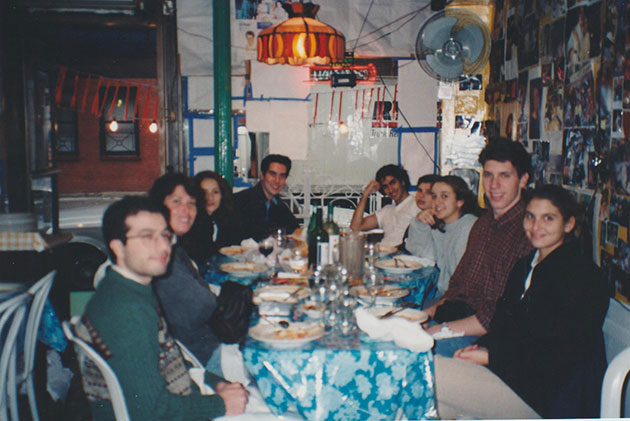
While having dinner with our friends
- My first car was a Nissan Pathfinder. We had a strong emotional bond. It was the perfect car for winter conditions. Thanks to Montreal, I learned to drive very well in the snow.
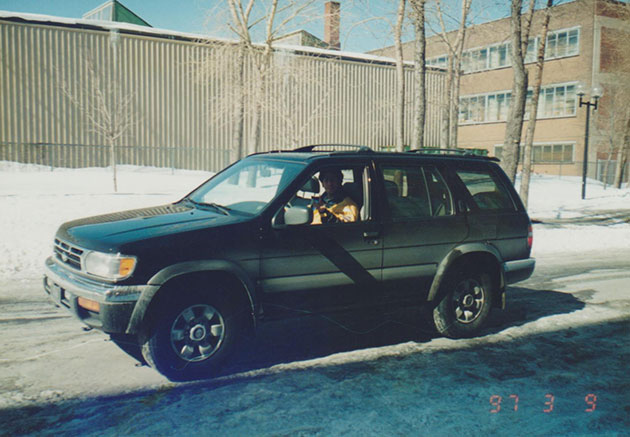
Driving my first car in Montreal
- I didn’t think I could withstand very cold weather. During a typical winter, Montreal’s temperature is -10° C. during the day and -20 to -30° C. in the evening. My record, due to the wind, was -52° C. one evening. So, I learned to live with the cold.
- I love skiing. For the first time in my life, I saw the slopes lit up in Montreal. Instead of going to the gym after work, people were heading to the ski slopes just outside the city in the evenings. It was amazing.
- It was tragic to lose in the finals of a school tournament with hundreds of football teams competing, after beating the opposition. I’ll write about the details later. We played two of our matches, starting with the semifinals, in the school stadium. Playing the finals in front of a stadium crowd was an incredible feeling.
- I can see a difference between students studying in Türkiye and those studying in Canada. Many students studying in Türkiye are more practical and quicker to grasp the lessons than those in Canada, but they lack self-confidence. Students who studied in Canada are much more confident and able to move abroad. I also find the English language proficiency at many Turkish universities to be low. Even the professors teaching these courses don’t have sufficient English or other foreign language skills in my opinion. Naturally, in Canada, you spend your entire day in English and French. I believe I improved both my confidence and my foreign language skills in Montreal.
- After English, I added a second foreign language in Montreal. When I graduated from university, I spoke French, albeit smatterings. Now, strangely, after learning Spanish, it’s replaced French. I don’t speak French now, but I understand it (I need to go and live in France for a while to revitalize it).
- I watched my first Formula 1 match in Montreal. It was incredibly enjoyable in every way. This experience later benefited me as part of the team working behind the scenes when Istanbul was holding a Formula 1 event.
- Just as in elementary and high school, I was very fortunate in terms of friendships at university. We had a wonderful environment. Friendships are very influential at a young age. A social circle is so powerful that it constantly motivates you. It can make you do things you shouldn’t or constantly restrain you from doing what you should. It constantly tells you what you want to hear, yet you don’t realize you’re being used. Thank God, my circle of friends was composed of close-knit, sincere, and decent people. I didn’t actually have a single group of friends. I was among many different groups with very different ethnic backgrounds, including Turks, French Canadians, English Canadians, French, Latin Americans, Americans, Greeks, Lebanese, and Indians. Of course, the quality of the students there, regardless of their country of origin, was quite high.
- I first heard the saying, “The only constant is change,” at university. It was there that I saw that people can constantly improve and change by adhering to core values. Indeed, those who don’t change and fail to improve themselves in their professional and personal lives always lose. In human life, an approach like, “This is who I am, who accepts me this way, who doesn’t, who decides for themselves” always ends in disappointment. If actions deemed necessary aren’t taken on time, the resulting regrets won’t help.
- I’ve always been a hard worker and do my best to fulfill my responsibilities. Our school’s motto, written on its logo, is Grandescunt Aucta Labore, meaning “Through hard work, everything grows and thrives.” There were also over 300 clubs at our school, and we found ourselves involved in a different activity every day. During my university years, I frequently heard the English expression “Work Hard, Play Hard.” Like many of my fellow McGill students, I not only studied diligently for my classes but also participated in a variety of activities to have fun in a city like Montreal and at our university.
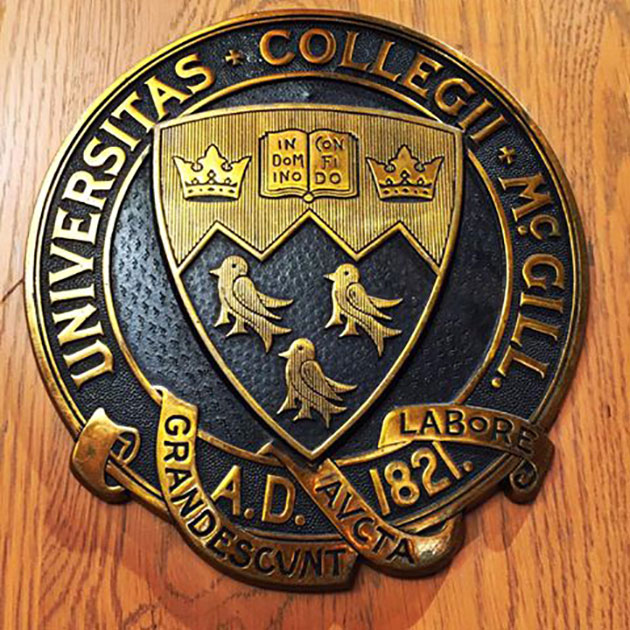
The school logo.
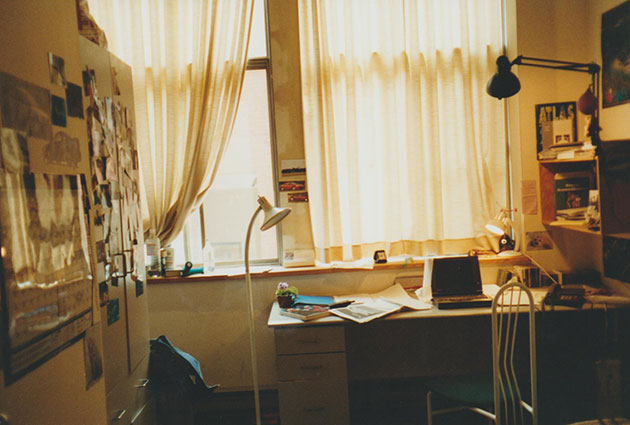
The room I stayed in the dormitory my freshman year.
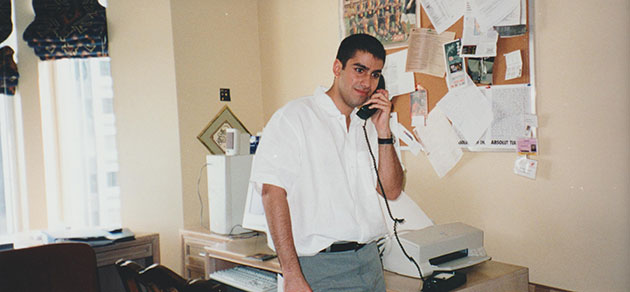
I moved back home after my sophomore year. Talking on the phone in my room at home.
.
- Because I’ve been exposed to so many different cultures, I’ve abandoned prejudice. I no longer judge any culture. I know that in every culture, region, and country, there are good and bad people. We can’t say that no person is 100% good or bad. There are degrees of this. That’s why, in university, I’ve imprinted on me how wrong it is to judge someone based on their place of origin, culture, or beliefs, and that we should focus on the individual.
- Also, as a citizen of the Republic of Türkiye, I’ve stopped caring so much about ourselves. That’s why empty boasts and clichés like “A Turk has no other friend than a Turk,” “A Turk is worth the world,” “Are we so beautiful? We’re wonderful” have seemed absurd to me since my university years. Let’s always be proud of where we come from, but let’s also know this: The important thing is to be productive and produce, to be human and serve humanity, to be happy, to believe in universal values, not to upset others, and even to make those we care about happy. The rest is meaningless. Consider this an introductory post. In my next post, I’ll share more details about my university. From time to time, I’ll also write down my university memories and share them with you. Until next time, stay safe.
Tag: education