As CEO of Turkent A.Ş., the Turkish franchise of the KFC and Pizza Hut restaurant chains, I always had a social responsibility project on my mind. I was managing a company with 106 restaurants, but I always felt a need. I couldn’t figure out what kind of social responsibility project I could undertake. I continued to research this topic. Finally, luck struck, and one day I received a joint invitation from Member of Parliament Aziz Akgül and Metro A.Ş. Held at the Hyatt Hotel, the reception was attended by numerous food and retail companies.
At this dinner, held in honor of Bob Forney, Chairman of the Global Foodbanking Network, I had the opportunity to learn of the concept of food banking for the first time. Food banking, which began operations in the early 1960s, gained momentum with the founding of the Global Foodbanking Network in 2000 and led by Bob Forney. As the saying goes, a person’s character reflects their face, and Bob Forney was a bright, trustworthy, and good-natured individual who exemplified this. Sadly, we lost Bob Forney in August 2010. May he Rest In Peace.
Food banking, in short, is the collection of surplus or near-expiry dated food (the word “bank” here is used in the sense of collection) and its distribution to those in need through various channels. At the beginning of the meal, I announced that I had to leave early (it’s a shame, I had to catch Galatasaray’s European Cup match that evening). I usually make quick decisions; after listening to the concept for 15 minutes, I told him, “Count me in,” and told him we would follow up. I then thanked Bob Forney for his presentation, excused myself, and left.
The Association’s Establishment Process
We then followed up on the process. Six other food companies had expressed interest in joining us, and at the next meeting, we gathered at Metro A.Ş. headquarters. I have to give her credit; Nurdan Tümbek was leading this initiative at Metro at the time. Ms. Nurdan was one of the pioneers in initiating and implementing this initiative. She and Aziz Akgül, a then-member of parliament and founding president of TİSVA (Turkish Foundation for Waste Reduction), who spearheaded the 2004 parliamentary enactment of the relevant law to encourage companies to provide in-kind aid and who relentlessly pursued this initiative, are the first architects of food banking in Turkey. This initiative, in turn, was initiated by bringing Bob Forney to Turkey. Later, when they, other food companies, and we all gathered, the decision to establish a “Food Banking Association” was reached. I don’t remember exactly, but toward” the end of the meeting, someone said to me, “Mr. Serhan, you should be the founding president.” As I was groaning, I realized that all eyes were on me, and an expectation had been created. Frankly, although I hadn’t initially planned to be at the forefront, seeing that I had no other option, I said, “Okay, I’ll do it.” Thus, my commitment to this endeavor was confirmed. Later, we founded the association. Here are the founders of our association:
- Aziz Akgül (former Member of Parliament, Chairman of the Board of Directors of TİSVA)
- Timur Bayındır (President of the Hoteliers Association of Turkey)
- Can İkinci (former General Manager of Starbucks, now a director of Actera, a major investment fund)
- Celil Ömer Görener (CEO of Banvit)
- Melih Ödemiş (co-founder of yemeksepeti.com)
- Emine Feyhan Yaşar (Board Member of Yaşar Holding)
- Mustafa Ayman (former owner of Beşler Sucuk)
- Hasan Serhan Süzer
After determining the management team, we hired a general secretary at my recommendation. Uğur Uralcan was appointed as our first secretary general. For the next four years, we successfully implemented the food banking model. This meant working with institutions and organizations that either collected the food provided by our donors in one place or delivered it directly to those in need. For instance, we donated to a primary school in Mecidiyeköy for mentally challenged children. We’ve donated millions of Turkish Lira worth of food to many similar institutions.
Sustainable Solution: Teaching How to Fish
At the end of my fourth year, I announced at a board meeting that I wouldn’t be running for president at the next general assembly and that I wanted to step down as president. I explained that I was no longer in the food retail business and had switched sectors to work in a completely different field, such as renewable energy. When the other board members insisted I stay on, I blurted out another reason. I explained that the Food Banking model in its current form didn’t satisfy me. When one board member asked me, “What’s unsatisfying about it?” I told him, “We can make this business more sustainable. Constantly giving fish isn’t the right model; it’s a model that can degenerate and lose its sustainability.” Instead, I explained that “teaching people how to fish while giving them fish” was a more appropriate model and explained my vision.
The board of directors supported me with the model. During this period, our first general secretary left, and Selen Gökdeniz, who still serves as an executive at the association, joined. After this stage, we moved on to planning. First, we revised our mission to “enable people to stand on their own two feet.” Then, we established the structure I envisioned, including strategic planning; we developed an investment plan; revised our bylaws; and contacted the relevant players individually. First, we approached the district governor’s office and began discussions with relevant food retail brands. I can say that the Maltepe District Governor’s Office and CarrefourSA’s appreciation and support for this model paved the way for the project. With the district governor’s approval, we decided to strengthen our human resources. Since we were planning to establish a supermarket, we appointed Burak Kaya, a Migros veteran, as the head of the operation. During the construction phase, we collected construction materials from local hardware stores. Any remaining material was filled through donations to the association. Thankfully, Architect Dilek, who had previously worked with me at KFC and Pizza Hut, was kind enough to volunteer as project coordinator. Carrefoursa was incredibly supportive during this time, even asking one of its contractors to undertake the construction work on a volunteer basis. Thus, with everyone’s support, we were able to open our first “Destek Market” to Carrefoursa Mini standards. And it was a fantastic experience.
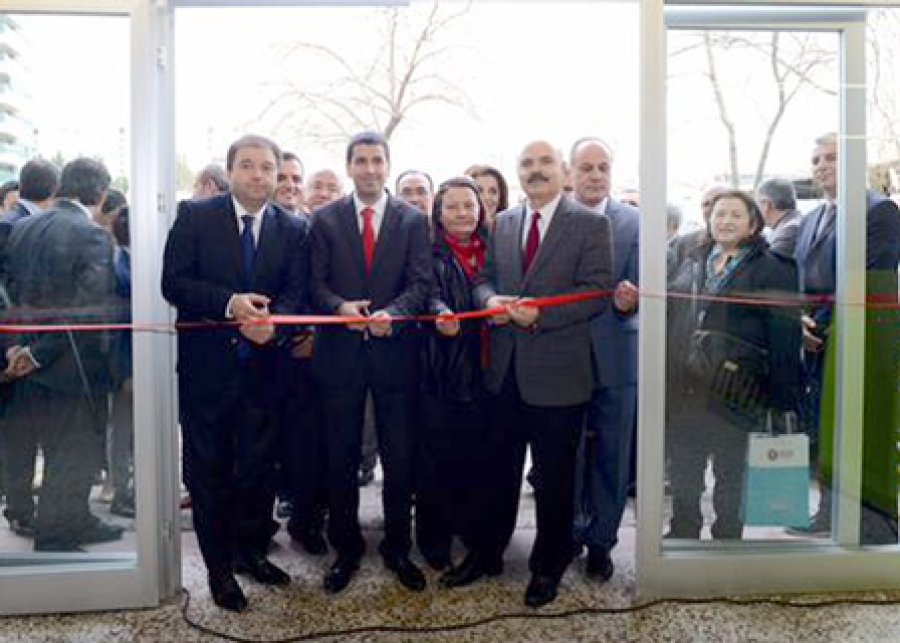
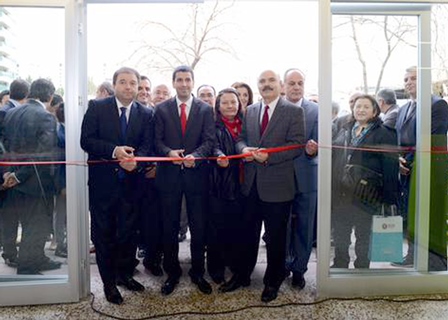
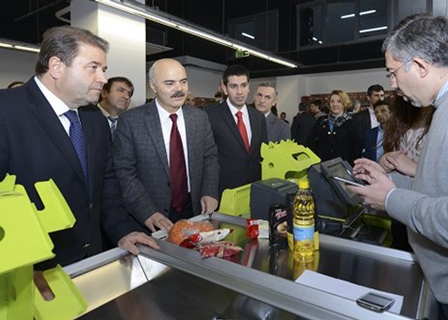
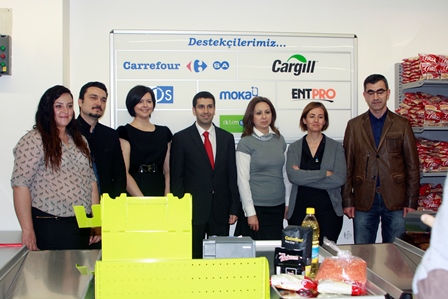
The Maltepe District Governor and Mayor, along with our donors and members, were present at the opening ceremony on 25 February 2015. It was a wonderful opening. Here are some images from the opening:
Anti-waste with an environmentalist approach
Since its opening in February, the Support Market has gone on to become a center serving over 2,000 families living in Maltepe, thanks to the extensive contributions of our stakeholders. In its first year, with recent donations, over 900,000 TL worth of essential goods have been delivered to those in need, rather than being returned or destroyed. This is one of the most important values of food banks, recognized worldwide. Preventing waste and the associated negative environmental impacts is crucial. We launched this model in 2010, and today, developed countries like France and Italy have made this type of in-kind aid mandatory in their own countries to prevent waste and combat hunger. I believe other countries will follow this approach and enact similar laws. Here’s a related news article: http://www.hurriyet.com.tr/artik-yiyecekleri-cope-atabilirsinizlar-40050010
At this point, I want to touch on another issue that deeply troubles me. In recent weeks, fans of the Dutch team PSV, during their match against Spanish team Atletico Madrid in Madrid, threw money at beggars in the hot weather, sending them running back and forth, chanting “Wow” after each one they accepted. Not content with that, the Dutch made the refugees do push-ups and poured beer into the glasses they gave them money in. This disgrace, unfolding in the heart of Europe, is the exact opposite of what we aim to achieve with the Destek Project: “providing aid and meeting basic needs without violating human dignity” while “enabling those in need to stand on their own two feet.” You can read this shameful news at http://www.hurriyet.com.tr/a-madrid-psv-maci-oncesi-insanlik-ayibi-40069880 . I’ve contacted my Dutch friends about this.
Getting back to our topic, another important added value of the Destek Market is the strong collaboration it creates. It brings together NGOs, the public, and the private sector around a sustainable development initiative. Because our goals and objectives are shared: preventing hunger and poverty, preventing waste, creating employment, and thus contributing to the integration of disadvantaged groups.
The process at Destek Market can be described as two-pronged. Our operating model consists of Destek Market and Destek HR (Human Resources). While Destek Market provides in-kind assistance to people, Destek HR also finds jobs for those in need, enabling them to become self-sufficient. Essentially, the goal here is to ensure that those in need no longer need Destek Market. We consider ourselves successful when someone in need is employed and earns their own living and no longer needs Destek Market.
How does the model work?
In our Destek Market model, district governorships, through their Social Assistance and Solidarity Foundations, identify those in need in their districts. They issue aid decisions based on their poverty levels, within set limits, and submit them to us. We then send messages to these lists, inviting them to join Destek Market. Beneficiaries can shop by presenting their ID numbers and an SMS message sent to them, selecting products from the shelves that meet their needs, free of charge, within their limits. During this process, we meet with shoppers and invite them to a job interview. As part of our Support HR program, we interview those in their household who are eligible for employment. We also monitor suitable positions at both our donor companies and other organizations in the district to make matching decisions. Sometimes, candidates are referred to training programs and then hired.
In addition to all this, we organize various volunteer activities. We organize volunteer days to raise awareness and participation among both individuals and corporate employees who want to volunteer. Sometimes, companies volunteer their professional services with us as part of our social responsibility initiatives. In this way, we strive to create a comprehensive collaborative environment and contribute to the district together through the Support Market.
The Maltepe provincial district of Istanbul can be considered a prime example of Turkey in this sense. There’s a concept like the ‘underside’ and ‘overpass’ of a highway. While wealth increases as you move down the highway, and especially towards the coast, many in the neighborhoods above it are worried about how they’ll make ends meet. We’re saying to the wealthier segment of the district, “Take care of your district and contribute to the Support Project so we can help develop your neighbors just a few kilometers away and make them dependent on nothing.”
Our Goals and Principles
In 2016, we will increase the number of Support Markets and begin opening similar markets in many locations across Turkey. Our growth will continue to accelerate. We will achieve this through the highest-standard food banks (or Support Markets, as we call them) that we will open. We will also accredit food banks from institutions and organizations that can work with us, based on our principles of transparency, impartiality, and honesty. This will enable us to provide essential goods such as food, cleaning products, and clothing to an increasing number of people every day. We also plan to set up Destek HR programs in each of the Destek Markets we open. In other words, in-kind assistance will not be limited to any one location. We will implement our association’s mission of “enabling people to stand on their own two feet” in all locations we open or accredit.
Our philosophy that aid is merely a means to reach those in need, and that the goal is to eliminate the need for assistance, forms the basis of the Support Project. To this end, our Destek İK (Support HR) initiative, which we developed in collaboration with Destek Market and planned to provide employment and training support to those in need, was launched in October after receiving its private employment agency license. After obtaining its employment agency license, Destek HR, the association’s economic enterprise, quickly facilitated the employment of more than 70 people in need. As briefly outlined above, our core model is to help those in need become self-sufficient and to provide them with essential provisions during this time.
Of course, we sometimes deviate from our core model in exceptional circumstances. For example, we always prioritize the elderly or disabled who are unable to work. As long as the District Governor’s Office approves, we will continue to meet their basic needs without interruption. Furthermore, we also assist citizens who do not request in-kind assistance and simply indicate a need for employment, working to help them find employment.
Three birds with one stone!
In short, we are killing three birds with one stone with the Destek Project. First, we prevent waste by using products that are nearing their expiration date before they expire (a significant portion of donated products in the supermarket are still within their expiry period). Second, we provide in-kind assistance to those in need, meeting their basic needs. Third, we provide them with vocational training, helping them become self-sufficient.
We also plan to expand our communications and collaboration activities in the coming period. We aim to reach more institutions and individuals and provide more support. Another recent development brought us great joy: the Basic Needs Association received the Sabancı Foundation’s ‘Changemakers’ Award. We are thrilled our work has been recognized with such a prestigious award. We extend our heartfelt thanks to all the Sabancı Foundation executives and employees who deemed us worthy of this award. Here is the Changemakers video:
https://www.youtube.com/watch?v=UJtsDRvEGz0
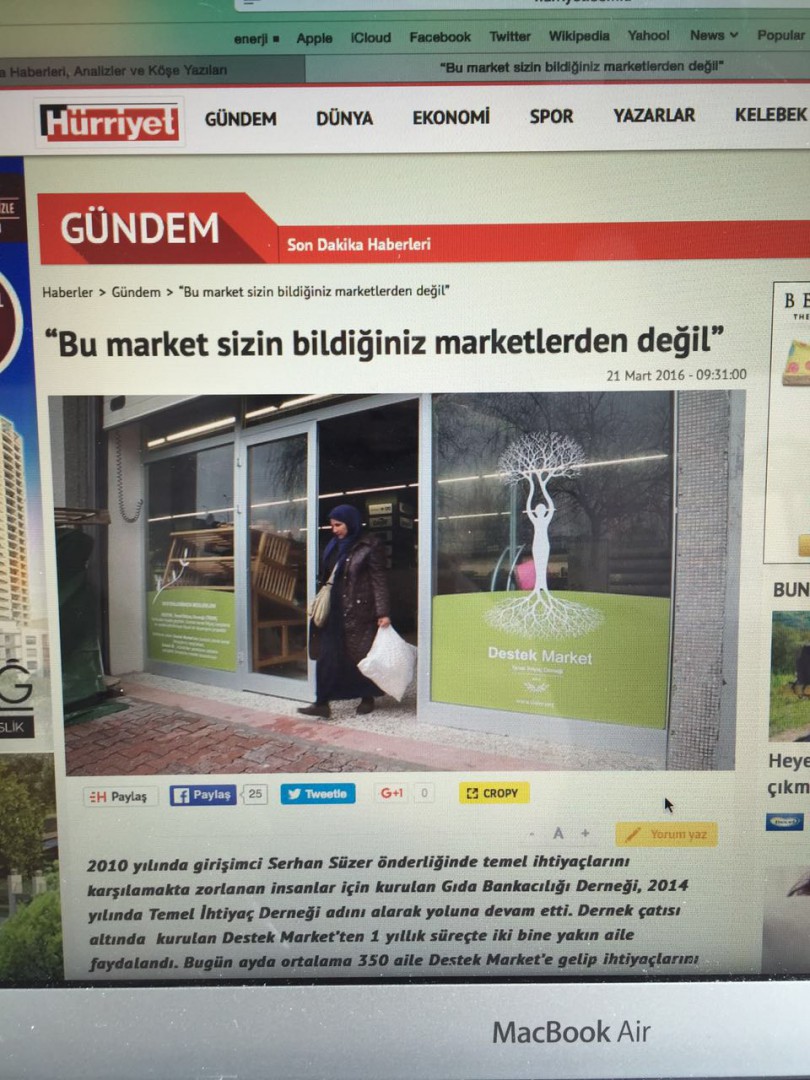
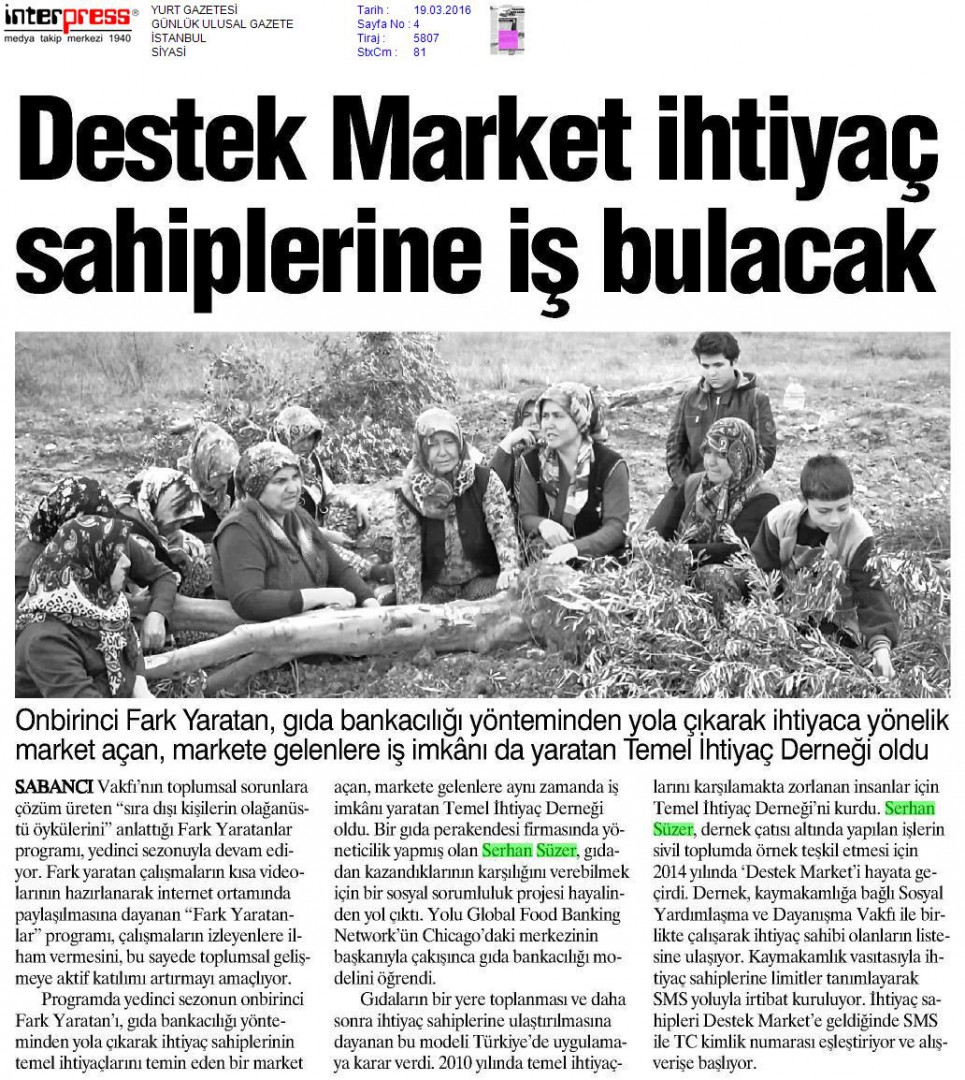
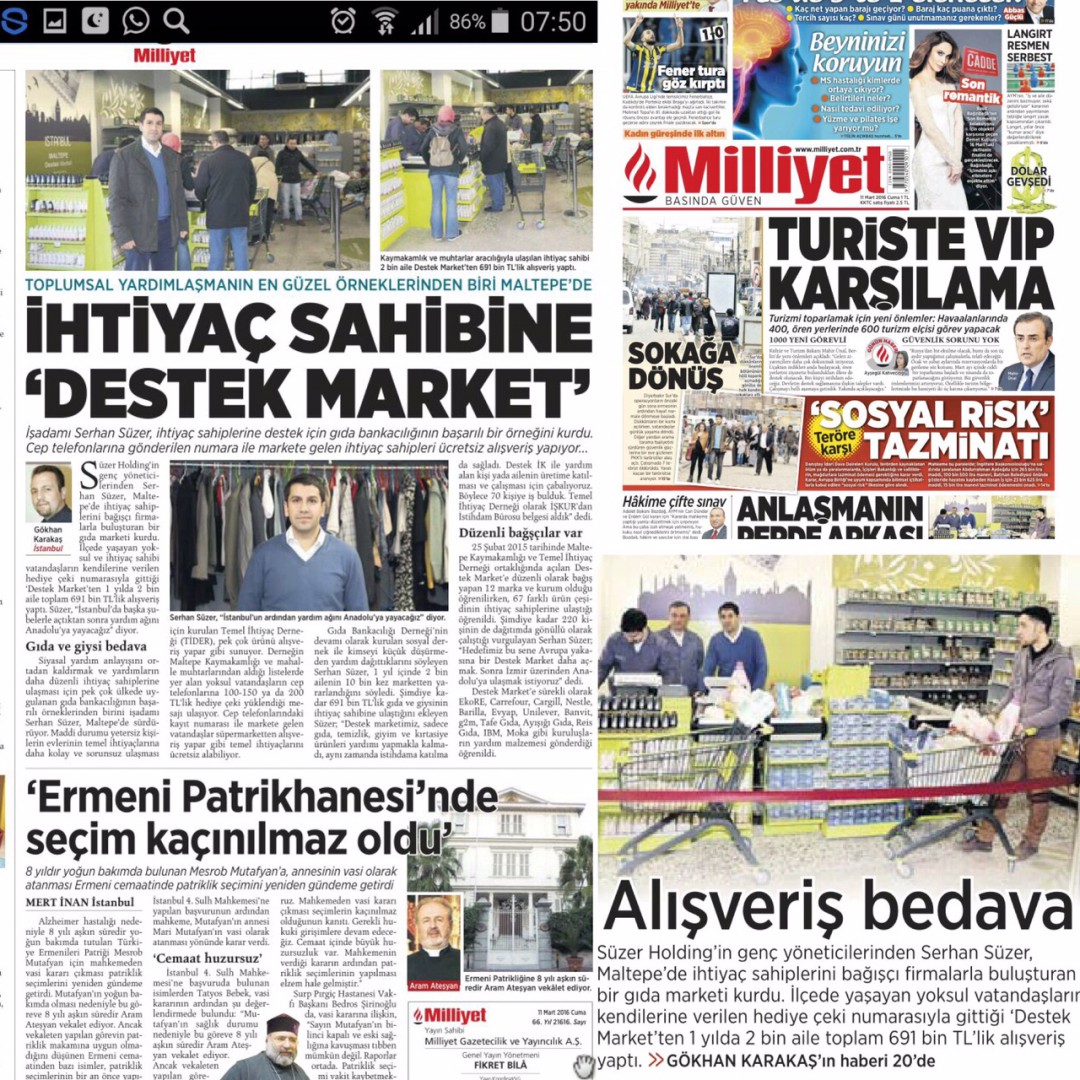
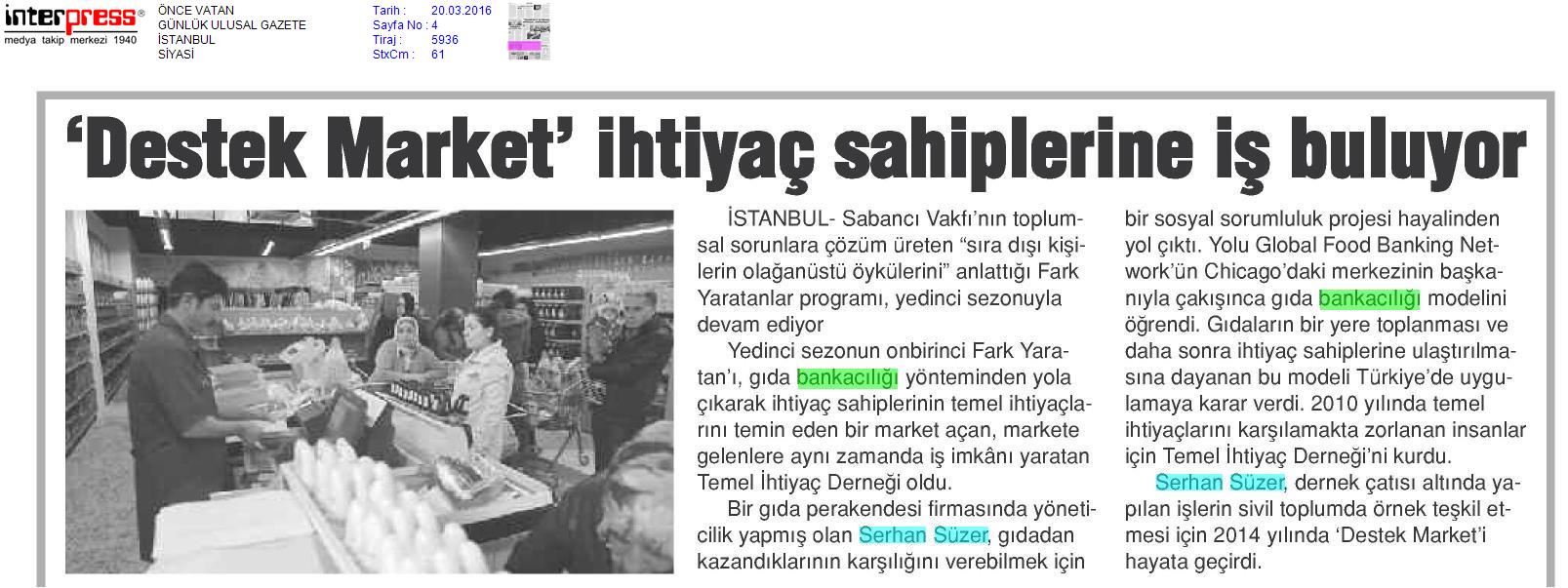
Moreover, many news articles about us have appeared in the print and broadcast media over the past few weeks. Here are just a few of them:
Star Ana Haber:
https://www.youtube.com/watch?v=cvZ_5Y76zkE
NTV Haber:
https://www.youtube.com/watch?v=X6vtLrsDxG4
Following some of these news reports, some of our citizens have rightfully asked questions like, “Who are they? Who do they have connections with?” Unfortunately, everyone has become suspicious of each other these days. Let me answer this right away (I’m writing in capital letters to emphasize our sensitivity to this issue):
WE ARE NOT AFFILIATED WITH ANY GROUP, INSTITUTION, OR ORGANIZATION. AS CITIZENS OF THE REPUBLIC OF TURKEY, WE HAVE BUT ONE PURPOSE, TO ENSURE THAT PEOPLE IN NEED IN OUR COUNTRY CAN STAND ON THEIR OWN FEET WHILE MEETING THEIR BASIC NEEDS. IMPARTIALITY, TRANSPARENCY, AND HONESTY ARE OUR THREE CORE PRINCIPLES.
You can find other information about the association in the following resources:
Website address: http://www.tider.org
Facebook: https://www.facebook.com/tidersosyal/
Twitter: https://twitter.com/tidersosyal
I’d also like to extend my heartfelt thanks to all our association’s donors. Thanks to them, we’re able to meet the basic needs of thousands of people in need. Here’s the list of our donors (as of this writing):
- Carrefour
- Cargill
- Evyap
- Unilever
- Banvit
- g2m
- Tafe Gıda
- Ayışığı Gıda
- Reis Gıda
- IBM
- Nestle
- Barilla
- Moka
- Mondelez
- EkoRE
I hope to see an increase in our donors on this occasion.
A world first
Finally, I want to emphasize this: This model, consisting of the ‘Destek Market” and ‘Destek HR’ social assistance program we’ve created, is a world first. We are in contact with other food banks worldwide to expand this model beyond our country. We recommend that in-kind assistance alone is not sufficient; as in our case, this model should be integrated with vocational training. We are working to ensure that similar structures are set up in other countries. We will continue to do our utmost to create a more just and beautiful world.
I receive many questions about the Support Project, renewable energy, and other work I do on my blog and other platforms. I will answer these frequently asked questions in my next article.
See you next week…
Tag: business world