Personally, every time I think about these atrocities, I tremble. I believe we can solve this snowballing problem, despite everything. The presence of a significant number of intelligent and educated animal lovers in Turkey sheds light on the future. I will mention some NGOs founded by such individuals at the end of my article, but first, I’d like to discuss some examples from history and the present.
The new generation doesn’t know about bears being made to dance to belly dance. Older generations do. A group of musicians joyfully plays belly dance, and a poor, large bear with a nose ring performs movements as if it were dancing on its two legs to the music. Those watching this performance rejoice, singing along to the music, and applauding the bear. They feel as if they’re in a beautiful and joyful environment, thinking the bear is also happily singing along. However, the truth is quite the opposite. A tragedy is unfolding there. Most people don’t realize the suffering inflicted on that poor bear to make it dance.
Bear Cruelty
A cruel method was used to raise bears used in shows. A few-month-old bear cub, taken from its natural habitat and having its claws and teeth removed, and sometimes its eyes blinded by lead, would be placed on a hot sheet. When its feet burned, it would lift one foot after the other and begin to hop. As the bear jumped, a tambourine would be played. Conditioned to the sound of the tambourine, the bear would assume its feet would burn when not on the sheet, and would repeat the same movements. The bear’s owner, holding a tambourine in one hand and a stick in the other, would insert a ring into a hole drilled into the bear’s nose, which is several thousand times more sensitive than a human’s, and then tie a chain around his waist. The bear would play the tambourine during the street show. If the bear reacted reluctantly, the performer, known as a “bearici,” would poke the animal with a stick or pull the chain from its nose to get it moving.
Historically, great efforts, both institutional and individual, have been made to save bears from this cruelty. This struggle began with the Society for the Protection of Animals, founded in 1924 and the first animal rights organization of the Republican era. Later, many national animal rights organizations, international NGOs such as the WSPA (World Animal Protection Fund), and the Society for the Protection of Natural Life made significant efforts to save bears. Animal rights activists also supported these efforts individually, doing their best. My grandfather, Hasan Süzer, was one of the animal rights activists who saved bears from such cruelty by giving money to bear hunters he encountered during this period. I am proud of him for saving so many bears from such cruelty. After the animal rights activists’ great struggle, by 1994, no bears were allowed on city streets, and most of the bears collected were sent to camps. Bear owners who rescued their bears from municipalities and police stayed away from city centers and continued their shows in small towns and villages. However, this was no longer as lucrative as it once was, and the business soon ended. To read the history and details of the bear-playing tradition, you can read the article I’ve included at https://www.istdergi.com/tarih-belge/ayilarin-basina-gelenler.
The Reason for the Increased Cruelty
Let’s move on to today. Animal cruelty continues to grow. The most striking examples of animal cruelty today come from what’s being done to stray cats and dogs. A vicious cycle has emerged: cats and dogs abandoned on the streets because they can’t care for them; animals living on the streets for generations, breeding litters, and the increasing number of animals suffering due to the ever-increasing cat and dog population.
In all of this, the meager measures taken to take animals to shelters and the continued cruelty there (there are relatively well-managed shelters, but they are very few and far between) don’t solve the problem. We witnessed this most recently in the incidents at the Konya shelter. Last month, a dog was beaten to death with a shovel at the Konya Metropolitan Municipality Animal Rehabilitation Center. When the video of this massacre was posted online, animal rights activists revolted. Following a widespread outcry, the animal killers were arrested, and two defendants were subsequently sentenced to 15 months in prison. The court adjourned the sentence (HAGB).
This is good news in a sense, as this is the first time that the killers who inflicted cruel death on animals have been officially sentenced. However, the adjournment of the sentence means that if no intentional crime is committed within a certain period or if the HAGB conditions are met, the sentence will be overturned. In short, these killers are now free. However, if they commit another crime, they will face prison. In other words, I believe this decision was made to defuse public tension.
The Cruelty to Donkeys
News of cruelty continues to come from all over the country. Donkeys are a vital part of life in villages across Turkey. They are primarily used for carrying loads. Unfortunately, in some parts of the country, a dark mindset exists that goes beyond carrying loads and tortures, beats, injures, and even tortures donkeys to death. Here’s an example: a poor donkey rescued from the village of Arslanlı in the Akçakale district of Şanlıurfa by the animal welfare NGO Meyako: https://www.instagram.com/reel/CoAJmHTIPOg/?igshid=ZDFmNTE4Nzc=
I congratulate Meyako on their dedicated work. We once implemented an off-grid, solar-powered agricultural irrigation project in Akçakale. The tribal leaders who owned the land where we built this project were dishonest and refused to pay the full amount. There, I unfortunately witnessed with my own eyes how people, animals, and any living creature are disregarded, and how they are treated differently after completing a task until they’ve served their purpose. Unfortunately, there are many places in Turkey like Arslanlı Village in Akçakale that need to be addressed. These dark mindsets are turning our paradise into hell. It’s very difficult for those raised with this mindset to change, but they often pull themselves together after harsh punishments. At the very least, the new generation needs to be educated to change the mindset of the ignorant segments of the country.
Another ‘Traditional’ Animal Cruelty: Camels
Incidentally, the problem isn’t just with the treatment of cats and dogs, but with the treatment of all animals. Here’s another example: Camels. There aren’t many camels in Turkey. Camels are generally a part of life in the deserts of the Middle East. Camels in our country are also set up to fight with each other. Not only the camels themselves, but also their owners can sometimes get into a fistfight. Let me share with you a brutal news story from Antalya, the tourism capital of 21st-century Turkey.
Traditional Folkloric Camel Shows were organized by the Kumluca Camel Drivers Protection and Sustenance Association and the Kumluca Municipality. Approximately 120 wrestling camels from the Aegean, Marmara and Mediterranean regions participated in the wrestling matches held at Kumluca Karatepe Stadium. Zafer Gemici, President of the Kumluca Camel Drivers Protection and Sustenance Association, said, “We had very good wrestling matches. We had difficulty separating the camels. Both our camels and the people of Kumluca miss wrestling.” In fact, let alone those who had difficulty separating the camels, the camel owners also got into a fight in this aggressive atmosphere. While the wrestling matches were going on, two camel owners argued over a violation of the rules. A brawl broke out between the camel owners and their entourage, who were punching each other. The police, who were at the stadium as a precaution, broke up the fight. You can read the details at the link https://m.haberturk.com/antalya-da-develer-guresirken-kural-ihlali-yapildigini-savunan-deve-sahipleri-kavga-etti-3558559-amp
I cannot comprehend that such atrocities born from ignorance can occur even in Antalya, one of Turkey’s most developed provinces and home to at least 10-15 million tourists annually. These activities must be stopped immediately.
The Netherlands-Turkey Difference
I would like to give an example to illustrate the difference between us and developed countries. The current government, whose country hosts hundreds of thousands of Dutch tourists who come to Antalya for vacation, which organizes a primitive activity like camel wrestling, is preparing to ban the ownership of flat-nosed dogs like pugs due to their respiratory illnesses, and of cats like Scottish Folds, which are genetically predisposed to joint disorders.
This measure will make the ownership of certain animal breeds illegal and will ban the publication of their photos in advertising or on social media. You can read the details on yesilist.com’s Instagram page: https://www.instagram.com/reel/Cn7rclIjBru/?igshid=ZDFmNTE4Nzc%3D
We’re making camels fight, and if that’s not enough, the camel owners are fighting too. Dutch people vacationing in the same place are stopping the breeding of animals that are biologically distressed because they’re being treated unfairly. There’s a huge difference.
About the proposed animal rights law
I previously wrote an article about the “animal rights law” proposed in our country on 14 July 2021: https://www.serhansuzer.com/tr/ulkemizde-hayvan-haklarinin-hakkini-verabilirsiniz-miyiz
I agree 100% with everything written in the 24-point feedback from the Animal Protection, Rescue and Survival Association (Haykurder) regarding the impending law, which I included in this article. As a reminder, I’m sharing my own comments on these articles below:
Sterilization and Rehabilitation: Sterilization and rehabilitation planning should not be based on human population. The establishment of permanent rehabilitation centers in residential areas with a population of less than 25,000 should be enshrined in law. Sterilization must become a nationwide comprehensive initiative, and sterilization activities must be fully implemented in every corner of the country.
Animal Hospitals: At least one animal hospital must be established in every district.
Pet Shops and Sales: The sale of animals in pet shops has been banned, which is fantastic. I hope all pet shops comply with this ban.
Dangerous Breed Ban: There are no dangerous breeds. The fact that strong animals are being exploited and aggressively bred by malicious individuals and used as weapons is clear. The ban on dangerous breeds should be lifted, and instead, a law focused on preventative measures should be in place.
Bestiality: The definition of “bestiality” is scandalous. Sexual intercourse is an act of mutual consent. The definitions for animal sexual crimes are “animal sexual assault” or “animal sexual abuse.” These regulations should include absolute, non-suspendable prison sentences. Psychological rehabilitation should be a requirement for zoophilia.
Hunting: All hunting and hunting activities should be banned, and those who do not comply should be punished.
Zoos: Keeping animals in man-made facilities, regardless of their name, should be prohibited.
Complaint and investigation: Investigations should be launched ex officio, without the requirement for a complaint from the animal owner or any institution, and crimes should be reported by anyone.
Malfeasance in Office: Municipalities should be penalized, and violations of animal rights should be considered crimes of commission.
Fireworks: Thousands of birds lose their lives every year due to fireworks. The use of fireworks should be banned. In fact, I wrote a blog post on this subject at the time: https://www.serhansuzer.com/tr/gereksiz-ve-zararli-bir-icat-havai-fisek
Fur import and export: Fur import and export, as well as the use and production of fur, should be banned.
There’s one more point I’d like to add to these articles:
Animal Farms: Animal farms should be established where stray animals can be comfortable, receive daily care, and meet their needs. These should be used to foster animals. Those operating these farms must be professional. For example, breeders of specific breeds can also be given a certain quota of stray dogs. These professional operators need financial support (incentives, etc.). Ultimately, the goal should be to have all dogs adopted.
We should support NGOs
For those asking what we can do now, you can first support this effort by adopting an animal. I also recommend supporting the animal NGOs that are working diligently in this area. You can support an organization you like by visiting the ones listed below or any other animal NGOs you come across and donating your time and money to them (I’m sharing a statistic that there are nearly 3,000 animal associations in Turkey: https://www.siviltoplum.gov.tr/derneklerin-faaliyet-alanlarina-gore-dagilimi :
HAYKONFED (Confederation of Animal Rights to Live): https://www.haykonfed.org/
HAYTAB (Animal Rights Federation): https://www.haytap.org/
HAÇİKO (Association for the Protection of Animals from Helplessness and Indifference): https://haciko.org.tr/
MEYAKO (Angels’ Life Village Association): https://www.meyako.com/
THKD (Turkish Animal Protection Association): https://www.thkd.org.tr/
Let’s not forget, animal rights are universal!
Let’s take care of our animals. To give them the life they deserve, let’s organize beyond individual efforts and accomplish the necessary tasks mentioned above. To solve these growing problems, we need to organize Turkey’s largest team game. Millions of animal lovers need to organize and work together to fully achieve all the goals.
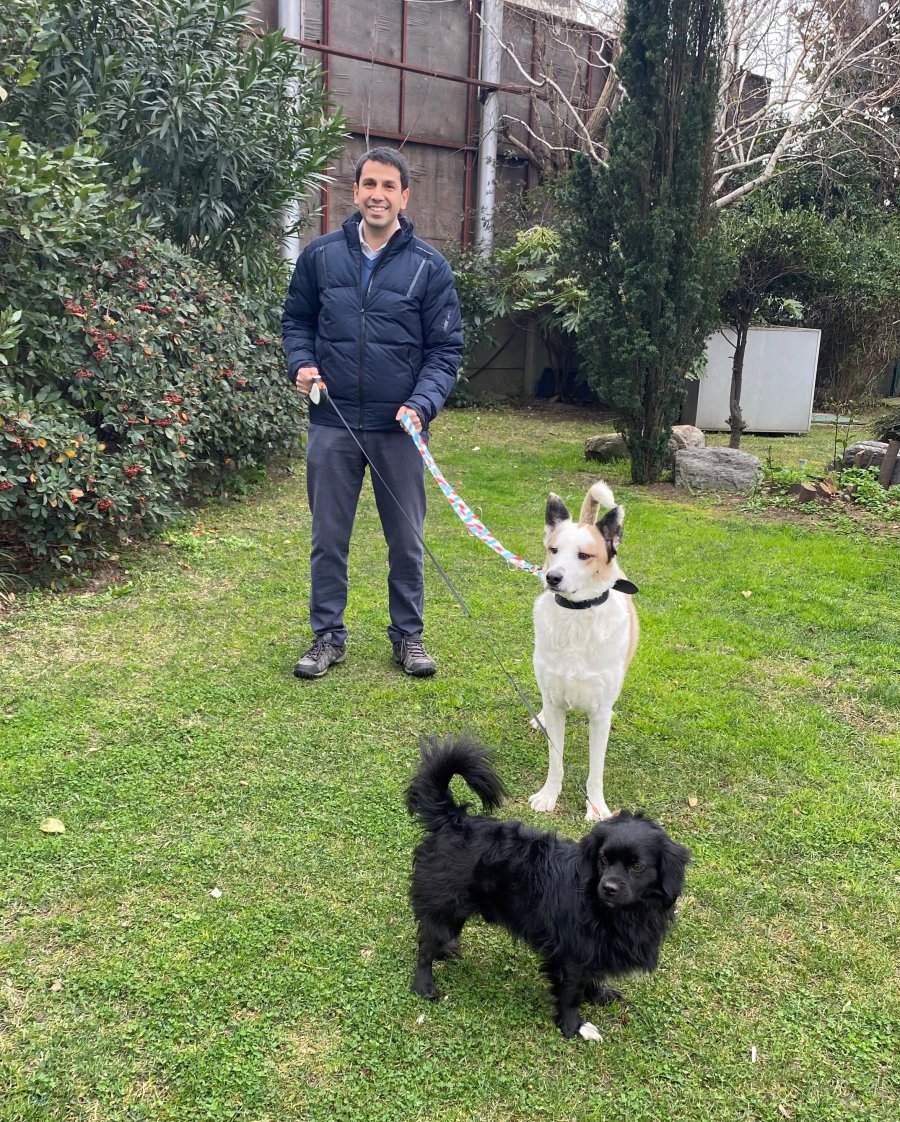
Note: The two dogs I’m holding on to in the picture belong to me. I take these animals out and walk them every day. The older one is my first dog, Sunny (I’ve had dogs before, but my parents took care of them). Sunny was born to us after her mother, the wind farm watchman, got pregnant (we don’t know the father). I adopted her. The younger dog is Blackie. My mother saw Blackie in front of a supermarket in the Turkish Republic of Northern Cyprus, fell in love with him, and decided to adopt him. She immediately took Blackie to the vet to get him groomed and start the adoption process. She then brought him back to Turkey and left him with me, saying, “You can take care of this one too.” Neither of them is a breed; they’re mixed breeds. They have very different personalities. They’re so sweet.
Tag: education