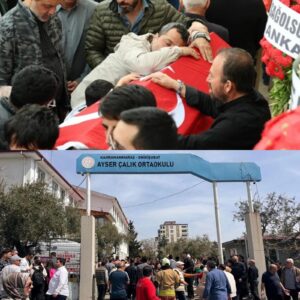
Without further ado, I would like to emphasize that Turkey has failed in every aspect of disaster response. Of course, this is the biggest disaster we’ve ever experienced. Here, 10 provinces were severely affected. Officially, 50,000 people died here, but according to information I received from the region, at least three to four times that number. We experienced perhaps the worst disaster in the history of the Republic of Turkey.
So, if Japan had experienced such a powerful earthquake with the same magnitude today, would hundreds of thousands have died, and millions have suffered the same hardship? Of course not. Perhaps dozens would have been affected, and a few would have died (and even then, from causes other than building-related causes, such as heart attacks due to overexcitement), but the numbers would never reach hundreds of thousands, and millions of people living in major cities would have quickly returned to their routine lives.
Mistakes and Anti-Heroes
I would like to clarify that I will break this article into two parts to provide a more in-depth analysis of the problem. First, let’s address the mistakes made nationwide, and in the next section, we’ll address our institutions that emerged as heroes in the fight against disasters but later turned into anti-heroes. For my readers unfamiliar with the meaning of the English word “anti-hero,” I can share the following definition: “Anti-hero” is used in today’s popular culture, particularly in literature and cinema, to describe protagonists whose ideals, goals, and personality are the polar opposite of conventional heroes. It can also be described as a protagonist with negative qualities. For more details, you can read the explanation on Wikipedia: https://tr.wikipedia.org/wiki/Antikahraman
Now let’s answer this question: Why did we suffer so many losses? What mistakes were made nationwide?
1) Public institutions and NGOs responsible for disaster response
a) Incompetence: Incompetence is the most fundamental problem, especially in the public sector and in many of our NGOs. We must empower competent individuals. Otherwise, in civil society and disaster response, we will always leave things unfinished, like a duck with one foot in the grave, and the result will always be disappointment.
b) Utter lack of preparation: The public sector and NGOs were caught unprepared for a disaster of this magnitude. I always tell my close circle, “To achieve success in disaster response, we need to make very serious preparations during non-disaster periods.” This includes numerous preparations, such as holding national exercises at least once a year, like military drills, and sharing roles and coordination between the public and NGOs.
c) Coordination problem: Coordination is a very serious problem. All relevant public institutions, ministries, and NGOs, including search and rescue, humanitarian aid, and psychological rehabilitation, must ensure full coordination before, during, and after an earthquake, working as one. Only this way can effective disaster management be achieved.
2) Disasters are viewed as a political tool
The promotion and popularity of individuals or institutions that assist people in distress due to disasters are perceived as directly politically relevant in Turkey. Sometimes, the ruling party and the opposition even engage in competition over how much aid they provide. However, the public, especially politicians, must understand that disaster management is a trans-political issue. The politics surrounding aid provided and the resulting polarized environment are, in my opinion, a clear and distinct indicator of the moral collapse that I feel in our country, deep down.
3) Planning Issues
Everything done in Turkey is carried out with a lack of planning. In the past, this function was handled by the State Planning Organization, but now it has been deactivated. Even the meticulously prepared reports prepared by the State Planning Organization have been shelved; I’ve never witnessed them being utilized. Perhaps they were more functional in previous generations, but in my generation and the years since, the State Planning Organization has lost its function year by year. Similarly, proper urban planning isn’t being implemented in our country. If it were, buildings wouldn’t be erected in places like riverbeds. Just look at developed countries. Each country has its own style stemming from its own culture. For example, in the US, roads run parallel to each other, and the resulting square or rectangular plots are built. In France, you’ll see roads connecting to a circle. In these countries, if a location is planned by official institutions, that plan is never changed except for force majeure. Here, we’re not satisfied with the permissions we receive; the function and physical condition of buildings (such as the addition of additional floors) are constantly being altered. This mindset needs to change. Because of this unchanging, outdated and opportunistic mindset, buildings in Turkey are being built anywhere, haphazardly and without considering disaster conditions. And then what happens?
4) The Contractor Problem
Let’s make a quick comparison here. Consider Germany, which stands out for its robust engineering. While there are 3,800 contractors in Germany, there are 453,000 in Turkey. Not just anyone can become a contractor in Germany. Merit is essential. In other words, company managers must be proven engineers. In Germany, you cannot employ uninsured or illegal workers. You cannot have unqualified people do the work. You must use materials as specified by law. If you try to solve your problem with bribes, German authorities will destroy your life. The laws are very strict and strictly enforced. Turkey, however, has the opposite situation. For example, anyone can become a contractor. There are primary school graduates, even contractors who have never attended school. We can solve the contracting problem like Germany. We must ensure that contractors are meticulously selected (they must prove their competence and moral integrity), and that the selected contractors comply with applicable laws. Those who fail to comply or shirk their duties should face, at the very least, a ban on contracting and even harsh sanctions, including imprisonment.
I touched on this topic in my previous article. I want to emphasize the immorality of stealing building materials again so you can visualize it. If the structural work had been done properly, most of these collapsed buildings would have suffered significant damage but not collapsed. People would have survived. The structural work of a building accounts for 20% of the total cost. That’s 6% of the total cost. They don’t hesitate to endanger the lives of hundreds of people living in the building just to save 6%.
5) The Problem of Public Oversight
In Turkey’s disaster response, oversight is where we’ve conceded the most. Despite all the flaws, if public oversight had been properly implemented, tens of thousands of people wouldn’t have lost their lives. Furthermore, a zoning amnesty was issued, seemingly to spruce up an already flawed system. It’s incomprehensible. The government, which made this decision and dragged all the parties behind it, should ask this: Tens of thousands (or even hundreds of thousands, according to unofficial figures) of our citizens lost their lives, all while incurring financial losses far exceeding the revenue generated from zoning amnesty. Was it worth it? At least you should have made the zoning amnesty conditional. You should have given this zoning right to those who built their buildings resiliently. The earthquake hit, and all the mistakes were exposed. What a shame.
Examples that reflect AFAD’s character
Now, let’s turn to the antiheroes of disaster response. I’d like to share my thoughts on AFAD and the Turkish Red Crescent, which came to the forefront during the Kahramanmaraş Earthquakes. Incidentally, what I’m about to write here is based not on what I read in the newspapers, but on my own personal experiences and observations:
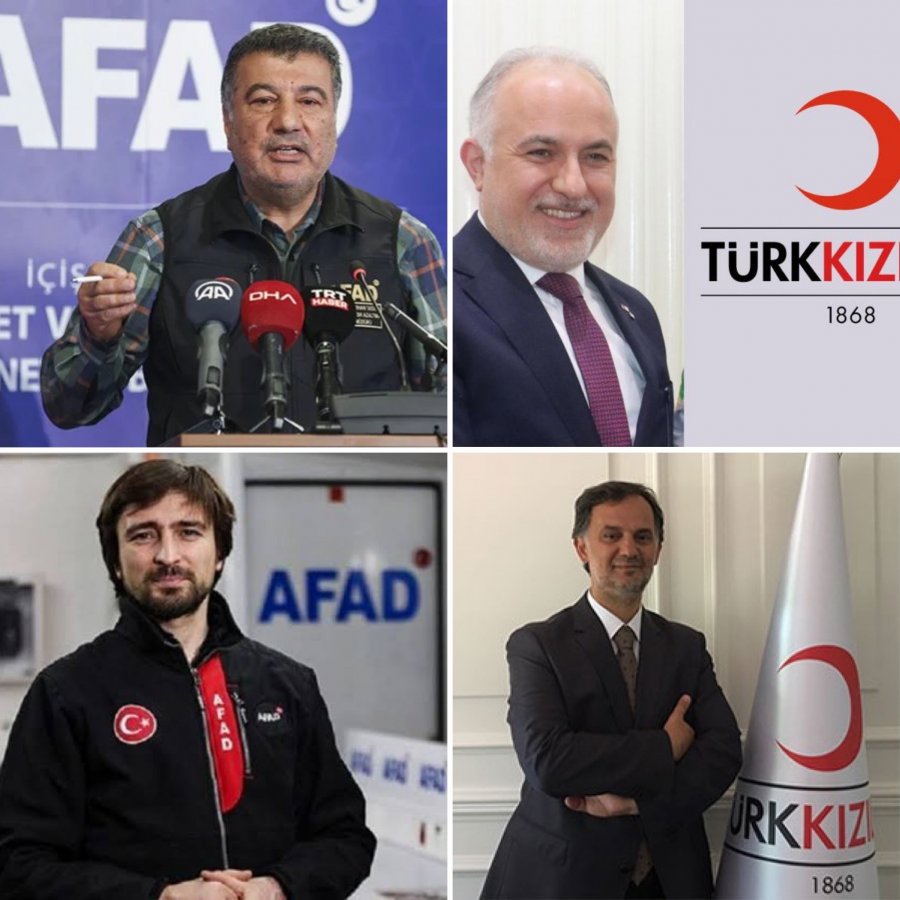
1) AFAD: AFAD has been constantly criticized since its founding. From the very beginning, it gave the impression that it was established to create an alternative to AKUT, the very popular disaster management institution. In other words, you could say that politics has been effectively mixed into disaster management. Let’s move past that. It’s clear that AFAD stands out as the institution that failed the most during the disaster. So, if an anti-hero is to be declared, I would put AFAD at the top of the list without a second thought. AFAD’s inadequate staffing, lack of competence, and lack of practical experience were brought to light immediately after the 6 February earthquake. Now, I won’t delve into how to solve these problems in this article (that would be a blog post in itself). There are only two issues I’ve personally experienced and will criticize regarding AFAD, and both of these issues reflect AFAD’s character:
a) The appointment of Mehmet Güllüoğlu, former AFAD president, to the Tanzanian Ambassadorship: Having met him personally during both the Elazığ and İzmir Earthquakes, I know his attitude and management style well. My observation was that, despite not being in control of everything, he was a good manager. At the very least, he paved the way for those who wanted to do something, wasn’t prejudiced, and didn’t look down on others like he did in some other relevant institutions. Thanks to this modesty, he filled many gaps with NGOs, creating a productive intervention environment. They removed such a man from the AFAD Presidency and appointed him to the Tanzanian Ambassadorship. No one understood such an appointment during his prime. His appointment created a serious rift within AFAD. As NGO representatives, we were unable to initiate any of the projects we were planning to undertake. Then, when the administration they appointed to replace Güllüoğlu failed after the Maraş Earthquakes, they called him back to Turkey:https://www.gazeteduvar.com.tr/tanzanya-buyukelciligine-atanan-eski-afad-baskani-gulluoglu-turkiyeye-cagrildi-haber-1602645
But now, everything is long gone, and irreversible losses have emerged. If the Güllüoğlu administration had remained, we could have saved tens of thousands of lives thanks to this leader who, without a shred of ego, opened the door to everyone’s contributions. What a shame.
b) The post-Güllüoğlu administration’s closure of collaborations: After Yunus Sezer was appointed mayor after Güllüoğlu, the doors to collaborations that were already struggling to progress were completely closed. I remember bringing the “Risk Reduction Map” project to AFAD (Disaster and Emergency Management Presidency). We even met with the Tekirdağ province, which prepared the first Risk Reduction Report in Turkey. In Tekirdağ, we explained: Risk reduction is not a project that can be accomplished with annual reports. It requires an online map, and this map must be constantly updated by full-time volunteers and officials. We argued that only in this way can we diagnose all problems in a timely manner and eliminate risks before a disaster occurs. In fact, the official who prepared this first risk reduction report at AFAD’s Tekirdağ headquarters told us, “Yes, there’s definitely a need for such a map format. It would be fantastic if we could do it together. The superficial reports we’ve prepared are useless. The report was compiled based on information we’ve gathered from various sources, and it’s also outdated. We most certainly want to work with you on this.” While his optimistic approach excited us, the manager at AFAD’s Tekirdağ headquarters practically dismissed us, saying, “We can work with you if we get approval.” We then asked again several times, but because we received no positive feedback, the “Risk Reduction Map” project, for which we told AFAD, “Let’s do it together; we even arranged for the software developer,” was abandoned. Had this project been implemented, we could have informed tens of thousands of people about the danger and saved their lives.
2) The Red Crescent: Imagine an institution, a legacy of the Ottoman Empire, whose sole purpose is to help those in need across the country (See: History of the Red Crescent: https://www.instagram.com/p/CpNUrmYoPgl/?igshid=MDJmNzVkMjY=). The Red Cross, which has counterparts in other developed countries, enjoys the highest prestige. Even Atatürk, while an officer in the Ottoman Empire, was treated by the Red Crescent (then called the Hilal-i Ahmer Society). (See:https://www.instagram.com/p/CpNoaw9oWOJ/?igshid=MDJmNzVkMjY%3D) After the founding of the Republic, he named it the Red Crescent and included it among the institutions he meticulously maintained. An institution of such importance to the country has become a source of constant debate over the last 20 years. Corruption, irrational statements by its administrators, commercialization, politicization, etc.
My own experience with the Red Crescent
Let me share my own experience with the Red Crescent. My paths crossed with the Red Crescent’s General Manager, İbrahim Altan, due to the Izmir Earthquake on 30 October 2020. As the first-term spokesperson for the Disaster Platform, a group of over 20 NGOs working together during the Izmir Earthquake, I was standing before the Red Crescent General Manager. As NGOs, we were trying to determine our mission. We went back and forth between the Izmir Governor’s Office, AFAD, and the Red Crescent. Interestingly, the Red Crescent General Manager forgot about the Izmir earthquake and focused on the collaboration we had established with TİDER the NGO side. The Red Crescent was also included in this collaboration, representing the public sector. While I tried to bring up the topic of “What will we do in the Izmir Earthquake?”, the manager’s attention was elsewhere. To help you understand his stance, I’m sharing an approximate conversation we had:
– Your Coca-Cola campaign gave me a lot of trouble. I faced a significant amount of opposition from the administration, who opposed this campaign because of Coca-Cola’s position, and I was very worn down; you caused me great distress.
– Ultimately, hundreds of thousands of people benefited from this campaign. Coca-Cola donated millions of Turkish Lira (I can’t recall the figures now, but I’m just mentioning the figures I was given before and remembered). Isn’t that the important thing?
– Don’t exaggerate those numbers too much (why did we come here? The general manager is scolding us for our significant contributions to society). Here are the exact numbers…
– It doesn’t matter, I’ll confirm the exact figures with our general manager right now. There’s a 10% difference between us anyway. As a result, hundreds of thousands of people received millions of Turkish Lira worth of aid. You see the result.
Scolding instead of thanks
Seeing the tension building, other NGO executives intervened. The general manager, seemingly obsessed, couldn’t get past this. While we expected him to thank us, we got a scolding from him. Meanwhile, I asked him why he was struggling with the Coca-Cola campaign. After all, Coca-Cola is one of the world’s largest global brands. He didn’t fully answer, but from his words, I understood that Coca-Cola was struggling because of the perception of its Israeli brand. We all know that Coca-Cola is an iconic American brand, but I think I’ve been hearing this comment for years from American Jewish businesspeople because of their Coca-Cola shares. These kinds of conspiracy theories seem absurd to me, and I’d also like to point out that I found such a comment from the general manager in such a meeting extremely inappropriate.
After this topic took us a considerable amount of time, we finally got to the main point, and he told us, “AFAD will decide where you will be assigned,” and he also slammed AFAD (accusing them of incompetence). So, we left the meeting frustrated and without achieving anything.
Meanwhile, because they didn’t have enough people in their warehouses, they asked us for volunteer support despite everything. We provided the best support we could, regardless of these men’s ego problems. Hundreds of volunteers from NGOs in the Disaster Platform worked in the Red Crescent’s warehouse for days. We saw a similar ego problem, the origin of which I don’t understand, in the Red Crescent’s board of directors. The sale of Red Crescent tents to AHBAP, the food poisoning in Hatay, and the statements of the Red Crescent’s board chairman, which created immense public hostility, led us to align the Red Crescent with AFAD in terms of poor governance.
Recent related news about the Turkish Red Crescent:
Kınık and Altan paid the Turkish Red Crescent General Directorate fines imposed by the General Directorate of Civil Society Relations, affiliated with the Ministry of Interior, “due to the discretionary power of the board of directors regarding probationary periods in certain personnel appointments and administrative action taken by the general directorate regarding an employment contract.” Here’s the related news:https://www.birgun.net/haber/kizilay-baskani-ile-genel-muduru-ne-kesilen-para-cezalarinin-belgelerine-birgun-ulasti-317917
The independent auditing firm that reviewed the Turkish Red Crescent’s accounts gave the institution a “limited positive opinion.” Grant Thornton then reported the basis for the “limited positive opinion” and the deficiencies to the Turkish Red Crescent Association: https://www.sozcu.com.tr/2023/gundem/kizilay-ile-ilgili-carpici-denetim-raporu-7608635/
It turns out that the tent capacity produced by the tent company that the Red Crescent claims to produce is insufficient, so it outsources production to foreign markets, and therefore the so-called cost figure is transferred to the contract companies, not to the institution: http://cuts2.com/MvILO
Two posts by Zaytung making fun of the Red Crescent (let’s laugh a little at our crying state):
- https://www.instagram.com/p/CpK8G4DNPZU/?igshid=MDJmNzVkMjY%3D
- https://www.instagram.com/p/Cps-RFQNy8L/?igshid=MDJmNzVkMjY%3D
They adapted Cem Yılmaz’s advert for the President of the Red Crescent (continuing to mock the Red Crescent’s tent selling incident):
https://www.instagram.com/reel/CpPN4rNgd4n/?igshid=MDJmNzVkMjY%3D
Şahan Gökbakar shared the speech made by Red Crescent President Kerem Kınık 26 years ago: https://t24.com.tr/video/sahan-gokbakar-kizilay-baskani-kerem-kinik-in-26-yil-once-yaptigi-konusmayi-paylasti,52859?fbclid=IwAR0alcyaMqgIG4tBVUQ4U6kIN6nLLF7Ryhwd5ouDsD8WPXrQOF3w8CVS-kw
Statement from the Red Crescent regarding allegations of food poisoning in Hatay: http://cuts2.com/NKkTf
Empty Promises of Donations
Finally, in addition to the public institutions we criticize, there are also NGOs and private sector organizations I will criticize equally harshly. However, to keep this article short, I’ll stop here for now. I simply want to draw your attention to another incident that clearly demonstrates the extent of moral collapse in our country. This time, my criticism is directed at the private sector and individuals. The “Turkey One Heart” campaign, launched to provide aid to the region following the major earthquake, was broadcast live on almost all TV channels on the evening of 15 February and attracted considerable attention. Hundreds of individuals and organizations appeared on TV promising to donate to the earthquake victims, promising to donate this much, but then failing to deliver anything. By the end of the night, more than 115 billion lira in aid had been pledged. Despite weeks having passed since the campaign, only 74.2 billion lira of the promised aid had been deposited into AFAD’s account. I’m sharing the related news:
Here you go. As a country, we are failing wherever you turn. We hope this dark period, where incompetence, fraud, and violence have reached their peak, will end ASAP.
Tag: education