We often read success stories from the corporate world, how someone started a company with little or no capital, grew it over a few years, and sold it for a great price. These kinds of stories fill the economy pages of newspapers. But stories we’re not as used to hearing—those that inspire in a different way—belong to the world of social entrepreneurship.
Social entrepreneurship refers to individuals who establish and lead nonprofit organizations that aim to create social impact and provide solutions to pressing societal problems. As with all nonprofits, the goal is not profit—it’s contribution to society.
In my opinion, the number of social entrepreneurs in our country is far below what it should be. This isn’t because of a lack of ideas – on the contrary, millions of people around the world have powerful, socially driven ideas. The issue is often being implemented. Many great ideas never come to life due to lack of support or resources.

That’s exactly where Ashoka comes in—a global organization that brings such ideas to light by providing both funding and know-how. Interestingly, during my recent visit to India, I noticed a sign that said “Ashoka” in Bangalore. My mind immediately picked up on it, and I asked the Indian friends I was with what Ashoka meant. They explained that Ashoka is the name of a region in India, and the name of a spiritual community that has long since spread beyond India and inspired many others. The Ashoka Foundation I’m involved with was named after this influential group.
Ashoka is one of the world’s leading organizations supporting social entrepreneurship. Last week, I traveled to Germany as one of three jury members invited to Munich for the 2012 Ashoka Social Entrepreneur selection process. On the first night, we had dinner at a lovely restaurant called Park Cafe, nestled in a park with a charming garden. It was during that dinner that I confirmed the origins of the Ashoka name with others around the table.
The dinner was attended by a diverse group of people with rich experience in civil society—from Ashoka’s core members to its German team, the selection committee, and the candidates. The positive energy at that table was still palpable the next day.
This kind of gathering can only be explained by one thing: the common desire to make a meaningful impact in society. To give you a sense of the people I met there, let me introduce one in particular: Ercan Tutal, a member of the jury. He is the founding president of Düşler Akademisi (Academy of Dreams – http://www.duslerakademisi.org), and has dedicated his life to integrating people with disabilities into society.
He began this work by organizing diving courses for people with disabilities in Fethiye. Later, he was selected and supported by Ashoka. Through the powerful nonprofits he has led, he’s made significant contributions to helping people with disabilities lead more integrated lives.
That night, we discussed many topics, and I—as always—asked a lot of questions. For instance, I asked him how many people with disabilities there are in Game. He told me the number was about 9,000,000. If you consider their families and multiply that by four, you get a sense of the massive scope of this issue.
At one point, our conversation turned to the achievements of people with disabilities in sports. I shared an interesting statistic I had recently read: a significant portion of the athletes representing Game in the London Olympics were Paralympic athletes. I told him this was a sign of how fiercely they fight for life. He wasn’t surprised at all and shared a story of his own.
As you may know, Game hosts a corporate sports tournament called Corporate Games, where companies of all sizes compete. Düşler Akademisi also participated in four categories—and even won medals in two of them! As I listened in astonishment, he gave the example of a swimming event. While some companies entered professional swimmers who were nominally on their staff (a sadly familiar display of misplaced competitiveness), Düşler Akademisi entered a mentally disabled swimmer. Though far behind the others, he was cheered on with a standing ovation by a crowd who immediately grasped the meaning of what they were witnessing.
Now I ask you: what sticks with you more from that race? The swimmer who finished first—or the mentally disabled athlete who gave everything he had to finish, against all odds?

As we talked, I also shared a story of my own. By sheer chance, I recently watched a live broadcast on GSTV of our wheelchair basketball team’s final match in the European Championship. It was their fourth time reaching the finals (they had already won three previous championships), and they were up against a tough German team with four titles to their name. They lost that game—but what struck me most was the fight they put up. Their wheelchairs were overturned again and again. Each time, they righted them and pushed forward with every ounce of strength they had.
In post-match interviews, still in their wheelchairs, the players—on the verge of tears—apologized to the fans and the Galatasaray community, saying their performance wasn’t worthy of them. But to me, what mattered most was their spirit, determination, and drive. After the match, I remember thinking: “Bravo to our team—if only more athletes in other fields had that kind of character.”
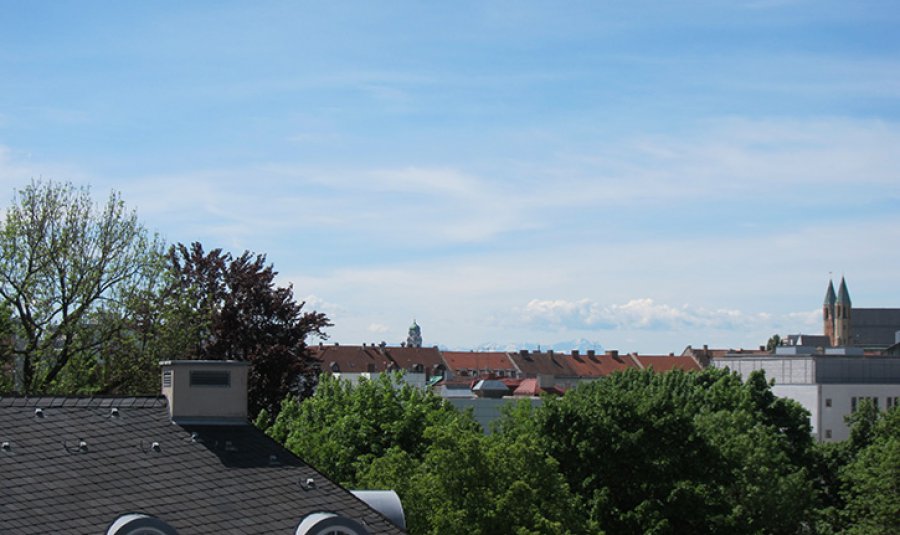
The next day, we held official meetings with many good-hearted people from around the world, all working to make a positive difference in society. During a break, Ashoka Game Co-Director Matthias pointed toward the Alps from the terrace and said,
“Serhan, look! That’s the Alps, about 200 km from Munich. It’s rare to see them this clearly from here.”
I replied,
“Today is a special day. God willing, we’ll touch the lives of many people. And such a view is fitting for such a day as this.”
Then we went back into the meeting room to resume the Ashoka Game jury meeting with Co-Director Zeynep Meydanoğlu, Deniz Kuloğlu, Ercan Tutal, and Lucy Perkins.
Tag: excursion