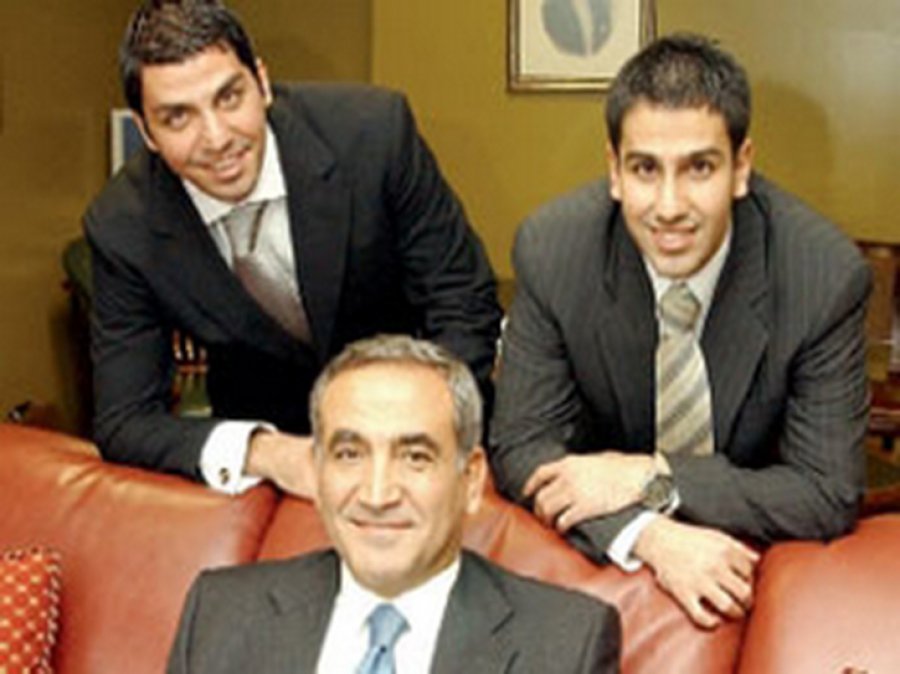
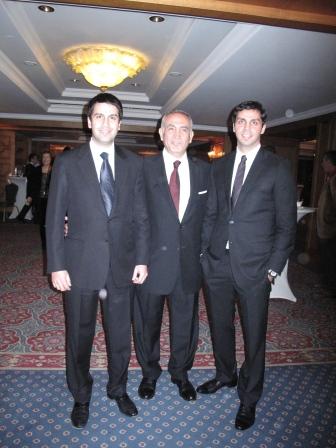
In my previous post, I talked about what it means to be a twin and shared a story I had with my brother Baran. As fraternal twins, I mentioned just how different we are from each other—and how those differences are a strength and should be embraced as an advantage. Naturally, since childhood, Baran and I have shared many experiences, and some of those moments have become defining memories we’ll carry with us for the rest of our lives. I’d like to share one of those turning points here.
It was the end of the first semester of our last year of middle school. Mustafa Abi, who worked for us and drove us to school, was supposed to pick us up. For some reason, he was late that day (you know how Istanbul traffic can be). All the other school shuttles had already left, and we were waiting alone across the street from the school gate, on the sidewalk. I had always been a good student, finishing both middle and high school with honors. Later, I graduated from one of the top universities in Canada, McGill. That day, I had my backpack on, my report card and certificate of merit in hand, standing next to Baran, waiting for Mustafa Abi.
Our school was located up on Tarabyaüstü. A group of students came down the road toward us. One guy who seemed to be their leader approached me and we had the following exchange:
“Did you get a certificate of merit?”
“Yes.”
“Let me see. I’ve never seen one in my life.” (Everyone laughs.)
“Sure, take a look.” (Yep, I was that naïve.)
As soon as I handed over the certificate, the situation changed.
He said, “Nice one. Now listen, you need to give me 20 bucks or I’ll tear this certificate to shreds.”
Baran was the first to react. “Give that back,” he said, “What do you think you’re doing?” and stepped in to retrieve the certificate. Immediately, others intervened and held him back. There were at least 15 of them, surrounding us in a circle, shielding the guy who had demanded money. When Baran went in for a second attempt, he got punched.
Let me be clear: I’m not someone who enjoys fighting. I usually avoid it altogether. I’ve never started a fight in my life—in fact, I’ve often been the one trying to stop them. I’ve only been in a handful of physical altercations, and every single time it was because the other party left me with no choice. Once a fight starts, you almost enter another state—I can’t even remember what I do in the moment. But the outcomes have rarely ended well for the other side. What has always stuck with me, though, is something our father drilled into us from a young age: “Never violate anyone’s rights—but never let anyone violate yours either. If someone tries to do that, do whatever it takes to stop it. If that means fighting, then so be it. Always stand up for your rights.”
That advice might not sit well with everyone, but believe me, it’s helped me navigate many tough situations in life. Whenever I truly felt my rights were being trampled, I pushed back.
That day was exactly what my father had warned us about. The boys confronting us were from a nearby school, and they saw us as pampered private school kids—easy targets. They tried to extort me, threatened to rip my certificate, and ganged up to punch my brother. I had no choice but to fight.
They may have seen us as spoiled rich kids, but they hadn’t accounted for two things. First, we grew up hearing our father’s words and were never going to take that kind of abuse lying down. And second, Baran and I worked out together every day at the time. We played soccer, basketball, and ping pong in our backyard. Those games always ended in arguments—and sometimes even wrestling matches—until our grandmother stepped in to break us up. Out of respect for her, we’d stop immediately. So, in a way, we were both very well-trained for fights.
That day, Baran and I stood back-to-back and started throwing punches at anyone who came close. There were so many of them. Each time we got one down, another came at us. We were being hit from all sides. But we fought for about 20 minutes and managed to stay on our feet. By the end, eight or nine of them were on the ground. Some had fled, but many kept coming at us. One of the first to run away was the guy who asked for money. Then Mustafa Abi showed up and ended the fight. He’s normally a calm, polite man, a bit intimidated by his wife—but that day, he leapt out of the car with a flying kick. I was still fighting, but I couldn’t help watching him in awe. He fought like a lion, right alongside us. His arrival shocked the group. The tide turned. The rest of them fled. The street was covered in blood. Aside from a few punches Baran and I had taken, we were okay. But the other side was completely scattered. We chased after them for a bit, but since they lived in the backstreets of Tarabya, they vanished into alleys we weren’t aware of.
And what happened to the certificate? Amazingly, it had fallen to the ground during the scuffle and survived with just a small tear at the edge. We picked it up and moved on.
But that wasn’t the end.
Second semester began. On the first day back, I was chatting with friends in the cafeteria when Baran came rushing in, shouting:
“Dude, they’re back! There’s a huge group waiting outside the school. When they saw me in the yard, they shouted, ‘that’s one of them!’ and tried to climb over the outer wall.”
“How many of them?”
“I don’t know—hundreds.”
“Wait, what? Let’s take a look.”
I went to check, and I was stunned by what I saw: at least 200–300 people were outside, carrying sticks and all kinds of sharp objects. They had brought most of the boys from their school with them.
Baran said, “Let’s round up our own guys and fight back.” I told him not to be ridiculous—that our school didn’t even have enough male students to match their numbers, and even if we did, none of us were prepared to fight people wielding weapons. So, we called my father’s other driver, Turan Abi, who had some connections in law enforcement. He immediately notified the Tarabya Police Dept. A large group of officers came and dispersed the crowd. They even patrolled around the school for months afterward to prevent further incidents.
That was how it all ended. What did I take away from this? In one of my most difficult moments, it was Baran who reacted first to defend me. And I, in turn, have protected him on many occasions. Even though we’re nothing alike, even though we don’t always understand each other and sometimes clash, we both know this: in life, we always have someone by our side. We’re both 100% sure that in the hardest of times, we’ll have each other’s backs and do whatever it takes to get through.
That’s why I see having a twin brother as a gift life has given me.
Tag: memoir