
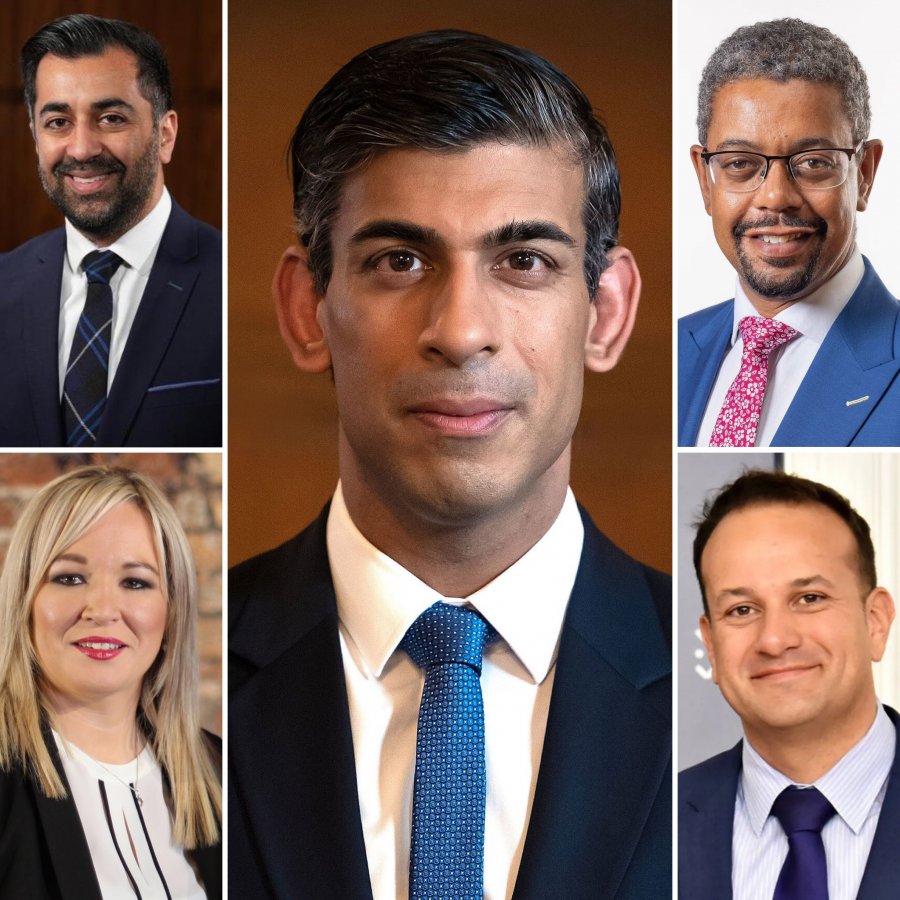
Yes, you read that right: the Prime Ministers of England, Scotland, and Wales, which make up the United Kingdom, are all of immigrant descent. The Prime Minister of Northern Ireland, the fourth country of Great Britain, is not of immigrant descent, but she too deviates from the typical white male profile, and is, moreover, a woman representing the political wing of the IRA.
I believe the profile of the immigrant leader was reinforced by the two terms of Barack Obama, America’s first Black president, leading the US. Some say Obama did a good job, while others say he made major mistakes and dragged the country backwards, but one undeniable fact is that Obama has always projected a very popular presidential profile. While Americans initially overestimated their expectations by creating exaggerated profiles of Obama as the “Great Savior” or “Superman,” Obama did his best. In my opinion, although his popularity waned at the end of his second and final term as president due to some mistakes and not fully meeting expectations, Obama has always marked a period in our lives as a highly popular figure known worldwide.
After Obama, I think other Western countries, and especially Britain, started asking, “Why not an immigrant leader?” It began to be said. Perhaps the first attempt at this on the British Isles was Sadiq Khan, a Pakistani man elected Mayor of London in 2016. Mayor Sadiq Khan took office on 9 May 2016. Since then, his generally good performance has perhaps positively changed perceptions and paved the way for other immigrant leaders. With all this said, let’s briefly introduce the current leaders of Great Britain:
British Prime Minister Rishi Sunak
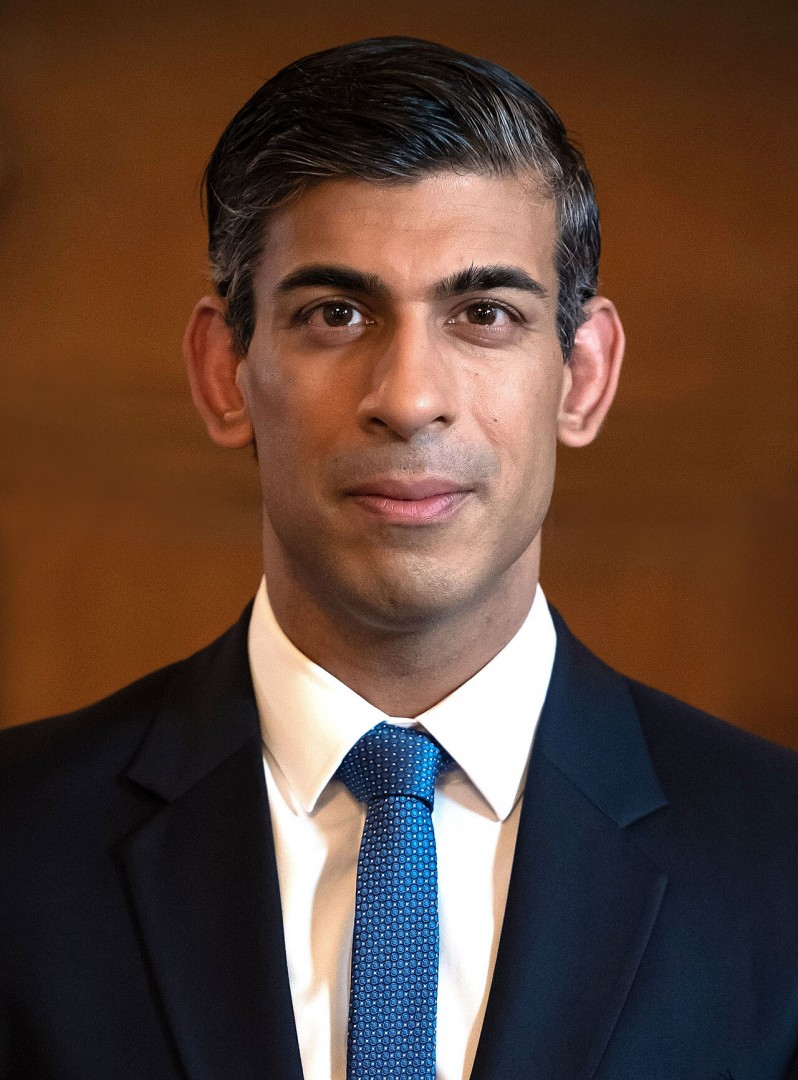
Rishi Sunak (born 12 May 1980) became the first Indian-Asian Prime Minister of the United Kingdom on 24 October 2022. He is also the country’s youngest prime minister in modern history. Britain’s first Asian prime minister, he previously held two cabinet positions under Boris Johnson and most recently served as Chancellor of the Exchequer between 2020 – 2022. Sunak has served as the Member of Parliament (MP) for Richmond (Yorks) since 2015. Sunak worked at Goldman Sachs between 2001 – 2004. He was elected to the House of Commons for Richmond, North Yorkshire, in the 2015 general election. He supported the Brexit campaign in the successful 2016 referendum to leave the European Union.
Sunak supported Johnson’s bid to succeed Theresa May as Conservative leader and prime minister, and Johnson subsequently appointed Sunak as Chief Secretary to the Treasury in July 2019.
Following the 2019 general election, Johnson promoted Sunak to Chancellor of the Exchequer in the 2020 cabinet reshuffle following the resignation of Sajid Javid. During his time in this role, Sunak was a prominent figure in the government’s financial response to the COVID-19 pandemic and its economic impact, including the Coronavirus Job Retention and Eating Out Help programs. He also played a role in the government’s response to the cost-of-living crisis, the UK energy supply crisis, and the global energy crisis. Sunak resigned as chancellor in July 2022 amid the government crisis that culminated in Johnson’s resignation.
Sunak stood in the July-September Conservative Party leadership elections to succeed Johnson. He received the most votes in each of the parliamentary seats but lost most of the members to Foreign Secretary Liz Truss. After spending Truss’s tenure as prime minister on the backbench, Sunak was elected unopposed in the October 2022 Conservative Party leadership election, replacing Truss, who resigned amid another government crisis. At 42, Sunak became the youngest prime minister since Robert Jenkinson, 2nd Earl of Liverpool, in 1812. Sunak took office amidst the cost-of-living crisis and energy supply crisis that began during his time as chancellor, as well as industrial disputes and strikes. He authorized foreign aid and arms shipments to Ukraine in response to Russia’s invasion of the country (See: https://en.wikipedia.org/wiki/Rishi_Sunak ).
Scottish First Minister Hamza Yusuf
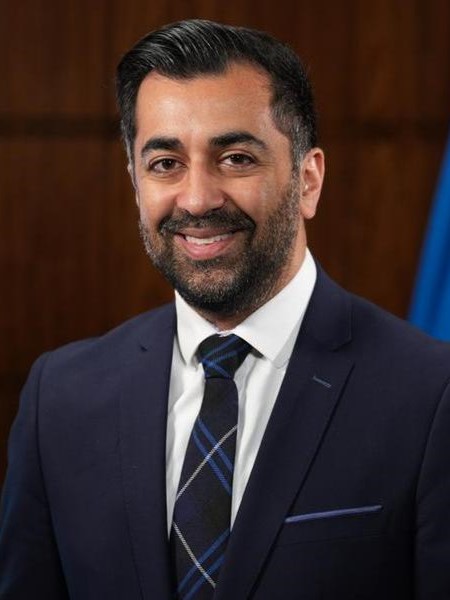
Hamza Harun Yusuf (born 7 April 1985) is a politician who served as First Minister of Scotland and leader of the Scottish National Party (SNP). Yusuf was born in Glasgow to Pakistani immigrants and studied political science.
Yusuf previously served as Justice Secretary between 2018 – 2021 and then as Health Secretary from 2021 to 2023 in Nicola Sturgeon’s government. He has been a Member of the Scottish Parliament representing the Glasgow Pollok constituency since 2016. He represented Glasgow between 2011 – 2016. By winning the Scottish National Party leadership election in 2023, he became the youngest, first Asian and Muslim Scottish Prime Minister (See: https://tr.wikipedia.org/wiki/Hamza_Yusuf ).
Welsh Prime Minister Humphrey Vaughan ap David Gething
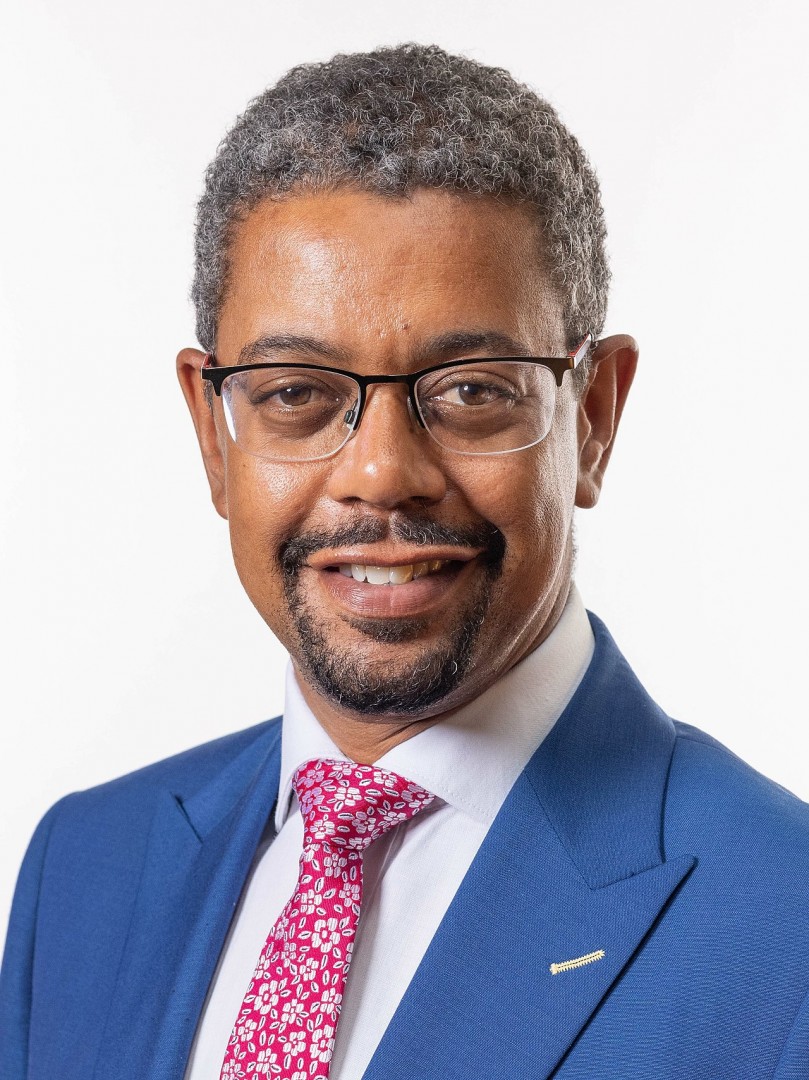
Humphrey Vaughan ap David Gething (born 1974) was a Welsh Labour and Co-operative politician who served as First Minister of Wales and leader of the Welsh Labour Party since 2024. He previously served as Minister of Health and Social Services from 2016 to 2021 and as Minister of the Economy from 2021 to 2024. He has held the Senedd for Cardiff South and Penarth since 2011 (See: https://en.wikipedia.org/wiki/Vaughan_Gething ).
Following the resignation of Prime Minister Mark Drakeford at the end of his five-year term in office, a vote was held in Parliament to elect a new Prime Minister. Vaughan Gething, the 50-year-old Welsh Labour Party leader, received 27 votes from the 60-seat parliament and became the country’s new Prime Minister. In his speech following the vote, Gething thanked Drakeford for his contributions to Wales, saying, “We can also expect a depressingly familiar pattern to emerge today: social media abuse and racist tropes disguised as polite language… People are questioning my motives, and yes, they will still question or deny my nationality, while others are questioning why I ‘play the race card.’ I say to these people again: it’s very easy to disregard your identity when your own identity has never once been questioned or held back.”
Northern Ireland Prime Minister Michelle O’Neill
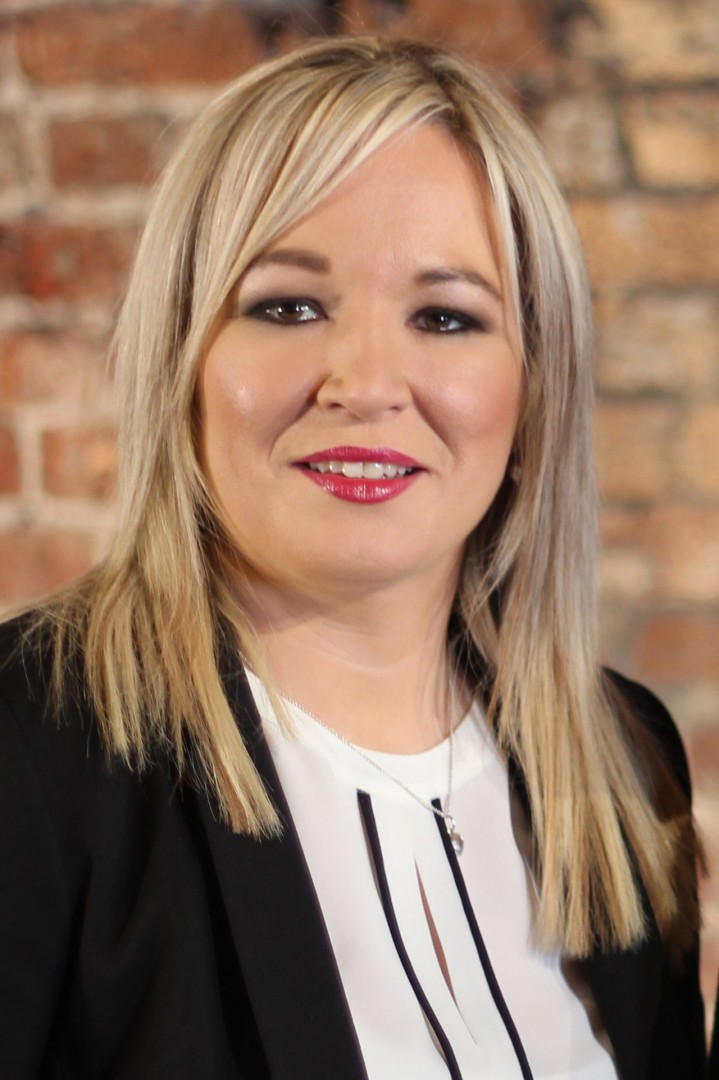
Michelle O’Neill (born 10 January 1977) is an Irish politician who has served as First Minister of Northern Ireland since February 2024 and as deputy leader of Sinn Féin since 2018. She has also served as a Member of the Legislative Assembly (MLA) for Mid Ulster in the Northern Ireland Assembly since 2007. O’Neill previously served as Deputy First Minister of Northern Ireland from 2020 to 2022. On 3 February 2024, MPs in Northern Ireland took a historic step by electing Michelle O’Neill, a nationalist politician, as First Minister, the equivalent of the Prime Minister’s office.
Sinn Féin, considered the former political wing of the Irish Republican Army (IRA), believes the dream of a “United Ireland” is now “within reach.” However, despite the party’s popularity, holding a referendum on “unity” with the Republic of Ireland is at the discretion of the British government. (See: https://en.wikipedia.org/wiki/Michelle_O%27Neill and https://tr.euronews.com/2024/02/03/kuzey-irlandada-tarihi-adim-milliyetci-isim-michelle-oneill-basbakan-secildi )
Irish Prime Minister Leo Varadkar
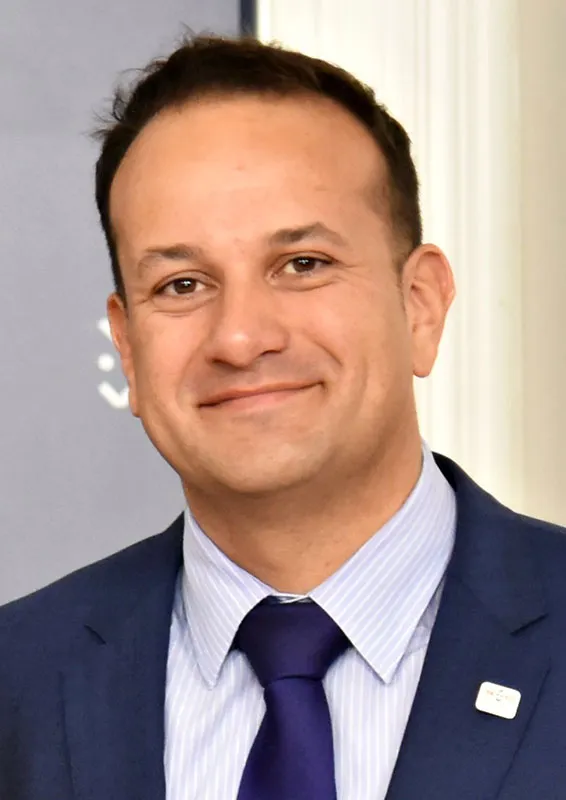
The Prime Minister of Ireland, the fifth non-British member state on the island, has a rather colorful profile. A physician, Irish Prime Minister Leo Varadkar was elected Prime Minister in 2017 at the age of 38, making him Ireland’s youngest prime minister. Varadkar, who worked as a family physician before entering politics, is the child of an Irish nurse and an Indian doctor. He is also the country’s first openly gay prime minister. Varadkar came out as gay after a 2015 referendum approved same-sex marriage in Ireland. Ireland was once considered one of the most conservative countries in Europe, and homosexuality was considered a crime until 1993. (See: https://www.bbc.com/turkce/haberler-dunya-40135175 ).
Although Varadkar announced his resignation this month, it is a fact that he too has gone down in history (See: https://www.sozcu.com.tr/irlanda-nin-ilk-escinsel-basbakani-istifa-etti-p30842 ). Varadkar said, “My decision to step down has both personal and political reasons. I believe this government can be re-elected.”
Let’s imagine a similar situation for Türkiye.
Let me offer a perspective on what this immigrant leadership trend in Great Britain looks like, so that Turkish citizens can empathize. If someone of Syrian or Afghan origin were to be elected to lead the country in the future, or if something similar happened in Northern Ireland, it would be like electing the leader of the now-renamed, Kurdish-majority DEM Party (formerly HDP) as prime minister. I can imagine how you feel about this. But don’t react too quickly. This unthinkable shift has already occurred in Great Britain, and with current immigration policies, it’s possible in Turkey in the future. I don’t think there’s a problem with that. The real problem arises when the very survival of the country is threatened. In other words, if Syrian immigrants hold a vote in places like Kilis or Hatay, where there are large immigrant populations and even the potential to overtake the Turkish population, and attempt to separate those provinces or districts from Turkey, the real problem will arise. Similarly, if separatist Kurds advance their ambitions to divide the country, this would be a serious problem. This absolutely must not be allowed to happen. To achieve this, a balanced distribution of immigrants within the country can be ensured, and a plan can be presented to ensure they live in a dignified manner, respecting the laws of this country and contributing to its life.
Incidentally, a prime minister of Kurdish origin was elected to lead Turkey in the past. Turgut Özal is a prime example of this. Rather than acting reflexively to divide the country, Özal played a unifying role. The famous ANAP salute, with both hands clasped in the air and meaning “We are all together, we will succeed together,” became one of the most important symbols of this mindset.
The crux of the matter lies in immigration policy.
Let me emphasize that diversity and this diversity are a positive thing in a country. Unusually diverse profiles generally add dynamism to countries and are extremely positive in terms of inclusiveness. However, as I’ve emphasized before, immigrants need to receive a good education and be prepared to contribute to their host country. It is necessary to immediately crush and end any movement or initiative that works against the fundamental dynamics of the country they reside in, such as those that attempt to divide the country, abolish secularism, discredit Atatürk, and undermine our democracy in Turkey.
Now, I want to shift the focus from immigrant leaders to the issue of immigration. The crux of the matter lies in the immigration policies of countries accepting immigrants and the general attitudes of countries sending immigrants.
I want to conclude my article with what someone of Pakistani origin (I cannot comment because I don’t know their status) said to the Danes. First, you can watch the video at this link:
The essence of this video lies in these words. The Pakistani in the video exclaims to the Danes: “We will live in your country for the rest of our lives. While you have one child, we have five. In 10-15 years, there will be more Pakistanis than Danes in your country!”
We can also assume that Syrian and Afghan immigrants utter the same words in Turkey. People with such unhealthy thoughts exist, albeit a few. At least there are immigrants who are inclined to have children constantly, thinking, “The state will take care of them anyway,” and similar discussions are taking place in our country as well. I’ll address immigration policies in my next article. For now, remember the Pakistani’s words.
Tag: education