During my first trip, I had a wonderful time and also experienced some very interesting events: like meeting a famous TV actress and learning Spanish thanks to a word I had mispronounced. This time, I was there for the wedding of my close friend Santiago, and again, it turned out to be an extraordinary experience. I have many stories to tell from both of my trips…
If I remember correctly, my first visit to Cartagena was in 2007. My father said, “I’m going to Colombia for the New Year holiday, come with me if you’d like,” and I didn’t want to miss the opportunity. I’d heard the name Cartagena—a Colombian coastal city that intrigued me—for the first time. Located in the north of Colombia, Cartagena is a large seaside city. Indigenous people first settled the area around 4000 BC. Later, the Spanish founded the modern-day city in 1533, naming it after Cartagena in Spain. The more I read about the city, the more curious I became.
My father and his European group of friends went to Cartagena first. Two days later, I joined them. We had a very enjoyable New Year celebration together. There are two memories from that holiday in Cartagena that have stayed with me.
The first was when we went with friends to an open-air lounge bar called Café del Mar. Café del Mar is an amazing nightlife spot located on the old city walls, right by the sea. To help you picture it, I’m sharing some daytime photos below:
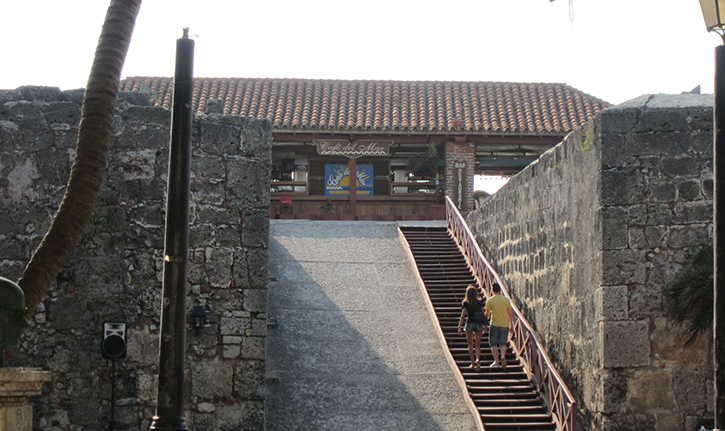
The entrance to Cafe Del Mar. You have to climb stairs to get to the top of the walls.
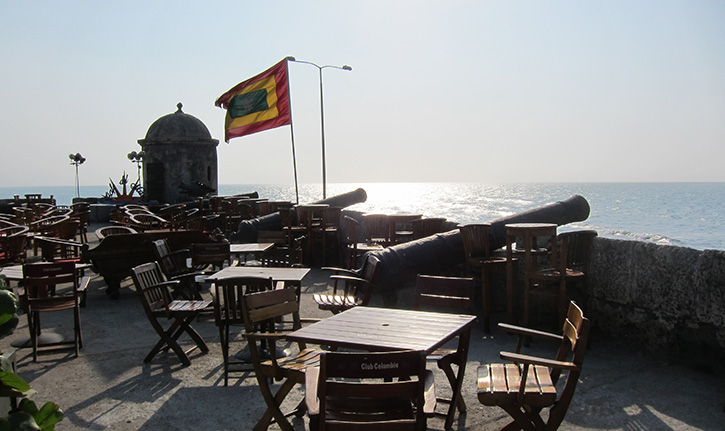
The view from Cafe Del Mar…
While we were enjoying a pleasant chat among friends, a stylish brunette woman in her late 20s suddenly walked in. Everyone at Café Del Mar stopped talking and turned to look at her, and I couldn’t help but ask my friends, “Who’s that?” When they told me she was a very famous TV actress, I jokingly said, “Would you introduce me as a very famous actor from Türkiye who’s come to Cartagena and would like to meet her?” One of my friend’s wives said, “That’s a great idea!” and got up to approach the actress. As she was walking away, I called after her, “Wait a second, I was joking! No need to say anything,” but my voice was drowned out in the music. She had already reached the actress. A moment later, she returned smiling and said, “She wants to meet you.”
And just like that, I found myself next to this famous actress. The conversation went something like this:
Colombian Actress: “How did you start your career on television?”
As someone who’s terrible at lying, I was scrambling for an answer when I remembered the economics programs I’d appeared on. So I blurted out, “Through economics programs.”
Colombian Actress: “Interesting… I’ve never heard of someone transitioning from economics shows to acting.”
After that, we chatted about a range of topics, from why I had chosen Cartagena to what I thought about Colombia and Colombians in general. Just then, the same friend’s wife came over and let me know we were leaving. I told her, “Alright, give me five minutes and I’ll come,” but she insisted: “We’re leaving now, Serhan.” So I said, “Okay, then,” said goodbye to the actress, and left with my friends.
Once we were outside, she explained that the actress was indeed very famous in Colombia, but had a troublesome boyfriend, so they had to cut our conversation short. That same evening, the actress called my friend’s wife (they knew each other from before) and said she’d like to organize a dinner where I could also join. But, bless her, my friend’s wife told her I was already on my way back to Türkiye to protect me, and the dinner never happened.
The second incident took place on New Year’s Eve. People in Cartagena had gathered in the town square to celebrate. Everyone was greeting each other with “felizaños”, wishing one another a happy new year. In Spanish, the letter “ñ” is equivalent to the English “ny” sound, so felizaños is pronounced felizanyos. Positive energy filled the air—everyone was hugging, sharing good wishes. I got swept up in the moment and wanted to join in. To be understood by everyone around me, I decided to say it in Spanish. But whether I misheard it or just got it wrong, instead of saying felizaños, I said felizanos.
Suddenly, the crowd around me went silent. An older woman approached and said loudly, “Felizaños, felizaños; no felizanos, por favor!” The Colombian and American friends with me all burst out laughing. It was clear I’d made a faux pas. Still unsure of what exactly I’d said wrong, I asked them, “What did I say?” They laughed even harder and explained that años means “years” in Spanish, while anos means “anus.” So instead of saying “happy new year,” I had said “happy anuses.”
Honestly, after realizing what my blunder meant, I couldn’t really blame the Colombian lady. She had every right to be upset. But something else stuck with me—most Colombians around me didn’t speak English. The younger, well-educated generation almost all speak English, but the rest speak only Spanish. This is the case in much of Latin America. After this incident, half-jokingly I told myself, “Serhan, you need to learn Spanish—otherwise, you’re going to get yourself into trouble again.” And after returning from that trip, I enrolled in the Cervantes Institute and began learning Spanish.
Later, when I was appointed as the Honorary Consul of Costa Rica, I realized just how wise a decision that had been. After all, Spanish is spoken by over 500 million people across 22 countries. In the United States, it’s the native language of at least 20% of the population. Thanks to learning Spanish, I’ve been able to communicate much more easily with Spaniards and Latin Americans, and I’m glad for that. Latin Americans are quite similar to us. Once you set aside the differences in language and religion, we share very similar cultures and almost identical mindsets. Our Mediterranean way of looking at things—our reactions, hospitality, rich cuisines, and love of living in the moment—are strikingly alike. Physically, they also resemble us. Whenever I go to Latin America, everyone assumes I’m one of them and speaks to me in Spanish without hesitation—whether it’s in Costa Rica, Colombia, Cuba, Brazil, or Argentina. And once I start speaking Spanish, they can’t quite place my accent and always ask which Latin American country I’m from. They’re surprised when I tell them I’m Turkish.
Unfortunately, because of the ongoing atmosphere of tension in our own country, we’ve drifted away from our true nature and are rapidly turning into an irritable, angry, and intolerant society. I recently saw the outcome of this in a study I read. According to the results of the Gallup International Global Happiness Barometer, nearly 56,000 people across 54 countries were asked how they felt over the past year. The results show that globally, 53% consider themselves happy, 13% unhappy, and 32% say they’re neither happy nor unhappy. In Türkiye’s section of the study—conducted by Barem Research, who surveyed 1,000 people—40% of Turks said they felt happy. Only 7% described themselves as unhappy, while 42% couldn’t define themselves as either.
In Latin America, however, the happiness rate was the highest in the world at 78%. In Western Asia and Eastern Europe—where Türkiye is located—the happiness rate was just 41%, making it the region with the lowest level of happiness.
Do these numbers tell you something? Two groups of people who are similar in both personality and appearance—one is among the happiest in the world, and the other among the unhappiest. If we assume that many people define the meaning of life as “leading a happy life,” then it’s safe to say that we’re clearly doing something wrong somewhere in our beautiful country, Türkiye.
Last month, I made my second visit to Cartagena—one of Colombia’s top tourist destinations—because it’s a must-see city with its colonial architecture, city walls, warm-hearted people, music, dance, and vibrant atmosphere. My itinerary included two Latin American countries. After a very successful trip to Costa Rica, I landed in Colombia on the evening of February 14 (for some reason, I was traveling from Costa Rica to Colombia on Valentine’s Day). This time, I was in Cartagena for a special occasion. My friend Santiago was marrying his girlfriend Sabina. Santiago is the son of former Colombian President Andrés Pastrana Arango. The Pastrana family is both incredibly humble and genuinely distinguished. I wanted to be by Sabina and Santiago’s side on their special day.
First, I flew from San José to Bogotá, then from Bogotá to Cartagena. Due to a flight delay, I arrived in Cartagena around 2 a.m. Ricardo met me at the airport. He’s the son of Gina Benedetti de Vélez, the former mayor of Cartagena. Ricardo is also a successful lawyer. Along with his father and brother, he runs one of the leading law firms in Cartagena.
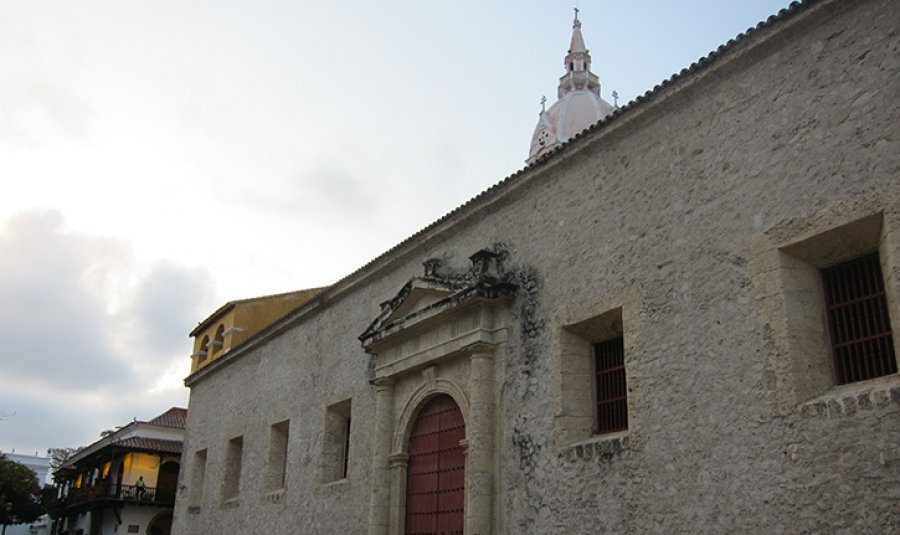
I was back in Cartagena after six years. As I passed through the city walls, I realized just how much I had missed the city, and memories of the wonderful days I’d spent there in the past came flooding back. Once again, I stepped into the magnificent Charleston Santa Teresa Hotel. But this time, there was a major difference… I walked in alongside my friend Ricardo, and I was speaking Spanish with everyone I encountered—from the receptionist to the security guard to the bellboy.
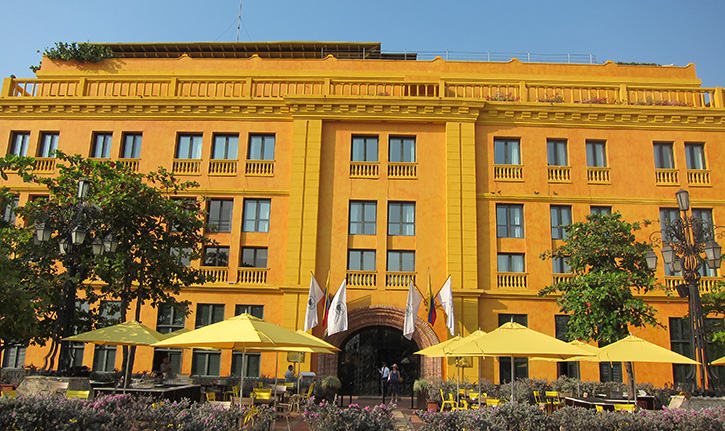
Exterior view of the Charleston Santa Teresa Hotel
The next day, after exploring the interior of the city walls, Ricardo and I went to the Cuzco Peruvian restaurant. I enjoyed the exquisite Peruvian cuisine, a cuisine held in such a special place by everyone in Latin America. It was truly a never-ending feast. You know how when you eat delicious food, your stomach is full, but your eyes are never satisfied?
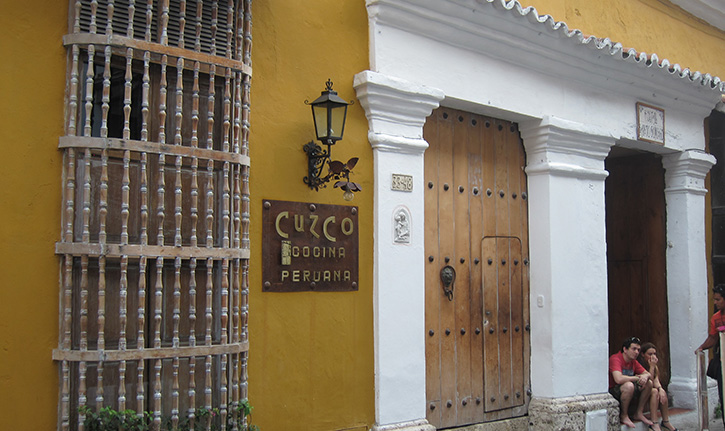
Entrance to the Cuzco Peruvian Restaurant
After this feast, it was time to buy a “guayabera” (a type of clothing) according to the wedding dress code. After Ricardo’s recommendation, I went to a shop within the city walls and purchased my guayabera shirt, white linen trousers, light-colored shoes, and the rest of the accessories. I was ready for the wedding.
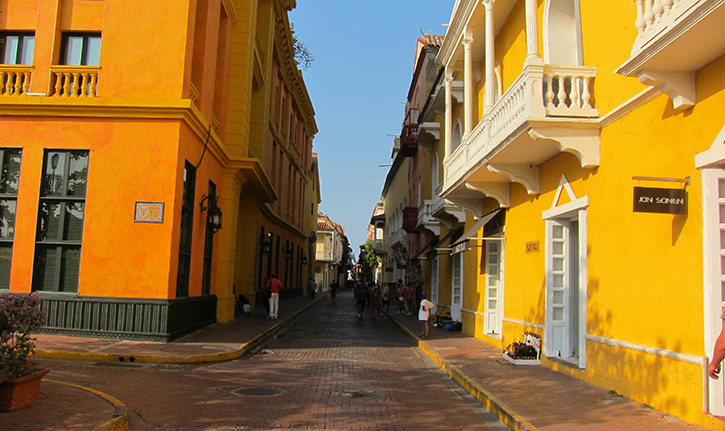
The shop where I bought the guayabera
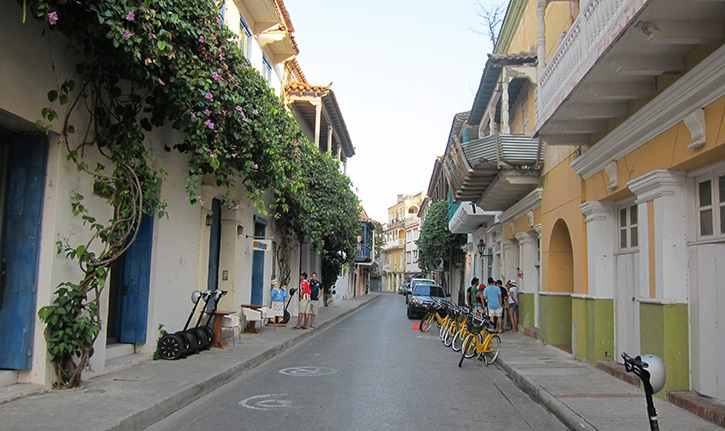
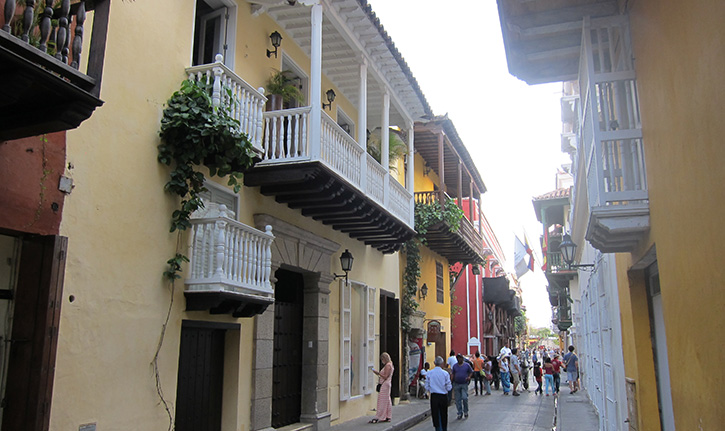
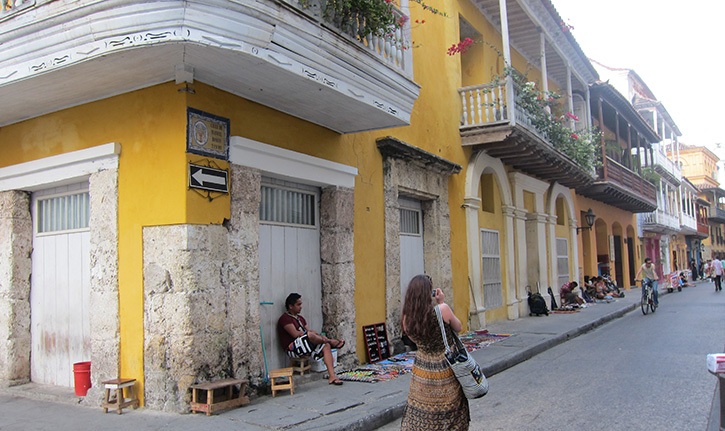
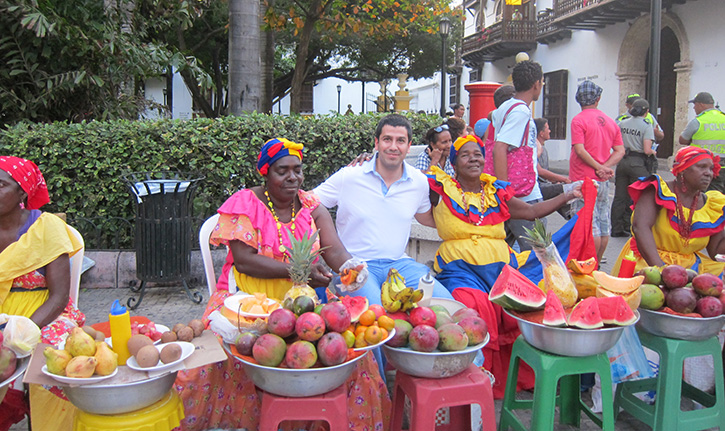
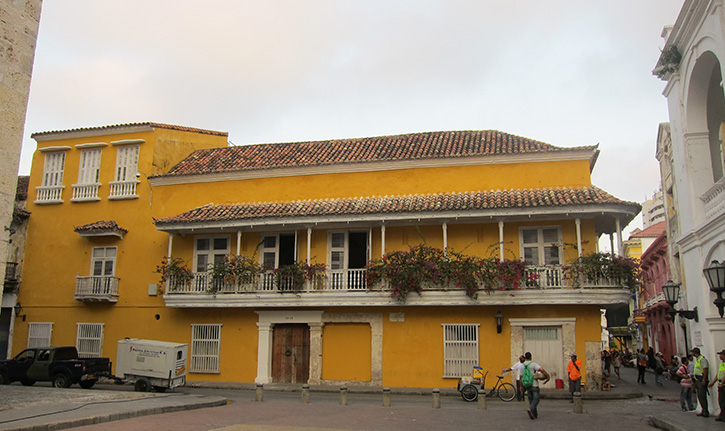
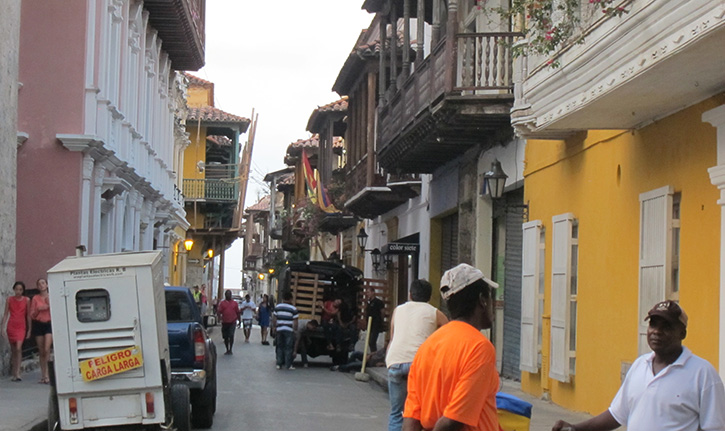
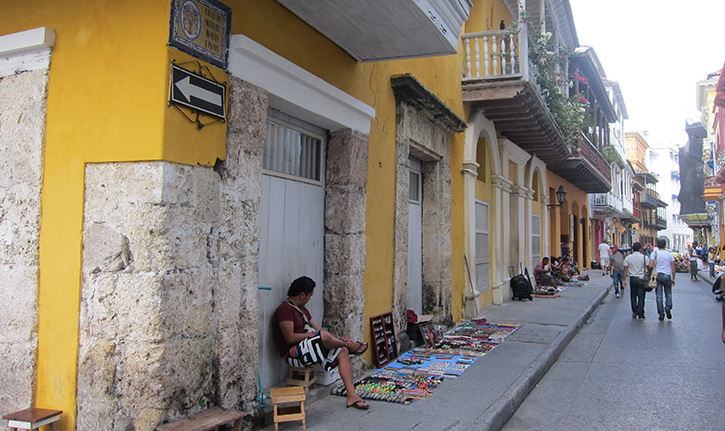
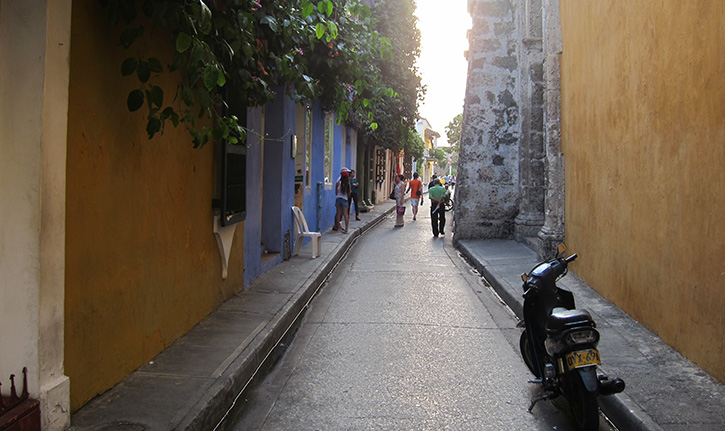
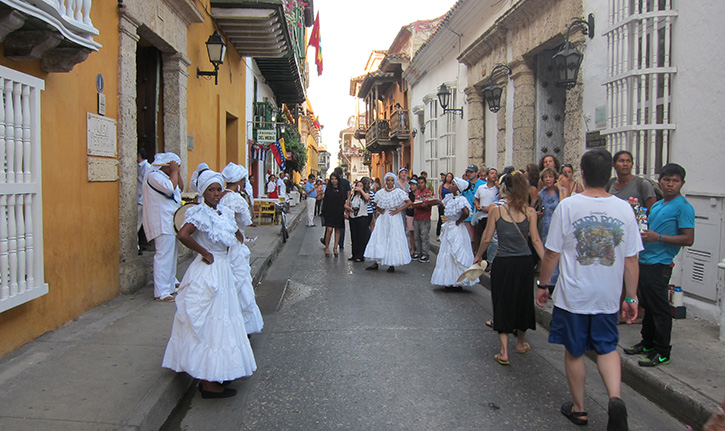
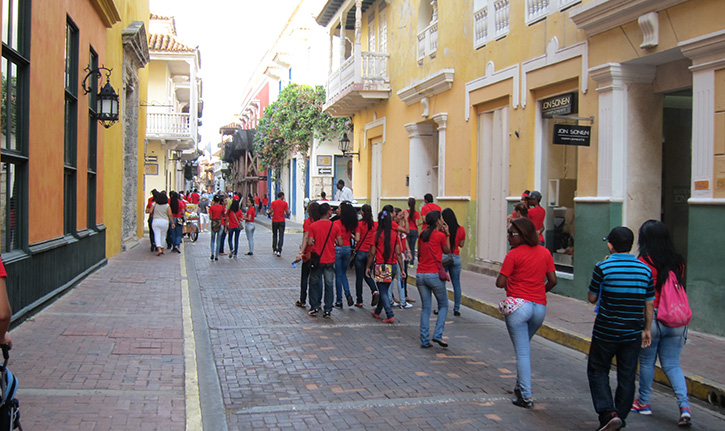
Afterwards, I wandered around the old city, the interior of the city walls. Here are the streets of Cartagena:
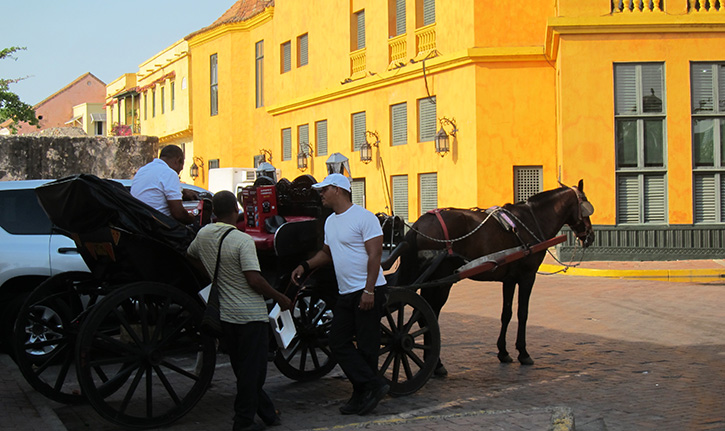
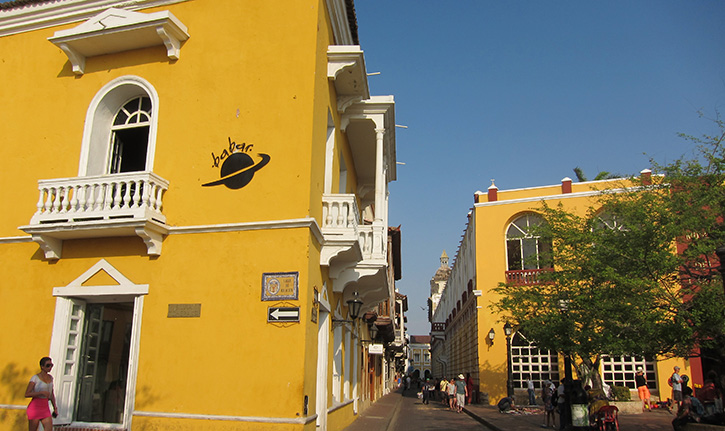
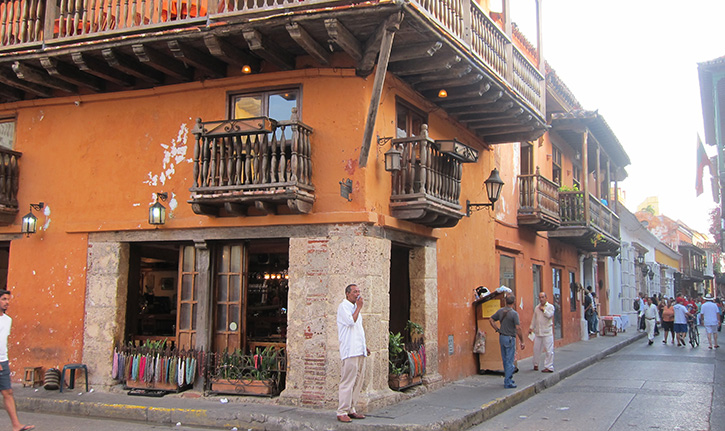
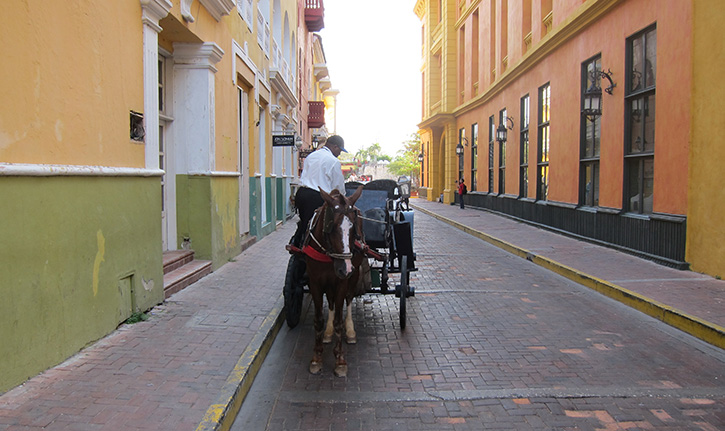
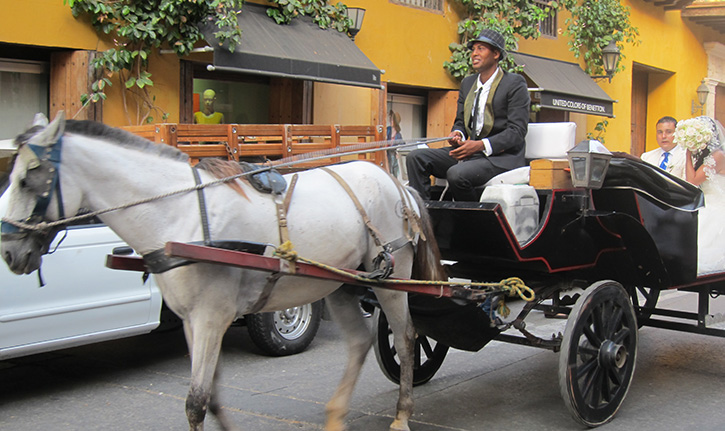
Before dinner, I attended a cocktail event hosted by the Pastrana family, who were organizing the wedding. It was a lively gathering with guests from many different countries. After the cocktail, I joined the Vélez Benedetti family for dinner. We first went to Café Del Mar—which was a true nostalgic moment for me. Then we took a carriage ride to a Colombian restaurant located within the old city walls. As I enjoyed the flavors of Latin cuisine, I observed the closeness of this wonderful family, how much they cherished being together, and the strong values they shared.
The next day, Ernesto from the Vélez Benedetti family took me to another typical Latin restaurant. This time it was in a different part of the city, where we had seafood soup, shark, traditional Latin rice, and plátano (a type of banana called “plantain” in English. Unlike the sweet bananas we’re used to, plantains are starchy and bitter, so Latin Americans fry them and eat them like potato chips. In Latin America, they even refer to the sweet banana as the “female” banana and the bitter one as the “male” banana). Here are some photos from the restaurant:
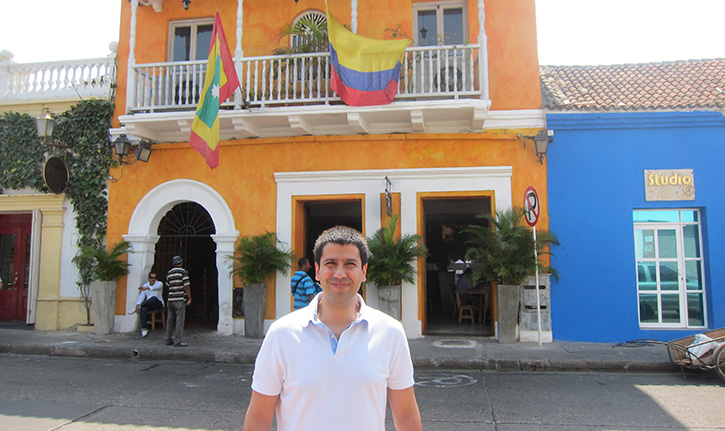
Picture I took at the restaurant entrance
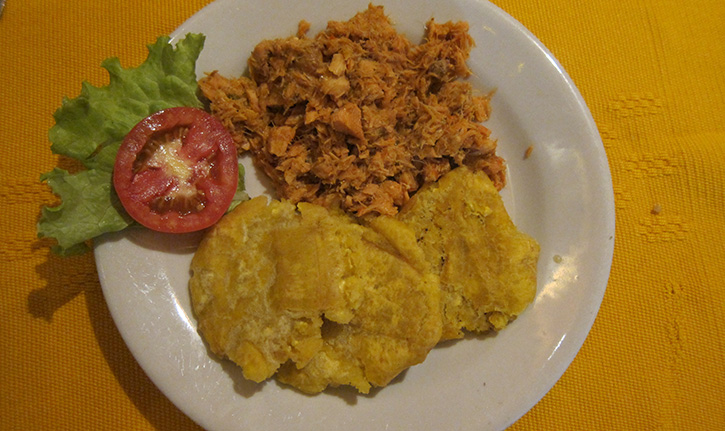
Shark (as you can see, it looks like canned tuna, but tastes different) and platano (tastes like potato chips; delicious)
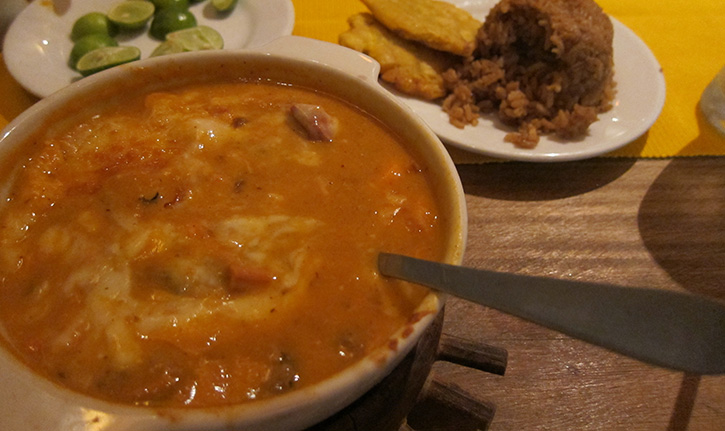
Seafood soup, Latin American-style rice, and platano
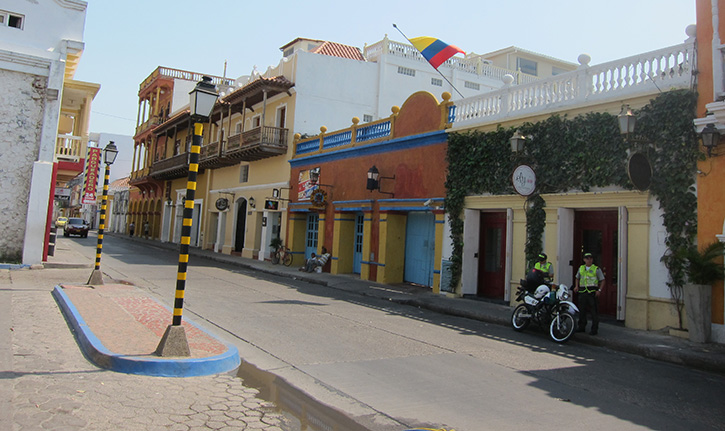
The street where the restaurant is located
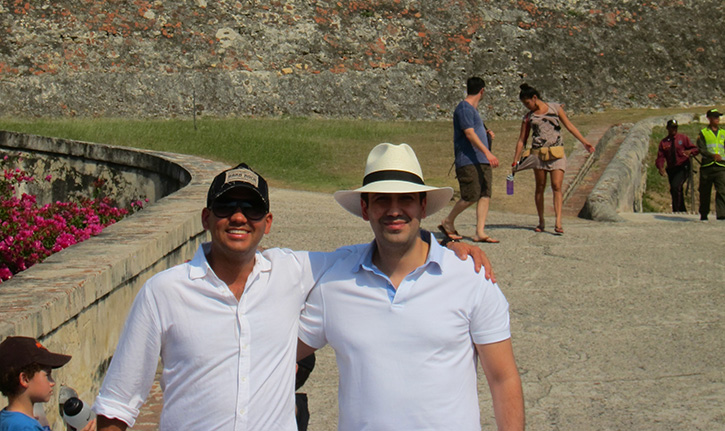
After lunch, we took Ernesto’s wife, Violetta, her son, and one of his son’s friends to San Felipe de Barajas Castle. This castle holds great significance for Cartagena. Perched on a hill in San Lázaro, San Felipe de Barajas Castle, with its strategic location, offers a commanding view of the city from both sea and land. The castle was built by the Spanish in 1536, during the colonial period. In 1984, UNESCO added San Felipe de Barajas Castle, along with the historic center of Cartagena, to the World Heritage List. Since 1990, the castle has served as a venue for various official social and cultural events, including hosting foreign delegations from the Colombian government, presidential summits, and ministerial meetings. The castle is also open to tourists. Here are some photos from my visit to San Felipe de Barajas Castle:
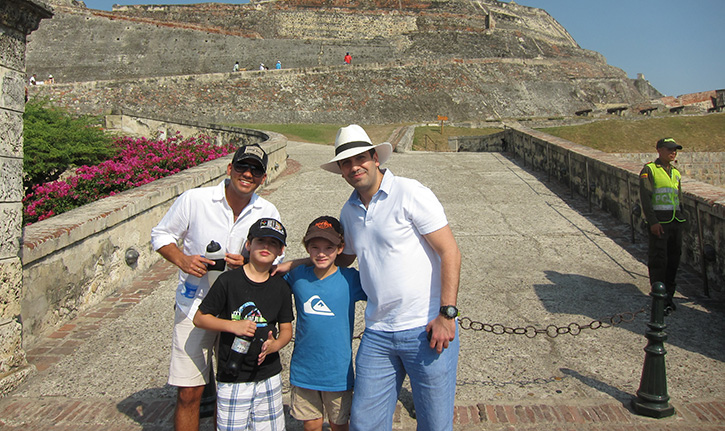
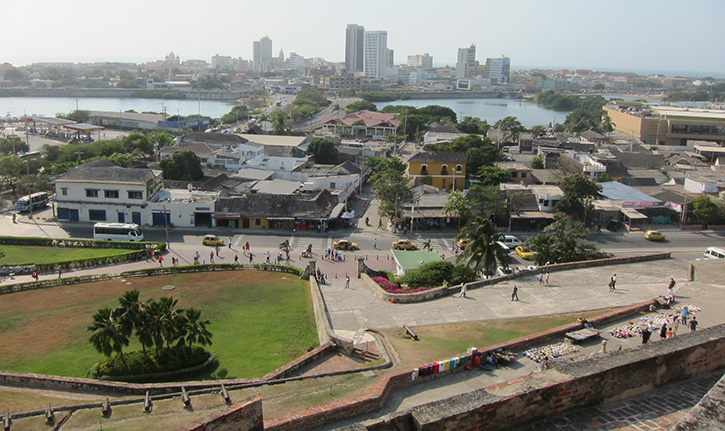
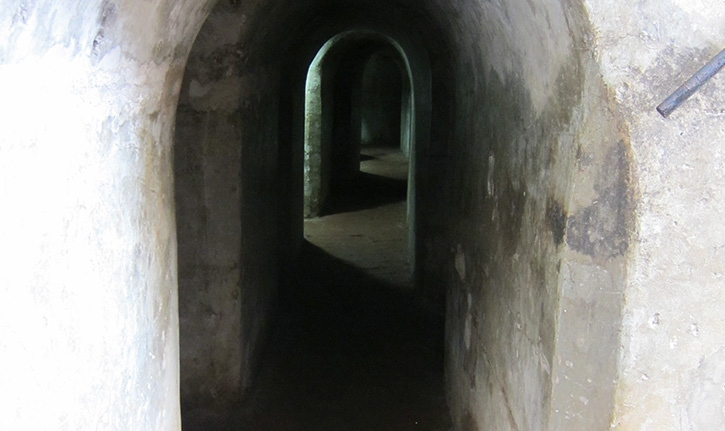
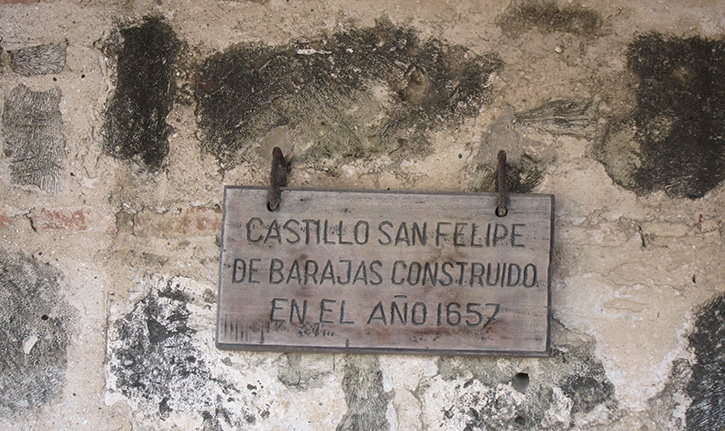
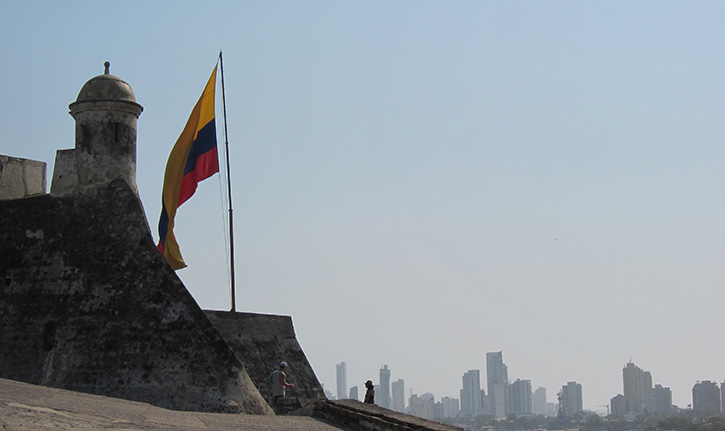
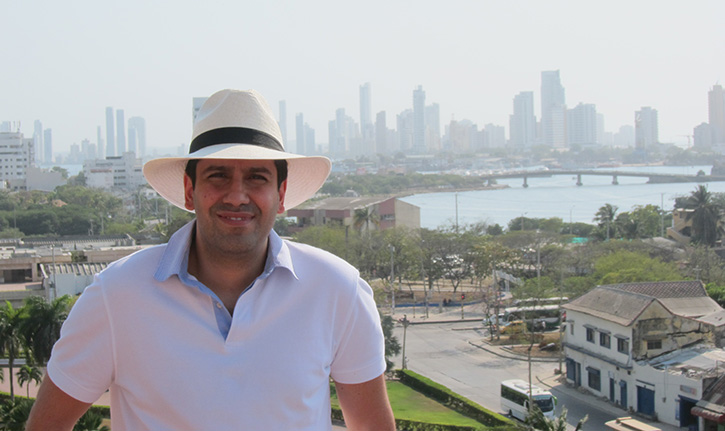
After visiting the castle, I took the following pictures on our way back to the hotel:
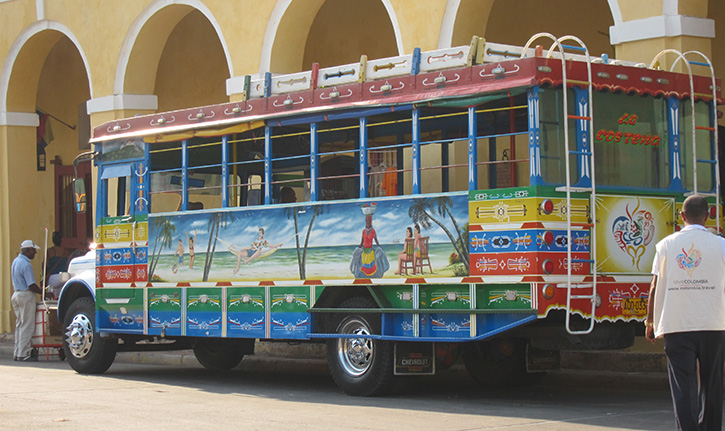
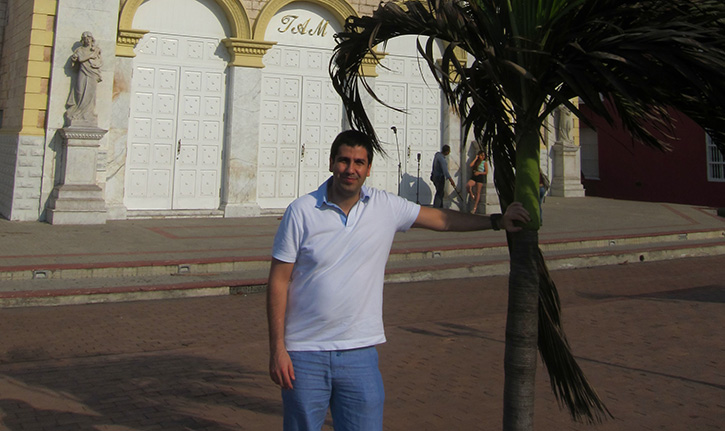
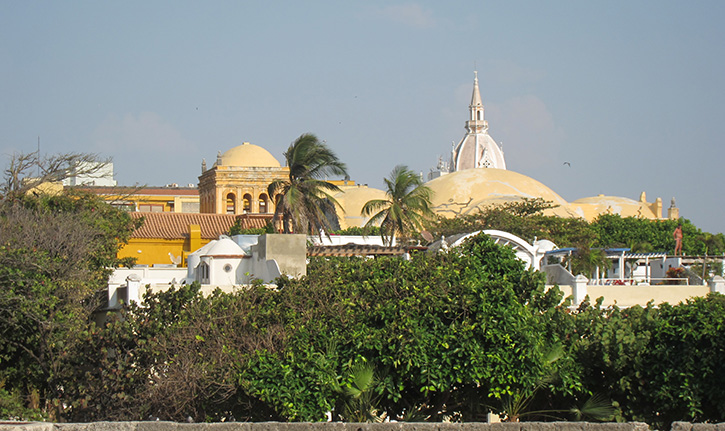
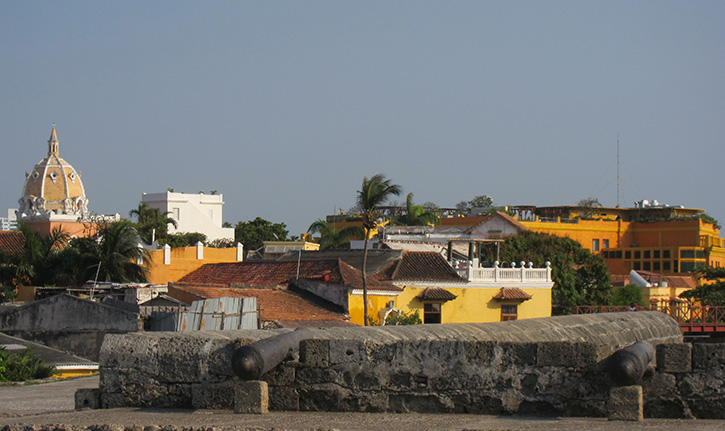
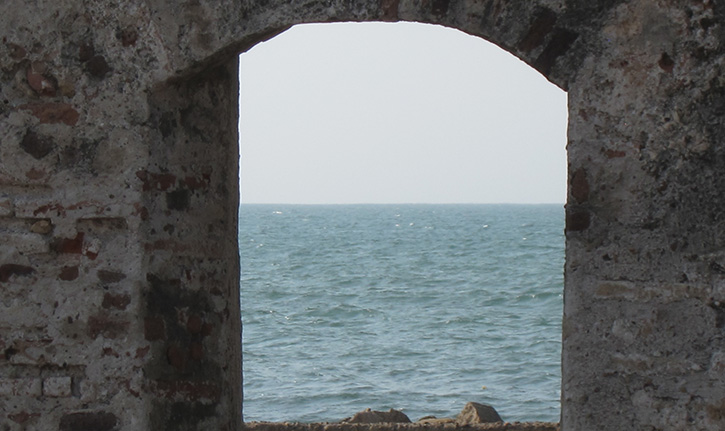
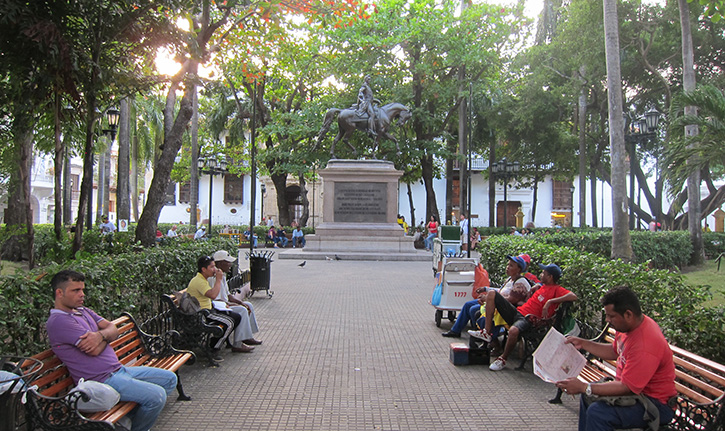
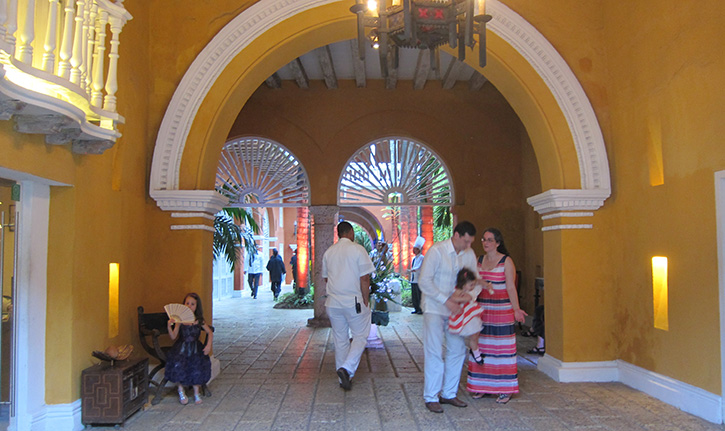
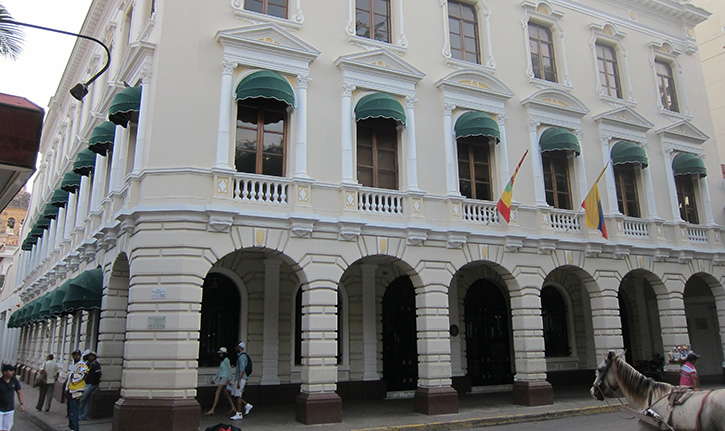
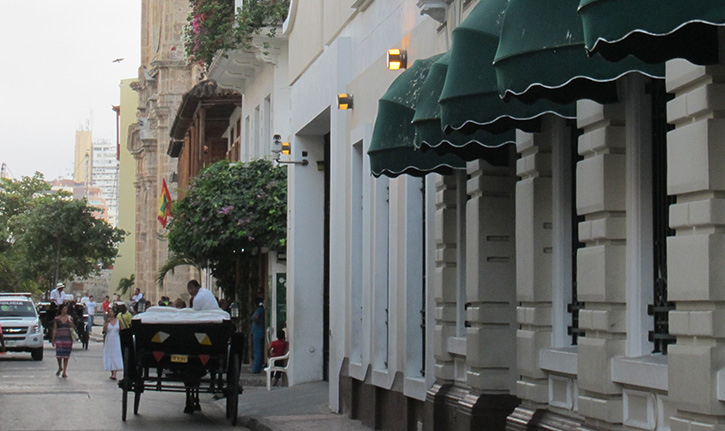
After returning to the hotel, there was still time until the wedding. I decided to wander around the city walls a bit more and took the following pictures:
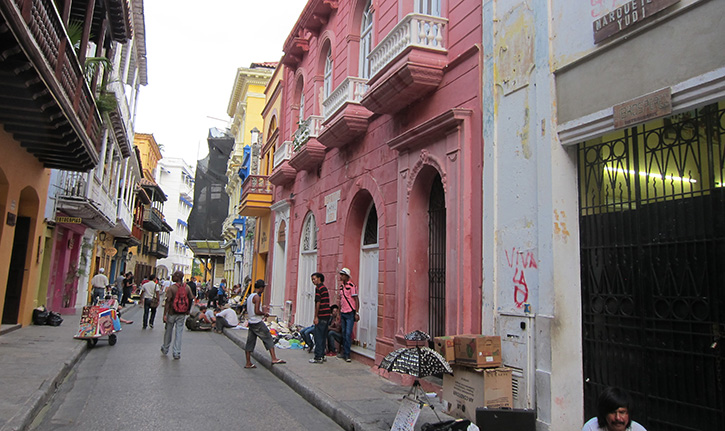
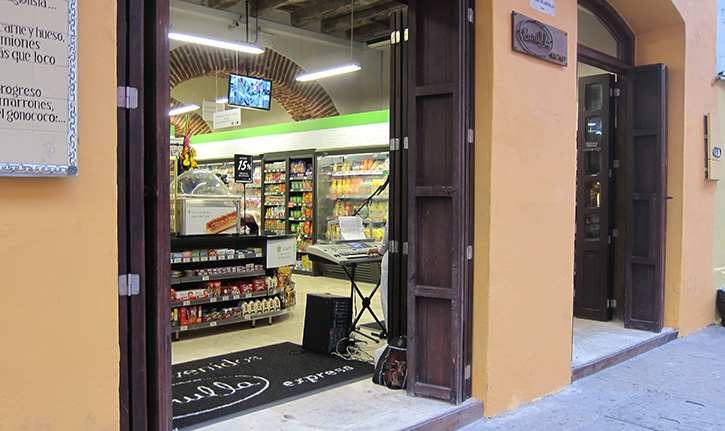
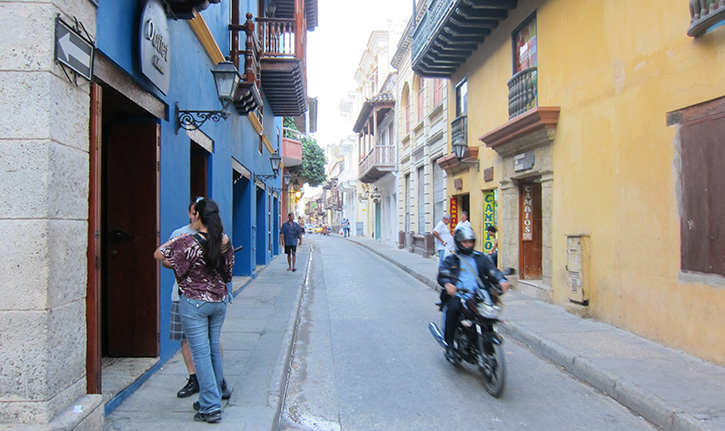
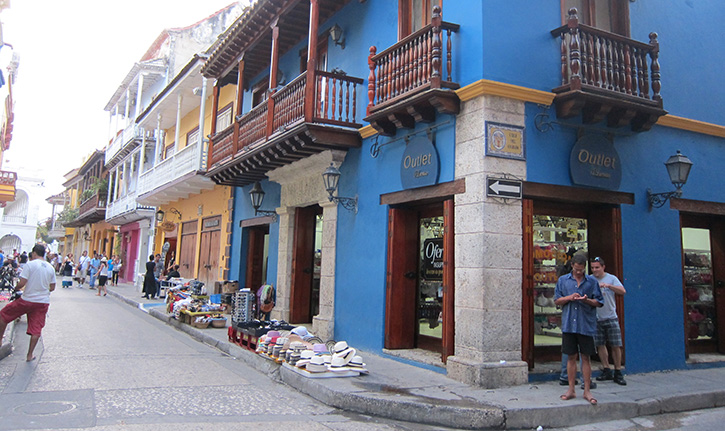
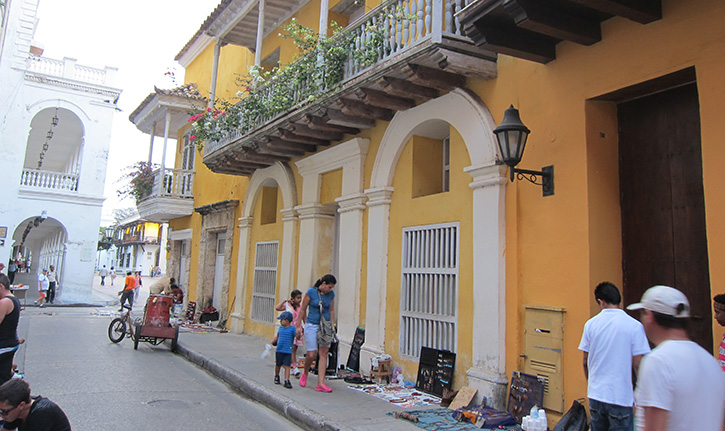
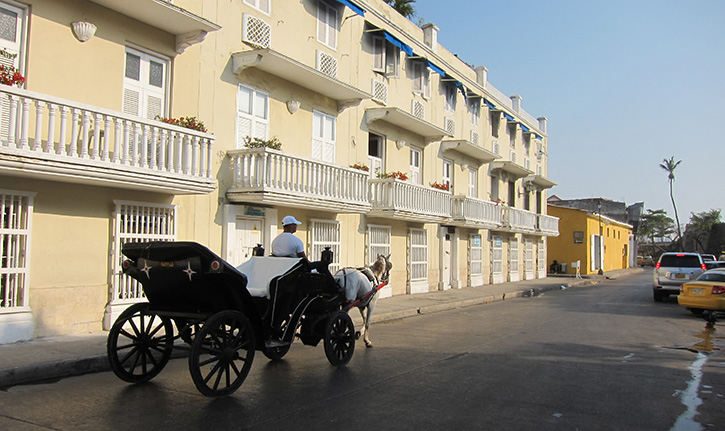
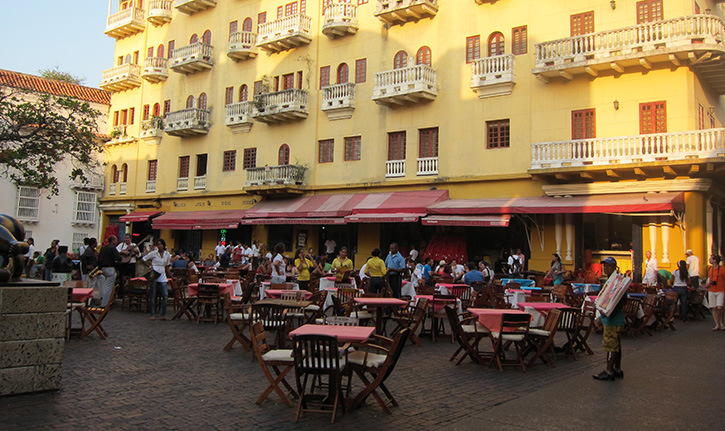
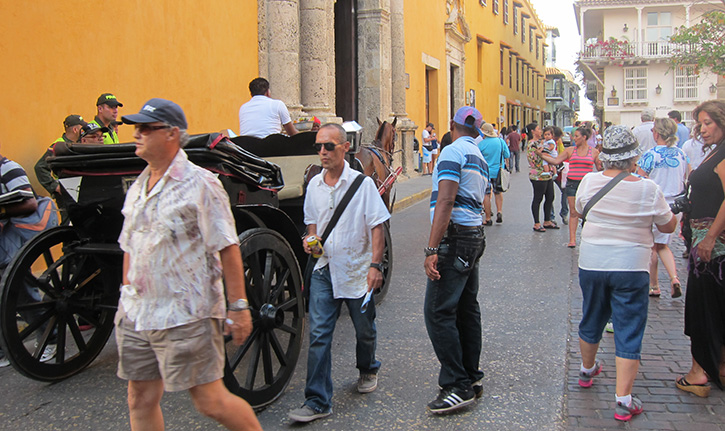
Have you ever seen a supermarket with live music? Here’s a video of one from Cartagena:
https://www.youtube.com/watch?v=CPH5U2RQxHo
I would also like to share the videos I shot on the streets of Cartagena to give you a better idea:
https://www.youtube.com/watch?v=-tu6onZ9kfw
https://www.youtube.com/watch?v=64irgd3namA
https://www.youtube.com/watch?v=Su59SYRKLAs
I arrived at my hotel two hours before the church ceremony was to begin. After getting ready, I went down to the lobby. When I saw Santiago, I went over to him. After a brief chat, we took the following photo an hour before the wedding ceremony:
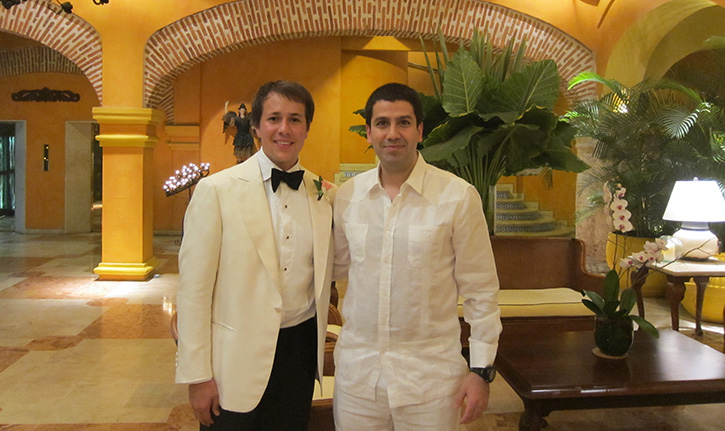
Afterward, we went to the church in the Pastrana family’s minivan. The atmosphere inside was beautiful, and the orchestra positioned in the corner completed the mystical atmosphere. After waiting for half an hour, first the groom and then the bride entered, accompanied by their families. Here’s the beginning of the ceremony:
https://www.youtube.com/watch?v=3Rrkt48l-Eo
After the church ceremony and the wedding, it was time to party. Dinner, held in another stunning setting atop the city walls, gave way to a night of partying that lasted until the crack of dawn. At the beginning of the party, here’s a short video I took with my charming friend Santiago and his wife Sabina, who I think are a perfect match (we actually wanted to take a photo, but I ended up taking a painting-like video instead):
https://www.youtube.com/watch?v=oYH9x92t3ew
Just as everyone at our weddings throws themselves onto the dance floor after dinner, dancing and belly dancing, Colombians, like other Latinos, throw themselves onto the dance floor and perform Latin dances like salsa and merengue with all their might. This time, Latin Americans showcased their mastery of dancing, having fun, and enjoying the moment. The atmosphere was magnificent. The music was fantastic. Latinos, ranking among the top in the global happiness index, proved once again that this wasn’t a coincidence. There was no trace of our heavier, swaggering, or constantly judging others. Everyone there, unconcerned about what others might think, was simply enjoying the moment. Including me…
The next day, it was time to return. I was sad. I landed in New York from Bogota. While I was getting my boarding pass at Turkish Airlines, a big man came up from behind, put his arm in front of me, and said to the officer about to hand me my boarding pass, “Hush, look at me. Do you speak Turkish?” He then placed his green passport on the counter. The officer, surprised, said, “Yes, I know.” Then he said, “This woman doesn’t understand what we’re saying, she doesn’t speak Turkish. Tell her what’s wrong with her.” Up until that moment, with the Latin music from the night before still lingering in my head and in a perfectly cheerful mood, I put aside my Latin American identities in 30 seconds, transformed into a true Anatolian young man, glared at him, and said, “I’m processing my boarding pass right now. Whatever you have to say, get in line, and say it when your turn comes.” The man frowned and was about to say something unkind to me (I was on guard, by the way), when the officer handling my check-in intervened, called out to his supervisor outside, and got him to step in. Then, saying, “Excuse me,” he handed me my boarding pass. After thanking the official, who I understood to be of Azerbaijani origin, I left. This incident brought me back to my senses. I was on my way back home…
Tag: memoir