
Jennifer Muirhead, 17 August 2012
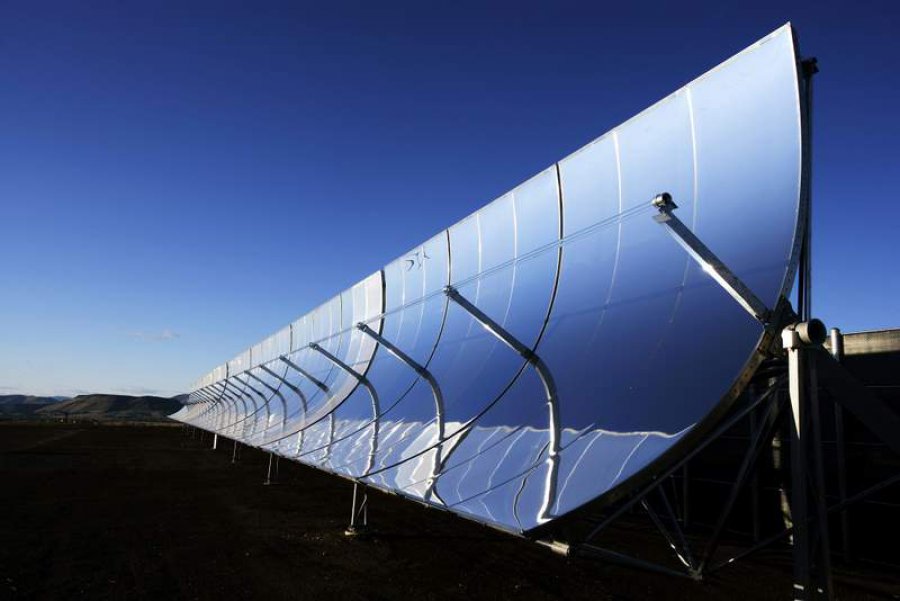
An Istanbul-based company, Hitit Solar, has developed the world’s first parabolic dish system proven to be capable of direct steam generation.
CSP Today spoke with Serhan Süzer, CEO of Hitit Solar Energy, about how this technology can help balance CSP costs and the future of the CSP industry.
CSP Today: With so many other CSP technologies available, why did you focus your R&D efforts on parabolic dishes?
Our research showed us that parabolic structures offer higher efficiency and better cost-to-performance ratios compared to other CSP technologies like tower and Fresnel systems. In tower plants, for example, the large distance—often hundreds of meters—between heliostats (mirror panels) and the receiver at the top of the tower significantly reduces the concentration of sunlight.
While many linear Fresnel systems reduce this distance to around 15 meters, it’s only six meters with parabolic dish systems. Moreover, Fresnel systems can only operate at full capacity for a few hours around midday. Before and after that, as the angles of reflected sunlight change rapidly, system efficiency drops sharply.
Another issue is that both solar tower and linear Fresnel technologies lack vacuum insulation around their heat receivers, which leads to significant heat loss to the atmosphere. Parabolic dish technologies, however, utilize high-vacuum insulation around their receivers, greatly reducing heat loss.
CSP Today: What are the challenges with parabolic dish systems, and how have you addressed them?
One of the first major hurdles we faced was the limitation posed by the Heat Transfer Fluid (HTF) used in Direct Steam Generation (DSG). DSG is a major step toward increasing CSP efficiency and was one of the EU’s key targets for 2020. However, in all existing parabolic dish designs, the receivers move while tracking the sun, requiring flexible hoses to connect to stationary piping systems on the ground. Later, ball joint connectors were developed as alternatives, but neither solution is suitable for high-temperature steam generation (over 500°C).
This is why parabolic dishes have typically been used with secondary systems involving bulky heat exchangers, which reduce efficiency.
We redesigned the parabolic structure so that the heat receivers are stationary, and all pipe connections are welded or flanged—completely eliminating the barriers to direct steam generation. This is our most important patent to date.
Furthermore, our new parabolic design allows a 48 x 6-meter dish to track the sun using a small 0.25 HP DC electric motor, ensuring continuous and precise solar tracking.
Another issue we encountered with existing designs was the heat receivers themselves. We didn’t want to use glass-to-metal seals to maintain the vacuum, so we redesigned the heat receivers in a way that eliminated the need for these seals. As a result, we can now extend the vacuum chambers to hundreds of meters while maintaining the required vacuum level.
To further reduce costs, we replaced the expensive custom-made curved glass mirror panels with 1.5 mm thin flat glass strips precisely bonded onto the parabolic aluminum surface. These are not only cheaper than thick curved glass panels but also strong enough to withstand strong winds—and even the weight of an adult walking on them.
CSP Today: What are some of Hitit Solar Energy’s key milestones and achievements so far?
One major milestone for us was signing an agreement with SolarTAC. As you know, SolarTAC is managed by MRI Global, a U.S. Department of Energy (DOE) company, and hosts several technology providers who showcase their innovations. We’re a new player in this industry and ready to showcase our technology.
We’re also in discussions with numerous potential clients in the U.S. and Türkiye for both small- and large-scale projects. We hope to bring some of these projects to life this year.
Additionally, I’d like to highlight our flexibility when it comes to local production requirement in many emerging markets. We have a structure that allows us to work with suppliers all around the world. If necessary, we can manufacture 100% of our collectors, except for the heat receivers, in any country that has a glass and metal industry. This means we can create jobs and support local economies wherever we operate.
CSP Today: Considering your experience and involvement in CSP, what’s your general outlook for the future of the industry?
I believe the industry should initially focus on hybrid systems. This will allow those in the broader energy sector (including conventional power) to become familiar with CSP while solving some of their problems—and enable us to secure short-term contracts.
You can think of it like the rollout of hybrid cars before fully electric vehicles hit the market. The auto industry made a smart move by first introducing hybrids, which gave potential customers a feel for electric driving. Nowadays, the market is ready to embrace electric—and even solar-powered—cars, and manufacturers are ready to supply them. We should follow the same strategy. We need to implement many hybrid projects first, so the market becomes familiar with our technologies. Then, many investors around the world will be willing to fund large-scale CSP-only projects because they’ll have confidence in the technology.
Beyond that, we need to raise global awareness about CSP technologies. When you talk to the average person on the street about solar energy, they still think only of photovoltaic (PV) systems. That needs to change. We must improve our communications, so people understand that solar energy isn’t limited to rooftop panels.
We believe CSP will play a key role in replacing today’s fossil fuel-based energy infrastructure. The solar thermal model on which CSP is based offers major technical advantages over other renewables like PV and wind. For instance, solar thermal systems use far more efficient energy storage to avoid production fluctuations that often plague PV and wind. These heat storage systems allow for 24/7 electricity generation and are much more efficient than the battery-based storage required for PV and wind farms.
Tag: energy