
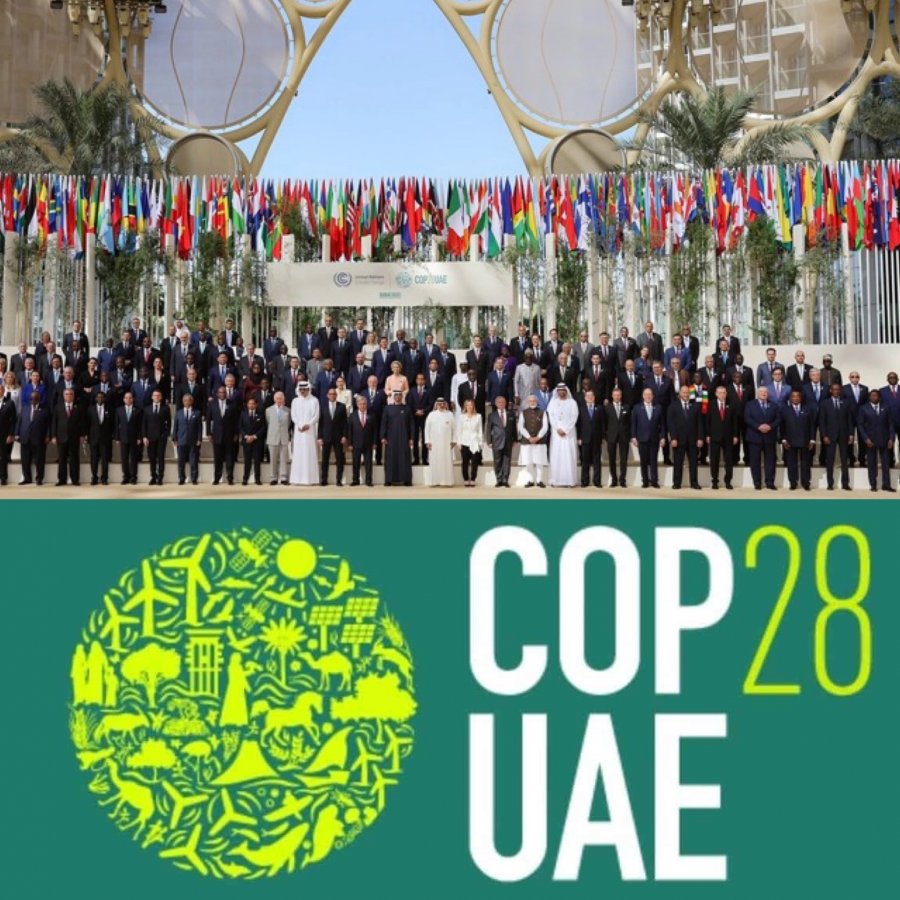
I follow the COP summits closely due to my job. For those unfamiliar, the COP Summit, which stands for “Conference of the Parties,” is an international climate conference held annually by the United Nations. We’re talking about a high-level gathering held at the end of each year, where year-long negotiations are translated into concrete goals. In addition to governments, civil society organizations and the business world are also welcome to participate in COP meetings and negotiations (with certain limitations).
Speaking of COP summits, let me re-share the link to the article I wrote for the 26th summit held in Scotland as a reminder:
https://www.serhansuzer.com/tr/cop26-zirvesi-ve-gelecegimize-dair-dusundurdukleri
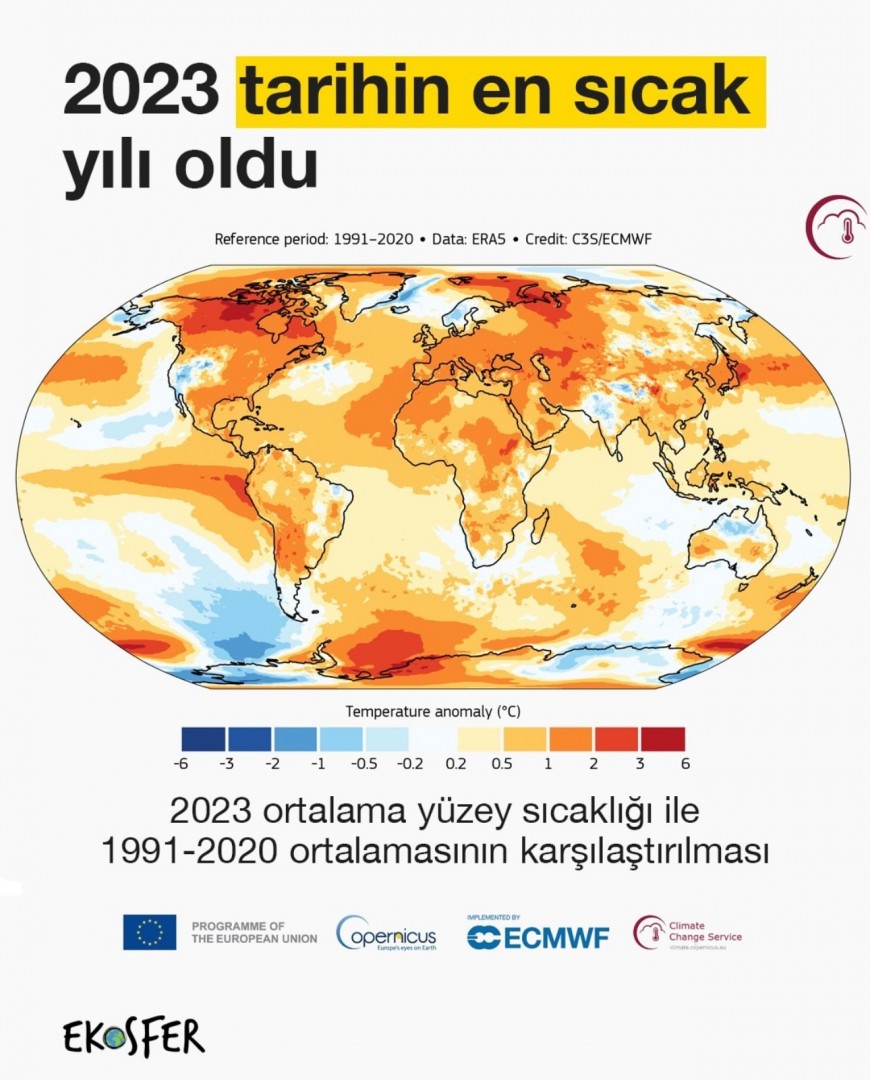
2023 is the hottest year in history!
Now, we’re feeling the effects of the climate crisis more and more. Announcements of consecutive hottest years on record have begun to arrive. According to Ekosfer, the EU Copernicus Climate Change Agency announced that 2023 was the hottest year on record, surpassing 2016.
The worst news is that the average temperature in 2023 exceeded the average temperature of the pre-industrial era between 1850 and 1900 by 1.48 degrees Celsius. The world’s hottest year also deeply affected the European continent, which includes Turkey.
- Temperatures were above average in Europe for 11 out of 12 months, and September was the warmest September on record.
- Heavy rainfall caused floods and inundations across the continent.
- The winter between December 2022 – January 2023 was the second warmest winter on record in Europe.
- The autumn between September 2023 – November 2023 was also the second warmest autumn on record in Europe.
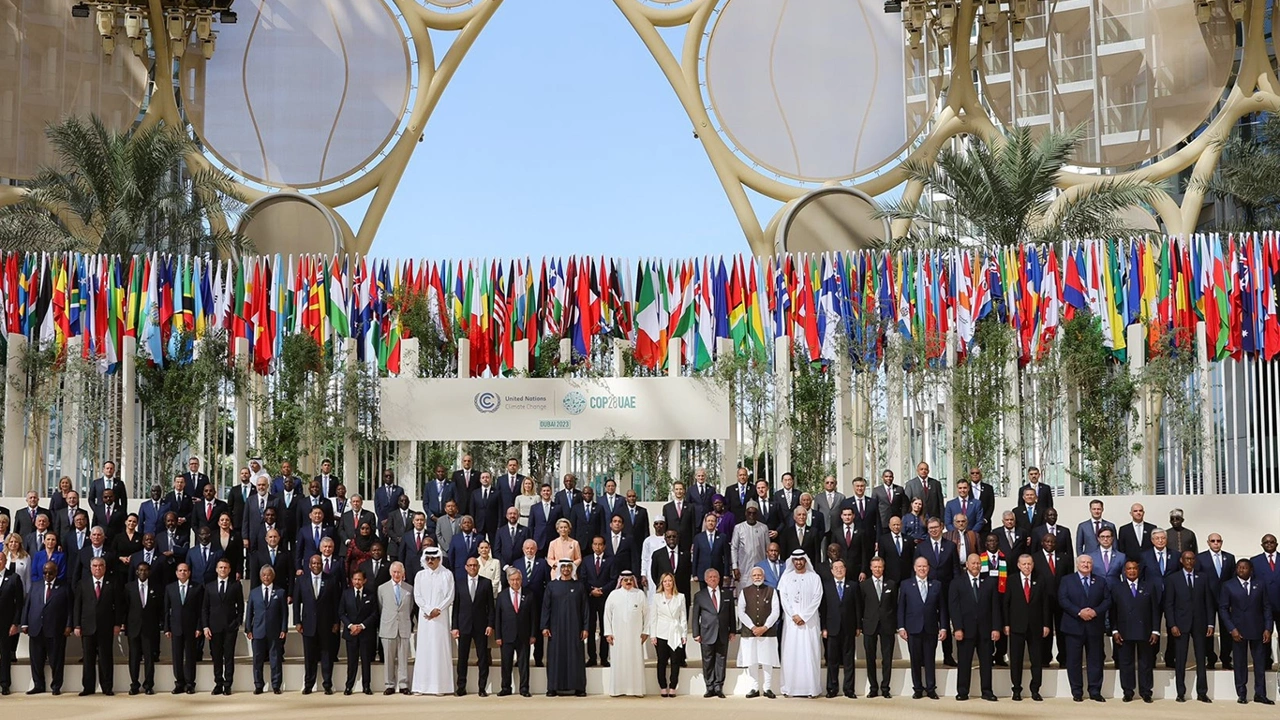
As the atmosphere heats up and the climate crisis deepens, let’s analyze what happened at the COP summits organized to find solutions to this potentially devastating problem for humanity. Since I wasn’t present at the most recent COP summit, held in Dubai, United Arab Emirates, for the 28th time, I’ll share my opinion based on two excellent articles I read. I’d like to share these articles and their summaries with you.
Thoughts from the PV Tech article
First, let’s consider the article published in PV Tech, a solar energy publication. I’m sharing a summary of this article, which you can read at https://www.pv-tech.org/cop28-solar-industry-welcomes-final-outcome-but-says-text-leaves-too-many-backdoors-open-for-fossil-fuels/ , below:
World leaders reached a final decision at the COP28 summit in Dubai, calling for a global effort to triple renewable energy capacity and transition away from fossil fuels. The solar industry welcomed the new renewable energy target, but the Global Solar Council warned that the specific section on fossil fuels leaves “too many backdoors” for countries to decarbonize sufficiently.
So, what we understand from this is that countries that derive their primary income from fossil fuels want to manage the transition to renewable energy under their own control. While raising their renewable energy targets, they also don’t want to give up the advantage of fossil fuels continuing to be used as an energy source.
Business models must change
As I’ve stated repeatedly on my blog, they need to shift their business models to ‘reinforce renewable energy as the sole energy source and the use of fossil fuels as raw materials.’ Unfortunately, no one has any intention of doing this. They’re trying to secure their easy-earned income by implementing a controlled transition to renewable energy.
Of course, the article also touches on the positive aspects of COP 28: The Council’s statement stated, “A few years ago, a global renewable energy target would have been unthinkable.” “In a country that has historically been an oil and gas country, the inclusion of a three-fold target in the final COP text is a clear signal that renewable energy sources are in play and fossil fuels are out.”
In addition to this article, I also came across an article on Ekosfer that addresses similar nuances, which you can read at https://ekosfer.org/cop-28-muzakereler-iklim-degisikliginin-hizina-yetisemiyor/ In addition to the points mentioned above, I summarize what was written in Ekosphere below:

What happened in Dubai?
The COP 28 meeting, which sought to secure the planet’s future, began with high hopes, like previous conferences, and ended in disappointment. One of the greatest expectations leading up to the meeting was a clear decision to phase out the use of fossil fuels like oil, coal, and gas, which contribute to the climate crisis. The Global Stocktake, which reviews the Paris Agreement’s goal of keeping global surface temperature below 1.5 degrees° C., or at least 2 ° C., and outlines the necessary steps, was the document we expected to include in this decision. The text only called for a “phase away from fossil fuels.” The failure to take concrete action on the transition from fossil fuels in 28 years of meetings has once again demonstrated the slow pace of negotiations.
Scientific data clearly indicates that we must abandon the use of fossil fuels. There have been decisions made to reduce greenhouse gas emissions, particularly the Kyoto Protocol, and fossil fuels are known to be the primary source of these emissions. Ekosfer finds this outcome, which included a call for a fossil fuel phaseout at the 28th COP meeting that lacked a date, sanctions, or finality, inadequate.
Some of the official decisions taken
Some of the other decisions taken during the official discussions at COP 28 are as follows:
- Accelerate efforts to phase out the use of unmitigated coal (that has not undergone carbon capture and sinking).
- Triple global renewable energy capacity by 2030 and double the annual average of energy efficiency improvements.
- Accelerate efforts to achieve the global net-zero emissions target by implementing zero- and low-carbon fuels by 2050 and before.
Let us remind you that most of these decisions were written as recommendations in the Global Stocktake text.
Let us remember our goal.
Let us also remind you, with numbers, how clear science is about what we should do. Before COP 28 begins, as announced by the United Nations Intergovernmental Panel on Climate Change on 14 November 2023, we must reduce global greenhouse gas emissions by 43% below 2019 levels by 2030. Failure to do so could result in a loss of our chance to keep temperature rise below 1.5° C. We have seven years and a difficult target to achieve. While technically feasible, current political decisions, coupled with the delay in phasing out fossil fuels, particularly coal, are taking us off the path indicated by science.
What is Turkey doing?
Turkey recently updated the Nationally Determined Contributions Declaration it announced upon signing the Paris Agreement and shared its 2030 target with the public. According to the announced target, Turkey aims to keep greenhouse gas emissions below 695 million tons by 2030 and expects emissions to peak in 2038. In 2021, Turkey’s emissions reached 564.4 million tons, a 7.7% increase compared to the previous year.
As can be seen, Turkey has not yet set an emissions reduction target; instead, it has announced a target to increase emissions from 564 million tons to no more than 695 million tons. To meet this target, we must limit emissions growth to 130 million tons over the next nine years (data is two years behind). Is this possible? According to our calculations, even at a 5% annual increase, reaching the target specified in the Nationally Determined Contributions (NDC) is unlikely. Turkey’s emissions are projected to reach 875 million tons (on track) by 2030.
Turkey, attending the COP 28 meeting under these circumstances, offered no indication of updating its targets at the conference. We observed that Turkey has initiated initiatives to utilize the Loss and Damage Fund and the Green Climate Fund. Due to Turkey’s status in the climate negotiations, it appears unlikely that it will benefit from these funds, and long-standing insistence on this issue has yet to yield results.
What needs to be done for the COP summits to achieve their goals?
For the COP summits to achieve their goals, it’s necessary to ensure that renewable energy is recognized as the sole energy source and that fossil fuels are used as raw materials. The goal here is to reach 100%, meaning 100% renewable energy for energy needs, and fossil fuels are used entirely as raw materials and recycled.
Accordingly, at each COP summit, increasingly stringent commitments should be made and a year-long review of what has been accomplished should be undertaken. I believe that, with the will of the state, reaching 100% energy transition is achievable by 2030. However, countries may delay this deadline even further depending on their own dynamics. However, in my opinion, we shouldn’t go beyond 2035 to get things right. Let’s not forget that every lost year reflects on future generations as a compounding and worsening climate crisis. Therefore, I would like to reiterate the urgency of this matter by saying, “We should have started this transformation yesterday.” I would also like to share my views on what needs to be done to ensure that COP summits proceed in this environment:
Countries with significant influence in the UN, such as the US, EU, Russia, and China, need to put more pressure on fossil fuel exporters like oil and natural gas and demand that they accelerate change.
COP summits should be organized by the NGO(s) of the country where the summit is held that are prominent in combating the climate crisis. The relevant state could also be involved in this process as a monitor.
Progress has been made in the 28 years of summits, but in my opinion, these progresses are not even a grain of salt, especially in some years. Therefore, it is essential to set minimum targets at every summit and ensure that these targets are met. For example, at the end of a COP summit, the next COP summit is announced, and the goals for the next one can also be announced.
As you will appreciate, the summit being held in the United Arab Emirates at the end of 2023 and in Azerbaijan the following year has drawn significant criticism from fossil fuel lobbies and the countries supporting it. The influence of states and the private sector, which generate revenue from fossil fuels, on the COP summits has once again become a subject of serious criticism. While I partially agree with this, I am not particularly bothered by the fact that summits are held in fossil fuel countries. These countries can sense firsthand the current situation and the need for change and can then organize their next moves accordingly. In other words, it is absolutely necessary to involve these fossil fuel countries. In this respect, these summits could provide them with a different perspective. The key here is to ensure that they experience the serious demand and pressure for energy transformation, even at summits organized in their own countries, and to revise their plans accordingly.
The Carbon Neutrality Target Needs to Be Pushed Forward
After all these recommendations, I’d like to emphasize that I have hopes of achieving a carbon-neutral world within the next 10 years. Carbon neutrality targets need to be pushed back from 2053, 2050, or even 2040, to 2035 at the latest. Meanwhile, I’d like to emphasize that I don’t understand the logic of equating Turkey’s 2053 carbon neutrality target with the conquest of Istanbul. This statement seems absurd to me. Instead of advancing this target, Turkey should be pushing it back. If the state had the will, I believe Turkey could reach its carbon neutrality target within five years.
Bonus: I’d also like to share with you the SKD (Sustainable Development Association)’s assessment of COP 28:
Tag: ecology