Last summer, while on vacation in Bozcaada, I stumbled upon BIFED (Bozcaada International Festival of Ecological Documentary). Luckily, the owner of the hotel where I was staying, Ms. Pınar, introduced me to the festival’s founders and organizers. Through this, I met producer, director, and festival coordinator Ethem Özgüven and his wife, Petra Holzer Özgüven, who is also the festival’s director, in Istanbul. They informed me about the BIFED Ecological Documentary Festival, which they organize primarily in Bozcaada and other similar destinations. You can read more at https://www.bifed.org .
After this meeting, Mr. Ethem invited me to a screening of the documentary he produced and directed, “Singing in Dark Times,” in Kadıköy, Istanbul. I even wrote an article about it. You can read the article at https://www.serhansuzer.com/tr/karanlik-zamanlarda-sarki-soylemek . This documentary tells the story of the Hatay Academy Orchestra, which continued to perform in Antakya after the city was devastated by one of the largest earthquakes in the history of the Republic of Turkey on 6 February 2023. If you haven’t seen it yet, I highly recommend it.
I was invited to the festival.
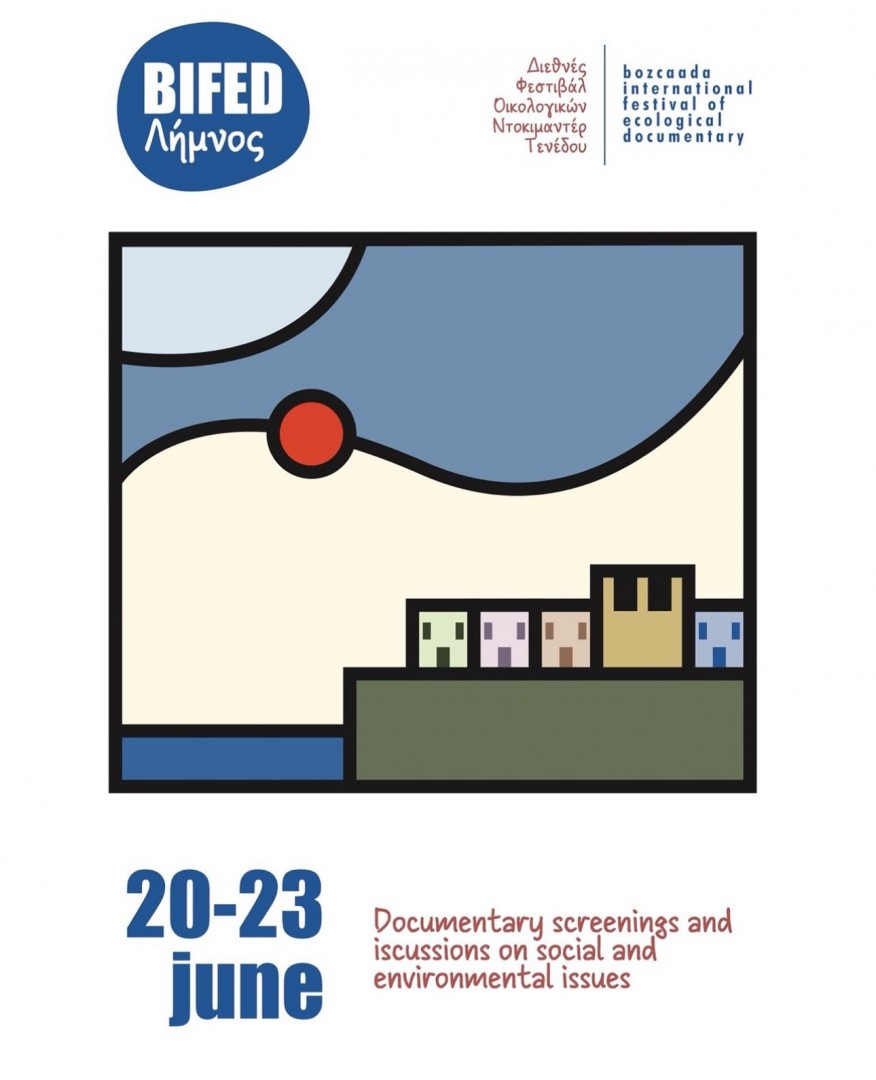
Later, the Özgüven couple, thankfully, invited me to the Ecological Documentary Festival on the Greek island of Lemnos, a neighbor of Bozcaada, as part of their BİFED activities. I was already planning a vacation to Greece, so I added Lemnos to my itinerary. It turned out really well.
Before I tell you about the festival, let me share some information about Lemnos Island, which I really liked for its tranquility and natural beauty (see Wikipedia):
Limni, or Lemnos in Greek, is a Greek island located southwest of Gökçeada, a member of the Northeastern Aegean Greek island group.
The most important settlements are Myrina, which is also the capital in the west of the island; Mudros, where the armistice agreement was signed; Kaspakas, Kandiya (Kodias); and Tigani.
Limni is the 8th largest island in Greece, covering 476 km².
Very attractive, but not overly touristy.
While Lemnos attracts tourists with its climate, simple beauty, magnificent cuisine, slow-paced lifestyle, and friendly people, it isn’t as touristy as other islands in the Southern Aegean. That’s what I liked most about it: it’s not overcrowded. The people are generally respectful of each other, and the nature is beautiful. For example, I loved its tranquil beaches and sea. Meanwhile, let’s get to know the sister islands in the region. Bozbaba (Agios Efstratios), a small island southeast of Lemnos, along with Imvros, Tenedos, and Samothrace (nearby Samothrace), form the Bosphorus Islands. From a Greek perspective, together with Bozbaba and Lesbos, it forms the administrative unit of Lesbos. The administrative center is on Lesbos.
Lemnos has four municipalities and approximately 30 settlements. The main towns are Myrina, on the west coast, and Mudros, on the east coast of the large bay in the center of the island. Myrina (also called “kastro,” meaning “castle”) has a beautiful harbor. It was the center of all trade with the mainland.
The Treaty That Ended the Ottoman Empire
To touch upon the island’s history from our perspective, the island was annexed to the Ottoman Empire in 1456, during the reign of Mehmed the Conqueror. From the 20th century onwards, however, Lemnos hasn’t exactly been auspicious for the Turks. The island’s loss date is 21 October 1912.
The Armistice of Mudros (or the Armistice of Mudros) was signed between the Ottoman Empire and the Allied Powers at the port of Mudros on the island of Lemnos on 30 October 1918.
The Armistice of Mudros is the armistice document signed between the Ottoman Empire and the Allied Powers at the end of World War I. With this agreement, the Ottoman Empire effectively ceased to exist.
The Armistice is significant because it is the first international document defining the borders of the Republic of Turkey, established after the collapse of the Ottoman Empire. We often recall from our reading how we managed to avoid the Armistice of Mudros and attain our current borders with the Treaty of Lausanne.
We watched the Portuguese defeat there.
I can give you this example from my perspective (I’m joking, of course). Turkey’s only defeat at the European Championship was a heavy 3-0 defeat to Portugal. Unfortunately, I watched that match at a cafe near the port of Myrina in Lemnos. There was another table of Turks besides us in the cafe. The Greeks around us smiled as we scored, but out of respect, there was no taunting or teasing. Ultimately, we enjoyed our meal in a pleasant atmosphere while unfortunately witnessing the ridiculous goals conceded by the Turkish national team.
Now, let’s get to my recommendations for Lemnos. Since we went there specifically for the festival, I can’t offer detailed advice. However, I can say this: In general, all the beaches on the island are beautiful and offer a certain standard of service.
I recommend Panthelis Lemnos and Keros Beach, which we also experienced on the island. I also really liked the pizza I had right at the entrance to the town of Atsiki. The shops, pastry shops, and other venues in the town of Myrina are delightful. We also stayed in a town called Varos. There, the pubs and similar venues where local tourists hang out are great for listening to music and enjoying themselves.
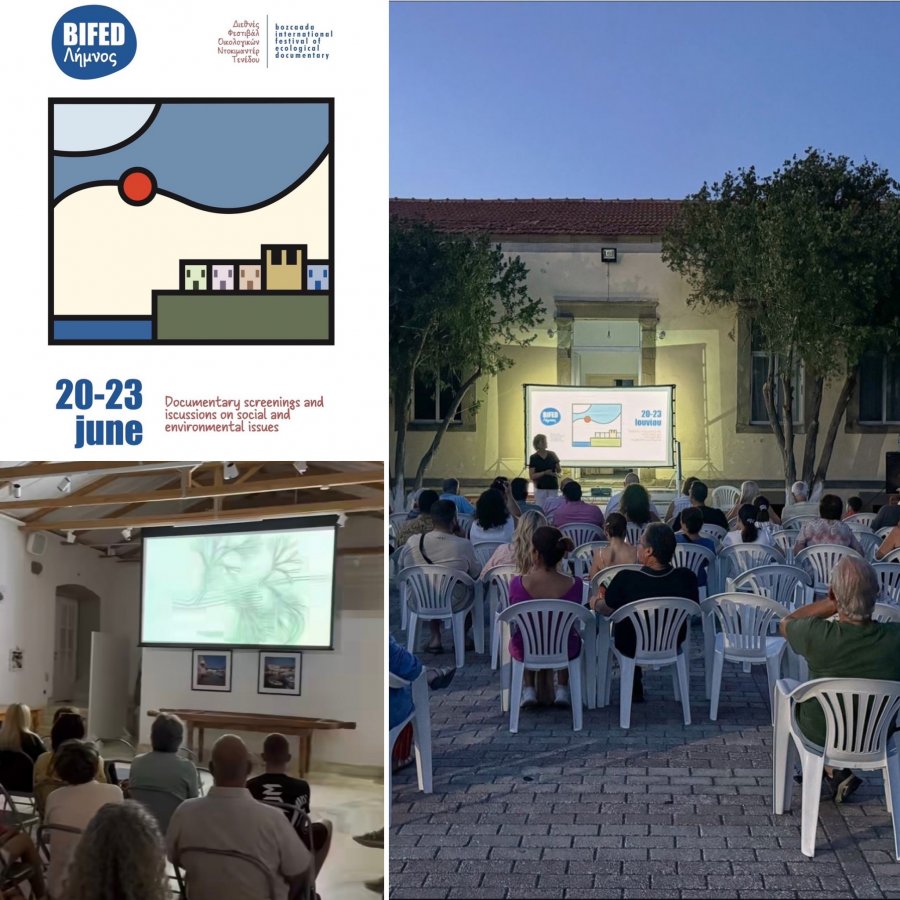
Now, let’s talk about the festival. You can find all the details about the festival at https://lemnos.bifed.org . I’ll also share a summary from this link:
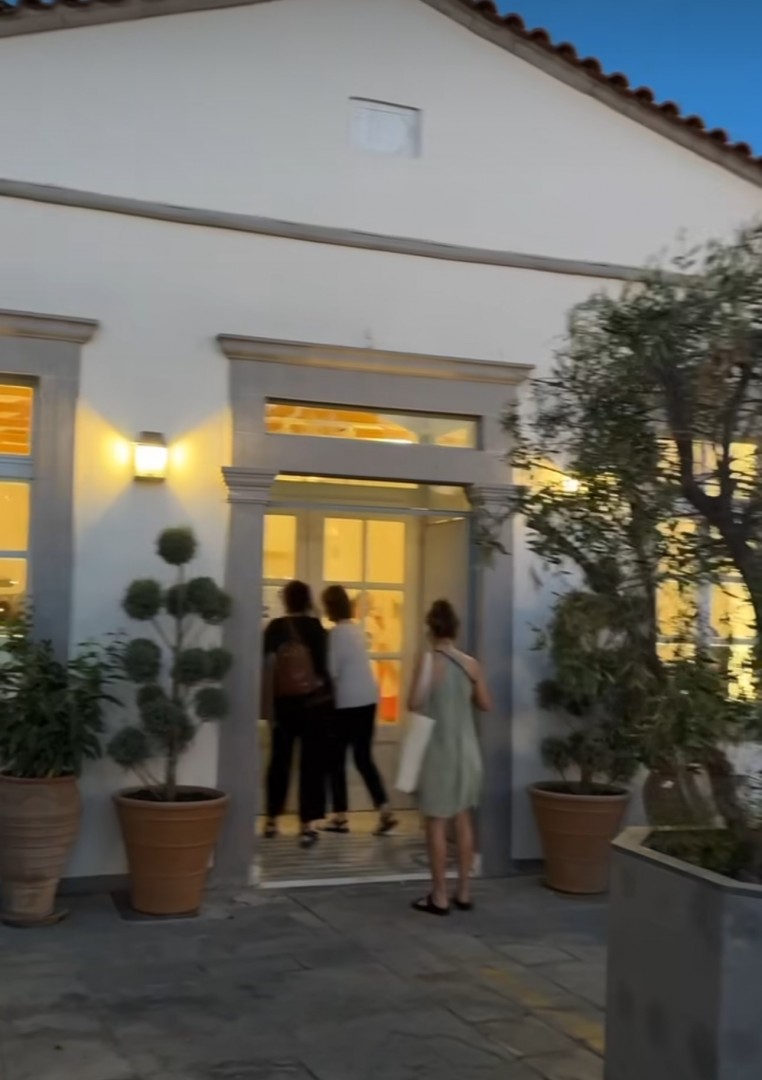
A festival that prioritizes truth
BIFED (Bozcaada International Ecological Documentary Festival) expands its reach to the island of Lemnos, creating a new connection between Bozcaada and Lemnos. The festival will be held on Lemnos for the first time, with events planned for June 2024. BIFED is committed to showcasing films that address real-world ecological issues through original storytelling, prioritizing truth and accurate representation.
The festival aims to draw people’s attention to environmental issues and showcase examples of how things can be changed. By organizing film screenings and discussions, BIFED aims to engage audiences, filmmakers, and advocates to foster meaningful conversations and create positive change. Positive change is the goal.
Following the events that took place in Logroño, Spain, in 2023, and following the collaboration with the future BIFED Berlin and REEF in Lebanon, BIFED on Lemnos aims to bring about change. This new festival will be a way to bring people together, educate, and inspire them to create a better, more sustainable future for all.
After the event in Kadıköy, I received this message about BIFED Lemnos from Petra Hanım: “Following BIFED Rioja, our festival begins in Greece with BIFED Lemnos, after Spain. We hope that this direct bridge we are building through ecology with our Greek friends, with whom we have been collaborating on education and the environment for many years, heralds a promising cultural exchange that will develop in the future.”
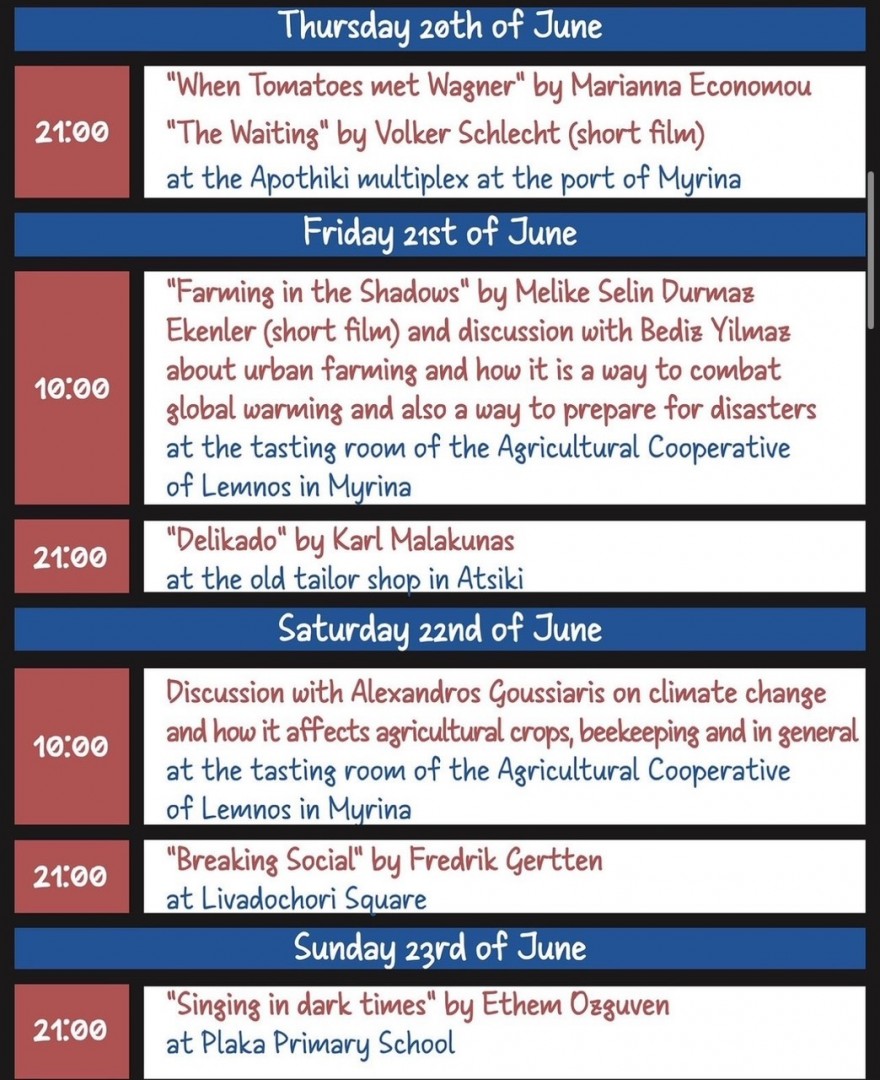
I’m sharing the full program for BIFED Lemnos below:
The Courage of Urban Women Farmers
By the way, due to time constraints, we were unable to attend all the festival events. Because we arrived late at night, we missed the first documentary, “When Tomatoes Met Wagner,” by Marianna Economou, and the short film, “The Waiting,” by Walker Schleht. We were present at the festival from the first morning of the second day. The events we attended were, in order:
1) In the Shadow of Apartments: An Urban Farming Experience (English translation: Farming in the Shadows): The morning we watched this documentary; the atmosphere was very peaceful. With a gentle breeze, we were at the tasting room of a local wine cooperative on a small hill. Directed by Melike Selin Durmaz, this film features hopeful and unwaveringly positive urban women farmers. Bediz Yılmaz, who organized these women and taught them agriculture, also spoke after the screening and took our questions. In the face of Istanbul, a city rapidly becoming engulfed in concrete, everyone, including me, greatly appreciated the fact that Turkish women, despite its dire situation, managed to buck the tide and cultivate the city, putting forth their immense effort. Of course, we must provide all the necessary support to ensure these efforts transcend the mere spark of hope. Sensible urban planning is essential for fundamental solutions to these problems.
A nostalgic open-air documentary
2) Delikado: It was filmed that same evening in the square where the old tailor shop stood in the town of Atsiki on Lemnos (for my Turkish readers, you did not misread this name. Please read the town’s name without considering its Turkish meaning). Projected onto a large screen, the square was transformed into an open-air cinema with makeshift town-style chairs. I loved the atmosphere.
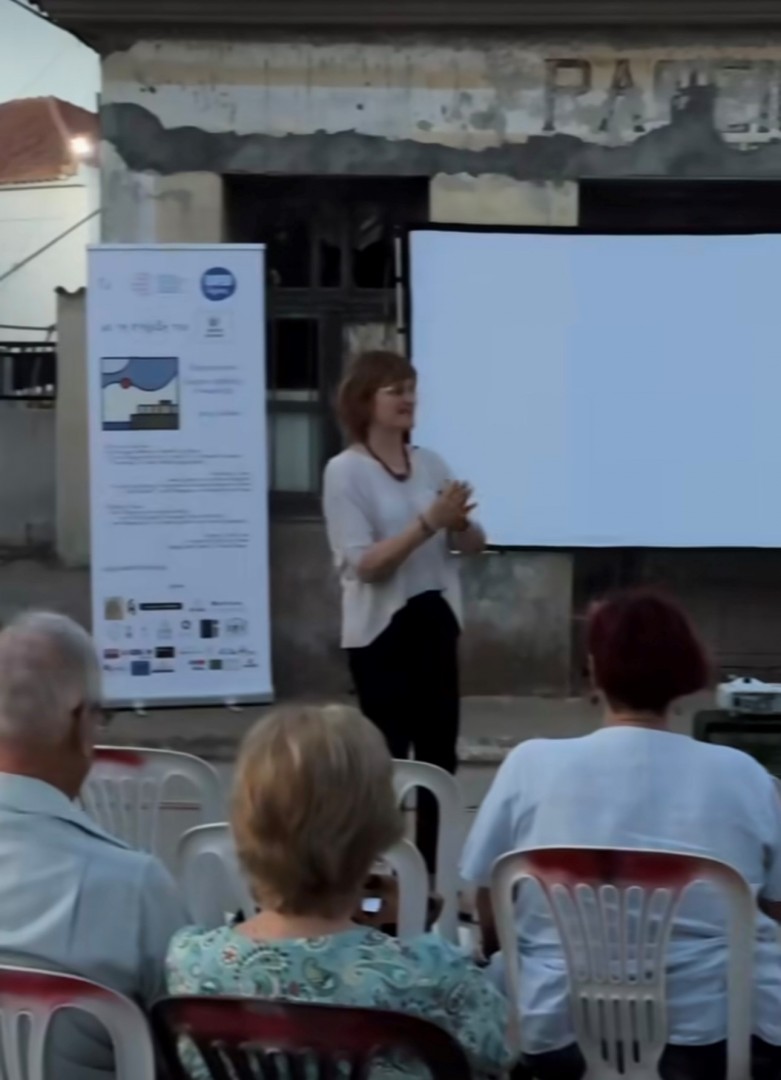
Delikado was a very moving documentary. Thanks to this film, we learned that the two countries with the highest number of environmental activists killed in the world are Mexico and the Philippines. In the Philippines, as in many parts of the world, luxury resorts are built at the expense of nature, not only for the sake of profit (trees are cut down and sold for lumber), but also in places where they are being cut down or burned (which, unfortunately, also happens in Turkey). In this film, some activists organize themselves, raiding those cutting down trees and confiscating their chainsaws (sometimes, in particularly risky situations, they sneak in and take their chainsaws). This film depicts the critical and risky role these activists play in protecting the forest. I say risky because the lumber and real estate sector, which are committing crimes by destroying the beautiful tropical forest, sometimes resists, and some even point guns at these activists. In the documentary, one of the activists was shot and killed. It was also noteworthy that the governor of the province where the documentary was filmed also owns a lumber company.
Threats and murders targeting activists
One of the most striking scenes in the documentary is the symbolic pile of chainsaws at the activists’ gathering place; the pile was so tall that it stood like a statue. The documentary also shows the mayor protecting the activists and the political struggle of the governor, who stands against them and thrives on bribes from the construction projects I mentioned earlier. The frightening part is the deadly threats the activists face, and the activists killed during the struggle. This documentary, which tells the story of environmentalists who, despite this level of danger, refuse to give up their struggle by living far from their families, is truly enlightening and moving.
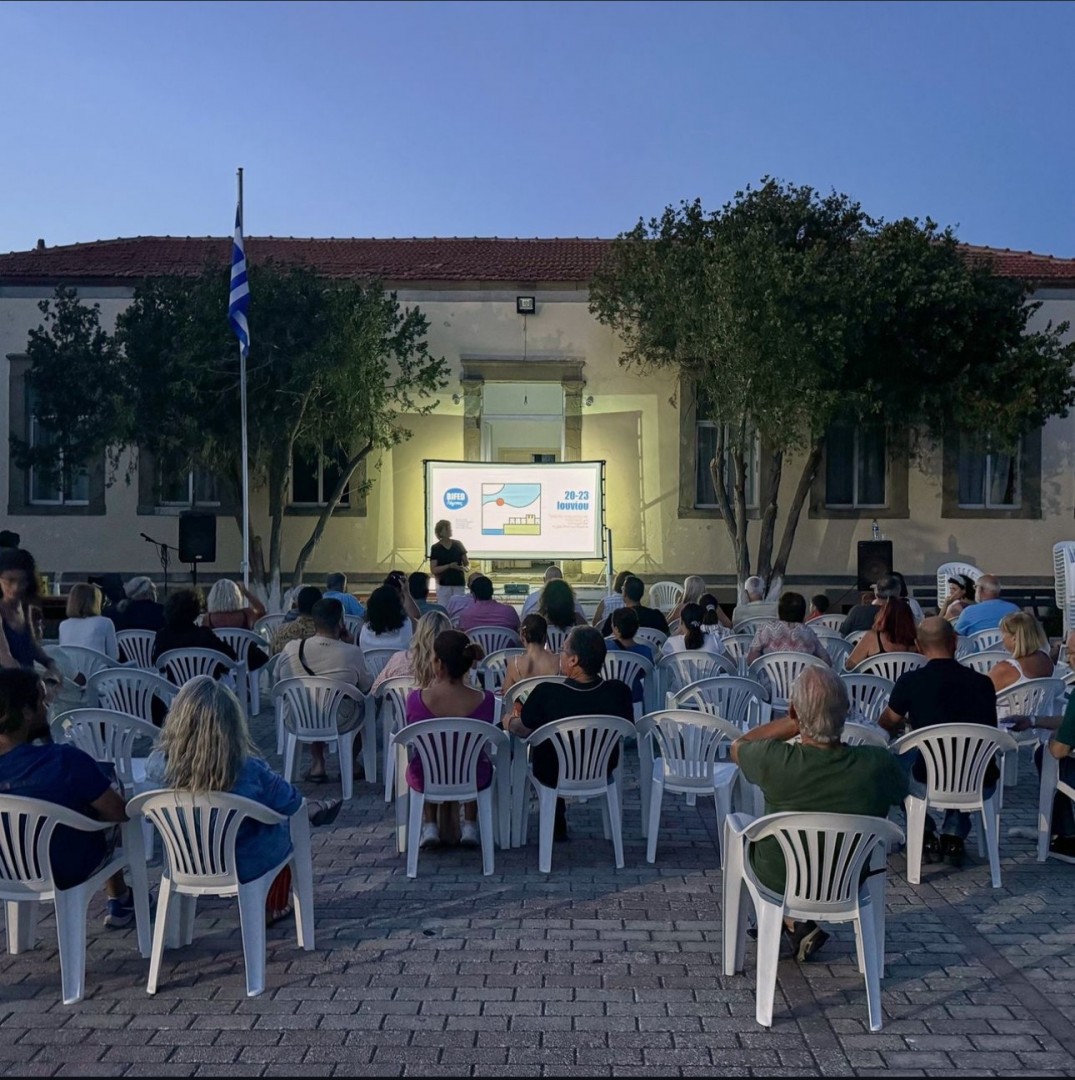
After the screening, we discussed the burning of forests in Turkey and Greece for the sake of profit. It turns out that as two neighboring countries, we have so much in common, both good and bad.
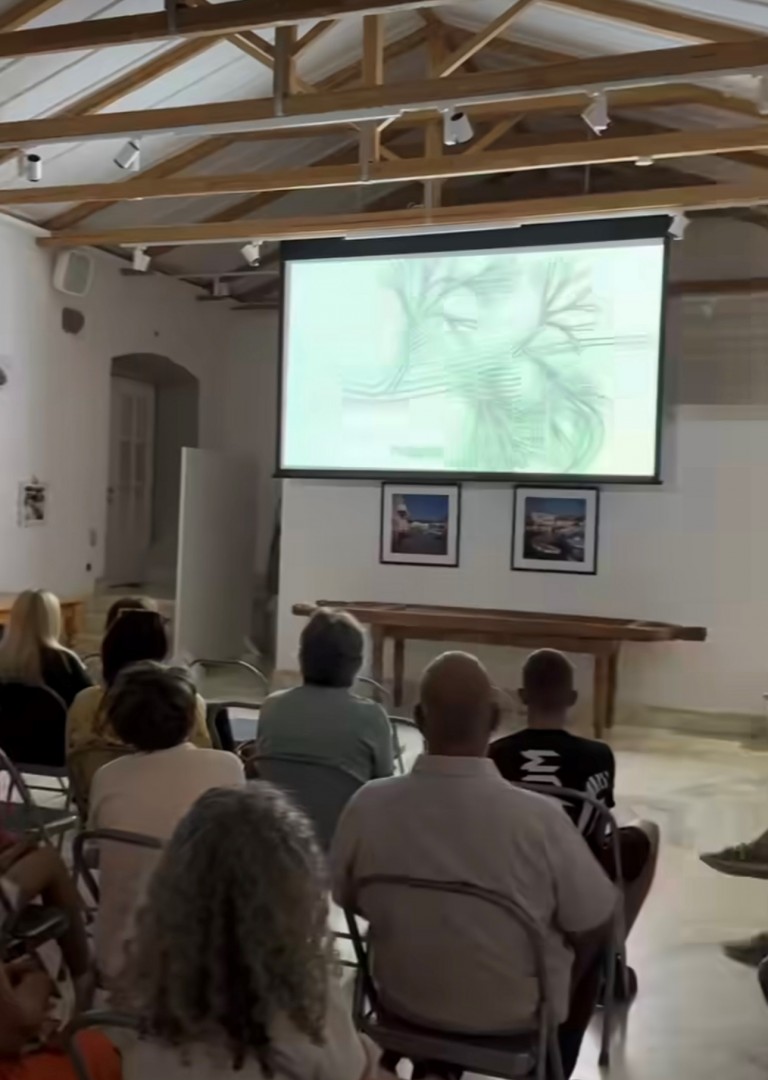
3) Limni Beekeeping Cooperative: We attended this event in Korpos on Saturday morning, 22 June. We watched a very detailed presentation by Alexandros Goussisaris, covering everything from the creation of the Earth to the evolution of humans and the formation of bees. Although it was a bit long, I enjoyed the presentation. He also explained that climate change is making it increasingly difficult for bees to produce honey, causing significant stress on them, and the measures they are taking to prevent a decrease in production efficiency. They also, thankfully, gave us each a jar of honey as a gift. After the photo shoot, we dispersed.
Then, we went to the beach and spent the rest of the day. In the evening, we got ready, watched the Turkey-Portugal match at a cafe, and then boarded the ferry to Kavala.
We were unable to attend the rest of the program because we were returning that evening. Frankly, if I can find the documentary “Breaking Social,” I’d also like to watch it.
I love learning new things while on vacation, so I’d like to thank the Özgüven family once again for inviting us to this event.
As I finish writing, I’m looking forward to seeing the documentary. As I finish writing, I’d like to share some summary footage of the festival to help you visualize it:
https://www.instagram.com/reel/C9haQLnovlK/?igsh=b25ydDM3NTk0amdh
I hope this sharing between Turks and Greeks will increase and we can all fight together for a sustainable life.
Tag: ecology