
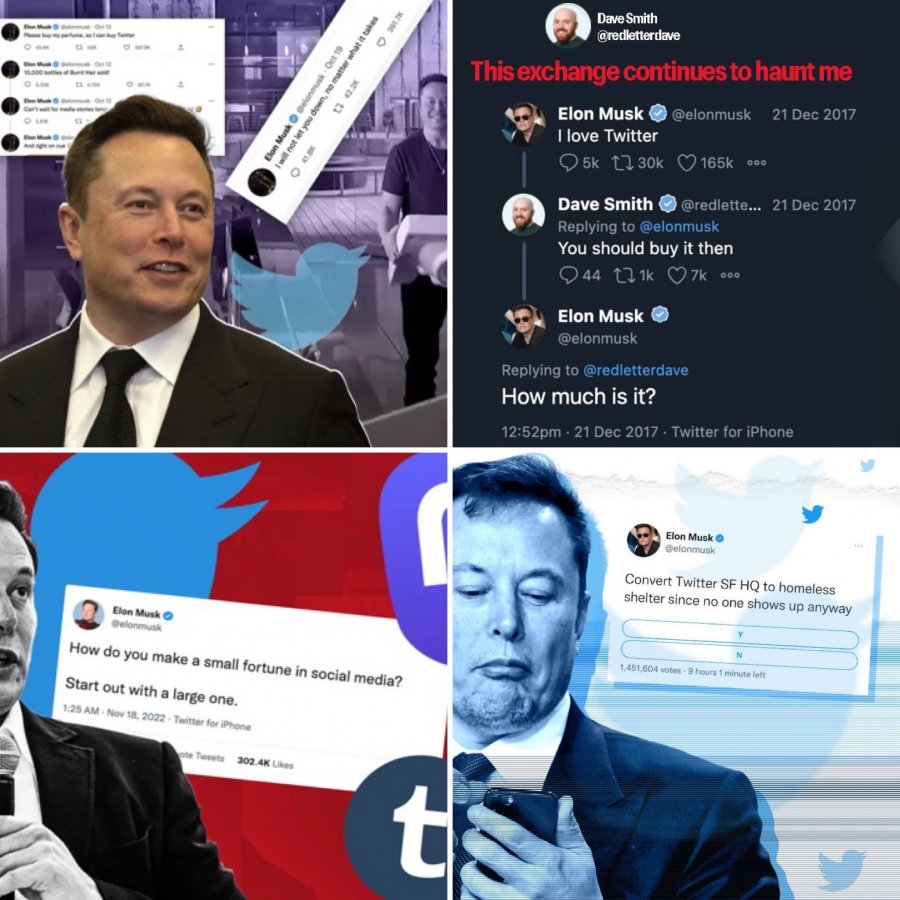
Elon Musk, one of the most followed individuals on the microblogging site Twitter, has long used Twitter regularly to express himself, share his thoughts, mobilize the masses, and promote his products. He has even repeatedly delved into topics that are completely beyond his purview. For example, Musk’s positive and negative comments about cryptocurrencies are well-known. While he generally uses this tool of self-expression to his advantage, he has also gotten into trouble when he uses it spontaneously, without much thought.
Three negative examples
– Several troubles with the SEC (Securities and Exchange Commission): Musk has received warnings and subsequent penalties from the SEC during periods when he used Twitter to express himself. Ultimately, in 2018, Elon Musk settled the SEC’s fraud charges through a settlement. As a result of the agreement, Musk resigned as Chairman of Tesla’s Board of Directors, Tesla appointed additional independent directors, and Tesla and Musk paid $40 million in fines. You can also read this decision on the SEC’s official website: https://www.sec.gov/news/press-release/2018-226 . Musk, in a sense, has paid the price for his ability to comment freely on Twitter, a publicly-connected platform, while running a public company.
– Tesla investors’ lawsuit against Musk: In a 2018 Twitter post, Tesla CEO Elon Musk stated that he was considering delisting the company for $420 per share and that the funds for this were secured (even his conversations with Saudi Arabia’s fund were leaked to the press). The company’s investors, claiming they were defrauded and suffered billions of dollars in losses, filed a lawsuit against Musk for damages. This lawsuit is still ongoing in San Francisco. – Thai children’s cave rescue operation: After a diver involved in the rescue operation criticized the mini-submarine he had prepared to rescue 12 children and their coach trapped in a cave in Thailand, he called the diver a “pedophile” on Twitter. The children, aged 11 – 16, and their 25-year-old coach disappeared in the Tham Luan Caves in northern Thailand on 23 June 2018. Thanks to the efforts of the Thai Navy and experienced divers from around the world, the Wild Boar football team was rescued by being sedated and submerged in a stable position. You can read the details at https://en.wikipedia.org/wiki/Tham_Luang_cave_rescue .
British caver Vernon Unsworth criticized Elon Musk’s involvement in the rescue operation of the children from the cave in Thailand; Musk subsequently posted the aforementioned post on his Twitter account. Unsworth subsequently filed a defamation lawsuit against Musk. Here’s a related news story: http://cuts2.com/etvxE
From a curious user to a patron…
The fact that a tech guru spends so much time on Twitter has even led to criticism at times. But Elon Musk ignored this criticism, perhaps with some minor interventions from his advisors, continuing along his own, more organized path. Ultimately, Musk’s interest in Twitter led to his acquisition of the company. To be clear, let’s summarize the process that began in April of last year (you can read all the details on the relevant Wikipedia page: https://en.wikipedia.org/wiki/Acquisition_of_Twitter_by_Elon_Musk ):
Musk began buying Twitter shares in early January 2022.
On 4 April 2022, Musk acquired a 9.2% stake in Twitter, becoming Twitter’s largest shareholder.
Twitter invited Musk to join its board of directors, and he initially accepted the offer, then declined. On 14 April, he offered $54.2 per share for all of Twitter. Twitter’s board initially responded with a “poison pill” strategy to counter the possibility of a malicious takeover, before unanimously accepting Musk’s $44 billion takeover offer on 25 April. Musk stated that during this period, he would work to add new features to Twitter, open source its algorithms, combat spam accounts, and promote freedom of expression.
First, the intention to terminate, then the acquisition
On 13 May, the Twitter deal was suspended. Details were awaited regarding spam and fake accounts that accounted for less than 5% of total users.
In July, Musk claimed that Twitter had violated the agreement by refusing to block spam accounts and announced his intention to terminate the agreement. The company filed a lawsuit against Musk in Delaware Chancery Court shortly thereafter, with a hearing scheduled for the week of 17 October. Weeks before the hearing was scheduled to begin, on 3 October, Musk re-bid Twitter at the original price and announced that he would reverse course and proceed with the acquisition. The deal was completed on 27 October. Elon Musk became the new owner and CEO of Twitter.
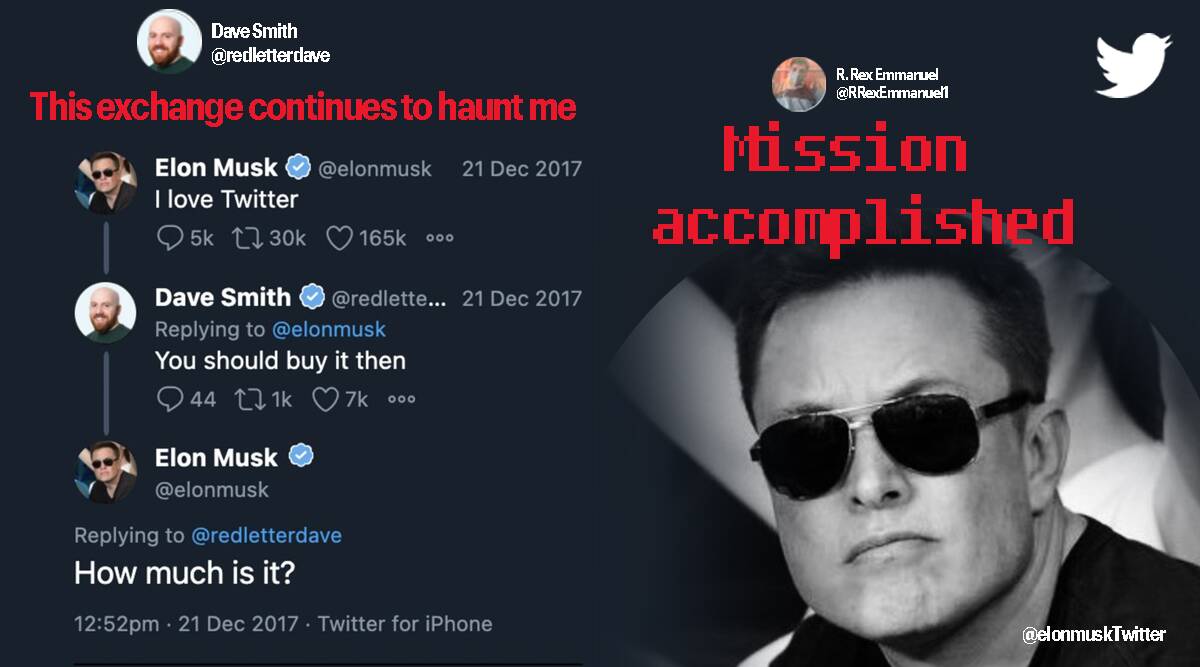
Musk paid $54.20 per share for Twitter, or approximately $44 billion in total. This was the same price he offered when he first attempted to acquire Twitter in April. Musk financed his bid by selling his Tesla stake, taking out loans from banks, and securing funding from investment firms and other partners. For example, cryptocurrency exchange Binance became one of Twitter’s investors, providing $500 million in funding.
After Musk acquired Twitter, he immediately fired several senior executives, including former CEO Parag Agrawal. He laid off half the company’s workforce. Before he had to lay off anyone, hundreds of employees resigned from the company after Musk issued an ultimatum demanding they perform “extremely demanding” work.
Since then, we’ve been constantly hearing about Musk announcing or implementing his plans for Twitter. This news peaked in November, particularly after Elon Musk acquired Twitter on 27 October.
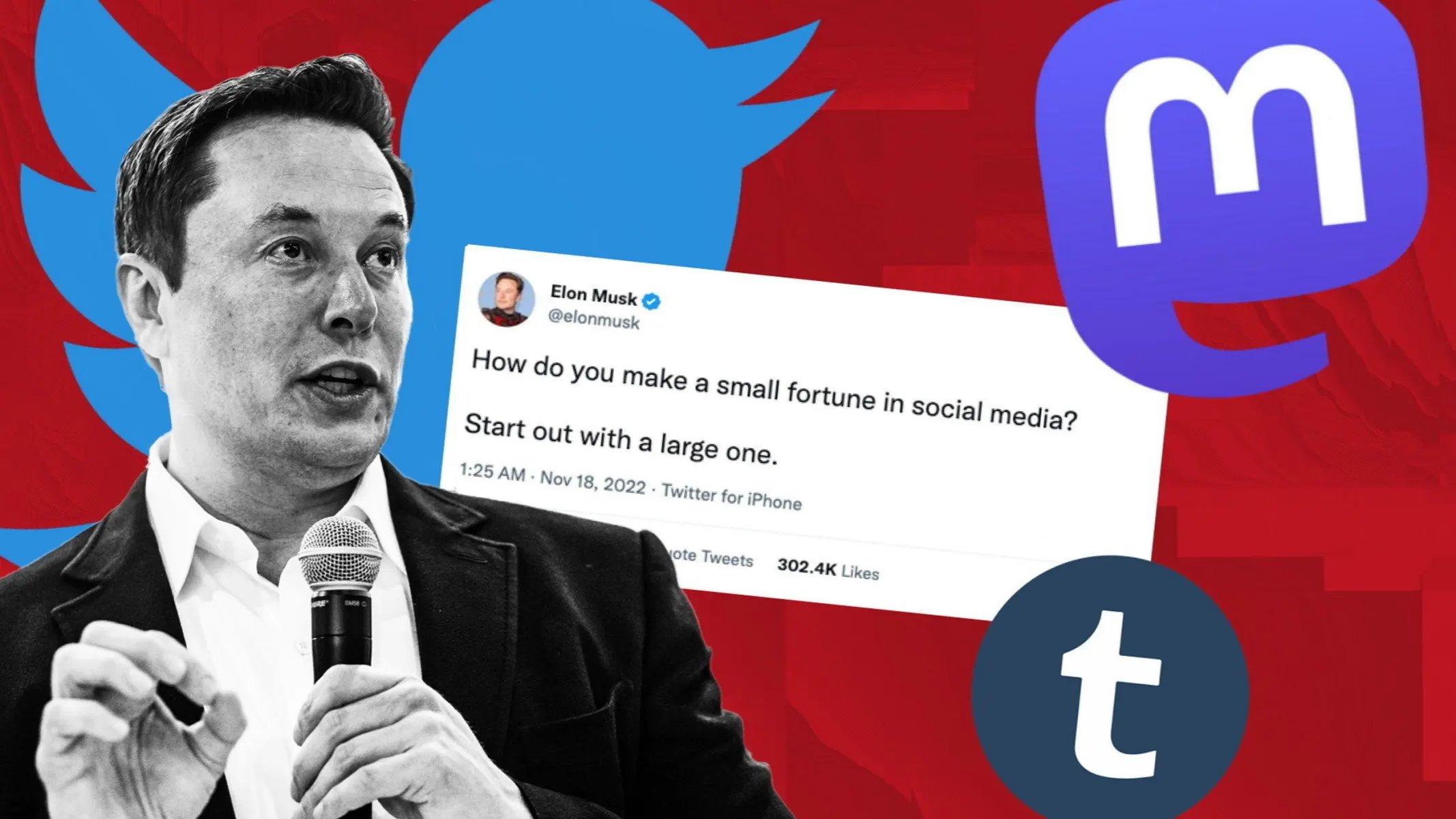
Overall, the reaction to the acquisition was mixed. There were supporters and strong critics. Even other platforms like Twitter emerged as alternative platforms. Such changes on the platform, which have also seen debates about the blue tick and gray tick, have driven some users to alternative platforms. One of the most profitable initiatives in this shift has been Mastodon. It’s reported that the social network’s servers, which have been active for over six years, are strained by this sudden surge of interest. Mastodon, which has a Twitter-like front end, initiates interaction by following accounts. These posts include options for replying, liking, and resharing.
There has been praise for Musk’s planned reforms and vision for the company, particularly his call for greater freedom of expression, while others have voiced concerns about a potential increase in misinformation, disinformation, harassment, and hate speech. Interestingly, while conservatives in the United States largely supported the acquisition, many liberals and former Twitter employees expressed concerns about Musk’s intentions. Musk faced significant criticism for his handling of the company and the suspended accounts.
Critical Developments Following the Acquisition
Now, let’s examine some of the events that began the day before Elon Musk’s Twitter acquisition and continued unabated for a month:
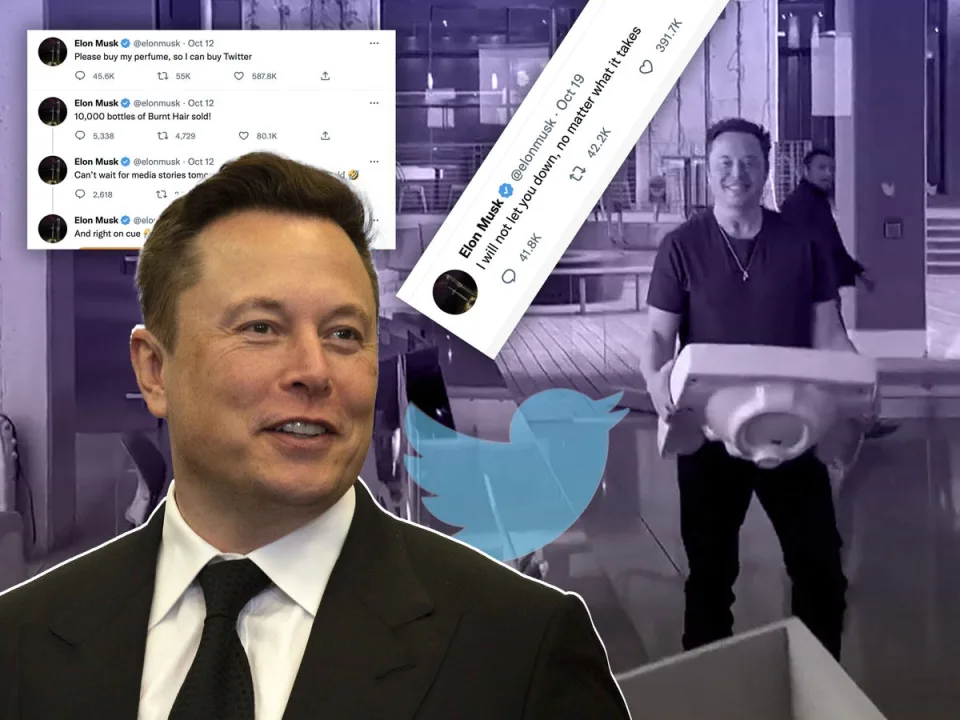
On 26 October (a day before the official shutdown), Elon Musk entered the Twitter building with a sink in his hand and delivered the following message (whatever you understand): “Let that sink in.” You can watch the video at https://www.youtube.com/watch?v=48yhx7aHmxI . It’s safe to say that Musk’s actions provoked his detractors and critics, prompting them to further attack him.
The purchase was completed on 27 October, and Musk changed the description on his Twitter account to “Chief tweet.”
On 1 November, he announced that he would offer Mavi Tik for $8 per month. He received significant backlash. Subsequently, despite the strong backlash, some radical groups also emerged to purchase Mavi Tik. For example, the Taliban purchased Mavi Tik: https://www.sozcu.com.tr/2023/teknoloji/taliban-twitterda-mavi-tik-satin-aliyor-7560730/?utm_source=anasayfa&utm_medium=free&utm_campaign=bilim_teknoloji Images of employees sleeping on the floor
Starting on 3 November, images began to appear of company employees sleeping on the floor of the company headquarters. Fearing they would lose their jobs, employees were reportedly working 12-hour days, seven days a week to fulfill these duties, and social media was awash with photos of employees sleeping on the floor of their offices.
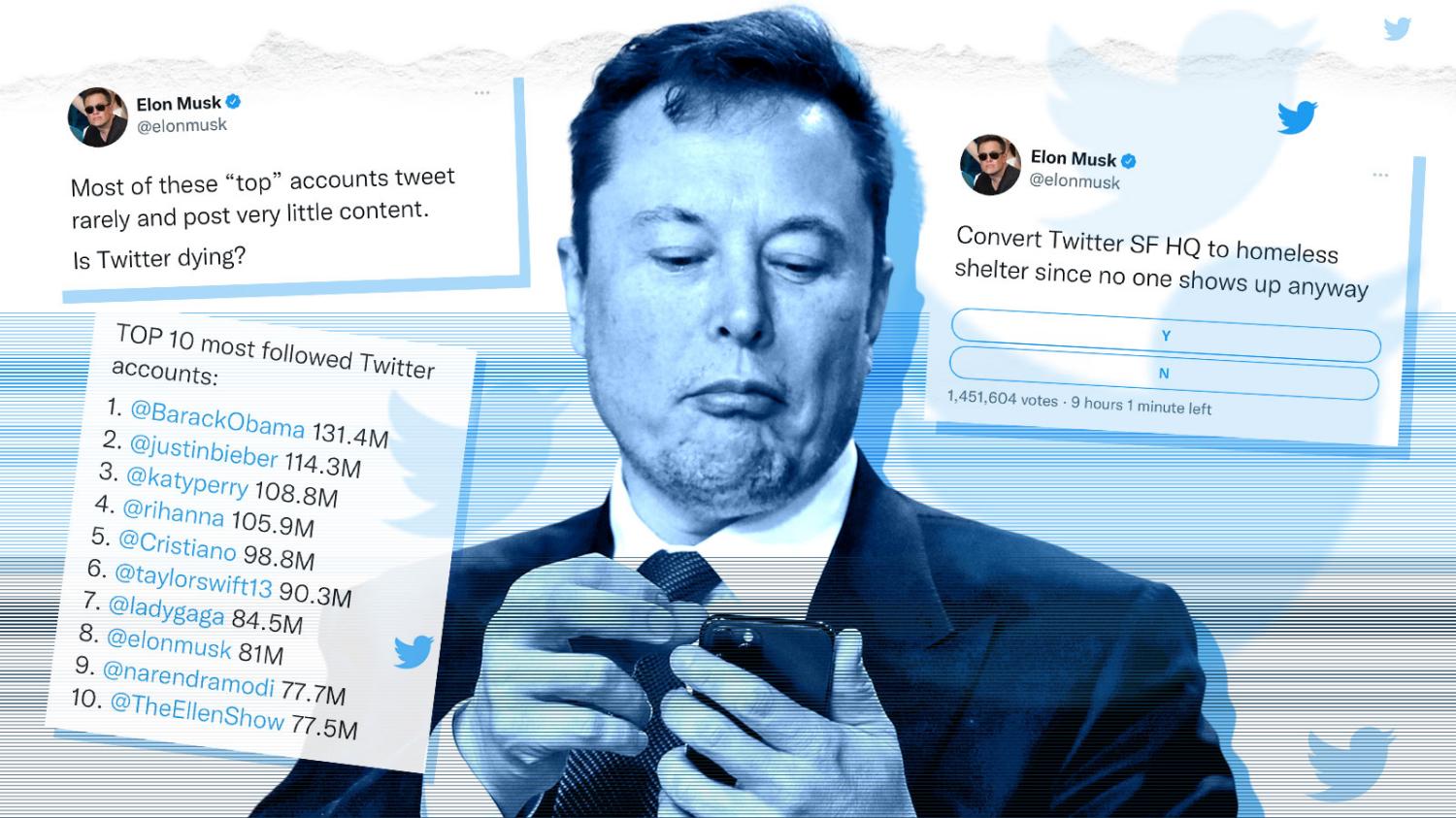
On 4 November, Twitter management sent an email to its employees, signaling layoffs. The email stated, “In an effort to put Twitter on a healthy path, we will be going through a challenging process of reducing our global workforce. We recognize that this will impact some valuable contributors to Twitter, but unfortunately, to ensure the company’s continued success, we must not do so.”
On 5 November, one day after the email, management announced the layoff of nearly half of the company’s employees. Musk stated in a statement following the layoffs that the company was losing more than $4 million per day and that he had “no choice” but to lay off nearly half of its employees.
Decrease in advertisers, increase in users
Starting 7 November, following the layoffs on Twitter, numerous companies, concerned about the spread of hate speech and the appearance of their ads alongside problematic content, decided to stop advertising on Twitter.
According to a company document obtained by The Verge on 8 November, Twitter’s daily user growth reached an all-time high just one week after Elon Musk acquired the platform.
On 9 November, Twitter’s director of product management, Esther Crawford, announced on her Twitter account that “Blue” subscribers who meet certain requirements will now have the “Official” label on their profiles.
On 10 November, Musk, Twitter’s new boss, sent his first email to employees after taking over the company, saying, “Prepare for the difficult days ahead” and announcing the end of working from home.
On 11 November, the “Blue Tick” fee, which launched in the US at $8, was increased to 109.99 TL per month in Turkey. It was announced that paying subscribers will receive certain benefits and reduced exposure to ads.
A Surprise Reversal of the Ultimatum
On 16 November, Musk, who had laid off nearly half of the company’s employees, issued an ultimatum to the remaining staff in an email. Giving his employees until the following day, Musk asked everyone to decide whether they wanted to remain a part of the company. Musk stated that everyone would need to work hard for what he believed would be a groundbreaking “Twitter 2.0,” emphasizing that this would mean long and tiring hours. In the email sent to employees, he warned that anyone who didn’t sign the form by 5:00 PM on Thursday evening would receive three months’ severance pay and leave the company.
On 17 November, Musk announced that he would soon lift the 280-character limit, a requirement he had frequently complained about. Initially allowing posts with 140 characters, Twitter had lowered this limit to 280 in 2018.
By 18 November, it became clear that Musk’s ultimatum email to employees had not yielded the results he had anticipated. Western media reports claimed that numerous employees resigned following the email. In a survey conducted on Blind, an app that verifies employees through their work email addresses and allows them to share information anonymously, 42% of 180 respondents responded, “I’m using the opt-out option, I’m free!” A quarter of respondents said they chose to stay “reluctantly,” with only 7% clicking “Yes.”
Rise in Trolls
Twitter told employees that all of the company’s office buildings would be temporarily closed, effective immediately. Employees were told the offices would reopen on Monday, 21 November, but the reason for the decision was not disclosed. Some newspapers suggested that the temporary closure plan stemmed from fears that disloyal employees would sabotage the platform.
Furthermore, trolling campaigns have also increased following the change of CEO position on Twitter. According to a report in The Guardian, a coordinated troll campaign containing hate speech, generating 50,000 posts, was launched in late October. When Musk mandated that fake accounts be labeled “parody accounts,” some users began changing their names to Elon Musk. Musk had stated that his top priority on the platform was bots, spam, and impersonation.
“Accidental” Layoffs
A turbulent November witnessed another statement: Musk announced that the company was losing $4 million a day and said bankruptcy was a possibility if the cash shortage wasn’t addressed.
Around the same time, another interesting piece of news emerged. According to a Bloomberg report, some of those asked to return were “accidentally” laid off. Some Twitter employees were shown for the platform. Musk, who laid off nearly 3,700 employees via email, explained the firings in a tweet:
“With the company losing over $4 million a day, unfortunately, there was no other option.” Everyone who left was offered three months’ severance pay, 50% more than legally required. Musk and his staff are rolling up their sleeves to reverse this negative financial situation. According to Mashable Turkey (https://tr.mashable.com/social-media/8743/twitter-populer-kullanici-adlarini-acik-artirmaya-mi-cikaracak ), in addition to the widely criticized changes to Twitter Blue, the company has added features that allow users to view stock and crypto prices within the app through a partnership with Robinhood, the stock trading app.
Other developments that had a negative impact
On Wednesday, iOS users noticed that Twitter had removed the “Recent” tab and replaced it with a “For You” timeline. This change replaces the button at the top of the page, which previously could be set to “Latest” and “Top Tweets” to see the latest tweets from people users follow or an algorithmically generated list. The “For You” tab is now set by default, forcing users to switch to “Recent” every time they open the app.
Other incidents have eroded Musk’s credibility during this turbulent period. Musk showed the door to an employee who had argued with him on Twitter. The argument escalated into Musk apologizing for the Android app being “extremely slow in many countries.” Musk claimed this was due to poorly written content. A Twitter engineer working on the app later cited Musk’s post and claimed his comments were false. Eric Frohnhoefer wrote that he had been working on Twitter’s Android app for nearly six years and “can say it’s wrong.” While acknowledging that “there are many performance improvements that could be made to Android,” Frohnhoefer disputed Musk’s diagnosis of the source of the speed issues. He argued that the problems stemmed from the app being overflowing with features that few people use, bloating over time with the effort to add new enhancements, and being slow to communicate with the network. Frohnhoefer suggested that Twitter prioritize simplifying the app, removing old features, and avoiding adding too many new ones. Musk announced the engineer’s firing on Twitter. Frohnhoefer, who had been experiencing access issues with his accounts, stated, “I think it’s official.”
Will Musk step down as Twitter CEO?
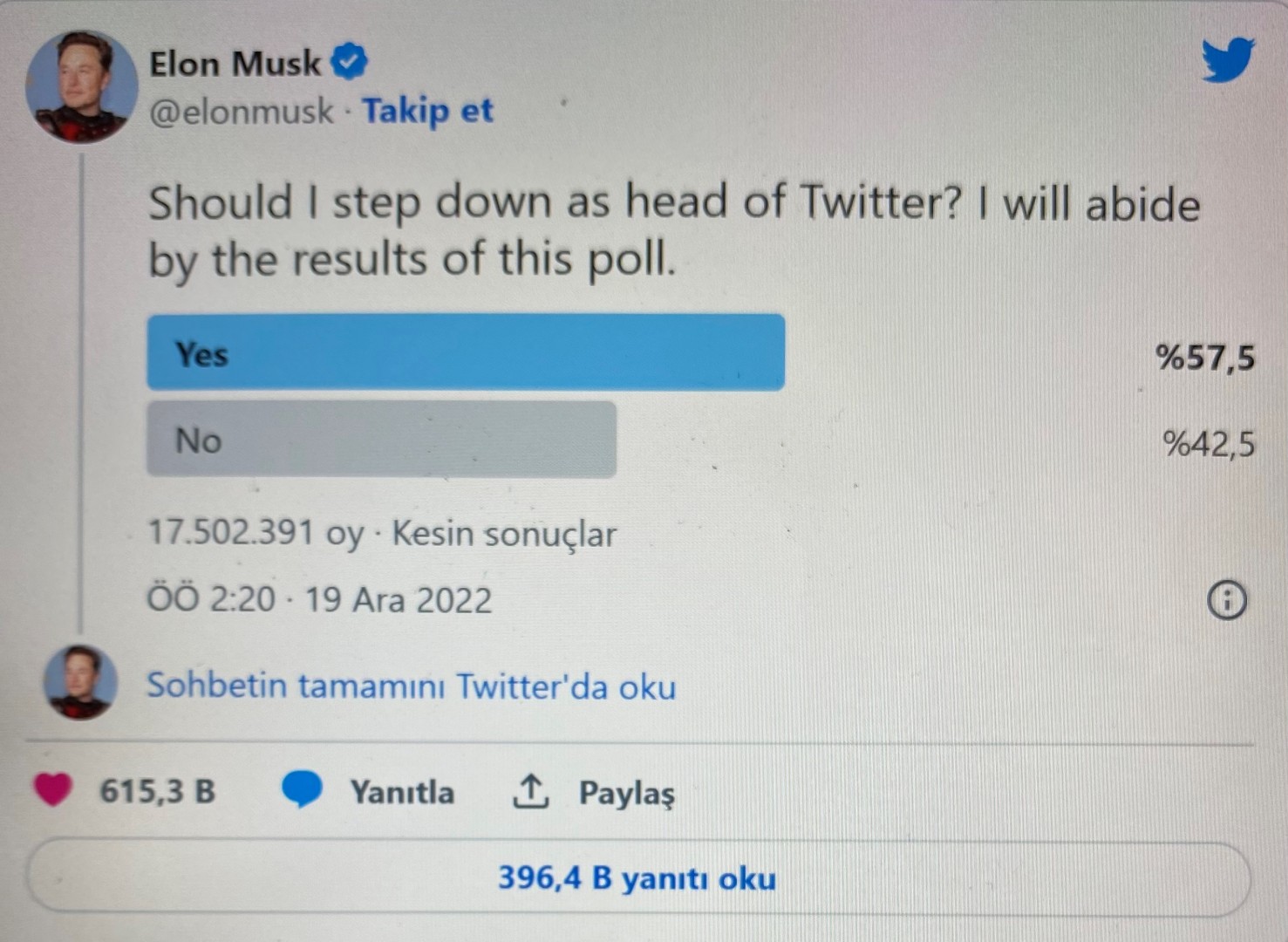
Elon Musk, who made headlines last November for his actions and wild moves, posed the question “Should I resign as the head of Twitter?” in December, which generated a massive response on Twitter, and initiated a poll. More than 57% of voters called for his resignation. While the poll results were criticized, it was claimed that Musk had begun searching for a new CEO. Following this result, Musk tweeted, “As soon as I find someone stupid enough to take on this job, I will resign as CEO! Afterward, I will only manage the software and server teams.”
Musk’s two-month Twitter odyssey affected other companies, especially the decline in Tesla’s share price. The discussions that erupted on the platform eroded trust in the famous entrepreneur and called into question his ability to run the company.
What’s going to happen next?
No one can predict what will happen after such turbulent events. Many factors will determine what will happen. Elon Musk, the hero of all these events, will continue to be the most important factor in determining the outcome. His attitude, his handling of problems, and his communication skills will determine Twitter’s fate. At this stage, I would like to share a few scenarios with you:
1) Over time, a cash deficit could turn into a cash surplus with newly developed applications. Then, Musk could abandon radical measures and pursue damage control, implementing initiatives that would reassure people. This would minimize all this criticism on Twitter.
2) If Twitter continues to incur significant losses for an extended period, Musk could say, “I consider the expenses I’ve made so far as losses and, to prevent further blood loss, I’m shutting down Twitter.”
3) If adequate measures aren’t taken, Twitter could become a battleground where radicals challenge each other. In that case, it could become a platform fueling global chaos. If the situation escalates, the US government could intervene.
4) Twitter’s owner is not required to express political views. If the party they support and voice these views fails to win the election, the opposing party could, once in power, implement policies targeting not just Musk’s Twitter business but all of his businesses. This could then begin a process that will lead to Musk’s complete bankruptcy, not just becoming the world’s richest man.
5) Twitter could step up its game with moves that would increase its influence on social media, such as Facebook’s acquisition of Instagram. This could result in a significant majority of the Twitter-angry crowd accepting the situation.
My Recommendations
I’ve listed the scenarios that first came to mind above. I have no doubt that Elon Musk, a man who never gives up on a fight, will do everything in his power until the very end. Transforming a difficult business model into a profitable, constantly growing one that’s widely accepted isn’t easy. But it’s not impossible either. Musk has a host of smart and knowledgeable advisors. He needs to focus on what needs to be done, turn a deaf ear to criticism, and focus on what needs to be done. In my opinion, he’ll be in an advantageous position if he makes the following moves:
1) Transferring it to a foundation: The idea of a single owner of a microblogging site like Twitter, where everyone exchanges ideas, is repulsive and even frightening for billions of people. And if you think about it, everyone has a limited lifespan. The question, “What would happen to Twitter if something happened to Elon Musk?” naturally comes to mind. Since he constantly declares, “I serve humanity,” I believe Musk should establish a foundation, clearly define the rules of governance and Twitter’s strategy, and transfer Twitter to this foundation. Such a foundation must also have an independent oversight mechanism.
2) Fintech: The company’s ability to move from a position of hundreds of millions of dollars in losses to significant profits depends on its key business model, “fintech.” I won’t go into the details here; if the opportunity arises in the future, I’ll explain which fintech model could generate significant cash flow for Twitter.
3) Integration of communication channels: Twitter needs to strive to move beyond its microblogging position. I think adding features like WhatsApp to Twitter that allow people to communicate among themselves would make it much more valuable in every sense. Another idea is to move beyond being just a microblog and transform it into a platform that embraces all blogs worldwide. I believe Twitter needs to target all communication channels to ensure continuous development.
4) Social responsibility: If they truly want to transform Twitter into a platform that helps humanity and fosters its development, there’s a lot of work to be done in terms of social responsibility. This would bring significant prestige to the platform and ensure it gains the support of a significant majority of the people who are angry at Musk. Want an example? For example, during disasters, Twitter could add new features to ensure the most efficient management of support in areas like search and rescue, humanitarian aid, and psychological support. This would save millions of lives and accelerate their transition to a new life. Collaboration with established NGOs is also crucial here.
The above are the first ideas that come to mind. Of course, Musk has the upper hand. I hope he can transform Twitter into a platform that truly serves humanity, as he says. I wish him success.
Tag: special days