
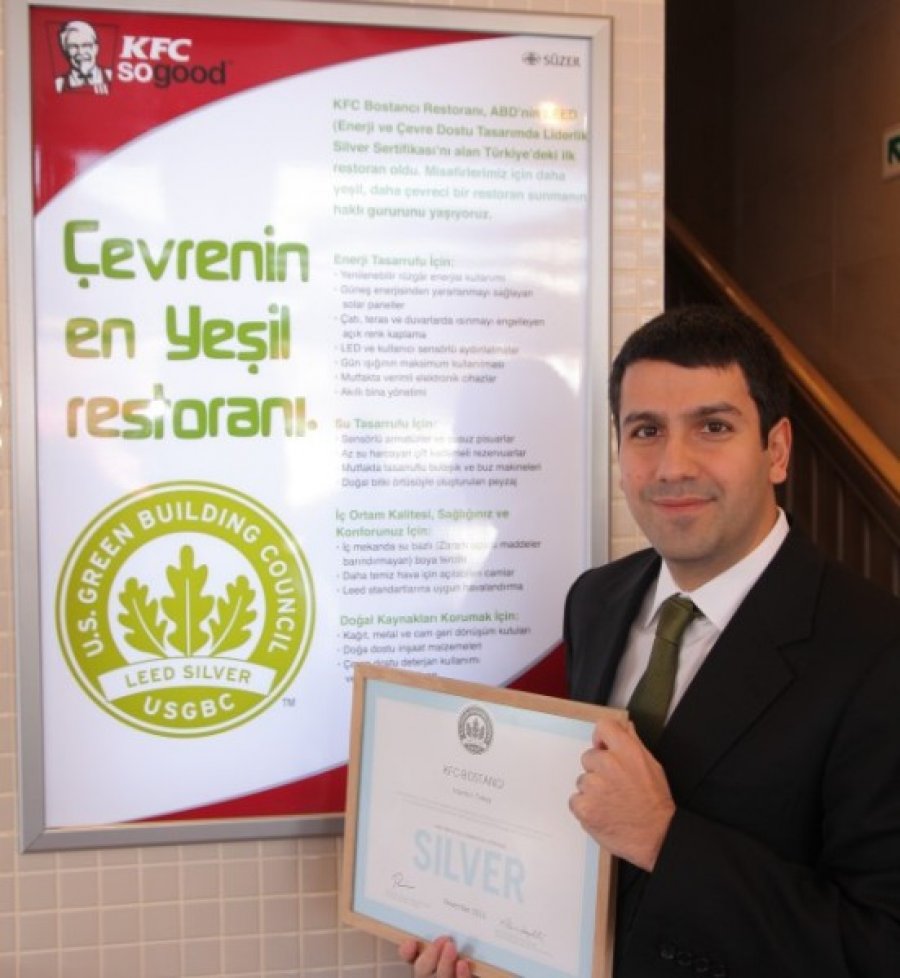
The year was 2011. I was the CEO of KFC (Kentucky Fried Chicken) and Pizza Hut. I really enjoyed what I was doing. We’d introduced many firsts to the industry in terms of sales, marketing, and financing methods. But my heart beats for my true passion. While I was trying to manage the company’s incredible growth, I was also building my future around a new sector I’ve long dreamed of: solar energy.
Since I started working in Turkey in 2001, I’ve constantly focused on sustainability. Chief among these is solar energy. Life has taken me into different sectors. I’ve enjoyed them all and gained new experiences. I’ll especially remember that transition period in 2011.
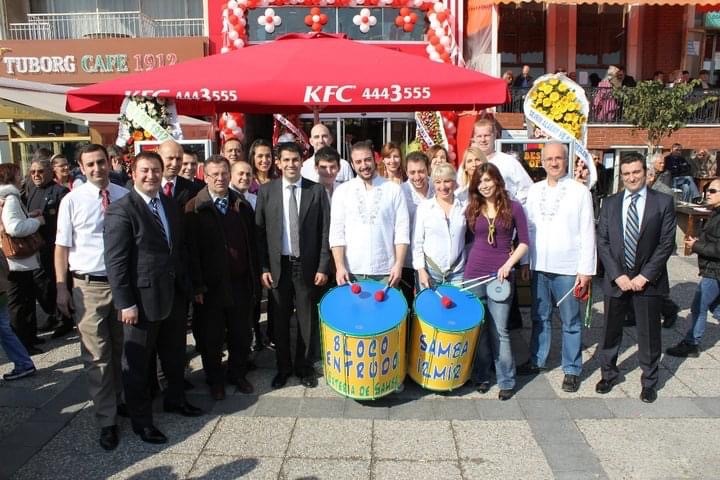
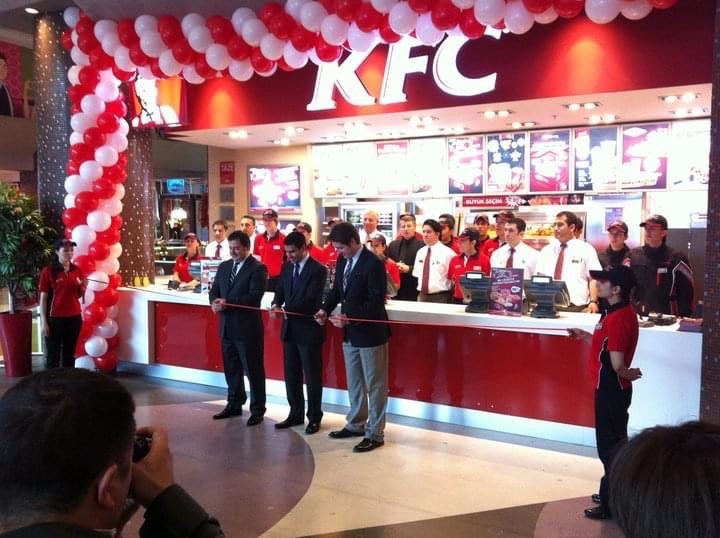
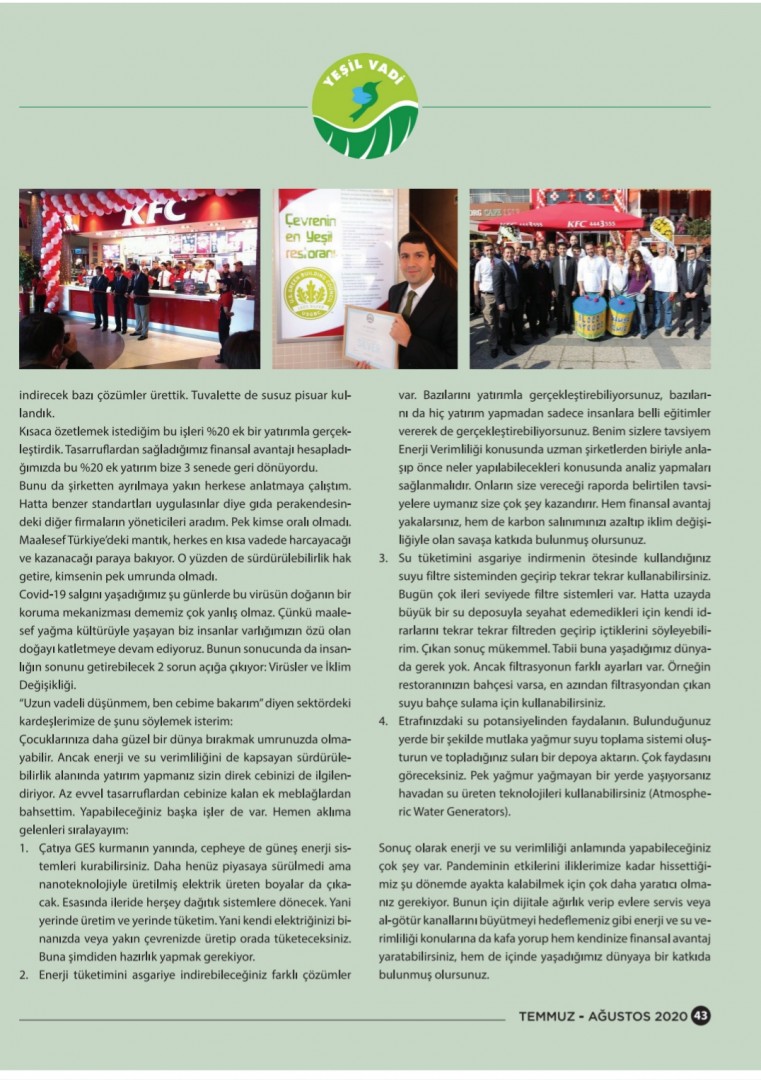
When I announced at the time that I was leaving the company to start a solar energy venture, everyone looked at me as if I were crazy. My last job at KFC and Pizza Hut also focused on sustainability. I’d like to share photos of two projects I completed during my time there. The openings of the İzmir Karşıyaka and Gaziantep restaurants, respectively:
Yum International, the company that owns these brands, opened the first LEED-certified KFC in Bostancı in November 2011. Obtaining LEED certification is a very serious process. In addition to extensive documentation, they test you against various criteria, including energy efficiency, water efficiency, and transportation. Ultimately, they score you. If you meet a certain score, you qualify for certification. This officially marks the opening of a green restaurant. In this article, I will explain some of the work we do in this area in practical terms.
Long-term solutions with ecological measures
For energy efficiency, we invested in a sensor-based flashing light system and other solutions to minimize energy consumption. We also installed a small solar power plant (SPP) on the restaurant’s roof. In other words, we generate electricity from the sun in the area, meeting some of our own energy needs this way.
For water efficiency, we made various investments in areas where water consumption is high. We ensured that all running water only flowed when needed (using sensor systems). We developed some solutions to minimize water consumption in the kitchen. We also used waterless urinals in the restroom.
I’d like to briefly summarize these projects, which we accomplished with an additional 20% investment. Calculating the financial advantage we gained from the savings, this 20% additional investment would have paid off within three years.
I tried to explain this to everyone when I was about to leave the company. I even called the executives of other food retail companies to ask them to implement similar standards. Not many people cared. Unfortunately, the logic in Turkey is that everyone is focused on the money they can spend and earn in the short term. Therefore, sustainability, while it’s a legitimate issue, hasn’t really caught on.
Nature’s Protection Mechanism
It wouldn’t be wrong to say that this virus is a protection mechanism for nature these days when we’re experiencing the COVID-19 pandemic. Unfortunately, we, living in a culture of plunder, continue to destroy nature, the very essence of our existence. As a result, two problems that could lead to the end of humanity arise: viruses and climate change. To our colleagues in the industry who say, “I don’t think long-term; I only care about my own pocket,” I’d like to say this:
You may not care about leaving a better world for your children. However, investing in sustainability, which includes energy and water efficiency, directly benefits your bottom line. I just mentioned the extra money you’ll save. There are other things you can do. Let me list some that come to mind:
- On-site production, on-site consumption
In addition to installing solar power plants on roofs, you can also install solar energy systems on facades. While they haven’t yet been released, nanotechnology-based electricity-generating paints are also on the way. Essentially, everything will shift to distributed systems in the future. That is, on-site production and on-site consumption. In other words, you’ll generate your own electricity in your building or in your immediate surroundings and consume it there. It’s important to prepare for this now.
- Energy efficiency consulting
There are various solutions that can minimize energy consumption. Some can be implemented with investment, while others can be achieved without any investment at all, simply by providing training to people. My advice to you is to work with one of the companies specializing in energy efficiency and first request an analysis of what can be done. Following the recommendations in their report will provide you with significant benefits. You’ll not only gain financial advantage but also reduce your carbon emissions and contribute to the fight against climate change.
- Filtration Systems
Beyond minimizing water consumption, you can filter the water you use and reuse it over and over again. Today, we have very advanced filtering systems. In fact, since they can’t travel through space with a large water tank, I’d say they repeatedly filter and drink their own urine. The results are excellent. Of course, this isn’t necessary in the world we live in. However, filtering has different settings. For example, if your restaurant has a garden, you can at least use the unfiltered water for the garden.
- Obtaining water from rain and air
Take advantage of the water potential around you. Be sure to create a rainwater collection system in your area and transfer the collected water to a tank. You’ll see significant benefits. If you live in a place where it doesn’t rain much, you can use technologies that generate water from the air (Atmospheric Water Generators).
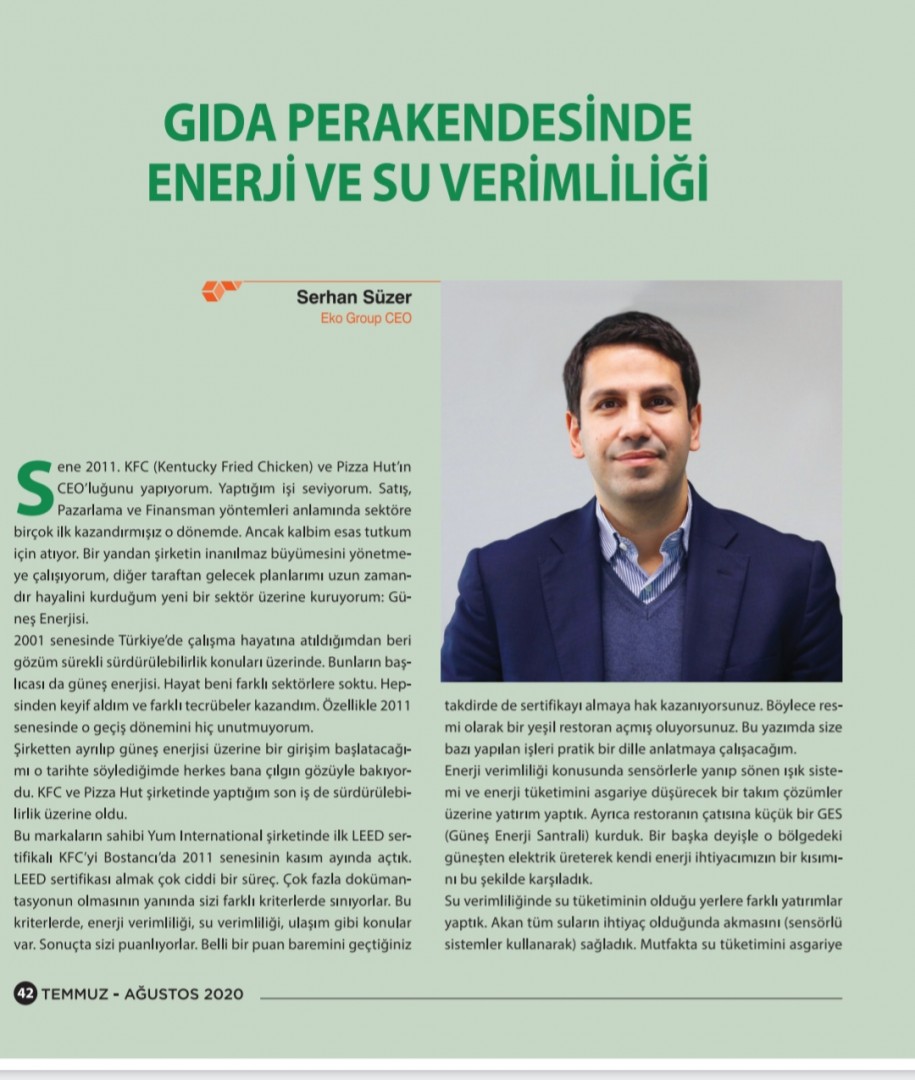
In conclusion, there’s a lot you can do in terms of energy and water efficiency. To survive during this period, when we’re feeling the effects of the pandemic deeply, you need to be much more creative. To achieve this, by focusing on energy and water efficiency, such as focusing on digitalization and expanding home delivery or take-out channels, you can create a financial advantage and contribute to the world we live in. Note: On this occasion, I would like to share with you my article published in Gıda Türk Magazine, the voice of the Turkish food industry:
Tag: ecology