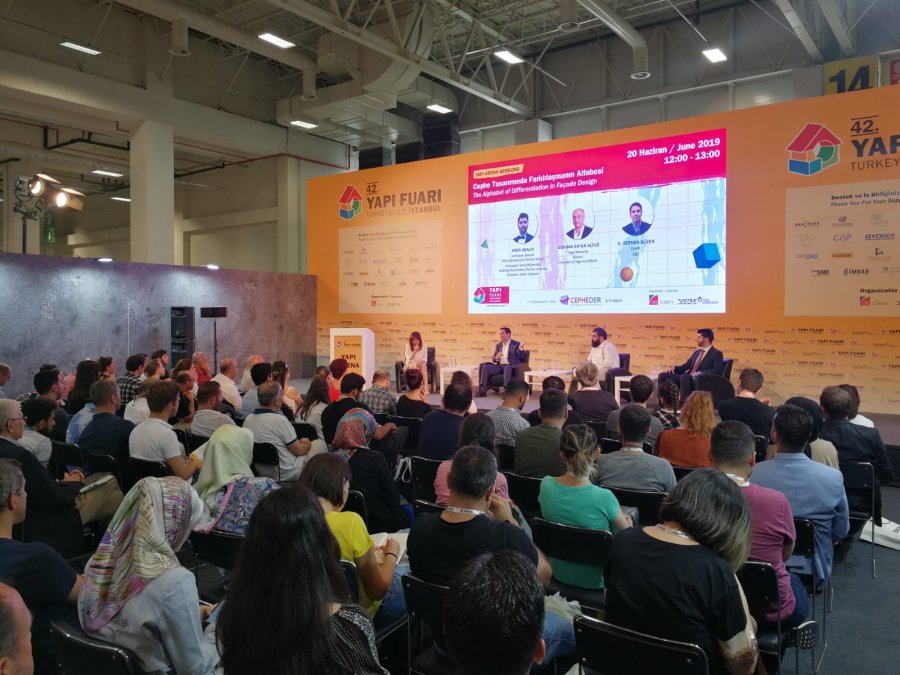
Cüheyda, whom I’d met through Arkitera, an architecture organization, appeared before me as the Secretary General of CEPHEDER, the NGO for companies selling facade and roof components. With her usual outgoing and positive approach, she said, “Mr. Serhan, we’d love to see you speaking to the owners and professionals of the companies I represent selling roof and facade profiles. You’d have a lot to say about solar energy to those in our industry.” As someone who has made it her mission to ensure access to solar energy for all, and having worked successfully with her in the past, I said, “Wow, Cüheyda, I’d love to help.” After this initial meeting, we met several more times. The date for the postponed Facade Fair was fixed, we were invited, and I finally took part in the event, the visual of which can be seen below.
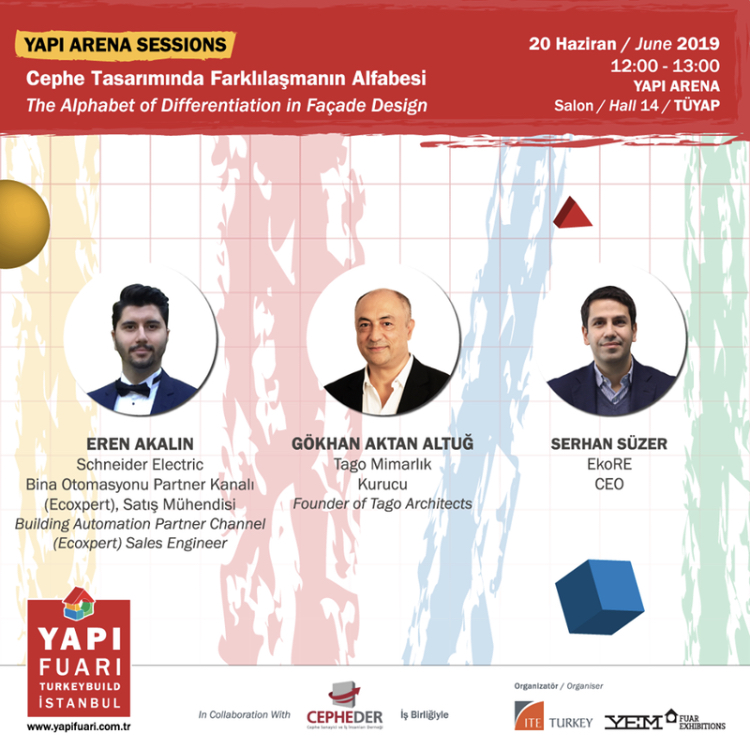
A summary of the talks on the panel I was invited to was shared with potential listeners in advance. Accordingly, the following will be discussed:
Schneider: The talk will begin with current global trends, the Internet of Things (IoT), and the importance of interconnected devices in buildings. The talk will then discuss how Schneider Electric maximizes energy efficiency and comfort in buildings using building automation technologies.
TAGO Architecture: “The façade as a communication tool.” The phenomenon we want to address is the façade’s historical ability to express itself. Is it a concept that can be achieved through design, or is it a consequence of function? Starting with traditional and cultural themes, we aim to define the relationships between buildings, people, and each other. In doing so, we will also explore the evolving architectural roles of façades and their new uses in visual communication. We will also explore different approaches that should be addressed on the urban and pedestrian scale.
My talk: Today’s rapidly increasing energy demand is pushing people to find more and more diverse energy sources. Unfortunately, the world currently relies on fossil fuels to meet this intense energy demand. However, for humanity to have a future, meeting this growing demand with renewable energy sources is crucial. Considering factors such as rapidly increasing efficiency, decreasing costs, and ease of construction and operation, solar energy is the most promising of all renewable energy sources. In this context, EkoRE’s greatest goal is to create a livable and sustainable future by establishing a 100% domestically produced panel factory in our country and by staying abreast of ever-evolving technologies, ending humanity’s dependence on fossil fuels. While solar energy technologies have many different application areas, the subject of this presentation is the lesser-known façade applications of solar energy. We will focus on how different technologies are used in various façade applications and how these systems meet the energy needs of buildings.
The voyage begins…
We left the office around 9:45 a.m. for the event, which began at noon, assuming it would take two hours from Çekmeköy to Beylikdüzü. Traffic was light, as repairs and maintenance work on the Second Bridge had not yet begun. We reached Beylikdüzü in 1.5 hours. It took us about 30 minutes to reach the conference venue from there. TÜYAP is a large fairground, and our driver dropped us off at one end of the fairground, while the conference venue was at the other end.
I had pain in my heel, so I walked that route for 15-20 minutes. When we arrived, I immediately delivered the presentation. I met with the organizers and Cüheyda Hanım. I met with the other speakers. After the microphone and other equipment were installed, we were ready to speak. After a 10-minute hang, the panelists were invited. Once on the platform, I shook hands with our moderator and the speakers and took my seat.
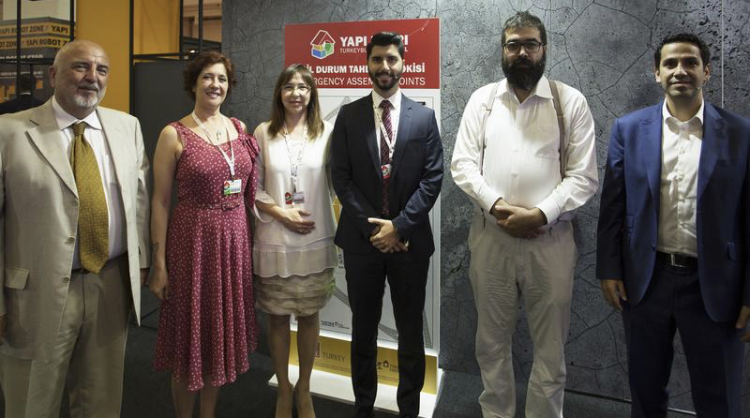
A picture we took together just before the panel. From left to right: Adil Baştanoğlu, president of Cepheder and Çatıder, Cüheyda Başık, our moderator, one of the speakers, Eren Akalın, architect Emre Kurbak, and me.
Touching the pulse of the audience
They gave the first seat to speak at the panel to Eren Akalın, a sales engineer for Schneider Elektrik’s building automation partner channel. I thought he touched on very important topics, and I liked the content, but his presentation was a bit overly technical, and he spoke in a routine rhythm. So, with a seating arrangement of 150 (I know this from the technical documentation the organizer sent us before the speech), the room, which was about 80% full (I can say this by eye; these figures are more or less accurate), began to gradually empty. Emre Kurbak, instead of Gökhan Aktan Altuğ of Tago Architecture, gave the second speech. When he started speaking, the room was 60% full. Frankly, it’s unsettling in situations like this. If the second speaker had delivered such a technical and monotonous speech, the hall might have been more than half empty by the time I reached the podium.
However, architect Emre Kurbak delivered a remarkably well-paced and engaging speech. The audience was enthusiastic, especially the concrete examples he provided from daily life and buildings that captivated the audience. The hall began to fill again. By the time he finished, the hall had reached 80% capacity. It was my turn. Since I had 20 minutes to complete my speech, I quickly skipped the sections of the presentation about our company and didn’t show our video. Then, using a similar method to the previous speaker, I presented examples of completed projects and explained different technologies and models in solar energy. The hall was packed to capacity; in fact, during the second 10 minutes of my speech, they started bringing in extra chairs for those standing. With the extra chairs, the hall reached 110% capacity.
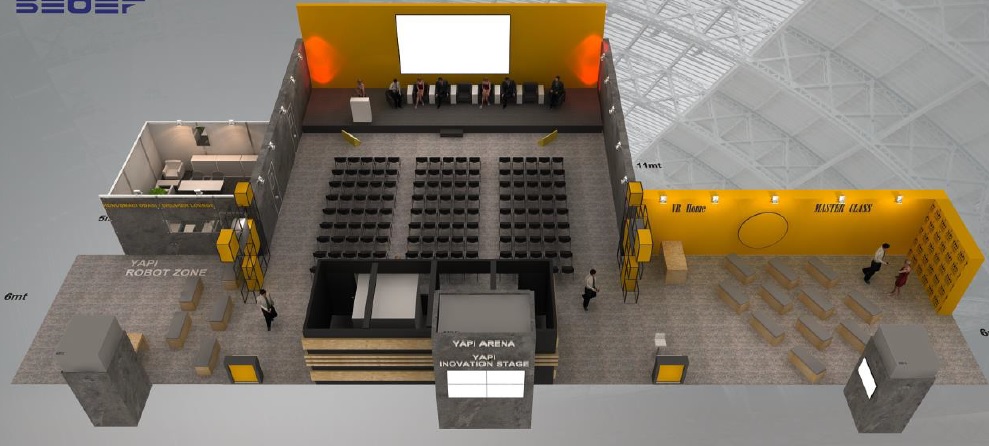
You can see the stage location in the technical documentation sent to us by the organizers. I’d like to share some photos from my presentation so you can visualize it:
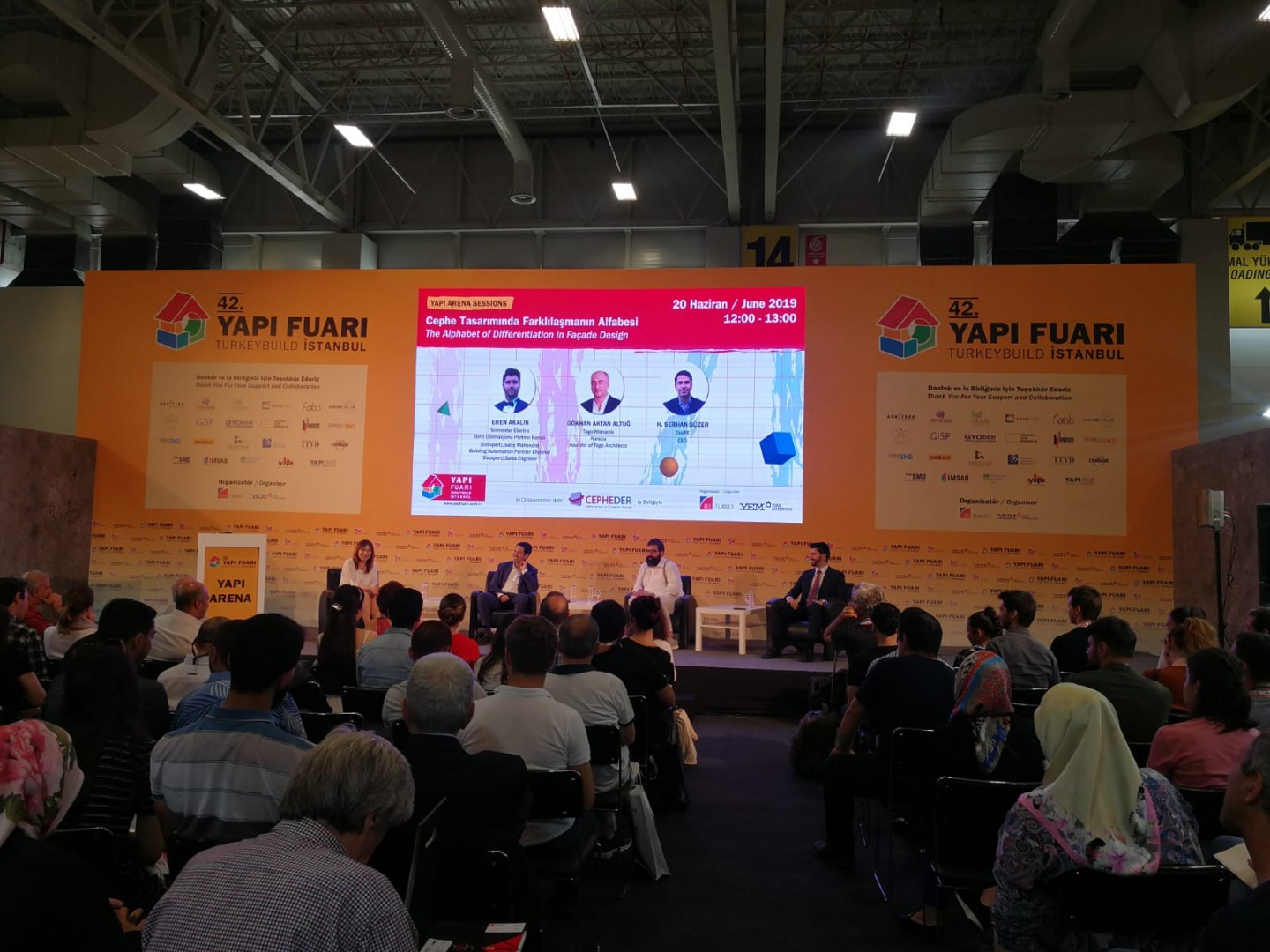
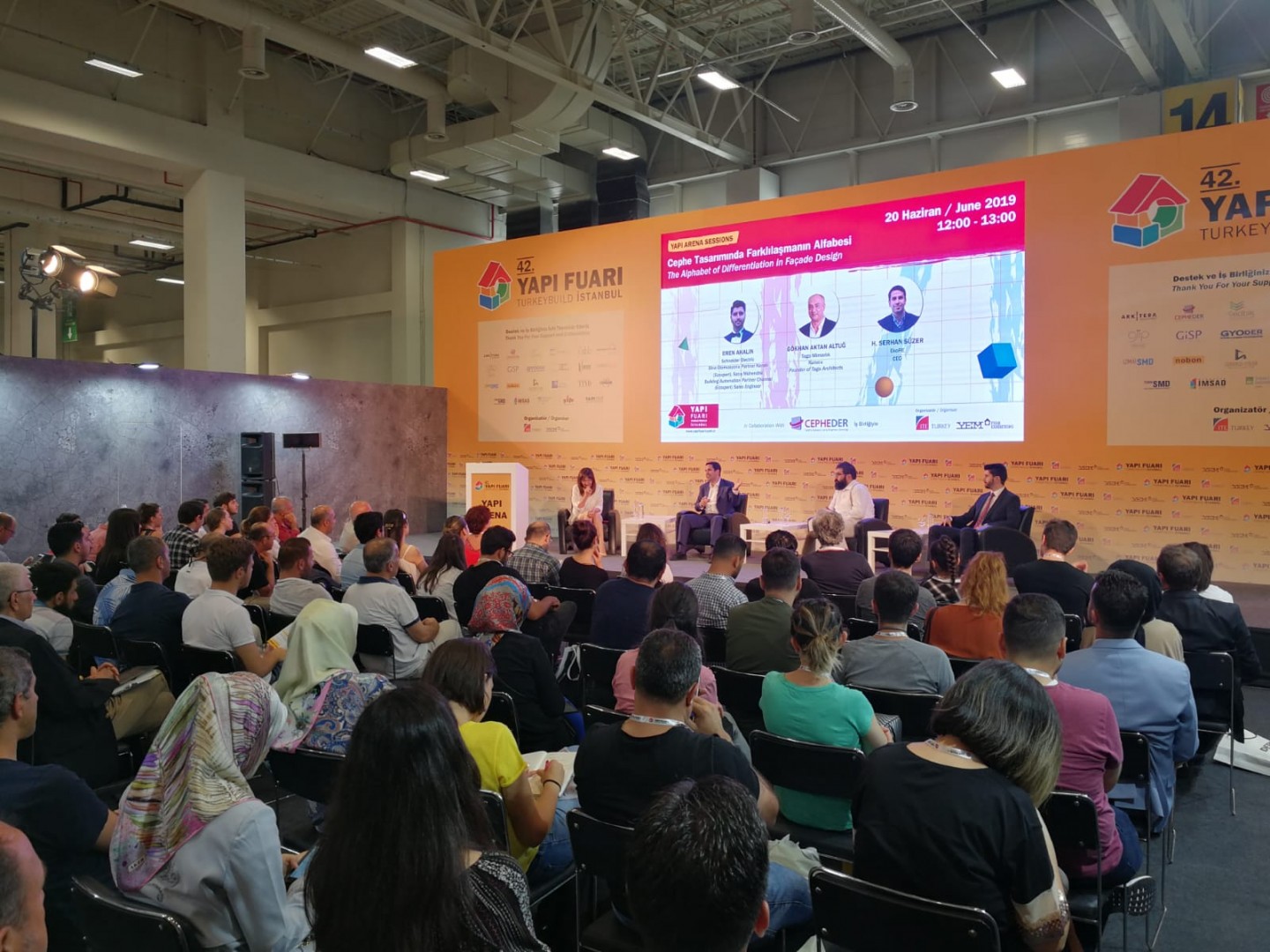
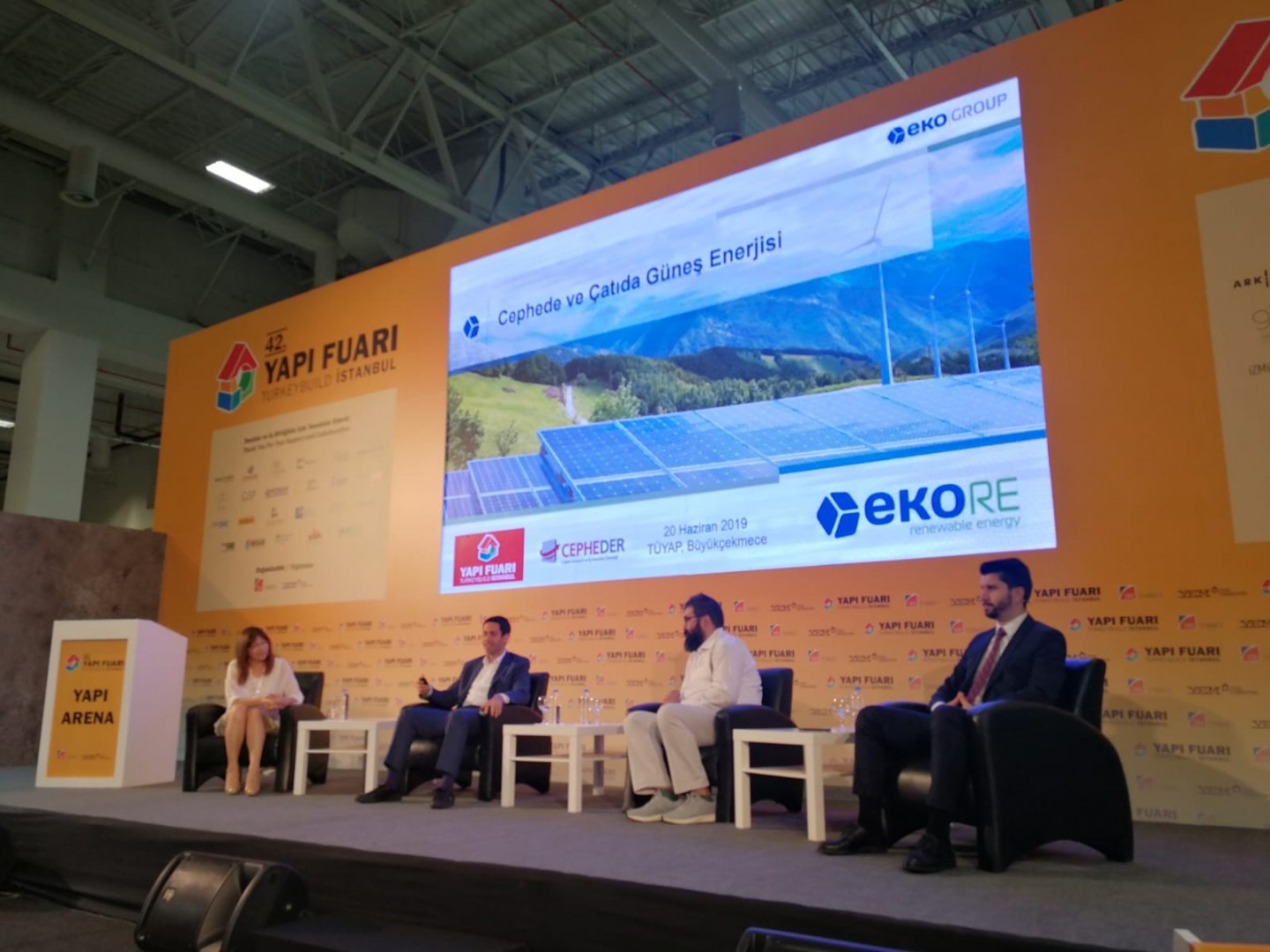
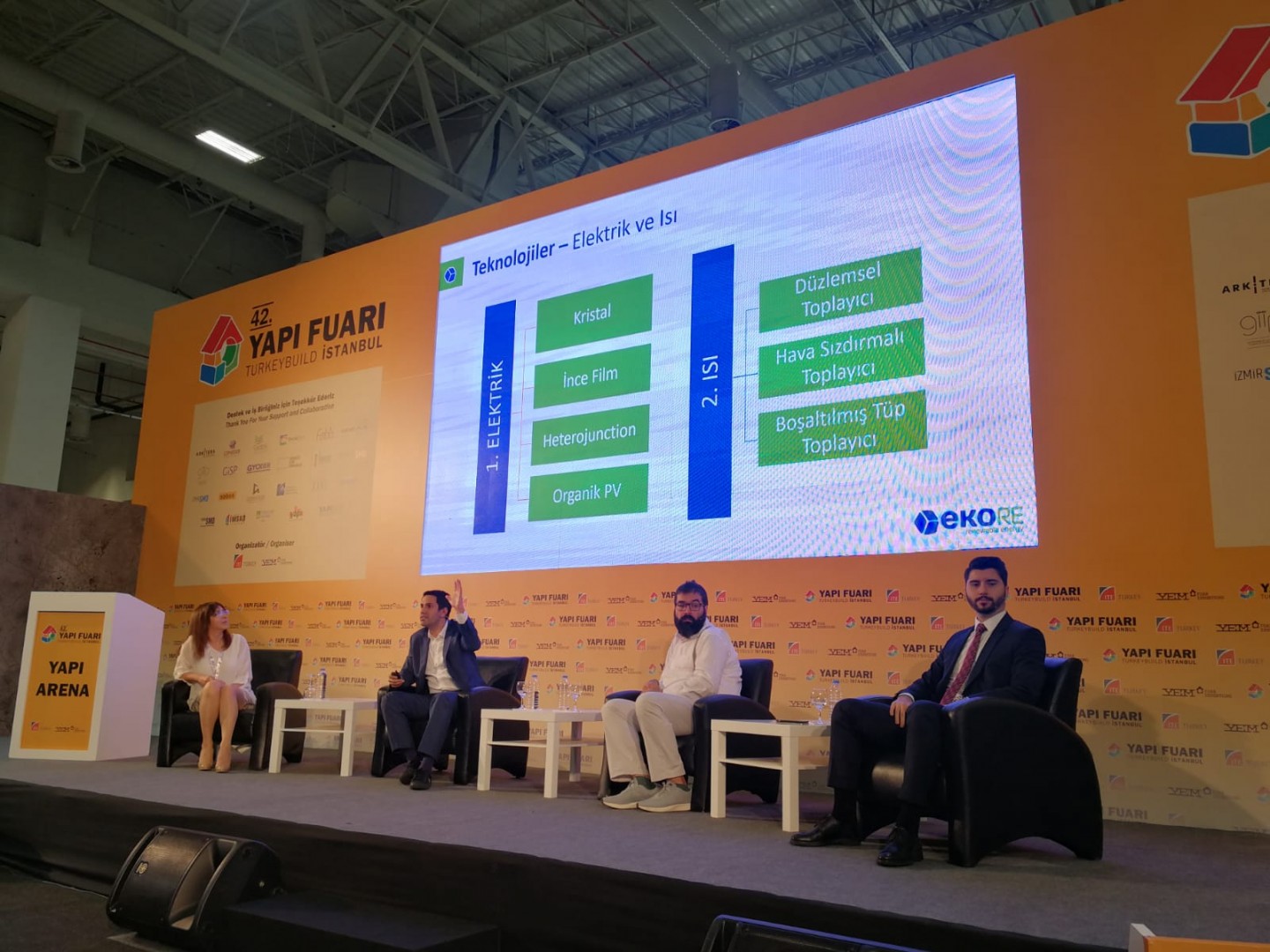
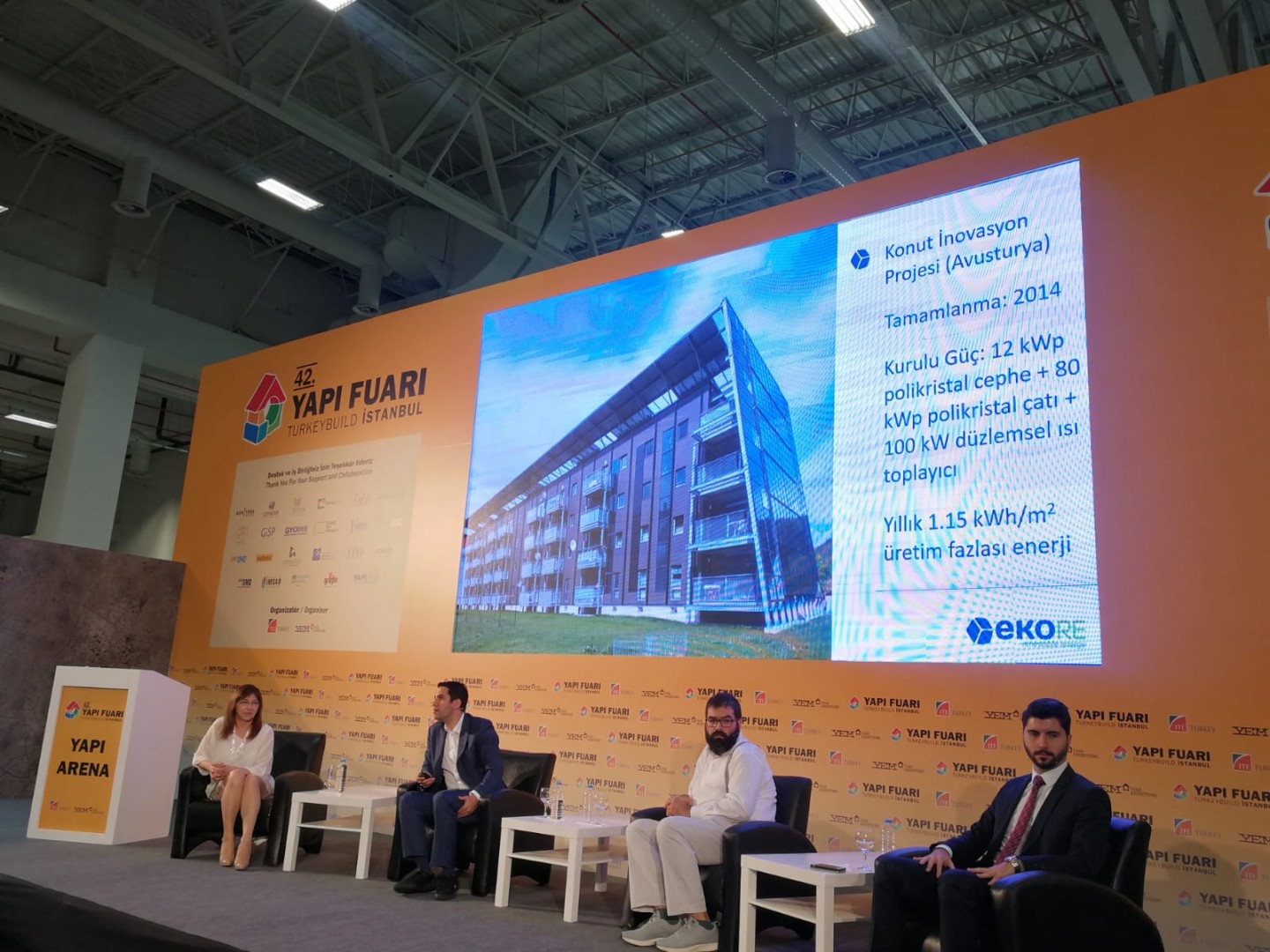
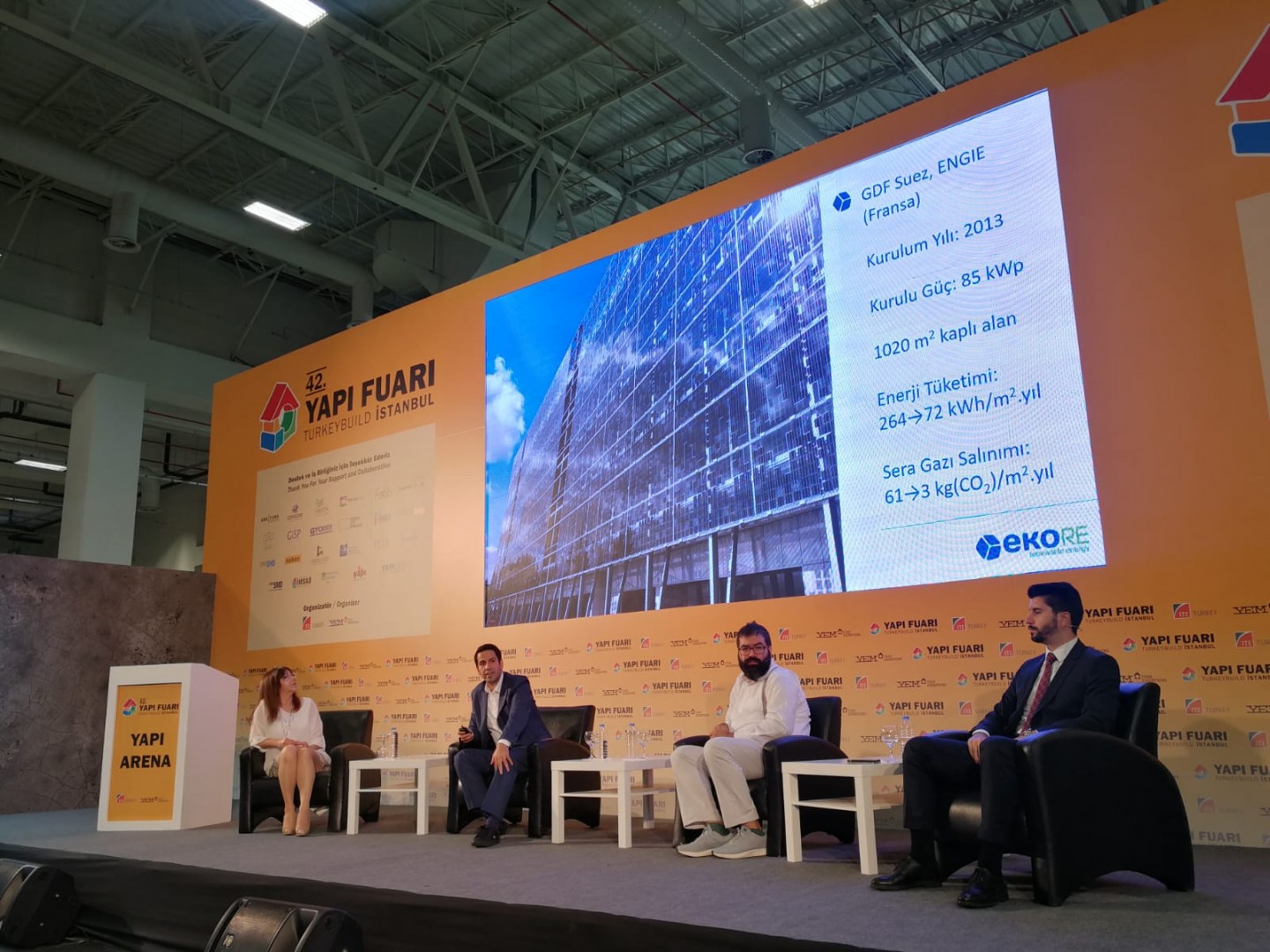
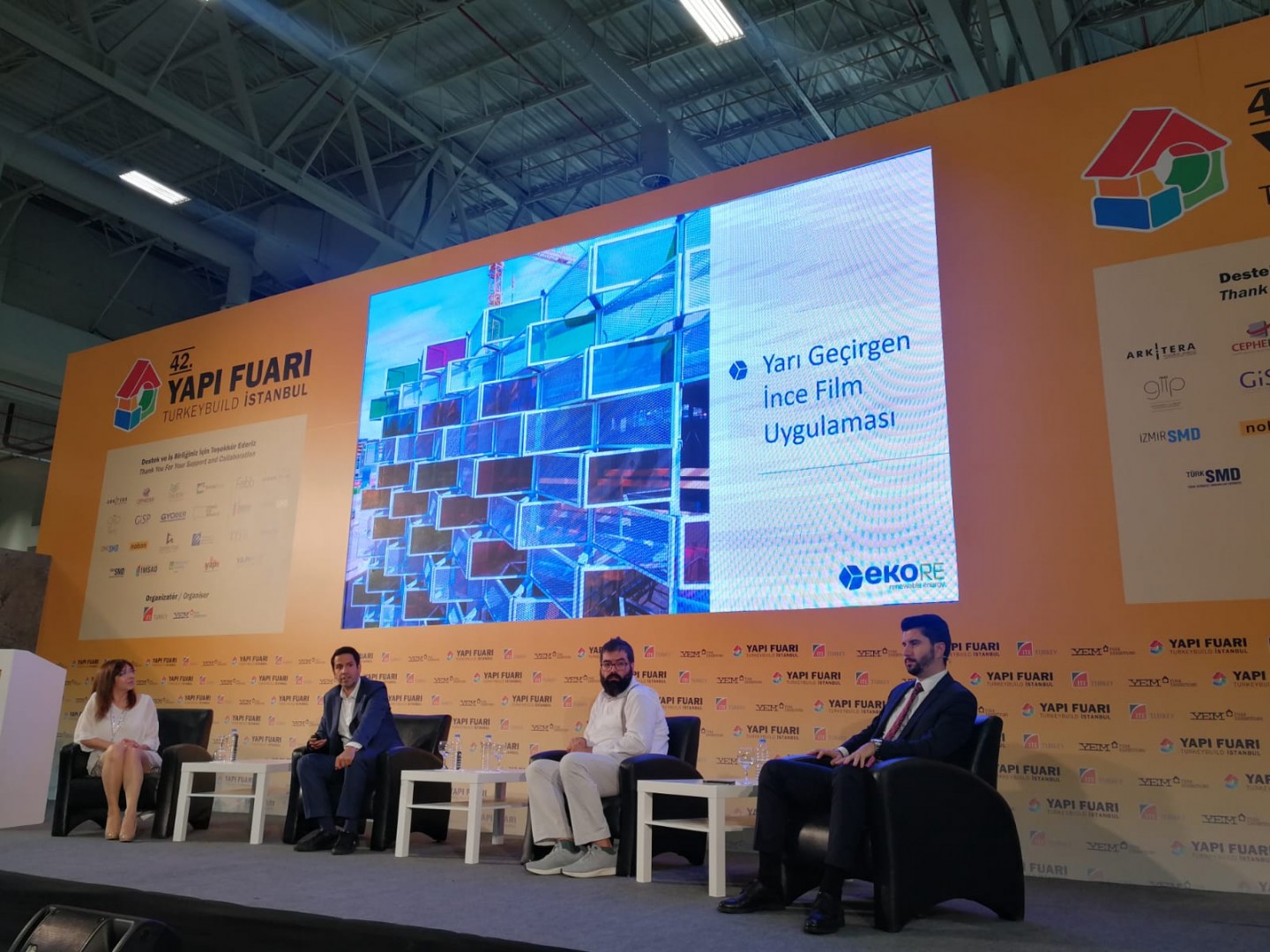
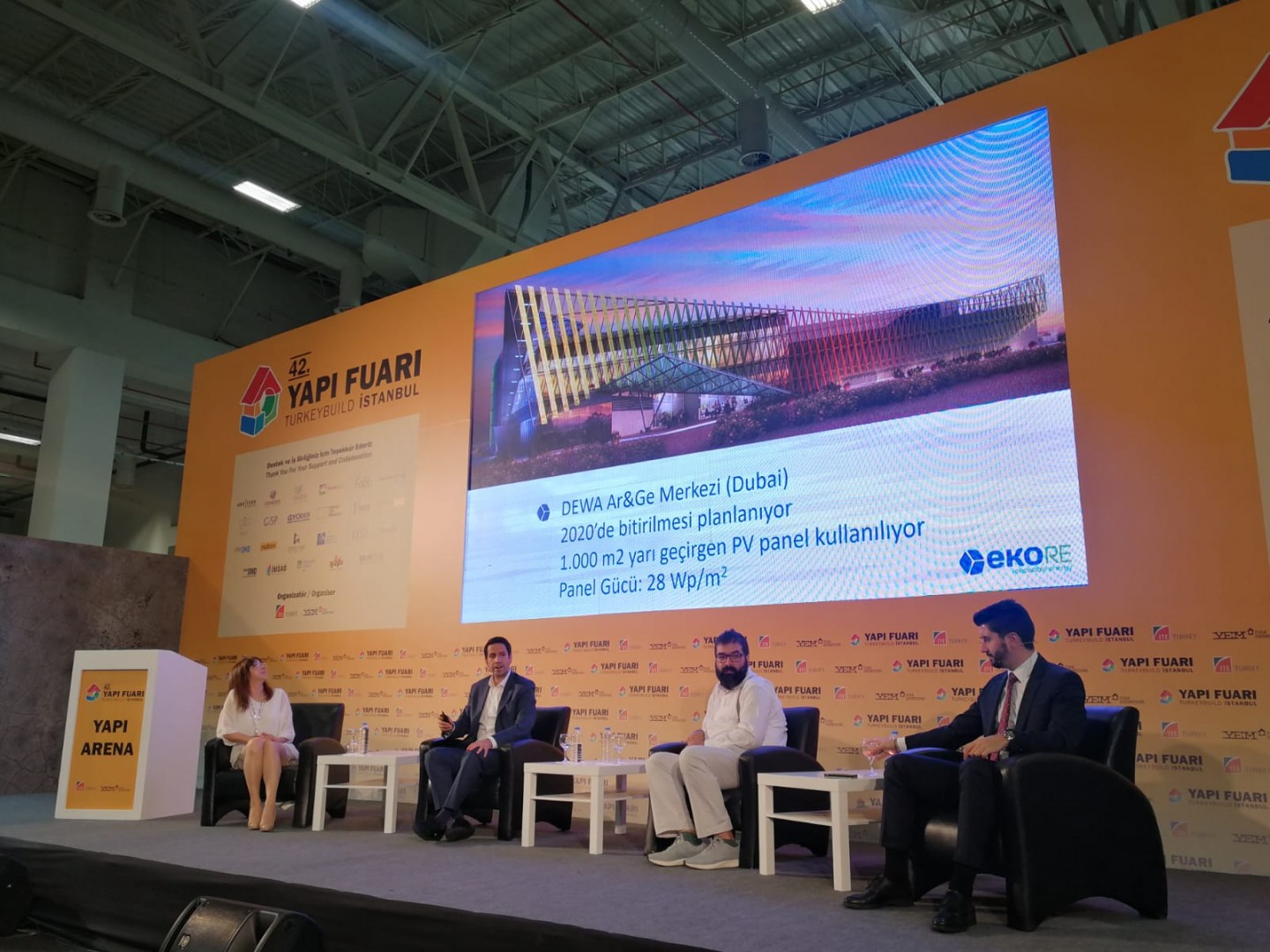
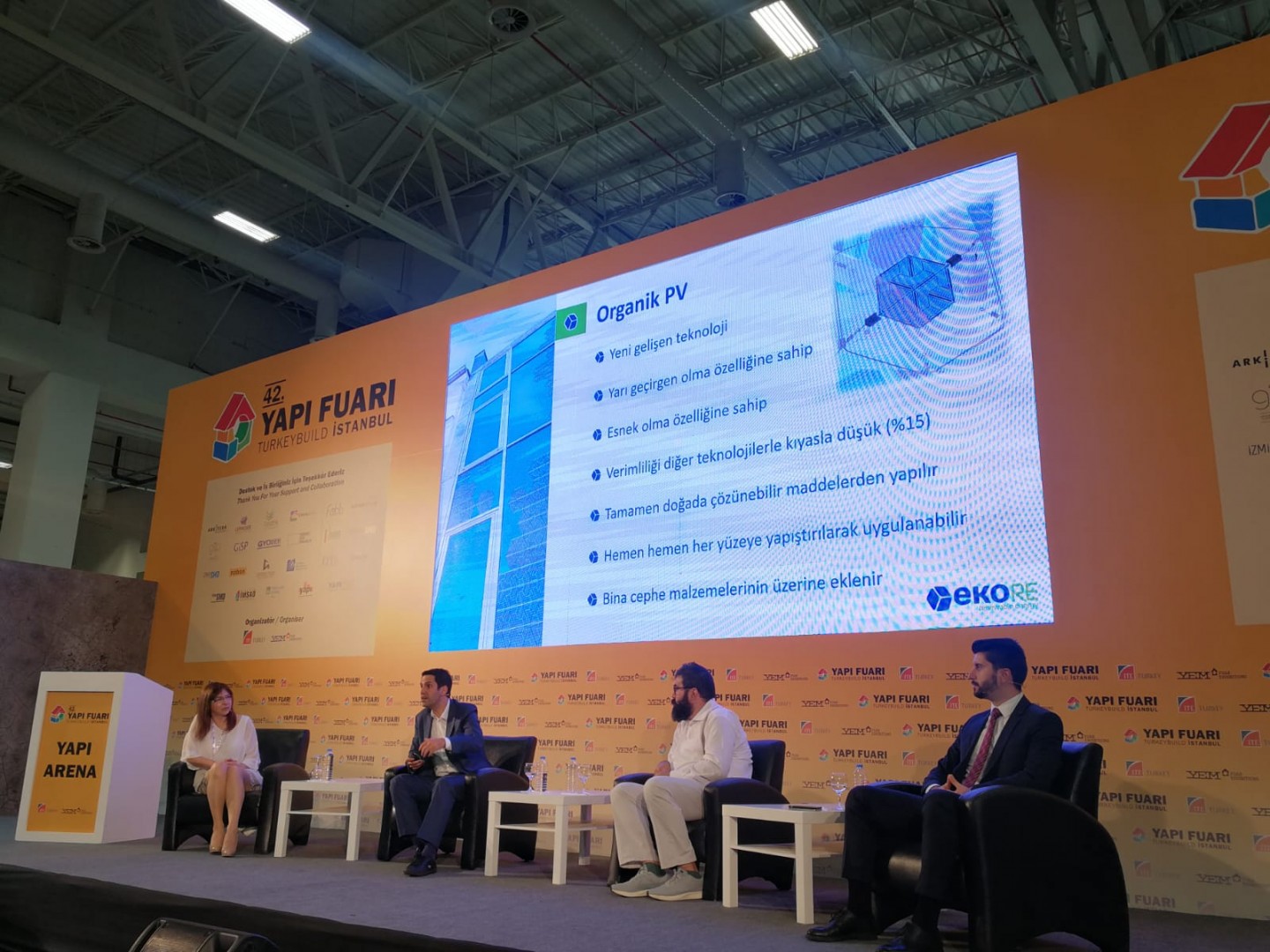
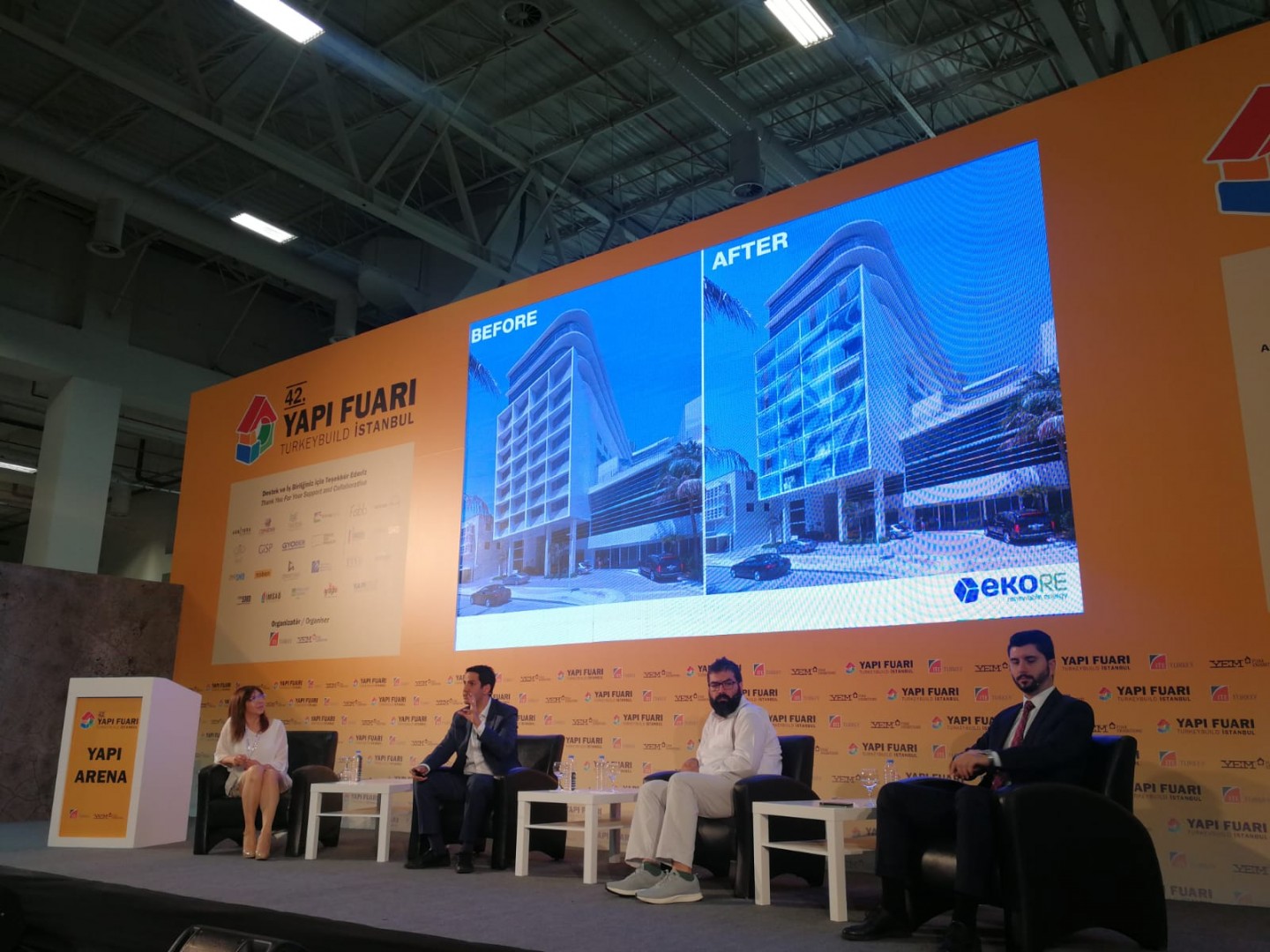
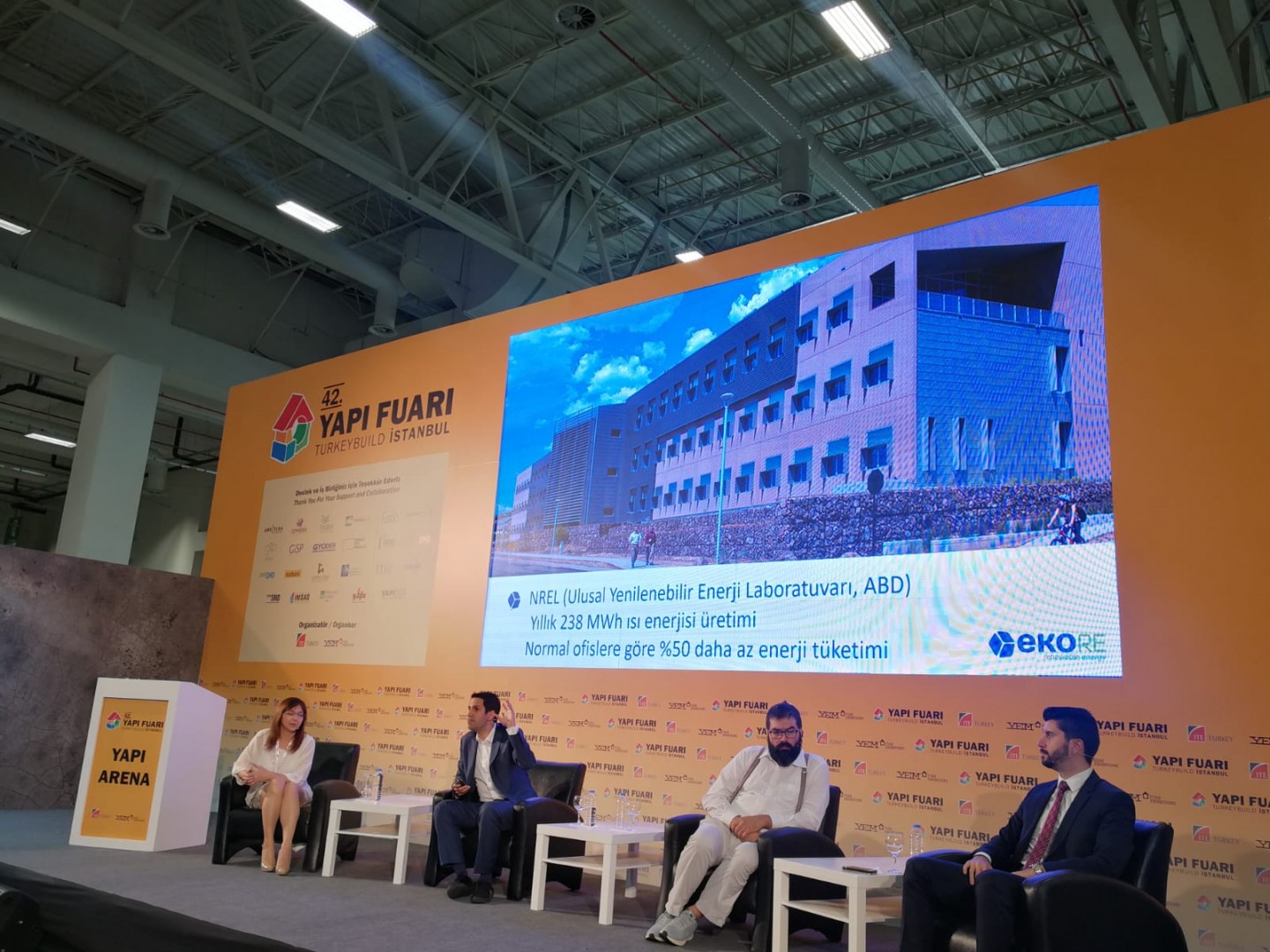
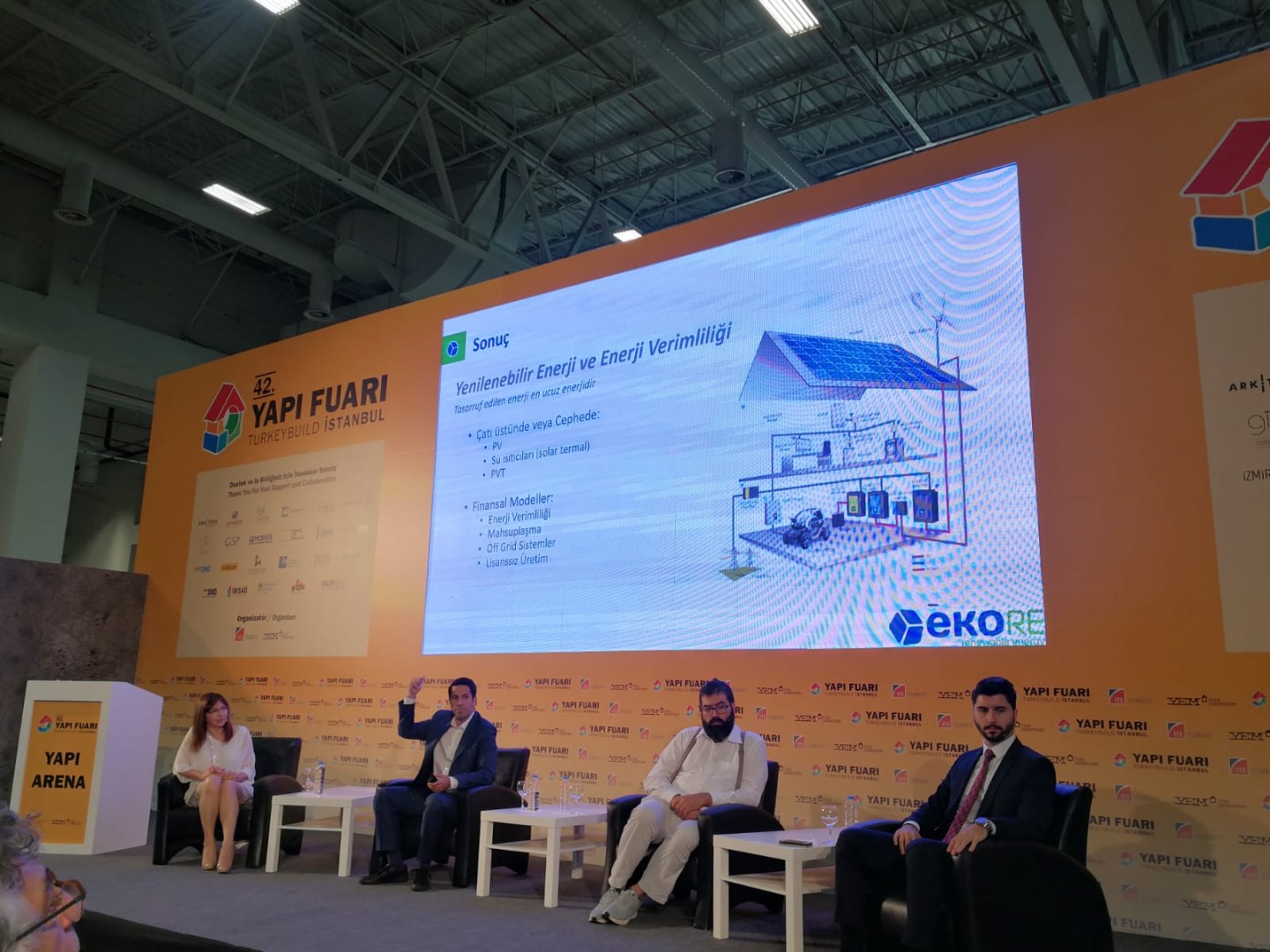
My presentation and current notes
I’d like to share my presentation with you because I think it will be helpful to my readers:
I mentioned that after focusing on the aesthetic appearance in the architectural presentation on the facade, I would emphasize function and different technologies in this presentation.
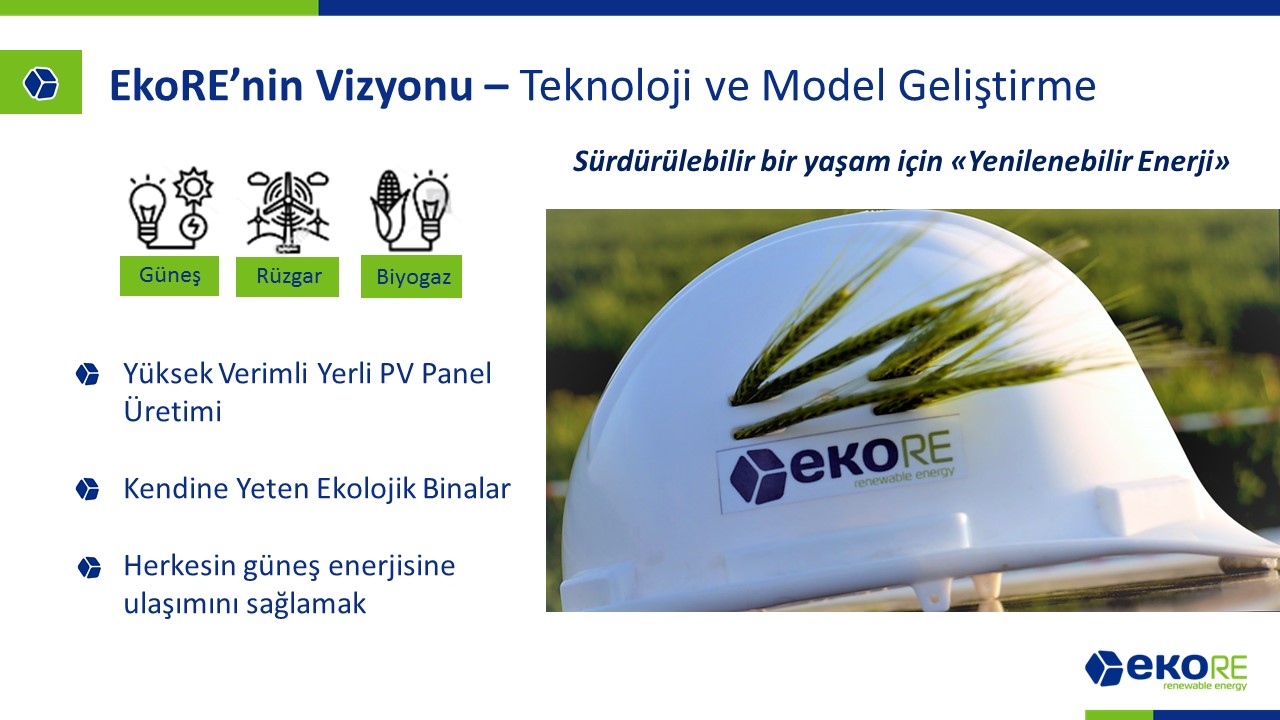
Energy production is evolving into a more modular structure. As a result, the goal is to consume the energy produced on-site. The problem is that the Turkish public is just starting to embrace solar technologies and that prices are based on dollars. EkoRE’s goal is to eliminate dollar-based pricing pressure by producing high-efficiency PV panels in Turkey, including all processes (from mining to mining), and to offer products to consumers at much more affordable prices. As a company, our most important mission is to ensure access to solar energy for all.
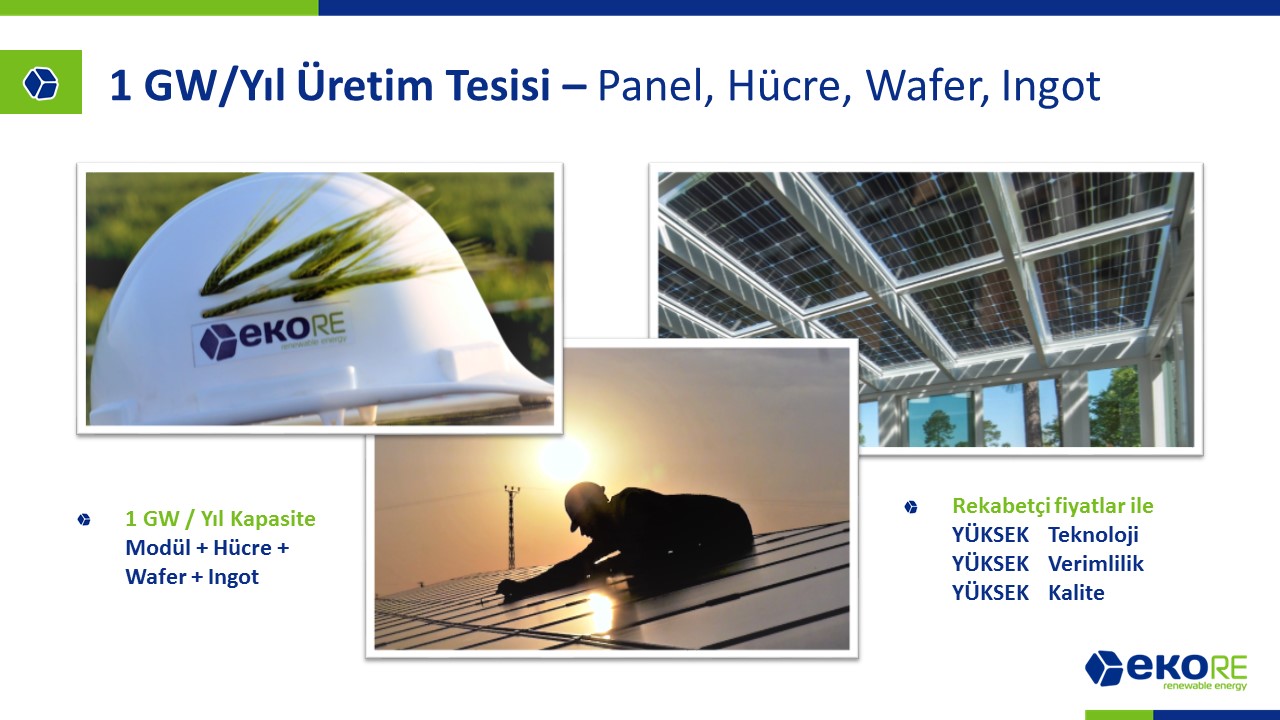
For this purpose, we held our groundbreaking ceremony in March for integrated solar panel production, which includes ingot, wafer, cell and module processes.
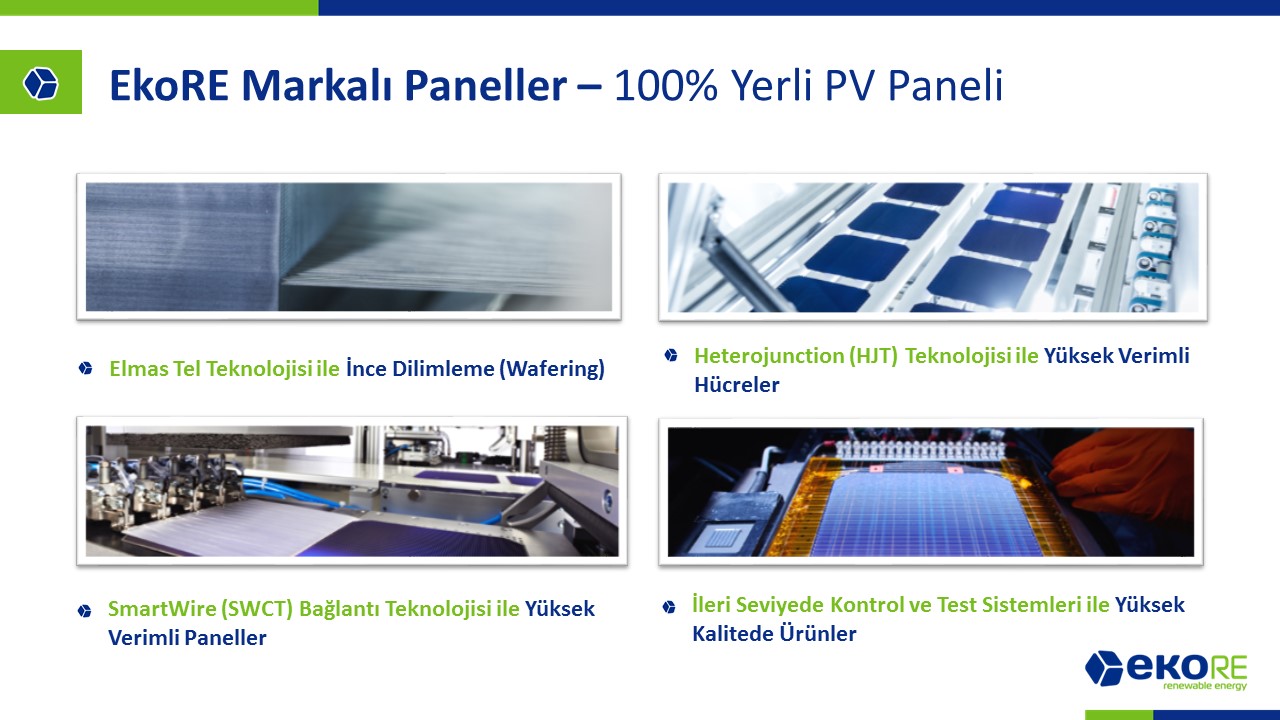
By opting for high-tech processes in heterojunction panel production, cell efficiency will be maximized, and ongoing R&D efforts will further increase panel efficiency each year. This will allow for maximum efficiency on roofs and facades, which have limited space.
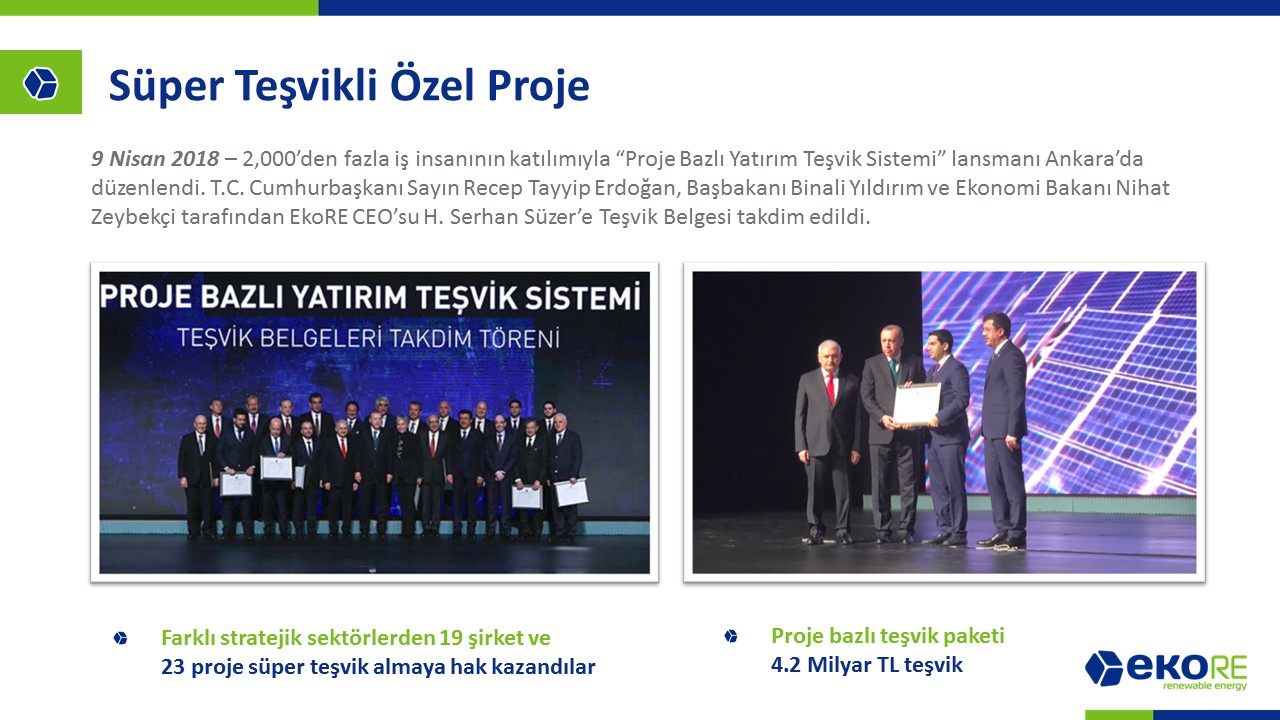
Last year, we received significant incentives for our strategically important project for the country. This visionary project, which qualified for project-based incentives, was named “100% domestic solar panel production for energy independence.”
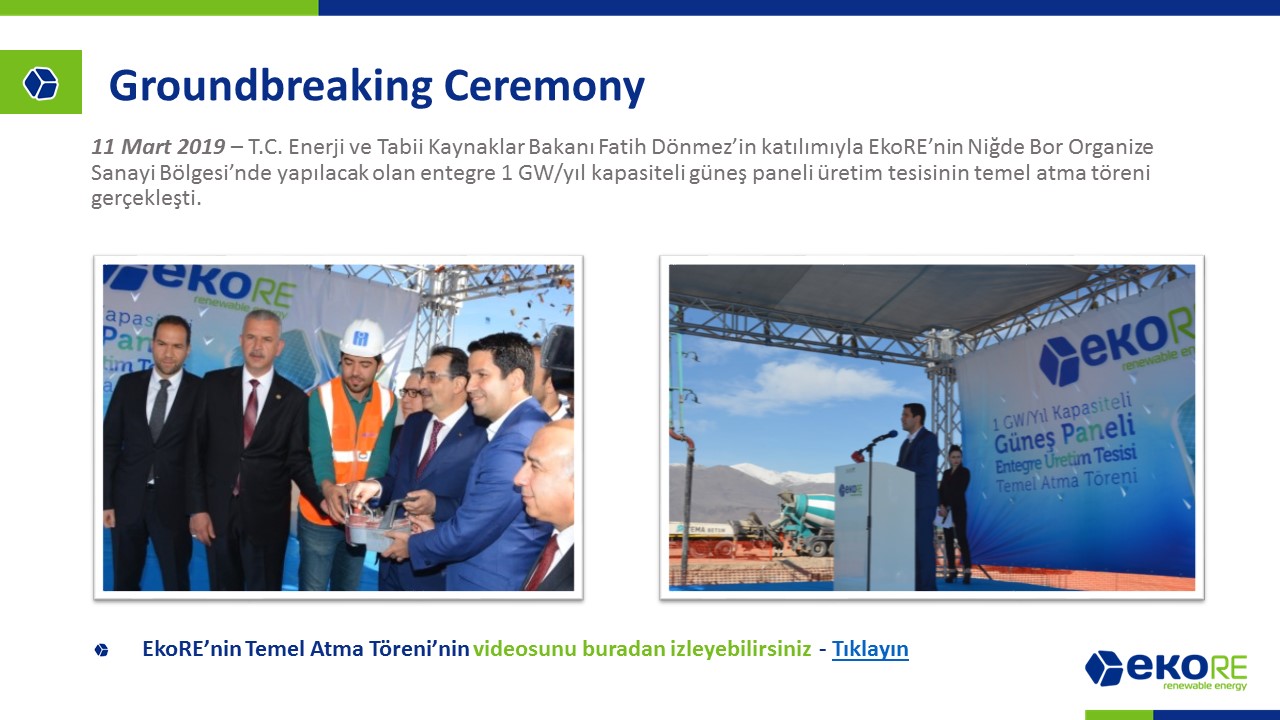
We held our groundbreaking ceremony with the participation of our Minister of Energy and Natural Resources, Fatih Dönmez. May it bring good fortune to our country.
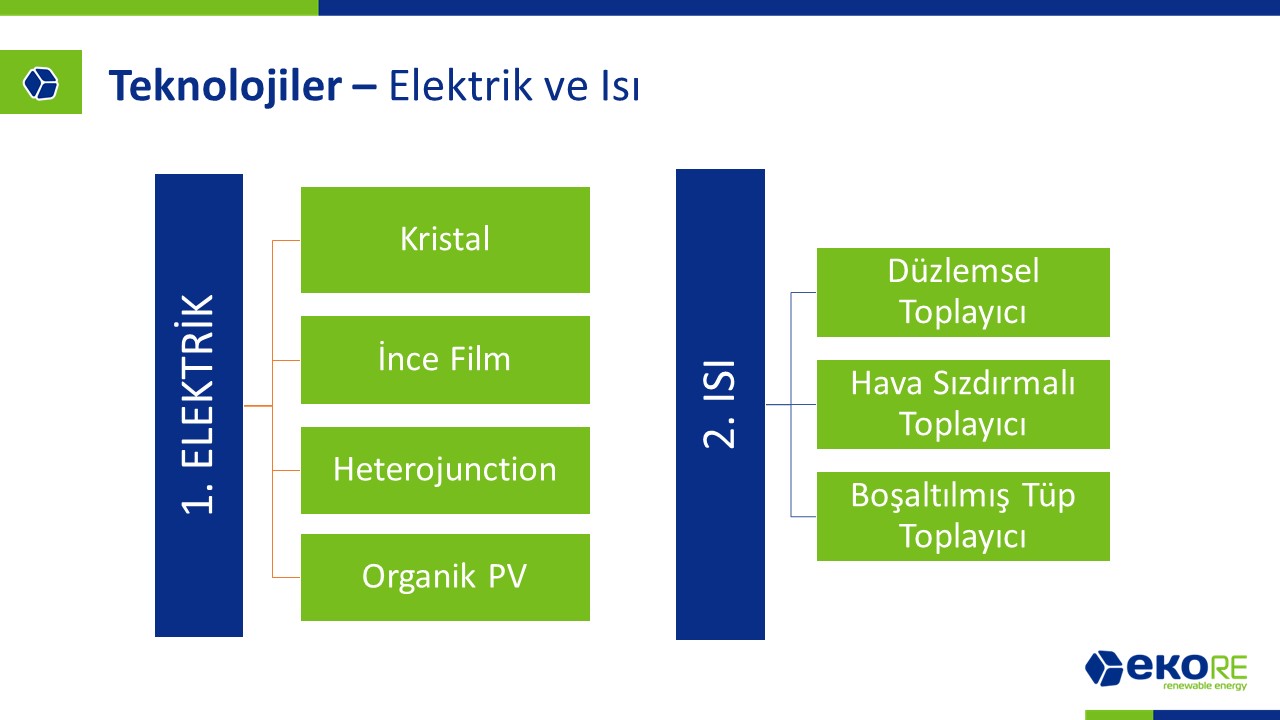
Now let’s get to the heart of our topic. The technologies used on facades are divided into two categories. The first is electrical, and the second is heat-generating.
One of Turkey’s biggest problems is energy. We are heavily dependent on foreign sources. However, the solution is actually simple. As outlined in EkoRE’s vision, we can achieve energy independence by deploying high-efficiency panels—all processes and technologies developed in Turkey—everywhere, regardless of residence or workplace, and by supporting these systems with battery technologies. The façade applications discussed in this presentation are crucial for buildings where roof space is limited.
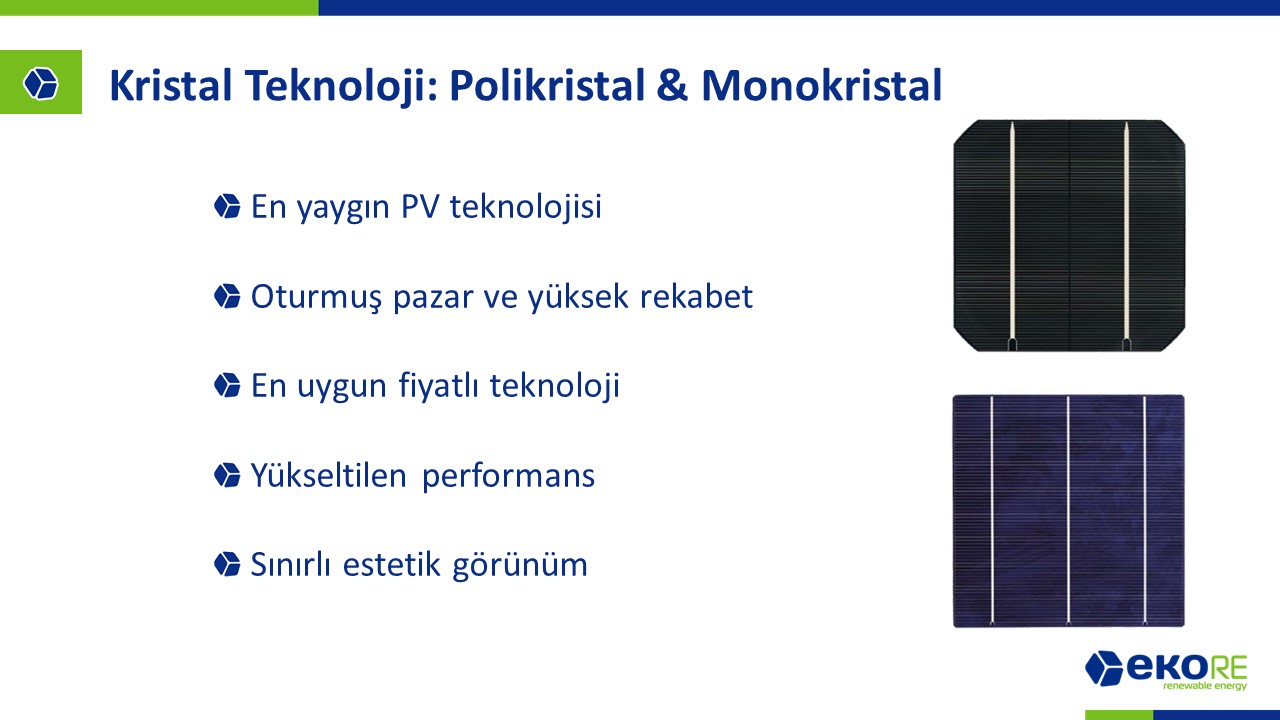
Some consider crystal technology, aside from its aesthetic appeal, to be the most useful and preferred technology. It has numerous applications, and its efficiency is constantly improving.
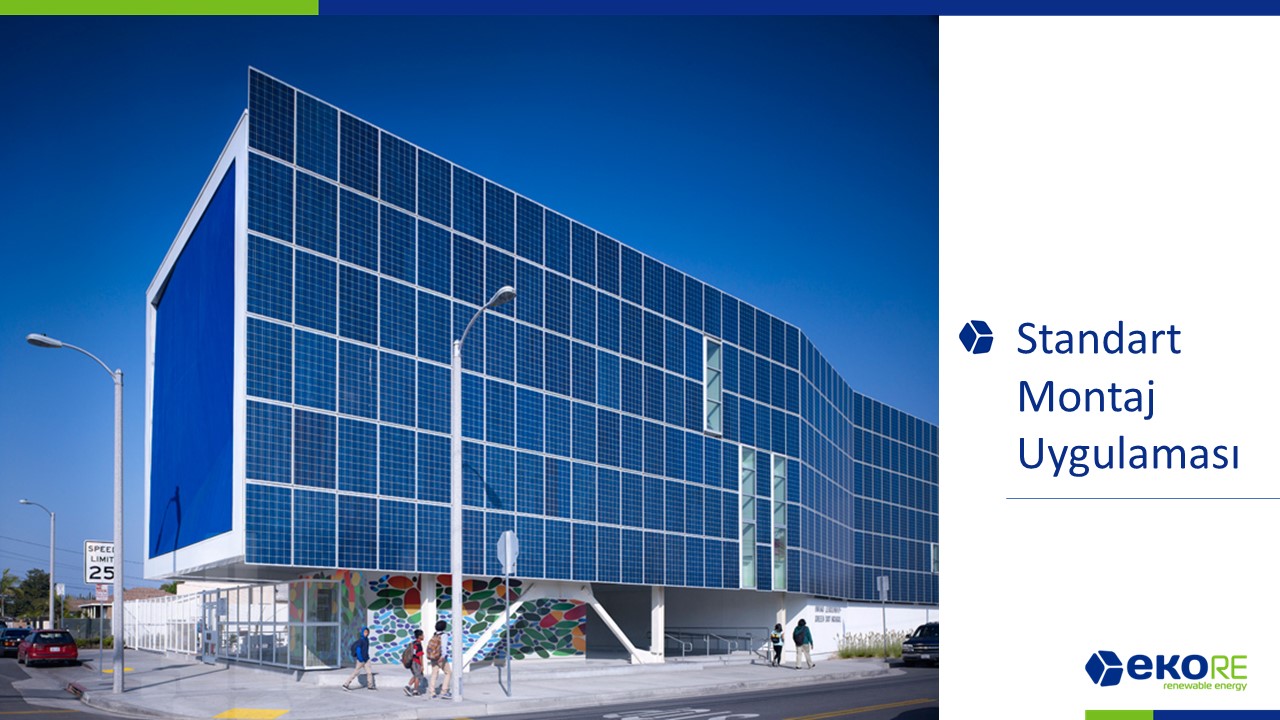
An example of crystalline technology. It’s not a popular option because the panels are angled at 90°, rather than the optimal angle of 15-25°. This reduces efficiency, but the key is using a non-functional surface for electricity generation. It’s a good example of the potential for generating electricity without wasting any space.
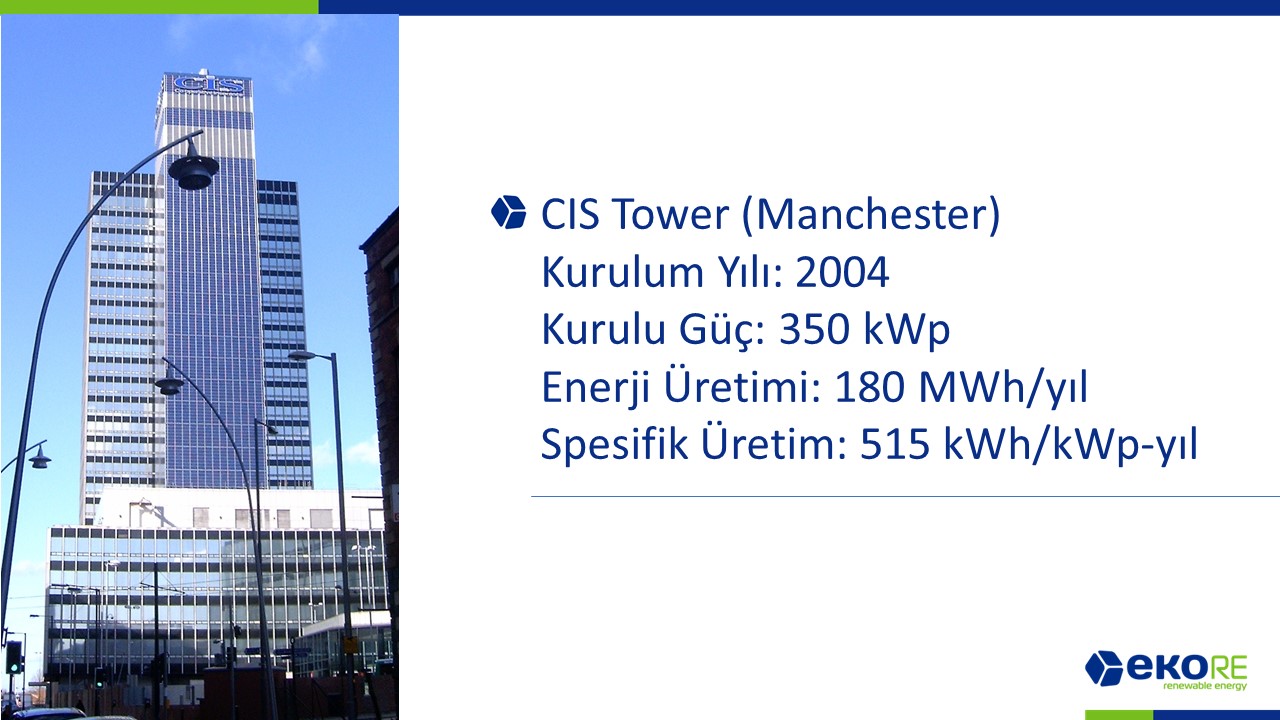
This is another example of applying crystal technology to the facade.
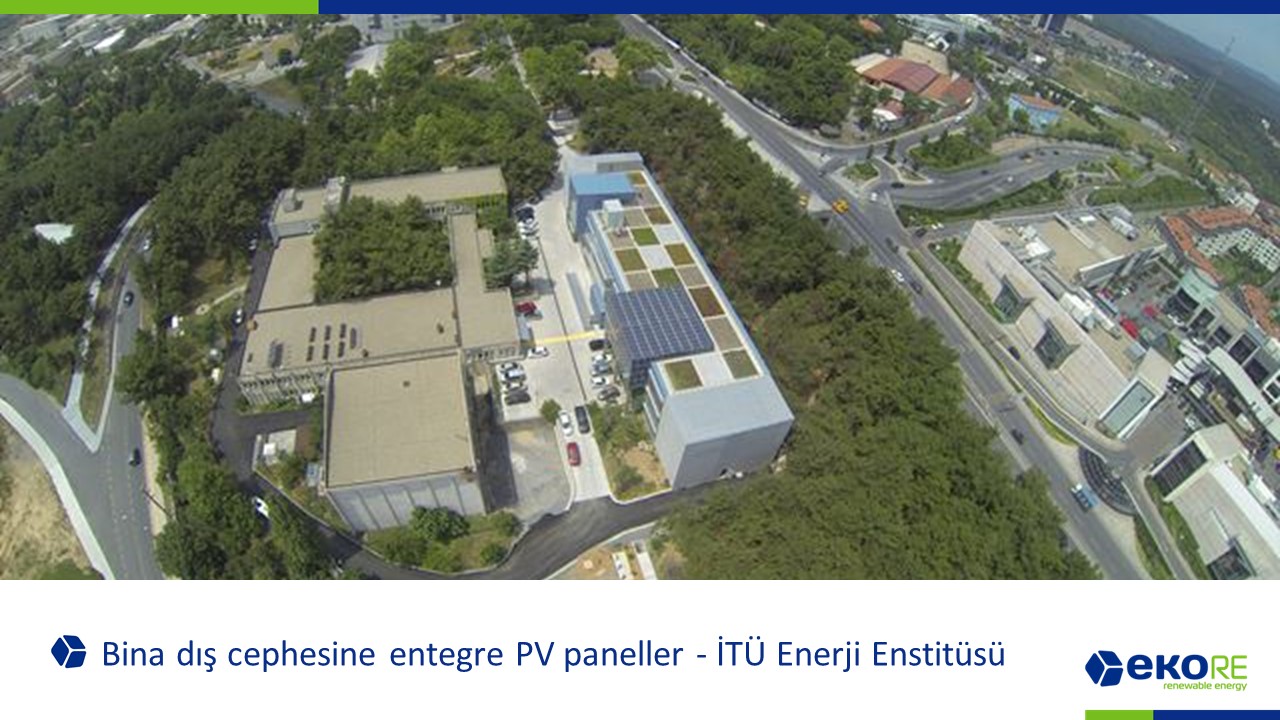
An example from Turkey. The roof and facade of the ITU Energy Institute are covered with solar panels to generate electricity. This way, a portion of its energy needs are met by solar energy.
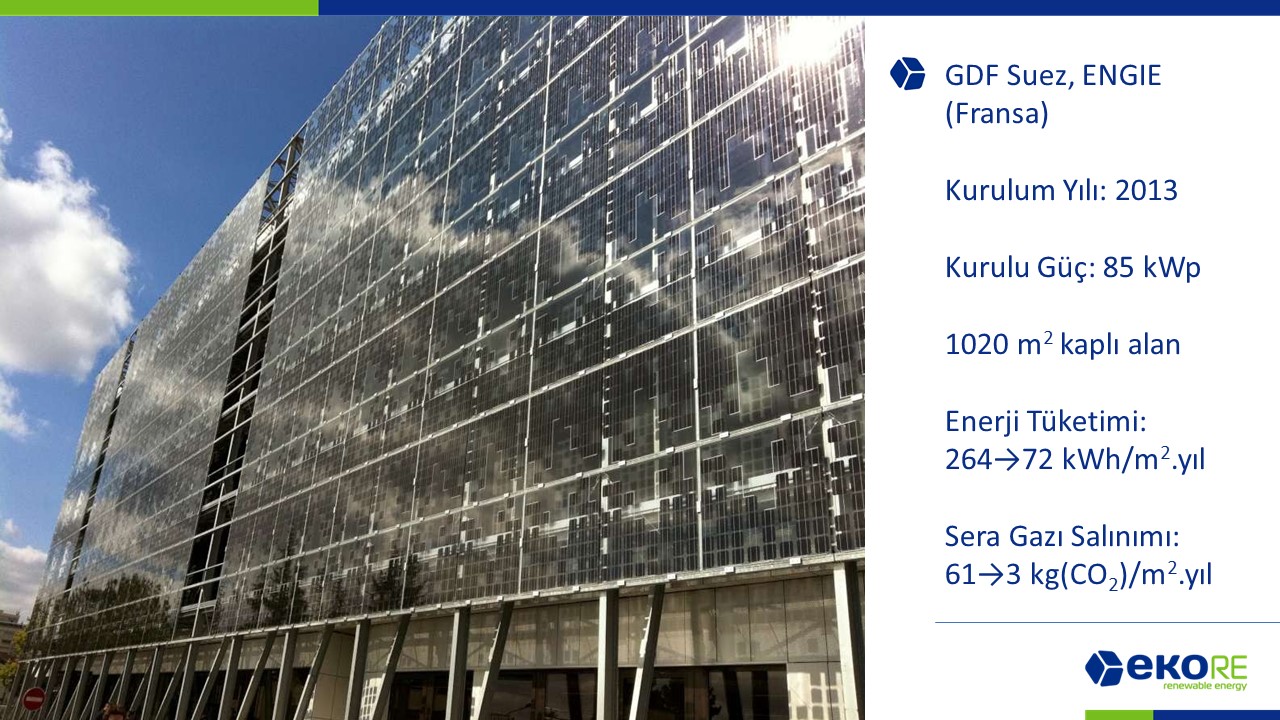
The world is increasingly turning to renewable energy sources. In the future, fossil fuels will be used solely as raw materials. Among renewable energy sources, solar energy technologies are the most promising in terms of their wide range of applications. Inspired by the rapidly developing renewable energy trend, the world-renowned French natural gas company, formerly known as Gas de France, has dropped the word ‘gas’ from its name and adopted the more appealing name ENGIE. In this example, we see ENGIE’s office building, designed with both functional and aesthetic appeal, using glass-on-glass monocrystalline cells.
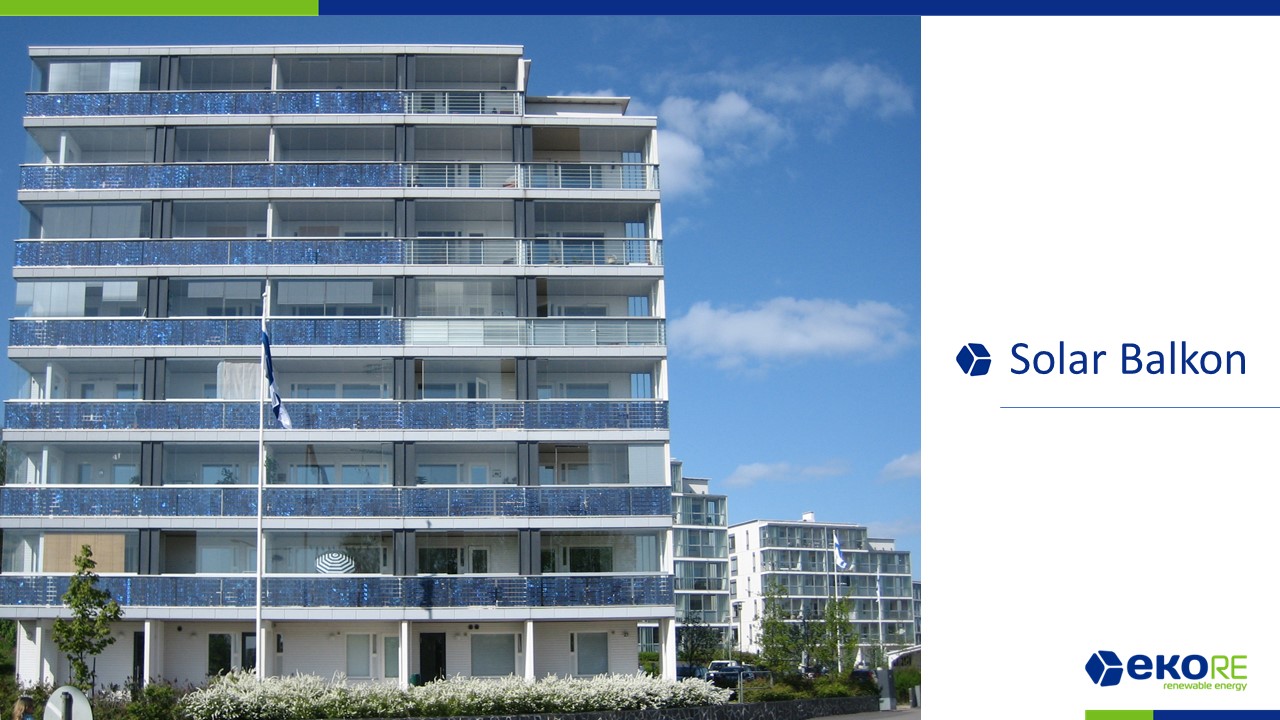
In this example, polycrystalline glass-to-glass panels are integrated into the balcony sill, creating another aesthetically pleasing appearance. This is another innovative step towards zero-energy buildings.
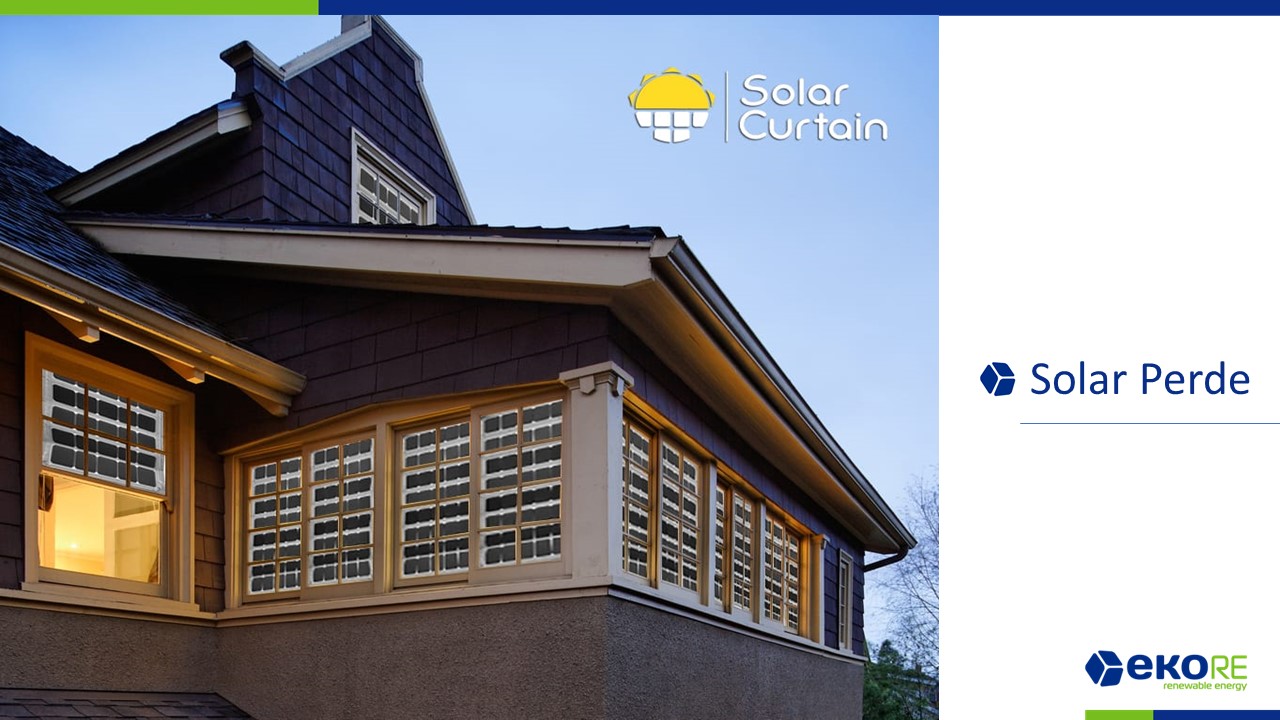
In solar curtains, which are a much simpler application, monocrystalline cells are sewn into the curtains, allowing you to generate electricity while protecting your home from heat and sun during the day.
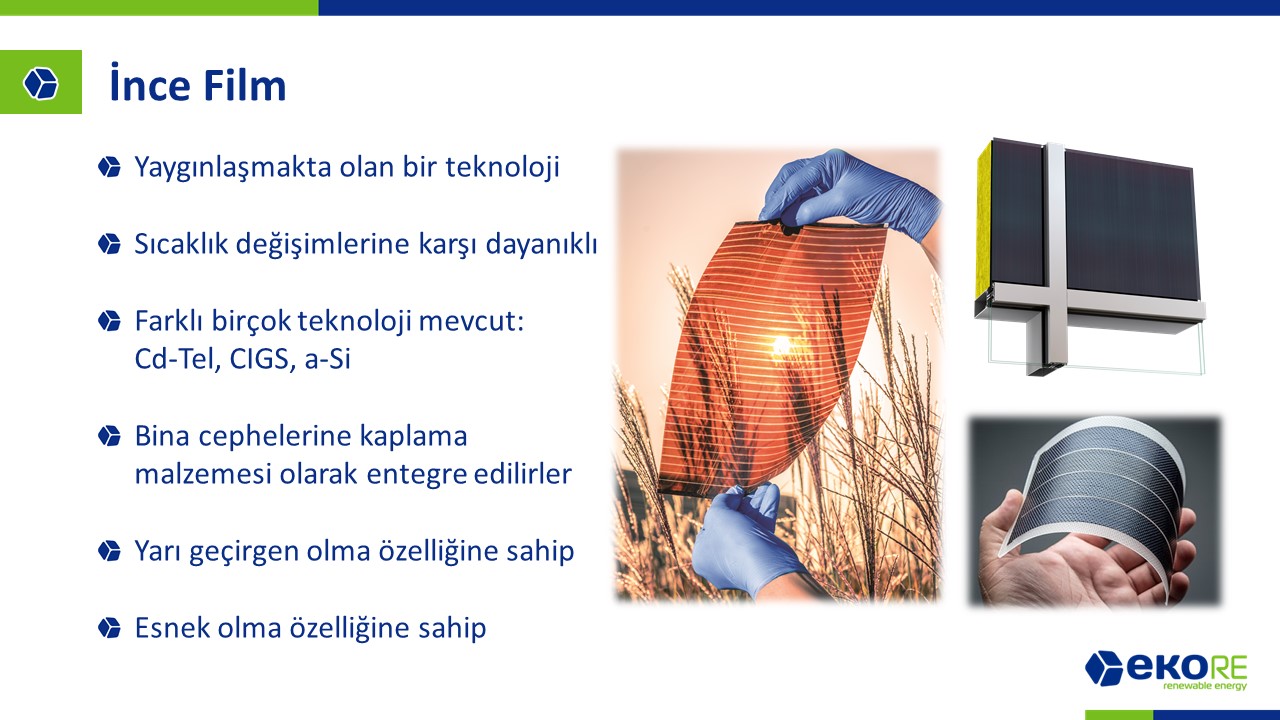
It’s a developing technology. While the price difference between it and crystalline technology has recently widened, this technology offers distinct advantages. The most important of these is its much lower temperature coefficient compared to crystalline panels. This means it suffers from much less efficiency loss in hot weather than other technologies. Its semi-permeability and the ability to produce flexible panels also provide numerous application options.
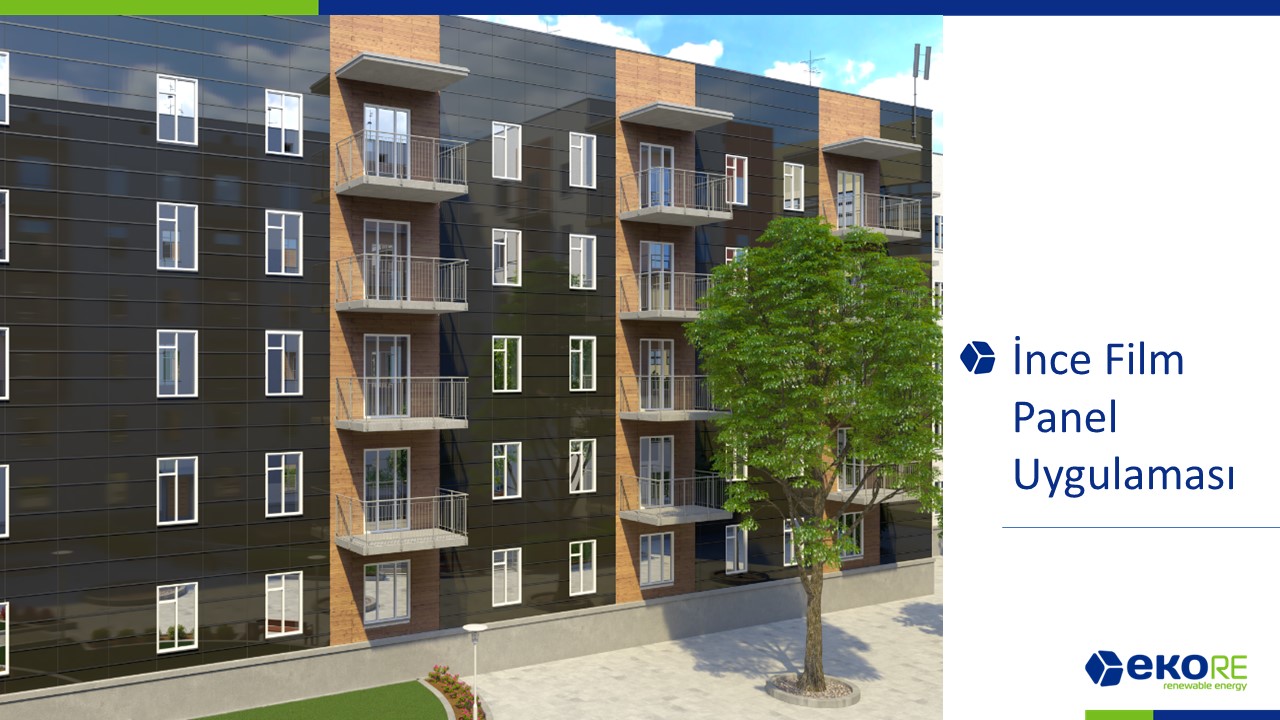
An aesthetic thin film facade application.
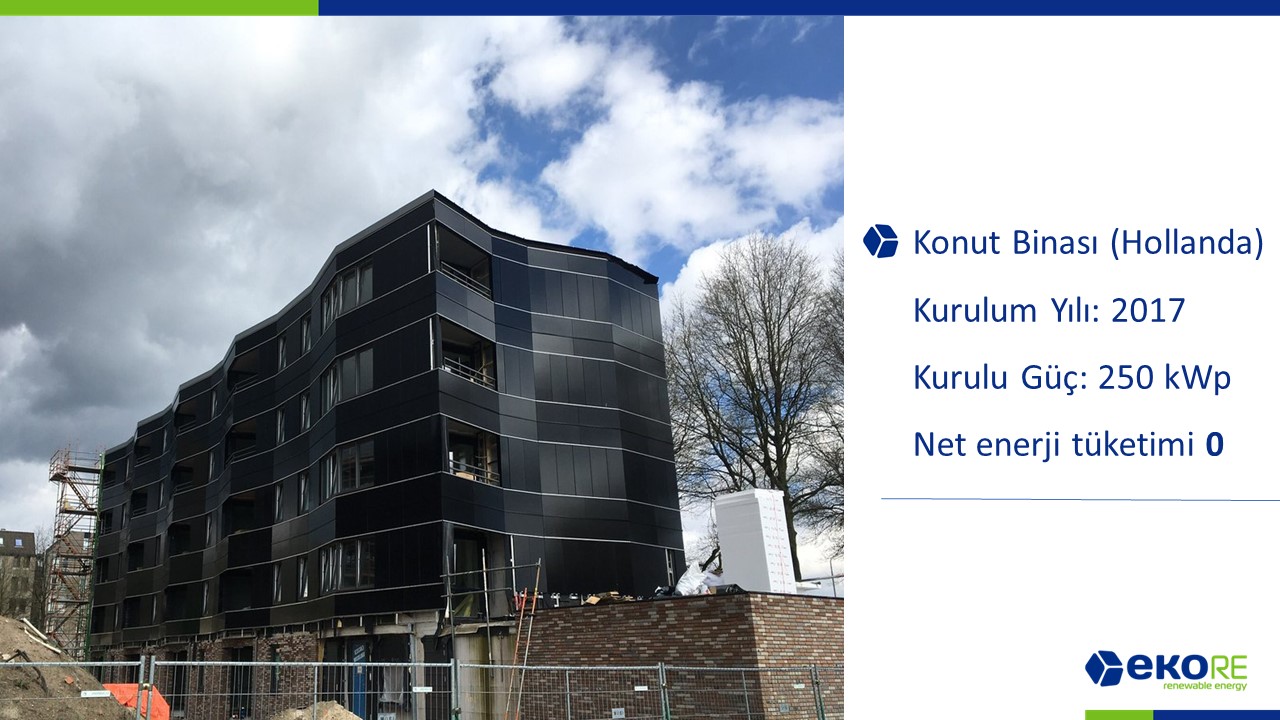
The building’s three facades and roof are clad in panels. The panels provide the energy needed for heating and cooling, thanks to heat pumps.
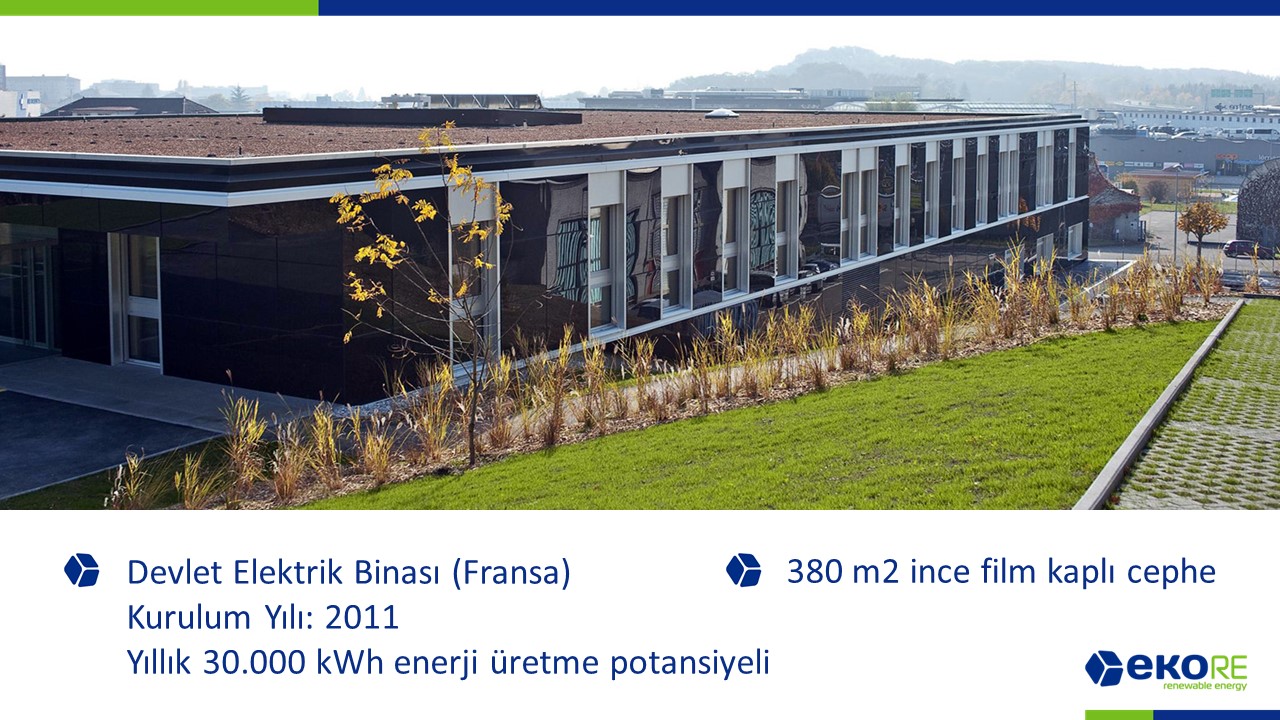
Another example of the use of thin film panel technology on a facade, where it is almost impossible to distinguish the difference from normal building facades.
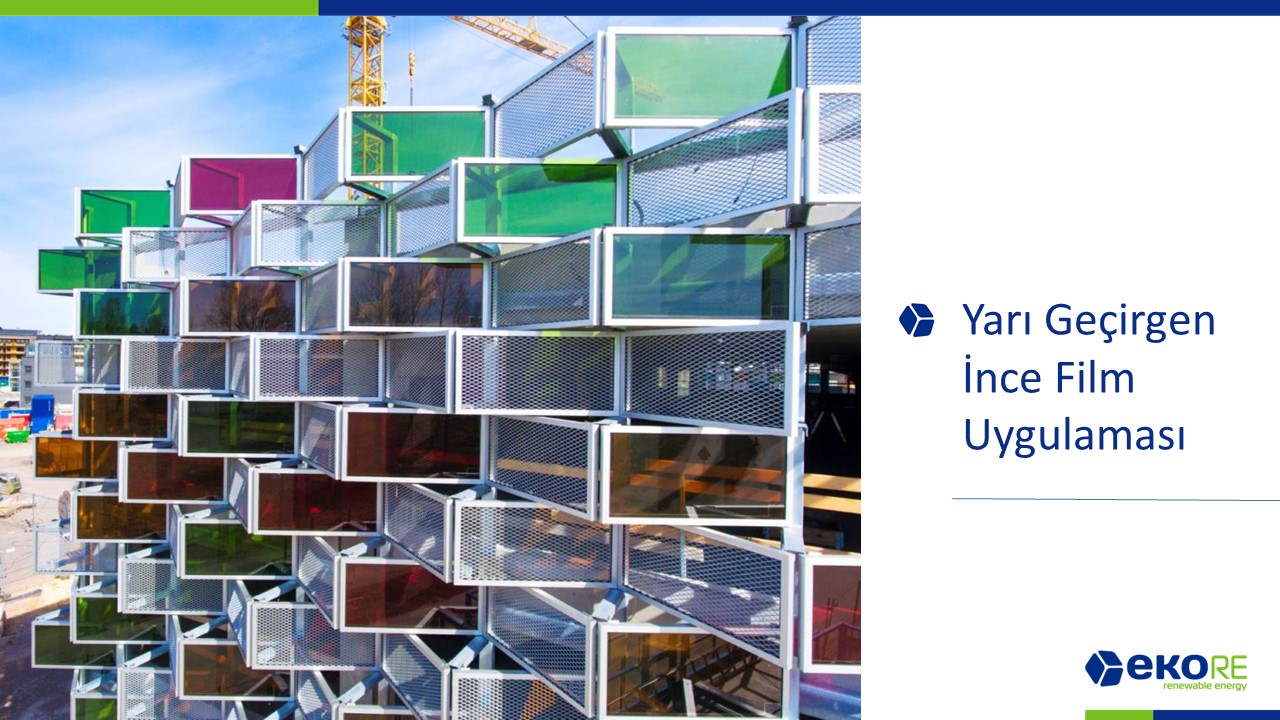
Each of the glass-like surfaces, in various colors, is actually a solar panel. Another aesthetic design utilizes semi-permeable thin-film technology. Thanks to such projects, every building can become a power plant, meeting the electricity demand in its surroundings.
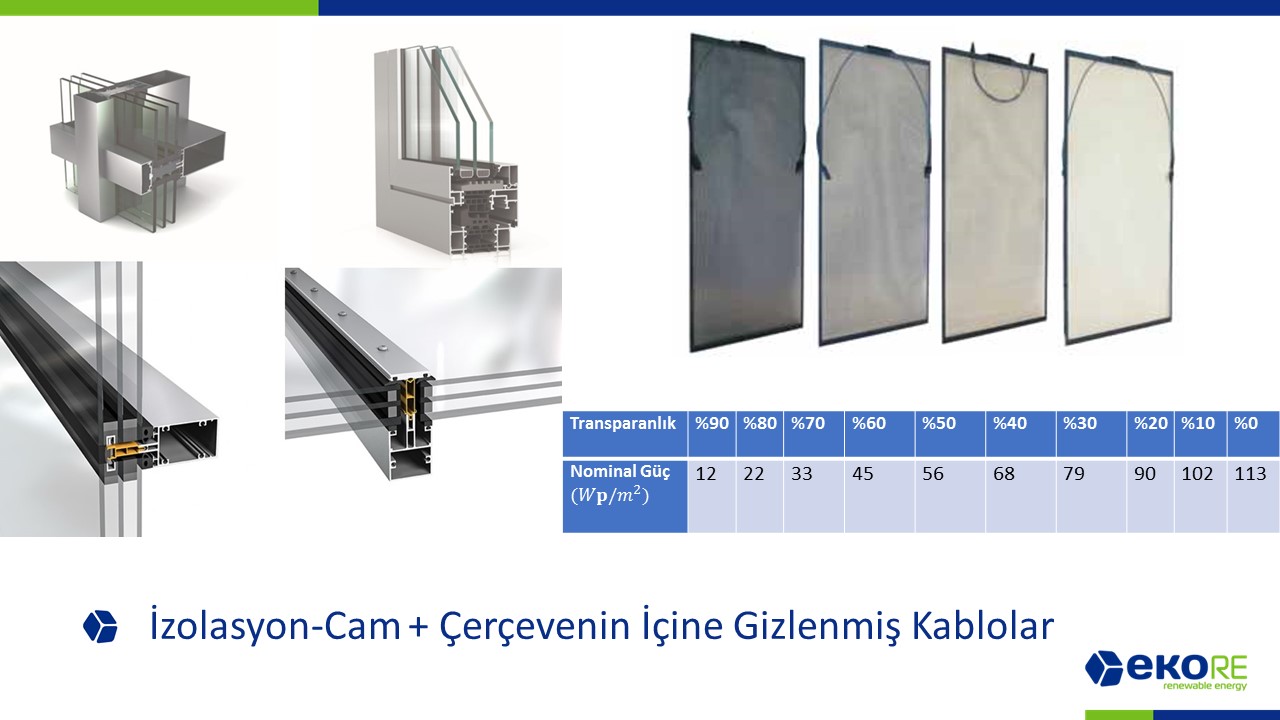
This technology generates solar energy while simultaneously providing shade. This reduces cooling costs. Energy loss is minimized thanks to the use of insulated glass. Products with varying transmittance levels can be selected depending on the application. The design, which directs the generated electricity to the desired location thanks to cables hidden within the frame, is aesthetically similar to standard glass.
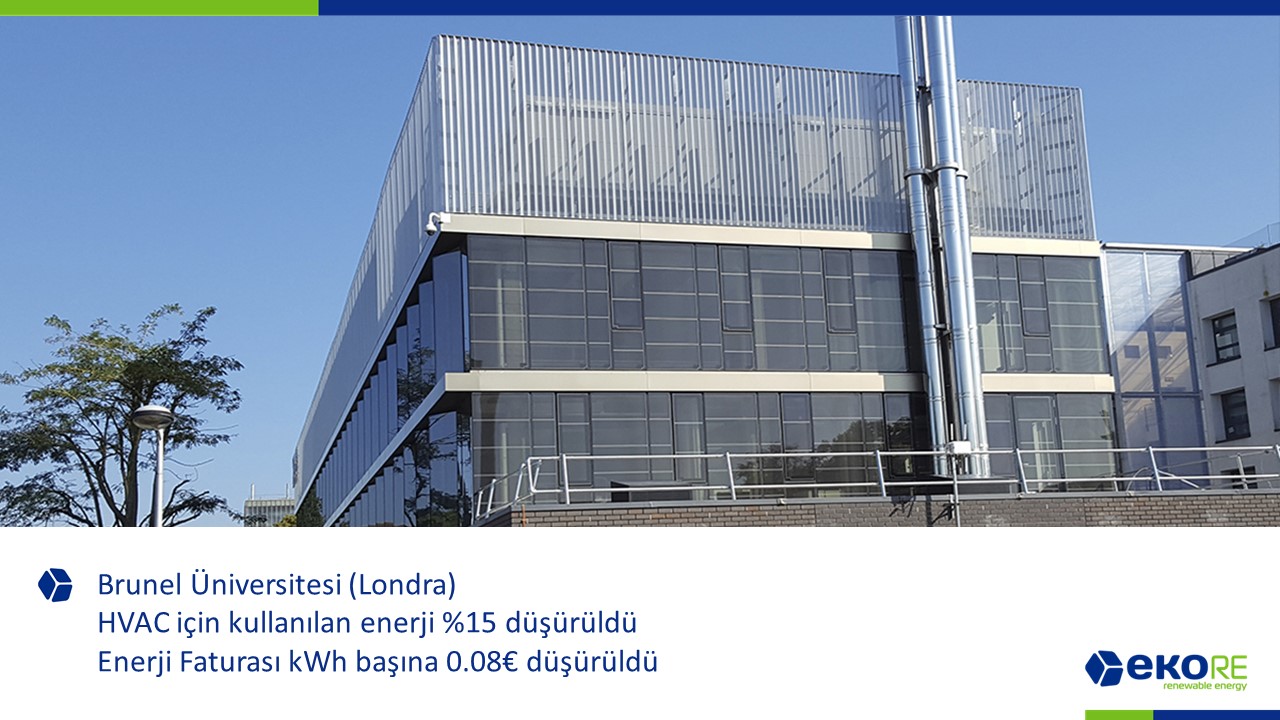
An example of a semipermeable thin film application.
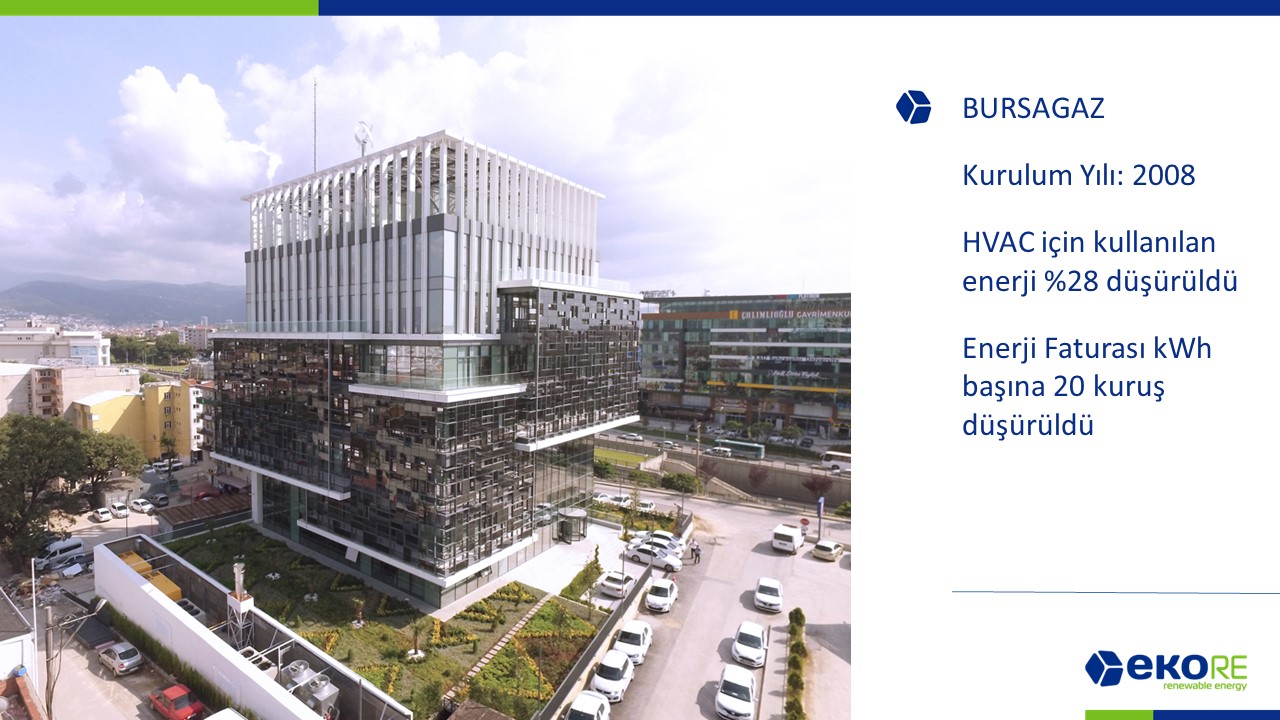
The black glass on the Bursagaz building, one of the best facade applications in Turkey, consists of semi-transparent panels. It was a fortunate coincidence that Tago Architecture, who was also a speaker on this panel, designed this application.
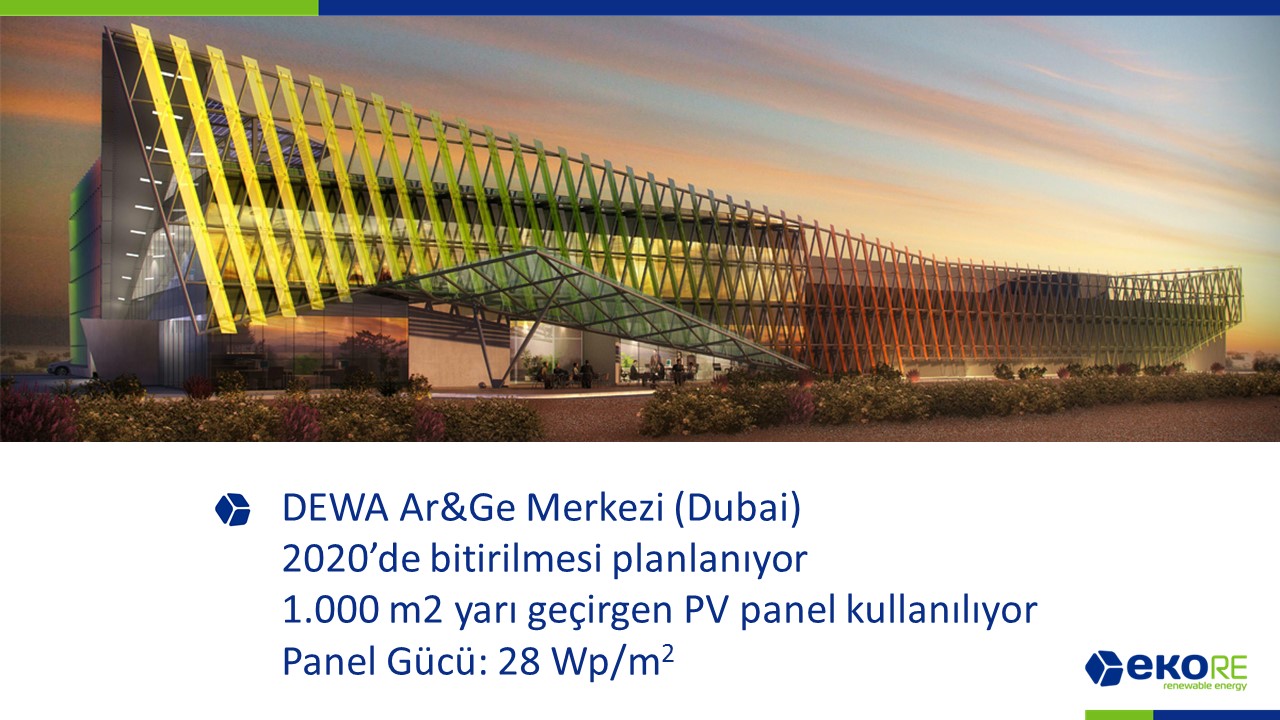
Semi-permeable PV fins in six different colors mounted on the exterior of the building are positioned at an angle of 31 degrees to capture the optimum sun angle.
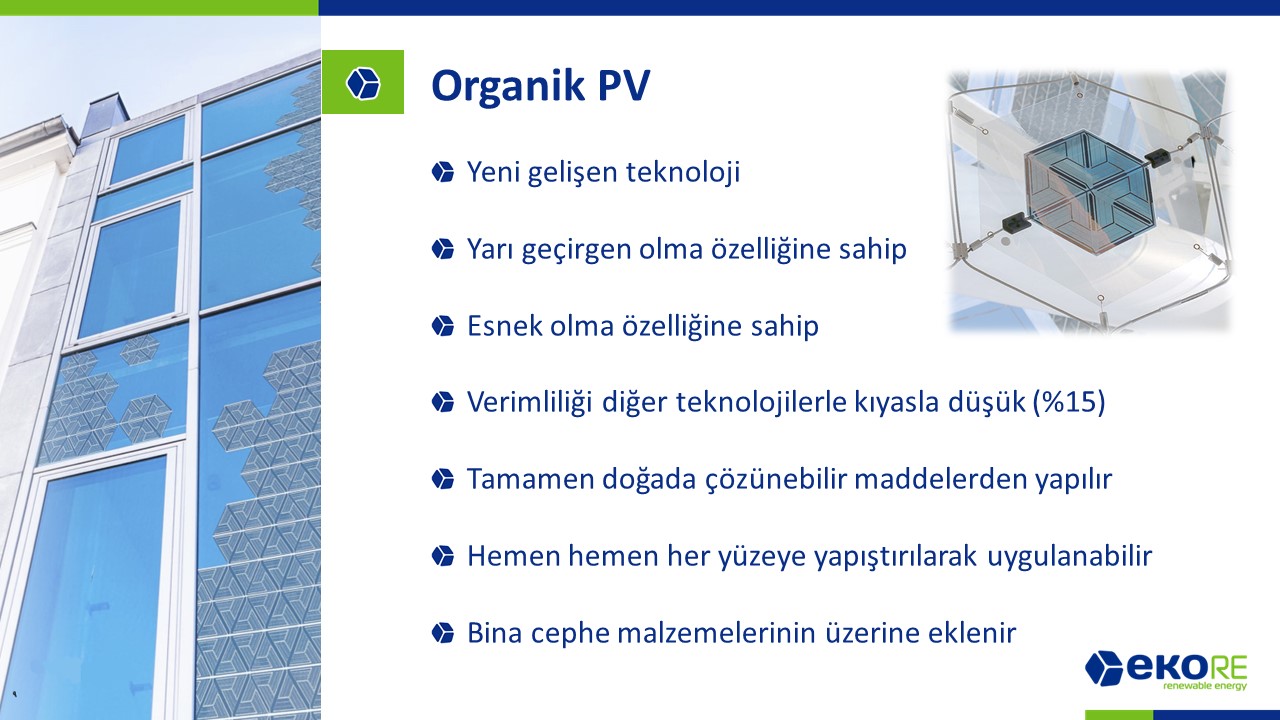
While its efficiency is lower than other technologies due to its emerging nature, panels made from organic materials offer numerous façade application options. This technology compensates for its efficiency losses with its flexibility, semi-permeability, suitability for a circular economy, and a wide range of applications. Because it’s so lightweight, it can be applied to almost any surface, utilizing any available space for electricity generation.
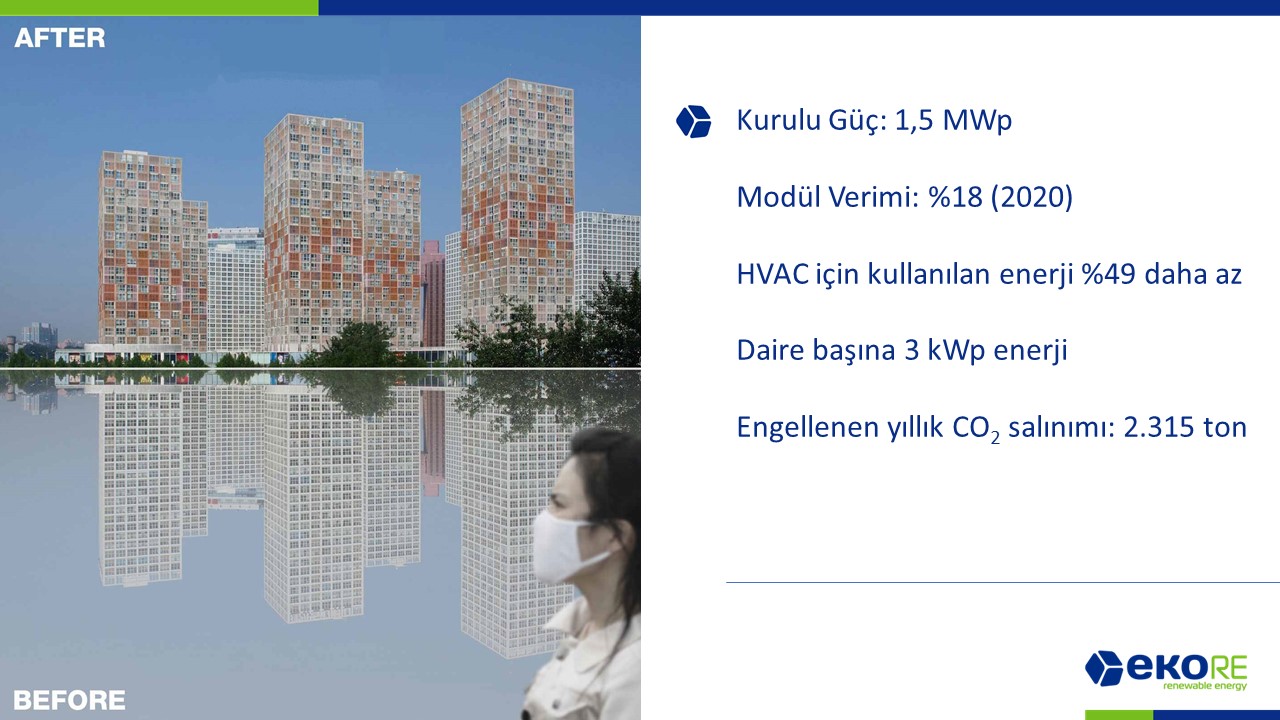
A building design covered with OPV (Organic PV)
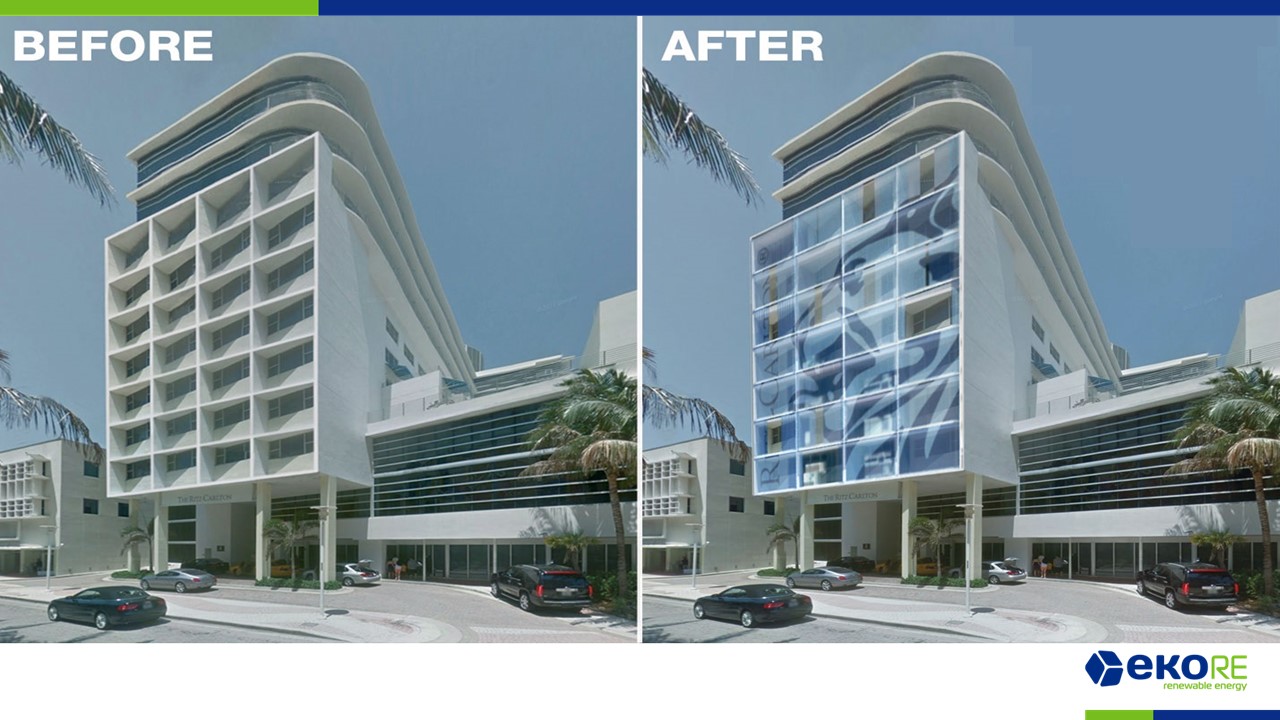
These fully customizable organic PVs, in this example, have covered the facade of the Ritz-Carlton Hotel in the shape of their logo (this is a conceptual illustration, not an actual application). This customizable design requires collaboration between PV manufacturers and architects in future buildings to allow for the placement of any desired visual on the building’s surface.
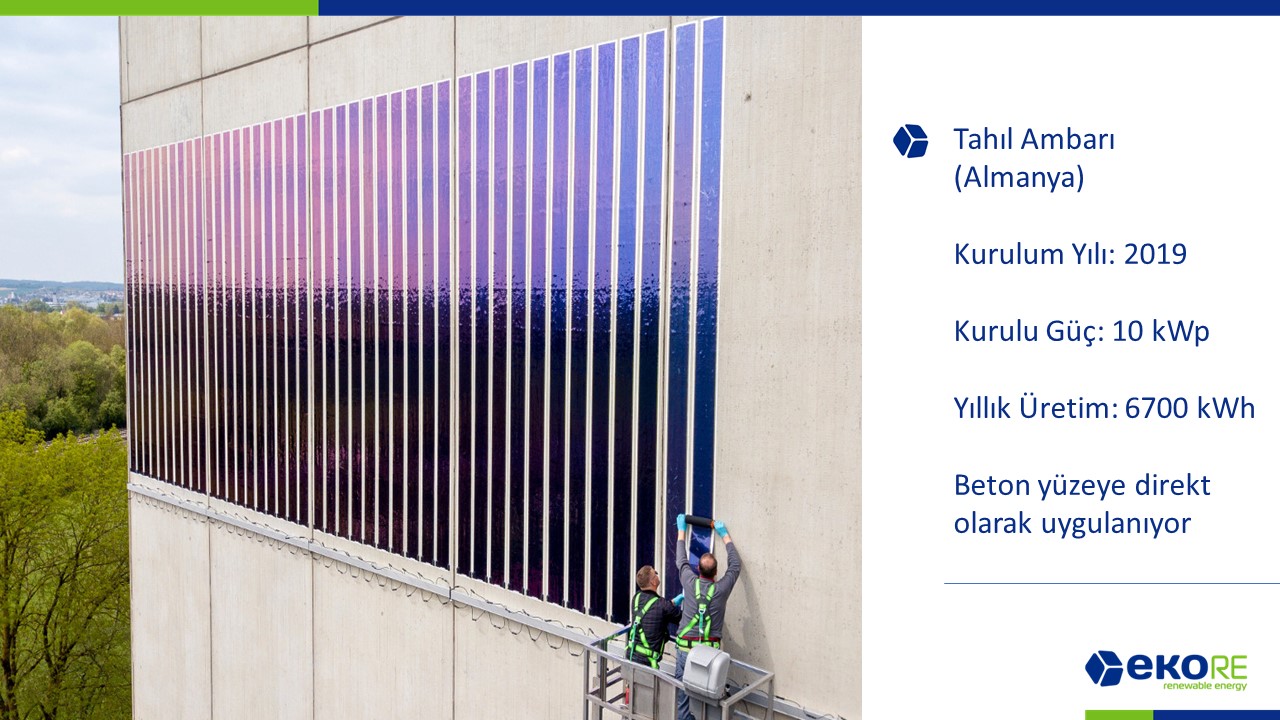
An example from Germany of OPV technology that can be easily applied in Turkey by attaching it to countless empty building facades.
Now, let’s talk about heat. Like electricity, heat is another important energy source. You can use it for air conditioning and water heating. While this isn’t my area of expertise, I’d like to share some examples.
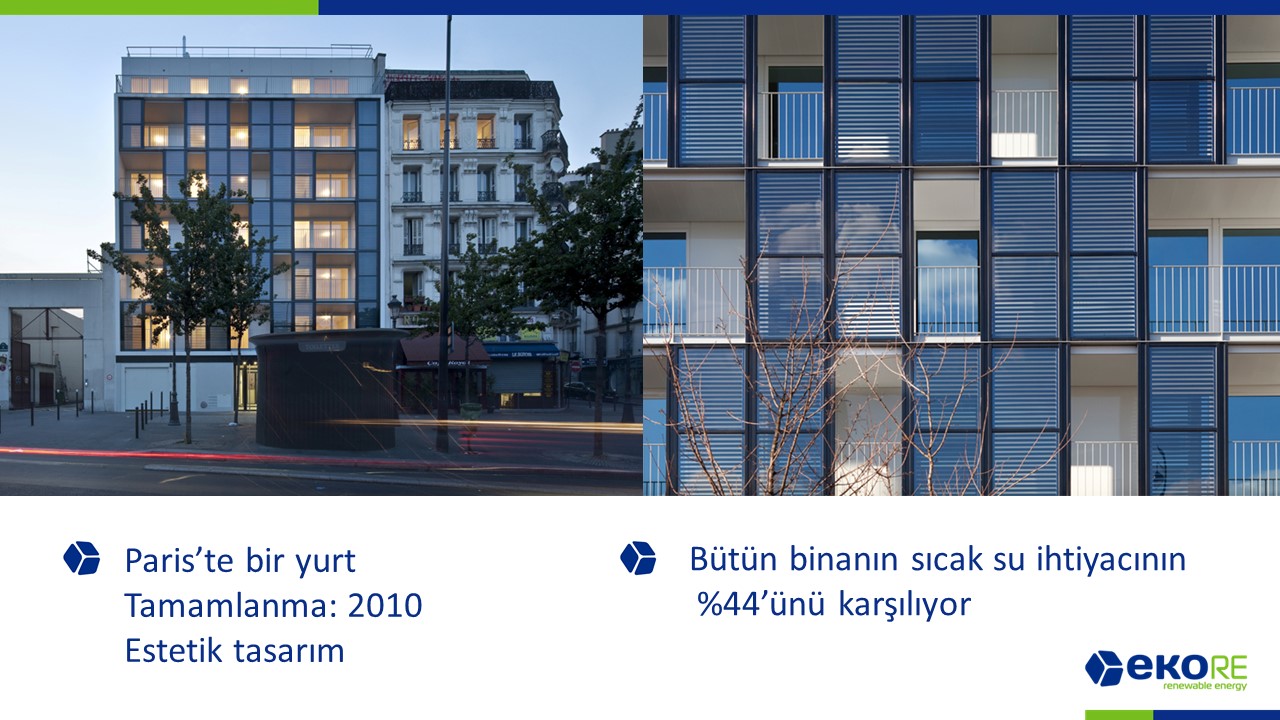
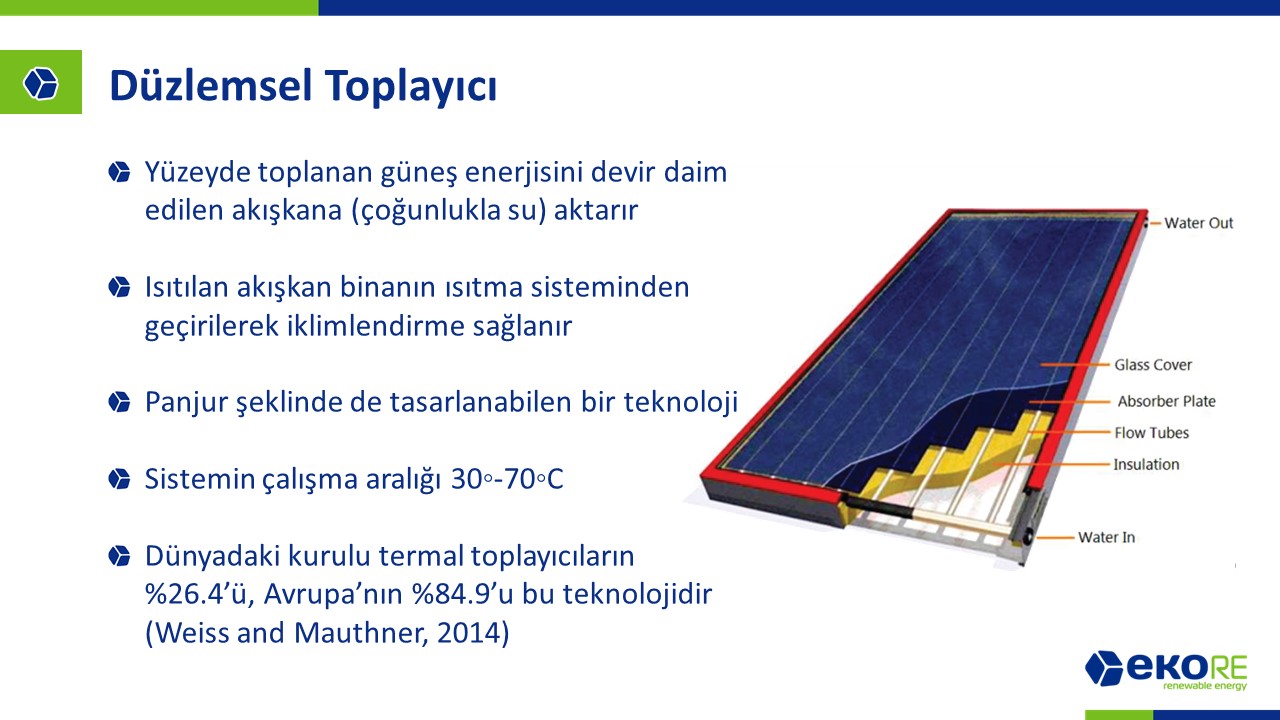
The most basic water heater technology is the planar collector. This is the most preferred water heater model in Turkey, especially in our southern regions. It is quite common throughout the country.
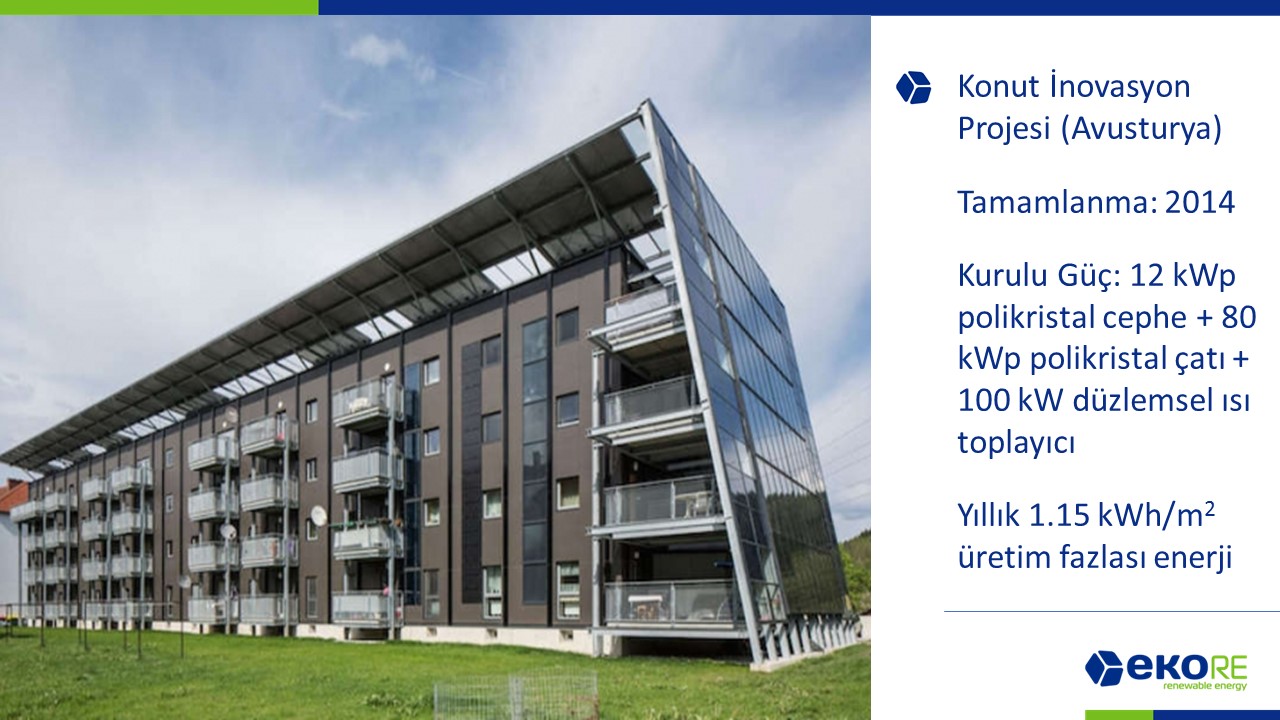
There are two main types of facade applications: one for newly constructed buildings, the other for existing buildings. This building falls into the latter category. It’s a housing project implemented by PlusEnergy for houses built after World War II (1950-1980). Built using a prefabricated concrete sandwich method, lacking insulation or ventilation, and heated by coal, the building’s operational costs were very high. The integration of panels, later added to the upper section and only to one facade, not only reduced the building’s energy consumption to zero but also enhanced its aesthetic appeal.
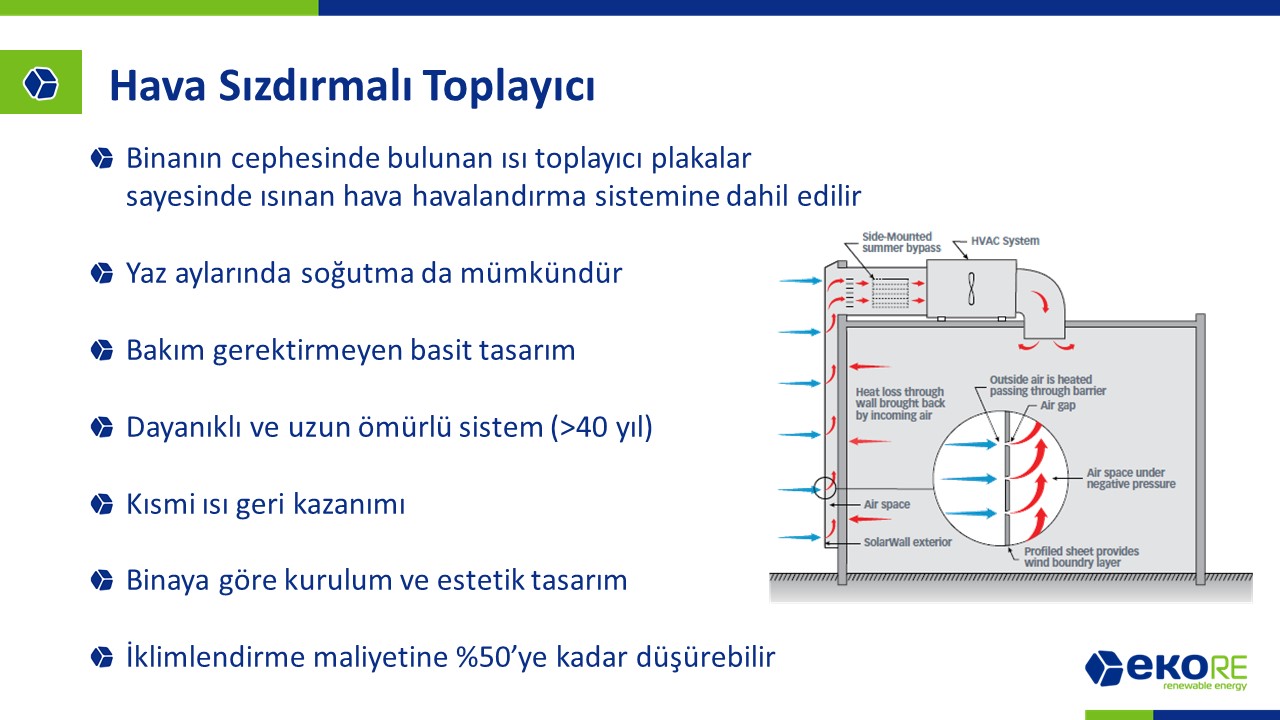
Air-insulated collector systems are among the unsung heroes. They provide significant energy efficiency in buildings both functionally and with a stylish design.
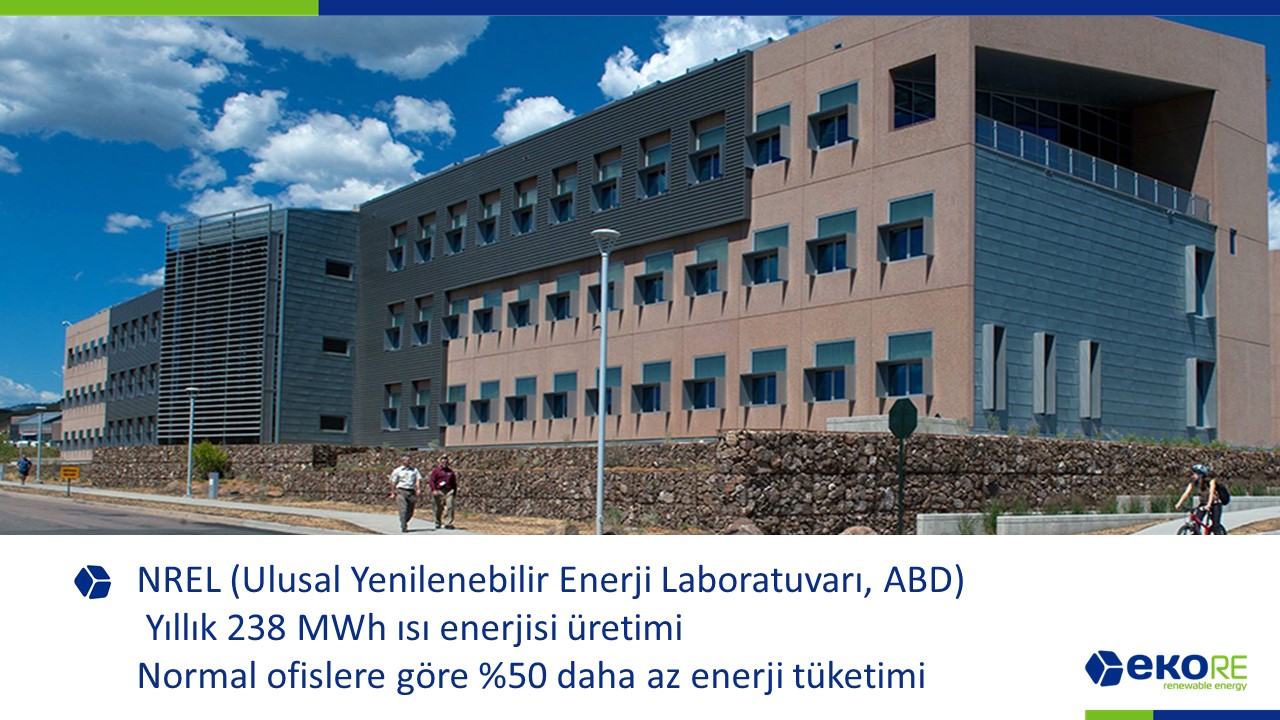
With this modern-looking application, the energy consumption of the offices was reduced by 50% and used as both a heating and cooling system.
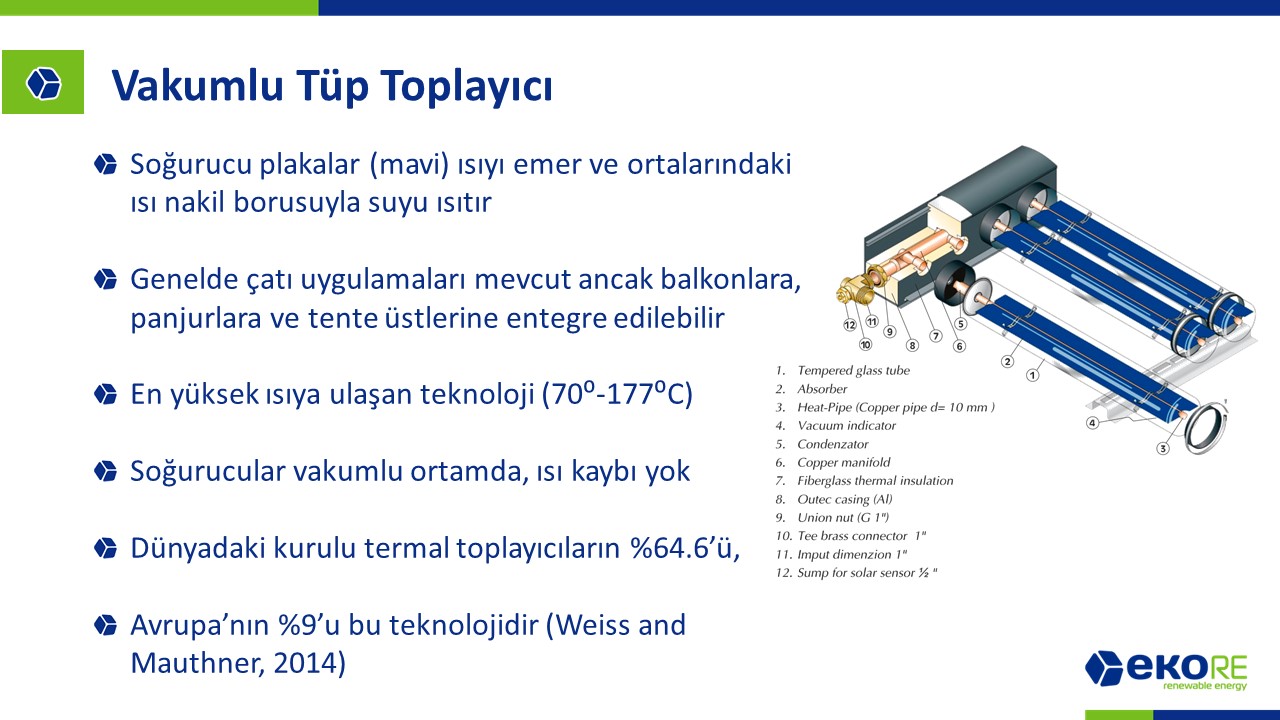
Solar energy first entered Turkey’s lives with water heaters. Vacuum tube collectors are an advanced version of the flat-plate collector. Because vacuum is used, higher temperatures can be achieved for longer periods of time. While facade applications of this technology, which is mostly found in the south and on the roofs of summer houses, are not widespread, there are potential applications. Because it reaches the highest temperatures among heat-collecting technologies, it is an extremely efficient system. To achieve this high efficiency, heat-absorbing plates are integrated into the vacuum tubes, minimizing heat loss. It looks quite stylish and is better than nothing.
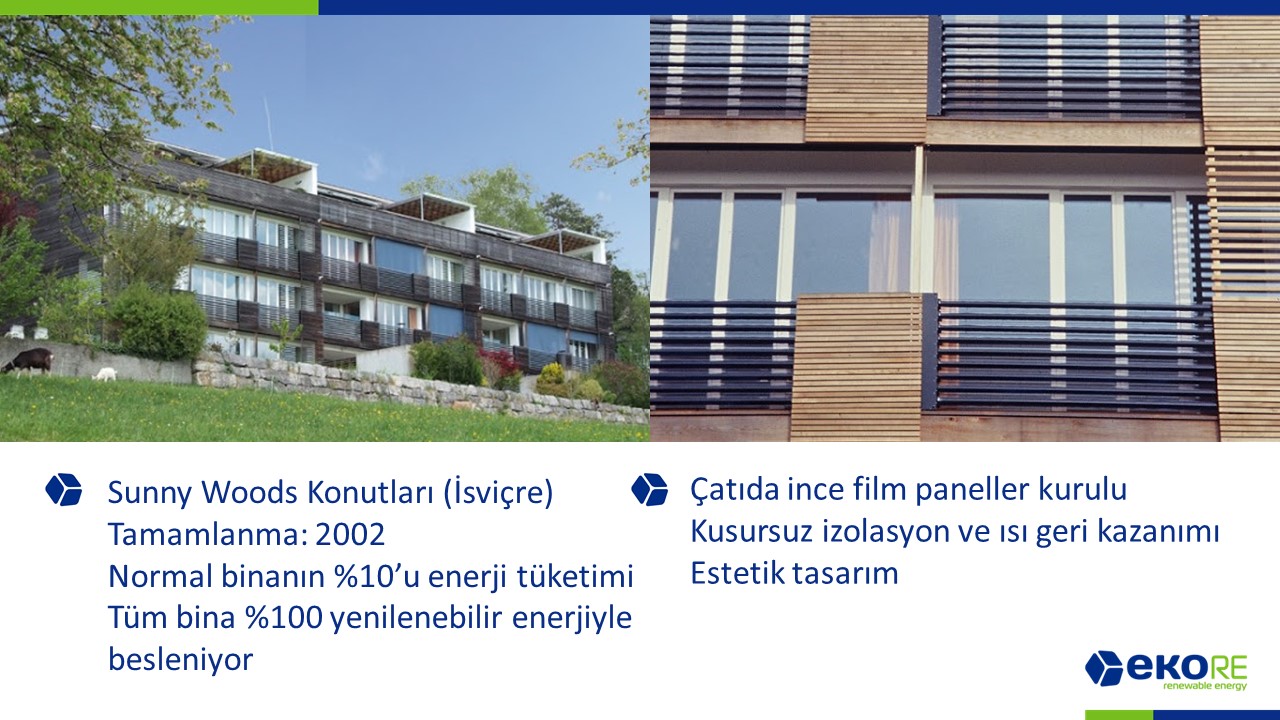
As seen in this example from Switzerland, it’s possible to design balcony railings using this technology. This aesthetically pleasing and stylish design provides all of the building’s hot water needs through vacuum tube collectors.
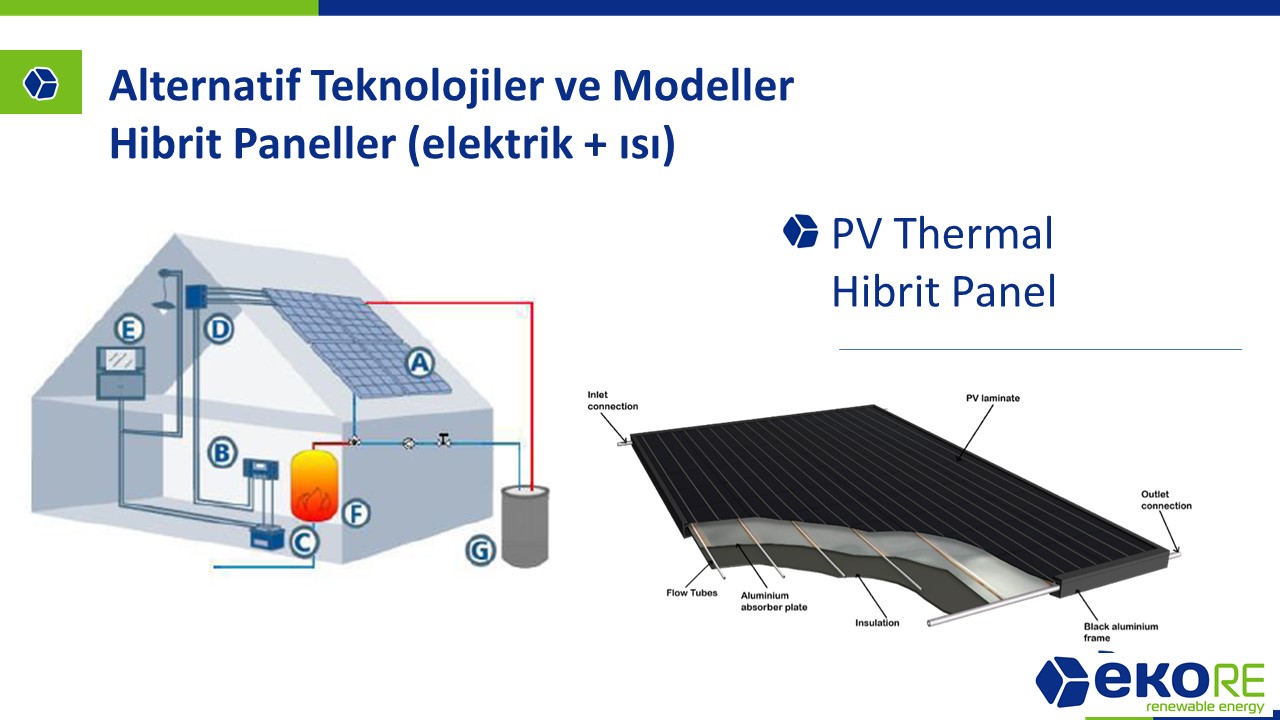
Cells at the front of hybrid panels generate electricity from sunlight, while absorbers at the back use the heat falling on the panel to heat water. This generates electricity for use within the building while also meeting hot water needs. At EkoRE, we aim to produce ‘Hybrid Panels’ in the future.
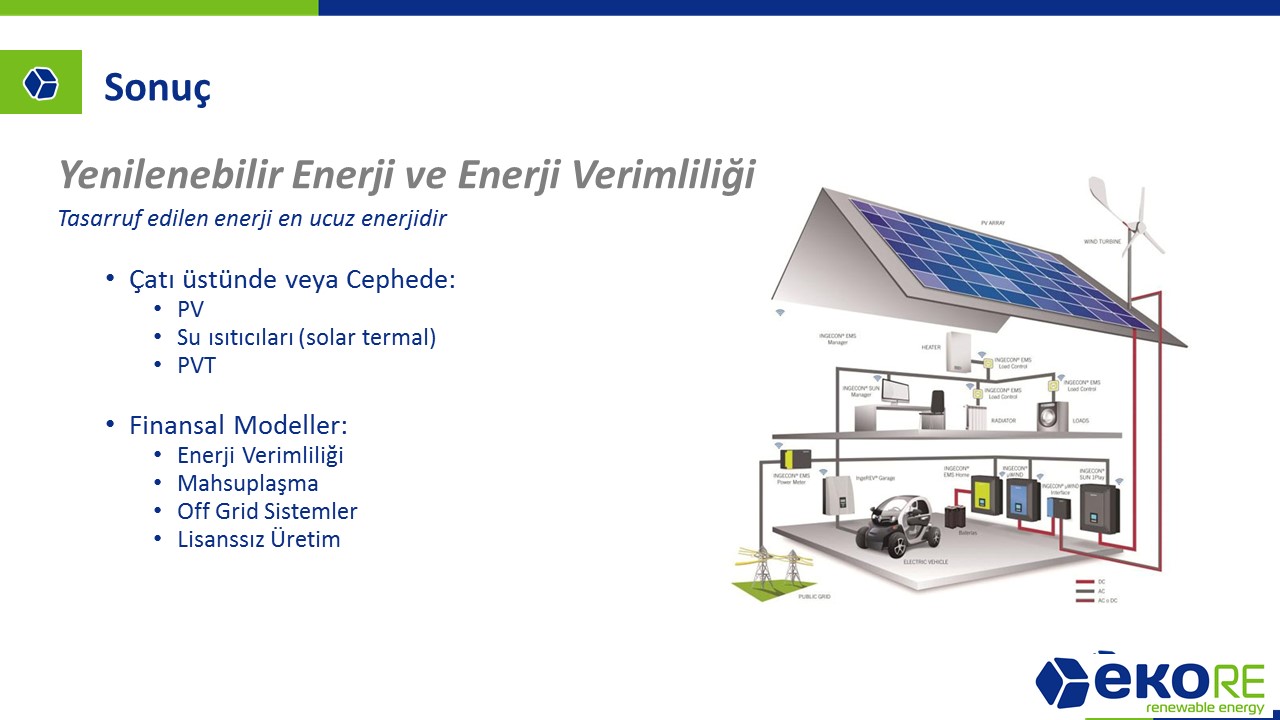
Ultimately, despite so many different technologies, the most beneficial and cheapest energy is the energy saved. Therefore, it’s essential to not only utilize technology but also change people’s consumption habits to be more economical. Consequently, there are three main technologies used on facades: electricity-generating PV panels, heat-collecting technologies, and hybrid panels. To summarize the financial advantages of these systems, they primarily significantly increase building energy efficiency and reduce energy bills. With the newly introduced offsetting system, electricity generated during the middle of the day, when demand is low, feeds into the grid, significantly reducing total energy consumption. In situations where grid connection is unavailable, the grid is insecure, or power outages are undesirable, it’s also possible to install a completely off-grid system powered by batteries. Finally, solar energy systems, especially installed in industrial settings, can leverage unlicensed electricity regulations to feed excess energy back into the grid and generate additional revenue.
Surprising timing and highlights
As I explained all this, I had a timer in front of me. I started speaking with exactly 21 minutes left and ended with just one. I couldn’t believe how punctual I was. I handed the floor over to the moderator just in time. The moderator then made his final comments and concluded the panel.
I’d like to conclude by sharing the points I highlighted in my presentation:
- In the future, everything will be realized with a distributed system approach. This means there will be on-site production and on-site consumption. A distributed system model will also be applied to critical life needs like energy, water, and food.
- We need to act with the same logic of producing energy, water, and food on all facades and roofs.
- To continuously increase production in limited spaces, “increasing efficiency” will be one of the two most important topics in R&D. The second important issue is cost reduction. Cost reduction is crucial for making solar energy accessible to all.
- For me, function is more important than aesthetics. However, in our work, it’s best to use products that are both functional and visually aesthetic. Finally, I’d like to share videos of certain sections of my speech:
My opening speech
The issue of homeland in the Niğde Bor Organized Industrial Zone
Concluding my speech…
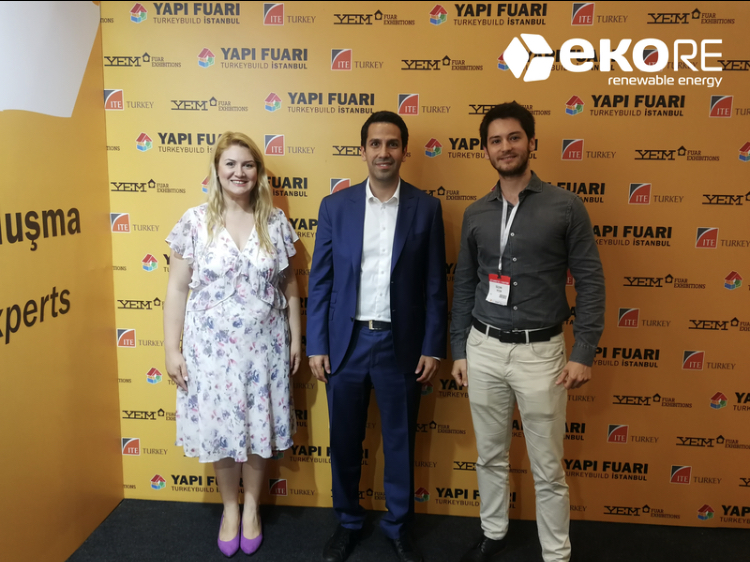
Here’s a photo I took with the EkoRE team who accompanied me after my speech…
Tags: business world