Before reading this article, I recommend reading my 2020 blog post titled “Who will be the greatest tennis player of all time?”: https://www.serhansuzer.com/tr/tenisin-gelmis-gecmis-en-buyugu-kim-olacak
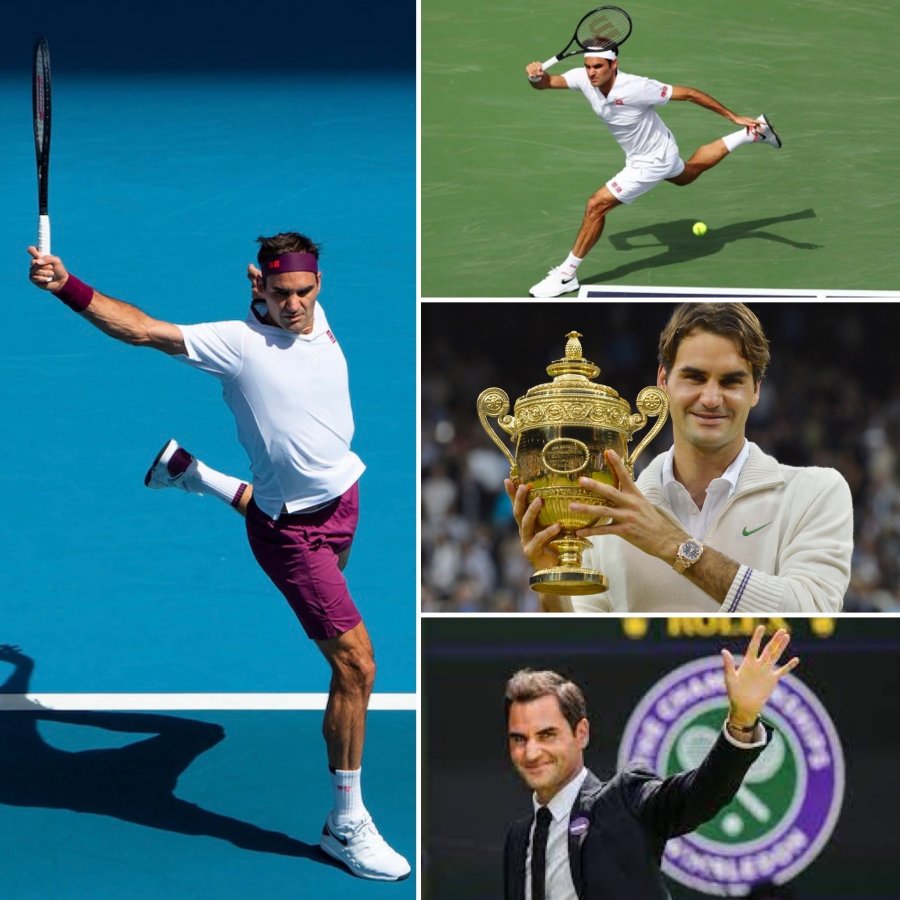
Before sharing my thoughts on Roger Federer, a true tennis legend who “changed the chemistry of the game,” let’s get to know him. First, I’d like to share the following information, along with some additions I’ve made to his biography at https://tenis.market/blog/roger-federer-kimdir-basarilari-kariyeri-rekorlari-ve-hakkinda-bilinmesi-gerekenler:
Who is Roger Federer?
Roger Federer, considered the greatest and most successful tennis player of all time, was born on 8 August 1981. Known in the tennis world for his extraordinary strokes and fast, fluid play, Federer has etched his name in golden letters in tennis history. Federer held the No. 1 spot in the world rankings for 237 consecutive weeks between 2004 and 2008, and remained at No. 1 for a total of 302 weeks.
He has won a total of 20 Grand Slam titles. He is also proud of his Olympic gold and silver medals in doubles and singles, respectively.
Childhood and Early Life
- Roger Federer was born on 8 August 1981, in Basel, Switzerland. His father is Robert Federer, a Swedish man, and his mother is Lynette Federer, a South African woman of Dutch and French descent.
- Raised on the border of France and Germany, Federer speaks German, French, and English as his native languages. He was raised Catholic and trained in football and tennis from an early age.
- Everyone in his family was happy with Federer’s tennis career. Pursuing tennis was entirely Federer’s decision. By the age of 11, he was one of the top three young tennis players in Switzerland.
- Federer, channeling all his energy and energy into tennis, cut ties with other sports. At 14, he began participating in tournaments and practicing, aiming for a professional career.
- Federer’s playing and tennis talent were recognized early, and he even received sponsorship from the Swiss National Tennis Center. In 1996, he became one of the International Tennis Federation’s junior tennis players.
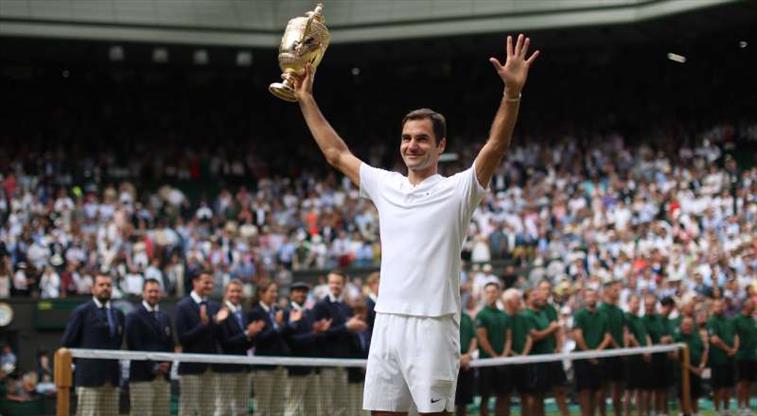
- He won the junior Wimbledon title before turning professional in 1998. After his Orange Bowl victory, he became known as the ITF World Junior Tennis Champion.
Career
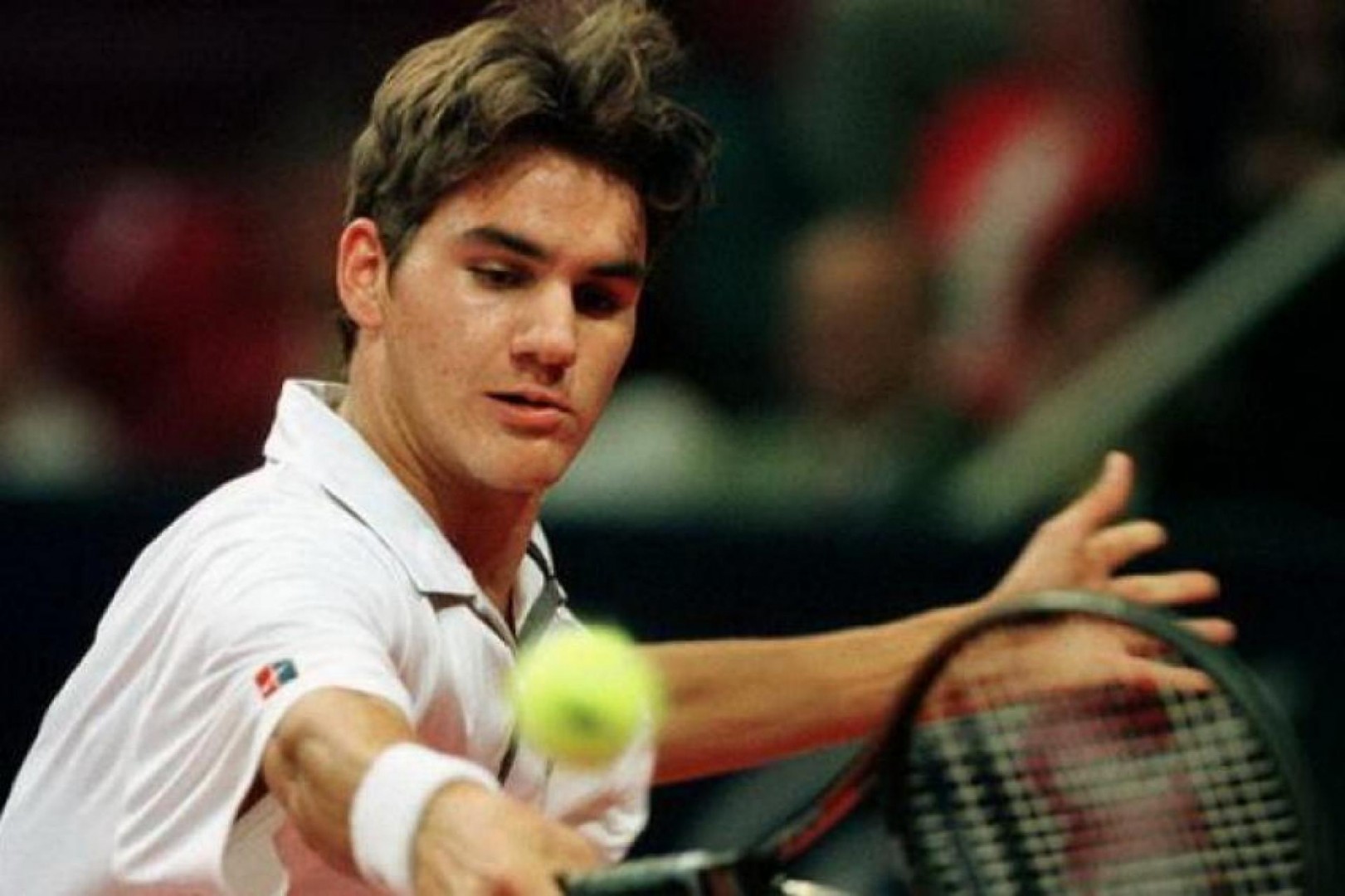
- Roger Federer played his first match after turning professional in Switzerland against Lucas Arnold. He unfortunately lost his first professional match.
- He suffered several more defeats in his later years. In 2001, he won the Hopman Cup in the mixed doubles tournament, defeating Michael Gambill and Monica Seles alongside Martina Hingis. That same year, he also won the Milan Indoor tournament, achieving his first singles victory.
- Federer, who participated in Wimbledon and the French Open, impressed the audience with his performances. He reached the quarterfinals in both tournaments.
- He managed to showcase his exceptional skills in every match he participated in in 2002. By the end of the year, he had broken his own record by raising his ATP ranking to 6th.
- 2003 was a significant year for Roger Federer. He reached the finals in nine tournaments and won seven of them. Thanks to his exceptional talent and skills, Federer managed to raise his ATP ranking to 2nd in 2003.
- The world witnessed Federer’s tennis skills in detail in 2004. Having won gold medals at Grand Slam tournaments, Federer won the 2004 Wimbledon, Australian Open, and US Open series. He also won the ATP Master Series 100 and ATP 500 series, reaching 1st place in the ATP rankings. • Federer, who won the US Open and Wimbledon in 2005, lost the other two Grand Slam tournaments. Although he didn’t achieve his expectations at the Grand Slams, he maintained his first place in the ATP rankings by winning four ATP Masters Series 1000 and ATP 500 titles.
- In 2006, he won three of the four Grand Slam tournaments he participated in. Having won four ATP Masters Series 1000 and ATP 500 titles, Federer reached number one in the ATP rankings for the third time.
- His 2007 Grand Slam performance was identical to 2006. Winning four ATP Masters Series 1000 and ATP 500 titles in 2007 also showcased his mastery of the game.
- In 2008, he won only the US Open. Undefeated for three Grand Slam tournaments, he fell to second place in the world rankings.
- He won the first French Open tournament of his career in 2009. The subsequent Wimbledon victory made Federer the only tennis player with 15 Grand Slam singles titles.
- 2010 was a very bad year for Federer. Unable to win a Grand Slam tournament, Federer fell to second place in the world rankings for the second time.
- His career rise, which had been ongoing since 2002, stalled in 2010, and a decline began in 2011. He failed to win any of the four Grand Slam tournaments in 2011. He fell below the top three in the world rankings in 2011.
- Resurrecting from the ashes by defeating David Ferrer at the 2011 ATP tournament, Federer managed to climb to third place in the ATP world rankings.
- He ended his long silence by defeating Andy Murray at Wimbledon in 2012. That same year, he competed in tournaments around the world. Although he reached the final of the 2012 Summer Olympics, he lost to Murray and won the silver medal.
- 2013 was a disappointing year for Federer. Federer, who went winless for the first four months, spent the entire year with only one win at the Gerry Weber Open.
- He lost to Djokovic in the 2014 Wimbledon final. Having won the ATP Masters 1000 and ATP 500 series, Federer also won the Davis Cup tournament in Switzerland, raising his ATP world ranking to No. 2.
- Federer began 2015 with a victory on the Brisbane ATP Tour, marking his 1,000th career victory. He reached the finals of two Grand Slam tournaments in 2015, but failed to win the title. He reached the final of the 2015 Dubai Tennis Championships and faced Djokovic, winning the tournament.
- Federer, who suffered a knee injury in 2016, spent the entire season sidelined. His lack of a victory saw him drop to 16th in the ATP world rankings. • Federer, who recovered in 2017, returned to the court in excellent shape. He won the Australian Open and Wimbledon titles, and in addition to these victories, he won three ATP Masters 1000 titles and two ATP 500 titles, returning him to second place in the ATP world rankings.
- In the 2018 season, Federer won only the Australian Open and the Hopman Cup at the Grand Slams, but his failure to win any ATP tournaments saw him drop to third in the world rankings.
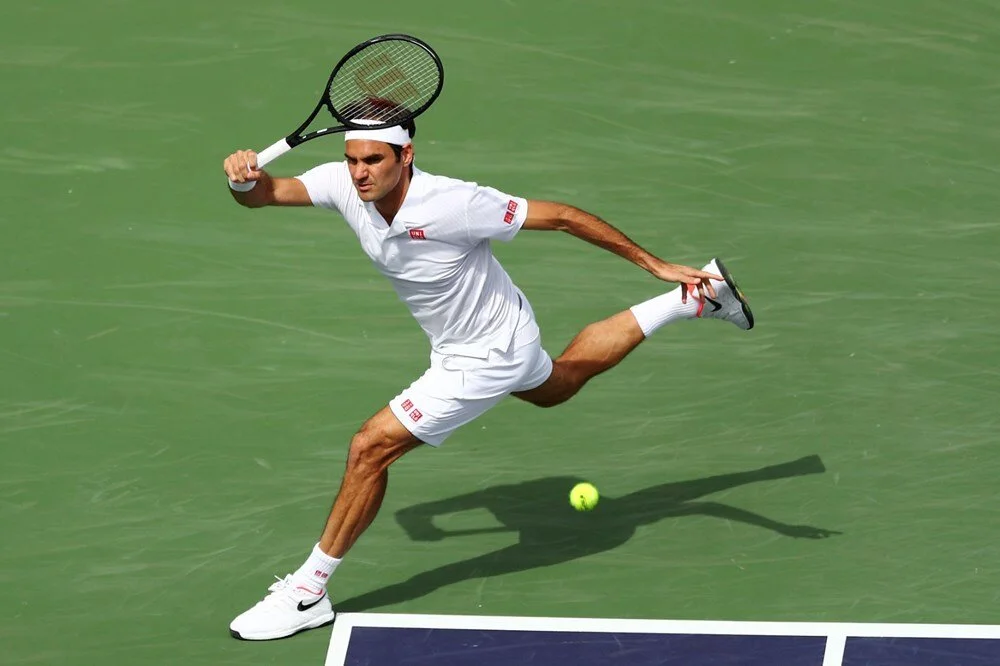
- After finishing third at the 2019 Australian Open, Federer captured his 100th career singles title at the Dubai Tennis Championships. Having won one Masters Series 1000 and one ATP 500 title, Federer faced Djokovic in the Wimbledon final. Djokovic won the match, which became the longest men’s final in Wimbledon history.
Awards and Achievements
- Roger Federer received the “Fan Favorite” award from atpworldtour.com from 2003 to 2018.
- He won the Stefan Edberg Sportsmanship Award from 2004 to 2009, and in 2011 and 2017. His colleagues and rivals voted in favor of Federer’s recognition.
- He has won the Laureus World Sports Awards five times throughout his career, winning in 2005, 2006, 2007, 2008, and 2018.
- He was awarded the Arthur Ashe Humanitarian of the Year award in 2006 and 2013.
Singles Career
Career Record: 1242–271
Total Trophies: 102
Highest Ranking: No. 1 (February 2, 2004)
ATP World Tour Finals: Champion (2003, 2004, 2006, 2007, 2010, 2011)
Olympics: Silver Medal (2012)
Grand Slam Singles:
Australian Open: Champion (2004, 2006, 2007, 2010, 2017, 2018)
French Open: Champion (2009)
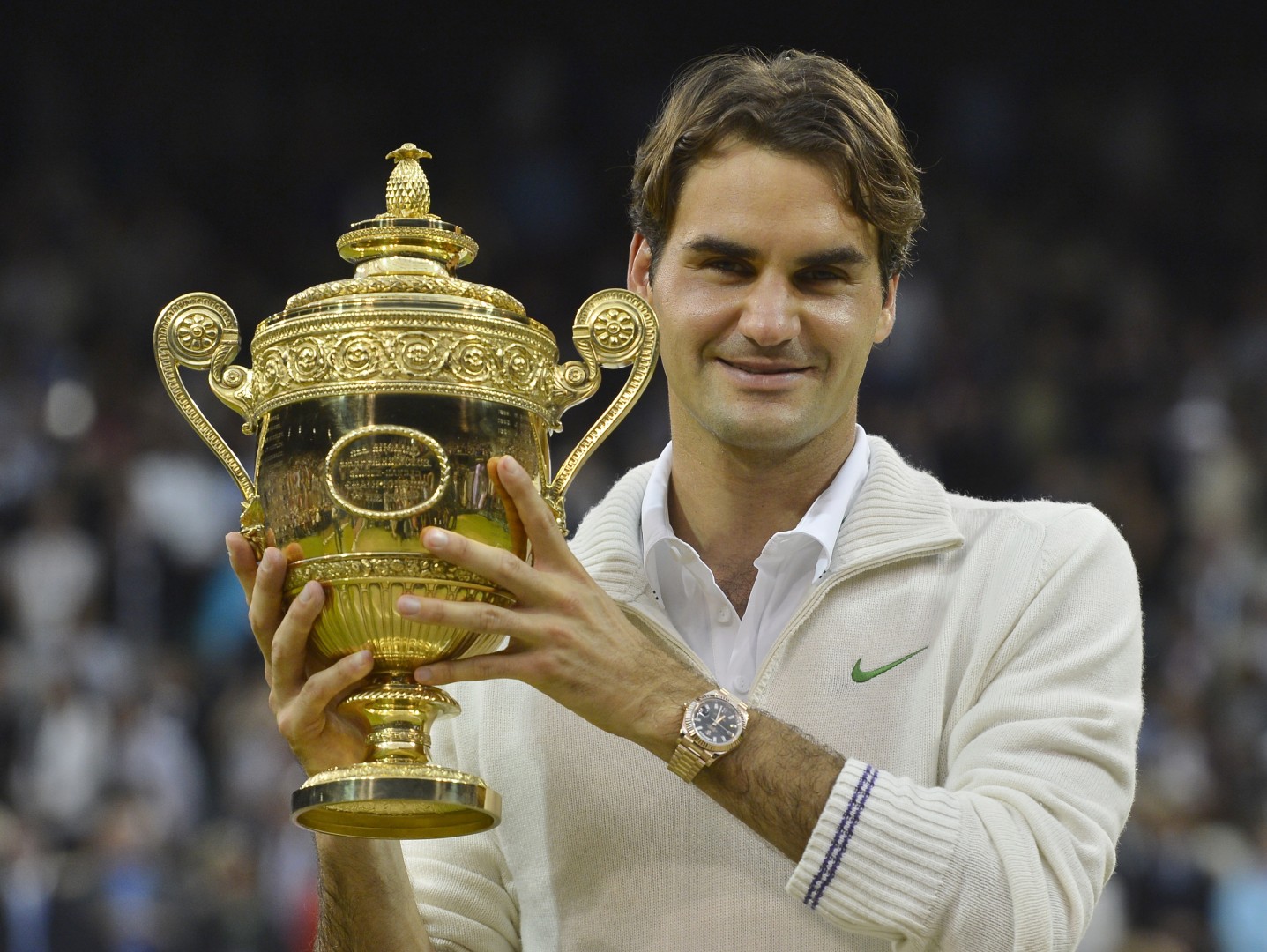
England Wimbledon: Champion (2003, 2004, 2005, 2006, 2007, 2009, 2012, 2017)
United States US Open: Champion (2004, 2005, 2006, 2007, 2008)
Doubles Career
Career Record: 131–92
Total Trophies: 8
Highest Ranking: No. 24 (June 9, 2003)
Olympics: Gold Medal (2008)
Grand Slam Doubles:
Australian Open: 3rd Round (2003)
French Open: 1st Round (2000)
Wimbledon, England: Quarterfinals (2000)
US Open, United States: 3rd Round (2002)
International Team Tournaments:
Davis Cup: Champion (2014)
Hopman Cup: Champion (2001)
You can see all of Federer’s statistics at https://www.flashscore.com.tr/oyuncu/federer-roger/GrsQDFC0/ .
Personal Life
Roger Federer married Mirka Vavrinec, whom he met at the 2000 Summer Olympics in Sydney, on 11 April 2009. He and Vavrinec, a fellow tennis player, have two twins, totaling four children. On 23 July 2009, Roger and Mirka had their first identical twins: daughters Myla Rose and Charlene Riva. Then, on 6 May 2014, Roger and Mirka had their second identical twins: sons Leo and Lennart “Lenny.”
Nicknames
This professional tennis player is popularly known as “Fed Express” or “FedEx.” People sometimes refer to him as the “Swiss Maestro” or simply “Maestro” for his extraordinary talent and expertise. Another nickname is “His Excellency,” meaning “His Excellency.” His fans often refer to him as the G.O.A.T. (The Greatest Of All Time).
His farewell to tennis
The grass-court legend who “added aesthetic value to tennis” bowed out of his Grand Slam career in the quarterfinals at Wimbledon 2021.
Federer, who played his last Grand Slam final at the same tournament in 2019, lost 3-2 to Novak Djokovic. This “epic” match, at 4 hours and 57 minutes, made history as the longest Wimbledon final. His Excellency holds the Wimbledon record with eight trophies won.
Another disappointment, as I mentioned earlier, was that despite beating Andy Murray at Wimbledon in 2012, he lost to Murray in the final and won the silver medal at the Summer Olympics that same year. This Olympic medal, which he missed, is perhaps the only achievement Federer has yet to achieve.
Just as he lost in the 2012 Summer Olympics final and his last Grand Slam final in 2019, Federer unfortunately couldn’t win his final tennis match. Before his epic Wimbledon final in 2019, the 2008 Wimbledon final, the 2009 Australian Open, and the men’s singles gold he never won were perhaps the biggest disappointments in Federer’s career. Interestingly, these events occurred in England, the tournament venue where he usually excels. Isn’t that how life goes sometimes? Your greatest weakness can sometimes become your greatest strength, or conversely, in England, where you feel your strongest and where statistics show you perform best, you can also experience your greatest disappointments.
Notes from Federer’s final match
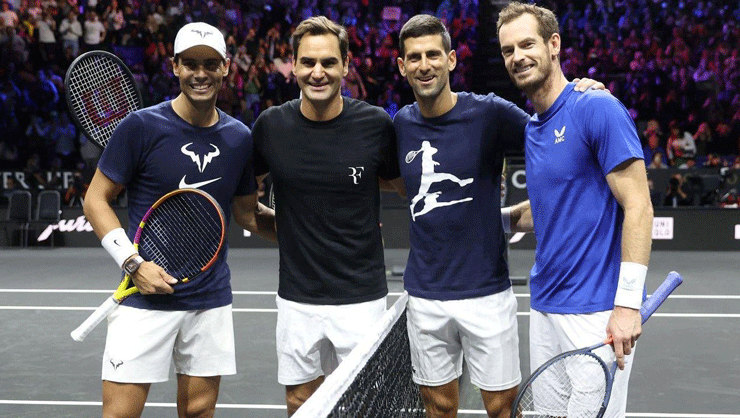
Let’s turn to the match where a legend like Federer announced his career ending. Although expectations had been raised that his farewell would take place at Wimbledon 2023, Federer announced that, contrary to popular belief, the Laver Cup, held from 23-25 September, would be his final tournament. Nevertheless, Federer, who will bade farewell in London, was on the same team as Rafael Nadal, Novak Djokovic, and Andy Murray at this All-Star tournament.
This was Federer’s first appearance on the court this year, despite his chronic knee injury.
It was previously known that Federer would face Kate Middleton, the Duchess of Cambridge, in a charity match as part of the event, but this announcement was made before the death of Queen Elizabeth II.
At the Laver Cup, Federer and Nadal, representing Team Europe, faced Jack Sock and Frances Tiafoe from Team World. The 41-year-old legend’s farewell match was met with enthusiastic spectators, and stars like Novak Djokovic and Andy Murray also joined Federer. The final match of Roger Federer’s professional tennis career was a thrilling one. Watched by over 20,000 people at the O2 Arena in London, the match between Federer and Nadal (Team Europe) won the first set 7-5.
Although the World Team (Tiafoe and Sock) began the second set with a break, Fedal regained advantage and took the set to a tie-break. The World Team won the tie-break 7-2, leveling the series at 1-1.
The Laver Cup format is a deciding set-match tie-break, with the first team to reach 10 points winning the set and the match. In the highly exciting match tie-break, Team Europe had a match point on Federer’s serve at 9-8 but couldn’t capitalize. The World Team won the match tie-break 11-9 and won the match 2-1, levelling off the series at 2-2.
Emotional Moments
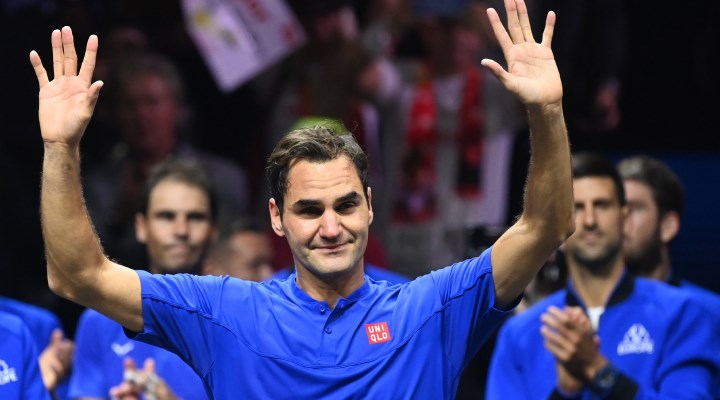
Federer, who appeared to be in good spirits from the day he announced his retirement until the final point of the match, became emotional at the end of the match and couldn’t hold back his tears. After coming to the bench, Federer began to cry as he hugged his teammates, and the tears didn’t stop for minutes. The Swiss player’s arch-rival, Rafael Nadal, also couldn’t hold back his tears during these moments. Here are the moments when Nadal, his greatest rival on the court and friend, whom I admire and love very much like Federer, couldn’t hold back his tears:
After those tearful moments, Federer took the microphone and shared his farewell speech below:
This farewell speech moved me deeply. I also had tears in my eyes while watching it. It was truly fitting for such a legend to say goodbye alongside the greatest rivals of his career. And of course, in my 2020 article at https://www.serhansuzer.com/tr/tenisin-gelmis-gecmis-en-buyugu-kim-olacak , I addressed the debate about the best player in tennis. This title, which translates to “GOAT” (Greatest of All Time), is bestowed upon three names in tennis: Federer, Nadal, and Djokovic.
In that article, I clearly stated my position by saying, “Not everything is statistics.” I would like to draw a similar conclusion to this article:
Not everything is statistics.
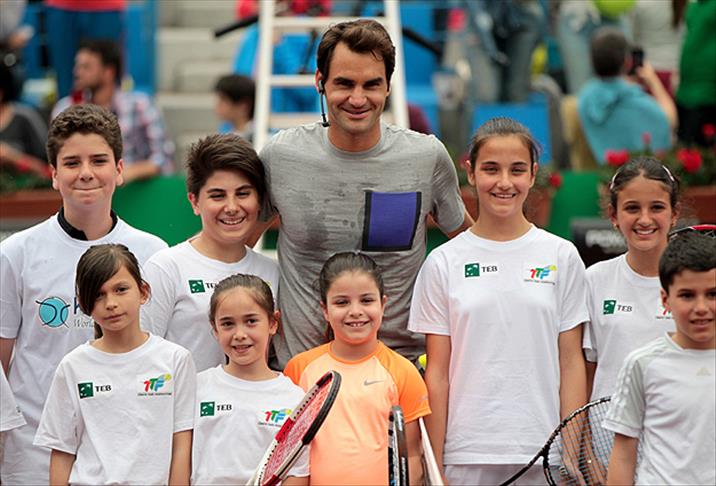
Even if he’s behind in every statistical category, Federer holds a special place. In my opinion, Federer is to tennis what Muhammad Ali is to boxing and Michael Jordan is to basketball. He’s always been at the pinnacle of tennis throughout his career. He’s 40 years old and still in the top five. He’s always been the best and most qualified role model among them.
In my opinion, statistics aren’t the only criterion for being the GOAT, the “Greatest of All Time.” The real criterion is how many people he inspires and how many hearts he can capture. Therefore, regardless of how this race ends, Federer remains the GOAT of tennis.
I hope one day, athletes of similar character and accomplishments emerge from Turkey and inspire the entire world.
3 Criteria for the “Greatest of All Time”
In addition to the conclusion of this article, I’d like to conclude by stating the following: A GOAT in each sport must meet three criteria:
1) A God-given talent that few people possess.
2) A top-notch work ethic (the ability to constantly work hard and improve).
3) A role model with his personality.
Among athletes like Maradona or Messi in football, and Michael Jordan or Kobe Bryant in basketball, Roger Federer’s status as a top-tier sports icon stems from his exceptional talent and incredible shots in tennis, as well as his exemplary personality in every way.
He is a true gentleman, a family man, and an exemplary figure in every way. Sport is a stage, and the best in all sports must be able to transcend their ambitions, because more than ever, we need good human figures who can influence millions. Therefore, I believe Federer’s departure from the sports scene is a great loss for the effort to strive for a better world.
I hope that many more athletes with similar good character will replace him and positively impact our world.
I wish Roger Federer a healthy and happy future. I hope our paths cross in Switzerland or elsewhere in the future, and I can share with him the sentiments I’ve expressed in my blog posts. Thank you, Federer, for all the blessings you’ve given us.
Bonus:
Tag: education