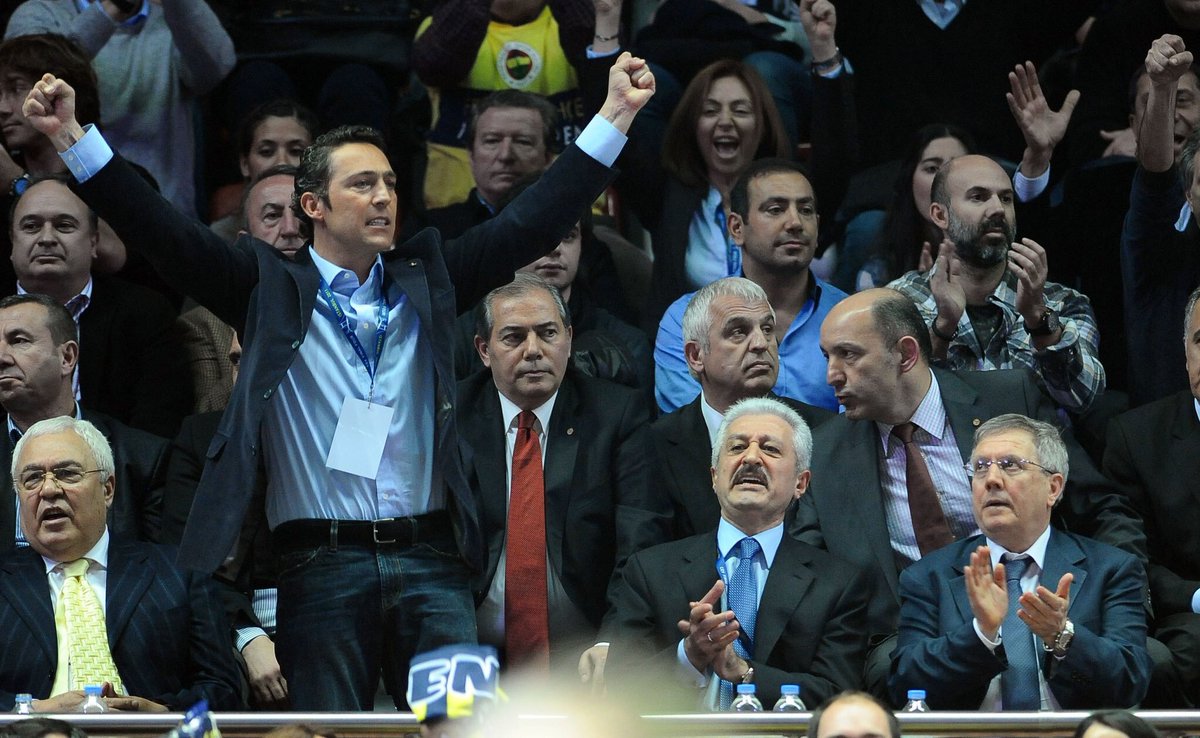
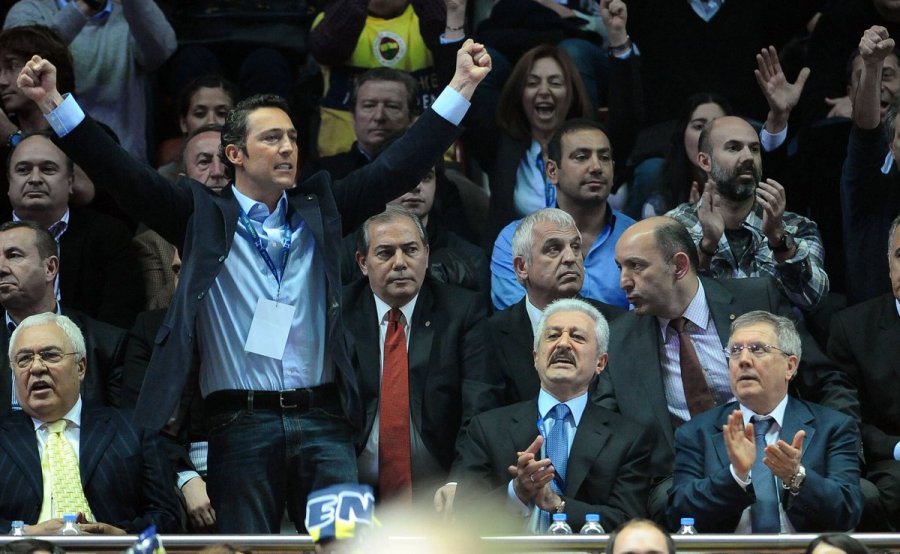
First and foremost, I heartily congratulate Ali Koç on the historic victory he recently achieved. Four-time victory over Fenerbahçe’s 20-year president is not something every brave man can do. Moreover, it’s incredible that he achieved this at a time when there was a deep-seated internal structure and everyone believed, “Aziz Yıldırım cannot be replaced unless he wishes it,” and I congratulate him.
Of course, the real work begins now. After this great victory, he’s practically in the red. Every move, every word, and every action he takes is under scrutiny. In this regard, I have some friendly advice for him. I hope these recommendations, delivered by someone with keen observation and a keen sense of perspective, will be helpful. I’d like to list these recommendations below.
1- Excessively high expectations:
The biggest danger stems from overly high expectations for Ali Koç. Fenerbahçe fans perceive him as a savior, someone who will unleash the club’s full potential. In fact, from what I’ve seen on social media, some have made political references and even gone so far as to post posts like, “Every era brings a blue-eyed savior,” which I think is overblown. As someone who heads one of Türkiye’s most prominent sports clubs, starting with such high expectations will give him the time he needs to a certain extent. In other words, no one will hold Ali Koç accountable for a year or two. However, if he fails, the tide will turn. Just like Obama was elected as POTUS. They declared him a superhero who would fix everything and put everything back on track. However, after two or three years, the public, seeing that none of their expectations were met, began to heavily criticize Obama. Therefore, he served his second term under even more challenging circumstances. Ali Koç needs to be able to manage these expectations. First, he needs to reiterate everything from the beginning and create a comfort zone to bring these already very high expectations down to more reasonable levels.
2- The Responsibility of Being in the Showcase:
He has now become the second highest-rated person in Türkiye after the president. In other words, Ali Koç is one of the most prominent figures in the spotlight. Every word he says, every action he takes, is under scrutiny. For example, according to what I follow on social media, conservatives criticized him for drinking water during his speech at the stadium. Some criticized him by asking, “How could he look the public in the eye and drink water during Ramadan?” While I don’t think it’s right for those who fast to criticize those who don’t in this way, I want to emphasize that Ali Koç needs to act with due consideration for the realities of the country. Many fasting people I know don’t find it odd to be eaten or drunk around them; on the contrary, they say, “Do whatever you want.” This mutual tolerance is essential for domestic peace. Of course, Ali Koç needs to act with due consideration for everything.
3- Championships as the sole achievement:
If you’re the president of one of Türkiye’s Big Three, you unfortunately need to contend with the perception that the only criterion for success is championships. This means that if you take past statistics and compare them, and include the championships of Trabzonspor and Bursaspor, your chances of success are less than one-third. Can you imagine? You start the league with around a 30% chance of success, and all the fans are in a “let’s win the championship, no matter what!” Especially if we assume that Fenerbahçe and Galatasaray are not just rivals, but rather a destructive rivalry that’s practically a war, it’s predictable that the reactions to the results and expectations will be much harsher. Even if the title chances diminish, the sentiment might shift to “at least Galatasaray or Fenerbahçe shouldn’t win the championship.” In such an environment, I believe Ali Koç has a two-year loan, simply because he’s Ali Koç. Normally, fans of the big three can only tolerate not winning the championship for a year, after which complaints and protests begin. And if the team plays poorly or suffers unacceptable losses, the fans won’t even wait a year. If Ali Koç witnesses a Galatasaray championship, his credit will be depleted even faster. Yes, in an environment with so many expectations, his credibility is high, but unfortunately, just as our people have a tendency to push us to the top, they also tend to drag us down. Be careful. What needs to be done here is effective perception management. He needs to explain to all Fenerbahçe fans that the only true success isn’t winning the Super League championship or beating Galatasaray. The importance of achieving success in sports other than soccer, the value of developing international-caliber athletes from youth academy, and the benefits of a national sports-based campaign that will save countless young lives must be explained to all Fenerbahçe fans. Ali Koç also has the opportunity to demonstrate that Fenerbahçe truly contributes to the country and reverse the negative perception of Fenerbahçe.
4- Anger Management:
When I watched the speeches made during the Fenerbahçe presidential election, I perceived two distinct tones in Ali Koç. The first was a constructive, collaborative tone praising Aziz Yıldırım. The other was a tone that occasionally echoed, one that was ready to fight, saying “we’ll do whatever it takes,” and one that criticized Aziz Yıldırım. My conclusion is this: Someone who puts himself in the spotlight like this needs to be very careful with their tone of voice. Especially in a difficult and stressful environment, anger management is essential, and it’s crucial to maintain composure and calm no matter what. In the soccer world, which is the most popular topic in Türkiye, along with politics, the press and fans are prone to saying anything and taking any action to irritate the other side. In my opinion, the lowest-ranking segment of the press is the sports and entertainment press. Those working there are ready to spread false news, portray untrue things as having happened or been said, and resort to any kind of maneuvering to provoke the other side. Of course, there are some very valuable journalists in the sports and entertainment press, but this is the exception. Everyone wants to capitalize on this popularity and compete for ratings. In such an environment, Ali Koç must be extremely careful, controlled, and plan every step as carefully as possible. God forbid, any harsh words uttered in such an environment could put Ali Koç in a very difficult position later on. He will need to carefully manage his relationships with his own fans and the press, as well as with the fans and press of his rivals.
5- Hostility towards Fenerbahçe:
Thanks to Aziz Yıldırım, hostility towards Fenerbahçe has skyrocketed over the last 20 years. Aziz Yıldırım generally used hate speech. He spoke of Fenerbahçe and others, and this destructive language caused division within the country. In various incidents, he made statements that caused extreme tension to garner the support of his own fans. As a result, he fueled hatred for Fenerbahçe throughout the country. Others besides Aziz Yıldırım also fueled hatred for Fenerbahçe, such as Emre Belözoğlu and their goalkeeper Volkan Demirel. But for some reason, their negative tone, constantly blaming others, and their constant fights, brawls, and arguments during games delighted some Fenerbahçe fans. Even when they displayed behavior no one would approve of, they were championed on social media and many other platforms as “our Emre, our Volkan.” Every time they played well, they were repeatedly hailed as heroes. Sometimes, they hid behind absurd statements like, “On the field, I fight to the very end for my team’s interests, so it’s normal for me to be aggressive. Off the field, Emre is a very calm and respectful person.” This behavior from athletes who should be setting an example for all of Türkiye exacerbates the problems in our country, which has already become a community of aggressive people. This angers sensible Fenerbahçe fans and fans of other teams in Türkiye. Emre’s departure from Fenerbahçe was a good thing for Fenerbahçe. Now, Volkan is next. In fact, I think it would benefit Turkish soccer if both retired. This would allow young people who follow their example and follow their example to find more appropriate role models. Ali Koç’s decision to have Volkan celebrate his retirement is a very wise decision in this regard. I congratulate him. A good athlete isn’t just expected to play well. A good athlete is also an exemplary human being. Those who participate in sports should follow Atatürk’s words, “I like athletes who are intelligent, agile, and moral.”
Beyond this, he also can transform this hatred towards his own club into a wave of love.
Emphasizing that soccer has a unifying effect rather than divisive, voicing common ground and promoting brotherhood wherever he goes, being respectful to everyone, and showing the best hospitality at Fenerbahçe stadium (not just to the management but also to the opposing team’s fans) will all contribute to this. Furthermore, whether losing or not, he must always use constructive and positive language and avoid blaming anyone. Even if he’s suffered a blatant injustice, he shouldn’t just say “for Fenerbahçe’s rights” and turn a blind eye. These things only fuel the chaos in Turkish soccer. He must clearly point out the wrongs committed and leave them to the public to judge. These mistakes will eventually be corrected by public pressure.
6- Hostility towards Galatasaray:
There’s much to be done on this issue. I have many Fenerbahçe friends who say, “Let’s not win the championship or achieve success in Europe, let’s just beat Galatasaray.” Focusing so much on a single rival and spouting so much hatred leaves irreparable damage to society in the future. My first impression of Ali Koç in this regard is that the right steps will be taken. He silenced the chants against Galatasaray during the stadium speeches and didn’t allow such hateful language to be used. Bravo, Ali Koç. We expect him to continue this same stance unwaveringly. Of course, this will have a positive impact on Galatasaray.
7- Financial Situation:
All clubs in Türkiye, except for a few, are in dire financial straits. A significant majority are insolvent. The Big Three, and Trabzonspor and Bursaspor, who follow them, are in particularly dire straits. In the Super League, all but a few clubs struggle every year to overcome this debt crisis. I’m not even counting the First League and other lower leagues. Despite generating significant revenue from broadcasting revenue and stadium attendance, clubs have reached this point due to the irresponsibility of club managers who have succumbed to the allure of populism. These managers, who manage their own companies with financial discipline, are left to manage sports clubs haphazardly because, for some reason, no one holds them accountable when they leave. Many of them aim to increase their own ratings and don’t care about the team’s financial situation. Ali Koç must first and foremost fix the financial structure. Otherwise, he will constantly face serious obstacles in conveying his vision for the club. To establish financial discipline, he must create a financial program, implement it to the letter, and make no compromises. He mustn’t be swayed by the allure of popularity; he must go beyond bringing in well-known players and trying to look good to the fans and instead develop long-term planning and select the right players accordingly. I understand from some of his statements that he will act in this direction. In this regard, my advice to him is to make no compromises regarding financial discipline. If he strays from this path, he will suffer the consequences later.
8- Investing in infrastructure:
The most important move in sports is to maximize investment in infrastructure. In fact, professional teams spending a significant percentage of their budgets on infrastructure instead of expensive transfers would be highly beneficial for both Fenerbahçe and the country’s sports. Fenerbahçe and all teams operating in Türkiye need to put aside populism and patiently invest in infrastructure. It would also be beneficial for them to set annual goals for themselves. For example, setting goals like, “We will promote at least three players from the youth academy to the senior team every year” will help them stay focused. Applying these goals across all sports in which they operate would be beneficial for the country and the nation.
9- Sports – the national issue:
A country’s development is directly proportional to its success in sports. Consider the Olympics. The most successful countries are always the most economically and culturally developed. Sports competitions are, in essence, a platform for self-promotion. Unfortunately, Türkiye’s record in sports competitions has always been poor. From time to time, some have shined in competitions like weightlifting and wrestling, and occasionally, international success has been achieved through the abundant transfers of foreign players, coaches, and trainers. These successes are not, in essence, the country’s success. Don’t talk to me about fancy-sounding but empty concepts like ‘industrial’ soccer. A country’s success with its own domestic players is true success. For instance, in soccer, in my opinion, at least half of the team’s 11 players, excluding the goalkeeper, should be domestic players. In other words, at least five of the 10 players on the field, excluding the goalkeeper, must be Turkish. It is also the responsibility of sports clubs to train athletes for the Olympics. In this sense, we expect Ali Koç to prioritize this national issue and take the necessary steps. As sports fans who desire the development of their country, we expect him to do so.
10- Fenerbahçe hooliganism:
Hooliganism is present in all teams at a significant level. However, hooliganism at Fenerbahçe extends to a different level than all teams in Türkiye. If we put aside the enjoyable and entertaining aspect of this hooliganism, which is instilled from a very young age, it often loses its flavor. Fenerbahçe’s hooliganism is quite homogeneous. In other words, the hooliganism of the unemployed and poor, who you might call the lowest economic segment of society, and the fans whose financial situation is among the highest in the country are very similar. They are all extremely passionate. It’s great that they support their team and stand behind Fenerbahçe no matter what, but sometimes the actions and rhetoric take the edge off. For example, I know Fenerbahçe fans who say things like, “I don’t enjoy anything in life as much as I enjoy Fenerbahçe,” or “I’m willing to do even if we just beat Galatasaray. Or there are those who say, “Let’s become champions, and in return, I will do…” I can’t write what these “…”s are here. But I can say that there are statements that shock me. I can also say that concepts like “Fenerbahçe Republic,” even if metaphorically, are utterly wrong and offensive. Describing Fenerbahçe as a “Republic,” even jokingly, belittles the achievements of Mustafa Kemal Atatürk, the founder of the Republic of Türkiye, and all other citizens who are not Fenerbahçe supporters. Ali Koç absolutely must avoid such “us and others” statements. Emphasizing that there is only one Republic in the country, and that is the “Republic of Türkiye,” founded by Atatürk and his comrades, is important for unity and solidarity.
11- Friendship and brotherhood in the country:
Sweet banter and banter are the spice of sports games, in my opinion. Some captions make me laugh out loud after events and games. I even personally enjoy the creative captions satirizing my own team, Galatasaray. Insult Events should be interpreted with humor, without hurting or attacking. However, this isn’t always the case. Verbal or written attacks that offend the opposing team and address sensitive issues are destroying friendship and brotherhood in the country. I’ll give an example from Fenerbahçe fans: Beşiktaş’s coach Şenol Güneş was injured in the head during a cup game played at Fenerbahçe Stadium in the second half of last season, and the game was abandoned. I’ll leave aside the absurd debates about whether he acted or not, and the Beşiktaş president’s attitude after the game. Fenerbahçe’s elite fans wrapped their heads in bandages during the basketball game that followed, demonstrating their high intelligence (!), and mocked Şenol Güneş, one of Türkiye’s best coaches of all time. It was later revealed that one of these individuals was a manager at Finansbank and was forced to apologize for his behavior. I ask you, what kind of psychology is it when someone’s injury is satirized in this way by fans who hold certain highly educated positions?
Similarly, in 2002, I also question the kind of mindset of Fenerbahçe fans, who defeated Galatasaray 6-0 in a historic victory, that they make their young children make the “6” sign. Shouldn’t these children be taught to be destructive by insulting the opponent and instilling in them a love and respect for everyone?
Fenerbahçe’s level is different, but this fanaticism is inherently present in every team in the country. They even justify their actions by saying things like, “They did this to us, and we responded.” As a result of all this, there’s always a climate of conflict and fighting. If the opposing team and its fans wrong your favorite team, you shouldn’t respond with the same wrong.
This country doesn’t need these tensions. Ali Koç has much to do in the name of friendship and brotherhood.
12- The relationship between politics and soccer:
Sports, and especially soccer, are so popular that it’s impossible for politicians not to show interest. Even many heads of state and leaders of countries who don’t understand soccer occasionally attend competitions and develop policies on these issues to capitalize on this popularity. The opposite can also happen. If the presidents of sports clubs are successful, their names are associated with politics. There’s a mindset that encourages Ali Koç to enter politics. I find this wrong. I believe sports should remain aloof from politics and be managed impartially. Therefore, my humble advice to Ali Koç is to stay away from politics and, especially, not engage in politics while at the helm of Fenerbahçe. Otherwise, he will bring the harsh climate of politics into sports.
My hope is that Turkish sports will develop in friendship and brotherhood, achieve success, and create an environment that benefits the entire country. Stay well.