
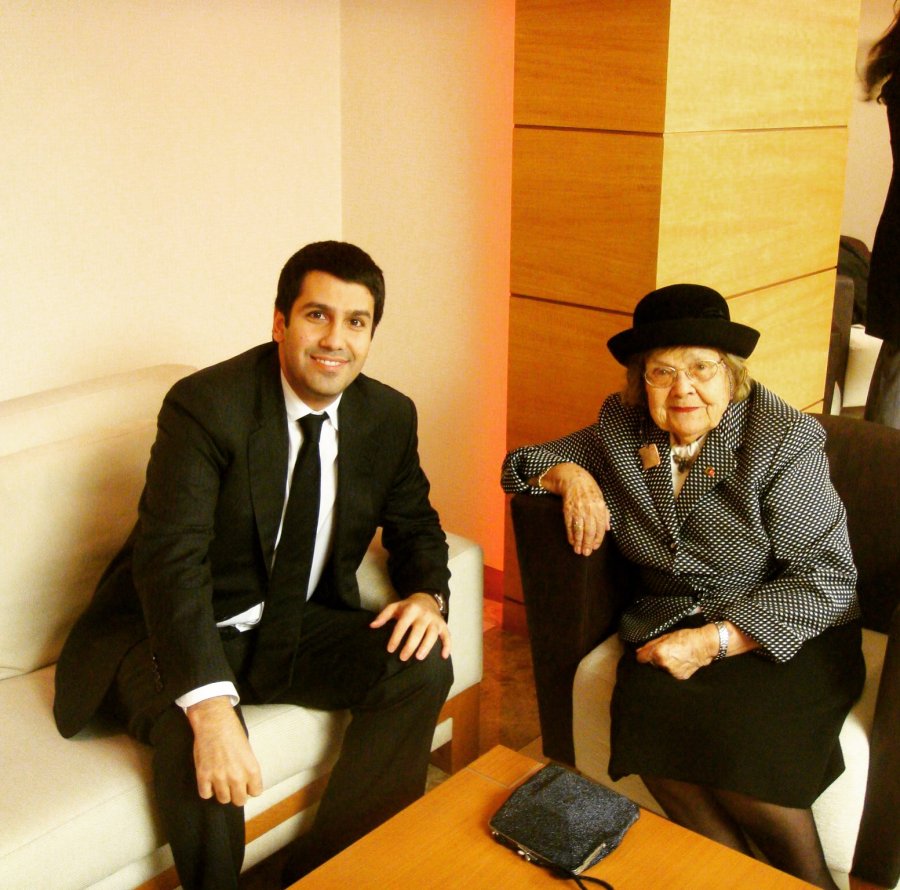
One of the greatest benefits of social media is finding old, even very old, friends and staying in touch with them. I keep in touch with many of my elementary, middle, high school, university, and former colleagues through Facebook, LinkedIn, and Instagram. It’s amazing; everyone keeps up with each other, and we occasionally meet up when we’re pumping each other up.
Four or five years ago, I received a message on Facebook from a primary school friend. This friend, whom I hadn’t seen since I was 11 and had been in contact with on social media, got straight to the point:
- Hello, Serhan.
- Hello.
- I never thought a post like this was appropriate for you.
- Which post didn’t suit you?
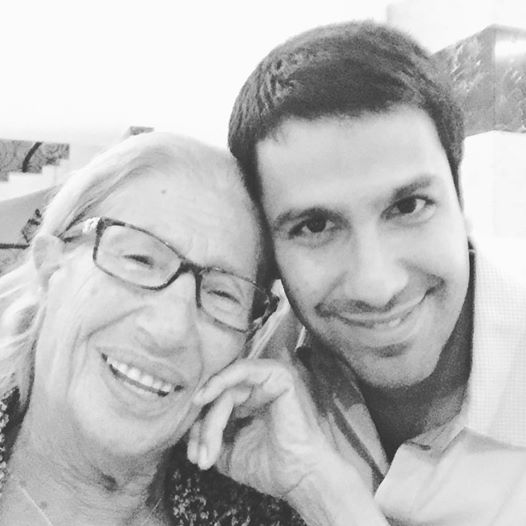
- You used the word ‘woman’ in the caption of your photo with Muazzez İlmiye Çığ (she’s one of the most amazing women I know; you can read her biography at https://tr.wikipedia.org/wiki/Muazzez_%C4%B0lmiye_%C3%87%C4%B1%C4%9F) . Don’t you know that women are not called ‘Ms.’
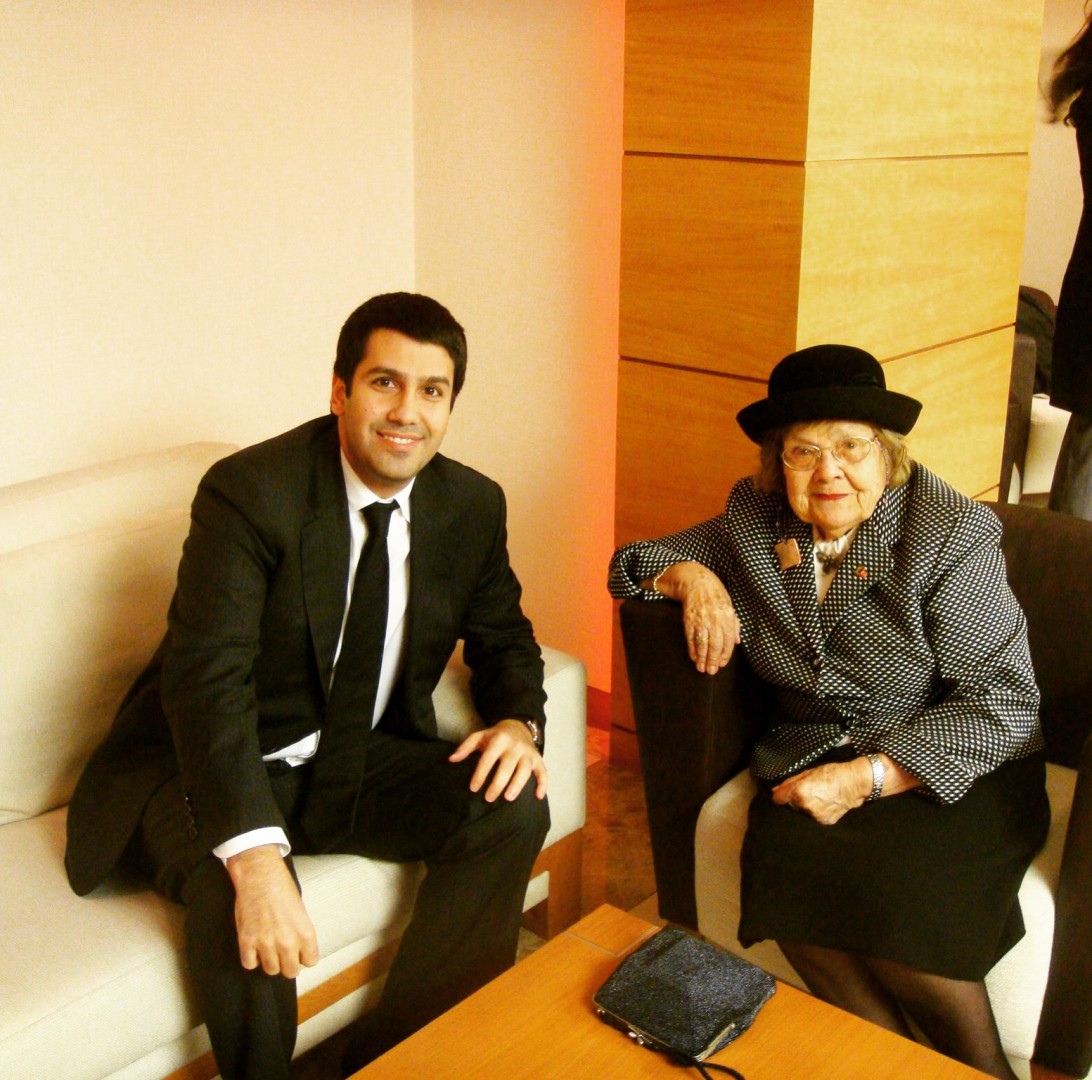
I was confused for two reasons. First, the first message I received from a friend I hadn’t seen since I was 11, whom we all knew and valued as family, shouldn’t have been in such a tone or content. “I must have really touched your nerves,” I thought to myself.
The second reason for my confusion was that I had never heard the whole “woman-ms” thing before. I didn’t understand why she perceived it as an insult. I immediately asked the question that had been on my mind (we speak to each other using our first names, of course, but I won’t share names here due to privacy concerns).
- Why do you perceive being called ‘Ms’ as an insult? ‘Woman’ sounds more rude to me.
- Don’t you know? Men use the word ‘Ms’ to degrade women.
- I had no such intention. On the contrary, ‘Ms.’ sounds much more polite to me.
- Don’t you know that the word ‘Ms’ is derived from ‘Mr.’ This word relegates women to a lower class.
- Interesting. You’re the first person I’ve heard that the word ‘Mrs.’ is derived from the word ‘Mr.’ and that this is used to degrade women. I’d never thought of it that way. The idea of relegating women to second-class status through the word ‘Mrs.’ I don’t know if any men think this way, but I have no such intention. On the contrary, I was being polite and used the word ‘Mrs.’ This also depends on how you interpret the words. You should know that I can’t possibly have such an intention.
I immediately made a word comparison in my mind and felt like saying the following: “Then let me give examples from the languages I know. Let’s protest English and Spanish. Let’s start a campaign to get them to eliminate words like ‘he’ and ‘she,’ ‘Mr.’ and ‘Mrs.’ or in Spanish, ‘el’ and ‘ella’ (meaning ‘she’). After all, if you consider this a derivation, you can find similar masculine and feminine words in many different languages.” However, to avoid offending my friend and prolonging the conversation, I left these words aside. My primary school friend was probably upset that such an argument had erupted between us, so she cut it short. After exchanging good wishes, we ended our correspondence. I never heard from that friend again after that.
What I’ve written may upset some women I truly value, respect, and love. However, due to my nature, I must also state that I know the truth. I also try to avoid using the word ‘woman’ as much as possible. However, I also want to point out that I find this “woman-woman” debate superficial and formalistic.
Violence and the vicious cycle
As someone who has always focused on functional use and is allergic to formalism throughout my life, I want to emphasize that we should all focus on the core issues rather than these debates. The crux of the matter is this: Millions of women in Türkiye are subjected to violence from even the men closest to them. In fact, let alone men with low education levels, even highly modern and well-educated men can inflict violence on their spouses or the women close to them. Thousands of women are physically abused, raped, and even killed every year. These incidents are not decreasing; on the contrary, they are increasing. So why?
The first reason is the lack of basic education in Türkiye. In fact, this is a vicious cycle. The mother doesn’t teach her son respect for women; on the contrary, she instigates ego explosions in the child from a very young age with phrases like, “My lion son, may all the girls be sacrificed for you.” A child constantly flattered by his mother experiences problems in relationships with the opposite sex because he sees himself as Alain Delon, Brad Pitt, George Clooney, or Alexander the Great. Problems arise when other women don’t receive the same attention, care, or allure he receives from his mother. Conversely, when other women connect emotionally and use words to shake a man in their communication, he can become a fish out of water. He can even resort to violence. Violence can sometimes be triggered by events such as ‘cheating’ or ‘being attracted to another woman.’ I wrote a detailed article on this subject last year. I recommend reading my article entitled Why can’t violence against women be prevented in Türkiye? at http://www.serhansuzer.com/tr/turkiyede-kadina-siddetin-neden-onune-gecileleniyor.
Another example is that children constantly observe the relationship between their parents within the family. Even if the parents don’t have a healthy relationship, the child may use this relationship as a benchmark. For example, in an environment where the father oppresses the mother, the child thinks, “This is how all women are treated.” This leads to an unhealthy mindset in their future relationships with women. It’s not just men who grow up with unhealthy mindsets. We can also see the serious effects of this in women who grow up in unhealthy family environments, and who are generally more emotional than men, later in life.
Lifelong Self-Improvement
I’ve repeatedly stated in previous articles: Education is the most important problem in Türkiye. I wrote an article about education entitled Education Education Education, that’s the whole point. You can find it at http://www.serhansuzer.com/tr/egitim-egitim-egitim-iste-butun-mesele-bu . As I mentioned in this article, parental education and the training of educators are particularly crucial. However, parents who are conscious and trained in child rearing can raise healthy generations, while those lacking this equipment can cause more harm than good in the educational process. This leads to a nation’s unfortunate fate and a dark future for generations. Just think: children raised by uneducated and uninformed parents are the parents and educators of the future. This baseness, the erosion of morality, the tendency to violence, the mindset of taking the easy way out and taking the easy way out become repetitive across generations. Such a nation can never have a bright future. I’d like to remind you of my favorite quote from Atatürk here:
“Nations that have made it a habit to live comfortably without working, learning, or getting tired; “They are condemned to lose first their dignity, then their freedom, and then their future.” The awareness that can be raised through education is also very important. You can sometimes observe that highly educated people experience many problems in their relationships. No matter how well educated they are, people need to constantly strive to improve themselves and strive for this throughout their lives.
Balance in relationships is crucial. Sometimes, in a male-dominated society, well-educated and informed women can react by giving their daughters excessive self-confidence. Six months ago, I was chatting with a woman sitting next to me on a plane. This extremely intelligent and well-educated woman, in her 60s, was complaining about her daughter. She said that her daughter’s husband was a very good person and was having difficulties in his relationship with her. He told her, “It’s great that you gave your daughter self-confidence, but you gave it a little too much.” She complained that raising daughters and maintaining a balance in this environment is very difficult for them today. In my opinion, both parties need to maintain that balance and strive to recover even if they experience difficulties. A relationship where only one party is constantly making sacrifices will eventually break down. It won’t work.
Complementation, Not Competition
One of the downsides of the modern age is the fueling of competition and its spread to the opposite sexes. Unnecessary competition between the sexes, attempts to dominate each other when men and women are together, or excessive dominance by one party all hinder the establishment of a healthy relationship. For a healthy relationship between the opposite sexes, in my opinion, men and women must complement each other. Just like Yin and Yang. Then both men and women can enjoy the life they share together. Otherwise, a healthy relationship cannot function in an environment where constant bickering, “You told me this, you did that,” and even the smallest things are obsessed with, is impossible. Both partners become people from different worlds. Both men and women need to abandon their conventional habits, strive to get closer to each other, and strive to complement each other. Otherwise, you can often observe unhealthy relationships even among educated individuals.
Women need to be present in every aspect of society. Women should be able to do the same jobs men do. In an environment where women are present, men also pull themselves together. Similarly, women are more careful in an environment where men are present. This creates a healthy work environment. I’d like to share an article I read before. You can read the story of a woman who works in an all-male auto repair shop at the link below.
http://www.hurriyet.com.tr/18-yasindaki-betul-oto-tamircisi-oldu-29507775
Isn’t this great news? Let me give you two examples from my own life.
Experiences in sports with the opposite sex
Back when I was attending Harvard Summer School, I mentioned the soccer movement my roommate Austin and I started. (You can find the relevant article at http://www.serhansuzer.com/tr/biz-bitti-demeden-bityecek-ego. ) One day, while playing a game on a standard soccer field, a girl approached us. Wearing cleats, soccer shorts, and a T-shirt, ready to play, I made gestures from the sidelines, saying, “Can I play too?” Everyone on the field pointed to me and Austin, the organizers. We stopped the match. We went to the girl. She asked, “Can I play with you?” This was the first time I’d ever seen a girl want to play soccer. Unconsciously, I blurted out, “No, not the game, it’s tough, you’ll get injured.” Austin and I then had the following conversation:
- (I spoke up first) This is the first time I’ve ever seen a girl want to play soccer with boys. If an injury happens here, we’ll be held responsible.
- Serhan, soccer is very common among girls in America. We even have mixed-gender soccer matches occasionally.
- I’ve never seen a girl play this sport before. Of course she can, but you Americans sometimes confuse soccer with American football. The match is very rough (and I was right about that; they really do throw some tough tackles during the match). She can get injured.
- Don’t worry. Everyone adjusts accordingly. Besides, she plays on our team, and we’ll protect her.
- Okay, fine.
After this conversation, I turned to the girl and asked her which position she wanted to play. “I’ll play midfield,” she said. “You know you have to run a lot in midfield, right?” I said to her. “Yes, I always run the most in our girls’ matches, don’t worry,” she said. “Okay, then join our team, we’ll play side by side,” I told her, and we took out a guy from our team and put her in. I gestured to Austin and a few others before the match, saying things like, “We’re putting her in protection.” The game began. Naturally, she was slower than the boys, but the girl had excellent technique. With her touch on the ball, the softness of her ankles, and her unique technique, she started playing like a lion. We were setting a screen to prevent her from being tackled in midfield. The other team started playing more softly. Ultimately, we won the match in a very pleasant way. I congratulated the girl. We talked about her being welcome to come play with us whenever she wanted.
“What kind of men are you!”
I experienced another sports competition with the opposite sex when I attended the Galatasaray Basketball School in Beyoğlu. I was 15 years old. I enrolled there purely for the sake of exercise. I was strengthening my basketball foundation and basic movements. After weeks of training, one day the coach came and said, “Friends, I have a surprise for you. We’ll be doing a different exercise today.” Then the Galatasaray Women’s Basketball team arrived. I couldn’t believe my eyes. The coach told us we were playing against a professional team and that this would contribute to our development.
At 1.80 meters tall, I was short for basketball, so I played guard on the team. Being ambidextrous and fast was an advantage. The match began. But there was a problem for me. I didn’t know how to guard the opposing team’s guard. I didn’t play defense because I feared it would be misunderstood. The other players on our team were equally confused. As soon as the match started, the Galatasaray Women’s Basketball team started scoring one after another. They quickly took a 12-0 lead, scoring half of those points. The opposing team’s guard, who was supposed to be my guard, threw it. The coach watching from the sidelines couldn’t take it anymore and called a timeout. During the timeout, our dear coach was raging:
“What kind of men are you! You should be ashamed of your manhood. Could you give up 12 points in such a short time? Didn’t I ever teach you how to defend?” When I said that, one of the players on our team interjected: “Coach, how do you expect us to play close-contact defense? None of us can do that.”
The coach then explained that we were playing basketball here, that there was nothing else at stake, that we needed to forget that our opponents were women and play as if we were playing against men, and that no one would misunderstand that.
After these conversations and the coach’s harsh words, we left the break with renewed motivation. Before the match started, I told the opposing team’s guard, “Well, we were instructed to play hard defense. I apologize in advance for the defense I’ll be playing from now on.” The girl replied, “Let’s see.” The match began.
Frankly, after we started putting our weight behind us, the balance of the game changed. We started scoring points one after another and stifling the other team. Ultimately, we won the match. It was a very interesting experience for me. It’s wonderful that women are involved in sports.
I hope my daughter and I will play sports together in the future. I know I will enjoy it very much.
My personal and corporate concrete steps
Having said all this, you might rightfully ask, “You’re so pontificating about women. What are you doing about it?” I’d like to share what I’ve done for women:
- I believe women should be present in every aspect of life. That’s why I’ve directed EkoRE, our engineering firm with a predominantly male presence, to recruit more female engineers for our intern program. Last week, when I visited our Konya Kulu site, I noticed this gap and informed our managers that I wanted to see more women among the field team. Our team has since acted on this matter.
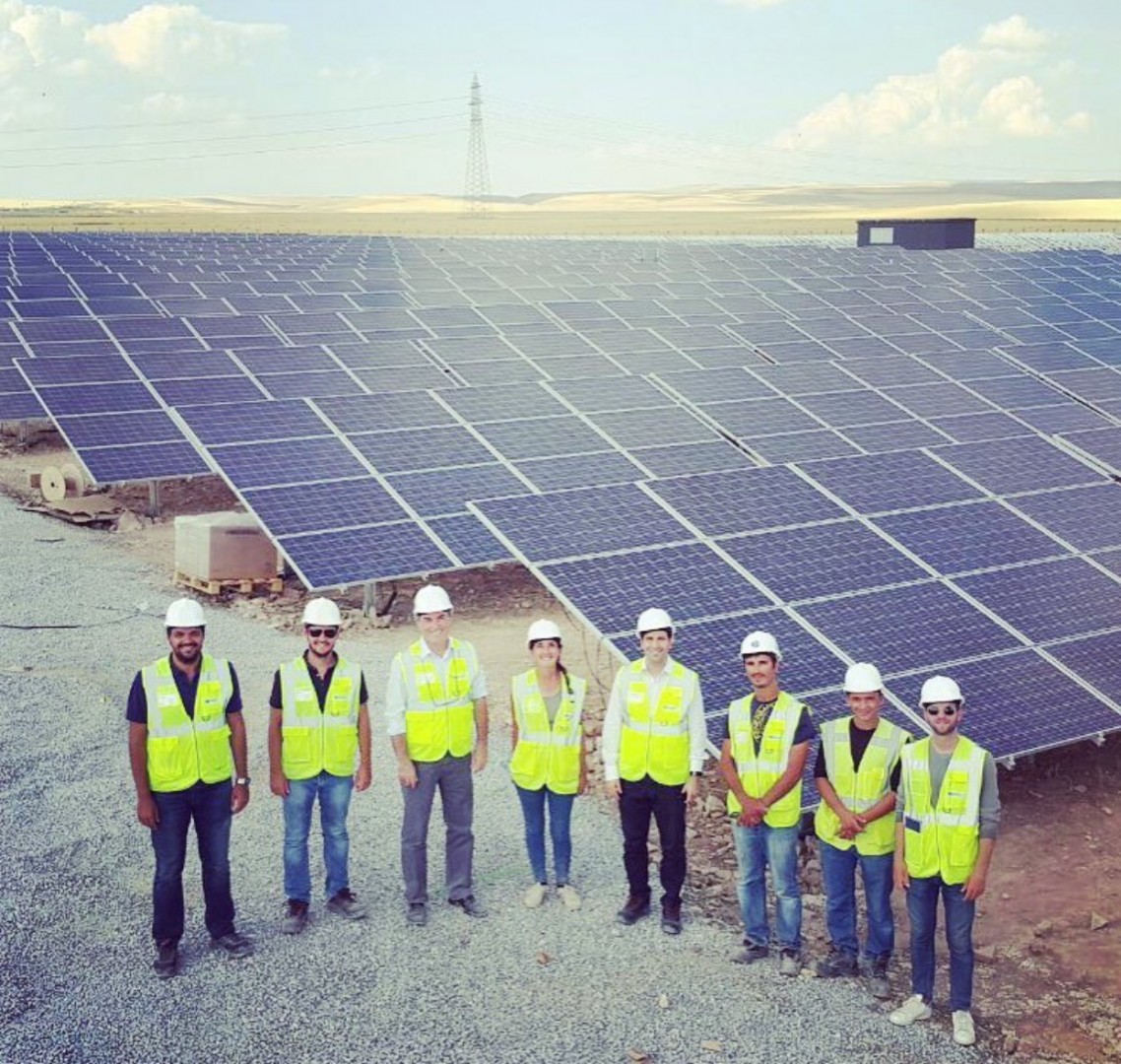
A photo we took yesterday at our Konya Kulu Solar Power Plant project. You can see our young engineers from the intern program, which started with Berker and Alaaddin from ITU on the EkoRE Solar team. Melis, who is normally responsible for desk work like technical drawing, is also doing a good job in the field. From now on, we will ensure an equal male-female ratio in our intern program.
- I signed the declaration, prepared by the United Nations on women’s rights and brought to the agenda by the Sustainable Development Association (SKD) in Türkiye, declaring that as business leaders, we will achieve gender equality. Below you can find the 7-article of United Nations Declaration, which is a summary of this file, which has a detailed background and a very long text.
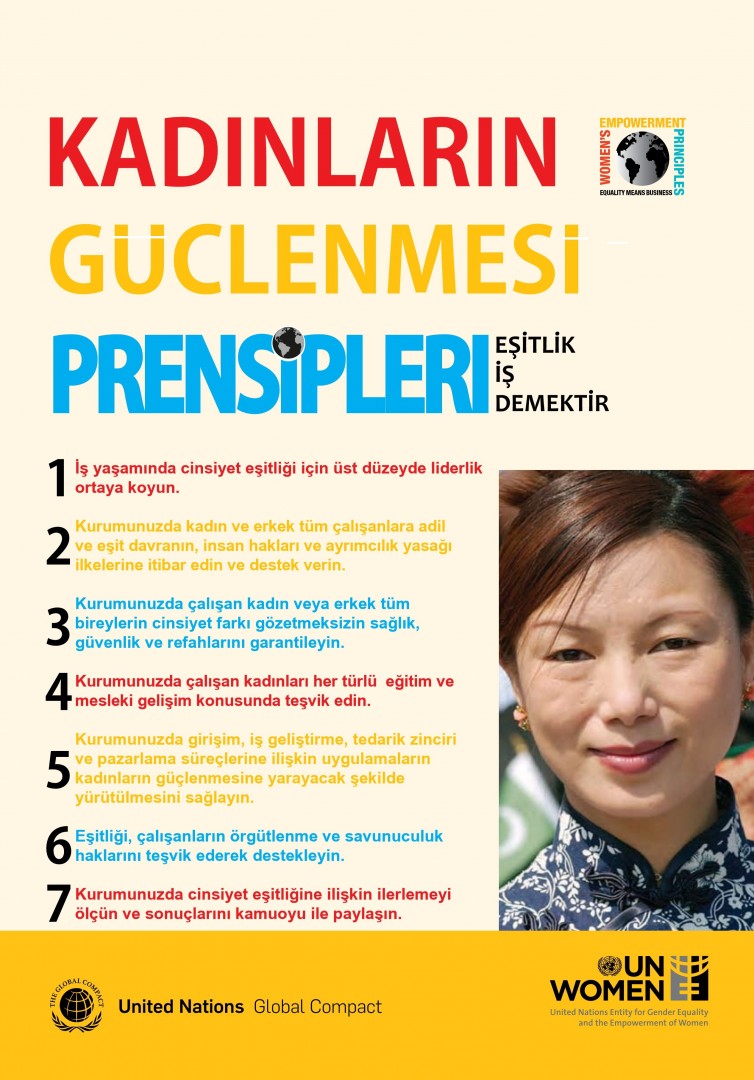
A 7-point declaration published by the UN.
- We are working with the UN to advance women’s development not only in Türkiye but also internationally. In a recent speech at the UN, we announced our partnership with RASIT (Royal Academy of Science) for an international intern program. You can find these speeches at http://webtv.un.org/watch/transforming-the-world-through-sustainable-energy-for-all-leaving-no-one-behind/4930324186001 (my speech begins at 37:24). RASIT, led by Iraqi Princess Nisreen El Hashemite, is an organization that specifically supports women in science. We will launch this program in October this year and will hold its launch in Istanbul. With this program, we will provide interns from around the world with internship opportunities in Türkiye and, in the future, in various parts of the world, training the successful engineers of the future. We’ve set a 50%-50% female-male ratio. In other words, half of the interns we train will be women.
- At the Basic Needs Association (TIDER), of which I am the founding president, we place great importance on programs for women. For example, we implemented a rural development project for women in Yırca Village, Soma. Thanks to this project, which we established and maintained for 1.5 years, the women of Yırca generated over 200,000 TL from the sales of the soap they produced. Details about this development project can be found at http://tider.org/news/4/69/Yirca-Soma-Yirca-Koeyue-Kalkinma-Projesi . Furthermore, TIDER’s main model, the Support Project (Support Market + Support HR), makes significant efforts to support women’s development, particularly in urban areas. A significant majority of our support recipients are women. We also do our utmost to ensure women’s participation in employment through our support project. You can find our related video at https://www.youtube.com/watch?v=UJtsDRvEGz0.
Finally, I want to address all my fellow women here:
- A man would never raise his hand against a woman who is physically weaker than him. Men who commit violence against women are pathetic in my eyes.
- Women are our wives, mothers, sisters, grandmothers, great-grandmothers—our very lives. Let’s protect women.
- Societies that lack the education and development of their women can never develop. The status and value placed on women are at a high level in all developed countries.
On this occasion, I wish a long life to my grandmother, who holds a very important place in my life and is the pillar of our family. May God bless her.
Tag: education