For my readers who are unfamiliar with the subject or are unfamiliar with the subject, I would like to share some examples from the words of these important representatives of Sufism, who have illuminated the present day from centuries ago (and let’s not forget, of course, that books have been written with the words of these important thinkers):
Yunus Emre: “Tolerate what is created, for the sake of the Creator.”
Mevlana Celaleddin Rumi: “Come, come, come, come, whatever you are.”
Hacı Bektaş-ı Veli: “Control your hands, your tongue, your waist.”
Sufism, or the philosophy of Sufism, accepted in Central Asia, the Caucasus, Anatolia, Thrace, and the Balkans, illuminates our day despite all the storms. It’s 2018, and what is happening in our country, which holds the legacy of these beautiful teachings passed down from generation to generation? I’m truly ashamed to state it openly:
VIOLENCE against children, the elderly, the disabled, women, teachers, students, doctors, patients, employees, colleagues, bosses, friends, neighbors, strangers, anyone in a vehicle in front of you/behind you/to your right/left, pedestrians, mothers, fathers, siblings, older brothers, sisters, other relatives, rivals, athletes, referees, other fans, their own fans, etc.!
The list goes on and on. I’m having a hard time understanding what kind of country we’ve become. Everyone is constantly inflicting violence on everyone else. This shouldn’t be perceived solely as physical violence. Verbal violence, psychological violence, sexual violence, and all forms of moral violence are included in this disgrace.
“Love-filled” violence against Sıla
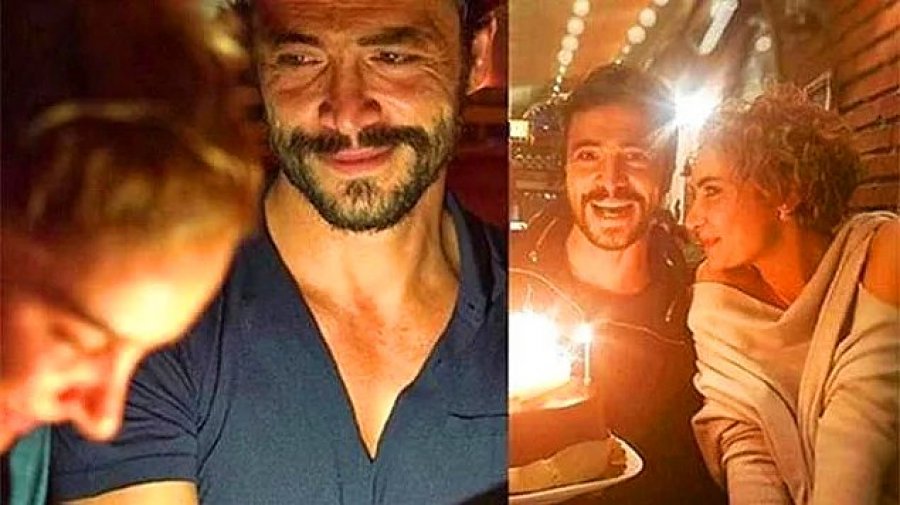
Every day brings a new incident. Following the actions of footballer Arda Turan (you can see my article on this subject: http://www.serhansuzer.com/tr/nasihat-dinlemeyen-ardanin-onlenmeyen-cokusu), we witnessed another violent incident that hit the headlines like a bombshell last week. For my foreign readers who aren’t familiar with the situation, I’d like to briefly summarize the situation: One is Sıla, a very popular singer in Turkey, and the other is comedian Ahmet Kural. They began a relationship last year and broke up at the beginning of this year. They resumed their relationship in early October. This time, their relationship ended in disaster. According to the authors, Ahmet Kural beat Sıla in her own home for 45 minutes, repeatedly kicking, slapping, punching, and hitting her with hard objects. Sıla then went to the prosecutor’s office and filed a criminal complaint. She was sentenced to a three-month restraining order against Ahmet Kural. Naturally, the incident was followed by mutual statements, the termination of the contract by Yapı Kredi Bank, which owns Unicredit, which had run an advertising campaign with Ahmet Kural, and the subsequent vilification of Kural, particularly on social media, for his alleged violence against women. Complicating matters further is the fact that, in their relationship, Ahmet Kural and Sıla acted deeply in love, a sentiment reflected in their photos together.
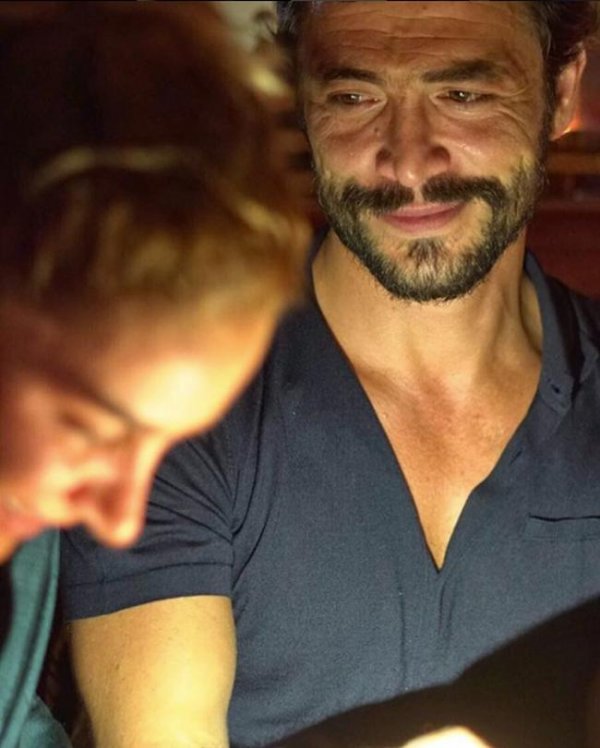
The picture is everyone’s talking about. People are constantly discussing it on social media: “How could a man who looks at her with such love beat Sıla?”
The problems behind the violence
Let me explain. I don’t know him, but a man who commits violence against the woman he loves likely has the following problems:
- He has experienced violence in his past. It was either inflicted on him or he witnessed it being committed against someone else in his family or close to him. Unfortunately, this is often the father’s violence against the mother or child.
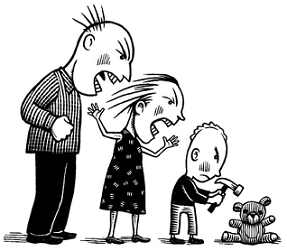
Representative image
- He’s ignorant.
- His cultural level is underdeveloped, or he has a personality that boasts about macho culture.
- He couldn’t handle fame.
- Many people who suddenly wonder what happened when they’re experiencing serious problems turn to alcohol or drugs. I’ve witnessed many people who drink and lose control. This can cost people their marriages, even their lives. And in Turkey, they really don’t know how to drink. They always overdo it. Look at the fights in nightclubs. Fights always break out after 3 a.m. Why? Because people do things they wouldn’t normally do while drinking. Alcohol brings out a different side in everyone. Some become aggressive, start fights, some start laughing constantly, and some get sleepy. Perhaps that’s why nightclubs close at 2 or 3 a.m. in developed countries.
- He has a psychological problem. He may be experiencing extreme emotions.
- He couldn’t handle Sıla’s popularity. Excessive jealousy is a serious problem in all relationships.
Disgrace in the derby and the comments
Last Friday, we witnessed the violent incidents at the Galatasaray-Fenerbahçe derby. I was personally ashamed of the events that unfolded. Not just for Galatasaray, but for Turkish football.
We all saw what happened on our screens. The match had already begun with a brawl. The players were fighting while warming up. The match atmosphere was also very stressful. Before the match, a young Fenerbahçe fan suffered a heart attack and tragically passed away. I pray for God’s mercy upon him and my condolences to his family. When some insensitive fans chanted “Let those who don’t love you die,” the Fenerbahçe fans left the stadium in justified protest. I was astonished to see this incident and the subsequent comments on social media.
For example, a businessman, a family friend whom I personally love and respect, posted the following on Facebook (I will definitely not share his name):
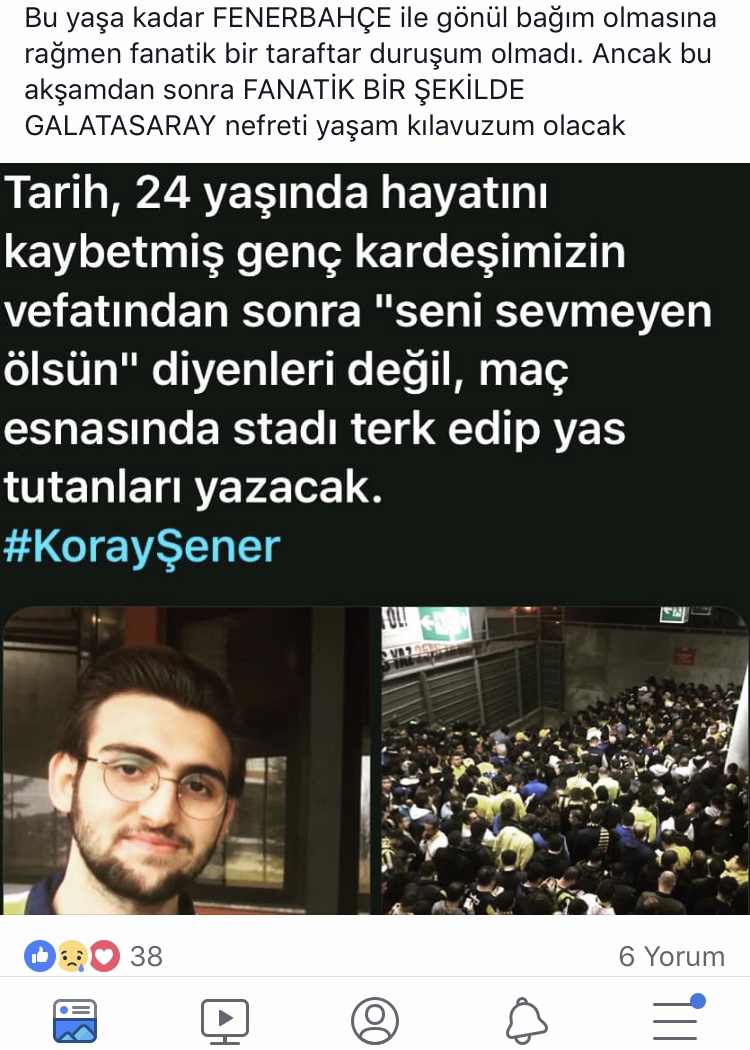
I read this comment with astonishment and sadness. Afterward, I reacted and removed him from my friends list. I’d like to say this to this lady: Why are you attributing the chants of the impertinent fans in the stadium to the entire Galatasaray community? We’re all humans before we’re Galatasaray fans. Our hearts are all heavy. What does “But after tonight, a FANATIC hatred of GALATASARAY will be my guide in life” mean? How can a reasonable person like you say that? Aren’t you also responding to violence with verbal violence? Because of these events, the country is being divided on every issue, and everyone is turning against each other. It’s a shame, a sin.
I’d also like to say this to her: One day, at a friend’s invitation, I went to a Fenerbahçe basketball match against a Greek team. We had another European friend with us. After the match, the Genç FB fans, furious with Aziz Yıldırım, got into a fight with the remaining fans. Yes, you read that right. Fenerbahçe fans attacked each other in groups, kicking and punching each other in the arena. The comment that touched me most was when our European friend, who witnessed the events, asked, “Which of these is a Greek fan?” Now I ask you: Can Fenerbahçe fans beating each other be attributed to all Fenerbahçe fans? I am utterly opposed to all forms of violence, whether Turkish, Greek, or from any other country.
For a return to a United Society of Tolerance…
While our region (Central Asia, the Caucasus, Anatolia, Thrace, the Balkans, the Middle East) once served as the cradle of civilization and fostered tolerance everywhere, today we are filled with violence everywhere. I’m not even mentioning the wars and countless others that have occurred. Therefore, we must transform from this state of being a Country of Violence (Violentistan) into a United Society of Tolerance (UTO), where tolerance and brotherhood are experienced in their fullest.
The problem is immense. However, there are solutions and much that can be done now to achieve UTO. I list my suggestions below:
1) Education is a Must!
I say this everywhere and always. I’ve written about this many times. You can read my article titled “Education Education Education, that’s the whole point” at http://www.serhansuzer.com/tr/egitim-egitim-egitim-iste-butun-mesele-bu. I’m not specifically talking about education in school here; there are actually three types of education we need to address: First, education between the ages of 2 and 10. During this period, children’s perceptions are very receptive and they absorb everything they are given. For example, I’ve always said that in developed societies, parents take their children to charity work from the age of 2 onward to instill social responsibility. When these children grow up with a sense of charity, they grow up with a benevolent identity and can maintain that sense of responsibility throughout their lives. This is crucial. The second crucial aspect is parental education. Parents need to be more aware of the values they should instill in their children and how they should treat them.
There’s an organization called AÇEV (Medical Education Foundation) that focuses on parental education, but it needs to expand throughout Turkey. It might be a very difficult idea to implement, but I think couples should be required to receive a certain level of education before having children. The third important issue is the “education of educators.” When I meet with educators, I sometimes get the impression that they are inadequate because so much in our education system is based on rote learning. I’ll give a very simple example: there are 3.5 million Turks in Germany, and our world-renowned athletes are born from Turks living there, but despite a population of 80 million in Turkey, we haven’t achieved the same level of success. I think we need to look at the institutions and educators that train athletes to understand why.
2) Football: A Matter of Life and Death
It’s absurd that football is a matter of life and death. After all, it’s a game. A ball, two goals, and 22 players on the field are the main actors in this game. Making this a matter of life and death only happens in underdeveloped societies. Many people who have never achieved anything in life live on the success of their team. And when they succeed, they experience a sense of personal satisfaction. However, it’s necessary to explain to these people, and emphasize in every possible way, that this isn’t their own achievement, that it’s a good feeling to be proud of their team, but that they should seek their life satisfaction elsewhere.
3) Economic Development
Conversely, we see a decline in fanaticism in countries with high economic development. As people who are economically well-off establish their own lives and have families, their tendency to violence decreases. This is because they have a lot to lose. The most dangerous and violent people are those who have nothing to lose.
4) Our People’s Participation in Production
I also want to emphasize the importance of participation in production alongside economic development. Generally, there’s no harm in people working, producing, and having dreams. Every person has a talent or skill and is born with dreams. If we want to ensure prosperity in a country, we must ensure that people achieve their dreams, do things they enjoy, and contribute to society. Otherwise, violence will constantly feed and grow as a herd of people who don’t produce and don’t pursue their dreams and passions grows.
5) Punishment
Those who commit violence must be given the harshest possible punishment. I’m not talking about token punishments. You must impose the punishment harshly and without compromise. It must be ingrained in the minds of those prone to violence that there is a consequence for the misdeeds they commit, so that they refrain from violence and act as a true deterrent.
6) Technology
This topic is rarely considered. However, technology is a serious tool for preventing violence. You can use technology to detect violent incidents in advance and record them as they occur. You can also develop systems that will enable the relevant authorities to respond immediately to prevent violence. In addition to the effective use of advanced cameras, you can prevent violence with various defense systems based on WiFi or Bluetooth. I recommend looking into analytics technologies. In the future (which we probably won’t see in our generation), they will implant chips in people. Then the problem will be largely solved. However, it’s too early to talk about that right now. Of course, after identifying the problem and the perpetrator, deterrent punishments must be implemented.
7) Media
Mainstream media must also stop inciting violence. On the contrary, they must focus on preventing violence. Strong sanctions must be imposed on organizations that do the exact opposite to boost ratings. Those who incite violence should not be spared. The sports and entertainment press in Turkey are particularly notorious for this. Anyone who encourages violence on social media, whether directly or indirectly, should be sanctioned. This includes fan groups insulting each other on social media. At the very least, you should close their accounts. You will prevent the creation of ‘fake’ accounts. As I mentioned above, social media users who actually engage in verbal abuse or pave the way for physical violence must be subject to serious penalties.
8) Instilling a Positive Culture
We need to instill a positive culture in the media, social media, educational programs, and every possible medium. We must quickly transition away from being a constantly negative and aggressive community. Because this negativity ultimately leads to violence.
9) Proactive Approach
I’m talking about identifying those with violent tendencies in advance and closely monitoring them. Technology can be used here as well, and psychologists, in particular, can actively serve in this process. In this way, we can prevent many acts of violence.
Hoping that we become citizens of a United Society of Tolerance. Stay well.
Tag: lifestyle