
I wrote my first article about green hydrogen last year,en titled “The unsung hero against climate change: Green Hydrogen.” I’m sharing the link as a reminder: https://www.serhansuzer.com/tr/iklim-degisikligine-karsi-gizli-kahraman-yesil-hidrojen
In this article, while discussing the importance of hydrogen, I shared the following information regarding its use: “In areas where electrification is not possible, hydrogen is intended to be used as a raw material, fuel, energy carrier, and storage. In terms of sectors, hydrogen has the potential to reduce greenhouse gas emissions, particularly in the industry, transportation, energy, and building sectors.”
Approximately 5.5 months after I wrote this article, Russia’s invasion of Ukraine began. With this invasion, Russia pitted the entire Western world against each other. Mutual confrontations and sanctions aimed to prevent the use of Russian gas, Europe’s energy backbone.
Russian gas supplies were significantly reduced, but it also became clear that Europe’s dependence on Russian gas would not be easily resolved. Following European countries’ freezing of Russian assets and seizure of cash, Russia’s imposition of a rule stipulating that “if you want to buy gas, you must open a ruble account in Russian banks and pay us in rubles” once again left Europe helpless. We observe that Europe, which some believe only has gas stocks until the end of this year, is rapidly developing alternatives.
Alternatives include increasing gas supplies from the Middle East (intense negotiations are ongoing with countries like Qatar and Abu Dhabi), increasing energy imports from distant lands like Australia, increasing shale gas imports from the US, and even reintroducing previously discarded countries like Venezuela into the equation.
The Most Powerful Alternative: Green Hydrogen
Given the dire situation, it’s being argued that green hydrogen is the most important alternative that can replace Russian gas. Green hydrogen is not only a key option for national security, cutting Russian gas imports, but also stands out as an energy source that countries pursuing a carbon neutralization vision will strongly embrace. In other words, green hydrogen is the most important energy type that can replace fossil fuels like natural gas and oil and provide a baseload for neutralizing carbon emissions. Baseload means being able to generate energy at any time of day and meet demand. While renewable energy types like solar and wind can generate electricity when the sun or wind is present, to generate energy when the sun and wind are not, you either need to generate and store more energy from the sun and wind (using battery systems) or maintain a certain proportion of the energy mix with green hydrogen, biogas, or geothermal energy.
Nine tons of hydrogen
Essentially, green hydrogen must also be sourced from renewable energy. Solar and wind energy are at the forefront here. As you know, producing hydrogen by separating it from water (using electrolysis) requires electricity. If you generate electricity from renewable energy, this is called green hydrogen. However, there are also different hydrogen production methods and colors. Hydrogen, the lightest element with atomic number 1 and located at the top of the periodic table, is a colorless gas, yet it is defined by approximately nine color codes, which are used in the literature.
These colors assigned to hydrogen are used to classify it according to its source of production, its production method, and the carbon emissions during the production process. I’d like to share these nine color codes:
*bkz. https://www.tek-sis.com/tr/makale/9/hidrojenin-renkleri
| Color | Source | Method* | Products Ensuing from the Production Process |
| Brown | Coal | Gasifying | H2+CO2 (emitted into the atmosphere) |
| Black | Coal | Gasifying | H2+CO2 (emitted into the atmosphere) |
| Gray | Natural Gas | Steam Reformation | H2+CO2 (emitted into the atmosphere) |
| White | Formed naturally | H2 | |
| Blue | Natural Gas | Steam Reformation | H2+CO2 (trapped and stored) |
| Turquoise | Natural Gas | Steam Reformation
(Methane Pyrolysis) |
H2+C (solid) |
| Red | Water | Electrolysis | H2+O2 |
| Yellow | Water | Electrolysis (drawn from the electricity grid) | H2+O2 |
| Green | Water | Electrolysis (Electricity obtained from renewable energy) | H2+O2 |
| Pink | Water | Electrolysis
(Electricity obtained from nuclear power plants) |
H2+O2 |
In my opinion, hydrogen production should be done with either green or white hydrogen. White hydrogen is a naturally occurring form of hydrogen. Finding and efficiently extracting white hydrogen is not easy, and its natural abundance is limited. Green hydrogen, however, requires water and renewable energy. This is quite possible in today’s world, as natural resources such as seawater, solar energy, and wind are abundant throughout the world. The use of green hydrogen, which has the potential to replace natural gas and oil in neutralizing carbon emissions, is crucial.
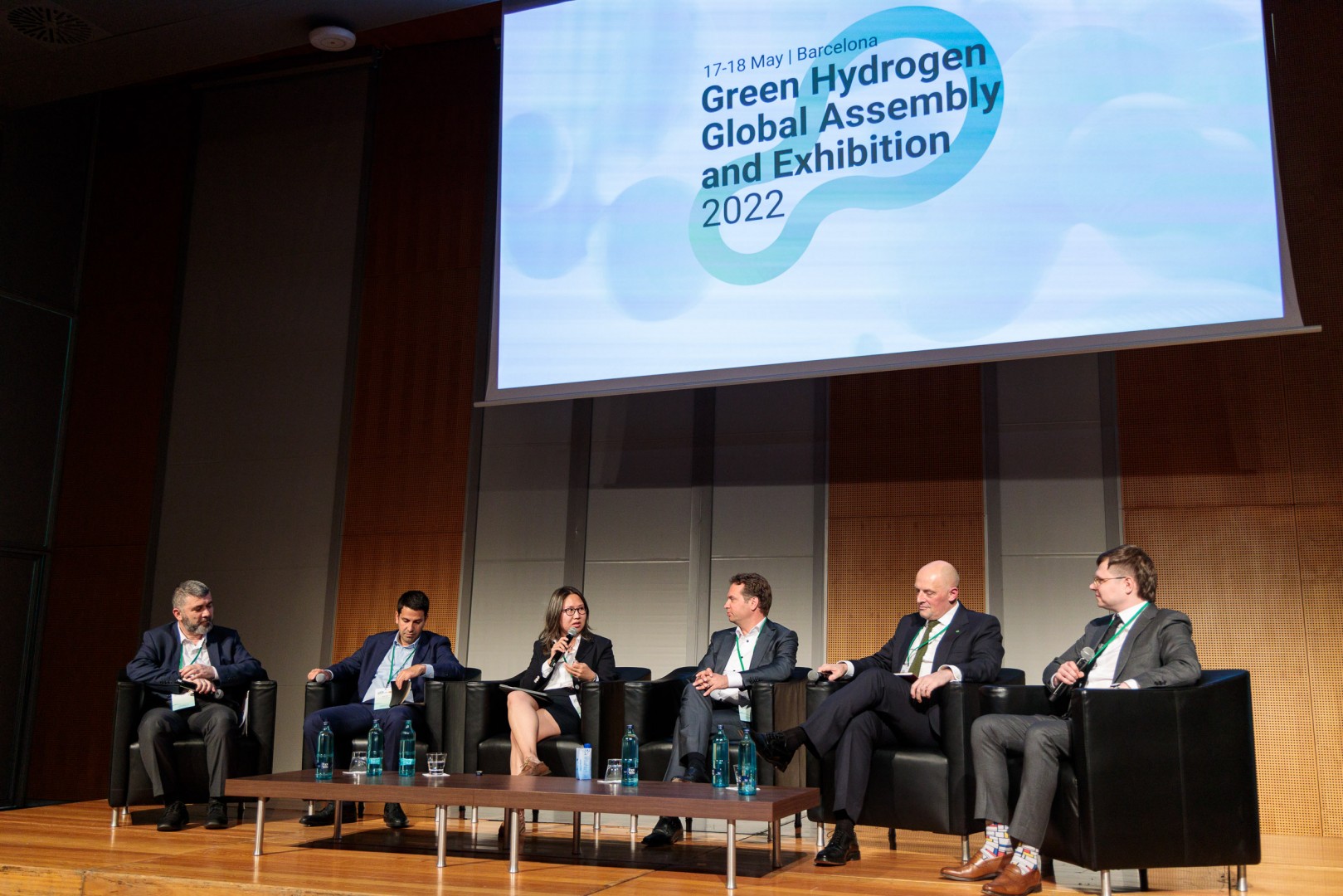
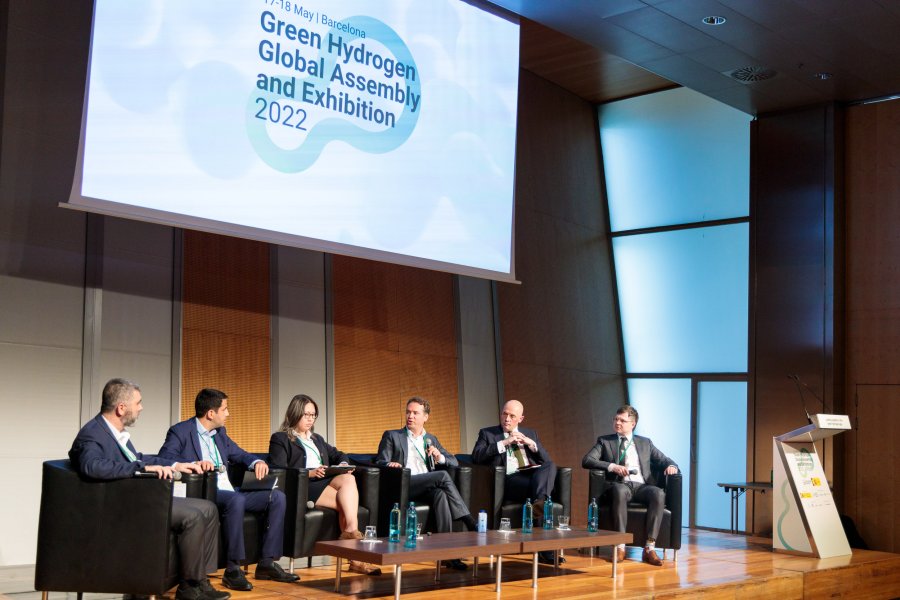
Now, let’s look at the green hydrogen potential in our region. To explain this topic in more detail, I’d like to share my answers to the questions posed during the panel titled “Decarbonizing Eastern Europe and Central Asia – Green Hydrogen in the Mix” on May 18th, the second day of the Green Hydrogen Assembly*:
1) Where do you get water?
Using seawater is the only alternative. While we’re not currently experiencing a drought in Turkey, this problem will arise in the future, 5-10 years from now. Therefore, for green hydrogen production, we absolutely must avoid using land-based water sources such as lakes, rivers, streams, groundwater, and waterfalls. In my opinion, desalination using seawater is the only viable alternative. When you start using land-based water, our people will blame the hydrogen sector for the drought. On our journey to change our fate, climate change for humanity, we will encounter the exact opposite reaction; the sector will self-defeat.
2) What color of hydrogen would you choose?
The only correct color for hydrogen is green. In my opinion, we should not consider any other hydrogen production method. Green hydrogen produced from renewable energy sources is the only alternative that will provide the decarbonization we need to be in harmony with nature and eliminate the threat of climate change.
3) On what issues can countries in the region cooperate?
Collaboration between neighboring countries can be established in many different areas. Sharing electricity generated from renewable energy, sharing water obtained from seawater, and exporting produced hydrogen to other countries through pipelines are just a few of these.
4) How does the hydrogen sector begin?
It begins when you establish a parallel supply and demand. First, there are tasks to be done on the supply side. You can start by incorporating off-grid, hybrid, or existing solar or wind power plants. When we say “integration,” there are several options: You can purchase these plants or sign a PPA (power purchase agreement). After addressing the renewable energy side of the business, it’s necessary to invest in desalination plants and electrolyzer technologies (producing hydrogen from water). In doing so, you should focus on selling green hydrogen as an alternative to natural gas. I’ll explain how you can create demand in future articles. I’ll write about it. And of course, there’s also the issue of transporting the produced hydrogen. That’s a whole other challenge. You can transport hydrogen by trucks, ships, or pipeline.
5) Will countries in the region enter the hydrogen sector in a similar way or through very different routes?
Since each country will use hydrogen in different ways, we’ll observe different paths. It’s clear that countries will follow each other in terms of hydrogen entry, but each country will position hydrogen differently depending on its priorities. Some will use it for their industries, some for heavy vehicles, some as an alternative to natural gas, and still others in fertilizer production. There will always be differences in use, and there will be multiple uses, but each country’s focus will vary depending on its own dynamics.
6) Do you think the countries in the region will be exporters or importers of hydrogen?
I’m a firm believer in distributed systems. I believe all countries should first meet their own needs and then export their surplus. I think the region we call Eurasia, that is, the countries in Eastern Europe and Central Asia, will be exporters in the long term.
7) The Eurasian region is a darker region in the green hydrogen story. Will it be a horse?
(The metaphor “Dark Horse” is used to ask, “Will it disrupt or contribute to the Eurasian hydrogen balance?”)
I think if we compare the hydrogen economy to a carriage, the Eurasian region will be one of the muscular horses carrying this carriage. We will all see this together.

I hope this information has been helpful to you, my readers. Finally, I’d like to emphasize this: The hydrogen era is beginning. This will be both economically beneficial for our country because we will be able to produce our own hydrogen using our own resources, eliminate natural gas imports, and, conversely, export hydrogen. Achieving energy independence, in my opinion, is a matter of national security. I hope that no one will attempt to obstruct or delay the transition to this new era in the interests of the country. We have been fighting for the widespread adoption of renewable energy throughout the country for 10 years, we have made significant progress, and we have succeeded in creating a sector that grows at an increasing rate every year. I hope we don’t have to put as much effort into hydrogen; it will become a sector everyone has supported from the very beginning and be a part of our agenda.
* To see details of the Green Hydrogen Assembly organized in Barcelona by the Green Hydrogen Organization, headquartered in Switzerland, please visit the link Green Hydrogen Global Assembly and Exhibition | Green Hydrogen Organisation (gh2.or).
Tag: ecology