
Why is Green Hydrogen necessary?
1) Economic Reasons
Energy imports are the number one cause of Turkey’s current account deficit. If we meet our energy needs with our own resources instead of importing, our country will start running a surplus instead of a current account deficit. This means all economic indicators will turn positive.
2) Ecological Reasons
To limit the effects of climate change and reverse this process, we need to reduce or even neutralize carbon emissions. The most effective way to combat this is to shift the energy model from fossil fuels, which contribute to the highest carbon emissions, to 100% renewable energy.
3) Energy Supply Security and National Security Issues
The fact that natural gas imports come from neighboring countries, with which we may face potential problems, is a national security issue. As we have witnessed many times in the past, these countries can use energy as a weapon, threatening our country and causing serious disruptions in energy supply. To prevent natural gas-exporting countries from threatening our sovereignty, we must meet our energy needs with our own energy resources.
We can also meet our own energy needs with 100% renewable energy. Turkey offers all types of renewable energy (solar, wind, geothermal, bioenergy, wave, current, etc.). Solar and wind energy, the most prominent renewable energy sources and capable of meeting all of Turkey’s energy needs on their own, have a drawback: We can only generate energy when the sun and wind are available. There are four ways to generate baseload energy, meaning we can generate energy whenever we want and meet our energy needs around the clock. However, there are limitations to these four methods, except for green hydrogen:
a) Baseload-providing renewable energies: Geothermal and bioenergy (biogas, biofuel, biomass) have limited capacity. Even if we completely equip the entire country with geothermal and bioenergy, we still cannot produce enough energy to meet the country’s baseload needs.
b) Hybridization (combining solar and wind): Even if wind and solar power plants built together balance each other by producing more solar energy during the day and more wind energy at night, or by producing more seasonal solar energy in the summer and more wind energy in the winter, they cannot meet the demand for “energy production when needed” and cannot provide controllable stabilization.
c) Battery: Heat storage technologies can meet the heat demand, but the process of generating the electricity required is difficult and costly (it requires controlling the molten salt process, then generating steam, and finally generating electricity with a steam turbine).While significant advances have been made in electricity storage battery technologies over the last 3-4 years, difficulties in accessing the mines where these batteries’ raw materials are extracted and the limited efficiency of these technologies in meeting high energy demands mean that batteries will struggle to meet all baseload energy needs.
d) Green Hydrogen: Generating their own gas from renewable energy and burning it when needed to meet energy needs makes all the difference in this equation. Green hydrogen is essential for providing baseload. Green hydrogen is a type of energy storage method. It can be used where it is stored or transported in different forms to meet the energy needs of locations.
Which sectors can Green Hydrogen meet the demand?
Green Hydrogen can replace natural gas and meet the demand wherever natural gas is used. Accordingly:
1) Industry: All organized industrial zones and industrial facilities in Turkey can begin using hydrogen instead of natural gas. This could begin with industries that use high amounts of gas, such as steel and cement.
2) Buildings: Residential buildings, workplaces, and all other buildings can switch to using hydrogen instead of natural gas.
3) Transportation: In the future, all small vehicles (cars, minibuses, buses, trucks, etc.) will be solar-electric, while larger vehicles (trucks, ships, airplanes, etc.) will be powered by hydrogen. This transition should be initiated in Turkey without delay.
4) Electricity or heat generation: Where necessary, hydrogen can meet the electricity and heat needs of a specific region.
What are the important points to consider regarding hydrogen?
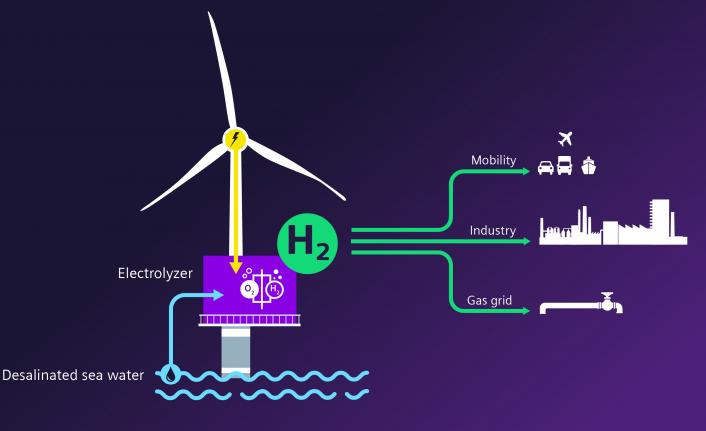
1) Hydrogen should only be green: When producing hydrogen, we need electricity to run the electrolyzer, compressor, and even the desalination plant. The industry assigns different colors to the source of electricity: “green” for hydrogen produced with electricity from renewable energy sources, “grey” for hydrogen produced with natural gas, “brown” for hydrogen produced with coal, “blue” for hydrogen produced with fossil fuels and stored carbon, and “pink” for hydrogen produced with nuclear power plants. To ensure access to safe energy, combat climate change, and neutralize carbon emissions, hydrogen should only be green. To help you visualize, below is a visual that summarizes the process of producing hydrogen by separating water molecules into oxygen and hydrogen atoms using electricity generated from renewable energy, operating an electrolyzer, and then supplying it to the sectors in need:
2) Landwater should not be used when producing hydrogen: Landwater should absolutely not be used in the production of green hydrogen. With climate change, droughts are expected to increase in the next 10 years, and certain regions are expected to experience water shortages. Three sources other than landwater can be used for hydrogen production:
a) Seawater: Water can be desalinated to obtain water of the desired purity.
b) Rainwater: Rainwater is collected in artificial ponds created next to hydrogen plants and, after the necessary filtration, can be used for hydrogen production.
c) Wastewater: Wastewater from industrial plants can be processed into water suitable for hydrogen production.
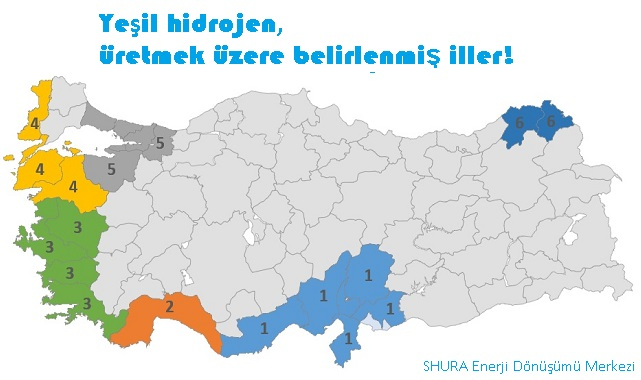
At this stage, the hydrogen sector should not be a problem, but rather be part of the solution. In other words, some of the water obtained by desalinating seawater for hydrogen production can be used to meet the needs of the people in drought-stricken regions. As an example, I’m sharing the regions previously identified in the Hydrogen Report prepared by the Shura Energy Transition Center. You can clearly see that all potential hydrogen regions are located offshore:
3) If possible, gaseous form should be preserved: There are different alternatives for hydrogen storage and transportation:
a) Gas in its original form
b) Liquid
c) Methane
d) Ammonia
e) LOHC (Liquid Organic Hydrogen Carriers)
In these alternatives, gas should be preferred if possible to avoid adding additional processes and increasing costs. For example, liquefying gas requires additional investment and operational costs. The same applies to the production of methane, ammonia, or LOHC, a synthetic fuel.
Furthermore, the combustion of methane, ammonia, and LOHC produces carbon. Additionally, ammonia contains toxic substances, and LOHC is also available in a non-toxic form, but it carries a significant cost.
How can hydrogen be transported?
Hydrogen can be transported in all its forms, using advanced technology and taking the highest level of occupational safety precautions. The determining factor here is cost. There are three ways to transport hydrogen:
1) Overland: It can be transported domestically and internationally by trucks or lorries. Road transport is particularly preferred for hydrogen distribution. We can transport hydrogen to Europe via the Greek and Bulgarian highways.
2) Maritime: High-volume hydrogen can be transported by ship. Possible routes are as follows:
a) From the Black Sea, it enters the Danube River and reaches many European countries.
b) It can be transported from the Aegean Sea to Greece and from there to other European countries by land and sea.
c) Hydrogen can be transported by sea from the Mediterranean to all countries bordering the Mediterranean.
3) Pipeline: It is possible to transport hydrogen in its original form, namely gas, via pipelines. These pipelines can go to many parts of Europe or be built domestically.
You can bring hydrogen domestically by pipeline and distribute it by truck, or you can install a direct pipeline to utility lines such as organized industrial zones. Converting natural gas pipelines is also an alternative. Mixing up to 20% hydrogen into natural gas pipelines is another alternative. However, the ideal approach is not to transport hydrogen by mixing it with natural gas, but rather to transport only hydrogen through a pipeline technically designed for hydrogen transportation.
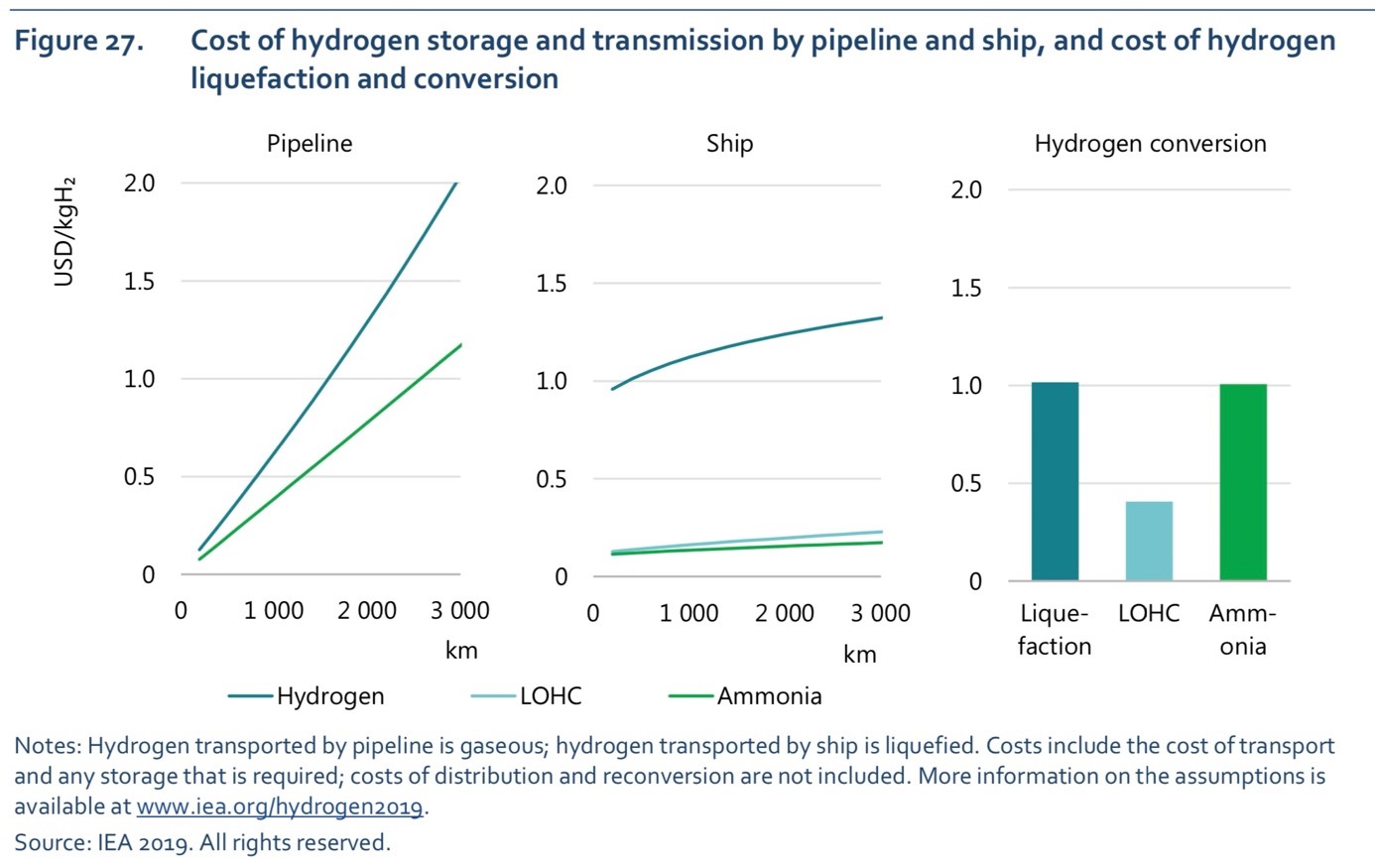
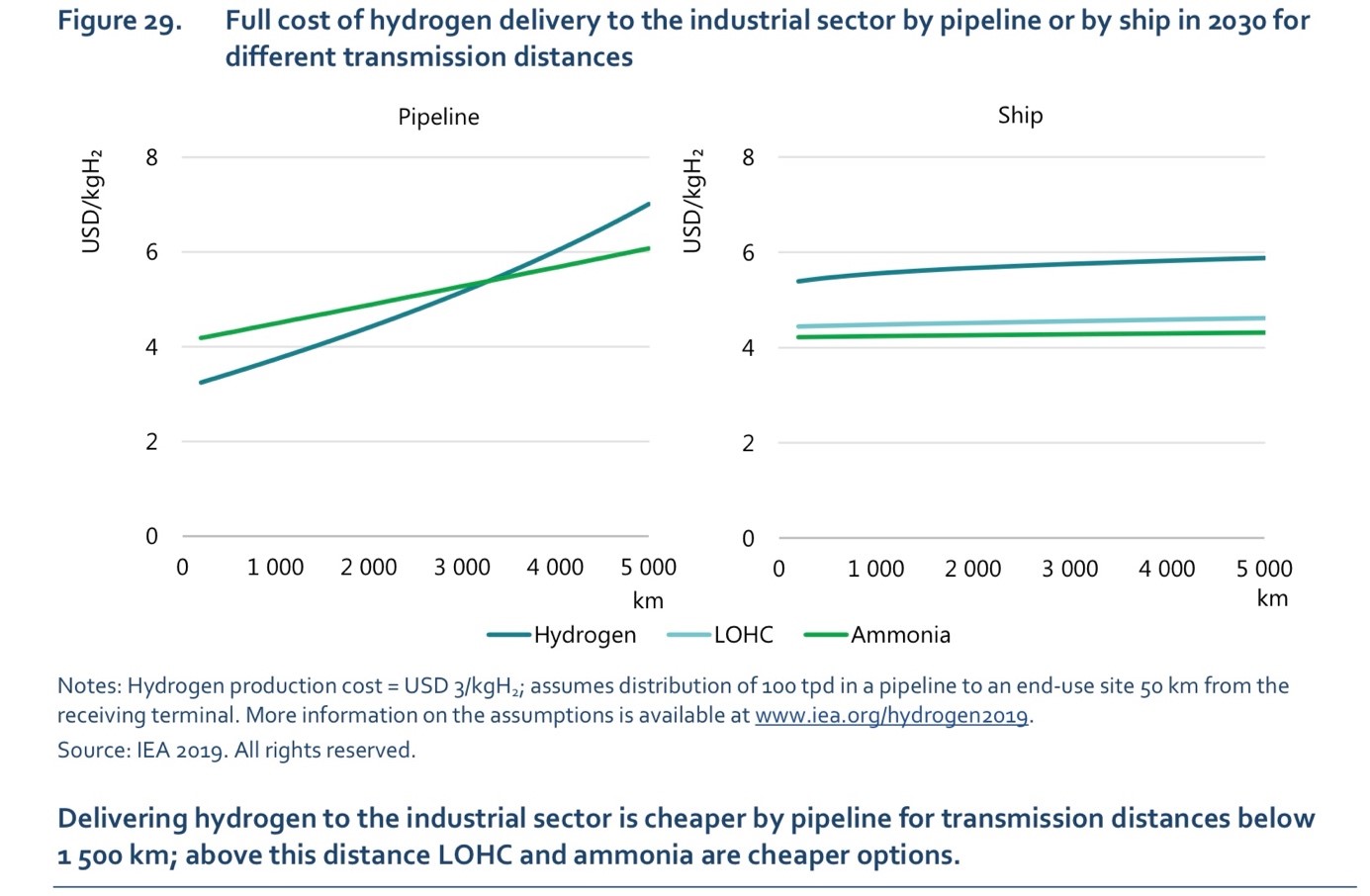
For a route like TANAP (Turkey, Greece, Italy, etc.), a pipeline that will only carry hydrogen would make sense. The general consensus within the industry is that hydrogen should be transported through pipelines in its original gas form for distances up to 1,500 km, and converted to liquid hydrogen, ammonia, or LOHC for distances beyond 1,500 km.
Below, you can find graphs from the International Energy Agency (IEA) hydrogen report published in 2019, which explains this situation:
CONCLUSION:
1) The natural gas used in Turkey should be replaced with hydrogen due to economic, ecological, energy supply security, and national security concerns.
2) When talking about hydrogen, only green hydrogen, that is, hydrogen produced with renewable energy, should be considered. Other electricity sources should not be considered for economic, ecological, and security reasons.
3) The public sector must make parallel infrastructure investments for hydrogen production, storage, and transportation, while also providing incentives and facilitating opportunities for the private sector to operate in this sector.
4) Road and maritime transportation can be used in phases in the short and medium term, and pipelines can be commissioned in the long term.
5) Hydrogen can be used in both centralized systems (power plants) and distributed systems (organized industrial zones or industrial facilities). Organized industrial zones, for example, can convert their own wastewater into hydrogen and use it.
6) Land-based water should not be used. Seawater, rainwater, and wastewater should be the sources of hydrogen.
7) Turkish companies investing in hydrogen technology should be supported in every way.
Note:
- I have been saying for at least 10 years that Turkey should aim for 100% renewable energy. Here is the relevant article I wrote in Turkish Policy Quarterly in 2013: Why Turkey Should Aim for 100% Renewable Energy?, Summer 2013 – TPQ (turkishpolicy.com)
- I am sharing the links to my previous articles on “Green Hydrogen” below:
(05/09/2021): H. Serhan Süzer – İklim değişikliğine karşı gizli kahraman: Yeşil Hidrojen (serhansuzer.com)
(31/05/2022): H. Serhan Süzer – Avrasya bölgesinde yeşil hidrojen (serhansuzer.com)
Tag: ecology