Last week, on a day that coincided exactly with the 20th Anniversary of the Ritz-Carlton, Istanbul (6 October 2021), I wrote an article about Contemporary Istanbul. In that article, I wrote, “By the way, I was proud that the Ritz-Carlton Hotel, which opened its doors exactly 20 years ago today (6 October 2001) during a difficult period, became one of the hospitality sponsors of Contemporary Istanbul (See: https://www.contemporaryistanbul.com/tr/sponsorlar/ci21-16th-sponsors/ ). I will write about the Ritz-Carlton project, which I personally managed for the next five years after its opening, while working in the family business, and which I served as project director for in the following year.” Now, as promised, it’s time to talk about the opening of the Ritz-Carlton, Istanbul project 20 years ago. I briefly touched upon this opening in my article entitled ‘My 15-Year Business Life and Notes for the Future.’ You can read this article at https://www.serhansuzer.com/tr/15-yillik-is-hayatim-ve-gelecege-notlar .
The story begins with me working in Kansas City, Missouri, the American headquarters of the Italian insurance company Generali Sigorta, at the direction of my father, instead of becoming an internet entrepreneur in Canada. After returning to Turkey and completing my mandatory eight-month military service, I witnessed the seizure of Kentbank on my last day of military service.
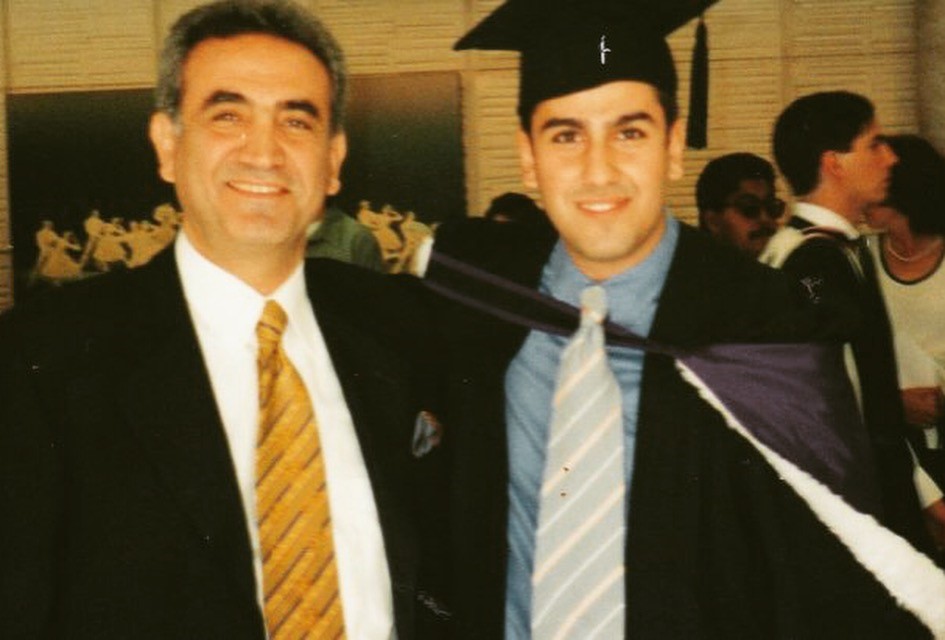
My graduation photo with my father at my university in Canada
The process that began with bank shock
Now I’m looking back at those days from my own perspective. When the bank was seized on the last day of my military service, I canceled my vacation plans and headed to Istanbul the next day. There was an air of mourning at the company, at home, everywhere. I didn’t know what to do, because I had trained myself to be a banker and had made all my preparations accordingly. Kentbank, where I was now to pursue my career, had been seized by the state-run Banking Regulation and Supervision Agency (BRSA). All our accounts were frozen, and we were thrust into an unfamiliar environment.
At that time, while I was wondering, “What can I do? How can I help?” and going to my father’s office every day for moral support, the family business began to deteriorate. A key executive, saying, “I love your group and your family, but I need to think about my own career,” left the group and informed my father and the board of directors that he wanted to make a career change to manage the credit card division of an international bank. That executive oversaw the Ritz-Carlton project. And of course, beyond the project director’s departure, the freezing of all the accounts for the Ritz-Carlton Istanbul project presented a very difficult challenge.
Let me explain the account freezes as follows. At that time, such an atmosphere permeated the country that the media outlets of the time labeled the use of bank cash by some private sector institutions for their own corporate and personal gain as “bank siphoning,” and news stories about these “bank siphoners,” which had become a common habit, began to appear almost daily. It’s the nature of our people to sometimes extoll individuals or things related to them, but then the atmosphere suddenly shifts, and they begin to slam those very praises. Banking, which had always been perceived as a very prestigious sector, was, in my opinion, declared criminals because of three or four fraudulent businesspeople, and the vast majority of those in the sector were constantly under suspicion. This atmosphere led to the unjust seizure of our nationally valuable banks, due to the IMF’s agenda and pressure at the time (they were planning to ensure that Turkish banks were taken over by foreign capital). In total, 26 banks, including investment banks, were seized during that period. Kentbank also suffered from this situation on 11 July 2001. I plan to write about this in more detail later.
“They’re no longer giving their daughters to bankers.”
The main point I want to make here is that, influenced by this climate, a banking law was enacted at the time that violated human rights. If a bank was seized, and you were a manager of that bank, they could even go so far as to confiscate the assets of your third-degree relative, even through the state. They even used the phrase “they’re no longer giving their daughters to bankers,” to humorously illustrate the severity of the widespread distress at the time. Because giving a daughter away (of course, the custom of “giving their daughters away” doesn’t apply to some families today; this is changing over time) meant that if the banker experienced any difficulties, the girl’s family could also be implicated and targeted.
Of course, our holding company also suffered from such harsh conditions. All our assets and accounts were frozen. This includes the accounts we used to make payments for the Ritz-Carlton, Istanbul project. Can you imagine? You planned to open the hotel on 6 October 2001, declared it as such, and started making reservations. Then, a few months before the opening, on 11 July 2001, your bank account was seized, and immediately all the accounts of the hotel you were preparing to open were frozen. Furthermore, the project director announced that he was leaving the company. What would you have done?
Taking charge of the project under challenging circumstances and with little experience
My father initially appointed me to head the project. It wasn’t the right decision in my opinion. When he called me over and said, “I’m appointing you to lead the project,” I replied, “Are you sure? I just graduated from college? I’m not sure I can manage such a challenging process with so little experience.” He said, “I trust you. If you have any problems, come to me, so we can talk.” And that same month, he appointed me to head the Ritz-Carlton, Istanbul project.
We urgently needed to raise funds. The starting point for this was to go to OPIC, the lead lender for the Ritz-Carlton, Istanbul project, and explain the situation. For my readers who are curious about OPIC and are looking into it, let me quickly point out that OPIC recently (20 December 2019) merged with USAID’s Development Credit Authority and became the US International Development Finance Corporation (DFC). You can find the old and new websites at https://www.opic.gov/ and https://www.dfc.gov/, respectively. DFC’s lending capacity is used to provide loans, loan guarantees, equity, and insurance for development projects implemented by the private sector. Like OPIC, DFC is primarily self-financing with the revenues and interest earned from its regular operations.

Being familiar with an OPIC official was beneficial
My hand was shaking when I first made the phone call to Kenneth Angel, who was overseeing our project at OPIC. We were going through a very critical period; there was no room for even the slightest mistake. I had met Kenneth before, during my university years. While studying in Montreal, I took the time to attend a meeting in Washington, DC, where I met Kenneth. So, having followed the financing of the Ritz-Carlton, Istanbul project from the very beginning proved to be an advantage. I was relieved when he started talking on the phone, “Serhan, we haven’t seen each other in a long time. How are you?” Then I began to explain the events with complete transparency. Of course, as you can imagine, explaining the situation to Americans, “The group company’s bank has been seized, and all our accounts have been frozen,” wasn’t easy. These events were far beyond their usual circumstances. Kenneth and his team listened attentively and requested a wealth of documentation. Because I’m quite familiar with the American way of working (and of course, I share the same mindset), I managed the process with complete transparency. I even sent more documents than they requested. We explained all the details.
Kenneth’s manager, Jim Polan, came to Turkey in August. It was a very timely meeting. We explained the situation in detail and conveyed our request: “If you provide additional credit, we can open this hotel despite all the negative conditions,” we said. In addition to Kenneth, Jim also understood the situation thoroughly and began to support us. Jim was a highly experienced and practical manager. We faced two challenges. The first was convincing OPIC’s management, and the second was how to organize such a rushed additional loan in a cumbersome structure like OPIC, where even if you did, you could get a loan within 1-1.5 years at most if you started today.
Of course, OPIC’s management’s approval was essential. Due to such complex circumstances, our credit was jeopardized. How were we going to overcome this?
Was visiting the US a waste of time?
At the end of this entire process, we were invited to the US to explain the situation to OPIC’s senior management and board of directors. At that time, we headed to Washington, DC, along with other relevant executives at Süzer Holding. Kenneth and Jim were sympathetic to the project and believed we deserved support under all circumstances. They gave the management positive feedback about our decision. But their argument wasn’t enough. We still haven’t received the green light for additional financing.
We went to Washington, DC, to persuade other relevant OPIC executives (professionals and board members). I remember our first meeting vividly. Kenneth and Jim weren’t there. We were immediately herded into a meeting room at the entrance, and we couldn’t access OPIC’s inner offices. This didn’t bode well. We reiterated the situation to the OPIC executives there. When we wanted to discuss the details, they told us exactly this: “We don’t understand why you came all the way from Turkey to Washington, DC. We consider this loan a failed loan; you came to DC for nothing. We’re sorry, but we don’t believe this project can be saved.”
The meeting room was frozen. No one spoke a word. I took the floor again, explaining that this couldn’t be considered a bad loan, that we had encountered a situation no one could have foreseen, and that despite all the difficulties, we needed an additional loan to salvage the main loan. With the additional loan provided with OPIC’s support, we could open the hotel and then establish a healthy financial structure. Other executives who attended the meeting with me made similar remarks and emphasized the importance of the matter.
A brief conversation with the president and a chance moment
OPIC’s team listened to me once again, but it seemed they had already made up their minds. They simply said, “Sorry, we can’t help,” using the classic American expression, and dismissed the matter. As I left the meeting room, I was insisting that this was unfair and that this project shouldn’t have been completed this way. They paid no attention and kept repeating “sorry.”
At that very moment, a miracle happened. As we were leaving, we ran into Ross Connelly, president of OPIC. We were leaving, and he was entering. We chatted for two minutes, and they introduced us, but they didn’t really want to introduce us; they wanted to see us off as quickly as possible. This behavior caught my attention. The OPIC president was also a pleasant and easy-to-talk person. After the meeting, we immediately did some research and discovered that he had been politically appointed to the OPIC leadership. This explained a lot. First of all, he wasn’t your typical bureaucrat. His speaking style made it clear that he had a practical personality.
I called my father after the meeting and explained the situation. I explained that the situation wasn’t encouraging at all, that we were practically dismissed after the meeting, and that the meeting had been very tense. He was also very stressed. However, I also informed him of the green light I’d seen. I told him we’d met the OPIC president. I explained his background and his approach to us. My father, an experienced businessman, immediately emphasized that the solution to the problem lay with him and that we needed to reach him. I said, “They’re trying to block him, but we’ll do everything we can.”
Is the knot starting to unravel? Afterward, we told Jim and Kenneth that we wanted to meet with the OPIC president. With their guidance, we reached out to Ross Connelly’s assistant, explained that we were from Turkey, emphasized the importance of the matter, and requested an urgent meeting. And the miracle happened. His assistant got back to us the same day and scheduled us for the next day. The response was very swift. I think we had hit the nail on the head.
We prepared well for this meeting. We worked on how to explain the topic quickly, without being bored, and which key points to emphasize. Indeed, the meeting lasted half an hour. We explained the topic in 10 minutes (they had already given him a briefing), and in the remaining 20 minutes we discussed solutions. Ross Connelly was a businessperson by background, focusing on practical solutions to problems. He had made his decision before even entering the meeting. After listening to us, he immediately asked the other OPIC officials in attendance, “We need to save this project. How can we secure additional funding in such a short time?”
I couldn’t believe it, but I think we were saving the project. After clarifying everything and developing a crisis plan, they granted us an additional loan in 13 days, a record time in OPIC’s history. Under normal circumstances, due to OPIC’s structure, it would have been impossible to secure this additional loan in such a short time. However, as the OPIC president insisted, “Keep this project alive, no matter what you do,” they secured an additional loan of approximately $5 million.
Just as we were in full swing, a series of disasters struck.
We covered all the remaining payments with this additional loan and opened the hotel on 6 October 2001.
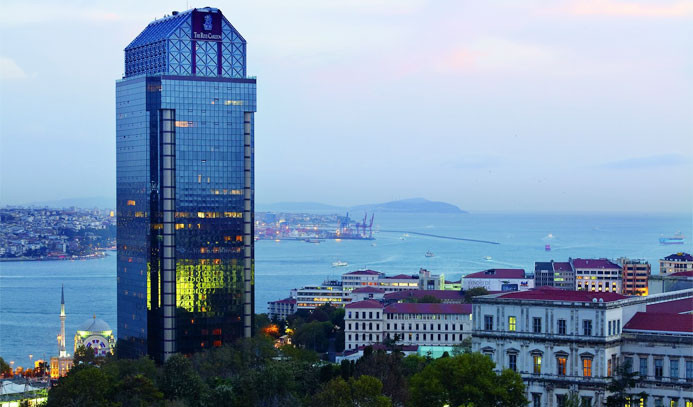
Just before the hotel’s opening, another serious event hit us hard. On 11 September 2001, when airplanes crashed into the Twin Towers in New York City, the entire global tourism sector was shaken. Turkey was particularly hard-hit by this crisis. One day after we opened the hotel, the United States invaded Afghanistan. While the hotel was 100% booked on 10 September 2001, and 40 people had placed their names on the waiting list, after the events of 11 September, we were forced to open the hotel with an 8% occupancy rate. In other words, the hotel was empty when we opened.
This left the hotel unable to fulfill its obligations. To fully convey the situation, let me summarize the technical structure of the loan. The approximately $50 million principal loan we received from OPIC was structured in such a way that other relevant financial institutions in the US would finance our project, with OPIC providing the guarantee. Marriott also guaranteed 40% of OPIC’s guarantee. The $5 million supplementary loan we secured later was financed directly by OPIC from its own resources.
Another catastrophic blow in 2003
Due to the blow we suffered after the 11 September attacks, the hotel was unable to repay its loan and, in fact, was unable to even manage its operations, let alone repay the loan. It was constantly incurring significant operational losses. We were unable to make our semi-annual principal and interest payments until 2003. Furthermore, the Istanbul bombings in 2003 (the synagogue bombings, the HSBC bombing, and the British Consulate General bombing. See: 2003 Istanbul attacks – 2003 İstanbul saldırıları – Vikipedi (wikipedia.org) dealt us another major blow. The problem was that the loan was unpayable. Because of this, we had repeatedly used the Marriott guarantee. However, the accumulated debt there began to become a problem for us.
After the Istanbul bombings in 2003, we decided to act. We contacted OPIC again. Of course, the same management welcomed us more favorably this time. We explained the situation and explained the need to restructure the loan. Without any problems, as if they had prepared us, they quickly began discussing the procedures, shared what they could do to help, and with swift approval from senior management, we restructured the OPIC loan.
Lowest Interest Rate Repayment Opportunity
I can technically summarize the restructuring as follows. OPIC paid off the $50 million loan it had guaranteed and took over. They combined it with our additional loan, turning it into a single, direct loan. By converting a loan for which we normally paid significant interest into its own loan, it was naturally able to adjust the loan interest rate. For those who don’t know, OPIC is a financial institution of the US government and affiliated with the Treasury. Therefore, it is qualified to offer the lowest interest rates you can get. Even after including country risk, they dramatically reduced our loan interest rate, making the $55 million loan affordable. In fact, I can say that we restructured our loan with interest rates even lower than those paid by the Republic of Turkey at the time.
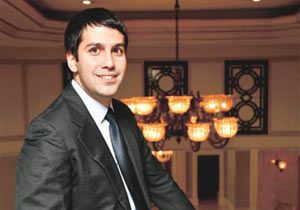
A souvenir photo of me taken at a hotel around that time. Can you see my relieved expression after years of immense stress?
This restructuring also had a third dimension: the Marriott Group’s guarantee. Ritz-Carlton and Marriott also supported this restructuring effort from the very beginning. There were two reasons for this. First, this restructuring meant our project was now self-supporting. A self-supporting project would ensure they maintained their fees. Second, they agreed to postpone the utilization of their guarantee for as long as possible and not file any claims. In return, we extended our operating agreement from 20 to 35 years and slightly increased the fees (management and incentive fees). Everything was now in place.
Crisis Follows the Rise
After the Istanbul bombings, tourism in our city plummeted once again. However, the momentum subsequently steadily increased. Istanbul’s tourism revenues increased at an increasing rate each year, and within a few years, the project was able to easily repay its loan, even accumulating significant cash flow, allowing it to repay the loan principal early. With our increasing income, we began saving the necessary funds to continually renovate the hotel in the relevant account (FF&E).
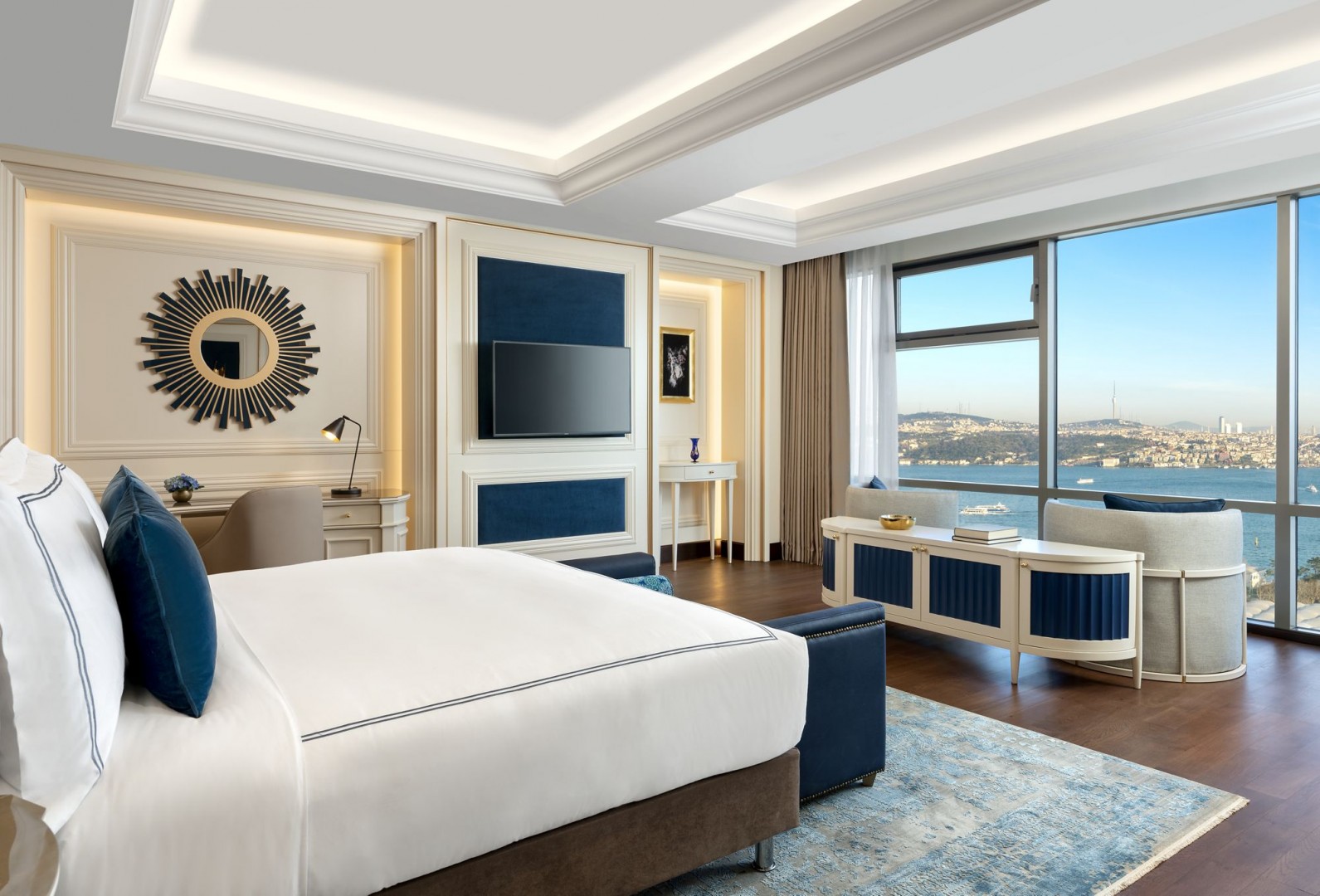
A renovated room in our hotel
Approximately five years after opening, in 2006, with everything back on track, I took over another project within the family business and assumed management of the Coca-Cola Iraq project (see: H. Serhan Süzer – Coca-Cola Irak Projesi (serhansuzer.com). The process we were dragged into with the seizure of Kentbank also came back on track in 2007 thanks to the agreement we reached with the Savings Deposit Insurance Fund (TMSF). Our rights were reinforced by the lawsuits we won, and all restrictions on us were lifted.
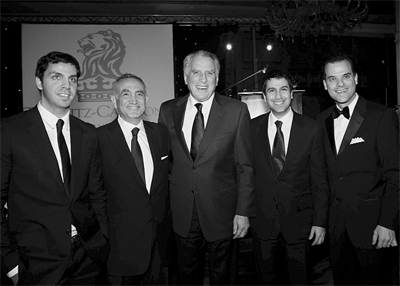
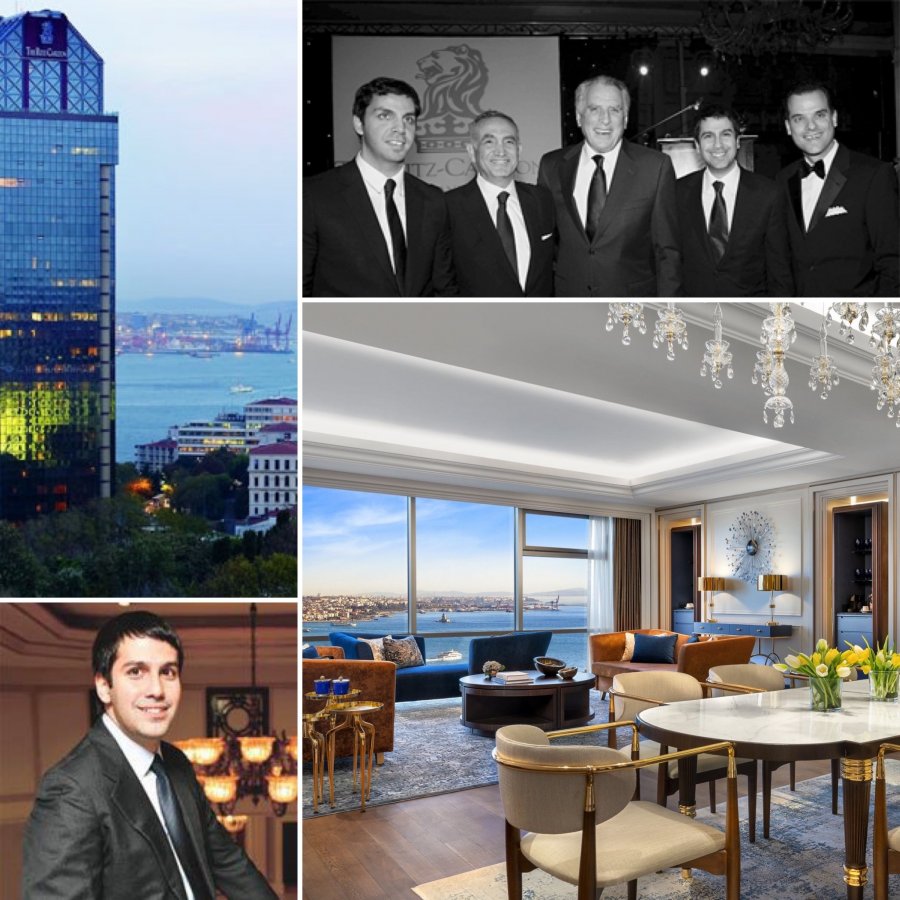
From left to right: My twin brother Baran, my father, Simon Cooper, president of the Ritz-Carlton Hotel Company, myself, and Martin Kleinmann, the hotel’s general manager at the time.
I would also like to express my gratitude once again to all the OPIC officials who stood by us under all circumstances. I would also like to thank Ritz-Carlton (and therefore the Marriott Group) for standing firmly behind us during that period. Through a wonderful collaboration, we demonstrated to everyone what international teamwork should be like, and ultimately, we salvaged a project that was perhaps nearly impossible to salvage.
A quality standard that elevates the sector.
I’m proud of what we’ve experienced and the results. Why?
First, Ritz-Carlton has significantly contributed to the sector in Istanbul by elevating its service quality. After we opened, managers from our biggest competitors, Çırağan and Swissotel, visited our hotel regularly and updated their own service standards. When benchmark hotels made such updates and upgrades to their service standards, the entire sector was forced to raise its quality.
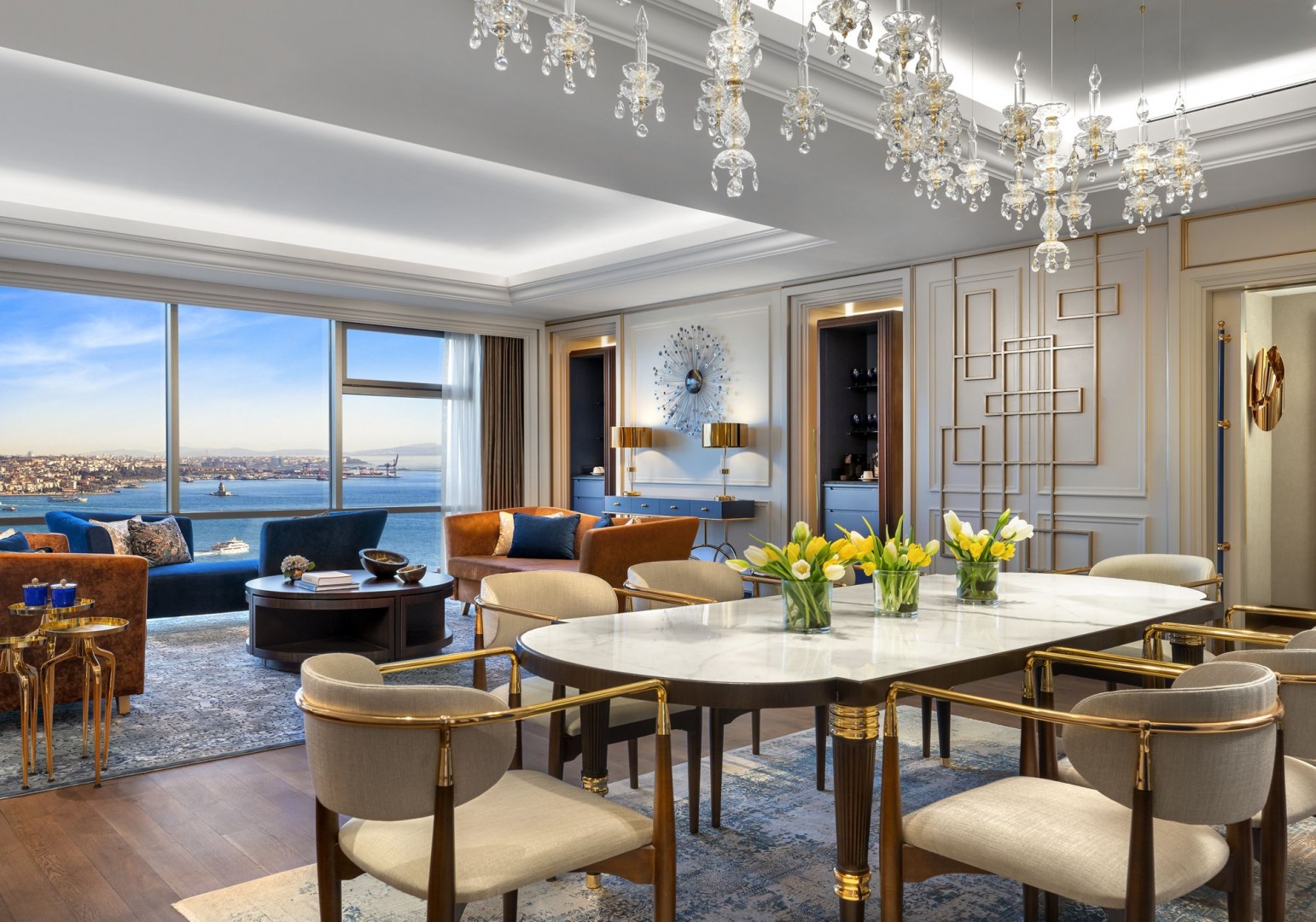
This image reflects the quality of the hotel.
Secondly, the Ritz-Carlton, Istanbul Hotel has become a virtual human resources development center for both the Ritz-Carlton chain and all other international chains. This is no easy task. I would like to point out that, in addition to general training, our colleagues receive continuous training daily in line-ups and at other times of the day. There are dozens of professional hotel managers who came from our hotel and work for international chains, particularly the Ritz-Carlton and Marriott Group, in other countries and Turkey. I occasionally meet these valued colleagues who trained at our hotel, both abroad and in Turkey. I am proud of them all.
All these beauties have been at your service for 20 years.
Finally, the Ritz-Carlton is one of the most valuable hotels in Istanbul, and the satisfaction rate of our guests is very high, especially our foreign guests. I want to emphasize this because our Turkish guests generally (I say generally, of course there are exceptions), even when they are very satisfied with everything, tend to hold grudges. Surveys clearly demonstrate this.
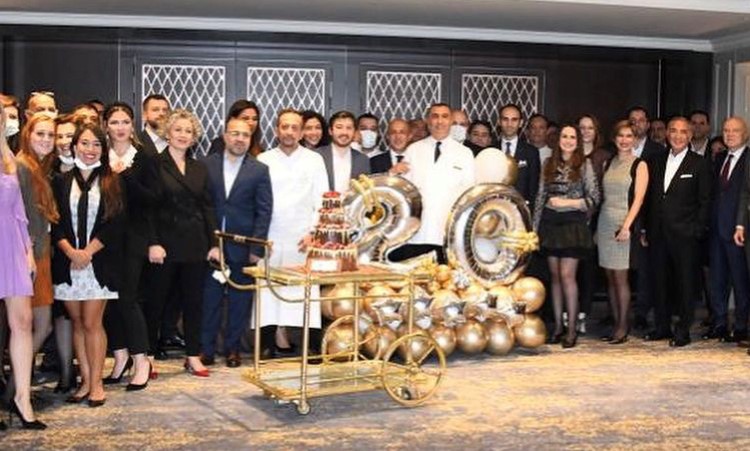
In our 20th year, ladies and gentlemen of our hotel (we use the term “ladies and gentlemen” instead of “professionals” in the Ritz-Carlton dictionary. It expresses the respect we have for our staff).
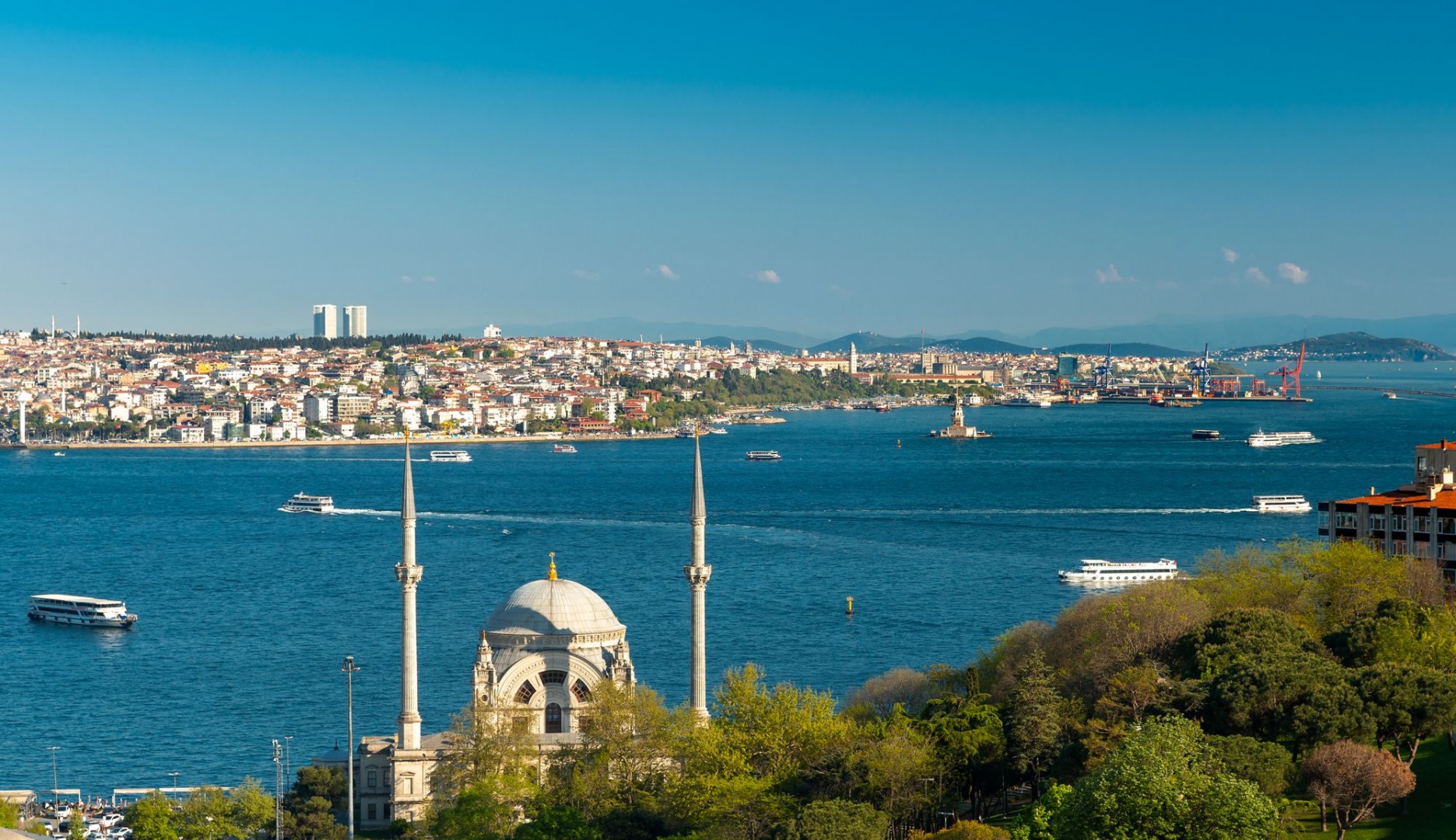
When you enter the Ritz-Carlton, Istanbul, you’ll be greeted by one of Istanbul’s most beautiful views. You’ll be able to tour the hotel in style and quality, experience the highest level of service, and savor our delicious Turkish and international cuisine. Our professionals, focused on customer satisfaction, will provide you with personalized attention (addressing you by name whenever possible), and everyone will go out of their way to make you feel special. You have no idea how much effort went into creating all this beauty. You don’t need to know. After all, as ladies and gentlemen serving ladies and gentlemen, the Ritz-Carlton, Istanbul has been at your service for 20 years. The Süzer Group will continue to do everything in its power to ensure this beauty continues. Enjoy and stay healthy.
Tag: education