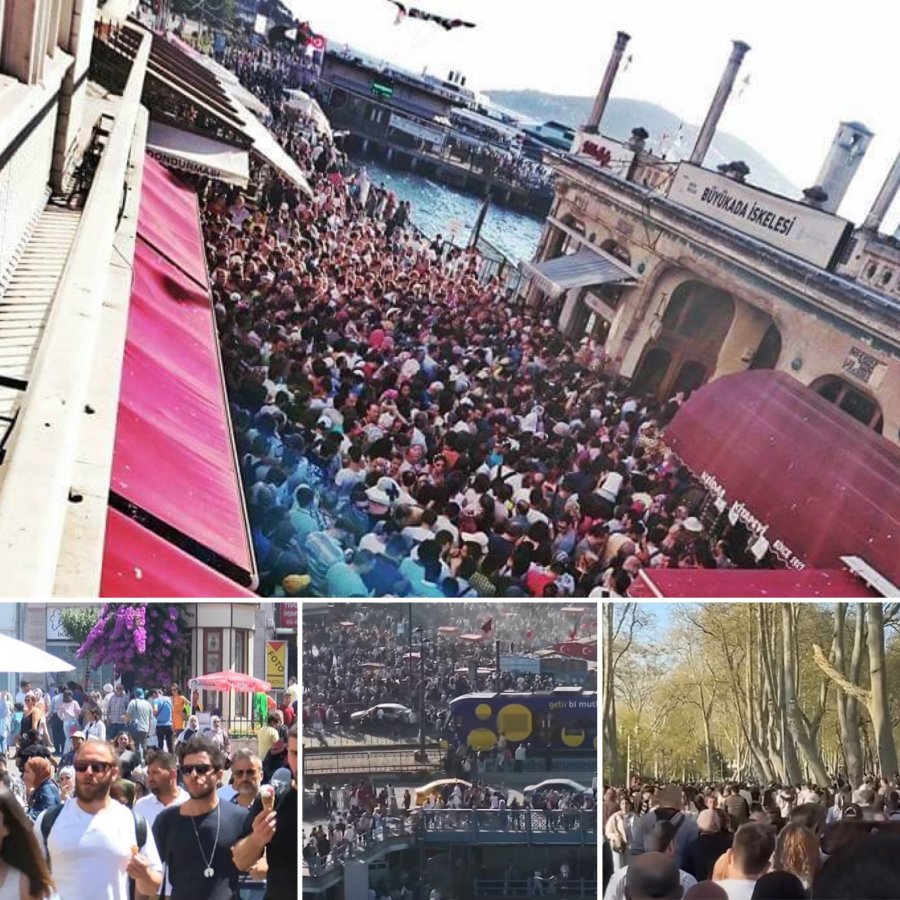
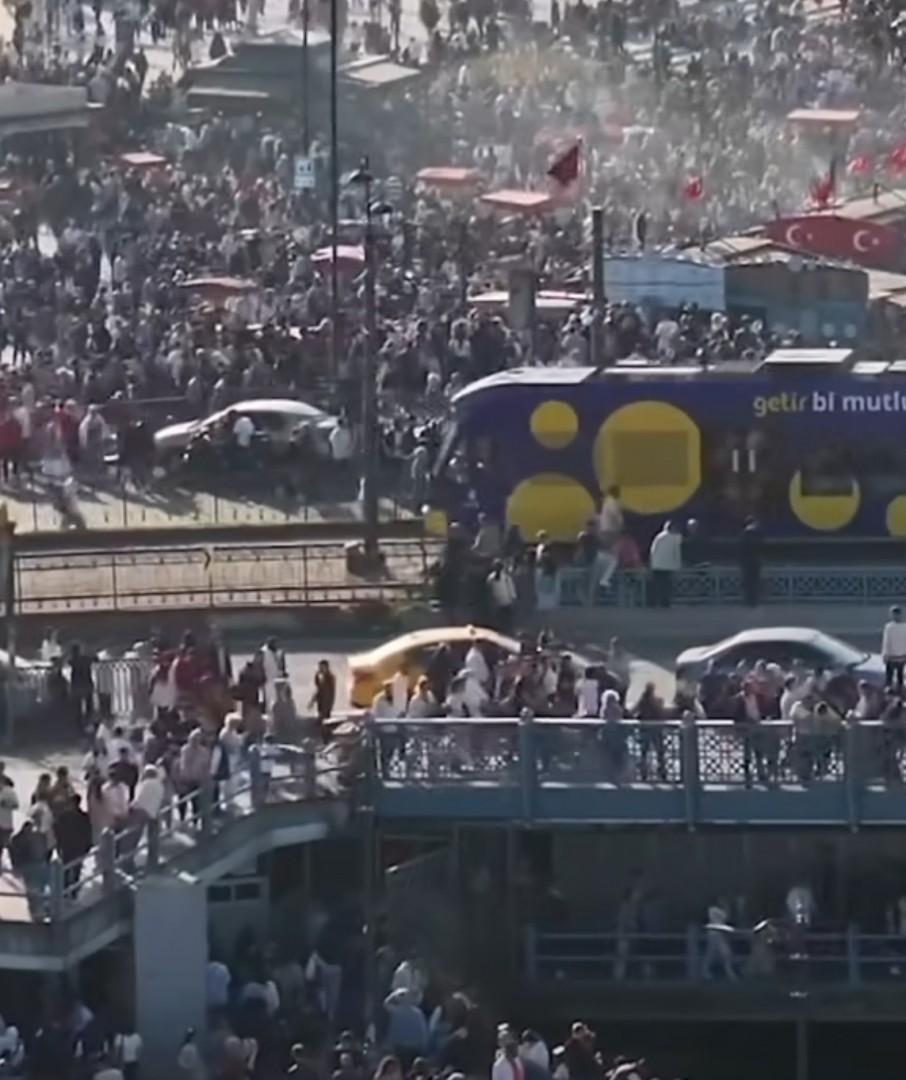
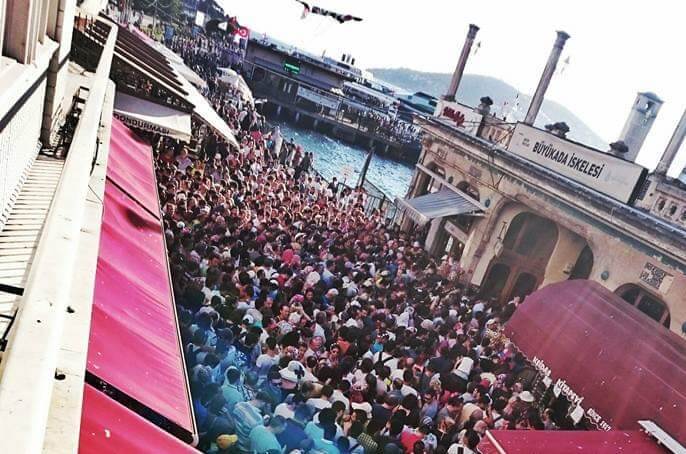
Holiday destinations near Istanbul, already crowded during holidays, especially weekends, are becoming overwhelmed with free transportation. To help you visualize the congestion at Istanbul’s transportation hubs during the holiday, I’m sharing the details: https://www.instagram.com/reel/C5qWxRei4mX/?igsh=MThod3p1am14Mjl0Nw%3D%3D
Istanbul’s population has already surpassed 20 million, including both official and unofficial residents. If you add the approximately 17.5 million tourists arriving in Istanbul in 2023, the number of people staying in the city could reach 40 million in just one year (see: https://www.trthaber.com/haber/ekonomi/istanbula-gelen-turist-sayisi-yuzde-66-artti-839305.html ). This places Istanbul, Turkey’s largest city and the largest tourist destination, among the world’s most populous. This puts it on par with India’s most populous cities, such as Delhi and Mumbai.
My India Evocation on Büyükada
I used India as an example because, upon my first arrival on Büyükada, I saw the crowds practically pouring onto the island after 11 a.m., and the scenes I’d seen in India immediately came to mind. The last time I visited India was 12 years ago, when I was working on the commercialization of CSP (Concentrating Solar Power) technology. I can say that I didn’t find anything I saw in India strange. In fact, many things, both good and bad, felt quite familiar to me.
Yes, you read that right. I found India very similar to our homeland, Turkey, in many ways. With one major difference. I realized that we could find extreme versions of many of the issues we praise and criticize in India. In other words, everything we have in Turkey, I encountered in India, in its extreme form. Of course, I adapted to this situation very quickly. I was able to move comfortably there.
To explain my point more clearly, I’d like to give you some examples of positive and negative elements.
Common points between India and Turkey
In a positive way:
1. Hospitality: In Turkey, we always pride ourselves on our hospitality. Hosting guests is a part of our culture. That’s why the hotel industry in Turkey is so developed. You won’t have any difficulties in terms of human resources and basic training in the hotel industry. When I went to India, I realized that the hospitality there is on another level. We felt like kings and queens in the hotel we stayed in. Incredible hospitality connects you to the place.
2. Culinary richness: I can’t be objective about this. Turkish cuisine seems to us to be the best in the world. The flavors of each region, appealing to different palates, reveal that we are a synthesis of different cultures and our rich culinary culture. In this equation, the star of Turkish cuisine is the cuisine of the southeast or the south. In other words, I place the cuisine of Gaziantep and Hatay in a special place among the magnificent Turkish cuisine. Indian cuisine is the cuisine most like this region, the star of Turkish cuisine, and where you can taste its diverse variations.
The main reason we occasionally experience a little stomach upset in India stems from overeating and being unable to control ourselves. So, I can say that I’ve experienced a similar feeling to eating in India in places like Gaziantep, Hatay, and Mardin. Let me give you an example of the similarities between the dishes. India’s famous Tikka dish (which can be made with meat or chicken, such as Chicken Tikka Masala or Tikka Masala) also has a counterpart in Turkey.
The word “tike” is used in Gaziantep and the Southeastern Anatolia Region. According to the Turkish Language Association (TDK), the meaning of “tike” is as follows: A piece, morsel, or slice of meat, bread, cheese, etc. in the local dialect. In Gaziantep, it’s used for dishes with finely chopped, bite-sized, and marinated meat (like shish kebab).
3. Spice Variety and Spices: Speaking of cuisine, we can’t help but mention spices and the use of spicy food, which are among the key elements that enrich Indian cuisine. Some might argue whether this is a good or a bad thing, but from my perspective, and because I love spicy and hot dishes, I see it as a positive element.
Turkey boasts a wide variety of spices, and hot peppers are used in cooking. When I told an Indian businessman at a meeting in Mumbai that I personally enjoyed spicy and hot dishes, he asked me how spicy I could eat. When I told him I could eat any kind of spicy food, he called his assistant and ordered a special Indian hot pepper. He handed me the Indian pepper, which came in two thick, interlocking bags, and warned, “Be careful, this is one of the hottest peppers in India. Even a small piece is incredibly hot; even Indians have a hard time eating it.” I brought that bag of peppers back to Istanbul and warned my housekeeper about the peppers. She said, “Let’s try it; I’ll make a very spicy pasta with it.” Sure enough, he threw a pinch of pepper into the large pot where the pasta was cooking, and the whole house felt like it had been pepper sprayed. After ventilating the house, I ate some. It was one of the hottest dishes I’ve ever eaten. So, the man was right in all his warnings. I really enjoyed the pasta, but that’s another matter, but my housekeeper was intimidated and confused about what other dishes she could use such a spicy pepper in. What I mean is, we have a lot of hot peppers here too, especially the small peppers grown in our eastern regions are very hot, but the spiciness I brought from India was on a whole different level.
4 . Dancing at Weddings: At that time, I accidentally went up to a wedding floor at the hotel we were staying at in Delhi. Then, out of curiosity, before returning to my room, I stepped out of the elevator, wondering, “What’s all this crowd?” That’s the exit. That crowd dragged me straight to the wedding hall. And I couldn’t believe what I saw at the wedding hall. About 300 people filled the dance floor with incredible energy, dancing together. I’d seen a similar scene in Cuba, but the Cubans, of course, turned the dance into a show with their amazing salsa techniques, and the collective dance was completely synchronized. At the wedding in Delhi, there wasn’t much synchronization or dancing technique like we had. Just imagine the basic swinging movements being performed with such energy, the atmosphere was so vibrant (yes, they were more energetic than us, jumping up and down). Of course, at this wedding, just like ours, the bride and groom were dancing in ecstasy, like in ours.
5. Rich Culture: Just like Turkey, India has a rich cultural mosaic. Yes, you read that right. India has the world’s most populous population of 1.5 billion, having essentially been similar over the years, but formed by the coming together of different peoples and cultures. You can tell this best by the language they speak.
At the end of a meeting with Indian engineers, I made the dreadful error of asking, “How do you say ‘Thank You’ in your language?” After 20 engineers across the table had talked amongst themselves for five minutes, they turned to me and said, “Sir, there are over 170 different languages and dialects in our country. So, it’s best if you say ‘Thank you’ in a way we all understand.” This response both surprised and amused me. We, too, have over 10 different languages and dialects besides our native Turkish, though not as many as Indians.
In the bad sense:
1 . Poverty: There’s serious poverty in Turkey. This situation worsens as the economy deteriorates. You can find plenty of data to support this, no matter what criterion you look at, from per capita income to other factors. We lag significantly behind Western countries, especially in terms of wealth.
After going to India, I remember thinking to myself, “We’re actually doing well.” I can’t even begin to describe the level of poverty there. Imagine millions of people walking barefoot on the streets; I’m talking about hitting such a low point. Poverty in India is at a level that makes you question humanity.
2. Traffic: India is the only place in my life where I’ve ever said, “I’d love to see Istanbul’s traffic.” I’ll make a separate mention of Delhi, but the traffic jams in Mumbai and Bangalore are similar. The traffic is so intense that you can imagine vehicles coming at you or in the opposite direction from every direction. Amidst this chaos, everyone is driving with their hands on their horns. In other words, they’re constantly honking their horns. What we call organized chaos in Turkey, and similar situations we encounter especially in traffic, are on a completely different level in India
3. “Hooking and Talking:” This is a term used particularly in the tourism industry. I personally don’t like this kind of “under-the-table” act at all. For those unfamiliar with it, let me quickly explain. “Hooking and Talking” is the practice of tourism professionals like concierges directing tourists to a specific location (carpet shops, souvenir shops, etc.) and earning a commission from the business. We encountered a similar situation in India. Naturally, I immediately recognized the situation and wanted to leave the shop we were unwittingly lured into. I remember getting a harsh response from the driver who directed us, saying, “We can’t mess with you,” and getting out of the car. I recently watched a video similar to this experience, and it brought the incident back to life. Here’s the video: https://www.facebook.com/share/r/ubqf7s1oRwnF3nSZ/?mibextid=UalRPS
4. Crowding: Turkey’s population has reached 85 million, with a surface area of 783,562 km². India’s population has reached 1.5 billion, with a surface area of 3,287,590 km². So, while India’s surface area is 4.2 times that of Turkey, its population is approximately 17.7 times that of Turkey. In other words, the population density is many times higher than Turkey’s. We, too, face significant challenges in densely populated cities, but I can’t imagine the difficulties and potential problems that would arise in a country with such a high population density per square meter.
5. Excessive Bargaining: In Turkey, there’s an atmosphere where you can bargain over everything. Some people even take the bargaining too far. India has a similar atmosphere. I remember being frustrated by haggling over every little detail before even getting to the main point. So, you can witness the extreme version of our bargaining shopkeeper mentality in India.
Let’s not squander the Princes’ Islands with a mass influx.
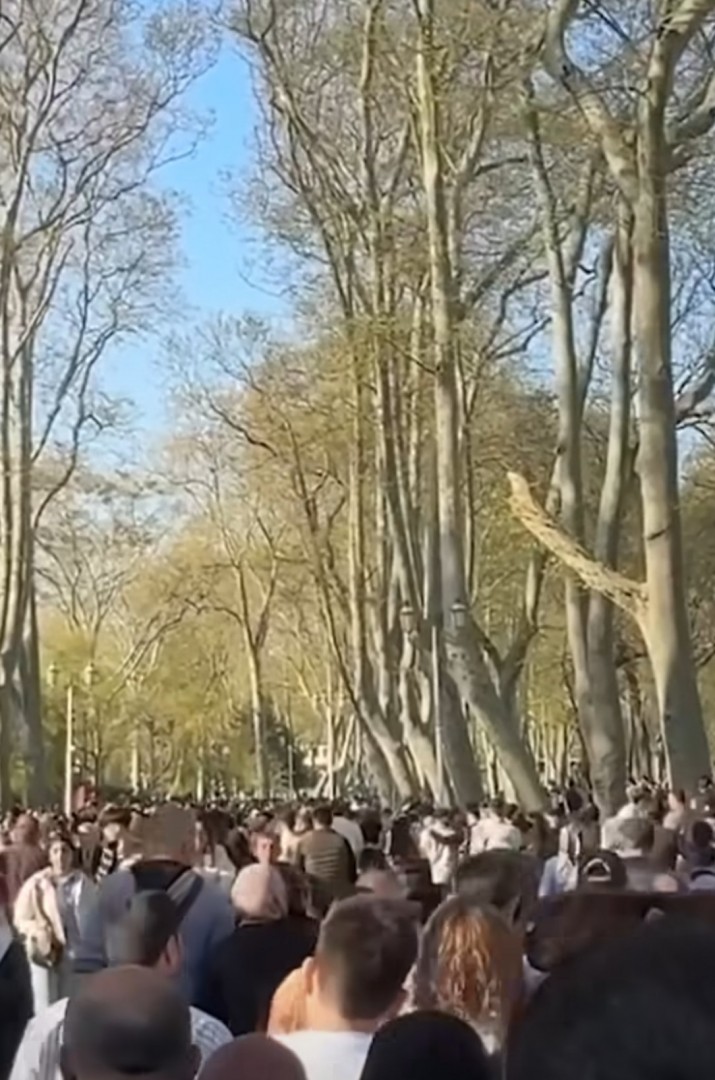
For my readers who have never been to India, after this Turkey-India comparison, let’s get to the heart of the matter. I wanted to share this association with the crowds I witnessed in India, the world’s most densely populated country, after experiencing similar crowds on Büyükada, one of Istanbul’s unique destinations. Believe me, neither the infrastructure nor the service capacity of the Princes’ Islands can accommodate all these people. Imagine hundreds of thousands of people entering and exiting and being unable to walk on some streets because of the crowds.
Last month, I addressed the issue of overtourism, which has become a serious problem that threatens the natural structure of destinations, in my blog post entitled “Overcoming Dilemmas for Sustainable Tourism.” You can read this article at https://www.serhansuzer.com/tr/surdurulebilir-turizm-icin-ikilemlerin-asilmasi.
Suggestions for Protecting Our Islands
I’ll now update the recommendations in this article specifically for Büyükada (here I use the word “Adalar” to refer to the Princes’ Islands or the Princes’ Islands district of Istanbul). Here are the first ones that come to mind:
1) We should aim to transform Büyükada into a slow city. One way to do this would be to prevent further deterioration by granting the islands special status, such as a natural park or protected area.
2) We could limit daily entry to the islands (for example, to 10,000 people per day). It’s important to organize transportation accordingly.
3) We can ensure that all historical structures on the islands are restored and revitalized.
4) Restoring only the historical buildings isn’t enough. We must also have all existing buildings seismically strengthened. The islands are located close to a fault line in the Sea of Marmara. God forbid, in a serious earthquake, we could lose many of the beautiful islands.
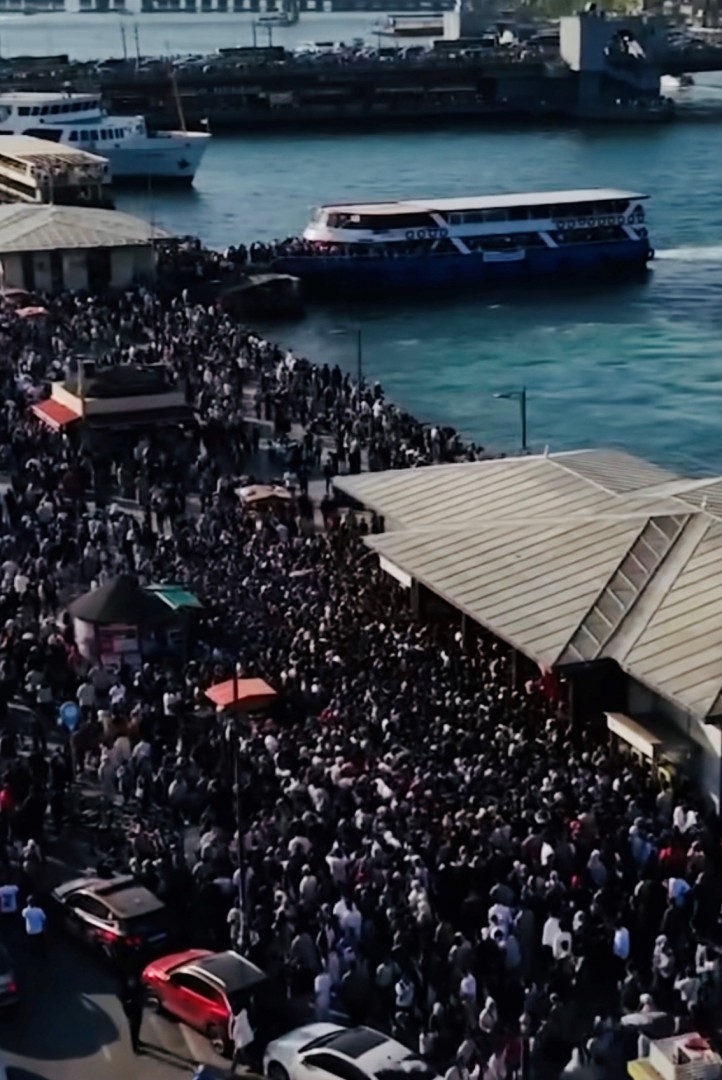
There’s a lot I could say about Istanbul’s sustainable tourism, but that would require another long blog post. Therefore, reserving any comments I might have on this topic (problem identification, solutions, etc.), I’m limiting this article to the Princes’ Islands, a beautiful district of Istanbul that takes on a veritable Indian feel during the holiday.
This year, I’ll be writing about how our country’s largest metropolis, which is rapidly becoming “India-Istanbul,” can be revitalized into a livable place and how sustainable tourism can be achieved. I promise you.
Tag: memoir