

Unfortunately, in just the past century, humankind has inflicted serious damage on this delicate equilibrium. In a previous post, I explored how increased energy consumption disrupts nature’s balance. This time, I’ll be offering some solutions for how we might restore that balance. Some of these ideas may strike you as far-fetched. However, I can assure you that many of the concepts and recommendations I outline below will, in fact, come to pass during this century.
As I mentioned earlier, it took billions of years to achieve the perfect ecological conditions for life to flourish on Earth. Yet in just the past century, we’ve managed to severely harm that balance. (For more on that, you can read my earlier article here: http://serhansuzer.com/enerji-ve-cevre-dunya-nereye-gidiyor/) Now I’d like to share a list of ideas—a kind of prescription for healing the damage done to nature. Some of these may seem visionary or even radical, but I believe that most of them will become a reality within this century. And I may continue to add to this list over time. Here’s my proposed prescription for repairing the destruction of our planet:
- Adjustments to the Capitalist System: Capitalism, through rewarding innovation, success, and hard work, has enabled humanity to achieve some of the greatest advancements in history, especially over the past century. From the internet, cars, airplanes, computers, and cell phones to countless other inventions, we’ve witnessed just how far human potential can go when properly incentivized. And there’s no doubt that rapid innovation will continue across many fields. But can we truly call capitalism an environmentally friendly system? The answer is no.
Its most glaring flaw is its incompatibility with nature. A system focused solely on consumption inevitably leads to environmental degradation. The constant push for more sales and higher profits—combined with population growth and the demands of modern life—drives unsustainable levels of production and resource use. Natural resources are being depleted at alarming rates, and construction often ignores environmental risks (such as building in riverbeds). In many places, people directly destroy nature to make money—like the individuals who deliberately set forest fires in luxury resort areas, only to replace those forests with profit-generating villas. This kind of exploitation is rampant. A striking example of this conflict is found in a video on eco-currency that I recommend watching: http://www.eco-currency.net/.
The video features a Brazilian farmer named Alberto, who lives in the Amazon. For Alberto, the forest holds no economic value—so he burns it to create farmland for soybeans, which he sells to survive. But if Alberto were compensated for preserving the forest, he would protect it instead of destroying it. That’s what eco-currency aims to do—provide financial incentives for conservation. Millions of people around the world face the same dilemma: destroying nature to survive. I believe eco-currency is a well-thought-out solution that balances economic growth with ecological preservation. In addition to rewarding those who protect nature, we must also penalize those who harm it. Taxes collected from polluting factories or hotels, for instance, could be redirected toward environmental protection. And individuals who intentionally damage nature—such as arsonists—should receive the harshest penalties. A significant portion of direct and indirect taxes should be used specifically for environmental protection.
We must also rethink how stock markets operate. Today, a company’s stock value is based solely on revenue and profit. This encourages overproduction and overconsumption. But what if we introduced an Environmental Index alongside financial metrics? If all publicly traded companies were evaluated not just on profits but also on their environmental performance, executives would strive to make their operations more sustainable. This would help align financial markets with ecological goals. Similarly, every country should have not only an “economic report card” but also an ecological report card. Just as we track budget deficits or surpluses, we should give equal importance to carbon emissions and other environmental indicators—and make them publicly available. In fact, a country’s overall success should be measured by combining both economic and ecological data. A country with poor finances but excellent environmental performance should be considered healthy, while one with booming profits but high emissions should be considered in crisis. Such a balancing act encourages politicians to do what they need to do regarding the environment and allows them to look at events from a different perspective.
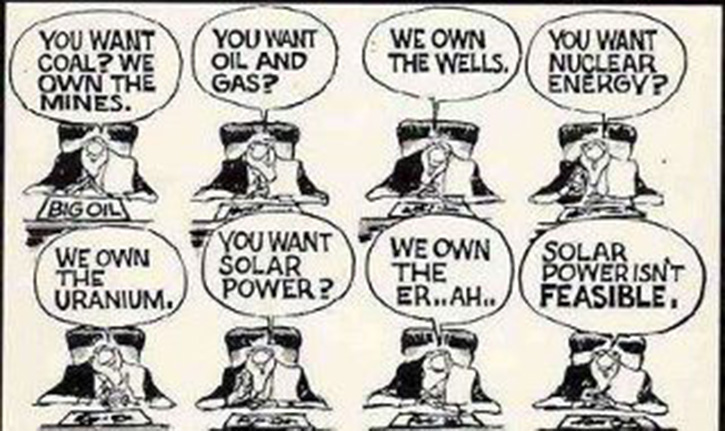
- Meeting 100% of Our Energy Needs with Renewable Sources: Humanity has invested enormous effort and capital into increasing fossil fuel reserves and alternatives—yet similar effort is not being made to expand and improve renewable energy technologies. The reasons are largely political and commercial. To illustrate the absurdity of this situation, I’d like to share a cartoon that highlights how throughout human history, many wars have been fought over vital Earth resources such as energy and water—because these resources always have owners.
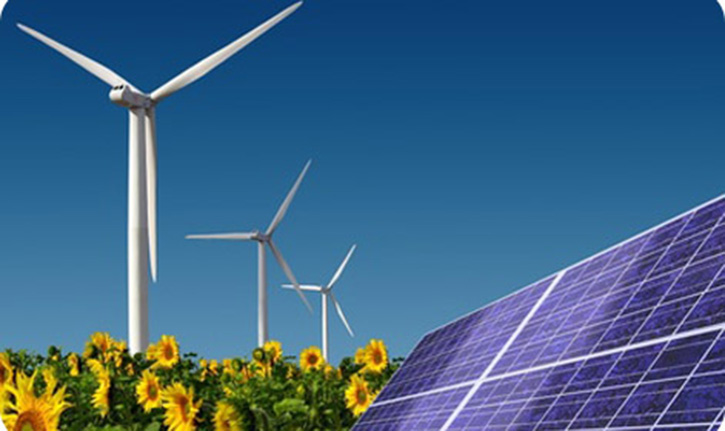
When diplomacy fails, conflict follows. But who owns the sun? We all do. This means that solar energy has the potential to bring peace to a world constantly battling over resource control. In fact, it could even spell the end of oppressive regimes that use energy monopolies to dominate others. Solar energy offers a natural path to democracy. The sun shines on Earth every day. All we need to do is ensure that all of humanity can benefit from it. Even now, vast deserts—such as the Mojave in the U.S., the Atacama in Chile and Peru, the Sahara in North Africa, Rajasthan in India, the Taklamakan in China, Türkiye’s Southeast, the Rub’ al Khali in Saudi Arabia, and large swaths of the Middle East and Australia—receive more solar radiation than almost any other regions on Earth. These areas alone could supply a significant portion of the world’s energy demand. If we include areas with moderately high solar potential, the entire planet could, in theory, be powered by solar energy alone. Of course, this would require full deployment of all solar technologies—centralized and decentralized—including CSP, photovoltaics, and CPV. And while we may not live to see it, space-based solar power could become a reality someday. Outside the atmosphere, closer to the sun, solar energy can be harvested more efficiently. The challenge lies in transmitting that energy back to Earth. In addition to solar, other renewable sources like wind, geothermal, and biomass must be fully utilized. I believe it is entirely feasible to meet global energy needs without fossil fuels—but it will take time, effort, and serious commitment from governments. With the right willpower, both macro and micro-level planning can help accelerate the transition from fossil fuels to renewables. It’s not a dream.
It can be done—especially if people support it, and public and private sectors commit unconditionally to the transformation.
- Energy Efficiency: When we talk about renewable energy, we must also talk about energy efficiency. Energy efficiency means reducing energy consumption through smart practices and technologies. There are two main approaches: Behavioral change and small adjustments that reduce energy use without requiring investment (which often just requires knowledge), and Technology investments that optimize energy use—where decisions are based on return on investment. In an ideal world, energy consumption would be minimized through efficiency, and the energy we do consume would come exclusively from renewable sources.
- Using Fossil Fuels Only as Raw Materials: Wherever I go, I advocate for using fossil fuels like petroleum, natural gas, and coal as raw materials rather than burning them. Combusting these fuels releases large amounts of carbon and harms the environment. Instead, they can serve as feedstocks for various industries. For example, petroleum can be used in petrochemicals, and natural gas can be used in fertilizer production. With more research, additional applications could be developed. Crucially, all such materials should be designed to be recyclable. This would both reduce fossil fuel use and minimize waste, demonstrating a more sustainable approach.
- Rethinking Urban Planning and Building Design: City planning must evolve to avoid harming nature. In future eco-friendly cities, buildings might be constructed from alternative materials rather than concrete—materials that integrate with nature. High-rises may be re-evaluated. Self-sufficient buildings that generate their own energy—will become essential. (There is already R&D being done on paint that produces energy when applied to walls.)
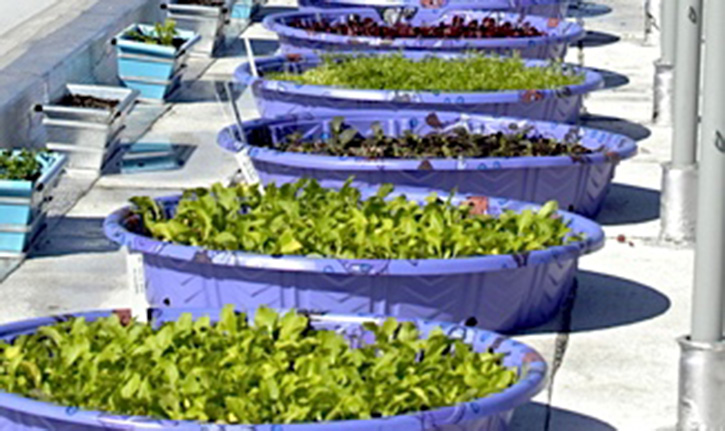
A few years ago, at the MIPIM real estate expo in Cannes, I attended a presentation by a German urban design firm working on a new city in China. One idea really stood out: using rooftops as farmland. They proposed that residents grow fruits and vegetables on their roofs—particularly beneficial in densely populated countries like China. Likewise, solar panels on rooftops should be standard for energy generation. In short, rooftops should be fully utilized—whether for farming or for solar power. Future cities must be planned to align with and support the natural environment in every possible way.
- Transitioning All Vehicles to Solar-Electric: We must stay on top of global transportation trends. Right now, alternatives to gasoline are already being used—LPG, CNG, and ethanol (especially in countries like Brazil).
Hydrogen and biofuels are also in development. I believe the evolution of vehicles will follow this path: Fossil-fuel → Hybrid → Electric → Solar-electric. Solar-electric vehicles will be the final stage, with continuous technological improvements in batteries, solar cells, circuits, motors, and materials. And this progress won’t be limited to land vehicles—ships and aircraft will transform too. Eventually, we’ll see solar-powered vehicles with zero carbon emissions that far exceed the range of today’s fossil-fuel vehicles—and might not even need to be plugged in to charge in sunny regions. Just last weekend, I visited Istanbul Technical University to attend a test drive of the solar-electric vehicle ARIBA 6. I’ll write more about it in a future post, but it was an exciting glimpse of the future. These developments are already taking root in universities. In the future, vehicles will become more and more eco-friendly until carbon emissions are eliminated entirely.
- Environmental Awareness Education: From what I’ve observed, most of our fathers’ generation lacks environmental awareness.
In fact, many of them don’t even believe in the concepts of climate change and global warming. Our generation has developed some awareness, but it’s not enough. At the very least, we need to take the right steps to ensure the next generations fully develop this awareness. To achieve this, environmental education must be included in every stage of the educational process—starting from preschool, through primary school, middle school, high school, university, master’s, and even PhDs—so that this consciousness is ingrained in our minds. Believe me, I remember being taught loads of information throughout my education that has never been useful in real life, and I was tested on those subjects many times. Instead, we should be taught classes that prepare us for real life. Environmental education is one of the most important of those subjects.
We need to start reshaping people’s relationship with nature and their way of thinking from a very young age so that all efforts in this field gain momentum and everyone contributes to solving these issues.
- Ensuring Everything Used Enters the Natural Cycle and Becomes Sustainable: As technology advances, people are making new discoveries, many of which are essentially reproductions of elements already found in nature. For example, the camera was modeled after how the human eye works. Similarly, all waste should be repurposed and recycled in a natural balance. For example, in the company where I currently serve as CEO, we use water purification technology powered by waste heat. In other words, instead of letting waste heat from cooling towers or other mechanisms escape into the atmosphere, we convert it back into energy and use that to purify water through natural vacuum processes. I could give many more examples like this. The important thing is to find ways to utilize waste heat, food waste, gas emissions, and many other byproducts and reintegrate them into the natural cycle. This is where scientists, engineers, and subject matter experts have a critical role to play.
- First Halting, Then Gradually Reducing Population Growth: I can imagine this might receive some backlash. But let’s look at it this way:
If population growth continues at this rate, what will become of the world? For instance, imagine that 500 years from now, the global population exceeds 25 billion. Will Earth’s resources be enough for everyone?
It’s certain that many resources will be on the verge of depletion, and humanity will face extreme hardship. Population growth must first be halted in countries with the highest growth rates and then gradually reduced. I can’t provide a specific number—that’s for scientists to determine—but it’s a fact that even today’s population of 7 billion is putting a huge strain on Earth’s resources. Therefore, the population must be reduced gradually to reach optimal levels. I won’t go into detail about how that reduction can happen, but there are various methods. For example, China implemented certain policies, and in my opinion, they were somewhat successful.
Aside from putting a cap on the number of children, birth control methods should be widely accessible and taught starting from secondary school.
I can already hear some of my economist friends questioning how an aging population, once the population pyramid flips, will be supported by fewer young people. For those thinking that, let me offer two solutions: First, raising the retirement age as much as possible. With today’s healthcare, people are living well into their 80s and even 90s. I believe anyone in good health should be able to work—even if not as intensely as before. Second, robots. Yes, you heard that right. In the future, robots will be a part of many areas of our lives—from industry to the service sector. This will lighten the workload on humans significantly.
- Minimizing Paper Use and Increasing Plantation (Tree Planting): We now live in a digital world. In my view, everything should be digital. Yet we still sign countless paper contracts, read daily newspapers on paper, and take notes on paper. All of this should go digital—paper use in these areas should be eliminated. In other words, we should be able to digitally sign contracts securely, read newspapers online only, and take our notes on iPads or laptops. On the flip side, to prevent soil erosion and increase oxygen output, trees and plants should be planted according to the needs of each region. Let’s not forget—every tree planted makes a positive contribution to our environment.
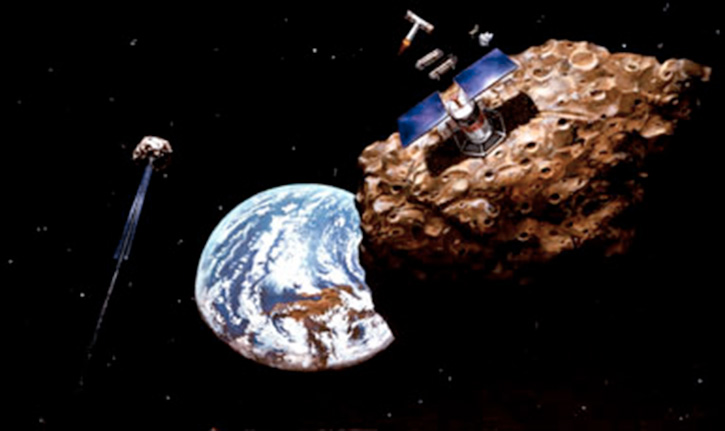
- Exploring the Universe and Benefiting from the Riches of Space: A few months ago, I read an article on NTVMSNBC.com about a concept I had already thought of and wondered if it could be done: space mining. The article said a group of wealthy entrepreneurs was launching a company called “Planetary Resources,” which would deploy an army of exploratory robots across space to identify celestial bodies rich in valuable minerals and begin mining operations in space.
Among the partners were Google’s CEO Larry Page and Chairman Eric Schmidt, former Microsoft lead designer Charles Simonyi, Dell Chairman Ross Perot Jr., director James Cameron, retired astronaut Tom Jones, rocket engineer Chris Lewicki, and astronomer Sara Seager. According to the article, there are about 9,000 asteroids, each about 45 meters wide, orbiting near Earth. Some of these contain more platinum than what is mined on Earth in an entire year. Considering that Earth’s platinum resources, like fossil fuels, may be depleted within a few centuries, and that just a few meters of surface excavation on an 800-meter-wide asteroid could yield 130 tons of platinum worth $6 billion, you can imagine how profitable this wild idea could be. These celestial bodies also contain other rare metals like palladium, osmium, and iridium. These are rare on Earth and can be used in countless ways you might not even imagine. In summary, instead of tearing the Earth apart to obtain limited resources, it seems reasonable to obtain them from asteroids, moons, and other planets.
- Full Support for R&D from Both Public and Private Sectors: There is so much technology to be developed in R&D that the world’s experts need to mobilize. What I want to emphasize here is that governments must support R&D even more. The private sector must allocate a specific percentage of their annual revenue to R&D in their respective fields. Furthermore, all universities around the world should focus more on R&D and aim to produce at least one innovation in their field each year. Lastly, relevant NGOs must also play a role. Foundations and associations that have funds should channel them into R&D projects that contribute to humanity’s advancement. What kind of sustainable R&D efforts should these financial resources be used for? There are many: energy storage, wireless energy transfer, energy-generating paints, solar energy systems in space, development of solar-electric vehicles, space mining, development of digital systems, waste utilization and reintegration into natural cycles, water technologies, etc. There’s still a long road ahead in achieving sustainability and maintaining ecological balance. All it takes is for humanity to truly want it…
Tag: ecology