
First, I want to state from the outset that I’m not against immigration. Controlled immigration is, in essence, an opportunity for countries to revitalize their economies and address human resource shortages in certain areas. On the other hand, I support the approach of allowing immigrants to escape the hardships in their home countries, start a new life, and gain a second chance at life. The problem I’m addressing in this article, as in the “too much of anything is bad,” is that mass migration degrades countries’ infrastructures, such as healthcare, economics, and education, and increases crime rates. This creates a precarious situation for both the countries receiving immigration and the mistreated immigrants.
Before listing my recommendations, I’d like to offer some reminders. In the last section of my blog post titled “Great Britain’s diverse range of leaders,” which you can read at https://www.serhansuzer.com/tr/buyuk-britanyanin-farkli-liderler-yelpazesi , I included what a Pakistani immigrant said to the Danes. I’m sharing the video again as a reminder:
I said the essence of this video lies in these words. The Pakistani in the video shouts to the Danes: “We will live in your country for the rest of our lives. You have one child, while we have five. In 10-15 years, there will be more Pakistanis than Danes in your country!”
I previously stated that what these Pakistanis said also applies to Syrian immigrants in Turkey. We know that the number of Syrians living in certain districts of Turkey is approaching the number of Turks, and even in some neighborhoods along the border. I also stated that this poses a threat to the country’s survival.
I also wrote about the immigration problem in Turkey last year in my article titled “The Immigration Issue.” You can read this article at https://www.serhansuzer.com/tr/gocmenlik-meselesi. I will now expand on some of the solutions I outlined in this article and adapt them to the entire world.
Solutions
1) We need to get to the root of the problem: The root of the problem lies in the countries they come from. If these people are happy where they are, they will not be inclined to migrate elsewhere. So, if Turkey has the largest number of Syrians, it’s necessary to repatriate some of them, or to allow those who remain in Syria to continue living there, to sit down with the Syrian government to help resolve their problems and ensure they take care of their own people. Syria’s unsolved problems are not just Syria’s problems, but all its neighbors’. Therefore, we absolutely must contribute to resolving the problems in our neighboring country. The same applies to Afghanistan and other countries that send immigrants to us. We can also enlist the support of other countries that don’t want to accept immigrants in solving these problems.
To further illustrate what needs to be done in the Turkey-Syria situation, I’d like to give the example of the US-Mexico relationship. Americans need to develop and implement a plan with the Mexican government to stem the tide of migration from their neighbor, Mexico. This plan calls for population control, ensuring good education, and a good life for Mexicans, and for this, the US must provide financial and moral support to Mexico. If Mexicans raise their living standards and feel happy in Mexico, they will stop migrating to the US. There will be no need to build a wall. Presidents of developed countries can say, as Reagan once said to Gorbachev about the Berlin Wall, “Mr. Gorbachev, tear down this wall.” In other words, someone else might be able to tell an American president, “Mr. President, tear down the wall you’ve built between you and Mexico.”
2) Illegal immigrants: Those who have lived in our country, adapted to it, learned Turkish, and are not involved in crime can remain in the country. Everyone has the right to live a decent life. However, the situation of those who have purchased Turkish citizenship for money, who are of no use to the country, who have failed to adapt, who are involved or prone to crime, and who do not speak Turkish needs to be reconsidered and, if necessary, ensure their repatriation through humanitarian means.
The same applies to other countries. I’m sure that developed countries like the US have all sorts of plans and procedures for the repatriation of legal immigrants. These immigrants, in particular, need to be provided with vocational training as well as education about life.
Illegal immigrants are the biggest problem here. Technology can be used to instantly identify those who have entered the country illegally. If these individuals are problematic individuals who will increase the crime rate in the country, they must be repatriated in a dignified manner. In the long term, to end the migration of these individuals to their countries of origin, we must address the root of the problem and develop a strategic cooperation plan with that country, ensuring mutual implementation and oversight of this plan.
3) We must implement the necessary measures regarding climate change completely and without delay. I have written numerous articles on this subject in the past. In short, switching the entire country to 100% renewable energy, switching all vehicles to solar-electric or hydrogen vehicles, prioritizing energy efficiency, using fossil fuels as raw materials, providing full support for R&D and the production of green technologies, starting the construction of self-sufficient and net-zero buildings, and implementing urban planning based on these fundamental principles are among the first things that come to mind. Governments must implement these necessary changes without delay. Millions of people are being forced to migrate not only due to human-induced migration but also due to natural factors like climate change and drought. We need to take the necessary steps today to address these conditions. Solving climate change may require several generations of struggle and taking the necessary steps. Only if we start today can we leave a more livable world for future generations.
We will continue to suffer from climate change. Billions of people may not have access to water, the foundation of life, and the situation will worsen. For example, those living in the northern hemisphere will begin migrating from the south to the north. This will bring with it numerous problems. We need to anticipate the large waves of migration that will occur due to climate change and take proactive measures. To get to the root of the problem, for example, we need to ensure that people facing water shortages have access to sufficient water so they can drink, maintain hygiene, cultivate, and produce their own food. This will prevent them from considering migration.
4) States can further collaborate with NGOs working effectively on migrant issues and contribute to the fight against this problem. Providing more support to global NGOs working on migration issues and enabling them to solve certain problems is also an option. States can undertake some of the tasks they struggle to accomplish through these NGOs. Of course, the core of these efforts should always be ensuring a dignified living environment for migrants and preventing migration from reaching levels that threaten the very survival of the country.
5) Taking measures at the UN level: The countries with the highest migration output in the world need to be identified, and close collaboration with these countries on how to stop migration should be undertaken, and all possible support should be provided. While many important studies are being conducted on this issue, I don’t think any proactive efforts are being made to address these issues and provide them with assistance.
The source of migration is clear.
At least we know where the migration is coming from. You can read a summary of the World Migration Report published in 2022 at https://worldmigrationreport.iom.int/wmr-2022-interactive/ . According to this report, the countries with the highest migration output in the world are: India, Mexico, Russia, China, Syria, Bangladesh, Pakistan, Ukraine, and the Philippines. We all know that Russians and Ukrainians emigrated due to the war. However, migration from other countries continues uninterrupted and continuously. Having said all this, let’s also look at the distribution of the world’s population. You can find a list of the most populous countries at https://tr.wikipedia.org/wiki/N%C3%BCfusa_g%C3%B6re_%C3%BClkeler_ve_ba%C4%9F%C4%B1ml%C4%B1_topraklar_listesi . Considering that the world’s population is 8.1 billion, the top five countries with the highest populations—India, China, the US, Indonesia, and Pakistan—have a combined population of 3.7 billion, exceeding 45% of the world’s population. India and China alone account for 35% of the world’s population, it’s probably not hard to guess where the largest wave of migration will come from. Imagine, the five most populous countries account for nearly half of the world’s population. Among these, the US is the only country that receives, not sends, immigrants. Africans deserve special mention. Starting with Nigeria, which ranks sixth with a population of approximately 220 million, African countries predominantly represent the countries from which people migrate.
The issue also needs to be viewed from a population density perspective. I would like to draw attention to the geopolitical situation of Russia, which is by far the world’s largest country in terms of area, despite being one of the least densely populated countries when considering its landmass.
The Russian President’s Responsibilities
Therefore, I believe Putin, or the new president who will succeed him, must stop attacking former Soviet Union countries, especially Ukraine and Georgia, and put aside his quarrels with the West. He must consider the unprecedented wave of migration to Russia from China and India, which together account for 35% of the world’s population. There’s a proverb in our beautiful Turkish language: “While you go to Damietta for rice, you’re left with bulgur at home.” In other words, if the Russian government doesn’t abandon its obsession with territorial expansion, it could lose some of its existing territories.
It shares a significant border with China, in particular. It shouldn’t be too difficult to reach the Central Asian republics and then Russia from India. These overpopulated countries, particularly those experiencing severe drought due to climate change, may consider settling in the cold regions of Russia, where the climate will become much more suitable for human life. Don’t say I didn’t tell you so.
Ultimately, everything depends on planning and cooperation between countries. Developed countries need to go beyond their own problems and develop one-on-one dialogue with the countries they migrate to, solving problems collaboratively, and getting to the core of the problem.
We may not see communities that have solved all their problems in our generation, but I have hope for future generations. Of course, we must sow the seeds necessary for solving these problems without delay.
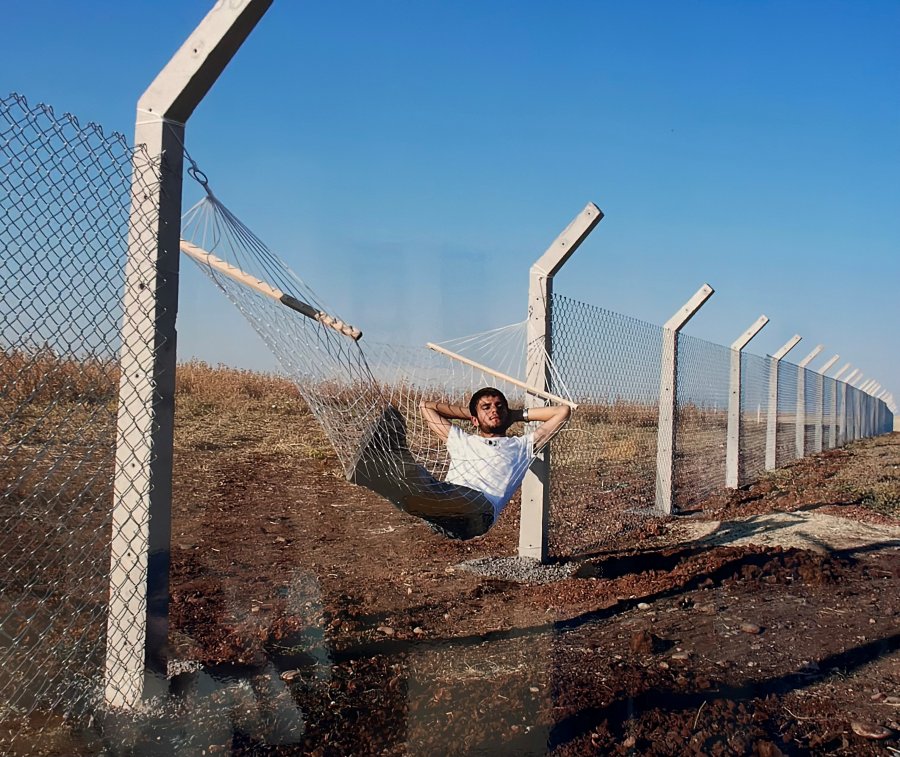
Note: The banner image is a photographic artwork displayed in the exhibition “Pretend You Are Not Here” currently open at the Arter Museum. This image was taken by the artist Murat Gök in 2010. The title of the work is “Untitled (Border).”
Tag: education