In 1972, at the United Nations Environment Conference held in Stockholm, Sweden, June 5th was recognized as World Environment Day (see: Dünya Çevre Günü – Vikipedi (wikipedia.org). This is one of the steps taken towards a livable world. Thousands of national and international NGOs around the world are working on nature and the environment. Progress is being made. However, unfortunately, the damage to nature is so extensive that all these efforts are not enough.
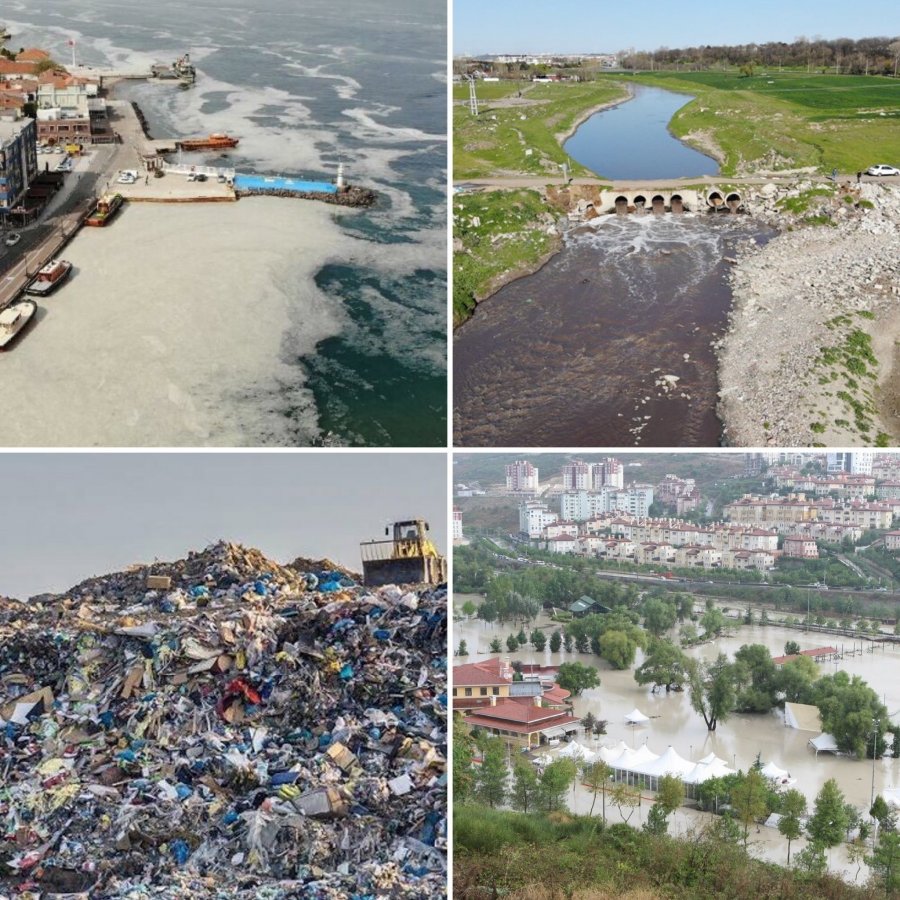
Climate change and the destruction humans inflict on nature are gradually moving us away from the goal of a livable world. Here are a few examples of the environmental disasters we have experienced recently:
1) Sea Saliva
The formation of sea saliva (mucilage) in the Sea of Marmara, which has been a major topic of discussion recently, indicates, according to experts, that the seabed is dead. According to Prof. Dr. Mustafa Sarı, the Marmara has become this way as a result of our misguided relationship with it. The sea did not become covered with mucilage on its own. We brought it to this state. How? With flawed waste management policies… We’ve mistaken the Sea of Marmara for a magician. The waste from the 25 million people living around the Marmara Sea, as well as the industrial waste that makes up half of Turkey’s industry, directly or indirectly flows into the Sea of Marmara. Considering the intense agricultural activity in the Marmara Region, the fertilizers and various chemicals used there also end up in the Marmara Sea. These wastes are discharged into the sea with little or no treatment. What is the sea supposed to do? How should it react? For years, it has tried to process these wastes on its own, but this burden has become unbearable due to climate change. Global climate change has raised the water temperatures of all the world’s seas. This temperature increase has had a greater impact on the Mediterranean basin. The Sea of Marmara is one of the warmest seas. Looking at 40-year average temperature data, we see that it’s 2.5° C. warmer today. The temperature also plays a significant role. (See: https://www.msn.com/tr-tr/haber/gundem/deniz-salyas%C4%B1ndan-kurtulman%C4%B1n-yolu-var-amerika-y%C4%B1-yeniden-ke%C5%9Ffetmeyece%C4%9Fiz/ar-AAKCLEk?ocid=entnewsntp)
There’s a lot to write about on this topic. For now, I’m sharing the following two articles (in Turkish and English). I’ll write a more detailed article in the future:
https://www.diken.com.tr/reuters-kareleriyle-musilaj-afeti/
https://www.bbc.com/news/world-europe-57372677
2) Black Streams
The most striking example of this is the Çorlu Stream. We’ve been hearing reports of the Çorlu Stream flowing black for years, but for some reason, no action is taken. Besides the sea, all kinds of streams (rivers, creeks, etc.) are victims of poor waste management policies. Let me share one of the hundreds of news stories on this subject: Siyah akan Çorlu Deresi, kötü koku yayıyor (aa.com.tr)
3) UK’s Plastic Waste Being Sent to Turkey
According to a new report published by the environmental organization Greenpeace, approximately 40 percent of plastic waste in the UK last year was exported to Turkey and illegally collected and incinerated. You can read the details of the news at the link: Greenpeace: İngiltere’deki plastik atıkların yaklaşık yüzde 40′ı Türkiye’ye ihraç edildi ve yasa dışı yollarla toplanıp yakıldı – BBC News Türkçe This is an absolute disgrace. Not only are we destroying the environment in our own country, but we’re also bringing in plastic waste from developed countries.
4) Flood Disasters
Floods continue to increase in almost every region of Turkey, especially in the Black Sea Region. This is due to climate change. I’d like to share a news article about Türkiye’s flood map:Türkiye Sel Baskınları Haritası: Türkiye’de Sel Ve Taşkın Olan Bölgeler Nerelerdir? (milliyet.com.tr)
Ways to Reduce Risk
The list above goes on and on. We can face natural and man-made disasters anytime, anywhere. The bad news is that this risk is constantly increasing due to climate change. Let’s look at ways to reduce this increasing risk:
1) Turkey Risk Map
We need a map that dynamically displays the risks occurring throughout the country. This map should be created for each risk, but the most significant risks should be prioritized. Furthermore, when creating a risk map, solutions should be included to guide the public correctly. We have such a project in the ‘Risk Reduction’ working group of the Disaster Platform, where I served as the spokesperson for the first term. If we can achieve our goals, we will have prepared a risk map that will guide all relevant institutions and organizations.
2) Combating Climate Change
Turkey needs to be among the countries at the forefront of combating climate change. To achieve this, we need to be one of the countries that implement the energy revolution first and fastest. When I say energy revolution, I mean:
- a) 100% renewable energy
- b) Using fossil fuels as raw materials
- c) Energy efficiency
- d) Electricity meeting every need as the primary energy source
- e) Distributed systems
3) Creating New Forest Areas
Whatever is happening to us stems from the continuous increase in carbon emissions. We also have trees that can absorb and reduce carbon. To reduce carbon emissions, we need to plant forests, each consisting of millions of trees, throughout Turkey. We must make this a national policy. Furthermore, our forests will prevent various natural disasters such as landslides and create a more livable climate.
4) Imposing the heaviest penalties on those who destroy nature for profit
Every year, we frequently witness forest fires in tourist areas. The heaviest possible penalties (starting from 10 years, for example) should be imposed on profiteers who burn down forests, destroying their forest quality and allowing them to be used for hotels, housing projects, and agricultural land. I’d like to re-share my previous article on this topic; H. Serhan Süzer – Komşudaki felaketin ardında yatan açgözlülük (serhansuzer.com). Ultimately, our neighbor Greece and I share similar mindsets. The same greed, the same indifference to destroying nature and endangering its future, are also present in our country.
Similarly, institutions and organizations that fail to properly manage waste should be punished with heavy taxes and even imprisoned for their disobedient executives.
5) Incentive Mechanism for Respecting Nature
Just as those who destroy nature are punished, individuals, institutions, and organizations that respect nature should be rewarded in every way. I can cite tax incentives, financial resources, and increased media coverage of positive stories as examples of this.
6) Establishing Nature Protection Teams within the Security Forces
The Turkish Army protects our borders and continues its work as a guarantee of peace and prosperity in the country. As someone whose grandfather was a Korean War veteran, I can say this: We live in a different world now. Securing our country’s future isn’t just about protecting our borders or neutralizing terrorists. Climate change also poses a serious threat to our future. Therefore, we must protect our water, forests, and all our natural areas. Nature protection teams must be established within the Turkish Army and police, and even with rangers. It is essential that those who destroy nature be arrested without compromise and face the harshest penalties.
7) Accelerate Technology Development
To accelerate the development of sustainability technologies, budgets must be increased, and institutions and organizations that achieve results must be rewarded. Furthermore, development beyond sustainability must also accelerate in areas such as AI, IoT, and biological technologies. Digitalization is an area that requires rapid progress in this direction.
I’ve listed the things that come to mind again today. While risk can never be eliminated, it can at least be significantly reduced. We need to roll up our sleeves to implement the above actions without delay. Do you have the vision and courage to do this?
Tag: ecology