
Let’s begin with the film I mentioned in the intro. Uglies, directed by McG and starring Joey King, Brianne Tju, and Keith Powers, is a 2024 American sci-fi drama available on Netflix. The film is an adaptation of Scott Westerfeld’s novel of the same name and takes place in a post-apocalyptic dystopian society where teenagers are considered “ugly” until they undergo major cosmetic surgery at the age of 16 to become “pretty.”
Uglies premiered on Netflix on 13 September 2024, and received mostly negative reviews from critics. Despite the backlash, it racked up 20 million views in its first three days (September 13–15).
Frankly, I can’t say I liked the film either. I’m not entirely sure what I disliked, but the way the plot was handled didn’t sit well with me. The concept itself is strong and delivers the kind of harsh societal critique we need, but the execution felt disjointed and amateurish at times.
Weak Storytelling, Strong Message
On the movie site Sinemalar.com, https://www.sinemalar.com/film/270825/uglies, a reviewer named SinefilOkan sums up my thoughts perfectly:
“This dystopic adaptation surprisingly parallels the dynamics of today’s world. In a society where social media distorts aesthetic perception and causes people to lose their true selves, individuality and authenticity are replaced by the pursuit of perfection. The city characters in the film reflect how Gen Z and Gen Alpha are trapped in this illusion. It’s not on the level of The Hunger Games or Divergent, but it has potential. Though it’s been heavily criticized across platforms, I found its message valuable and look forward to the sequel.”
Ugliness in the Name of Beauty
The movie’s core message applies well to today’s world. In order to conform to social standards and improve their standing, many women—even those widely considered attractive—resort to cosmetic procedures that radically alter their appearance, sometimes making themselves less attractive. The competition to be “more beautiful” is so fierce that many don’t even realize they’re making themselves look worse.
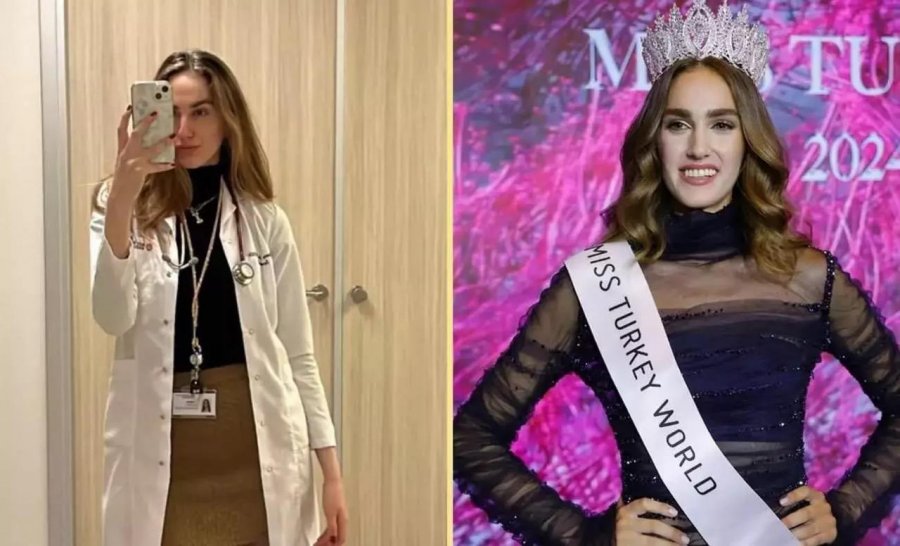
Take the recent Miss Turkey contest as another example. The winner, İdil Bilgen, was ruthlessly criticized by many for not fitting conventional beauty standards. What struck me most was how standardized the notion of beauty has become, especially with the widespread use of cosmetic enhancements.
Why No Runner-Up?
Speaking of the contest, I believe its name should be changed from “Miss Turkey” to “Miss Türkiye” to better reflect our national identity. Also notable: while İdil Bilgen won the crown, no runner-up was selected this year—because Turkey won’t be participating in the Miss Universe competition in 2024. The third-place winner, Cemre Ülker, will represent Turkey at Miss Supranational. Having a third-place winner but no second place seemed odd to me. Not sending a contestant to Miss Universe is a significant gap in the pageant format and should be corrected next year.
It would’ve helped if organizers clearly and transparently shared the judging criteria ahead of time, potentially minimizing public backlash. Transparency is always a good thing.
Let’s take a look at the profile of İdil Bilgen, who was chosen as Turkey’s most beautiful girl. The 2024 winner is 24 years old and 1.80 meters tall. She graduated from Koç University School of Medicine in the 2023-2024 academic year. Here’s the moment İdil Bilgen was chosen as Turkey’s most beautiful girl:
Unfair “Şabaniye” Comparisons
So far, everything seems normal. But the criticism escalated quickly. The focus shifted to the jury and organizers, with many arguing that far more beautiful contestants were overlooked, some who didn’t make it into the Top 20. Some went so far as to compare Bilgen to a character portrayed by famed Turkish comedian Kemal Sunal in the film Şabaniye, where he appears dressed as a woman.
Bilgen, however, responded with calm and grace, “I’m a Turkish woman. I’m honored and proud to have earned this title to represent Turkey. While we’re dealing with tragic issues like femicides and child abuse in our country, I don’t pay attention to the negative comments about me. These are people with opinions but no real knowledge. I don’t care what they think. I’m a modern Turkish woman, and I will represent our country at Miss World with dignity and grace.”
I Don’t Believe in the “Daddy’s Influence” Theory
While I don’t agree with the criticism, I do believe there’s some truth to it. What follows are my subjective opinions, and others may feel different.
The harshest criticism suggested that Bilgen won due to her father being an ambassador. I strongly disagree. No matter how influential, an ambassador cannot and should not sway the results of a beauty contest. I assume her father, as a representative of the Republic of Turkey, is an honorable man and wouldn’t stoop to such behavior.
That said, I do believe Bilgen is beautiful. But I don’t think she’s quite beautiful enough to carry the title “Miss Turkey.” She has an unusual kind of beauty. Interestingly, while most women wear makeup to enhance their looks, Bilgen looks more beautiful without it. I humbly suggest she avoid heavy makeup like she wore during the competition.
A Weak Year for Contestants
Beauty is subjective, and I believe this year’s contest had fewer standout contestants. Some years attract physically striking candidates; some don’t. I think 2024 was the latter. Looking at the top 20 finalists, I’d say they’re all attractive, but none stood out enough to earn the title of “Turkey’s Most Beautiful Woman.” (See 2024 contestants) https://www.instagram.com/reel/C_lPskQNt_e/?igsh=MTJlOWVkdzMwNGVyaw==)
Given that, I can understand how Bilgen stood out among them. I also don’t believe third-place winner Cemre Ülker is beautiful enough to place in a stronger year. In a more competitive field, she likely wouldn’t have made the top 20.
İpek Kuşçu’s “Artificial” Rise
On a related note, İpek Kuşçu didn’t make it into the Top 20 but used the opportunity to post her own photos, subtly implying she was more beautiful than the finalists—and received public support for it. (See: https://www.ntv.com.tr/galeri/n-life/magazin/miss-turkey-2024te-ilk-20ye-giremeyen-ipek-kuscunun-aciklamalari-gundem-oldu,12ZI2y_gwUq_ovu5TN5wmw
I’d like to point out that I disagree with these comments. Reminiscent of the movie “Uglies,” İpek Kuşçu portrays herself as having surgery and fixing her entire body at 16. This is a detrimental perspective for creating a society we can be proud of. In other words, millions of women, like İpek Kuşçu, pursue their aesthetic craze, and for some, this passion even reaches the point of addiction. They get nose jobs, colored contact lenses, lip fillers, botox, silicone injections, and so on, ultimately sacrificing both material and emotional aspects to achieve a physical appearance universally admired. However, there’s a problem here. Most cosmetic surgery is clearly cosmetic and never achieves that natural look. Those who value naturalness, like me, may shy away from someone who has had cosmetic surgery done, believing anything too extreme looks bad. For example, I’ve never understood why women want to get fake nails and have nails that are much longer than they should be. There are also extreme examples. Why would someone do this to themselves? Instead of going down this path, they should make serious efforts and do solid sports to optimize their physical appearance.
Prioritize Natural Beauty and Use Heptathlon-Style Scoring
In truth, beauty pageants aren’t even that necessary. I’d argue they shouldn’t be held at all. But if they are, natural looks should carry the most weight. In fact, showcasing contestants as they work out, do their jobs, or pursue hobbies would make the event more interesting and lead to better judgments.
Beauty should be treated as a multifaceted concept—not just about physical looks. In this sense, I agree with Bilgen. Pageants should use a scoring system like the heptathlon.
For those unfamiliar: the heptathlon is a women-only athletic event with seven disciplines, held over two days. Day one includes 100 m hurdles, shot put, high jump, and 200 m sprint. Day two includes javelin throw, long jump, and 800 m race. Skipping an event leads to disqualification.
The following seven criteria can be considered in beauty pageants: facial beauty, physical beauty, character, educational background, contribution to society and/or potential, aptitude for sports and the arts, and professional or potential career status. I’ve given these seven criteria as examples. Of course, these criteria can be modified or added. I’m talking about a format where those who score high on these seven criteria are likely to win, while failure to meet one or two criteria forfeits their chances of winning. Since we’re selecting beautiful people in every way, the criteria must be very clear.
Finally, I’d like to advise Miss Turkey İdil Bilgen to ignore all this criticism and focus on her work. Every job has its challenges, and she’s been assigned to Bingöl. May her path be clear. (See: https://www.sozcu.com.tr/miss-turkey-birincisi-idil-bilgen-bingol-e-atandi-p84302)
Starting her career strong is what matters most. Who knows? Maybe she’ll one day make groundbreaking contributions in oncology. That would matter far more than any beauty title—and make her a true role model for young women.
Tags: Education