
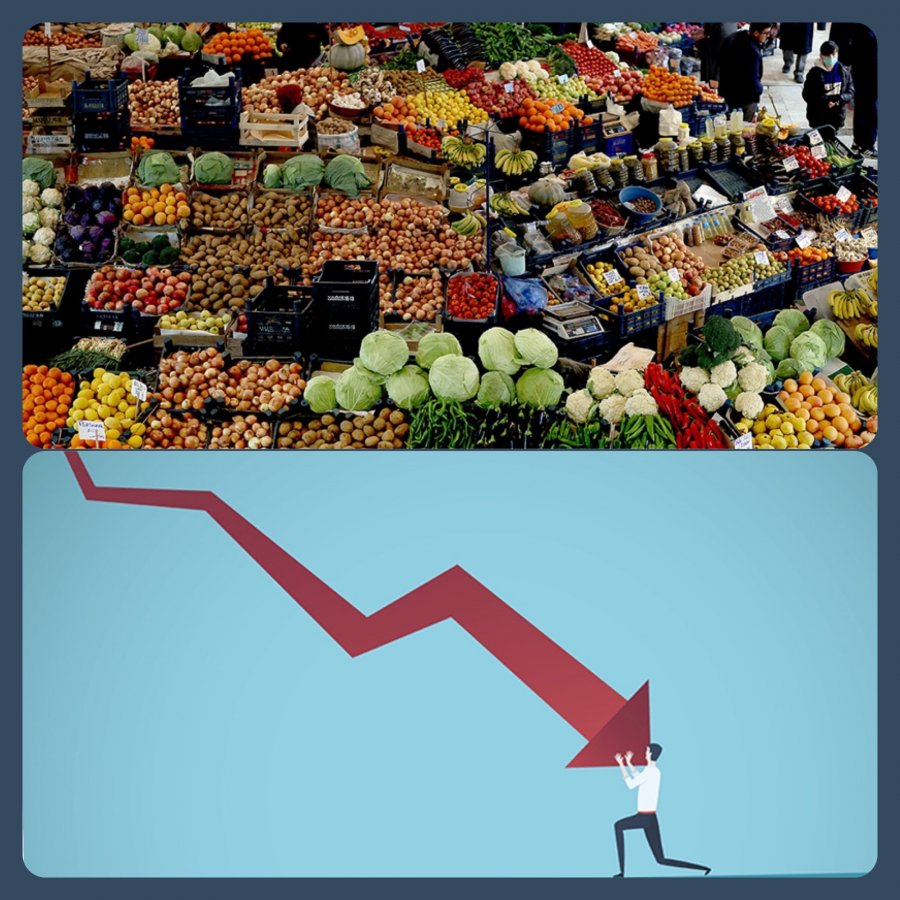
Turkey started June with significant price hikes. Natural gas prices increased by 30% for residential use, 10% for industrial use, and 16% for electricity generation. This increase in natural gas prices for electricity generation will also increase electricity bills. According to the new tariff, residential electricity prices increased by 15% and industrial and commercial customers by 25%. Natural gas and electricity prices are increasing almost monthly.
In addition to natural gas and electricity, gasoline and diesel prices also increased twice in 24 hours. We are witnessing new price increases every day (see:https://www.ntv.com.tr/ntvpara/elektrik-ve-dogalgaz-fiyatlarina-zam,PVc2uIxH906tQSsYgUtWrg?utm_source=newsletter&utm_medium=email&utm_campaign=%F0%9F%92%8A+Bunlar+zam )
Every week, we witness price increases not only for energy but for all necessities. It’s almost certain that bread prices will also increase in the second week of June. Bakers have requested from the Istanbul Chamber of Commerce that a 210-gr. loaf of bread be priced at 4 liras. Some bakeries have already raised the price to 4 liras.
Housing, a basic right, is also being subjected to inflationary pressures. The source of the problem here lies not so much in the economic situation as in greedy landlords. We are witnessing a nationwide war between tenants and landlords. In fact, the scale of this war has escalated to such an extent that the government has been forced to impose rent increase limits:https://www.bbc.com/turkce/haberler-turkiye-61731957
Istanbul inflation broke its 24-year record. Istanbul inflation, considered a leading indicator of Turkish inflation, rose 87.4% in March (See:https://bigpara.hurriyet.com.tr/haberler/ekonomi-haberleri/istanbul-un-enflasyonu-aciklandi_ID1473510/?utm_source=newsletter&utm_medium=email&utm_campaign=%F0%9F%92%8A+Bunlar+zam)
A potential price increase for dairy products is also expected soon. The National Dairy Council has requested a 32% increase in the price of raw milk. Prices for foods like milk, cheese, and eggs in Turkey have increased by 60% in the past year (See:https://tr.euronews.com/2022/06/01/avrupa-da-sut-ve-sut-urunlerinde-son-1-y-lda-fiyatlar-n-en-cok-artt-g-ulke-turkiye?utm_source=newsletter&utm_medium=email&utm_campaign=%F0%9F%92%8A+Bunlar+zam).
Let’s also look at transportation costs. High-Speed Train ticket prices have increased by 30%. They increased by 20% in January, 10% in March, and 15% in April. With the latest increase, the price of a ticket between Ankara and Istanbul has risen from 151 lira to 195 lira (See:https://www.dunya.com/gundem/yht-bilet-fiyatlarina-yuzde-30-zam-haberi-660714?utm_source=newsletter&utm_medium=email&utm_campaign=%F0%9F%92%8A+Terk-i+diyar )
The Salary Raise Conundrum
Meanwhile, the question of how much salary increases should be given has become a significant concern for employers. No matter what raises they offer, they can’t keep up with the accelerating pace of inflation. The main problem is that no one can accurately predict the level of inflation. Therefore, no one knows for sure whether the salary increases are high or low. There are differing opinions and explanations on this matter.
Prof. Dr. Veysel Ulusoy, one of the founders of ENAG (Inflation Research Group), which publishes inflation data using its own calculations, has been launched under disciplinary investigation at Yeditepe University, where he works. Ulusoy described the investigation, which was launched due to an interview published without the university administration’s permission, as “continuation of pressure,” saying, “They’re trying to force a crime.”
TÜİK previously requested an injunction preventing ENAG from publishing inflation data, but the court rejected it. You can read related news via the links below.
You can access information on ENAG at https://enagrup.org/ or via this Twitter account:https://twitter.com/ENAGRUP?ref_src=twsrc%5Egoogle%7Ctwcamp%5Eserp%7Ctwgr%5Eauthor.
The situation is slightly different in the public sector. Civil servants and retirees are expected to receive a total raise of 37% in July due to inflation and collective bargaining agreements. The final rise will be determined by the inflation figures to be announced on 3 July. President Erdoğan announced the already-finalized raise, saying, “We will provide relief to everyone with inflation adjustments in July and new wage regulations in January.”
In an environment where more people are struggling to make ends meet, the solution is also long-term. In other words, if you take steps today to permanently solve the inflation problem, you could see results within a few years at the earliest.
A Closed-Loop Solution for Basic Needs
The solution lies in creating a closed-loop system for basic needs. I’m talking about a system that can easily meet the country’s needs for food, cleaning products, clothing, and housing. The entire country needs to be self-sufficient in basic needs. Inflation, in fact, occurs because excess demand is not met by supply. For example, I list the steps that need to be taken for certain basic needs below:
1) Food: Food products should be organized to meet each province’s own needs. Excessive price increases are generally caused by intermediaries constantly inflating prices and hoarding stock. Therefore, planning and implementation are necessary to meet all major commodities on a provincial basis. Planning must be implemented to ensure direct access from producer to consumer. Wheat, tomatoes, eggplant, sugar, onions, garlic, fruit, and all other basic food products must be organized in this way. In other words, I’m talking about ensuring that all types of food are produced and consumed within the province. This is possible with today’s food technologies.
If feasible in the long term, urban planning should be designed to ensure that everyone meets their own basic needs. This means that all residences should be self-sufficient in terms of energy, water, and food. In other words, when you move into a house, it should be capable of producing its own energy, water, and even basic agricultural products. If certain foods cannot be produced, it is essential to ensure that they are produced in that complex, neighborhood, district, and, most importantly, in the province.
This is the only way to combat excessive demand. We can only meet the overwhelming and ever-increasing demand by making everyone a producer. In other words, I’m talking about all consumers becoming producers, primarily for their own needs, and working towards this goal.
2) Cleaning and textile products: Measures should be taken to eliminate imports in the production of cleaning and textile products. All cleaning and textile products should be produced with domestically sourced raw materials and equipment. If possible, production of these products should be limited to a provincial level. We can overcome energy costs, which would increase fuel prices, by ensuring (and encouraging) that production facilities generate their own energy.
3) Real Estate: We need to create a system where everyone in the country can own their own home. This requires a provincial-level planning and financing model that meets housing needs. I’m talking about a long-term financing model, like the mortgage system in the US, where everyone, from the poorest to the richest, will own a home. Furthermore, purchasing more than two residences (winter and summer residences) should be prohibited. Furthermore, the opportunity to own a home in the name of children could be introduced until they turn 18. It should be stipulated that when children turn 18, any residence owned by their parents that exceed their needs should be passed directly to their children.
Everyone who needs housing must be able to own their own home in the long term with financing and government incentives. Leasing should be liberalized only for commercial real estate. There, too, the possibility of turnover rents, like partnerships, should be opened. In other words, instead of charging a fixed rent and increasing it annually, they should rent it to a restaurant and generate income based on the restaurant’s revenue, and the property owner should monitor the property’s revenue like a partner. Of course, banks can also own real estate in businesses where turnover rents are not possible, such as banks. Everything in the financial sector is becoming increasingly digital.
Let me reiterate this: The model of buying a house and renting it as an investment should be abandoned. By reminding everyone that housing is also a basic need, we can enable citizens who want to invest in real estate to generate income through renting to commercial businesses. We should also eliminate fixed rents for commercial businesses and allow turnover-based rents.
In addition to all these measures:
1) It is necessary to establish systems that deliver goods directly from producers to consumers, eliminating intermediaries. It is crucial to directly meet demand through an online system and establish distributed systems across all areas, with on-site production and on-site consumption. If necessary, the state could own the online system, which creates a marketplace model for basic necessities (cooperation with the private sector for efficient operation is possible).
2) Hoarding must be prevented, and if necessary, penalties must be clearly outlined. Where necessary, the state can take the initiative and fix prices.
3) Excessive migration is one reason for the demand explosion that triggers inflation. Migration, which causes the country’s population to grow exponentially, must be controlled. If necessary, we need to collaborate with the countries that receive the most immigration to ensure the happiness of migrant families in their own countries (primarily Syria).
4) We need to meet our energy needs with 100% renewable energy. We already have abundant natural resources such as solar, wind, and geothermal energy. Moreover, if we can produce the necessary technology within our borders, we can bring this business to its proper level, eliminate our country’s dependence on any other country for energy, and minimize energy costs in every area.
I gave you some examples above. These examples can be multiplied and applied in every field. In my opinion, all of these are things that can be easily achieved with the government’s will behind them. If the government presents such a vision and stands behind it. If we design our way of life with a self-sufficient and distributed system mentality, annual inflation won’t even exceed 1%. We will ensure equality among every individual living in the country. Prices will remain stable for years, ensuring everyone’s comfort and stability. Our citizens can make long-term plans throughout their lives, and once financial hardship is eliminated, they will begin to enjoy life. Positive energy will permeate the entire country.
Are you ready to create such a world?
Bonus: The ongoing tenant-rent conflict across the country is at its peak. Miray Akovalıgil made fun of greedy landlords with a humorous sketch on her Instagram page. He wrote the following underneath: “The tenants’ problems are always on the agenda, but no one says that rich landlords are struggling too… Fuck the poor, I’m going to evict all my tenants and rent my houses out for three times the rent.” I’m sharing the relevant link: Instagram’da mirayakovaligil: Hep kiracıların sıkıntısı gündemde, kimse demiyo ki zengin ev sahipleri de sıkıntı çekio… Fuck the fakirs ben de tüm kiracılarımı çıkarmaya…
Tag: energy