
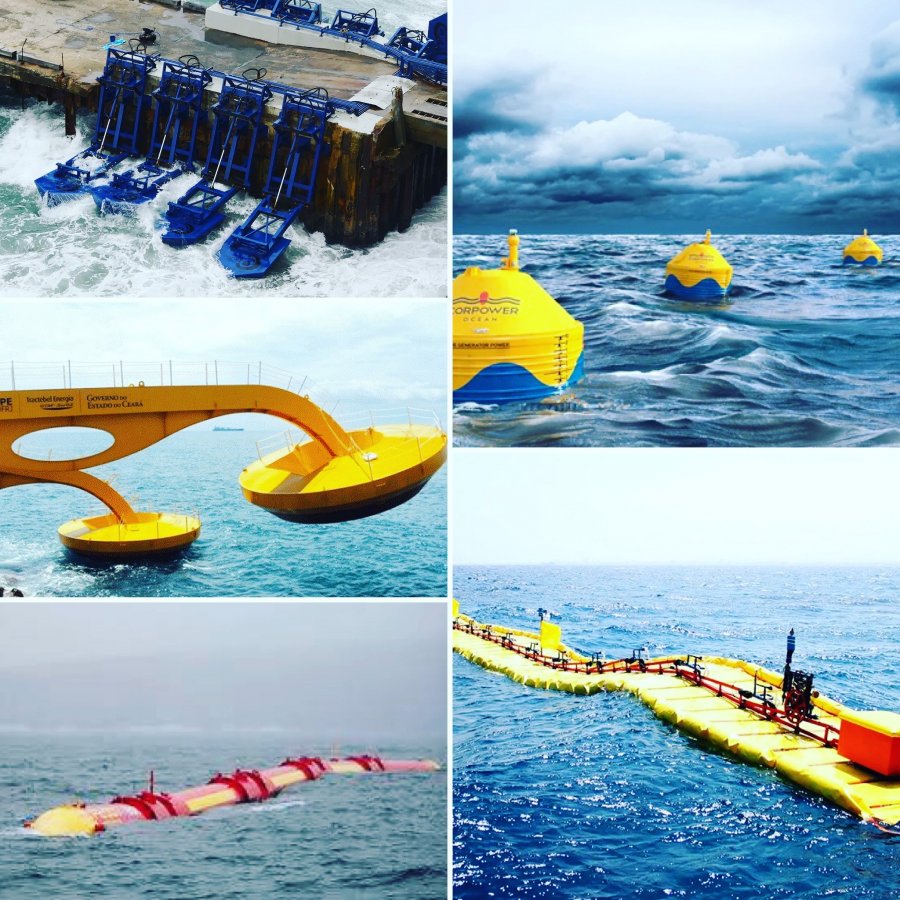
Wave energy is the energy generated by wave motions and pressures at or below the surface of the wave. This energy is converted into electricity when the right technology is used. The device that converts it to electricity is called a Wave Energy Converter (WEC). Here are three examples of WECs to help you visualize:
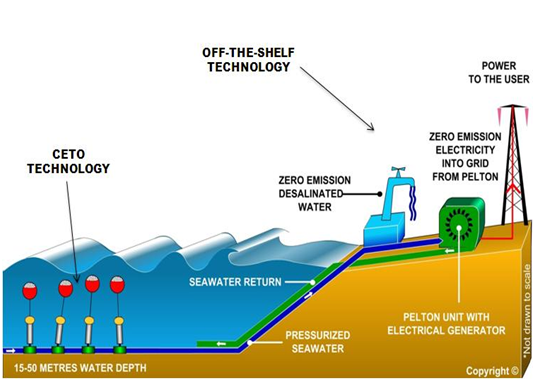
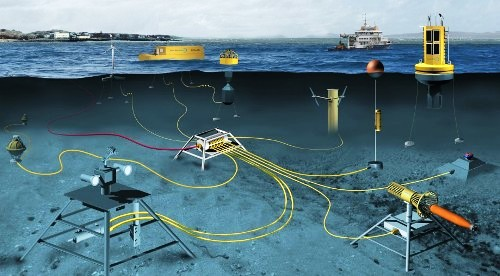
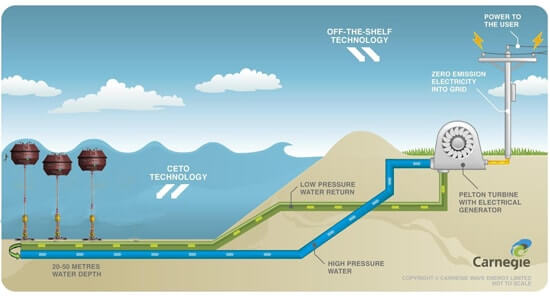
Waves are generated by wind passing over the sea surface. As long as waves propagate slower than the wind speeds immediately above them, energy is transferred from the wind to the waves. Air pressure differences between the leeward and leeward sides of a wave crest, along with surface friction from the wind, cause shear stress and wave growth.
Wave power is different from tidal and current power, which captures the energy of currents caused by the gravitational pull of the Sun and Moon or the natural flow of the sea. I will write a future article about current and tidal energy. However, today’s topic is wave energy. Wave energy is a renewable energy source that continues to exist as long as the wind blows.
A Brief History of Wave Energy Technology
The first known patent for harvesting energy from ocean waves was filed in Paris in 1799 by Pierre-Simon Girard and his son. An early device was built around 1910 by Bochaux-Praceique to power his home in Royan, France. The modern search for wave energy was pioneered by Yoshio Masuda’s experiments in the 1940s. He built hundreds of units used to power navigation lights, testing various concepts. Among these was Masuda’s concept of generating power from the angular motion of the joints of an articulated raft, proposed in the 1950s.
In 2000, the world’s first commercial wave power device, the Islay LIMPET, was installed on the coast of Islay, Scotland, and connected to the UK national grid. The world’s first wave energy testing facility was established in Orkney, Scotland, in 2003 to initiate the development of the wave and tidal energy industry. This organization, the European Marine Energy Centre (EMEC), has supported the deployment of more wave and tidal energy devices than any other single facility. In 2008, the first experimental multi-generator wave farm opened at the Aguçadoura wave park in Portugal. However, after several trials, this project was quickly terminated due to technical and economic reasons.
Various public institutions around the world continued the process, and in the 2010s, research and development funding for wave energy was increased in many countries (see list of wave energy projects:https://en.wikipedia.org/wiki/List_of_wave_power_projects).
Different technologies can be utilized to harvest energy from waves. After listing them, I’ll share a diagram below for visualization:
General wave energy concepts:
- Point absorber, 2. Attenuator, 3. Oscillating wave surge converter, 4. Oscillating water column, 5. Overtopping device, 6. Submerged pressure differential, 7. Floating in-air converters. (I’m sharing their original names: 1. Point absorber, 2. Attenuator, 3. Oscillating wave surge converter, 4. Oscillating water column, 5. Overtopping device, 6. Submerged pressure differential, 7. Floating in-air converters.)
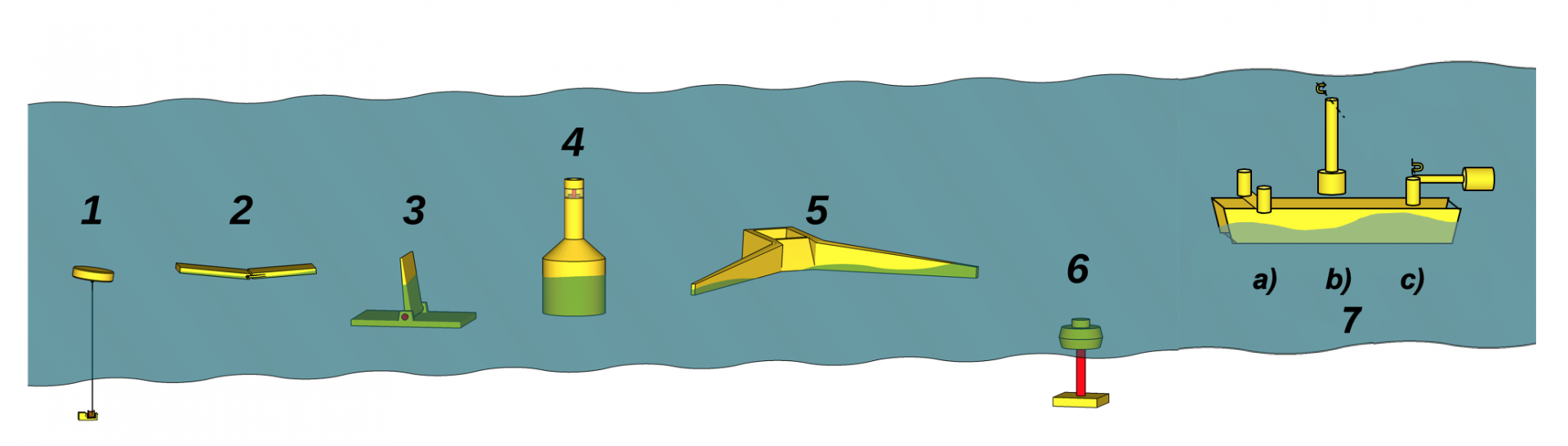
Now let me share different wave energy technologies:
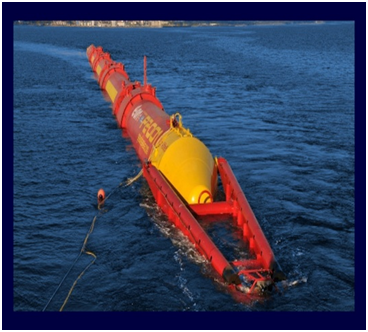
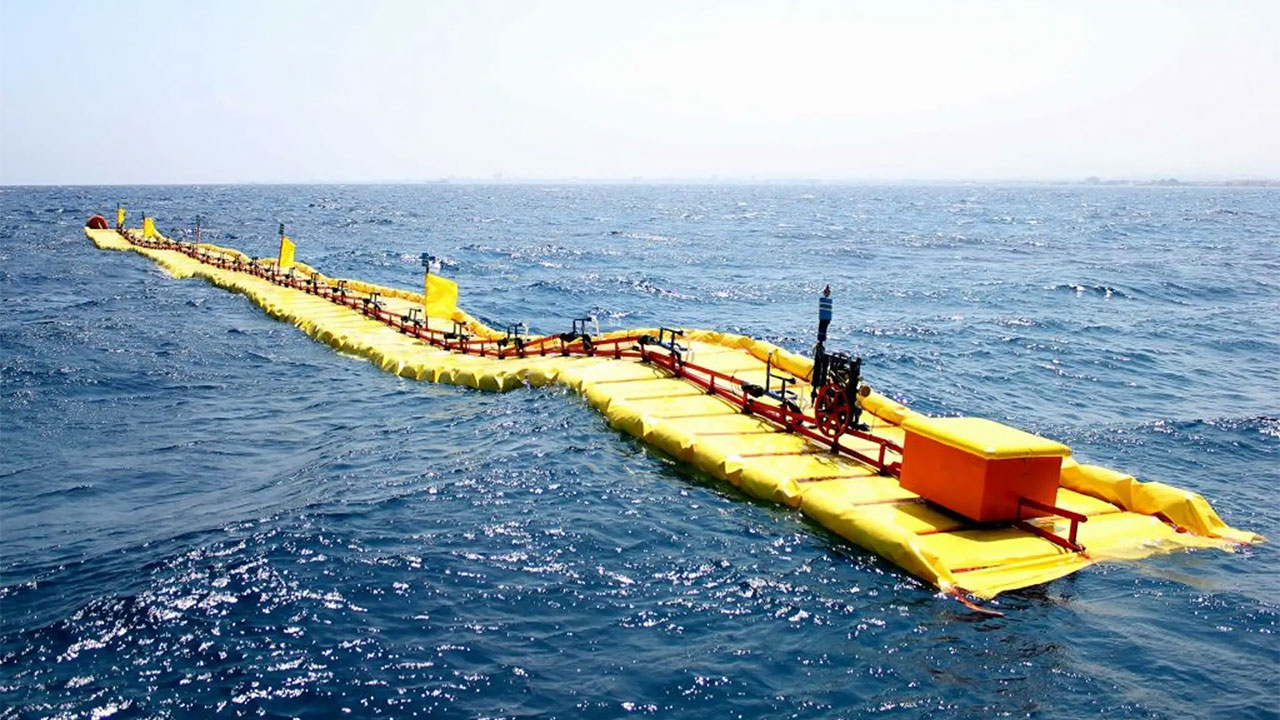
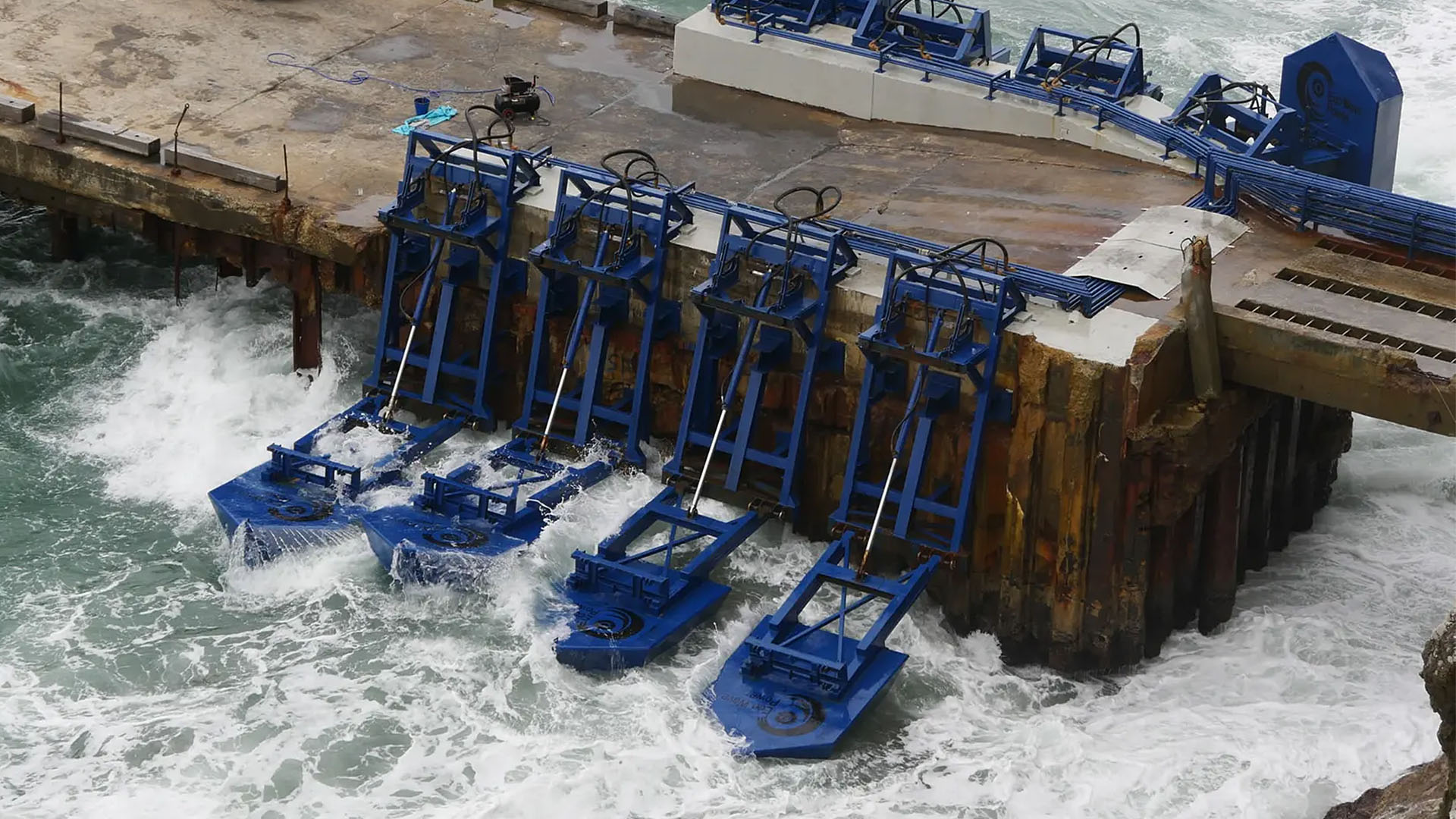
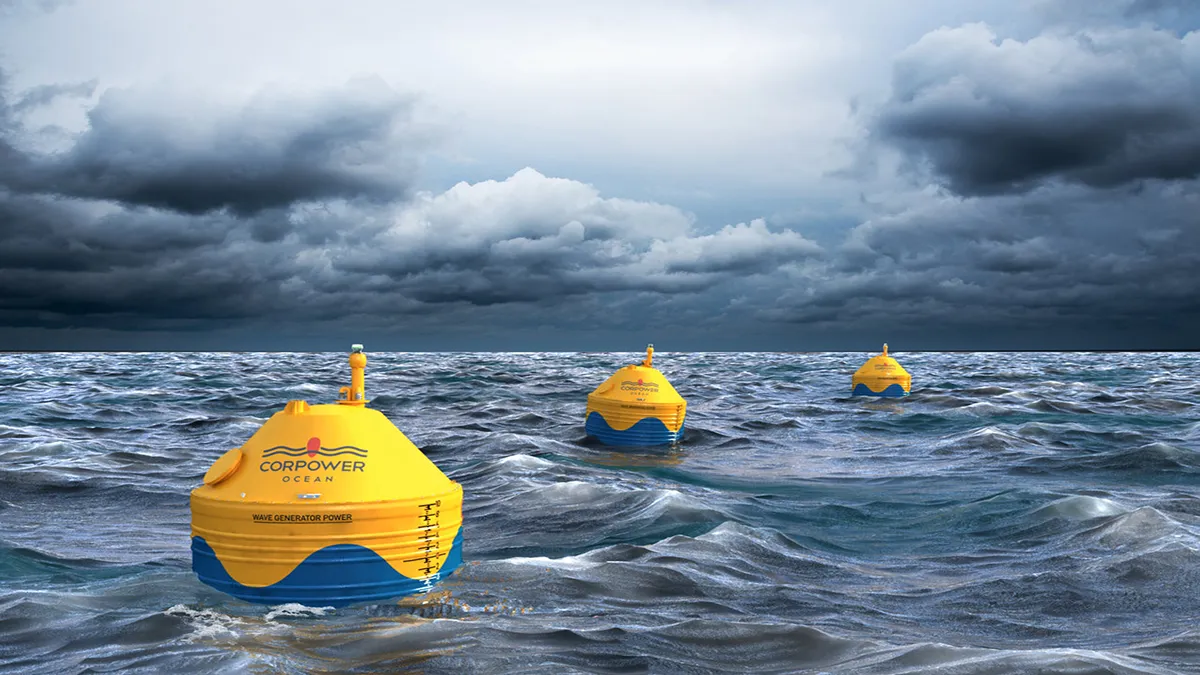
The theoretical potential of wave energy worldwide is estimated to be greater than 2 TW. The areas with the highest wave power potential include the west coast of Europe, the north coast of the United Kingdom, and the Pacific coasts of North and South America, South Africa, Australia, and New Zealand.
Disadvantages
Let’s discuss the advantages and disadvantages of wave energy. Let’s start with the disadvantages:
1) Wave Power: You don’t get the waves you want everywhere. In fact, wave energy is directly proportional to the wind energy coming from the sea. Where there is wind, there are waves.
2) Impact on the Marine Ecosystem: It can affect the marine ecosystem in some places. Special studies are required to address this. It can also cause noise, especially underwater. To avoid disturbing the ecosystem, it would be appropriate to install a silencer, which would be a costly addition.
3) Source of Disturbance for Private and Commercial Ships: The equipment and converters used for wave energy can take up space. Ships must navigate around this equipment.
4) Wavelength: In some wave energy technologies, excessively high or small wave lengths directly affect efficiency.
5) Production Costs: When comparing the energy generated from wave energy and its production costs, it may seem more expensive than it is. For this technology to be feasible, demand, and therefore supply, must increase significantly.
Advantages
Now, let’s consider the advantages of wave energy:
1) Wave energy has no polluting effects. For example, it indirectly reduces acid rain and all types of pollution.
2) It reduces dependence on fossil fuels.
3) It provides a significant advantage in the fight against global warming and climate change.
4) It provides electricity to coastal areas without an electrical grid.
5) It can convert saltwater into freshwater and pump it into the required area (Desalination plant).
6) There is no input other than the initial investment. Once the plant is completed, you produce energy as the waves rise.
7) Because it is built on the sea, land on land can be used for other purposes.
8) In countries with densely populated coastal areas, energy is consumed where it is produced, eliminating the need for long transmission lines.
9) It can be sized according to projected energy needs. It is an ideal energy type, especially for islands.
Wave energy is an abundant energy source whose advantages outweigh its disadvantages. It is consistent with concepts such as sustainable development, sustainable and clean energy, and has no CO2 emissions.
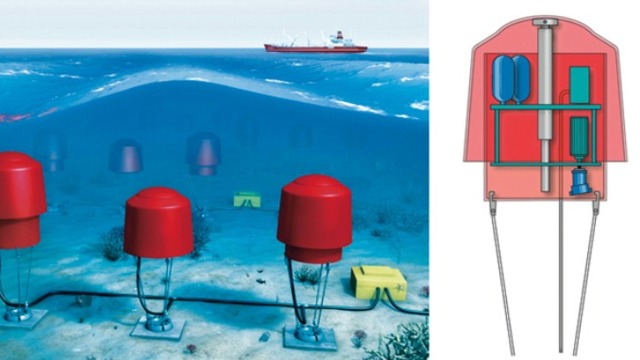
Bosch Rexroth Technology
Ideal for Turkey
Finally, I personally believe that wave energy, alongside current and tidal energy, will come to the fore as a complement to offshore wind and solar power plants. While pure wave, current, or tidal technologies will be used in some small and distributed system applications, I believe that hybridization with solar and wind energy will make significant progress in achieving baseload (i.e., the ability to generate electricity at any time of day). I hope that wave technologies will be widely used in a peninsula like ours, surrounded by the sea on three sides.
Note: The links to the sources I used while writing this article are below:
- https://en.wikipedia.org/wiki/Wave_power
- https://www.boschrexroth.com/tr/tr/sektoerler/yenilenebilir-enerjiler/
- https://www.enerji.gen.tr/dalga-enerjisi.html
- https://www.ceyrekmuhendis.com/sonsuz-enerji-kaynagi-dalga-enerjisi/
- https://muhendistan.com/dalga-enerjisi-nedir/
- https://www.bilgiustam.com/dalga-enerjisi-nedir/
- https://www.aa.com.tr/tr/ekonomi/eco-wave-power-ust-yoneticisi-bravermana-gore-turkiye-dalga-enerjisinde-cazip-bir-ulke/2770998
- http://www.emagrup.com/tr/dalga-enerjisi
Tag: ecology