Last weekend, on my second trip to Elazığ, I was accompanied by Burcu, a member of the TİDER board of directors, and my documentary filmmaker friend Serkan. We arranged the hotel on the way. On the way from Malatya to Elazığ, İsmail, Rıdvan’s replacement from TİDER, called me and said they had reserved a room for us at the Divan Hotel, but the entire city was full, and they could only reserve two rooms there. I told him no problem, that Serkan and I could share a room. After about a two-hour drive to Elazığ via Malatya (there was significant ice on the roads, especially on the Malatya side, and one truck even got stuck in the median), we arrived in Elazığ.
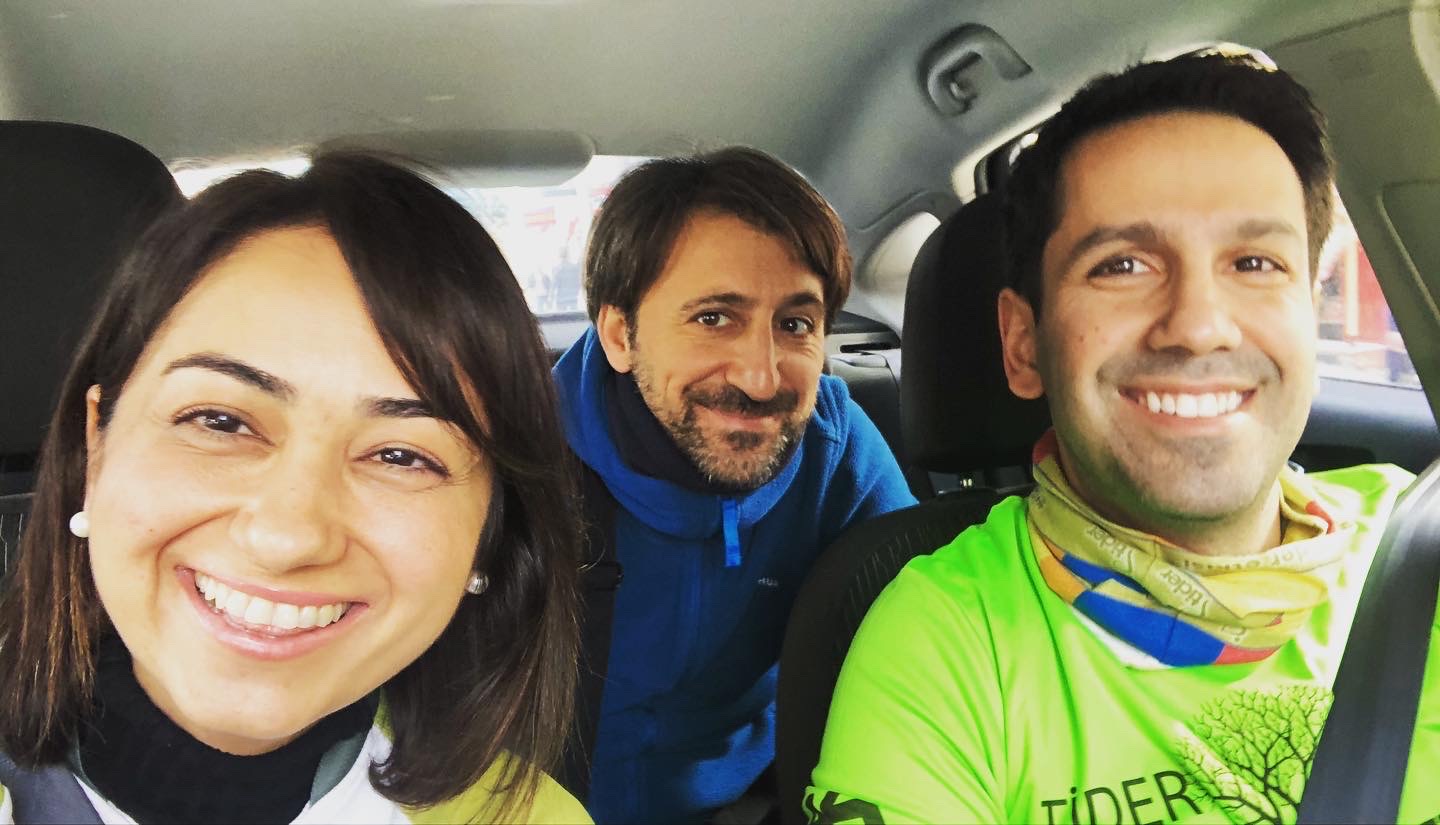
We were all surprised when we arrived at the Divan Hotel in the city center. This wasn’t the Divan Hotel we knew, owned by the Koç Group. Yes, its name was the Divan Hotel, but the building was very different, more like a hotel-like guesthouse. Of course, as I entered the hotel, I joked, “Welcome to the Özdivan Hotel.” Before entering, Burcu asked, “Should we stay at a different hotel?” Serkan, in his polite tone, said, “Mr. Serhan, you know I have kids. This building won’t be a problem, will it?” At first, I thought he was joking, but then I realized he was serious. When you think about it, he was right. Serkan has a beautiful and sweet daughter and a son. As the father of his children, he had to protect himself. The building was truly shabby.
Those heartbreaking questions
Burcu called a few more places to book a room, and the city was truly packed. Then I took the initiative, parked the car, went inside, and spoke to the receptionist. The man explained that the building was over 50 years old and hadn’t been damaged in an earthquake. Then he used a phrase that really bothered me: “Of course, everything is God’s will.” I couldn’t resist and asked him, “What does God’s will mean? God doesn’t like those who disrupt the balance of nature and build buildings that endanger human life.” I added, “First, build earthquake-resistant and sturdy buildings, then consider God’s will.” The man at the reception desk told me in Elazığ dialect, “Oh, Dad, you’re right.” Then I went upstairs. I looked in both rooms and told Burcu and Serkan, “Let’s just make do here for the night.” Thankfully, they both agreed. I jokingly told Serkan, who had entered the room hesitantly, “If there’s an earthquake, the worst thing is we’ll jump out the window. There’s only one floor.” I saw him looking at me with a grimace. Just kidding, the probability of anything happening is low. The big earthquake has already happened, and at best, we’ll only be hit by aftershocks, and that won’t bring down this building. Don’t worry, it’ll be fine.” Serkan then suggested that we check into the hotel as late as possible. And indeed, that’s exactly what happened. After visiting the TOG volunteers’ tent around midnight, we returned to the hotel around 1:30 a.m. Serkan, who struggled to enter the hotel, fell asleep immediately upon entering the room. Although I tried to calm him down and get him into the building, I can’t describe the bitterness I felt. My heart was racing, “Why can’t they build these buildings the way they should be? Why are they putting people in such danger and making them feel so uneasy?” Then, in the bitter cold of Elazığ, I lay in bed by the window, shivering in our room, where the heating didn’t work properly.
In my last article, I proudly announced the NGO Disaster Coordination Platform. You can find this article at https://www.serhansuzer.com/tr/elazigda-bizim-stklar-tarih-yaziyor . Our platform has accomplished incredible things in Elazığ in terms of helping earthquake victims. In collaboration with public institutions, led by the Governor’s Office, AFAD, and the Turkish Red Crescent, thousands of earthquake-stricken families were provided with basic needs such as food, heating, clothing, and cleaning supplies. They were provided with cooked meals every day. For now, I can say we’ve overcome the acute phase.
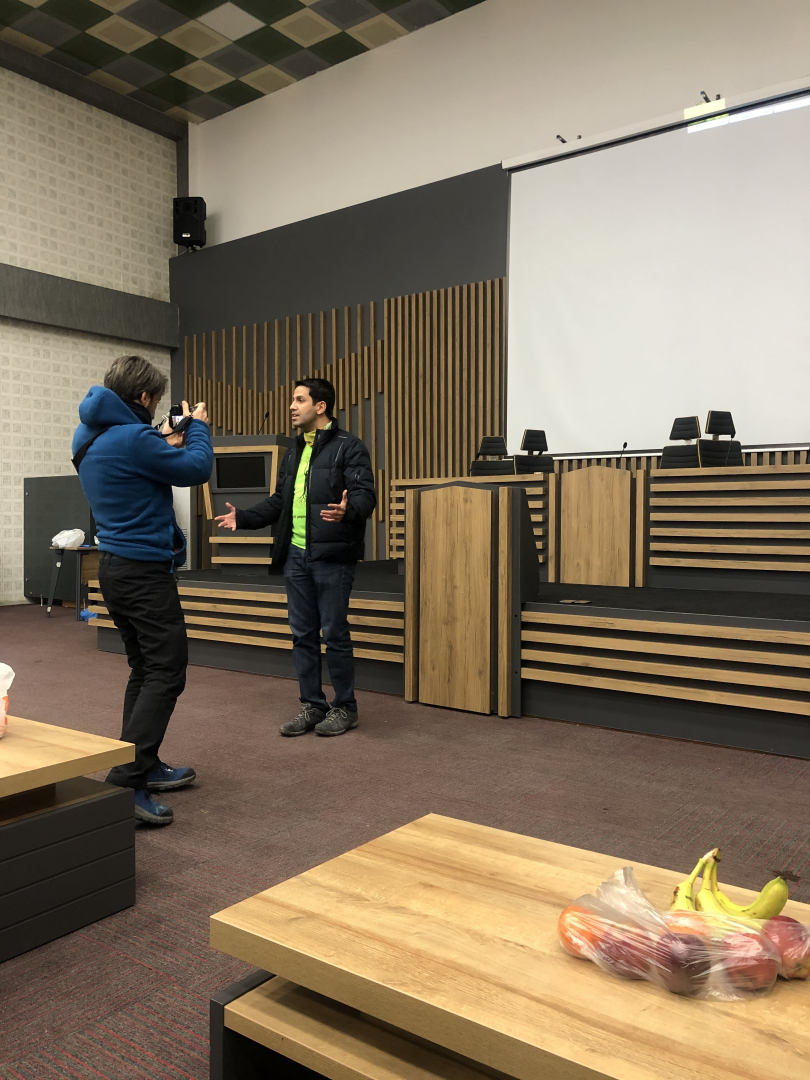
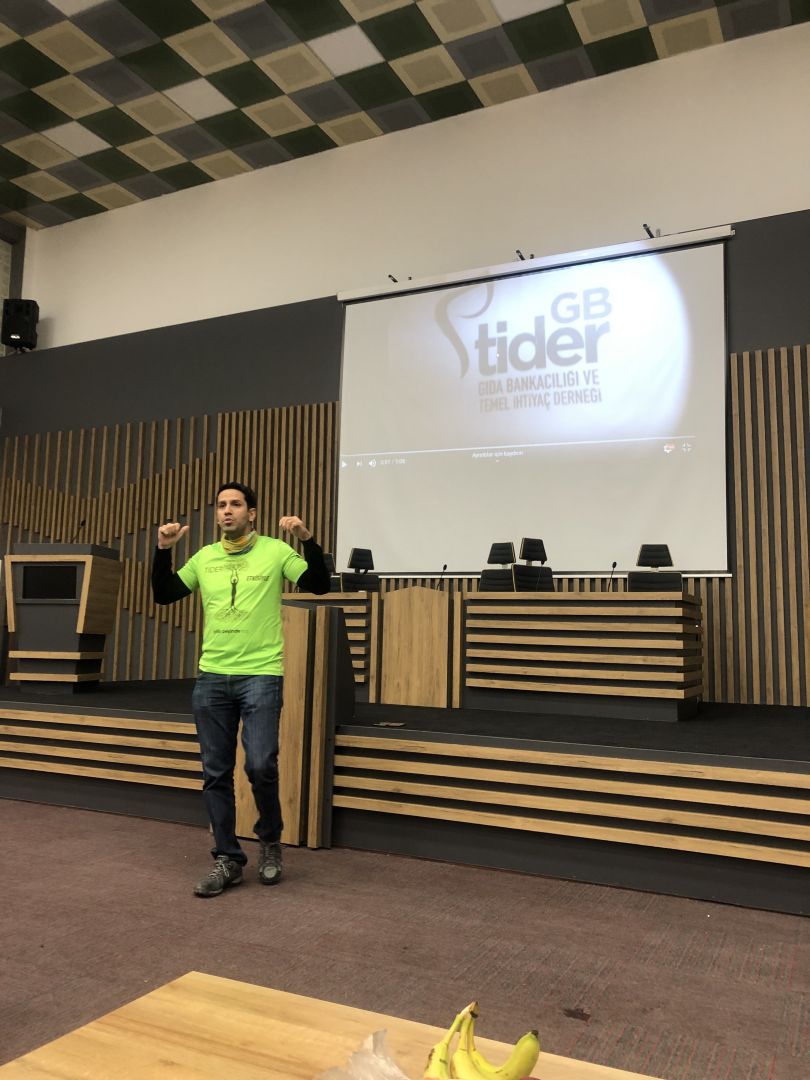
Of course, we were able to accomplish all this thanks to the volunteers who worked tirelessly day and night, regardless of the cold, on behalf of various NGOs. Here are photos from a speech I gave at a meeting held in the early hours of the morning before heading to the field:
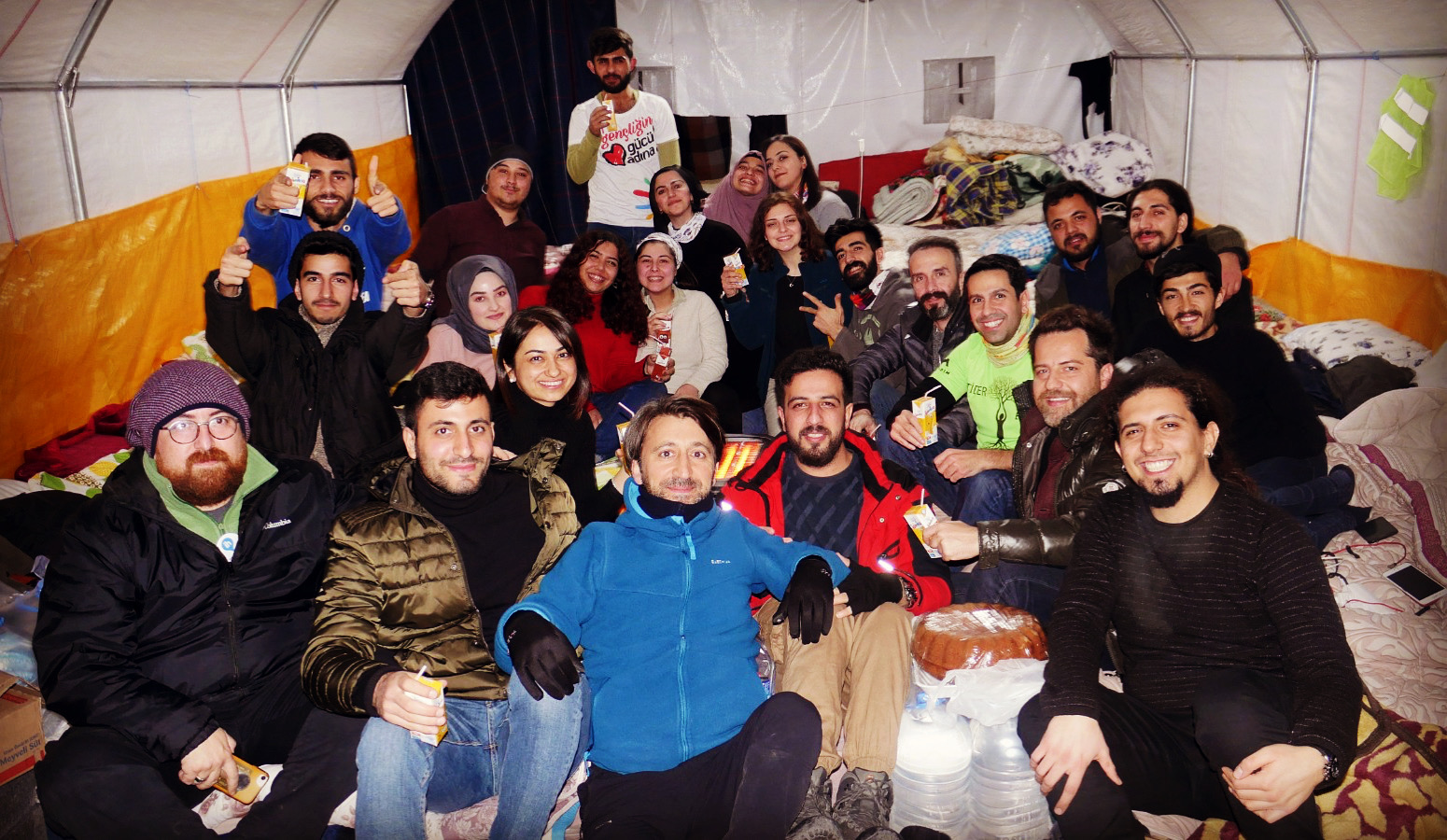
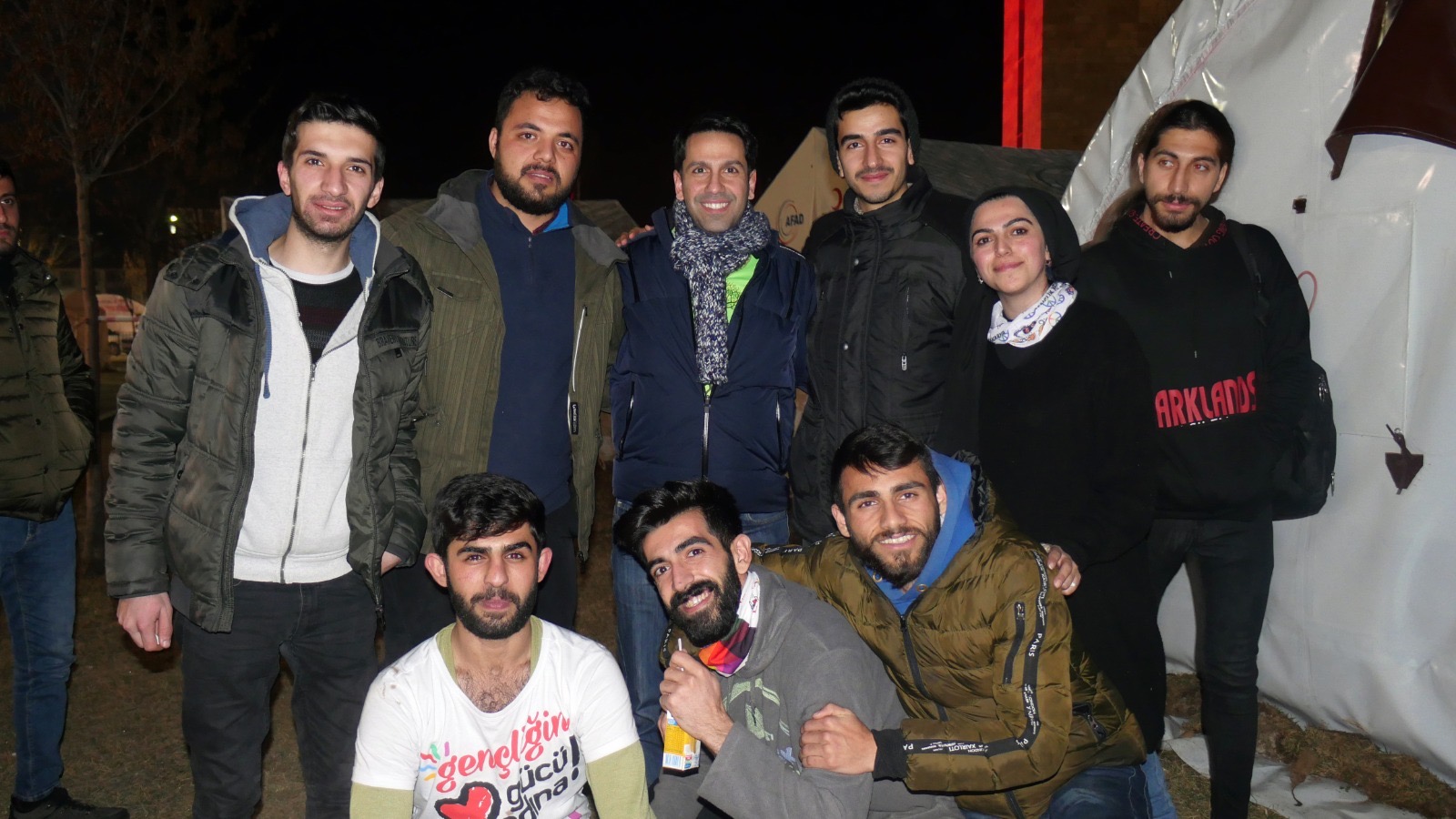
These are photos we took during our visit to TOG (Community Volunteers Foundation) volunteers after work:
Seeking a Formula for Sustainable Support
We are currently focused on meeting individual needs. However, there is still significant need. We are considering a structure that will ensure these basic needs are consistently met and that those in need can become self-sufficient. Our platform, which coordinates with dozens of national NGOs, plans to transition to the next phase by transferring its activities to local NGOs in February. I will later write about what will be done regarding the next phase, which aims to support those in need in a coordinated and sustainable manner.
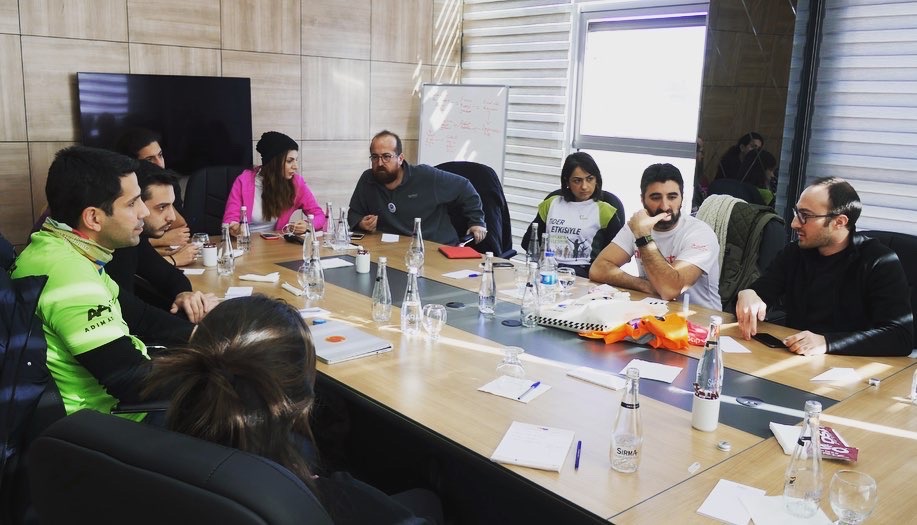
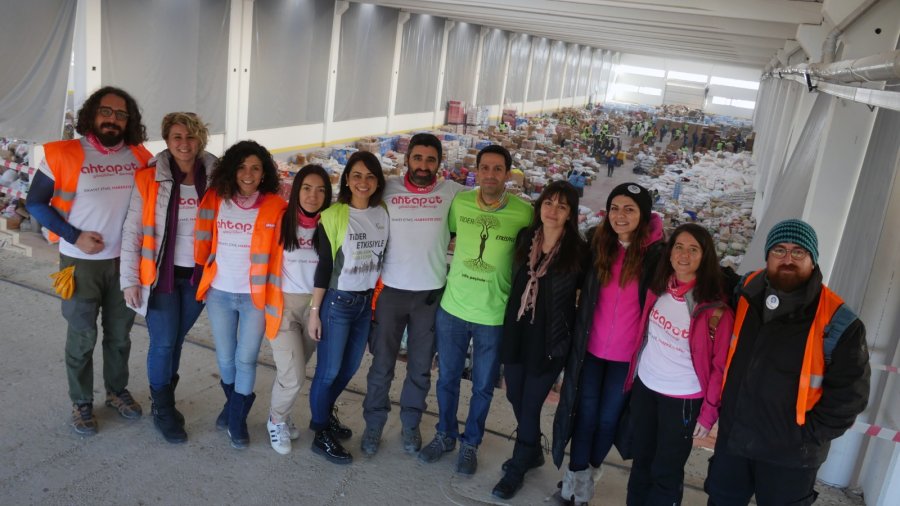
This photo of us was taken at an NGO coordination meeting where we discussed these issues.
So, is what we’re doing enough? Of course not. Metaphorically speaking, we’re extinguishing the fire in collaboration with the public. The main goal here is to prevent the fire from starting. It’s like this: TİDER, the umbrella organization for food banks, has a primary mission of eradicating poverty and ensuring that no one needs such an NGO. Only then will it have fulfilled its mission. Similarly, the NGO Disaster Coordination Platform will have fulfilled its mission only if it doesn’t have to. Of course, disasters can always occur; we need to mitigate their effects day by day, and the key is to prevent loss of life with every natural disaster. For example, Japan experiences over 100 earthquakes a year. Why aren’t there any deaths reported from earthquakes in Japan? The answer is simple. Because they make all buildings, low-rise or high-rise, earthquake-resistant. So, it’s not the earthquakes that kill our people, but the buildings that are not earthquake-resistant.
From my first earthquake-related blog post to today…
Our citizens, who have survived, are unable to enter their severely damaged buildings. Everyone experiences the same anxiety, just as Serkan and Burcu did. Our citizens in the earthquake zone are struggling to find shelter and heat. So, even if they manage to save their lives, they continue to suffer because they can’t enter their homes. And then, the public sector and NGOs are scrambling to fill this gap.
It’s a tragic coincidence that the first post I wrote on my blog was also an earthquake post. I’ve always wanted to write a blog like this since the early-2000s. The Van Earthquake prompted me to start one, and I began writing to share my thoughts and experiences.
In this post, which I wrote after the Van Earthquake of 23 October 2011, I discuss the 17 August 1999 earthquake, the first and greatest earthquake trauma of my life. You can read this article at https://www.serhansuzer.com/tr/bir-depremin-ardindan . In the last section, I conclude with the sentence, “If you’re asking, ‘So, what should we do?’ I’ll answer that later.” However, I realized I still haven’t answered that question. It’s my shortcoming that I haven’t written about it for so many years. So, I’m answering that question now. In my opinion, what needs to be done:
1) Resilient Building Solutions
The first priority is very simple. We need to stop building poorly constructed reinforced concrete buildings that look like matchboxes. We need to build buildings that will not cause our citizens any anxiety during an earthquake. Because they should know that even a magnitude 10 earthquake will not cause any problems with the building. This is possible with building techniques. Look at Japan. Do buildings collapse like ours in Japan, which experiences over a hundred earthquakes a year? In my opinion, we can even surpass the Japanese in building technology. We just need to set high standards and not compromise on these standards no matter what. Let’s focus on continuously improving our technology. The criteria for building techniques should be defined as follows:
- Materials that can absorb and mitigate shock, such as steel, wood, and hard plastic, and that are flexible, should be used. Another characteristic of these materials is their compatibility with the circular economy. This means that if you want to renovate your home, you can recycle these materials and use them for another purpose.
- We need to stop building multi-story buildings. I think we should focus on single, two, or maximum three-story buildings.
- These buildings should be designed as self-sufficient buildings; for example, each building should have solar panels on its roof and meet certain insulation standards. Another requirement for self-sufficient building designs is that energy, water, and food can be obtained, respectively, from the building and/or its surroundings.
2) New City Designs
New cities with a population of no more than 1 million need to be designed. The city’s infrastructure should provide a certain level of comfort and withstand all potential disasters. More specifically, rather than concentrating everything on Istanbul and its surrounding areas, it’s necessary to utilize the many vacant areas in Anatolia and even plan new cities in Thrace that are fit for purpose. For instance, it’s possible to relocate textile factories and workshops from Merter in Istanbul to the regions around Adana and Şanlıurfa, where cotton, the raw material for this sector, is produced. In these areas, we need to design cities with a population of no more than one million, each two or three stories high and self-sufficient, with gardens large enough to produce agricultural products. Of course, buildings like hospitals, shopping malls, and gyms should not be unnecessarily multiplied for profiteering, and instead, they should be built exactly as planned.
3) A true urban transformation
I just mentioned the need to design new cities with complete infrastructure, robust buildings, and a population of no more than 1 million. So, what will we do with existing cities? We will subject them to true urban transformation. Buildings should be lowered, not raised. To ensure that no one is deprived of their rights, newly designed cities should be allocated apartments from those already built. In other words, instead of the scattered apartments in large cities, property owners could be provided with garden-filled, self-sufficient homes integrated with nature in different cities of their choosing. Unfortunately, the current urban transformation has been a profit-driven transformation. This mentality absolutely needs to change. Yes, problematic buildings need to be demolished. However, rather than building taller mass housing in their place, we can achieve balance by building durable, earthquake-resistant, maximum three-story homes, and offering housing options in different areas to those left behind.
4) Engineer Contractors
Residential buildings should be built by licensed civil engineers who will never violate standards, rather than by contractors who are not primary, secondary, or high school graduates and are not engineers. Construction should be banned for those who remain. A civil engineering degree should be required to become a construction company owner. A system should be established where even the slightest mistake can result in their licenses being revoked and they will never be able to build again.
Engineering standards are particularly high in some countries. Canadian engineers are a prime example of this. In Canada, engineers have a Code of Ethics, much like the Hippocratic Oath for doctors. Everyone in this profession must learn the rules word for word and follow them to the letter. For details, please see https://engineerscanada.ca/publications/public-guideline-on-the-code-of-ethics . We need to establish a similar system for engineers. Anyone who fails to comply with these rules will be immediately disbarred from the profession. Engineering is a serious business, and human lives are at stake after completion.
5) Contemporary urban planning
We have no connection to urban planning. In developed countries, urban planning has logic. For example, in the United States, roads run parallel to each other, leaving square and rectangular areas at intersections. In contrast, in France, you see urban planning based on roads connecting to specific centers. Here, the prevailing approach is one where everyone uses whatever they can find as they please, turning repeatedly to add extra floors. Our people, if planning allows, immediately pile concrete on the smallest piece of land they find. We need to change this backward system as soon as possible. Otherwise, our citizens who struggle to find assembly areas during earthquakes will continue to be subjected to inappropriate suggestions from some politicians, such as, “If there’s no available space, take shelter in shopping malls.”
6) Disaster training
Every citizen of the Republic of Turkey is required to receive earthquake and first aid training. In fact, this training should be provided from a very young age. You never know when or where it will be needed.
7) The right building in the right place
Soil surveying is crucial. Millions of people think it’s a feat to build in streambeds and other places that will destroy the natural environment. Strict regulations need to be established on this issue. Buildings in areas with a significant earthquake risk must be built with extra strength and building density must be reduced.
8) The public must take active initiative
Last weekend, while visiting the site, I ran into officials from the Ministry of Environment and Urbanization. We somehow struck up a conversation, and the following exchange took place (I’ll leave the interpretation to you):
Serhan: What are you inspecting here?
MEU Official: We assess the damage to buildings. We have three categories: ‘Slightly damaged,’ ‘Moderately damaged,’ and ‘Heavily damaged.’
Serhan: How do you make these assessments? I don’t see any technical equipment on hand.
MEU Official: We use our best judgment. For example, if we see cracks in the columns, we report them as ‘severely damaged.’
Serhan: So, let’s say you report a building as severely damaged. What happens after you report it?
MEU Official: We tell the residents to vacate the building.
Serhan: Where are those people living? Whose responsibility is it to build a new building in its place?
BID Official: We don’t know. Our just job is to identify and report.
I think the state needs to be much more proactive and take the initiative in these matters. There’s a lot to say on this matter. However, I’ll stop here for now to avoid being perceived as pontificating.
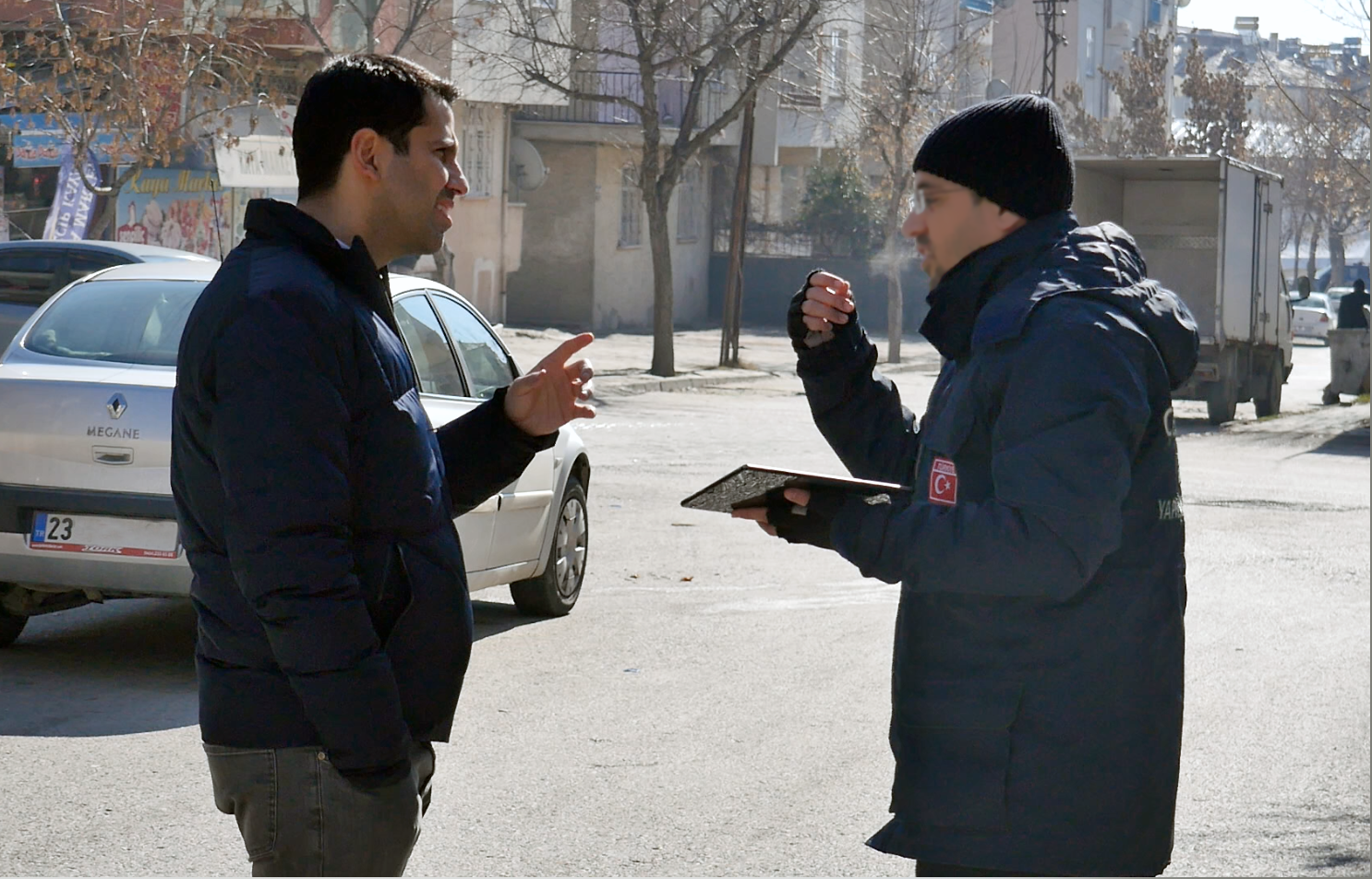
The moment the above dialogue took place (Serkan took the picture without my knowledge)
9) Inspections Must Be Conducted Without Compromise
Strong inspections of buildings must be conducted before, during, and after construction, both by the public and by relevant NGOs dedicated to this issue. If even the slightest deviation from standards is detected during these inspections, the relevant parties must be punished with the harshest penalties.
10) Support for R&D Should Be Increased
In addition to construction techniques and materials engineering, studies on earthquake pre-determination and simulations need to be supported and further progress to be made. Therefore, both the public and private sectors need to increase R&D budgets to support these types of technologies. Of course, work should be results-oriented, and experts in this field should be provided with every opportunity.
11) Training is Essential
It might sound cliché, but “training is essential!” No matter how technically superior you are and how you use the best technologies, you can’t achieve anything when the human element is at play. If you want to make a difference, you need to take training very seriously so that you can encourage people to insist on what’s right.
There’s much to be done in the short-, medium-, and long-term regarding training. In the short term, everyone can be trained in topics like earthquake awareness and first aid training. In the medium term, you can establish adherence to standards in all situations through technical training. In the long term, you can address cultural deficiencies. For instance, you can establish some fundamental principles, such as not lying, not deceiving others, not pursuing petty interests, and not compromising human health. In some areas, you can only achieve the desired results when the generation changes. However, we need to start working towards change today.
That’s all I have to say for now. Finally, I’d like to share an experience.
A very painful testimony
After working for a while as an AKUT volunteer during the 1999 Gölcük Earthquake, we returned to Istanbul, gathered a team from the family-owned construction group, and redeployed to the region. Because of the dire need, we decided to deploy as a team to Değirmendere. When we arrived, there was no one left to rescue, but the building debris was so devastating that people couldn’t even retrieve the bodies of their loved ones. Unfortunately, we recovered dozens of bodies during our work in that area. One in particular always haunts me.
In Değirmendere, some girl’s hair was spotted between the reinforced concrete blocks of a collapsed building. Her father, covered in rubble from the ruins, was crying out in protest: “Get my daughter out, get my daughter out, please, someone help me, get my daughter out!” The girl had been trapped for days under a concrete block about six or seven stories high, her long, wavy brown hair dangling between the two blocks. Her father, while pleading for help, clutched a framed picture of himself and his daughter to his chest, occasionally showing it to us.
We managed to extract the girl’s body after an hour and a half of work, breaking through the concrete blocks. Words cannot describe the charred body of this beautiful 16-17-year-old girl, her father’s cries, and the general stench of corpses in Değirmendere. The entire construction crew was in shock, yet they carried out their work flawlessly, as professionalism dictates. Recovering dozens of bodies in three days of work inevitably takes a psychological toll.
But the thing that most bothered me was how they managed to build such a building. I’m not exaggerating; some concrete wasn’t concrete. It was crumbling away instantly. Our construction team was discussing how many things, from the column system to the construction itself, had been done incorrectly and in violation of standards. As always, I was looking at the bigger picture.
Construction techniques, standards, and urban planning in the country absolutely had to change. Naturally, my mind was racing with thoughts about how this could happen.
The disaster in my grandmother’s hometown of Elazığ shook me to my core. All those painful memories flashed before my eyes as I walked around the field. Today, I’m in a very different position. Instead of Serhan, a graduate right out of university, I’m Serhan who’s become capable of initiating these radical changes. I’m ready now. Despite all the challenges I’ve faced, I will continue to do what needs to be done, demonstrate it, and ignite the spark of change.
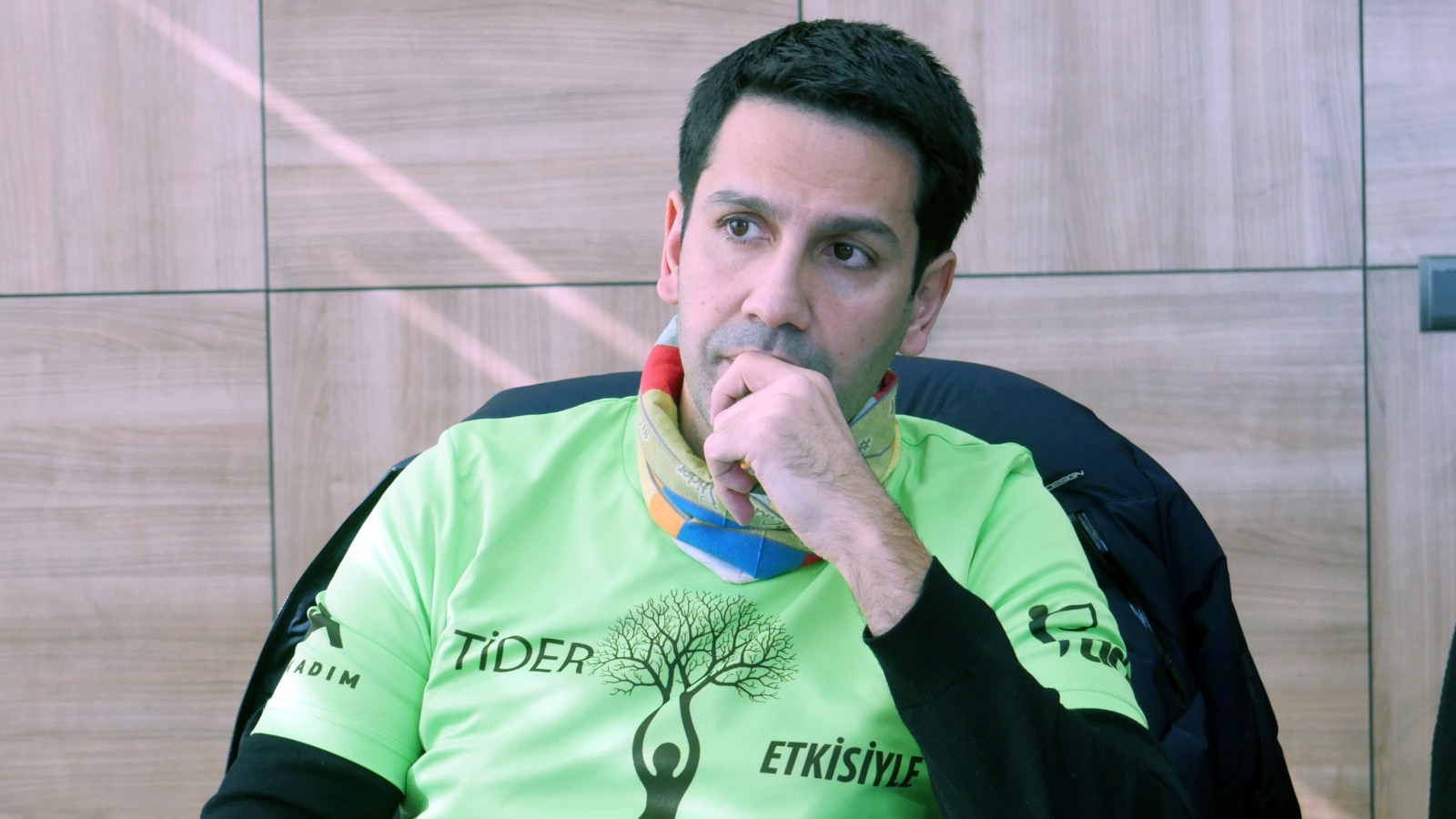
While pondering all these issues, Serkan captured this image.