When Aslıhan Niksarlı, whom I know from my circle of nature lovers and whom I can even call “a valued friend,” first told me they were planning to establish the Roots & Shoots Association (R&S) in Turkey, I remember saying, “That’s a great idea. I’m stepping down from the association’s board of directors these days. I’m planning to take a break from my NGO work for a while, but I’d love to be there for you in any way.” Aslıhan, who studied anthropology and specializes in primatology, founded the association she’d long dreamed of and subsequently began working with all the nature lovers in her circle to create wonderful projects. Before I comment further, let’s get to know the Roots & Shoots Association.
Roots & Shoots is a global program developed by the Jane Goodall Institute for working children and young people, designed to inspire their communities and lead change. It’s a structure where the power and responsibility to create solutions to problems lie with children and young people. Roots & Shoots works for the environment, animals, and people, and in doing so, aims to inspire children and young people, empowering them with strength and courage. It creates space for children and young people to pursue their passions, act together, and be the change the world needs. It supports initiatives that aim to live in peace and harmony not only with people but with all elements of the world. With Roots & Shoots, we move from thought to action; we see together that actions create real change (see: https://rootsandshootsturkey.org/roots-shoots/ ).
The Roots & Shoots Turkey Association is doing great work in our country, especially in raising awareness among children and young people. I will write a detailed article about the association later. In this article, I will touch upon Jane Goodall’s visit to Turkey, which inspired the association’s vision. Before delving into the details of the organization, let’s get to know the wonderful person Jane Goodall:
Who is Jane Goodall?
Dame Jane Morris Goodall DBE (born Valerie Jane Morris-Goodall; 3 April 1934), formerly Baroness Jane van Lawick-Goodall, is a British primatologist and anthropologist. After studying the social and family interactions of wild chimpanzees for 60 years, she is considered the world’s foremost expert on chimpanzees. Goodall first traveled to Gombe Stream National Park in Tanzania to observe chimpanzees in 1960.
She is the founder of the Jane Goodall Institute and the Roots & Shoots program and has worked extensively on conservation and animal welfare issues. As of 2022, she has been serving on the board of the Nonhuman Rights Project. In April 2002, she was elected a United Nations Messenger of Peace. Goodall is an honorary member of the World Future Council.
Goodall studied the social and family life of chimpanzees, beginning with the Kasakela chimpanzee community in Gombe Stream National Park, Tanzania, in 1960. She found that “humans are not the only ones with personality, rational thought, and emotions like joy and sadness.” Furthermore, even hugs, kisses, pats on the back, and tickles are what we consider “human” actions. Goodall insists that these gestures are evidence of “the close, supportive, loving bonds that develop between family members and other individuals within a community and can persist over a lifespan of over 50 years.”
A global leader in her field
Goodall founded the Jane Goodall Institute (JGI), which supported the Gombe study, in 1977. Jane is a global leader in efforts to protect chimpanzees and their habitats. With nineteen offices worldwide, JGI is widely recognized for its community-based conservation and development programs in Africa. Her global youth program, Roots & Shoots, began in 1991 when 16 local youth met Goodall on her back porch in Dar es Salaam, Tanzania. They were eager to discuss a range of issues that deeply concerned them, issues they knew from firsthand experience. As of 2010, the organization had over 10,000 groups in over 100 countries.
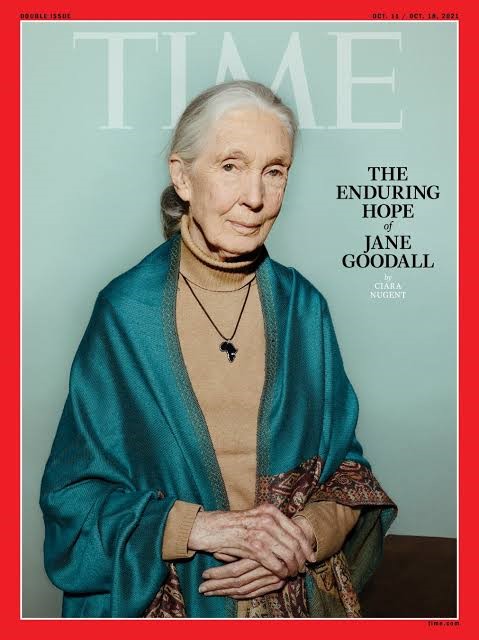
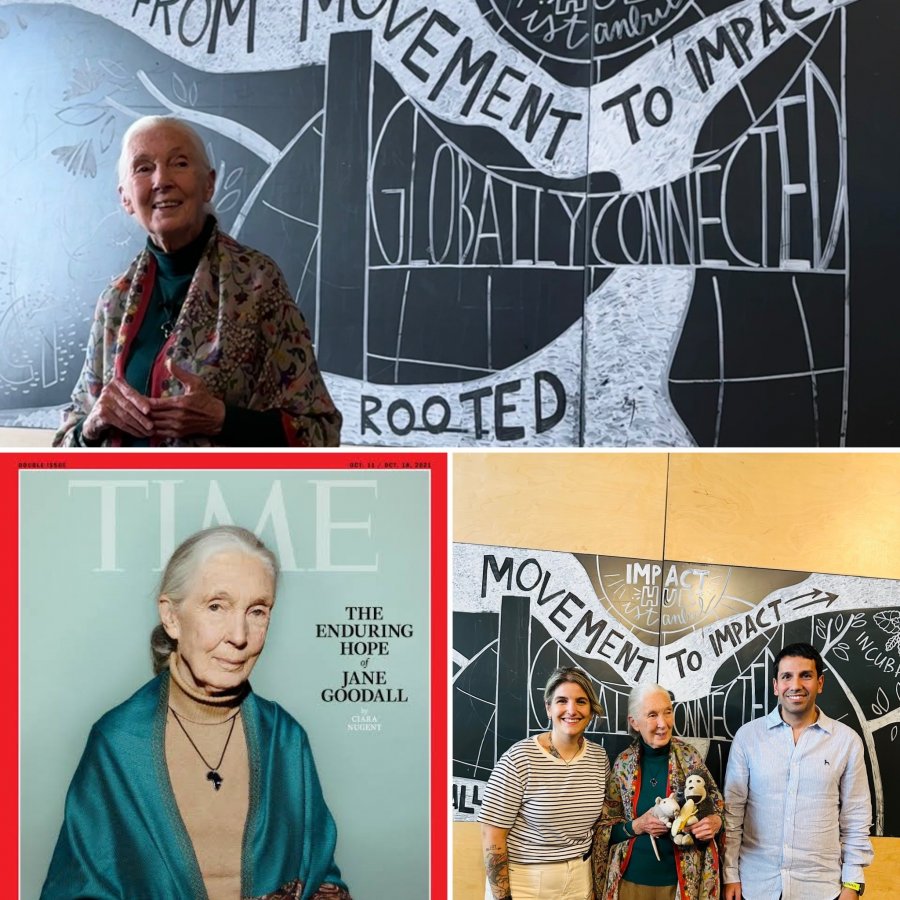
Jane Goodall, who has made significant contributions to the cause of nature and animals, even graced the cover of Time magazine.
In 1992, Goodall founded the Tchimpounga Chimpanzee Rehabilitation Center in the Republic of Congo to care for chimpanzees orphaned by the bushmeat trade. The center now houses over a hundred chimpanzees on three islands.
In 1994, Goodall founded the Lake Tanganyika Basin Afforestation and Education (TACARE, or “Take Care of Yourself”) pilot project to protect chimpanzee habitats from deforestation by reforesting the hills around Gombe, while also educating neighboring communities about sustainability and agriculture. The TACARE project also supports young girls by providing them with access to reproductive health education and scholarships to finance their university education.
These are just a few examples of Goodall’s long and active life. Goodall devotes almost all her time to advocating for chimpanzees and the environment, traveling approximately 300 days a year (see: https://en.wikipedia.org/wiki/Jane_Goodall ).
3-Day Istanbul Program
Now, let’s talk about Jane Goodall’s Istanbul program. The Roots & Shoots Turkey Association’s communication channels announced that Goodall will be in Istanbul on Friday, 3 May, and will participate in three separate programs on 4 – 6 May:
1) An opening speech at an event organized by the British Consulate General at the Pera Museum on Saturday, 4 May at 2:00 PM.
2) A special meeting with R&S friends (members, supporters, management, etc.) at the Impact Hub on Sunday, May 5th at 3:30 PM.
3) A meeting with students at Bilgi University on Monday, 6 May.
That weekend, I had Saturday and Sunday available. Initially undecided (I usually do both when I can’t decide between two options), I decided to attend both the Pera Museum and the Impact Hub event. I only had work scheduled on the Anatolian side of Istanbul until noon on Saturday. Traffic would have made it difficult to make it, but my initial goal was to attend both events. One was to listen to the opening speech at a formal event, while the other was to interact with nature lovers in a more intimate setting.
I was able to attend the enjoyable second day’s program.
Saturday arrived. Normally, my work would finish around noon, but it took longer, and I was able to leave around 1:00 PM. Meanwhile, I kept receiving messages saying, “Please arrive early. It will be very crowded. There’s no registration. First-comers can get a seat.” When I checked my navigation, the total time had exceeded 1.5 hours, so I decided, “You can’t be late for an event like this,” and made the crucial decision. I informed Aslıhan and didn’t attend the talk that day. The next day, I was ready for an event at the Impact Hub where R&S friends would gather.
I arrived at the Impact Hub about 45 minutes early. After meeting familiar faces and engaging conversation, we took our seats.
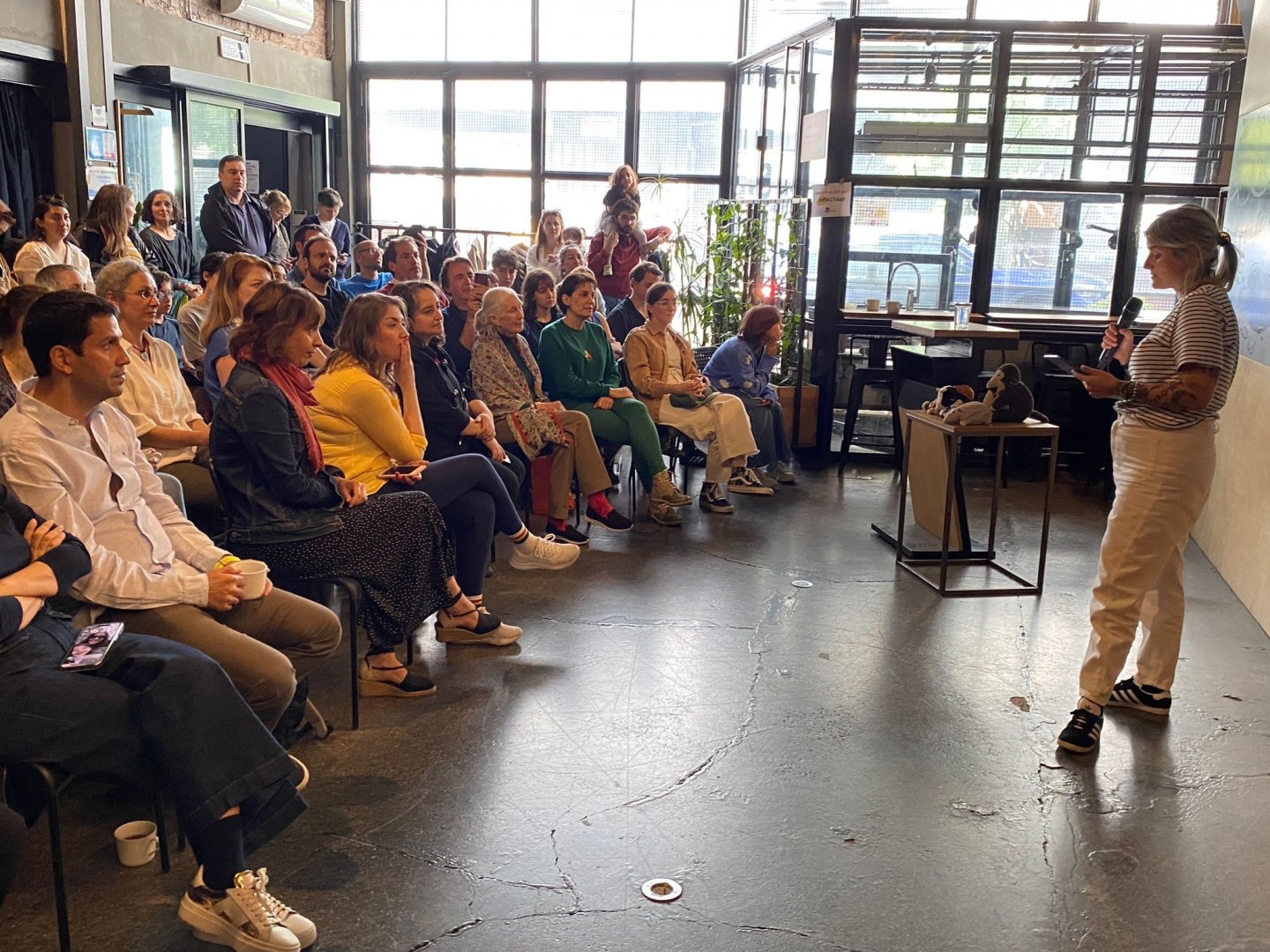
Jane took the stage on time and delivered a wonderful speech. I’ve summarized my memories of her speech below:
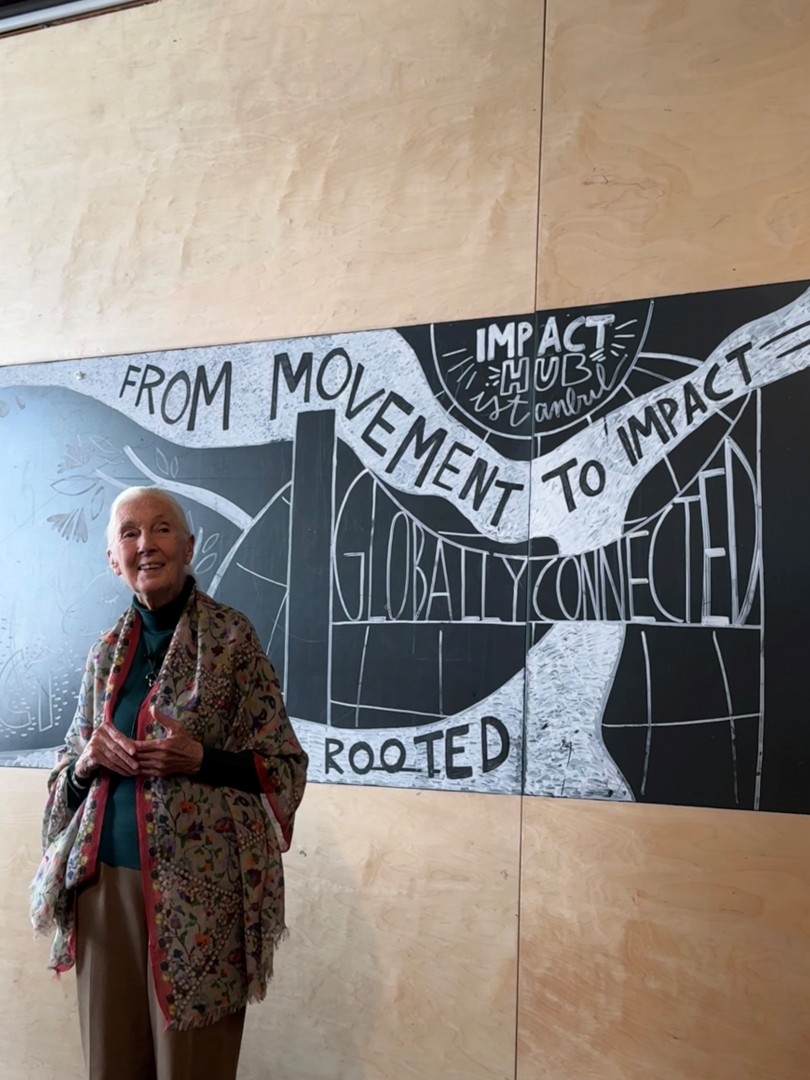
- Her first contact with animals occurred on the farm she and her family visited. Back then, she was curious about how chickens laid eggs and would ask her mother, “Where do those eggs come from?” When 4-year-old Jane didn’t get the answer she wanted, she decided to find out for herself. She hid in a chicken coop and disappeared for 3-4 hours. While her family was searching everywhere for her and was about to call the police, she received the answer she was looking for when a hen laid an egg in front of her. She ran to her mother with great joy. She told her mother about her experience, saying, “I know where eggs come from now.” Her mother congratulated her and supported her for this action. “From that day on, I knew there would be a special connection between me and animals. My mother’s encouragement and support for my four-year-old self was a turning point in my life,” says Jane Goodall. She also said that when she first went to Africa, she was agonizing over how she was going to finance all her needs, but her mother
- Did you know that Jane Goodall earned her doctorate without going to university? She also included this topic in her speech. Cambridge University found her work invaluable and made the offer. He explained that she wasn’t sure at first but somehow accepted the offer and successfully completed her doctorate at Cambridge.
- She placed toy animals in front of him and commented on different animals. For example, the monkey eating a banana said that the toy was given to her by someone very dear to her and that it had been her companion for decades.
Pigcasso, the painter pig
- She picked up another toy pig and said, “Do you know, pigs are one of the smartest animals. Their IQ is far above that of a normal animal,” and gave the example of “Pigcasso,” a pig who creates wonderful paintings with a paintbrush. I went to Pigcasso’s website and looked it up; it’s truly incredible: https://pigcasso.org/
- She said that although cows aren’t very intelligent, they are the most compassionate and loving animals. “You can pet a cow for hours, and they’ll respond in the most beautiful way. Knowing this, I first became a vegetarian, and then, after witnessing the terrible conditions under which the cows’ milk was harvested, I decided to become vegan. I’m vegan now,” he said.
- She recounted the moment he first encountered apes, when she tried to approach a chimpanzee and, after observing the forest for hours, decided to offer one of the ape’s favorite fruits. When she offered the fruit, the ape took it from her and shook his hand in thanks. “That moment was magical,” she said. “I realized that apes, just like humans, made these kinds of gestures back then.” She also emphasized that apes, just like humans, have kind hearts and bad ones, and that it’s possible to be attacked by a monkey.
- She said that dogs are her favorite animals because they give unconditional love. She even held a very special celebration in Florida, celebrating her 90th birthday with over 70 dogs. “It was a wonderful experience,” she says.
My questions and answers for Goodall
After Jane Goodall gave her speech, she was asked questions for about half an hour. She answered every question as best she could in her characteristically calm style. I asked her two questions in quick succession. I’m sharing my questions and answers below:
- Have you seen the Planet of the Apes films? If so, what did you think?
Yes, I watched the films. I especially liked the first film in the series. A scene in that film made me laugh out loud. At one point, the apes gang up on the scientist who was experimenting on them and lock him in a cage. Technically, such a thing is possible, and I remember smiling when I saw that scene. However, the ending of the first film in the series, which I also liked, was ridiculous. I didn’t like how they suddenly ended the film with the classic Hollywood model.
The second film in the series was worse. I think the scenes, especially from the second half onward, have nothing to do with real-life apes.
- How can we provide a good life for animals living in the wild around the world? How can we ensure they live a good life?
This might be a long answer, but I can say this: wildlife conditions, country environments, people, demographics, and resources vary around the world. Therefore, I can answer this question differently from country to country, as each country may have its own unique solutions.
But in general, you can continue to support the Roots & Shoots Association, which works towards an important mission in different parts of the world, as you do now. I believe the association and its programs will make significant contributions to wildlife by raising awareness among children and young people.
I will write about wildlife in Turkey.
I agree with Goodall’s answer to my second question; each country has its own unique dynamics. I will save my thoughts on how we can normalize the increasingly difficult conditions for wildlife in Turkey and give them a good life for another blog post.
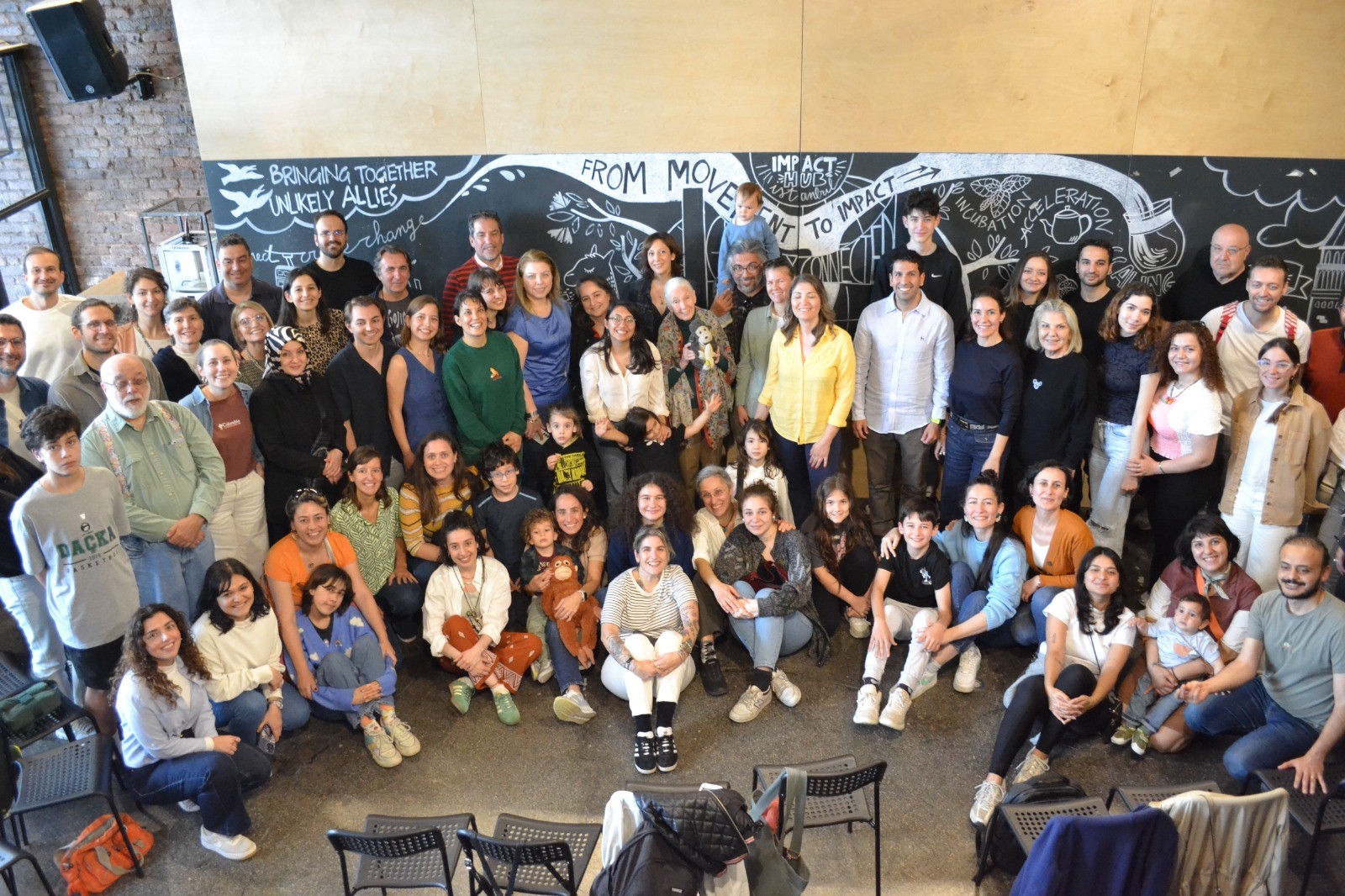
After this wonderful, positive speech by nature advocate and ethologist Jane Goodall, we moved on to taking photos.
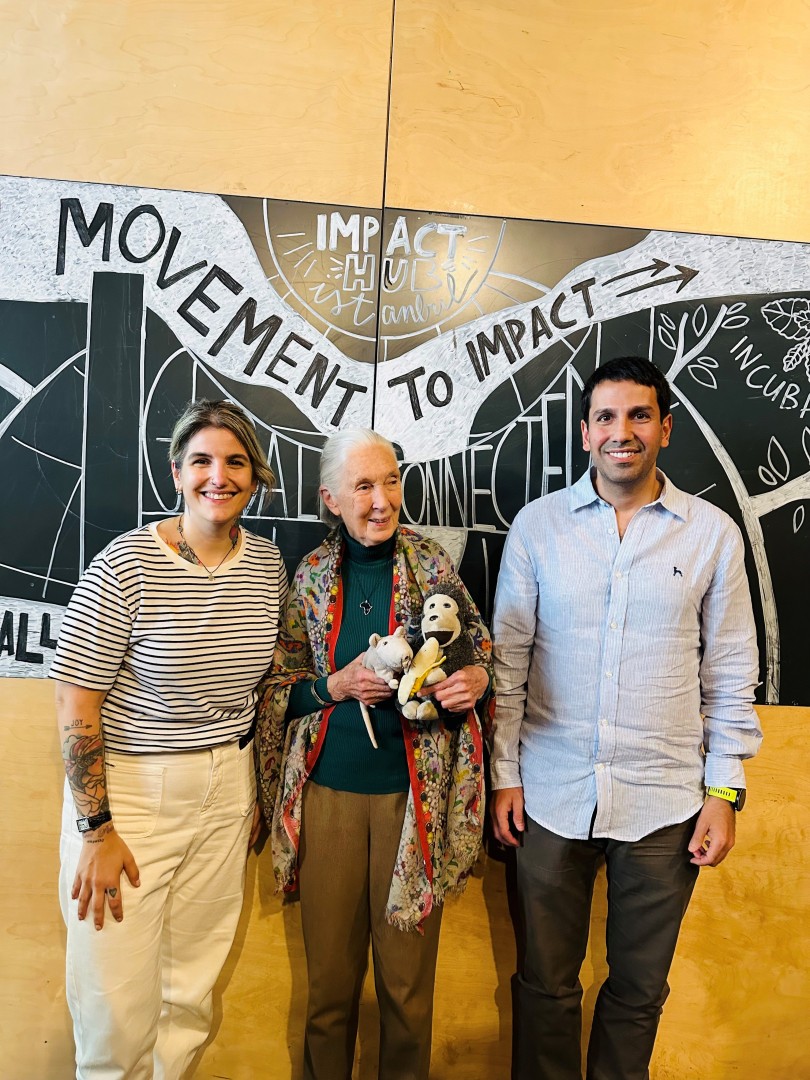
I would like to take this opportunity to thank the association’s founder, Aslıhan Niksarlı, the other founders, members, and all the stakeholders who contribute to this organization. They have done a wonderful job. I wish them continued success.
Tag: education