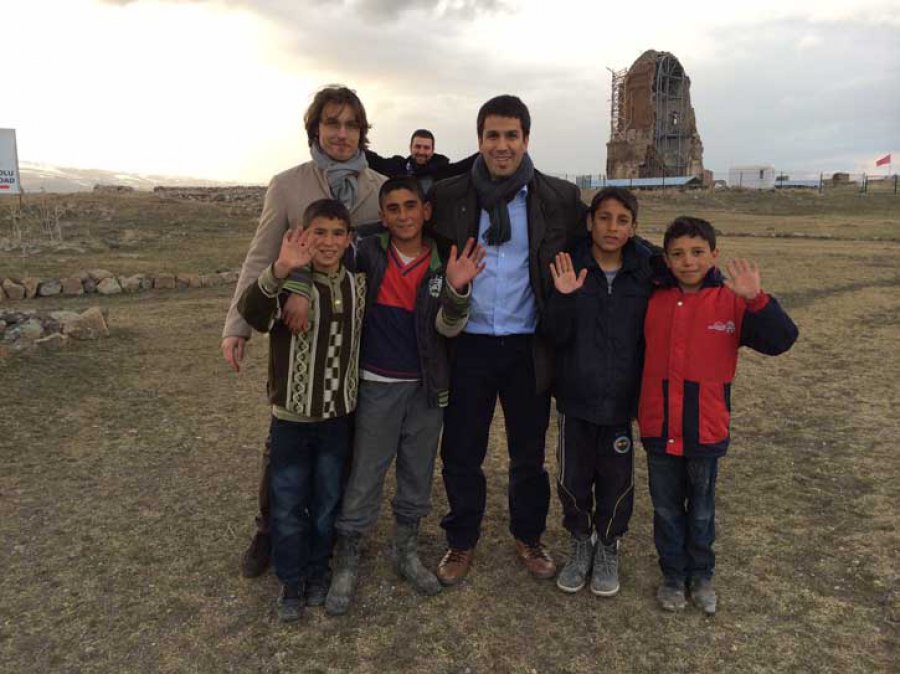
Of course, the children from Kars who served as our volunteer guides also played a special role in this discovery.
On my last visit to Kars this year, the Ani Ruins were on my itinerary. I was lucky that my luggage was among the first to arrive. Thus, I was able to leave the airport five minutes after our plane landed around 3:00 PM. We didn’t have much time, as it darkened around 5:30 PM. Macit, Ömer, and Alberto picked me up from the airport, and we headed straight to the Ani Ruins. It was the first week of March, so naturally, the atmosphere had changed. The snow had melted, the weather had warmed, and Kars was practically preparing for spring. The next day, we were to ski on the last remaining snow on the hills of Sarıkamış. However, on our way to the Ani Ruins, a place I’d long been curious about, we encountered some intriguing sights. Sometimes we passed through abandoned buildings, sometimes a vast plain greeted us, and sometimes a flock of geese blocked our path.
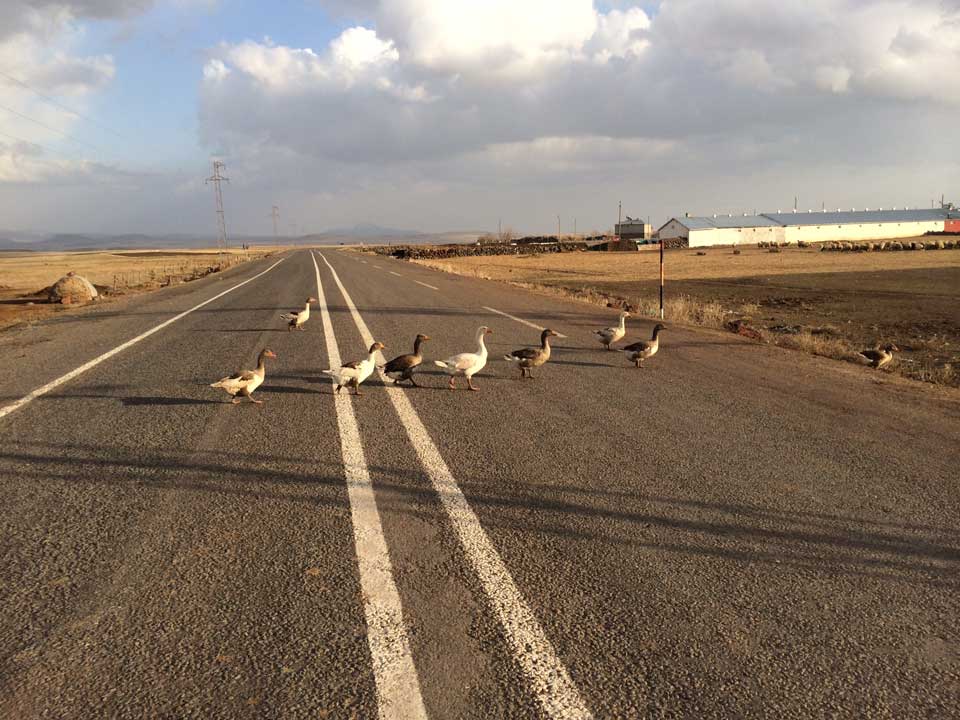
A flock of geese blocked our way. We got out of the car and captured this moment for eternity.
After an hour’s drive, we arrived at the Ani Ruins. However, the gate was closed. We clambered up the side of the city walls to enter. Once inside, we immediately got to work on the art.
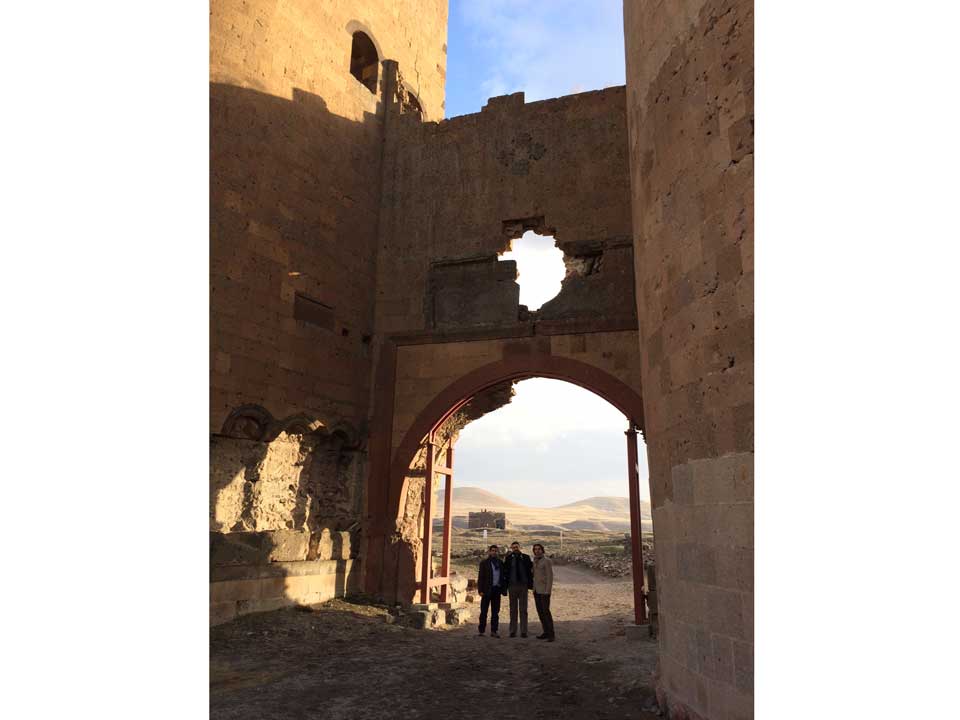
The courtyard that welcomed us as soon as we entered
“Friends, we’re short on time; there’s still plenty to see inside,” Macit warned us.
We understood what he meant when we entered the grand gate. Incredibly beautiful structures and an ancient city greeted us in a vast expanse.
Incidentally, I’d like to briefly share with you the information I read on the Governor’s Office’s website regarding the Ani Ruins:
Located within the village of Ocaklı, 42 km from Kars province, the Ani Archaeological Site is a medieval city built on volcanic tuff within Türkiye, on the west bank of the Arpaçay River, which separates the Turkish Armenian border. As the site was the first stopover point on the Silk Road into Anatolia, it was also a trade center. This is where the ancient city’s wealth stems from, with its earliest history dating back to the 5th millennium BCE.
HISTORICAL DEVELOPMENT OF THE ANCIENT CITY, ALSO LOCATED AT THE ENTRANCE OF THE ANI ARCHITECTURE
Wikipedia provides the following information;
- The first settlement in Ani Ruins began in the Chalcolithic Age, around 5000-3000 BCE.
- Early Bronze Age settlement during the 3rd Millennium BCE,
- Hurrian settlement during the Iron Age in 2000 BCE,
- Urartu State settlement between 900-700 BCE,
- Cimmerian domination around 650 BCE,
- Saka Turks (Scythians) rule 626-149 BCE,
- The city was re-founded by Karampart, a descendant of the Kamsarakan Arsacids, one of the ancient Oghuz tribes between 350-300 BCE,
- Sassanid rule between 430-646 CE,
- Ani and its surroundings fell into Arab hands during the reign of Caliph Omar in 646 CE,
- It came under Bagratli Principality rule in 732 CE,
- Ashot III of Bagratli had the protective city walls built, making Ani the capital of the Kingdom in 966 CE,
- The city fell into Byzantine hands in 1045 CE,
- The city was captured by the Seljuk Sultan Alparslan and annexed to the Şeddadid Principality in 1064 CE,
- Ani fell into the hands of the Georgian Atabeys in 1199,
- In 1226 AD, it became part of the Khwarezm State.
- In 1235 AD, the city was destroyed by the Mongol invasion and later became a provincial center.
- It came under Ilkhanid rule between 1339 – 1344 CE.
- It came under the rule of the Qara Qoyunlu Empire between 1406 – 1467 AD,
- It came under the rule of the Aq Qoyunlu Empire between 1467 – 1516 AD,
- It came under the rule of the Afshar Turks between 1516 – 1534 AD,
- It was annexed to the Ottoman Empire in 1534 AD,
- it remained isolated from the homeland for 40 years after it was invaded by the Russians in 1878 AD,
- It was recaptured from the Russians during the War of Independence in 1921.
Ani was the capital of Armenian rulers from the Bagratuni Dynasty between 961 – 1045. It also contains several examples of Islamic architecture dating back to the 11th – 12th centuries.
The earliest mention of the city’s name dates to the 6th century, as a fortified settlement belonging to Armenian lords from the Kamsarakan Dynasty. After a long power struggle between the Armenian Kamsarakan Family and the Armenian Bagratuni (Bagratid) family, the Bagratids emerged victorious. In 780, the Kamsarakans sold their properties to the Bagratids and emigrated to Byzantine territory.
Bagratid ruler Ashot I was recognized as “King of Armenia / Shahanshah of Armen” in 885 by both the Abbasid Caliph and the Byzantine Emperor. Ashot and his sons first ruled from the city of Bagaran (located near today’s village of Halimcan, 8 km north of Tuzluca), then from Shirakavan (in the Koyucak area of Akyaka), and later from the center of Kars. In 961, Ashot III (953–977) moved the capital to Ani and began building a major city there.
Ani reached its golden age under Smbat II (977–989) and his son Gagik (989–1020). According to tradition, the city’s population surpassed 100,000 during this period. In 1045, the Byzantines captured Ani and ended Bagratid Armenia. Left vulnerable and unsettled, the region surrendered to Seljuk Sultan Alparslan in 1064.
Here are some examples of Ani’s unique historical monuments:
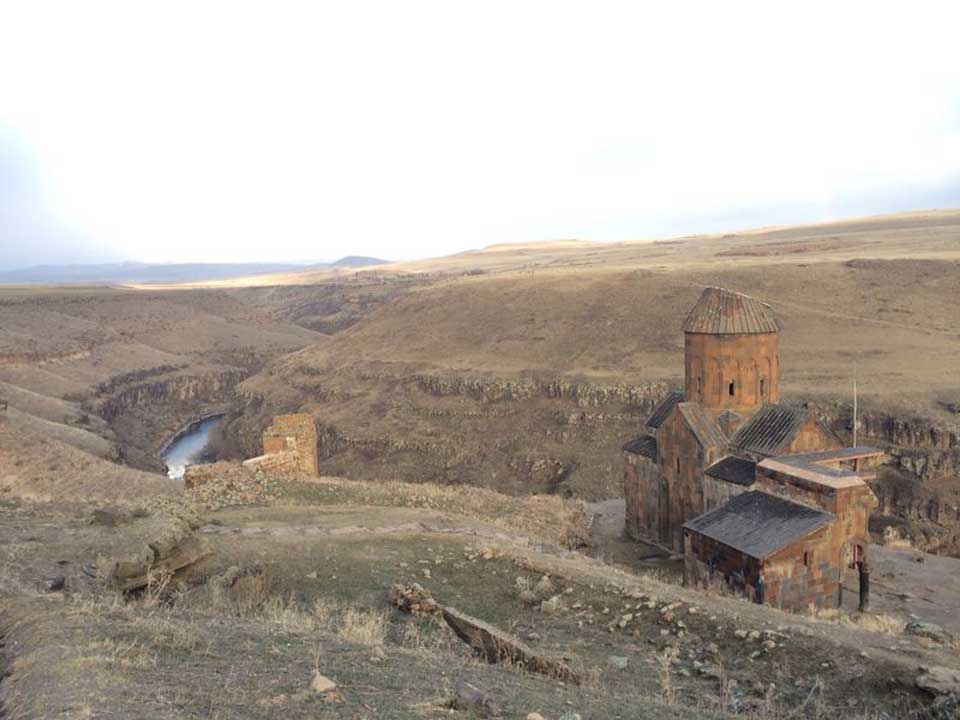
The city is flanked by the Arpaçay Canyon on two sides, while the third side facing the plateau is protected by strong 10th century fortifications. The city wall, about eight churches, and a mosque are among the most prominent structures still standing in Ani. The Lion Gate (Aslanlı Kapı) marks the city’s main entrance.
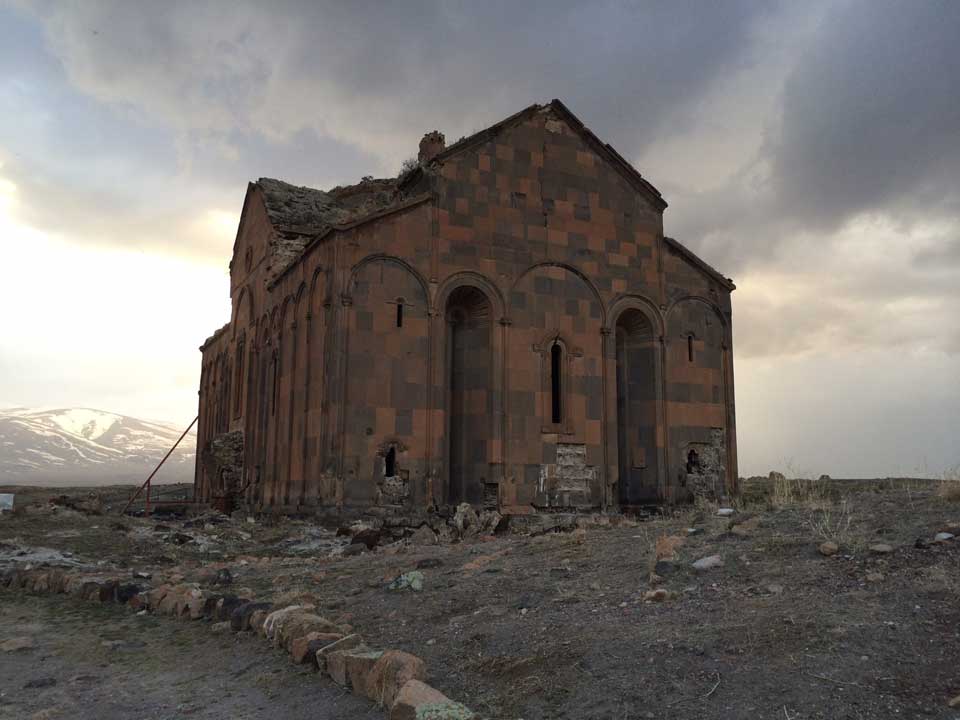
Also known as the Church of St. Gregory, the Cathedral of Ani was erected between the years 1001-1010 by Trdat the Architect, who had earlier reconstructed the dome of Hagia Sophia in Istanbul.
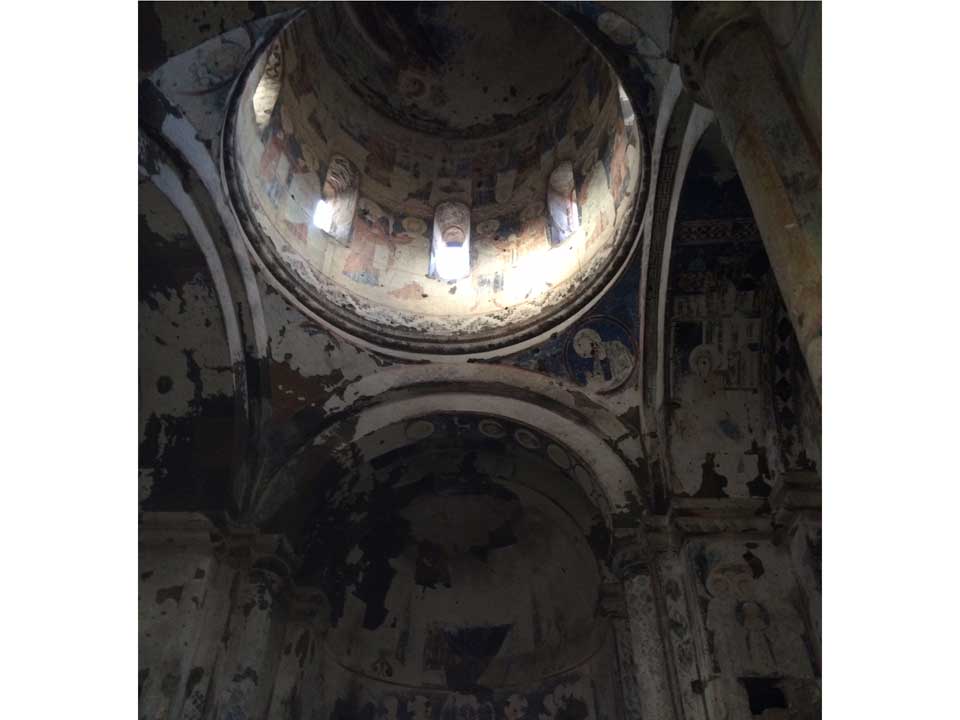
Located in a valley, the Church of Tigran Honents was restored in 1215 and is adorned with richly detailed frescoes characteristic of Armenian church tradition.
Dating back to 1020, the Abughamir Pahlavuni Church features elements inspired by Islamic architecture that were later commonly adopted in Seljuk architecture.
Constructed in 1035, the Church of the Savior (Halaskar / Amenaprgiç) has a circular plan resembling a domed mausoleum.
The Menucihr Mosque stands out as the oldest mosque built on Turkish soil after the Turkish conquest.
Outside the main archaeological zone, on a fortified hilltop, you can see the Church of the Virgins (Kızlar Kilisesi), built by Zakare Mkhargrdzeli.
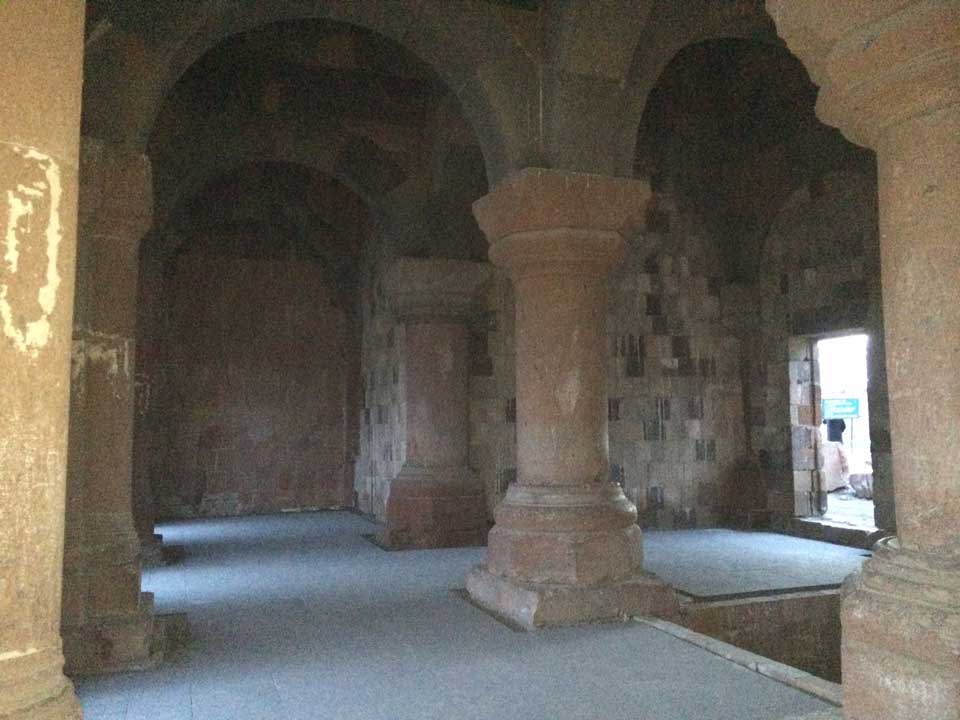
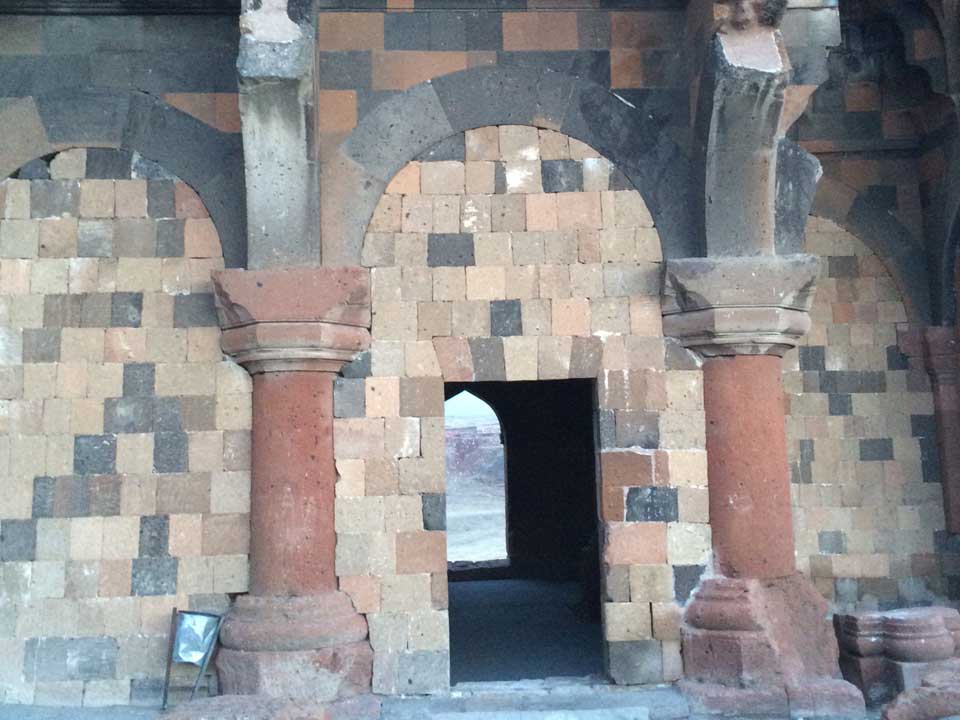
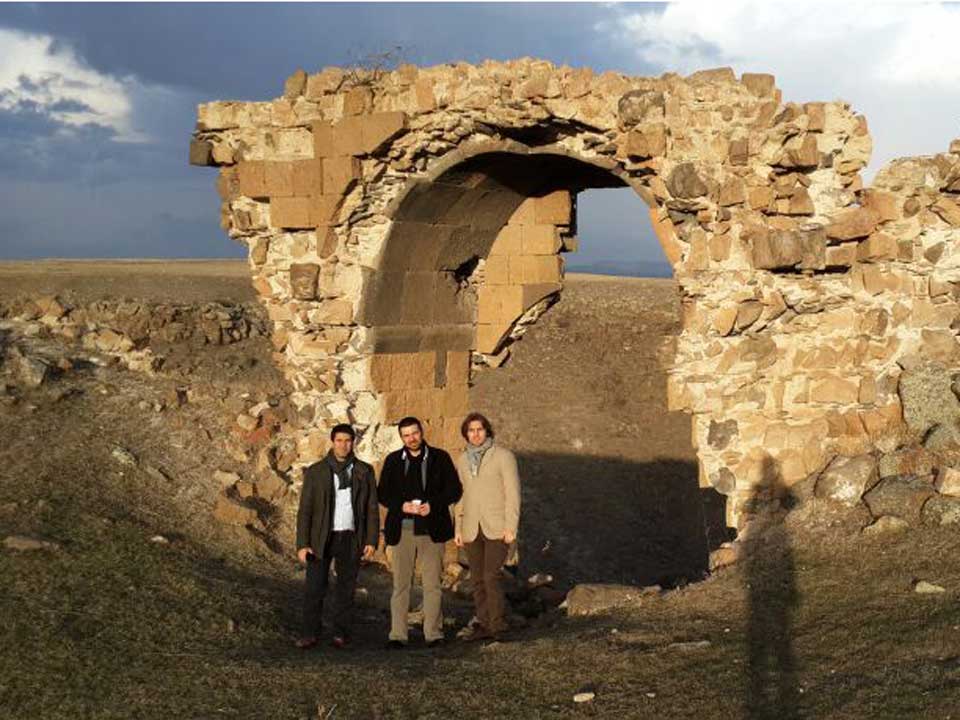
Below are selected photos I took in Ani:
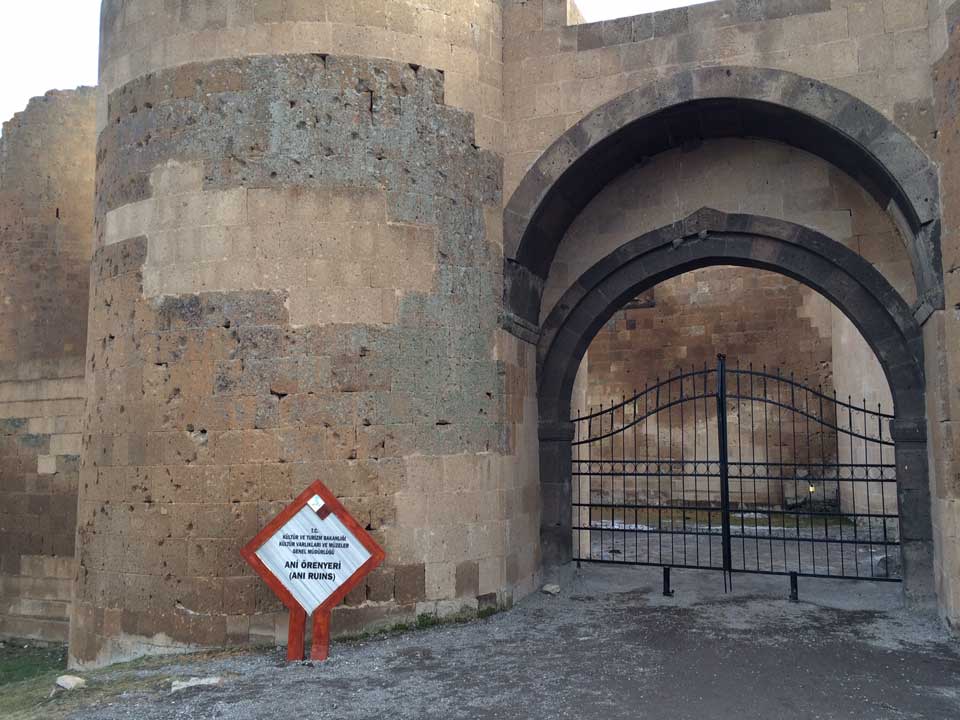
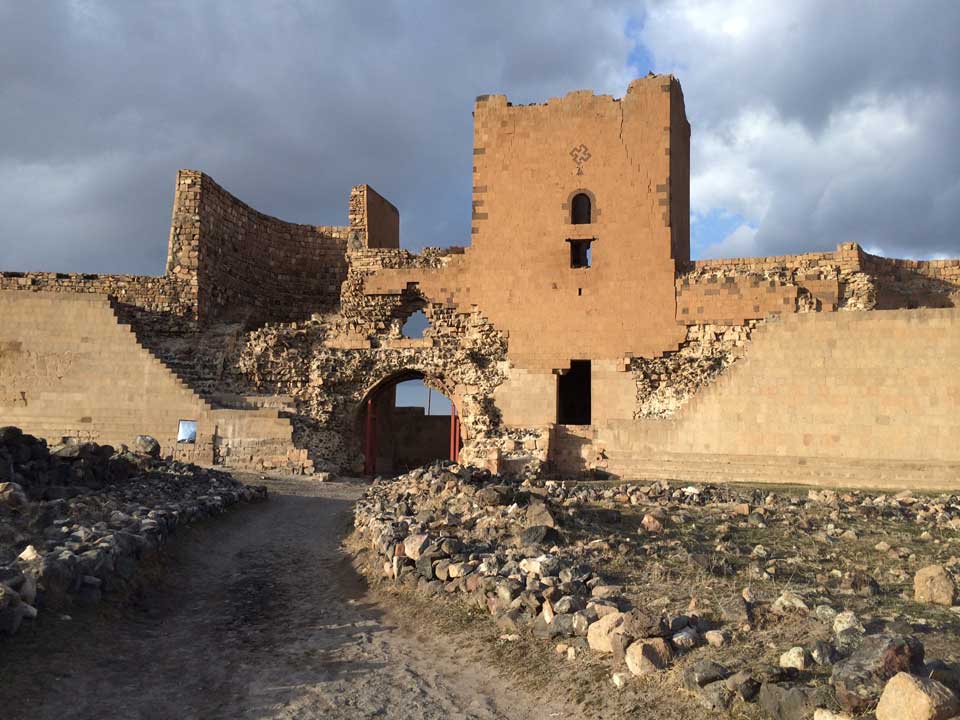
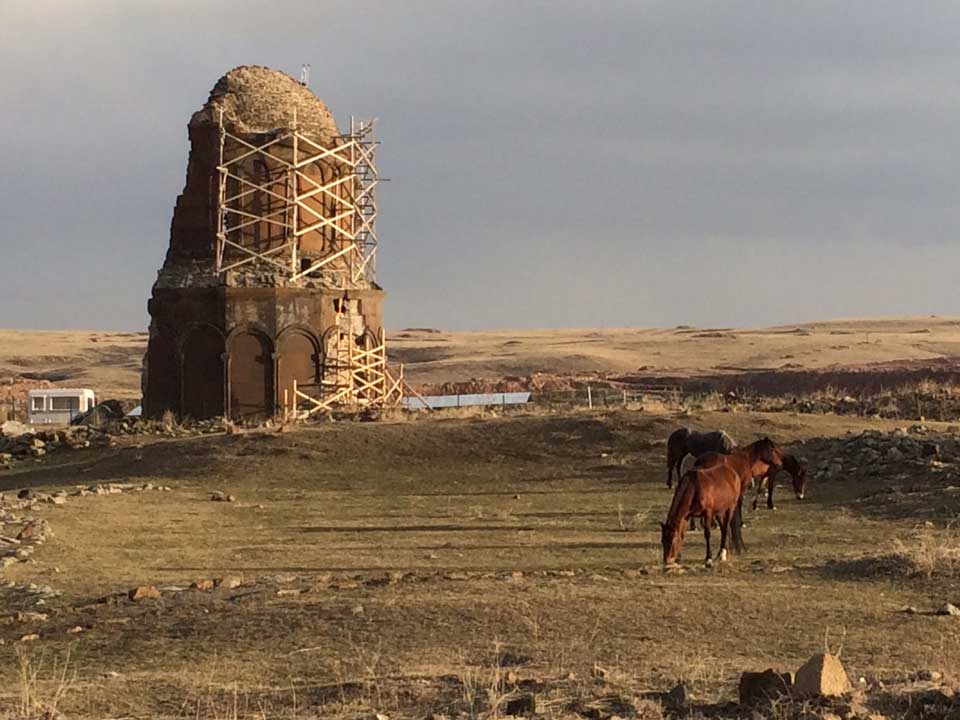
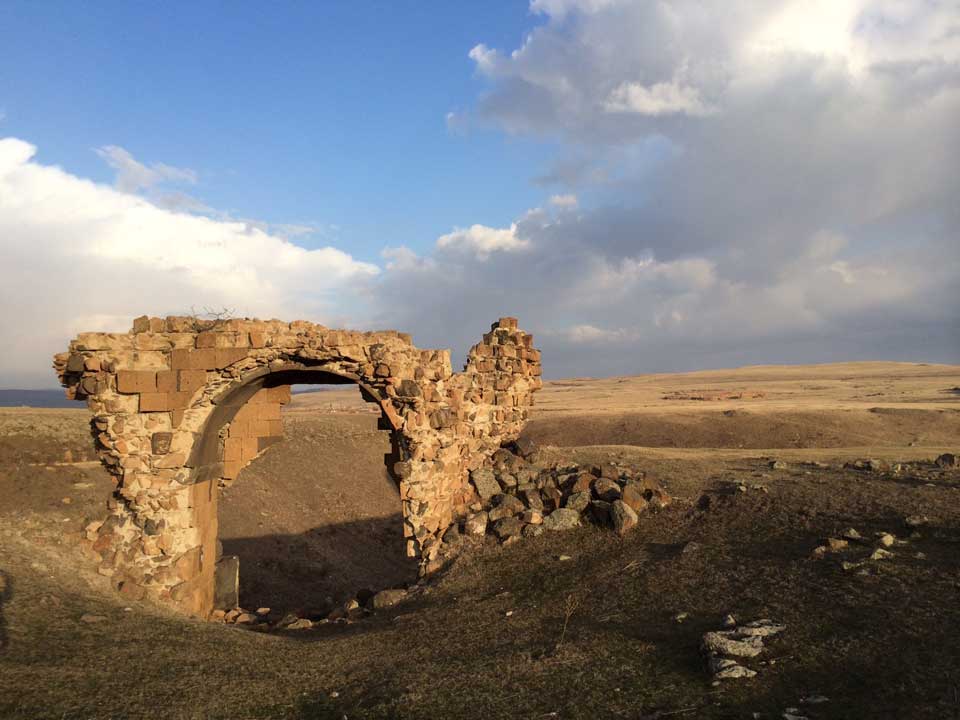
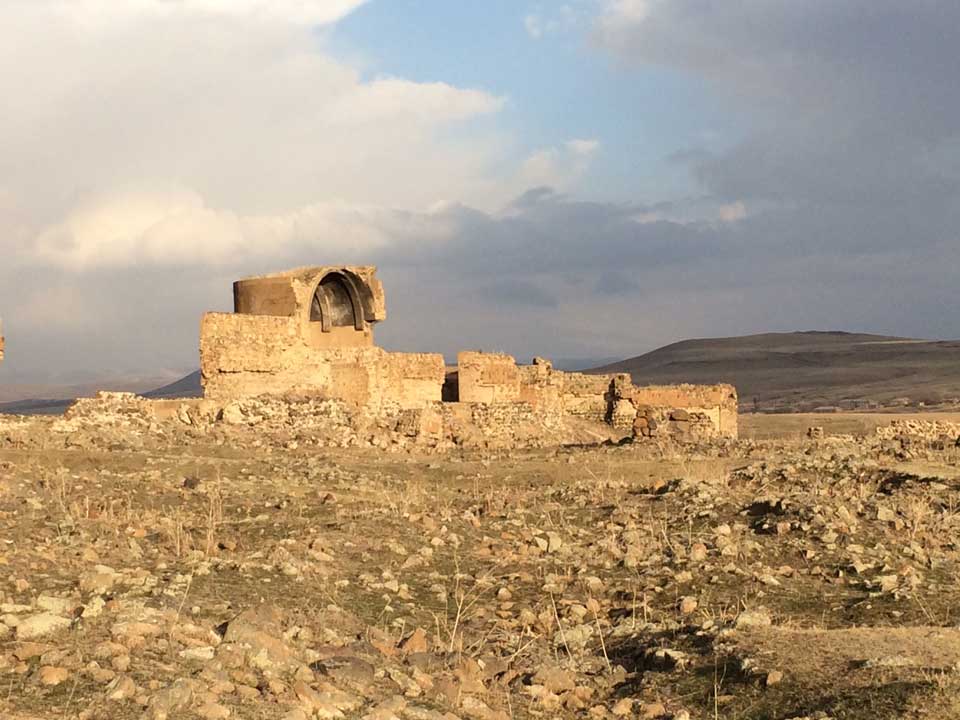
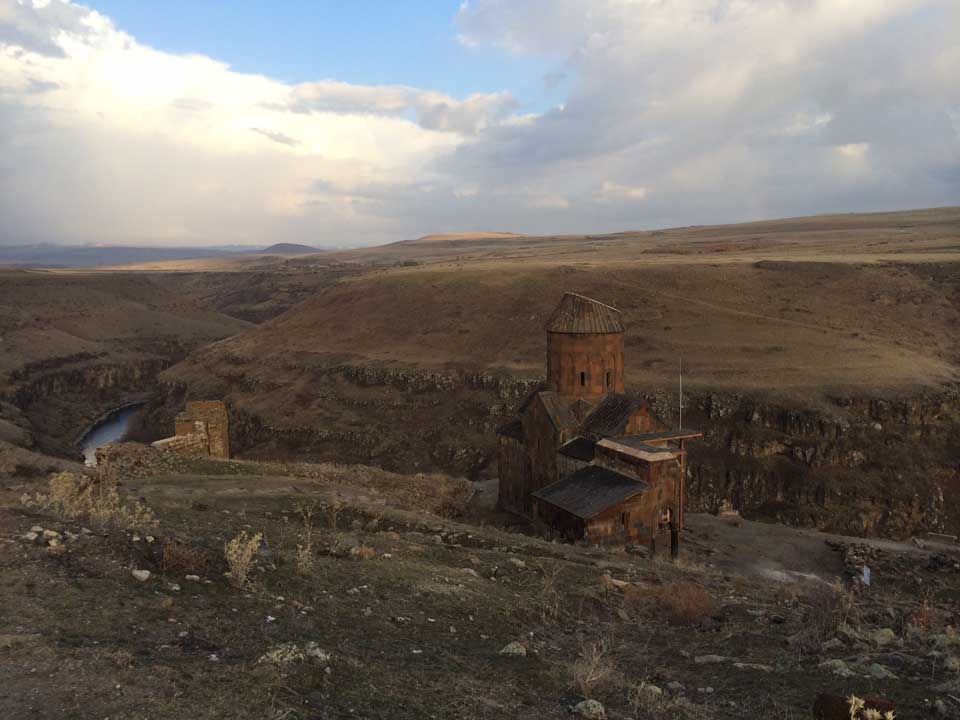
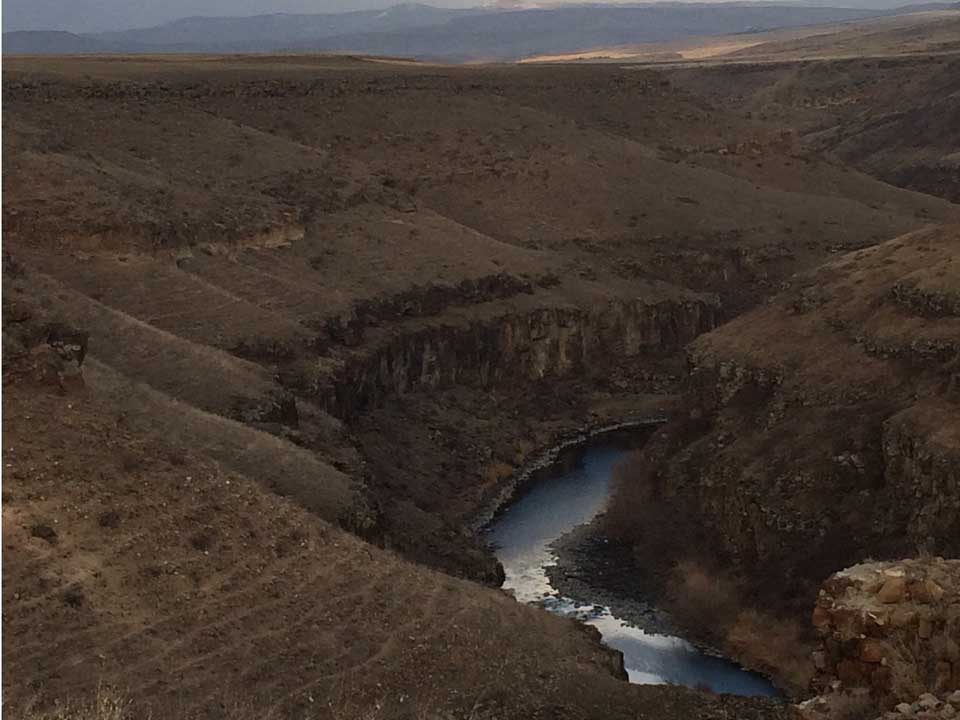
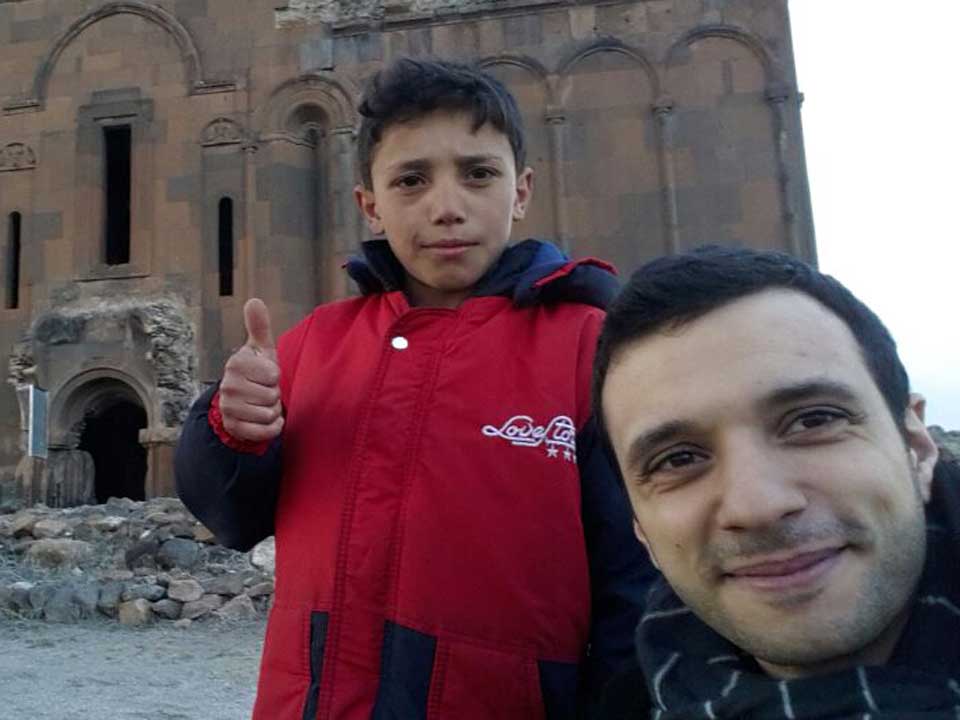
I can say that Ani, a place brimming with history and home to many different civilizations over the past 7,000 years, is a truly special place. Wandering around in awe of its city walls, the structures within, and the natural beauty of its location, I couldn’t help noticing another unique characteristic of Ani: its children. The children from Kars approached us and asked if we needed a guide. When we said we did, they started wandering with us. Here’s a snapshot we took with them:
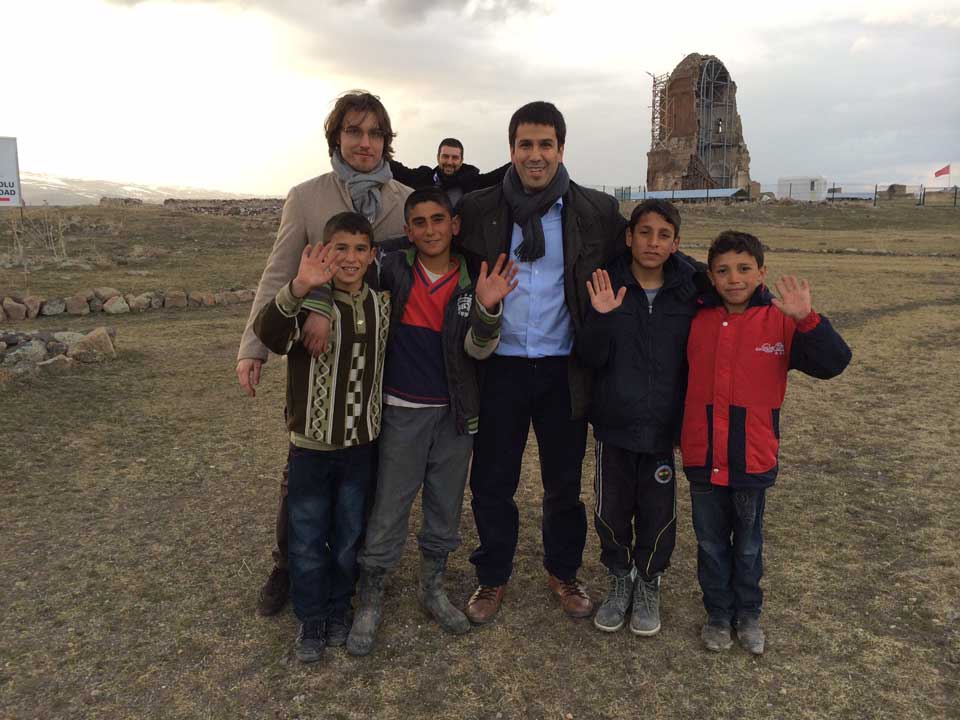
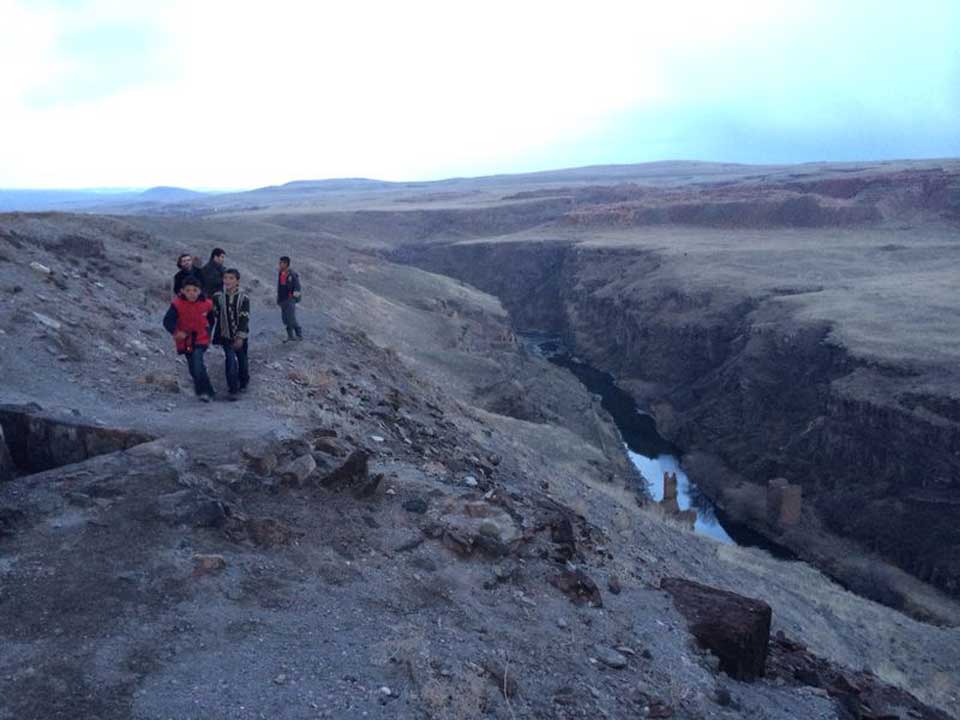
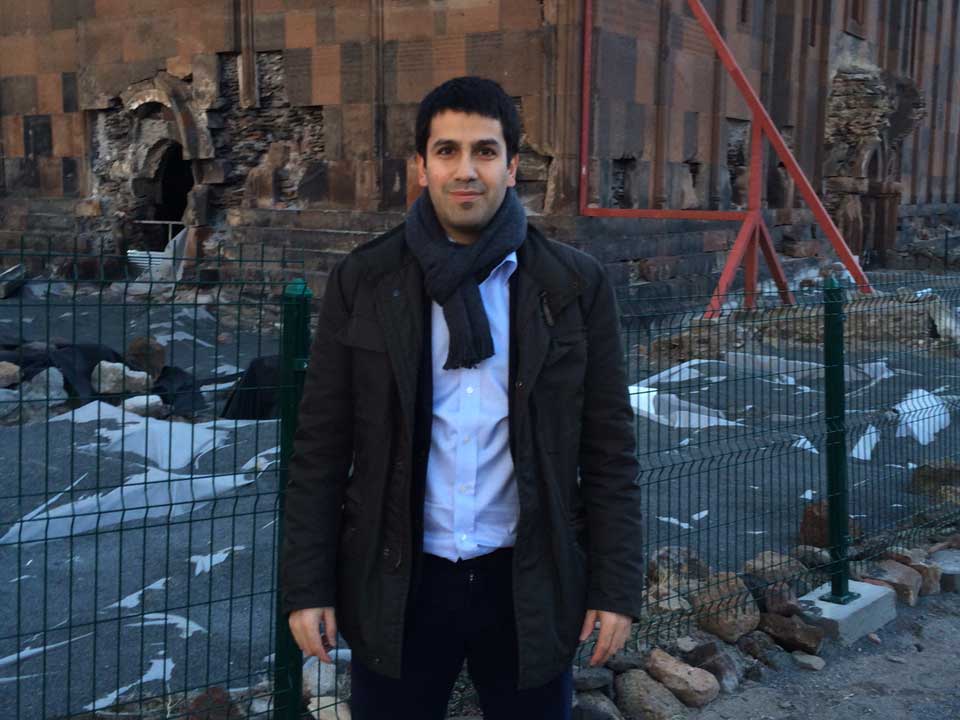
The children opened up as they told us about Ani’s history, buildings, horses, legends, their own lives, and life in Kars. They all had beautiful dreams. Here are some images from our conversation:
https://www.youtube.com/watch?v=58793x8lSs4
https://www.youtube.com/watch?v=GwMrVc5Kubc
At the end of this delightful conversation, it honestly hurt my heart when they said, “Man, we loved you so much. It would have been great if you had stayed here forever.” Unfortunately, these bright kids with big dreams, like many other kids in Anatolia, are unable to reach their rightful place due to lack of opportunities and isolation.
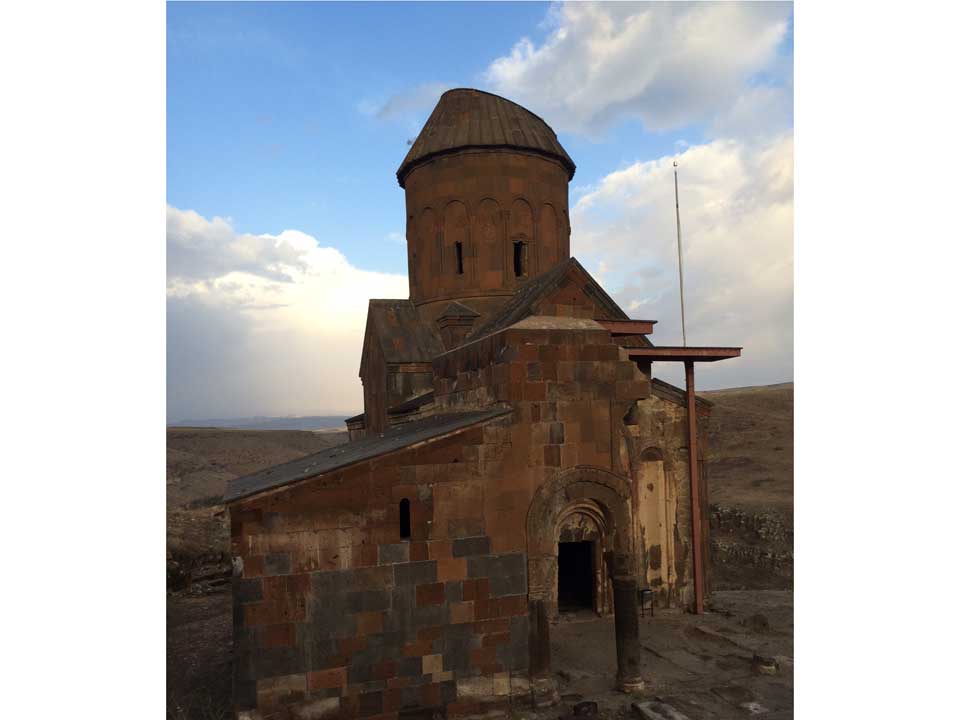
Another observation I’ve made about this place is the multiculturalism inherent in this land, which has been ruled by many different empires, kingdoms, and principalities throughout its history that dates back seven millennia. Rather than debating or prioritizing the superiority of any one’s culture, we should embrace this magnificent mosaic. One of the most significant problems in our country is the attempt to make everyone look like a carbon copy. It’s possible to encounter very different personalities within the same family, even amongst twins. I believe the important thing is to see these differences not as weaknesses, but as strengths, and to strive to make our country, as it has historically been, a leading country today, in every respect.
Tag: culture