Kars has become a popular destination, particularly with the sudden popularity of the Eastern Express (Eastern Express: https://www.tcddtasimacilik.gov.tr/tren/dogu-ekspresi/ ). As someone who loves Kars and has been skiing there for years, I believe the city is starting to find its rightful place in terms of the natural and historical beauty it offers. I’ve written two articles about Kars before. I’m sharing the links to these as a reminder:
https://www.serhansuzer.com/tr/kendini-ozleten-bir-sehir-kars
https://www.serhansuzer.com/tr/kars-ani-harabeleri
In this article, I’d like to share with you the other natural and historical beauties in the region. I’ll begin my journey chronologically.
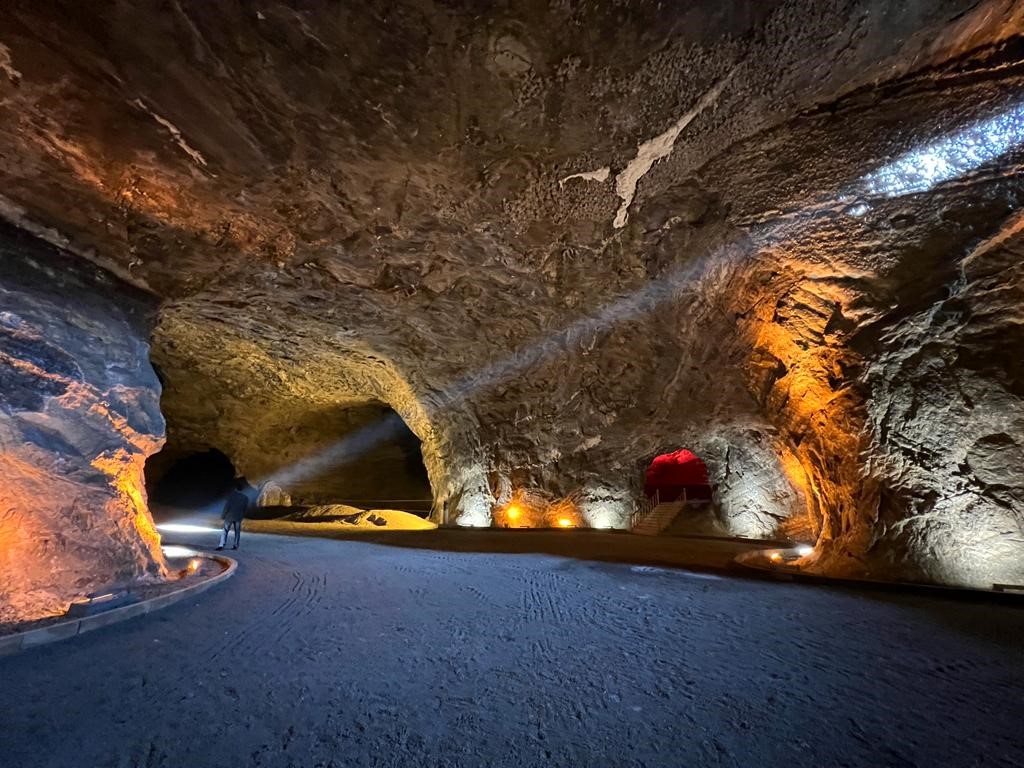
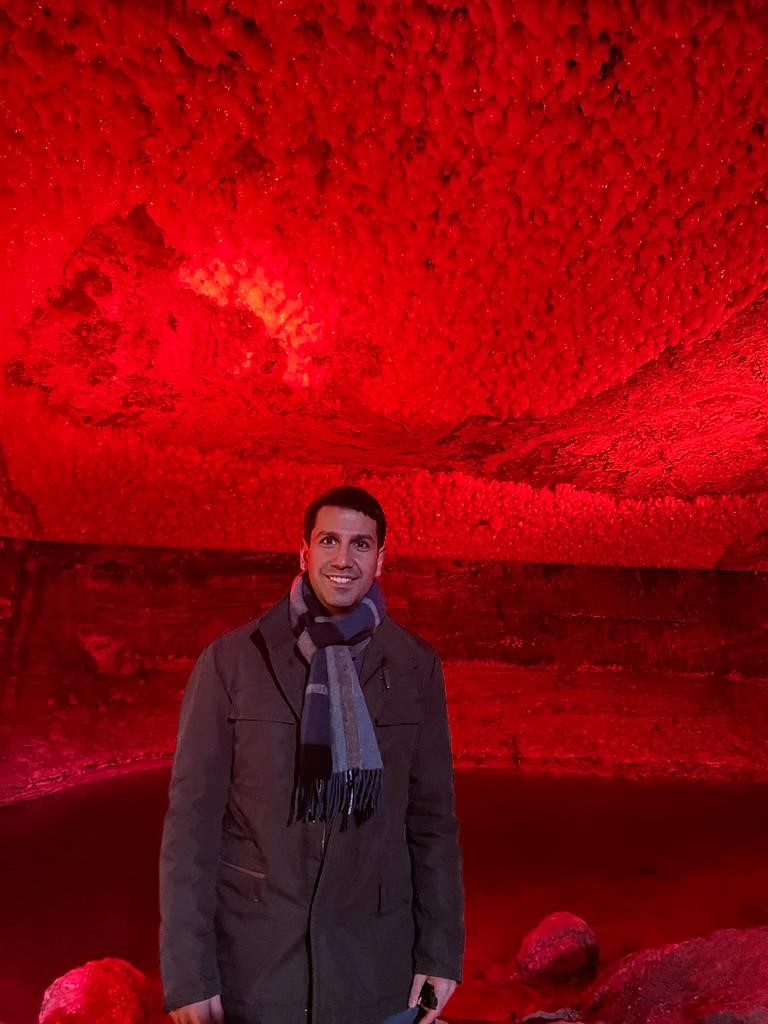
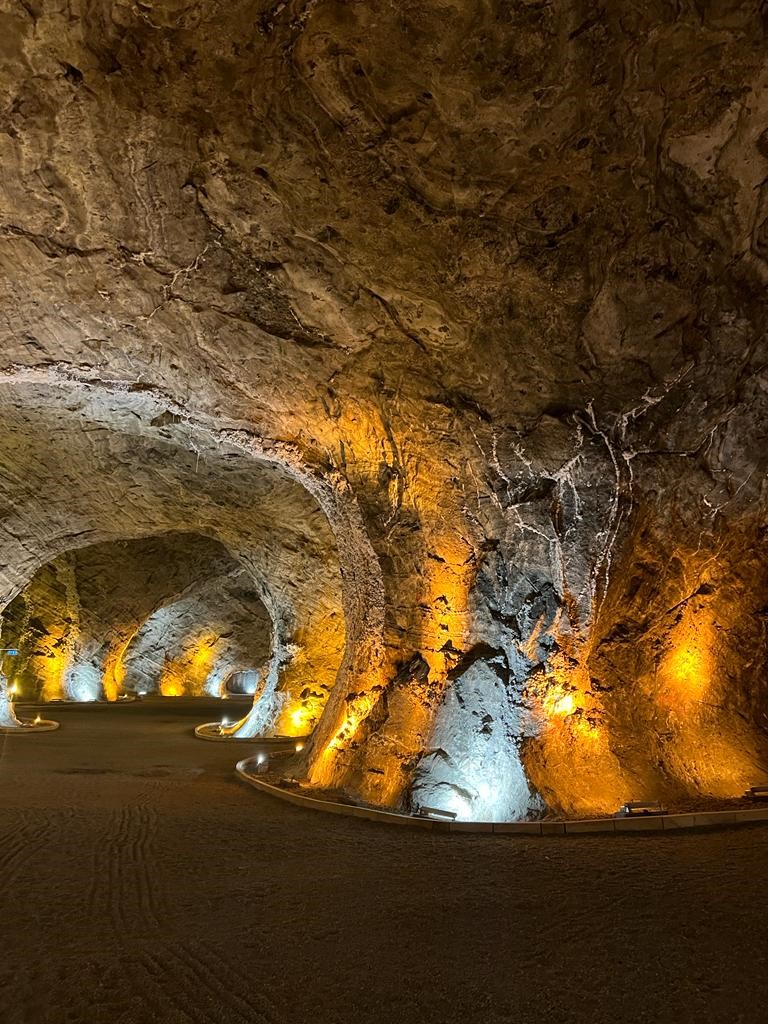
As soon as we landed in Kars, we checked into our hotel and immediately set off for Ishak Pasha Palace. After leaving Kars, we passed through Iğdır and reached Doğubayazıt, at the foot of Mount Ararat. While passing through the Tuzluca district of Iğdır, we decided to stop at the Salt Cave and explore it, even though we were short on time. It was an incredible experience. Entering through the makeshift door, you might think, “Is this the entrance to this place they’ve been talking so much about?” But once inside, you’ll witness incredible natural wonder. Moreover, you’ll feel your entire ears, nose, and throat open from the salt, and you’ll begin to feel a sense of well-being amidst the light beams. Words are insufficient to describe this salt cave. You can see what I mean by looking at the photos below:
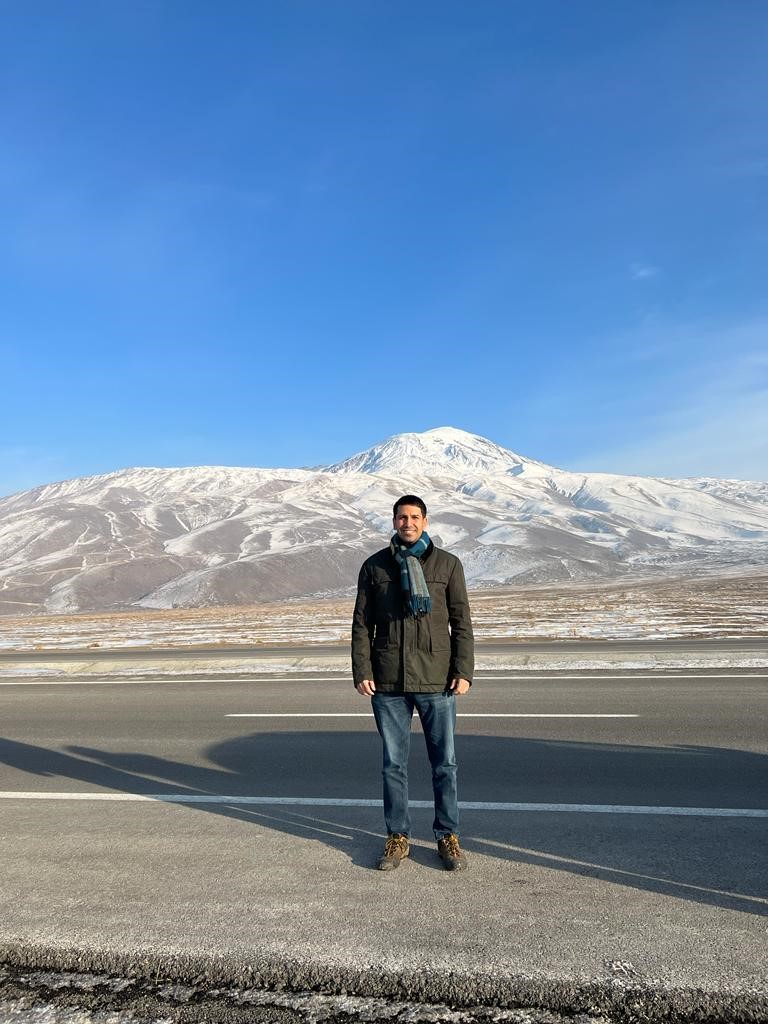
After leaving the Salt Cave, we enjoyed the ride along the foothills of Mount Ararat. According to our driver, Mount Ararat, which is normally almost impossible to see clearly in the always foggy weather, stood before us in all its majesty. At one point, the driver said, “This is the first time I’ve seen Mount Ararat so clearly. You’re very lucky.” Here’s the photo we took that day so you can imagine it:
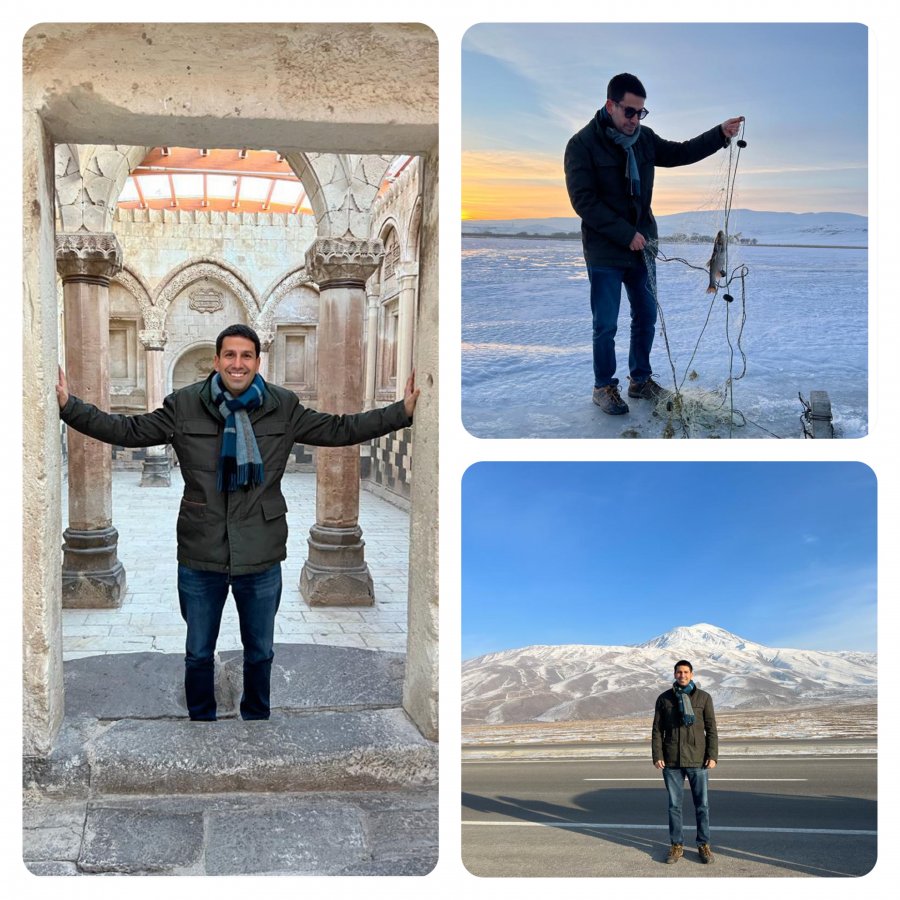
After a 2.5-hour drive, we arrived in Doğubayazıt, a beautiful district on the border of Ağrı. We drove through the district and arrived at İshak Pasha Palace, perched on a hill just outside. As you can imagine, the weather was very cold, below freezing. Since all but one section of İshak Pasha Palace was open, we explored for about an hour, ignoring the intense cold, which was felt strongly by the wind. Here are the resulting images:
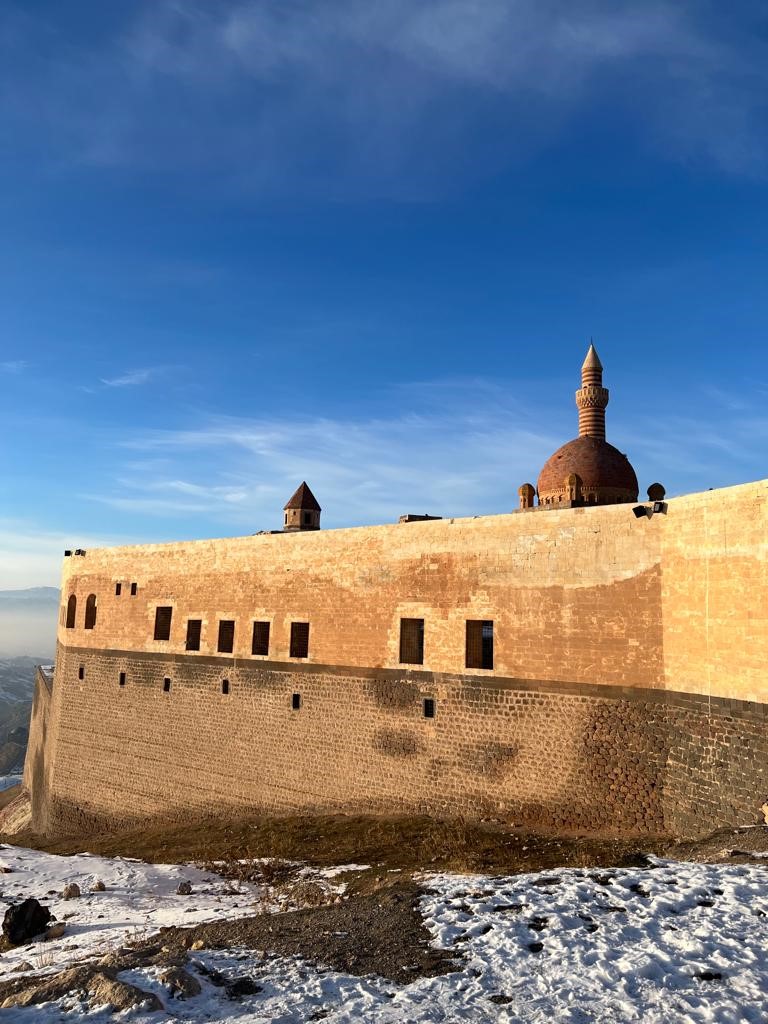
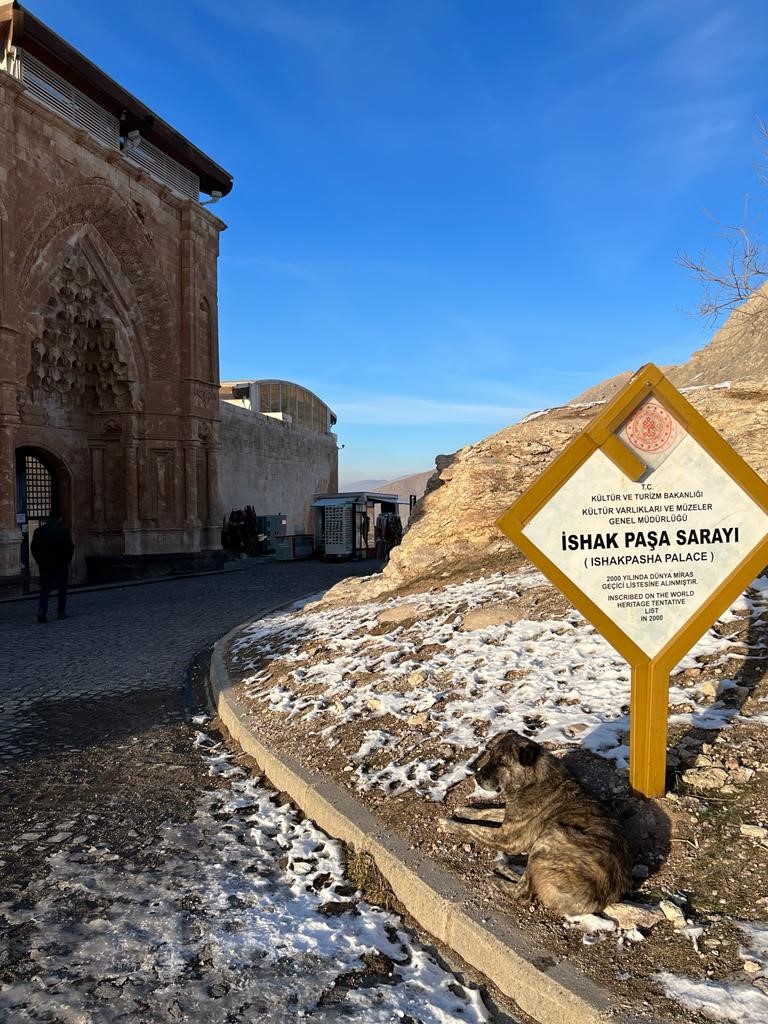
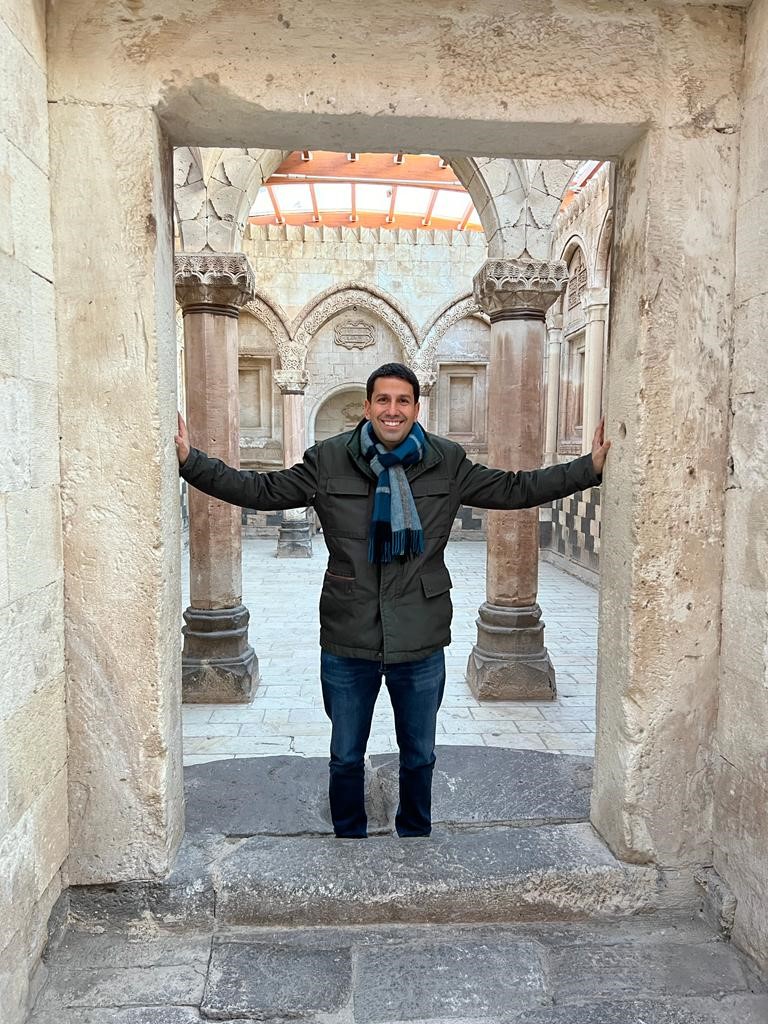
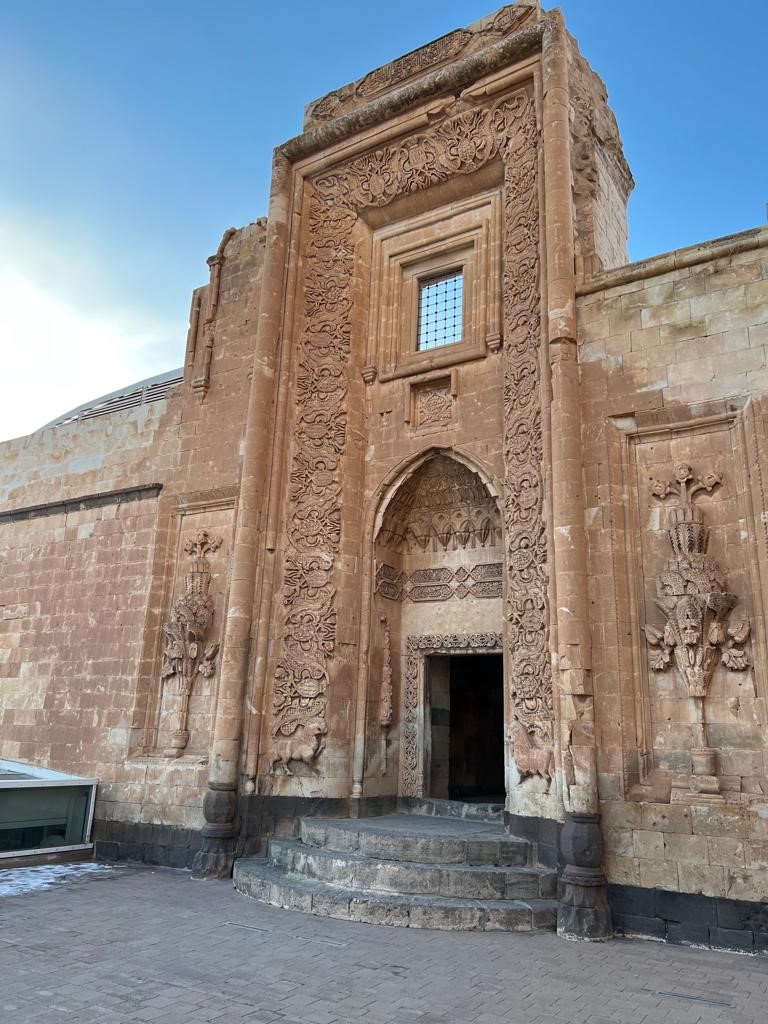
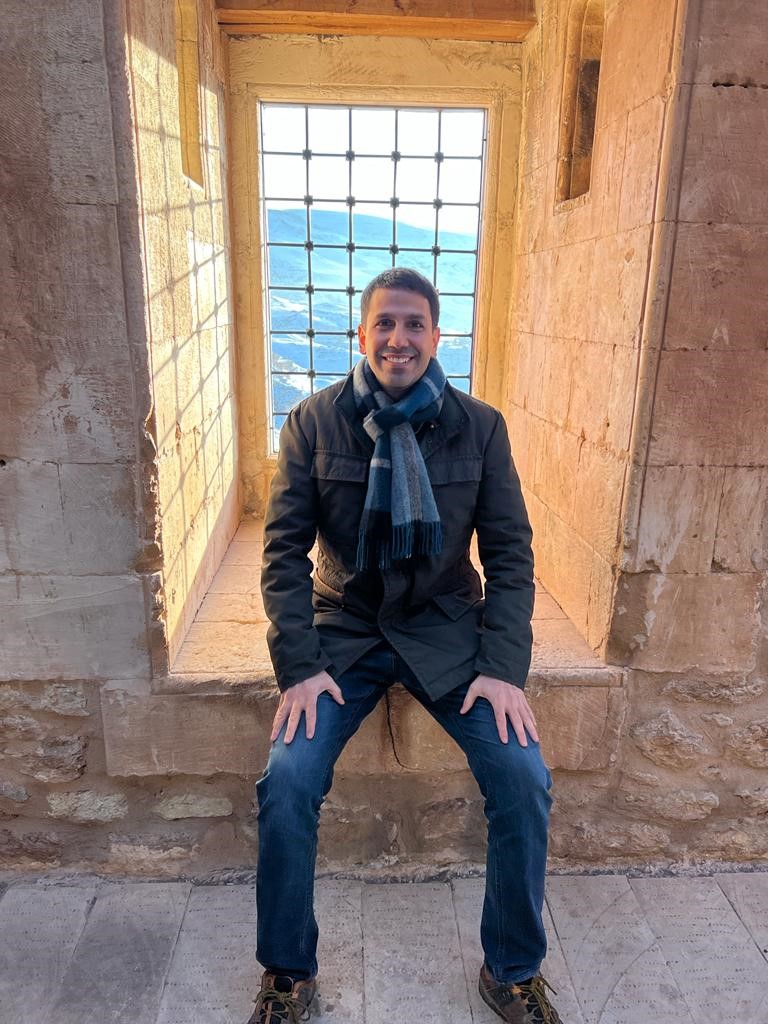
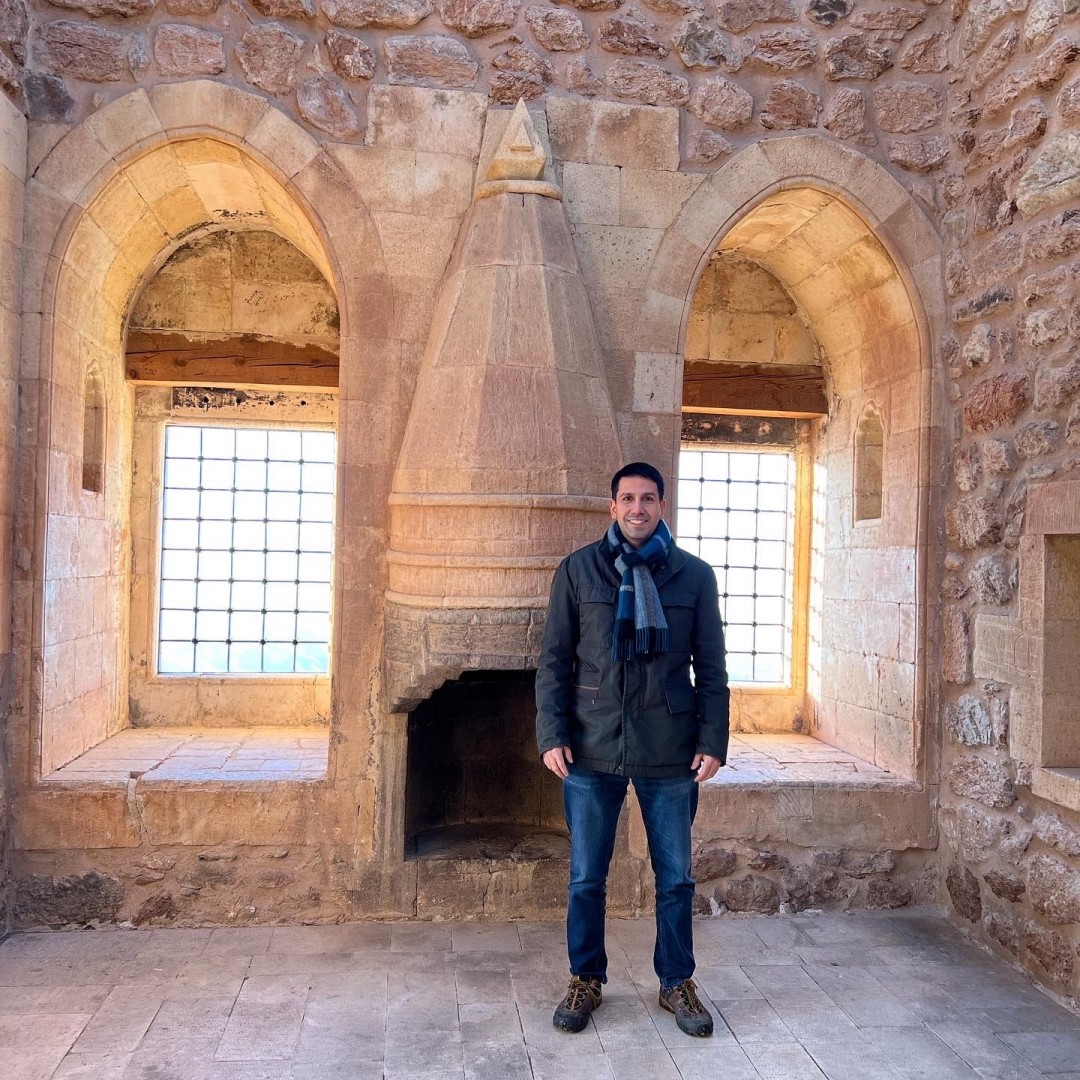
I can summarize this magnificent historical masterpiece for you from Wikipedia: İshak Pasha Palace is a beylik castle located near Mount Ararat, 5 kilometers from Doğubayazıt. The 116-room palace includes a tomb, a mosque, city walls, inner and outer courtyards, council and harem halls, and dormitories. Construction of İshak Pasha Palace was initiated by Abdi Pasha, a sanjak bey of the Kurdish Besyan tribe, the beys of the Bayezid Sanjak (Ocaklık) and completed by his successor, İshak Pasha (Source: https://tr.wikipedia.org/wiki/%C4%B0shak_Pa%C5%9Fa_Saray%C4%B1 ). For more details, you can visit Turkey’s cultural portal: https://www.kulturportali.gov.tr/portal/agri-nin-gozdesi–ishak-pasa-sarayi )
I enjoyed spending time in every section of this postcard-worthy historical structure, which took 99 years to build, and reading the inscriptions on the windows of the rooms. There were some things I didn’t like about this masterpiece, which serves as a mirror of past experiences in the region. First, the makeshift roof and tasteless renovation work they later built to cover it. I’m saddened to see these things and wonder to myself, “Are we that bloody clueless?” We’re not a nation with such cultural deficiency, but when those tasked with these matters lack competence, such renovations can emerge, betraying our history. I hope that in the future, these projects will be handled by the most competent professionals, who will conduct their work faithfully to the original and with the meticulousness of an international museum. Furthermore, it both saddens and angers me that thousands of uncultured and disrespectful people, both at the İshak Pasha Palace and at the Ani Ruins, who have etched unnecessary inscriptions on the most important historical structures. It is incomprehensible that our national values are being destroyed in this way by our own people. These people are often high school or university graduates, seemingly educated, yet they remain ignorant and uncultured. We absolutely must take serious measures in the future with sanctions. Of course, the most important priority is providing our people with an education with a solid ethical and cultural foundation.
We long for visitors to İshak Pasha Palace to be able to explore the site in its original, unaltered state, in a comfortable, enclosed environment.
After İshak Pasha Palace, we dined at Ararat Restaurant, a clean and beautiful venue in Doğubayazıt, and then returned to Kars. We returned to our hotel, delighted to have made the most of the day by visiting four important provinces—Istanbul, Kars, Iğdır, and Ağrı—that same day.
We set out the next morning. After first exploring Kars Castle and its surroundings, we headed towards the Ani Ruins.
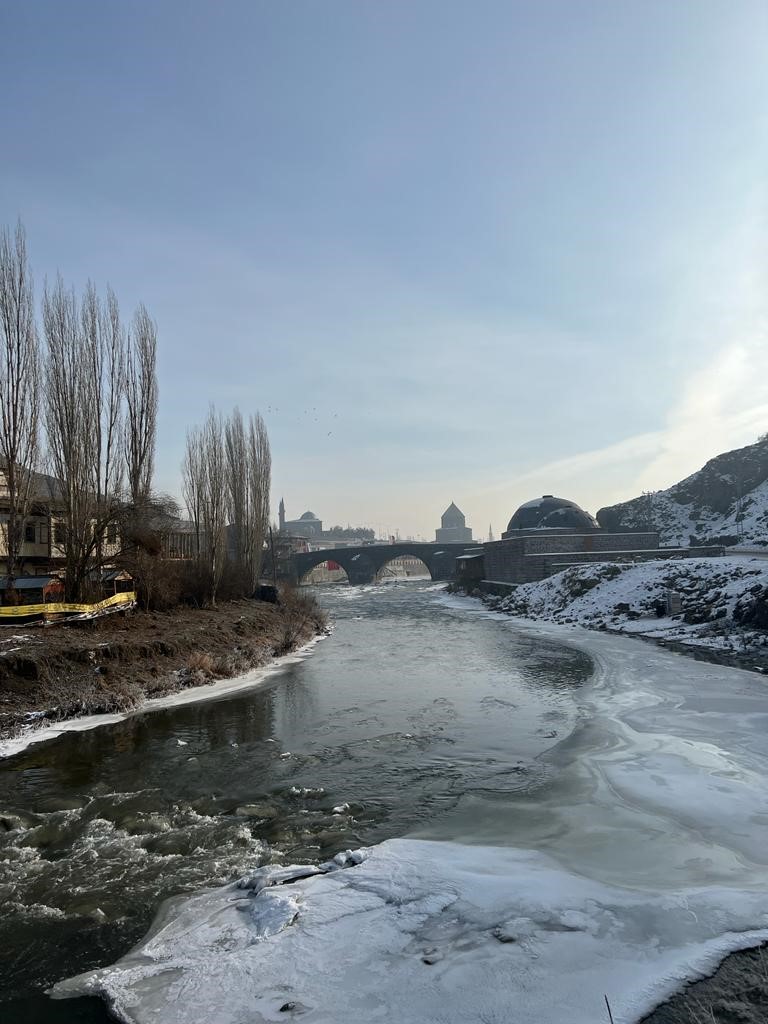
I enjoyed visiting the Ani Ruins again after such a long time and observing the developments there.
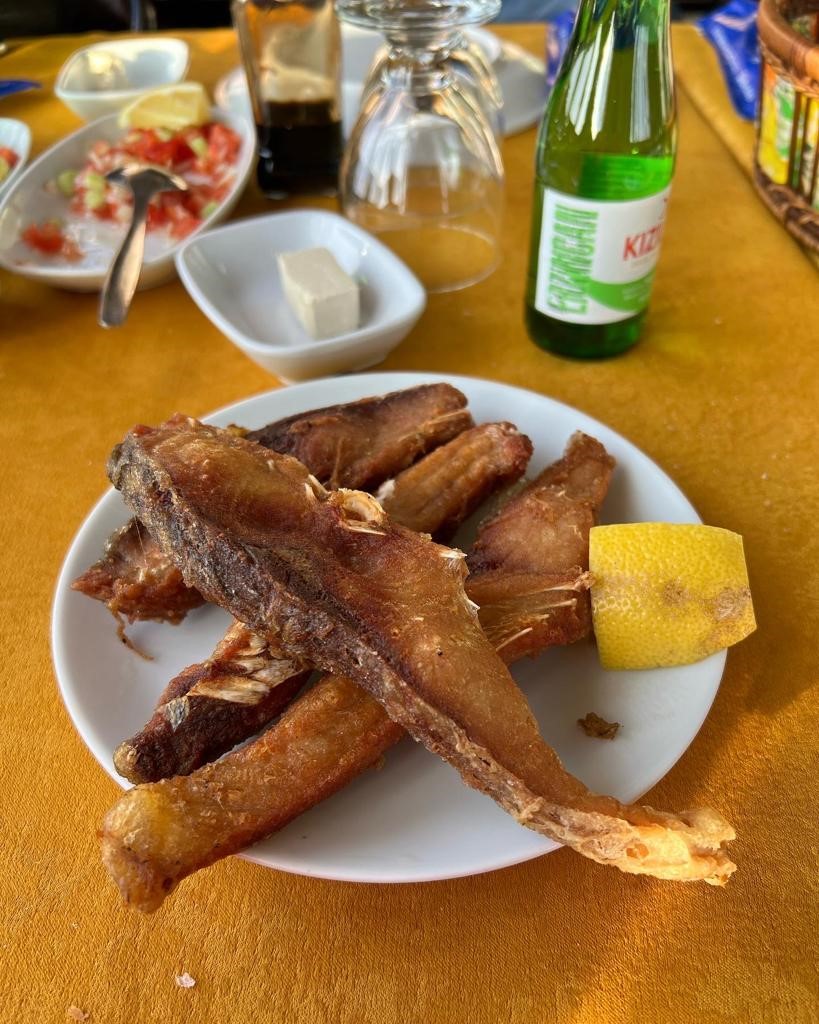
In the afternoon, before heading to Sarıkamış, we stopped at Lake Çıldır. We stopped at a restaurant called “Yunus’un Yeri” (Yunus’un Yeri) in Taşbaşı Village, the first stop on the way to Lake Çıldır, which had just opened for the season. First, we enjoyed a fried carp fish straight from the lake. Afterwards, we went to the lake and took a short horse-drawn carriage tour before stopping at the fishing area. After briefly observing the fishing process, we pulled in our nets and caught a fish. Here are some photos to help you visualize it.
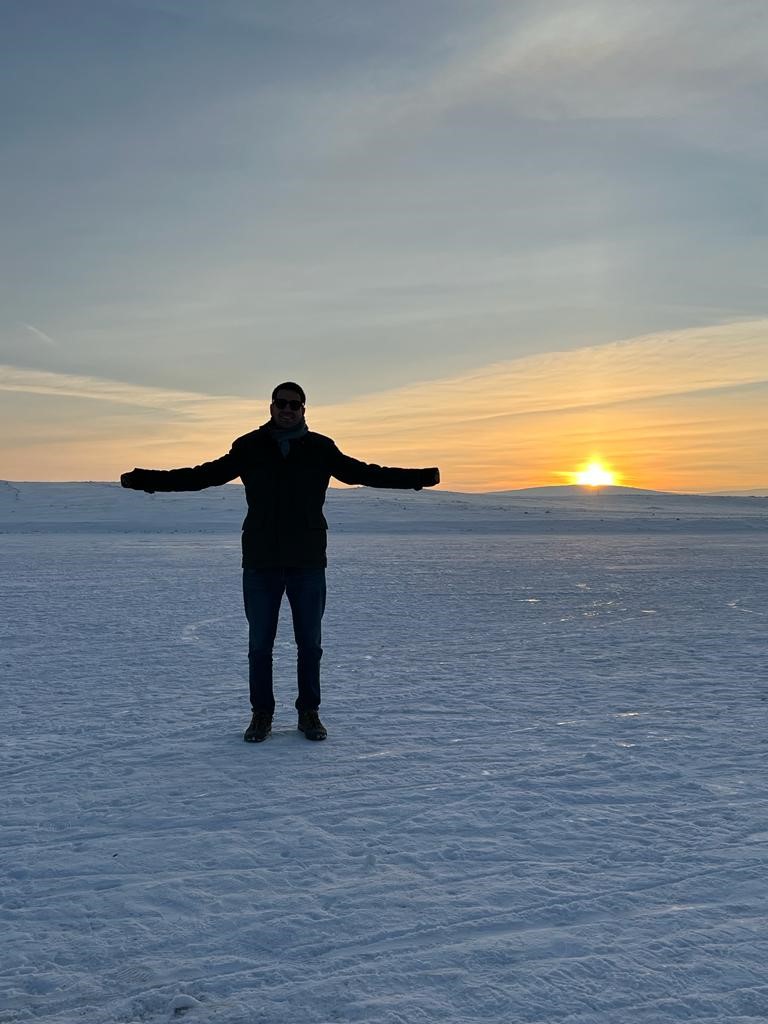
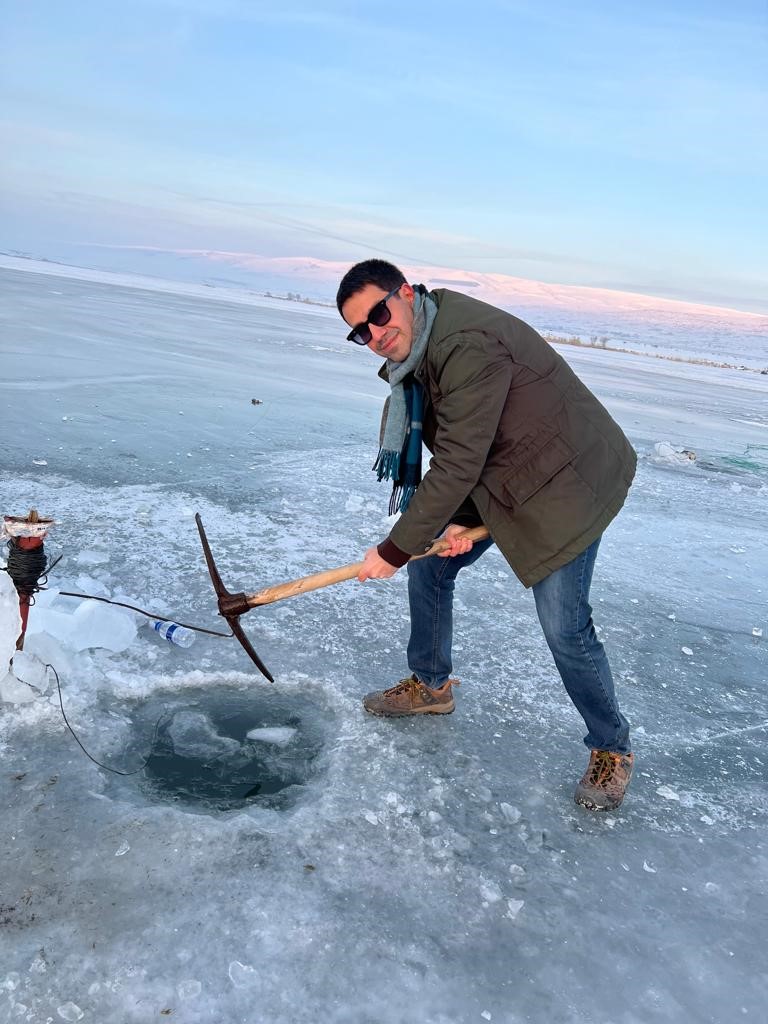
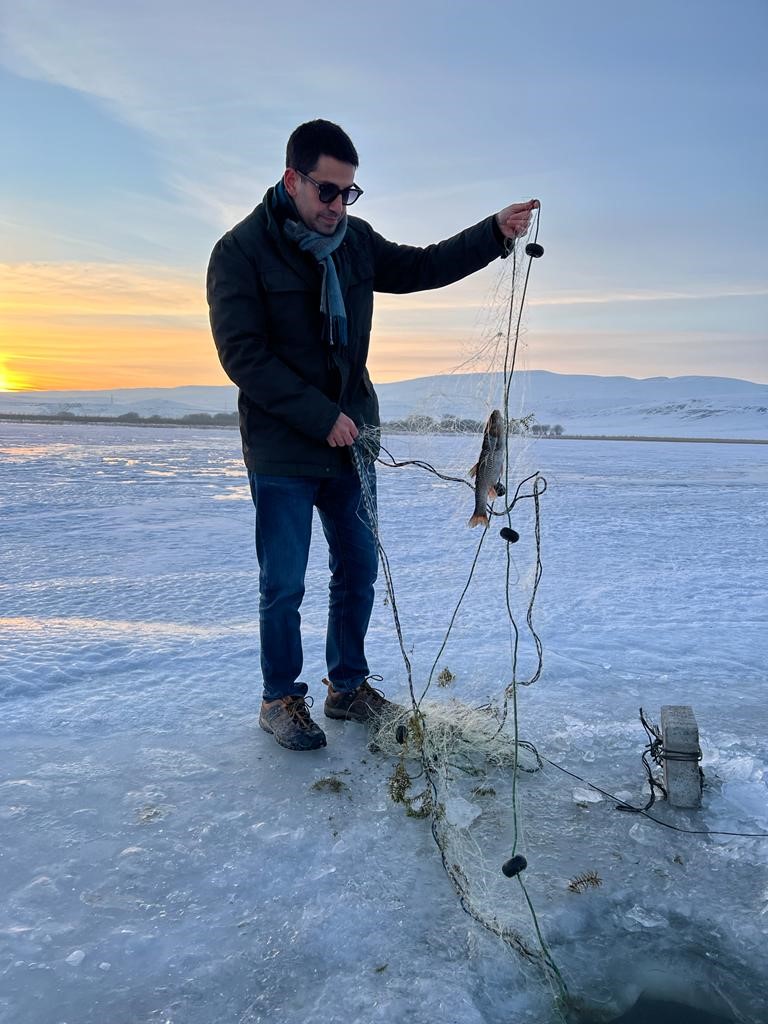
I’d like to share some information about Lake Çıldır, which freezes over in winter and offers a unique experience, from Wikipedia: Located within the borders of Ardahan and Kars provinces, Lake Çıldır is the largest freshwater lake and the second largest in the Eastern Anatolia Region, with an area of 123 km2. Located at an altitude of 1,959 meters above sea level, the lake’s deepest point is 42 meters. Lake Çıldır is a natural dam lake formed by a lava flow and a debris flow. For more details, please visit https://tr.wikipedia.org/wiki/%C3%87%C4%B1ld%C4%B1r_G%C3%B6l%C3%BC.
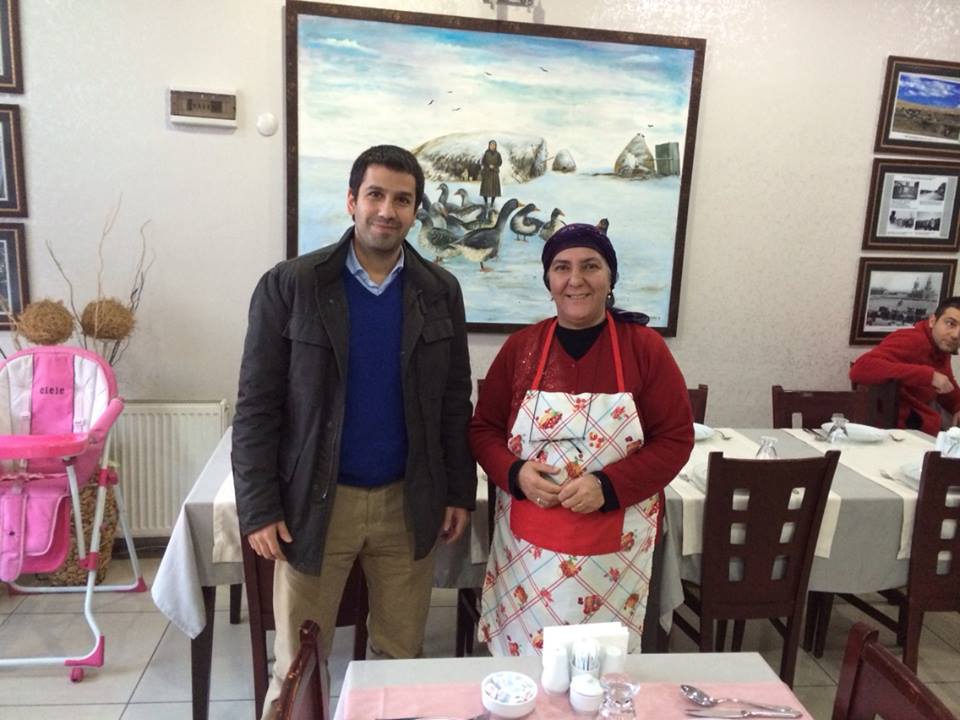
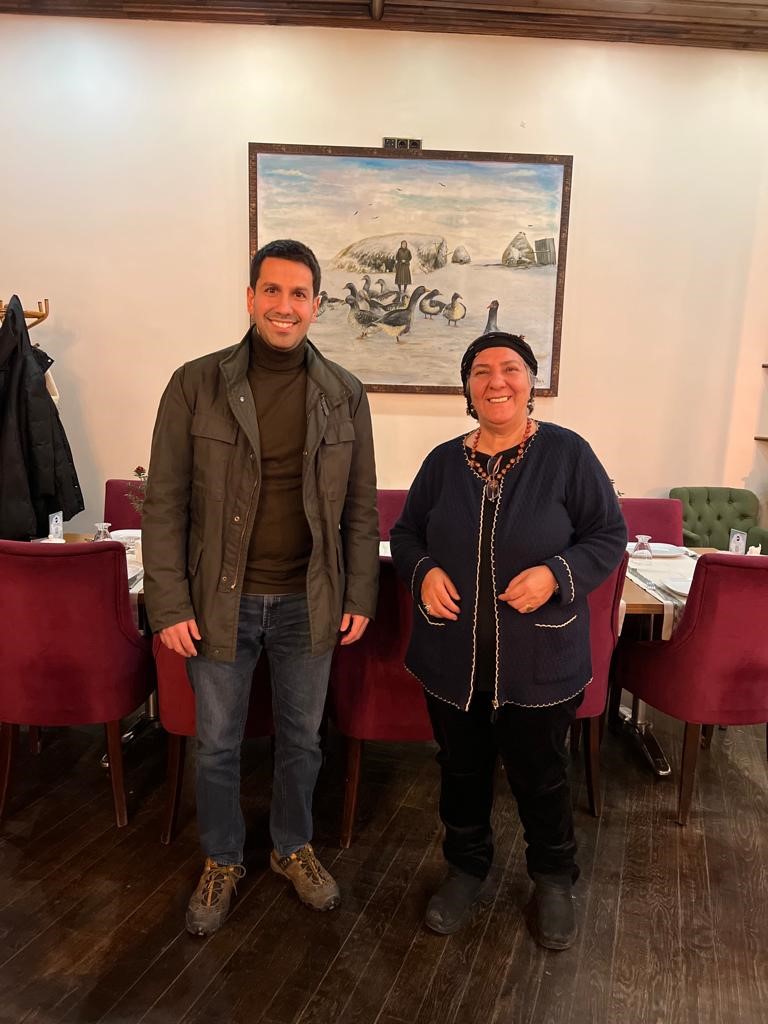
After Lake Çıldır, we took one last tour of Kars and visited the new location of Nuran Abla’s Kaz Evi near Kars Castle, where we enjoyed their delicious food as always. Over dinner, Nuran Abla and I chatted about the past and took a photo similar to the one we took eight years ago. Notice the jacket I’m wearing here (the photo we took eight years ago at the old location and a similar photo we took this New Year’s Eve):
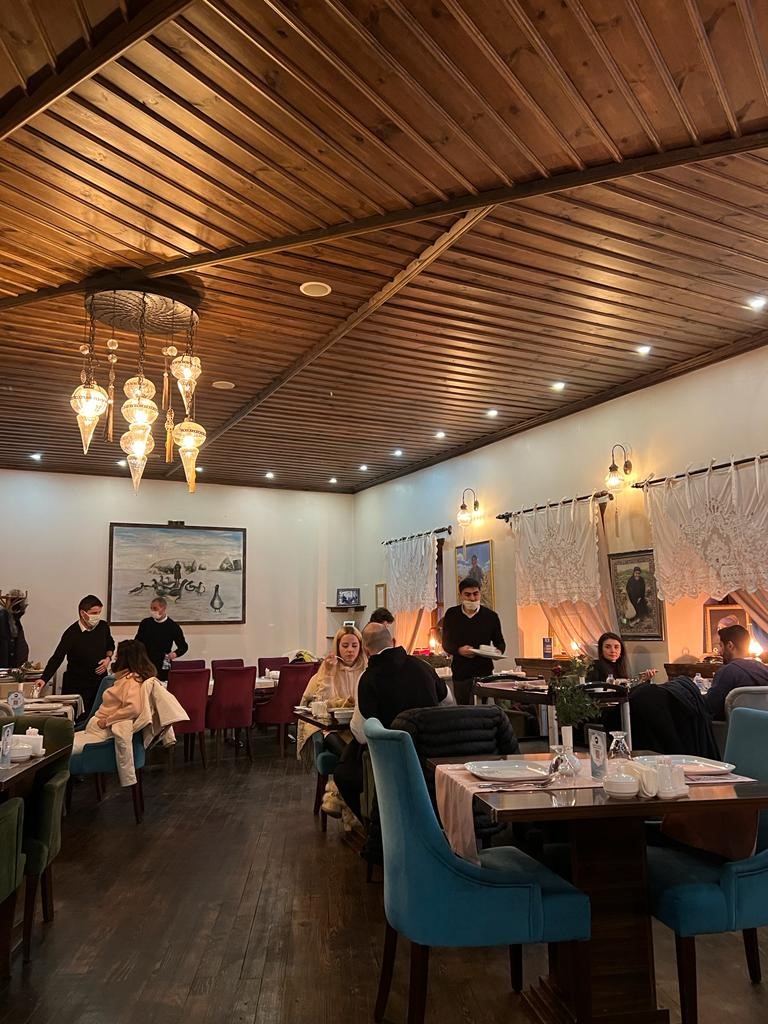
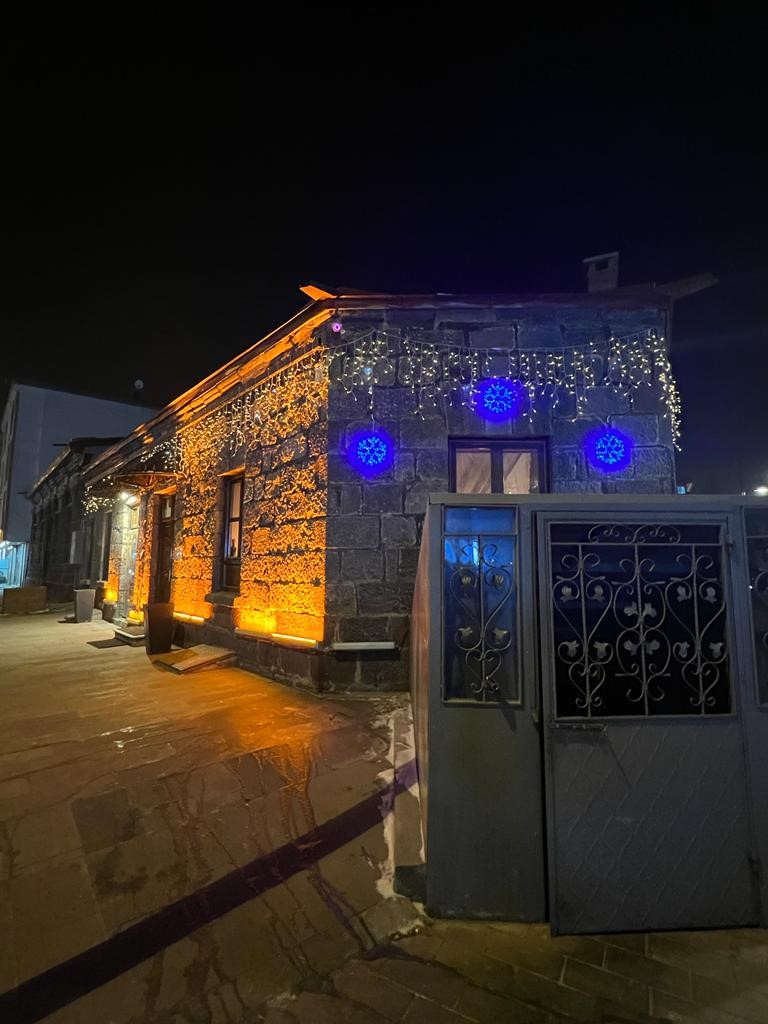
These are the photos we took from the location:
After another productive and beautiful day, we headed to Sarıkamış. Kars and its surrounding area will continue to be among my favorite destinations. After expanding my repertoire in the region and visiting the Salt Cave, Ishak Pasha Palace, and Lake Çıldır, my fondness for the region has only grown.
Tag: education